
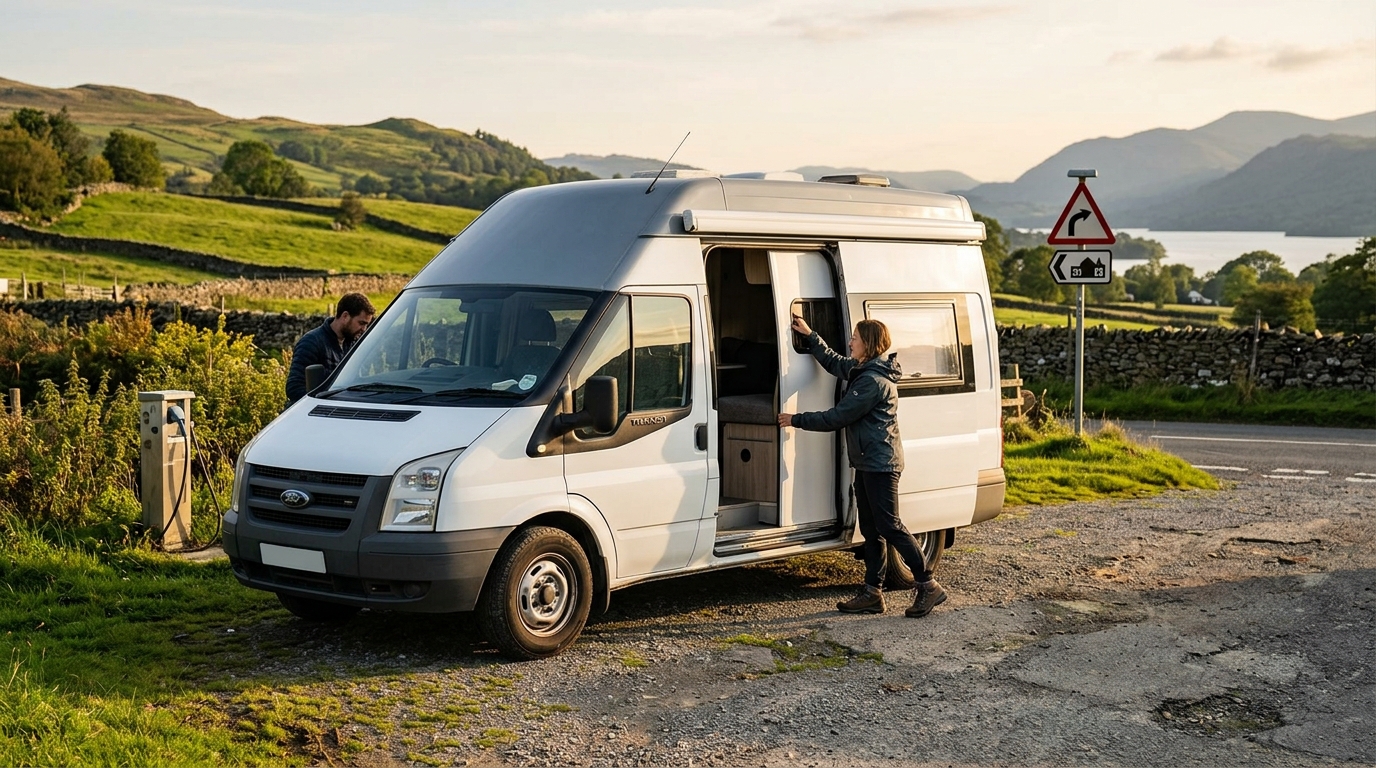
For live availability and current prices, start with our RV Rental UK - Complete Guide 2026 guide.
In This Guide
- Where to Camp in UK - Top Options
- Campground Types in UK (National, Private, Wild)
- Featured RV Park or Campground in UK
- Hookups & Amenities - What to Expect
- Booking Windows & Reservations in UK
- Nearby Supermarkets & Resupply Points
- Best RV Class for Camping in UK
- How to Save on Campgrounds in UK
- How much does it cost to RV in UK
- Do you need a special license to drive a motorhome in UK
- Can you take a dog in an RV in UK
- What is the best month to RV in UK
- Can you wild camp an RV in UK
- What are the driving rules for motorhomes in UK
- Is it legal to sleep in your car UK
- What is the best size motorhome for UK roads
- What You Shouldn't Miss
- Why Book with Bandana Caravan
- Final Thoughts
- Frequently Asked Questions
Where to Camp in UK - Top Options
The UK offers a remarkably diverse range of camping experiences, from breathtaking coastal retreats in Cornwall to rugged mountainous hideaways in the Scottish Highlands and picturesque lakeside spots in the Lake District. For live availability and current prices, start with our RV Rental UK - Complete Guide 2024 guide. These popular regions are well-equipped with amenities for those exploring with a rented motorhome or campervan. Imagine yourself pulling up to a stunning lochside view in Scotland or waking up to the sound of waves on a Cornish beach - that's the magic of RV travel in the UK! We believe in slow travel, recommending a maximum of 100-150 km per day on average, allowing you ample time to truly feel the place, connect to the culture, the local food, and the stunning scenery. This approach also allows for spontaneous stops at charming villages or unexpected viewpoints, enriching your week-long trip or extended road trip adventure.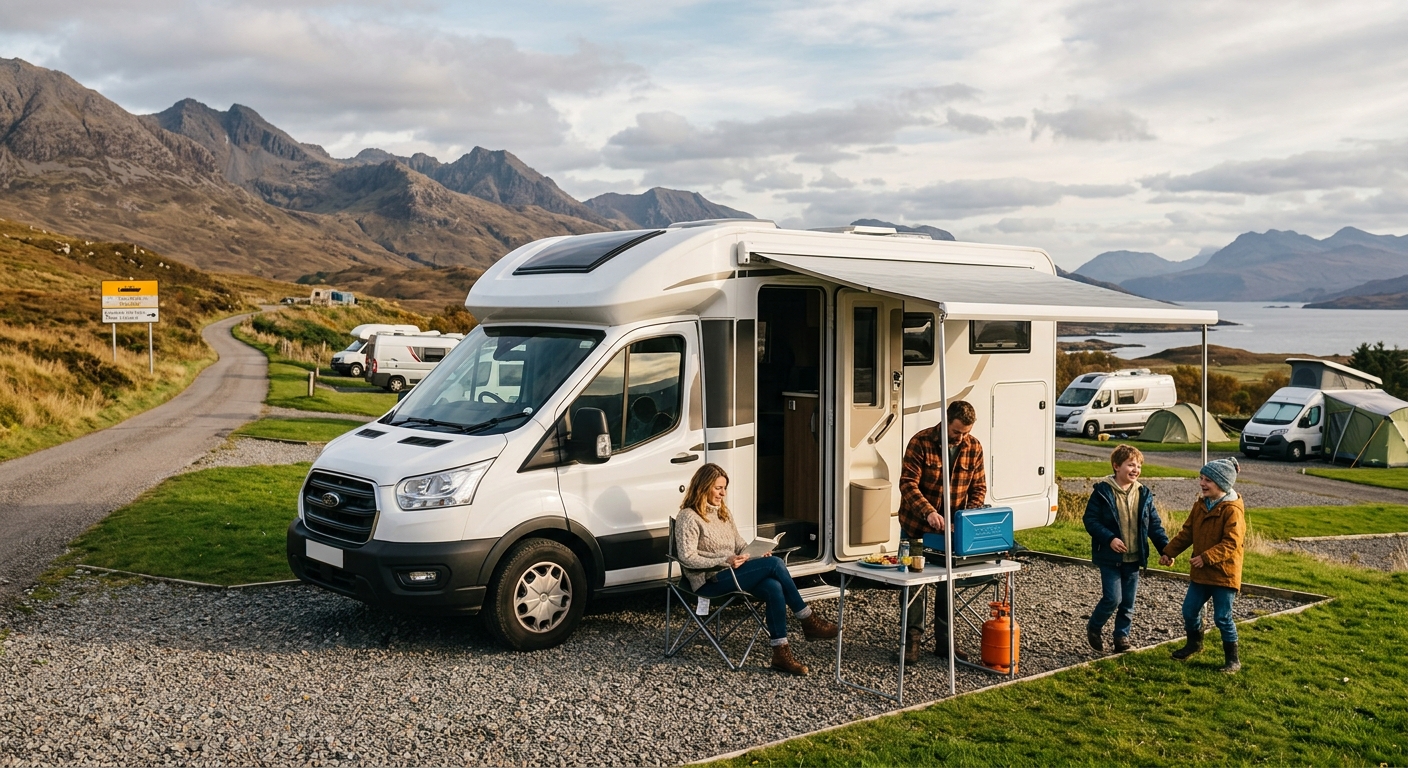
Campground Types in UK (National, Private, Wild)
RVers in the UK have a variety of campground options to choose from, each offering distinct rules and amenities, ensuring there's a perfect spot for every kind of rented RV adventure. Organised national park sites, private commercial campgrounds, and the more nuanced practice of wild camping (also known as freedom camping) are the primary choices. National Park Sites, often managed by organizations like the National Trust, typically provide basic to moderate facilities and offer excellent direct access to nature. Private Commercial Campgrounds, conversely, range from simple pitches to luxurious holiday parks, offering extensive amenities like 16 Amp electric hook-ups, showers, laundry, on-site shops, and sometimes even entertainment, making them ideal for families or those seeking extra convenience. Wild camping, however, is largely illegal for RVs in England and Wales without explicit permission from the landowner; it is tolerated in certain remote parts of Scotland, but requires a strict 'leave no trace' approach to respect local communities and minimize environmental impact. Remember, Bandana is a true RV specialist, not a travel agency side department, so we understand these nuances to help you plan your journey.Featured RV Park or Campground in UK
When choosing an RV park in the UK, look for sites that cater to your specific needs, balancing essential facilities, a great location, and a welcoming atmosphere for your rented motorhome. An excellent RV park typically offers electric hook-ups (EHUs), fresh water points, and clean waste disposal facilities for both grey and black water. Consider your preferred setting – perhaps coastal views, serene lakeside tranquility, or easy access to charming towns and attractions – and always check recent reviews for insights into cleanliness, noise levels, and the helpfulness of staff. Many quality parks enhance the camping experience with additional amenities such as laundry services, on-site shops, children's play areas, and Wi-Fi, though rural Wi-Fi can sometimes be unreliable. For finding campsites and campgrounds during your trip, we recommend using RV PLANET (rvplan.net) - a great resource for locating available spots along your route.🎬 Video coming soon
Hookups & Amenities - What to Expect
RV camping in the UK typically provides a good range of essential hookups and amenities, although the specific offerings can vary between campsite types, from basic national park pitches to fully-serviced private holiday parks. Most private campsites offer 16 Amp electric hook-ups (EHUs), requiring a blue CEE form plug adapter for your rented RV to deliver 230V mains power. Fresh water refill points are common across nearly all official campgrounds, as are grey water (sink/shower) and black water (toilet) dump stations. You can usually find these clearly marked and well-maintained. For cooking on board, many modern rental motorhomes and campervans come equipped with efficient stoves and ovens, allowing you to prepare delicious meals; for some inspiration, check out our RV-friendly recipes playlist. Connectivity is increasingly available, with Wi-Fi often offered at private sites, though it can sometimes be an extra charge and may be less reliable in remote areas. Laundry facilities and hot showers are standard at most private locations, while more rustic sites might offer simpler or cold shower options. LPG (liquefied petroleum gas) for heating and cooking is readily available at many service stations and specialized gas suppliers throughout the UK, compatible with common UK bottle connectors.Booking Windows & Reservations in UK
Successful RV travel in the UK often hinges on strategic booking, as popular spots fill quickly, especially during peak times, although spontaneous travel is still possible. For peak season (May-September and all school holidays), reserving your motorhome or campervan and campsites 3-6 months in advance is highly recommended to secure your preferred vehicle and pitch. During the shoulder seasons (April and October), you might find more availability with just 1-2 months' notice, often balancing pleasant weather with fewer crowds and potentially lower prices. In the off-season (November-March), many campsites reduce their rates or close for winter, but those that remain open usually have ample space for last-minute bookings; always confirm opening times and available facilities. It's reassuring to know that many national and state parks reserve 25-30% of their spots for first-come, first-served arrivals. This means that even if you're a spontaneous traveler, you’ll find a spot. If not at the first campground, then the next one; just remember to call ahead before driving to avoid disappointment. We offer full price transparency, ensuring no hidden fees or surprises, making your booking process stress-free from the start.Nearby Supermarkets & Resupply Points
Keeping your rental RV well-stocked for your UK journey is straightforward, with a widespread network of supermarket chains and smaller local shops easily accessible across the country. You'll find major supermarket chains like Tesco, Sainsbury's, Asda, Morrisons, and Aldi in or on the outskirts of most towns and cities, offering a comprehensive selection of groceries, fresh produce, and household items. For quick top-ups or forgotten essentials, smaller express versions of these chains (such as Tesco Express or Sainsbury's Local) and independent corner shops are widespread in villages and urban centers. Traveling through rural and scenic areas, you'll also discover charming local farm shops that provide fresh, local produce and unique regional delicacies, offering a taste of local culture and supporting community businesses. Many larger fuel stations located on main roads and motorways also feature convenience stores for essentials, though prices may be slightly higher than in larger supermarkets. We also encourage you to look for a "Rent a Motorhome in UK - Prices and Best Deals 2024" guide if you are still researching vehicle availability for your upcoming journey.Best RV Class for Camping in UK
Choosing the ideal RV class for camping in the UK largely depends on your desired comfort level, your driving confidence on various road types, and your specific travel itinerary, with smaller, more agile rental campervans and motorhomes often favored for navigating rural areas. Class B camper vans, like the average 5.8m long models in Bandana’s fleet, are highly popular for UK travel due to their compact size and excellent maneuverability, making them ideal for narrow country lanes, historic village streets, and easier parking. These typically sleep 2-3 adults and offer reasonable fuel economy, around 8-10 Liters/100 km. Semi-integrated motorhomes (Class SI), averaging 6.9m in length, provide more interior living space than camper vans while remaining relatively manageable. They are suitable for couples or small families (sleeping 3-4 adults) who desire more amenities without the bulk of larger vehicles. Larger Class C alcove motorhomes, averaging 7.5m, offer ample sleeping space (typically 4-5 adults) and are well-suited for families needing multiple dedicated beds and storage, though their size can be more challenging on very narrow roads or in tight parking spots. Remember, drive slowly and carefully, and you can drive almost anywhere without issues. No need to stress - just use common sense and pay attention.How to Save on Campgrounds in UK
Saving money on RV campgrounds in the UK involves smart planning and leveraging various discounts and booking strategies for your rented motorhome or campervan. Consider purchasing campground discount cards offered by organizations like the Camping and Caravanning Club or the Caravan and Motorhome Club, which can provide significant savings on pitch fees at participating sites, especially if you plan an extended road trip. Traveling during the shoulder seasons (April-May or September-October) often results in lower pitch fees compared to the peak summer months, while still offering pleasant weather and fewer crowds. Opting for municipal or regional campgrounds can also lead to more budget-friendly rates than private resorts, typically offering essential facilities at a lower cost. Many campgrounds provide weekly rates that are cheaper per night than shorter stays, making week-long trips or longer bookings a good value. Additionally, some campgrounds offer "Certificated Sites" (CS/CL) – smaller, often more basic, and generally cheaper sites on private land for members, providing a unique and affordable experience. For more insights on financial planning, you might also find our "Cheap RV Rental in UK - Budget Guide 2024" helpful.How much does it cost to RV in UK
The cost of a rented RV trip in the UK typically ranges from £100-£250 per day, encompassing rental fees, campsite pitches, fuel, and daily expenses, though this can vary significantly based on the vehicle type, season, and your travel style. Motorhome or campervan rental prices can range from £70-£150 per day, with smaller Class B camper vans generally at the lower end and larger Class C alcoves at the higher end; longer rental durations often result in lower per-day rates. Pitches at private campgrounds with full hook-ups typically cost £20-£45 per night, while more basic national park sites or municipal campgrounds can be found for £15-£30; premium holiday parks may exceed £50. Fuel expenses are a significant factor, with Bandana's fleet typically consuming 8-12 Liters/100 km, so budget accordingly as UK fuel prices are generally higher than in many other countries. Daily food costs can range from £30-£60 for self-catering, but dining out or visiting attractions like historical sites or national parks will add to your budget. Always factor in an additional 10-15% contingency fund for unexpected costs, such as minor repairs or roadside assistance, to ensure peace of mind. To itemize and track every expense along the way for easy budgeting, we recommend exploring RV PLANET routes, which can help you manage your total trip cost effectively.Do you need a special license to drive a motorhome in UK
In the UK, the driving license requirements for a rented motorhome depend primarily on the vehicle's Maximum Authorised Mass (MAM) and the date your driving test was passed, but rest assured, a standard car driver's license is sufficient for all motorhome classes offered by Bandana RV. If you passed your car driving test before 1 January 1997, your license typically allows you to drive vehicles up to 7,500 kg (7.5 tonnes) MAM, which covers almost all standard rental motorhomes. For those who passed their test on or after 1 January 1997, your license generally restricts you to vehicles up to 3,500 kg (3.5 tonnes) MAM. This typically covers smaller campervans (such as Bandana's Class B Camper Vans with average lengths of 5.8m) and many smaller semi-integrated motorhomes. To drive a motorhome between 3,500 kg and 7,500 kg MAM if you passed your test after 1 January 1997, you would need an additional C1 driving test, but our rental fleet vehicles are chosen to be accessible with a standard license. An International Driving Permit (IDP) is recommended for visitors from non-English-speaking countries but is generally not mandatory in most cases for short-term rentals in the UK. The minimum rental age for all our motorhomes is 21 years old, with no young driver surcharges or vehicle class restrictions based on age, making RV travel accessible to a wider audience.Can you take a dog in an RV in UK
Yes, you can generally take a dog in a rented RV in the UK, but it requires careful planning to ensure compliance with rental policies, campsite rules, and specific travel logistics for a smooth week-long trip. Many RV rental companies in the UK, including some of Bandana's partners like Apollo and Britz, offer pet-friendly vehicles, although they often charge an additional cleaning fee to cover extra sanitation; always confirm their specific pet policy and any potential breed or size restrictions when booking. The vast majority of UK campsites welcome dogs, though they will typically have rules regarding leashes, designated exercise areas, and sometimes restrictions on certain breeds, so always check the campsite's policy before booking. In national parks and at many outdoor attractions, dogs are usually welcome, but they often need to be kept on a lead to protect local wildlife and livestock; access to specific indoor attractions, shops, or restaurants may be limited. If your travel plans involve ferries, particularly to Northern Ireland or continental Europe, be aware of specific pet travel rules, including pet passports, microchipping, and potentially crate requirements. Practical tips for traveling with your furry friend include ensuring adequate ventilation in your RV, providing comfortable bedding, bringing sufficient food and water, and planning for regular exercise and potty breaks. Always be prepared with waste bags and dispose of pet waste responsibly, adhering to the "leave no trace" principle.What is the best month to RV in UK
The best months to RV in the UK are typically May, June, and September, offering an excellent balance of pleasant weather, longer daylight hours, and fewer crowds compared to the bustling peak summer season. May and June often bring warmer temperatures, less rainfall, and wonderfully long daylight hours, making them ideal for exploring the rolling countryside and picturesque coastal areas before the major school holidays begin. However, be aware that popular spots can start to get busy towards late June. While July and August are the warmest months and offer the best chance for beach activities and outdoor pursuits, they also constitute the absolute peak tourist season, which means higher prices for everything from campgrounds to attractions, larger crowds, and the necessity for advance bookings for your rented campervan and pitches. September is often considered a 'shoulder season' gem, typically providing mild weather, significantly fewer tourists, and the beautiful autumn colors beginning to emerge, making it excellent for walking, hiking, and touring, with campsites becoming easier to book and often more affordable. Regardless of the month, UK weather can be unpredictable, so packing layers and being prepared for rain is always advisable. If you venture into Scotland during late spring to early autumn, pack insect repellent to ward off midges (small biting insects). Our "RV Rental UK - Complete Guide 2024" offers more seasonal advice.Can you wild camp an RV in UK
Wild camping with a rented RV in the UK is generally prohibited on most land without explicit landowner permission, with notable exceptions primarily limited to certain areas of Scotland. In England and Wales, wild camping with an RV is largely illegal without prior consent from the landowner, as the vast majority of land is privately owned. Attempting to do so risks fines or being asked to move on by local authorities or landowners. Scotland, however, has more relaxed laws regarding wild camping under the Scottish Outdoor Access Code, which generally permits it on most unenclosed land; however, this code is primarily intended for lightweight camping with tents and does not explicitly extend to motorhomes or campervans. While 'tolerated' in some remote parts of Scotland, motorhome wild camping still requires adherence to a strict 'leave no trace' philosophy, avoiding designated camping areas, private land, and respecting local communities by parking discreetly and never overnighting in popular tourist spots or areas with 'no overnight parking' signs. A legal alternative to wild camping can be found in designated overnight parking spots for RVs (sometimes known as 'aires' or 'stopovers'), which are offered by some local authorities or businesses, often for a low fee or even free.What are the driving rules for motorhomes in UK
Driving a rented motorhome in the UK requires adherence to specific road rules, including varying speed limits, parking regulations, and an awareness of vehicle dimensions, particularly on the narrower rural roads. The UK drives on the left-hand side of the road, and speed limits for motorhomes depend on their Maximum Authorised Mass (MAM). Motorhomes over 3.05 tonnes unladen weight (or over 3,500 kg MAM) are subject to different speed limits than cars: 50 mph (80 km/h) on single carriageways (unless otherwise signed), 60 mph (96 km/h) on dual carriageways, and 70 mph (112 km/h) on motorways. Always pay close attention to road signs, especially those indicating height, width, and weight restrictions, which are common on older bridges, through historic villages, and on very narrow country lanes; use common sense and pay attention. Parking a larger RV, such as a Class C alcove motorhome (Bandana's Class C averages 7.5m in length), can be challenging in urban areas; it's best to utilize designated RV parking or out-of-town car parks and always check for any length restrictions. Be mindful of your vehicle's length and acceleration when overtaking, and maintain appropriate lane discipline on multi-lane roads. For emergency preparedness, carry breakdown insurance, and know the emergency contact numbers: 999 for emergencies. Familiarize yourself with basic troubleshooting for your RV and keep a first-aid kit readily accessible, especially when traveling in remote areas.Is it legal to sleep in your car UK
While sleeping in your car or a rented campervan in the UK is not explicitly illegal, the legality hinges entirely on where you park and whether you are trespassing or causing an obstruction. It is generally permissible to sleep in your vehicle in a public layby or on a public road, provided there are no specific parking restrictions, such as 'no overnight parking' signs, and you are not obstructing traffic or access. However, sleeping in your vehicle on private land without the landowner's explicit permission is considered trespassing, even if the car park is openly accessible during the day (e.g., supermarket car parks, pub car parks). Some motorway service stations often permit overnight parking, typically for a fee, and certain rural pubs or businesses may allow overnight stays if you patronize their establishment, making it a good idea to ask inside first. To avoid potential issues, always be discreet, maintain a low profile, and be prepared to move on if asked by police or landowners. The intention should always be to rest, not to set up a full camp. For a stress-free experience, consider pre-booking a pitch at an official campsite through resources like rvplan.net for your week-long trip.What is the best size motorhome for UK roads
The best size motorhome for navigating UK roads, especially the scenic routes and rural areas, is typically a smaller, more agile vehicle, often a Class B campervan or a compact semi-integrated model. Camper vans (Class B), with Bandana's fleet averaging 5.8m in length, are exceptionally well-suited for the UK's diverse road network. They easily handle narrow country lanes, historic village streets, and urban parking, offering a highly maneuverable experience. Semi-integrated motorhomes (Class SI), averaging 6.9m in length, provide a good compromise between interior space and maneuverability. These offer more comfort than a camper van without the extreme length challenges of larger RVs, making them suitable for couples or small families. Larger motorhomes, such as Class C Alcoves (averaging 7.5m in Bandana’s fleet) or Class A Integrated models (also averaging around 7.5m), offer ample living space but can be more challenging on very narrow roads, in tight parking situations, and when encountering low bridges or sharp turns. If your itinerary includes remote single-track roads in areas like the Scottish Highlands, the Lake District, or specific coastal routes, a smaller vehicle will significantly enhance your driving experience and reduce stress. Remember our emphasis: Drive slowly and carefully, and you can drive almost anywhere without issues. No need to stress - just use common sense and pay attention.What You Shouldn't Miss
The UK offers an incredible tapestry of history, nature, and culture perfect for exploration in a rented motorhome or campervan.- **The Scottish Highlands' North Coast 500:** Embark on this iconic 830 km (516-mile) route through dramatic landscapes, ancient castles, and pristine beaches. Be prepared for single-track roads with passing places, ideal for a longer trip over a week or more.
- **The Lake District's Serene Lakes:** Explore the stunning glacial lakes like Windermere and Ullswater, combining picturesque drives with opportunities for hiking and watersports. Book your campsites well in advance during peak summer.
- **Cornwall's Coastal Charms:** Drive along the dramatic coastline, discovering hidden coves, charming fishing villages, and world-class surfing beaches. A rental campervan is perfect for navigating the winding coastal roads.
- **Historical Adventures in Bath & Stonehenge:** Immerse yourself in Roman history at the Roman Baths in Bath, then venture to the mystical standing stones of Stonehenge. There are several RV-friendly campsites in the surrounding areas.
- **Northumberland's Castle Coast:** Travel along the rugged Northumberland coast, visiting iconic castles like Bamburgh and Alnwick, and enjoying vast, unspoiled beaches.
- **The Jurassic Coast in Dorset:** Explore 150 km of coastline with dramatic cliffs and fossil-rich beaches, a UNESCO World Heritage Site perfect for geological wonders.
Final Thoughts
Embarking on a rented RV adventure across the UK is an experience unlike any other, offering the freedom to explore ancient landscapes, vibrant cities (drive slowly and carefully, and you can drive almost anywhere without issues), and charming coastal towns at your own pace. With Bandana Caravan, you’re not just booking a vehicle; you’re gaining a partner who understands the details that make a big difference. We're committed to making your journey as seamless and enjoyable as possible, providing transparent pricing and expert advice every step of the way. Whether you're planning an extensive road trip through the Scottish Highlands or a week-long trip to discover the beauty of Cornwall, the possibilities are endless. We handle the details, so you can truly live the journey. Get inspired for your next trip and discover top destinations, planning tips, all in one place with our comprehensive resources. Ready to explore the UK with the comfort and freedom of a rental motorhome? Compare Motorhome Prices for UK now and start planning your unforgettable adventure!(Example of a pre-planned route from our global selection of over 1,300 itineraries via rvplan.net)
Explore this routeOn the routes offered through RV PLANET routes, you can itemize and track every expense along the way for easy budgeting.
