
In This Guide
- Where to Camp in India — Top Options
- Campground Types in India (National, Private, Wild)
- Featured RV Park or Campground in India
- Hookups & Amenities — What to Expect
- Booking Windows & Reservations in India
- Nearby Supermarkets & Resupply Points
- Best RV Class for Camping in India
- How to Save on Campgrounds in India
- What do I need to rent an RV in India?
- Is RVing popular in India?
- How much does it cost to rent an RV in India?
- Is RV camping allowed in India?
- How do I choose the right RV for India?
- Are there luxury RVs for rent in India?
- What are the best RV rental companies in India?
- What are the road conditions like for RVs in India?
- What are the rules for driving an RV in India?
- What is the best time to visit India by RV?
- What are some popular RV routes in India?
- Do RV rentals in India come with a driver?
- Can I travel cross-country in an RV in India?
- What kind of insurance do I need for an RV rental in India?
- Are there specific apps for RV travel in India?
Where to Camp in India — Top Options
Popular RV camping areas in India include the scenic Himalayan foothills, the beaches of Goa, and the desert landscapes of Rajasthan, offering diverse experiences for motorhome travelers. While dedicated RV parks are an emerging concept, many travelers successfully utilize government-run forest rest houses, private farm stays, or approved campsites near major tourist attractions. Regions like Himachal Pradesh and Uttarakhand provide stunning natural settings with opportunities for managed camping in valleys and mountains, often with basic amenities. Coastal areas in Goa and along the Konkan coast offer beachside camping options, sometimes facilitated through private landowners or eco-tourism initiatives. For those planning a broader trip, our guide RV Rental Asia - Complete Guide 2026 provides an overview of the continent. When considering your travel, remember that you can access current pricing and availability through our RV Rental in India - Prices and Best Deals 2026 page.
Campground Types in India (National, Private, Wild)
India offers diverse RV camping experiences across national parks, private campgrounds, and opportunities for 'wild camping' or boondocking, with varying levels of infrastructure and legality. National Parks and Wildlife Sanctuaries often provide designated forest rest houses or basic campsites within or near their boundaries. These sites typically require prior booking and permits, with strict adherence to regulations to protect wildlife and natural environments. A growing number of private establishments, particularly in popular tourist regions like the Himalayas, Rajasthan, and Goa, offer more structured camping with amenities ranging from basic tent sites to some accommodating RVs with essential hookups. While not explicitly illegal nationwide, seeking permission from local authorities or landowners is crucial before parking overnight in undesignated areas for wild camping or boondocking. This approach demands self-sufficiency, adherence to 'leave no trace' principles, and careful consideration of safety and cultural sensitivities, making managed sites often preferable for first-time RVers in India. Exploring more options can be done through our Weekly RV Rental in India - Pricing 2026 guide.
Featured RV Park or Campground in India
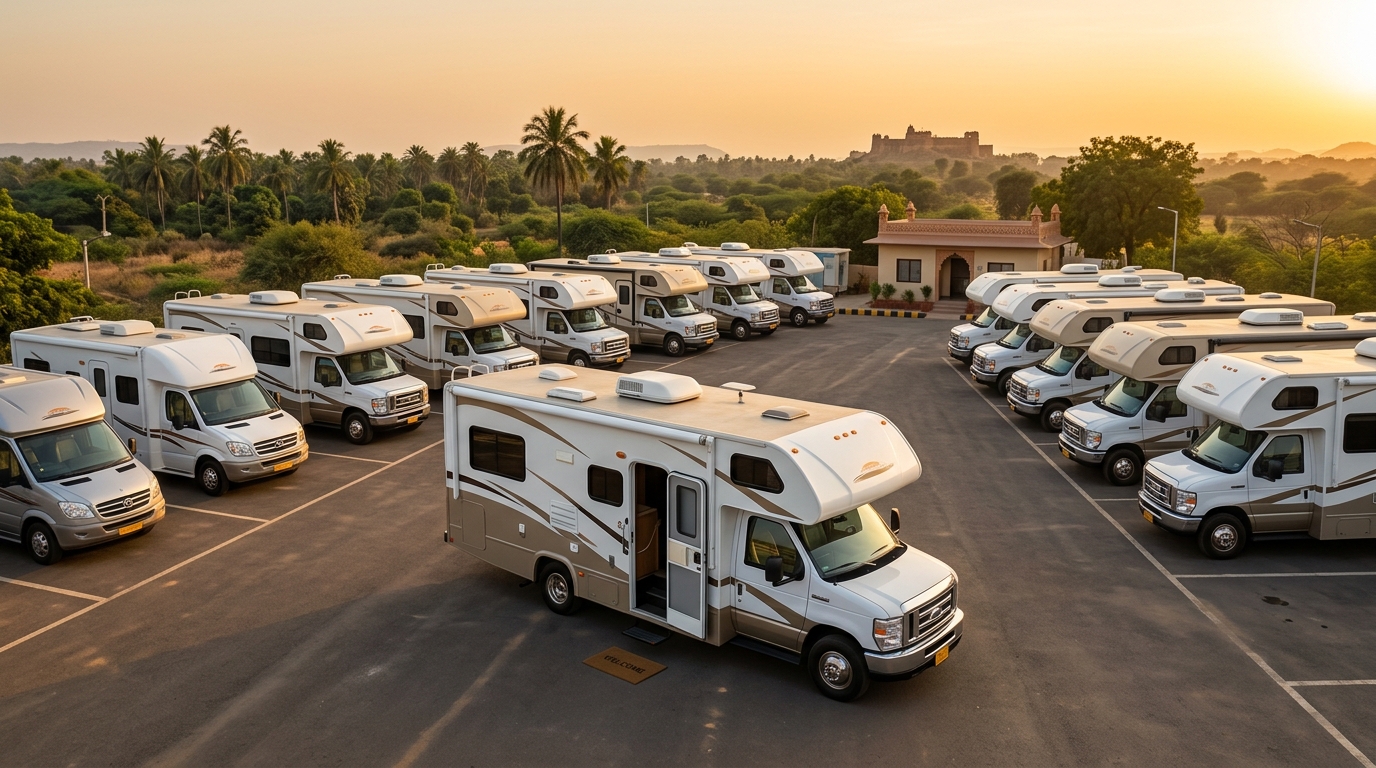
When selecting an RV park or campground in India, prioritize locations offering secure parking, essential amenities, and proximity to attractions or natural beauty. An ideal RV park in India will typically provide basic electricity hookups (usually 230V, Type D/M sockets, so carry universal adapters), access to fresh water, and a designated point for waste disposal (grey/black water), though dedicated dump stations can be rare. Look for sites known for their safety and security, particularly for overnight stays, and those with clear communication channels and helpful staff who can assist with local information or in emergencies. Many emerging RV-friendly spots are often integrated with eco-tourism resorts, adventure activity centers, or farm stays, providing a blend of natural access with hospitality services and a chance to experience local culture. For a curated list of potential spots, consider browsing the routes available on RV PLANET. You can also find information on specific pricing through our Luxury RV Rental in India - Premium Prices 2026 guide. On the routes offered through RV PLANET routes, you can itemize and track every expense along the way for easy budgeting.
Hookups & Amenities — What to Expect
RV hookups and amenities in India are still developing, typically encompassing basic electricity, water, and sometimes waste disposal, with WiFi and laundry less commonly available than in Western countries. Expect 230V, 50Hz electricity; while some modern RV sites might offer universal sockets, carrying universal adapters (Type D/M are common in India) is highly recommended. Be aware that power fluctuations can occur, making a surge protector a wise addition. Fresh water access is usually available for tank refills, but it is strongly advised to filter or boil any water used for drinking and cooking due to varying water quality. Dedicated grey and black water dump stations are infrequent outside of specialized RV parks or major city waste management facilities; RVers often need to rely on their vehicle's self-contained systems or make local arrangements for waste disposal. Mobile data coverage is generally good in populated areas but can be unreliable or non-existent in remote regions, so purchasing a local SIM card is recommended for consistent connectivity. RV park WiFi is a rare luxury. On-site laundry facilities are uncommon, and showers may be available at private campgrounds but often resemble basic Indian-style bathrooms; many RV travelers rely on their onboard facilities. Sourcing propane for RVs can be challenging as local LPG cylinders may not fit foreign connectors, so verify compatibility or plan for alternative cooking methods like electric induction plates if power is stable. To help manage these costs, remember that on the RV PLANET routes offered, travelers can itemize and track every expense along the way for easy budgeting. For ideas you can prep on the road, watch our RV-friendly recipes playlist on YouTube.
Booking Windows & Reservations in India
Booking RV campsites in India is often more flexible than in Western countries, with many spots available last-minute, though advance planning is crucial for popular national park stays or peak seasons. For high-demand destinations such as national parks, popular hill stations, or during major festival seasons, booking a few weeks to several months in advance is recommended to secure preferred spots, especially for forest rest houses. Many private campgrounds and informal sites can often accommodate same-day or next-day bookings, particularly outside peak tourist periods. However, it is always advisable to call ahead before driving directly to a site to confirm availability. National Park campgrounds typically release only a limited percentage (e.g., 25%–30%) of spots for advance reservations, with the remainder available on a first-come, first-served basis. Reassuringly, you will almost certainly find a place — if not at the first campground, then often at a nearby alternative or a local farm stay. Discovering deals and planning your booking window can be simplified by checking our RV Rental Deals in India - Latest Offers 2026 page.
Nearby Supermarkets & Resupply Points
Resupplying your RV in India is generally straightforward in towns and cities, with major supermarket chains and local markets offering a wide range of groceries and essentials. For comprehensive grocery shopping in larger towns and cities, look for national chains such as Reliance Fresh, Big Bazaar, More, or D-Mart, which stock a wide variety of fresh produce, packaged goods, and household items. Smaller towns and villages will feature numerous local 'kirana' (provision) stores, which are excellent for fresh vegetables, fruits, basic staples, and local specialty items. It is always prudent to stock up on non-perishables, essential medications, and sufficient water before heading into remote or mountainous regions, where resupply options will be significantly limited and specialized items hard to find. Planning your route efficiently can also lead to savings, as detailed on our One-Way RV Rental in India - Price Guide 2026.
Best RV Class for Camping in India
The best RV class for camping in India largely depends on your travel itinerary and the diverse terrains you plan to encounter, with smaller, more rugged vehicles often being the most practical choice. Class B Camper Vans are highly recommended for India due to their compact size and superior maneuverability. Bandana's fleet includes Class B Camper Vans averaging 5.8 meters in length, sleeping 3.2 people, and offering good fuel efficiency (typically 8-10 Liter/100 Km). Their agility makes navigating dense city traffic, narrow roads, and finding parking much easier. Semi-integrated motorhomes offer a good balance between comfort and manageability; Bandana's Class SI units average 6.9 meters in length, sleeping 3.8 people, with fuel consumption around 10-11 Liter/100 km. These provide more living space than a camper van while still being manageable on most main roads. For those seeking more space and comfort primarily on well-maintained routes, Class C Alcove or Class A Integrated motorhomes can be considered, though their larger size might present challenges on very narrow, unpaved, or winding mountain roads. Truck Campers are also an excellent option for rugged terrain, offering enhanced off-road capabilities if the base truck is suitably equipped, though they may have higher fuel consumption (12-17 Liter/100 km). For example, a , a Class C motorhome, offers ample space for families and friends. Explore more vehicle options and their suitability through our Family RV Rental in India - Pricing Guide 2026.
How to Save on Campgrounds in India
Saving on RV campgrounds in India is achievable by utilizing available discounts, choosing off-peak travel times, and opting for more budget-friendly camping alternatives. Leveraging specific discount programs offered by rental providers can significantly reduce nightly rates at participating campgrounds, providing a key saving lever for frequent campers. Traveling during shoulder seasons, avoiding peak tourist times (e.g., Diwali, Christmas, summer school holidays in hill stations), will generally result in lower prices for campgrounds and fewer crowds at popular sites. Municipal or regional campgrounds are often more affordable than private resorts or high-end glamping sites, providing essential facilities at a fraction of the cost. Staying longer can also yield savings, as many campgrounds offer weekly or monthly rates that are substantially cheaper per night than daily rates; plan stays of three or more nights when possible to maximize savings. If traveling with a group, inquire about sharing hookups or potential group discounts, which can effectively reduce the individual cost of accommodation. For experienced and self-sufficient RVers, carefully seeking permission for responsible wild camping or farm stays can eliminate accommodation costs entirely, though this requires careful planning for safety, ethics, and local cultural sensitivities.
What do I need to rent an RV in India?
To rent an RV in India, you typically need a valid driver's license, an International Driving Permit (IDP) for foreign nationals, identification documents, and a security deposit. A valid driving license from your home country is essential. For international travelers, an IDP, obtained in your home country before departure, is legally mandatory and must be presented alongside your original national license. Most rental companies require drivers to be at least 21 or 25 years old. A passport (for foreigners) or an Aadhar card/PAN card (for Indian residents) will be necessary for verification. A credit card for payment and a significant security deposit, which is refundable upon the safe return of the vehicle, are standard requirements. It is crucial to thoroughly read and understand the rental agreement, paying close attention to details such as mileage limits, specific insurance coverage, breakdown assistance policies, and any additional documentation required for inter-state travel or entry into protected areas. For insights into costs, consult our RV Rental in India - Prices and Best Deals 2026.
Is RVing popular in India?
RVing is an emerging but rapidly growing travel trend in India, driven by a desire for experiential travel, outdoor adventures, and increased demand for self-contained trips, particularly since the early 2020s. While not as widely adopted as in Western countries, the concept of 'caravanning' or motorhome travel is gaining significant traction, especially among younger generations, families, and adventure enthusiasts seeking unique ways to explore India's diverse landscapes. Several dedicated RV rental companies have recently commenced operations, offering a range of vehicles from compact camper vans to larger luxury motorhomes, catering to this increasing demand. The Indian government is also slowly promoting caravan tourism through various initiatives, including plans to establish more RV-friendly infrastructure, although challenges such as varying road conditions and designated parking facilities continue to evolve. Understanding the best vehicle for your trip is key, as detailed in our Family RV Rental in India - Pricing Guide 2026.
How much does it cost to rent an RV in India?
The cost to rent an RV in India varies significantly based on the RV class, rental duration, season, and included amenities, typically ranging from ₹8,000 to ₹25,000 per day. Smaller camper vans will generally be on the lower end of the price spectrum, while larger Class C Alcoves or luxury Class A Integrated units will command higher daily rates. Longer rental periods often come with discounted daily rates, making extended trips more cost-effective per day. Peak tourist seasons (e.g., October to March, and summer holidays in hill stations) typically see higher rental prices compared to the shoulder or off-seasons. Some rentals might include basic kitchenware, bedding, or even a professional driver, which will affect the overall cost. Beyond the base rental fee, it is crucial to budget for fuel costs (RV fuel consumption typically ranges from 8-17 Liter/100 Km), tolls, potential state entry fees (as some states levy taxes for commercial vehicles), local taxes, and a refundable security deposit. Comprehensive insurance for the rental vehicle and personal health is also a critical consideration. To save money, consider opting for smaller vehicles, traveling during the off-season, planning your route to minimize fuel consumption, and preparing your meals in the RV instead of dining out frequently. You can compare prices across different providers using our RV Rental Deals in India - Latest Offers 2026.
Is RV camping allowed in India?
RV camping is generally allowed in India, but it often requires discretion, local permission, or utilization of designated campgrounds, as explicit RV-specific laws are still evolving. The safest and most legal option is to use established private campgrounds, resort-affiliated RV parking, or forest department rest houses that explicitly permit overnight stays for vehicles. While not strictly illegal nationwide, it is highly recommended to seek permission from local authorities (e.g., police, village head) or landowners before parking overnight in undesignated areas for wild camping or boondocking. This approach is crucial for both personal safety and cultural respect. Camping inside most national parks is restricted to designated areas or requires specific permits, and driving an RV within these sensitive areas may also be subject to additional regulations. Always practice 'leave no trace' principles, respect local customs and privacy, and avoid camping near religious sites without explicit permission. Prioritizing safety is paramount, as isolated spots might not always be secure. For route planning that includes suitable stops, check out RV Rental in India - Prices and Best Deals 2026.
How do I choose the right RV for India?
Choosing the right RV for India involves balancing your comfort needs with the practicalities of navigating the country's diverse terrains, traffic conditions, and developing infrastructure. Consider road conditions, as India's roads vary from excellent national highways to extremely congested city streets, winding mountain passes, and unpaved rural tracks, all demanding careful and adaptable navigation. Smaller, more rugged vehicles like Class B Camper Vans (averaging 5.8m long) or Truck Campers (averaging 5.5m long, good for diverse terrains) are often more suitable for agility and handling rough patches. Denser city traffic, often characterized by chaotic movement and diverse road users (pedestrians, cyclists, animals, auto-rickshaws), can be particularly challenging for larger RVs; compact RVs offer significantly easier driving and parking experiences in urban settings. Match the RV's sleeping capacity (Bandana's fleet ranges from 2.1 to 5.8 average sleeping places) to your group size for optimal comfort and space. If planning for off-grid or wild camping, prioritize RVs with larger fresh water tanks, reliable power systems (solar panels are a significant advantage), and sufficient waste holding capacity, as access to hookups is less common. Consider your luggage, equipment, and water needs against the RV's load capacity. Factor in fuel consumption (Bandana's fleet averages 8-17 Liter/100 Km) for your budget, especially given the potential distances involved in Indian travel. To compare different classes, our Family RV Rental in India - Pricing Guide 2026 offers insights.
Are there luxury RVs for rent in India?
Yes, luxury RVs are increasingly available for rent in India, catering to discerning travelers who seek premium amenities, enhanced comfort, and a high-end road trip experience. These luxury motorhomes, often larger Class A Integrated (averaging 7.5m in length, sleeping 4.4 adults) or high-end Class C Alcove models, come equipped with features such as sophisticated interiors, fully equipped modern kitchens, private bathrooms, efficient air conditioning, advanced entertainment systems, and sometimes even dedicated lounge areas. Many luxury RV rental providers also offer additional premium services, which may include a dedicated professional driver, an onboard chef, or personalized concierge services to further enhance the travel experience. These options are ideal for those who prioritize maximum comfort and convenience while exploring India's diverse landscapes, though they typically come with a higher rental cost and might be less suitable for very remote or challenging road conditions. Explore premium options through our Luxury RV Rental in India - Premium Prices 2026.
What are the best RV rental companies in India?
While the RV rental market in India is still in its nascent stages, a growing number of companies offer vehicles, with 'best' often depending on fleet size, customer service, and geographical coverage areas. Platforms like Bandana, for instance, offer a wide array of RV classes, including popular Class B Camper Vans (255 units), Class SI Semi-integrated (335 units), and larger Class C Alcove (302 units) and Class A Integrated (55 units) motorhomes, providing diverse options. When choosing a rental company, it is essential to evaluate their fleet diversity, the comprehensiveness of their insurance offerings (both for the vehicle and personal liability), the reliability of their breakdown assistance network, and overall customer reviews. Look for companies that offer transparent pricing, clear pickup/drop-off procedures, and possess local expertise to provide valuable advice on optimal routes, necessary permits, and specific challenges of driving an RV on Indian roads. For price comparisons and deals, see our RV Rental in India - Prices and Best Deals 2026.
What are the road conditions like for RVs in India?
Road conditions for RVs in India are highly variable, encompassing excellent national highways, extremely congested city streets, winding mountain passes, and unpaved rural tracks, all demanding careful and adaptable navigation. Major national highways are generally well-maintained and suitable for all RV classes, though speed limits can vary and unexpected obstacles such as animals, pedestrians, and broken-down vehicles are common. Dense city traffic, often chaotic and characterized by a multitude of diverse road users (pedestrians, cyclists, animals, auto-rickshaws), can be particularly challenging for larger RVs; smaller Class B Camper Vans offer significantly better maneuverability in these environments. Many rural roads can be narrow, unpaved, or poorly maintained. Mountain passes in regions like the Himalayas are frequently winding, steep, and sometimes prone to landslides, requiring cautious driving and experience with larger vehicles. Be prepared to share the road with a wide mix of traffic, including slow-moving vehicles, animal-drawn carts, and livestock; defensive driving and constant vigilance are crucial. While improving, road signage can sometimes be inconsistent or exclusively in local languages, making reliable GPS navigation (with offline maps) and a good co-pilot essential. For planning your routes effectively, utilize the resources on RV PLANET.
What are the rules for driving an RV in India?
Driving an RV in India requires adherence to general Indian traffic laws, which are often less strictly enforced than in some Western countries, combined with specific considerations for larger vehicles. A valid driving license from your home country and an International Driving Permit (IDP) are legally required for foreign nationals driving in India. Drive on the left side of the road. Seatbelts are mandatory for front-seat occupants. Speed limits vary and are generally posted, though often not strictly adhered to. Honking is customary and primarily used as a signal of presence or to overtake, not necessarily aggression. Be acutely aware of your RV's dimensions (height, width, length), as some bridges, underpasses, or narrow village lanes may have restrictions; Bandana's fleet ranges from 5.5m to 7.5m average length. For specific regions (e.g., some parts of the Northeast or certain tribal areas), special permits might be required, even for Indian citizens; verify this for your planned route well in advance with your rental company or local authorities. India has a strict zero-tolerance policy for driving under the influence of alcohol. It is also illegal to use a mobile phone while driving. Be mindful and respectful of pedestrians, cyclists, and animals on the road. While yielding to larger vehicles is often practiced, defensive driving and anticipating unexpected movements are key to safe navigation. To ensure you have all necessary documentation, consult our RV Rental India - Complete Guide 2026.
What is the best time to visit India by RV?
The best time to visit India by RV is generally from October to March, when the weather across most of the country is pleasant and highly conducive for comfortable road travel. During these months, the northern plains and central India experience mild, dry winters, making it ideal for exploring cultural sites, national parks, and desert regions like Rajasthan. Coastal areas such as Goa and Kerala enjoy sunny days and comfortable temperatures, perfect for beachside camping and leisurely drives. However, if your itinerary includes the Himalayan regions, the summer months (April to June) are more suitable, as mountain passes are typically clear of snow and fully accessible for RVs. The monsoon season (June to September) can bring heavy rainfall, which may make some roads difficult to navigate and significantly increases the risk of landslides, making it generally less ideal for RV travel, particularly on unpaved sections or winding mountain routes. Planning your trip during the optimal season can be made easier with insights from our RV Rental in India - Prices and Best Deals 2026.
What are some popular RV routes in India?
Popular RV routes in India offer diverse landscapes and cultural experiences, ranging from iconic historical circuits to scenic coastal drives and challenging mountain expeditions. The Golden Triangle (Delhi-Agra-Jaipur) is a classic route for cultural exploration, seamlessly connecting India's most iconic historical sites; this route is best navigated with smaller to medium RVs due to dense city traffic. The Rajasthan Circuit allows exploration of majestic desert forts and vibrant cities like Udaipur, Jodhpur, and Jaisalmer, offering a good mix of well-maintained highways and charming rural roads. Himalayan Foothills routes (Himachal Pradesh & Uttarakhand), connecting cities like Delhi to Manali, Shimla, or Rishikesh, offer breathtaking mountain scenery but involve challenging winding roads best suited for Class B or smaller Class SI RVs. Goa & Karnataka Coast routes are ideal for beach lovers, offering picturesque coastal drives and numerous opportunities for serene seaside camping and exploring fishing villages. Kerala Backwaters offer exploration of serene backwaters and lush greenery, though direct RV access to the water's edge might be limited, requiring parking further inland. While Google Maps is widely used and effective, it is highly recommended to download offline maps due to potential mobile data availability issues in remote areas; a dedicated GPS device can also be a valuable backup. For curated route suggestions, explore RV PLANET and benefit from a 25% planning discount by using rvplan.net.
Do RV rentals in India come with a driver?
Many RV rental companies in India offer the option to include a professional driver, which is a popular and often recommended choice for both international visitors and those unfamiliar with local driving conditions. Opting for a dedicated driver can significantly enhance your travel experience by expertly navigating dense traffic, understanding local customs and road nuances, and handling the complexities of Indian roads and parking. While some companies do offer self-drive options (requiring an IDP for foreign nationals), having a driver provides considerable peace of mind, allowing passengers to fully immerse themselves in the scenery and cultural experiences without the stress of driving in a new environment. The inclusion of a driver will add to the overall rental cost but is frequently considered a worthwhile investment, especially for first-time RVers in India or those planning extensive travel across varied and challenging terrains. For family trips, our Family RV Rental in India - Pricing Guide 2026 can help you budget.
Can I travel cross-country in an RV in India?
Yes, you can absolutely travel cross-country in an RV in India, offering an unparalleled opportunity to experience the subcontinent's vast and diverse landscapes at your own pace. Extensive cross-country RV travel requires meticulous planning, especially concerning route selection, anticipating varying road conditions, identifying reliable fuel stops, and understanding potential state entry regulations. Be aware that certain regions, particularly in the Northeast or some border areas, might require special permits for entry. Additionally, some states may impose specific road taxes or entry fees for commercial vehicles, under which your rental RV might be classified. Consider the type of RV that best suits your entire route; a robust Class B Camper Van or a smaller Class SI Semi-integrated model might be more versatile and resilient for India's varied terrains than a larger luxury RV. Plan your resupply points for fresh water, food, and propane well in advance, as availability can vary significantly between urban centers and more remote areas. Emphasize comprehensive safety protocols, including having emergency contacts and knowing your rental company's breakdown assistance network. Always be culturally sensitive, particularly when parking overnight or interacting with local communities, to ensure a respectful and safe journey. For tips on planning longer trips, check out our Weekly RV Rental in India - Pricing 2026.
What kind of insurance do I need for an RV rental in India?
For an RV rental in India, you typically need comprehensive vehicle insurance from the rental provider, and it is highly advisable to secure personal travel and health insurance, especially for international travelers. The rental company will provide basic third-party liability insurance, which covers damages to other vehicles or property in the event of an accident. Many also offer Collision Damage Waiver (CDW) or Loss Damage Waiver (LDW) plans, often with a deductible, to cover damage to the RV itself; thoroughly understand what is covered and what your financial liabilities are. For international travelers, comprehensive travel insurance that includes medical emergencies, hospitalization, and emergency evacuation is absolutely critical. India's healthcare system can be complex, and robust personal health coverage provides invaluable peace of mind. Consider obtaining additional coverage for your personal belongings stored inside the RV, as standard rental insurance typically does not cover theft or damage to your valuables. Ensure your rental agreement explicitly includes access to a reliable breakdown assistance network across India, which is crucial given the diverse road conditions and potential for mechanical issues, particularly when traveling in remote areas. For detailed cost breakdowns including insurance, refer to our RV Rental in India - Prices and Best Deals 2026.
Are there specific apps for RV travel in India?
While there aren't many dedicated 'RV park' specific apps like those common in Western countries, several general travel and navigation apps are indispensable for RV travel in India. Google Maps is essential for turn-by-turn navigation, real-time traffic updates, and finding points of interest, fuel stations, and restaurants; it is highly recommended to download offline maps for areas with potentially patchy mobile data coverage. MAPS.ME or OsmAnd are excellent alternatives for offline navigation and provide detailed maps, which are particularly useful in remote regions where mobile data might be unreliable. In urban areas, local food delivery apps such as Zomato or Swiggy are convenient for ordering food directly to your RV, offering a wide array of dining options. UPI payment apps (e.g., Google Pay, PhonePe, Paytm) are critical for cashless transactions, as India heavily relies on digital payments, accepted even in many smaller establishments. Stay updated on current and forecasted weather conditions using weather apps, especially if traveling to mountainous regions or during the monsoon season, where conditions can change rapidly. Familiarize yourself with local emergency numbers (e.g., 112 for all-in-one emergency services) and consider any region-specific apps for breakdown assistance or safety, though a reliable assistance network from your rental company is paramount. For route planning assistance, remember to visit RV PLANET.
What You Shouldn't Miss
- Drive the Himalayan Foothills: Navigate the winding mountain roads of Himachal Pradesh or Uttarakhand for breathtaking vistas and a true adventure. Consider a nimble Class B camper van for easier handling on these routes.
- Explore Rajasthan's Deserts: Journey through the vibrant desert landscapes, visiting majestic forts and experiencing the rich culture of cities like Jaisalmer and Jodhpur.
- Coastal Cruising in Goa: Enjoy the scenic drives along the Konkan coast, finding beachside camping spots and soaking in the relaxed atmosphere.
- Discover the Golden Triangle: Embark on a classic historical tour connecting Delhi, Agra, and Jaipur, immersing yourself in India's iconic heritage sites.
- Experience Kerala's Backwaters: Traverse the serene backwaters and lush greenery of Kerala, though be prepared to park slightly inland from the water's edge.
- Expert Insights from Avi Bandana: Top 5 Adventures: For personal recommendations and unique perspectives on exploring India, look for specific guides featuring Avi Bandana's top adventures.
Final Thoughts
Embarking on an RV adventure in India promises a journey filled with incredible diversity, from the majestic Himalayas to the sun-drenched beaches and historic deserts. While RV infrastructure is still developing, the opportunities for unique and immersive travel are immense. With careful planning, choosing the right vehicle, and embracing the local rhythm, your rented RV will be your gateway to experiencing the soul of India.
Remember to pack smart, stay informed about local conditions, and most importantly, travel slowly to truly connect with the culture, the food, and the breathtaking scenery. We're here to support you every step of the way, ensuring your RV rental experience is seamless and unforgettable. Get inspired for your next trip!
Discover top destinations, planning tips, all in one place! Plan a trip itinerary in advance with minimal effort and maximum enjoyment. Let us help you find the perfect RV for your Indian adventure.
Compare RV Rental Prices for India
