In This Guide
- Where to Camp in Iceland — Top Options
- Campground Types in Iceland (National, Private, Wild)
- Featured RV Park or Campground in Iceland
- Hookups & Amenities — What to Expect
- Booking Windows & Reservations in Iceland
- Nearby Supermarkets & Resupply Points
- Best RV Class for Camping in Iceland
- How to Save on Campgrounds in Iceland
- How much does it cost to rent an RV in Iceland
- Can you RV around Iceland
- Is it worth it to RV in Iceland
- What is the best time to RV in Iceland
- Is it easy to find campsites in Iceland
- What are the rules for camping in Iceland
- Do I need a 4x4 campervan for Iceland
- What should I pack for RVing in Iceland
- How long does it take to drive around Iceland in an RV
- How do you dispose of human waste in Iceland
- Can you drink tap water in Iceland
- Is it easy to drive an RV in Iceland
- Are there unique experiences RV travel offers in Iceland
- How to stay warm in an RV in Iceland winter
- What are F-roads in Iceland
Where to Camp in Iceland — Top Options
Camping in Iceland is best experienced at designated sites along popular routes like the Golden Circle, South Coast, and the full Ring Road, with options ranging from well-equipped facilities near towns to more basic, scenic spots in nature. These locations are strategically chosen to offer access to Iceland's breathtaking natural attractions, making your RV journey both convenient and visually stunning.
The Golden Circle route is a fantastic starting point, offering convenient access to iconic attractions such as Gullfoss waterfall, the Geysir geothermal area, and the historic Þingvellir National Park. You'll find several well-situated campgrounds that provide a comfortable base for exploring these natural wonders.
For those drawn to the dramatic landscapes of the South Coast, you'll find strategic locations for exploring breathtaking sights like Seljalandsfoss and Skógafoss waterfalls, the famous Reynisfjara black sand beach, and various glacier tongues. Many campsites here offer spectacular views and easy access to these must-see destinations.
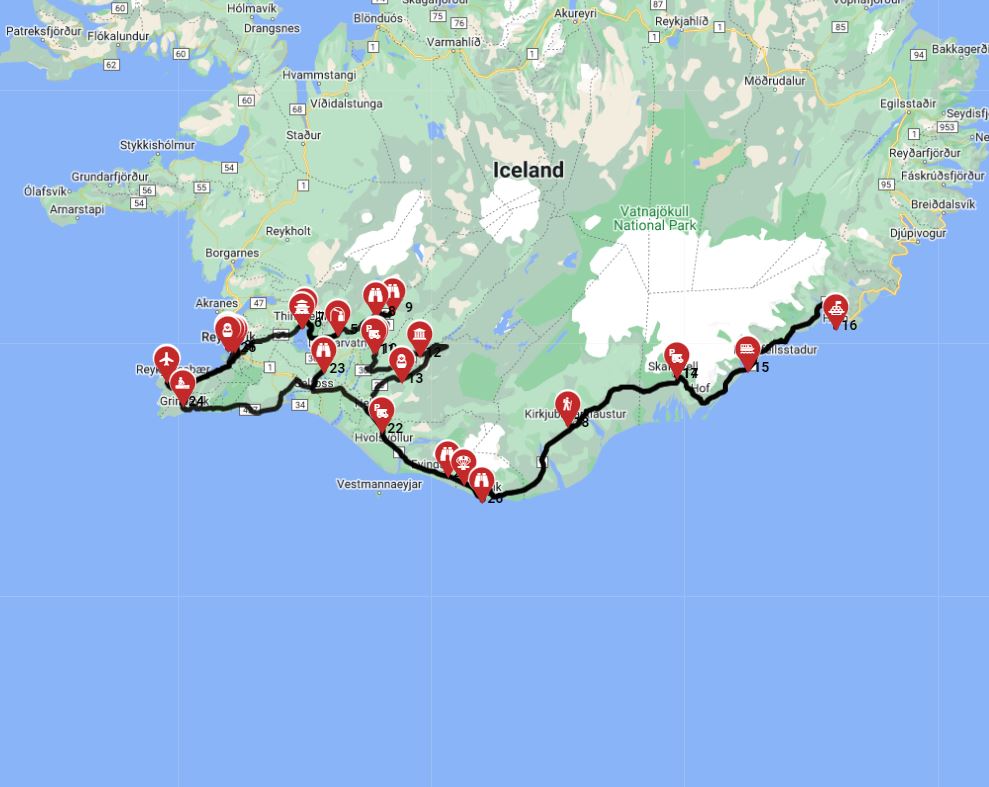
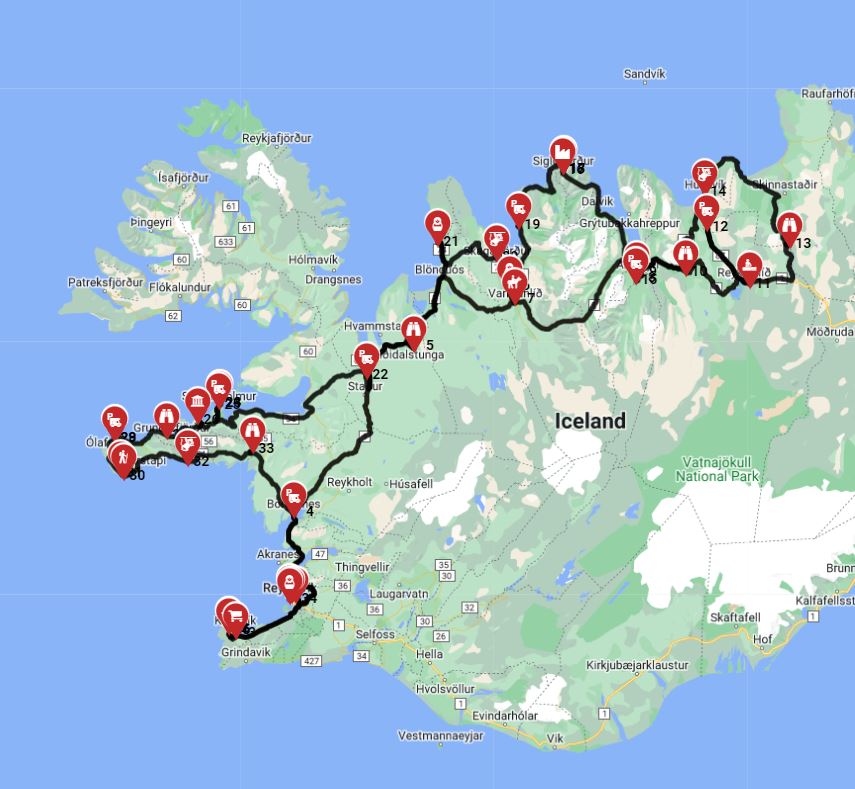
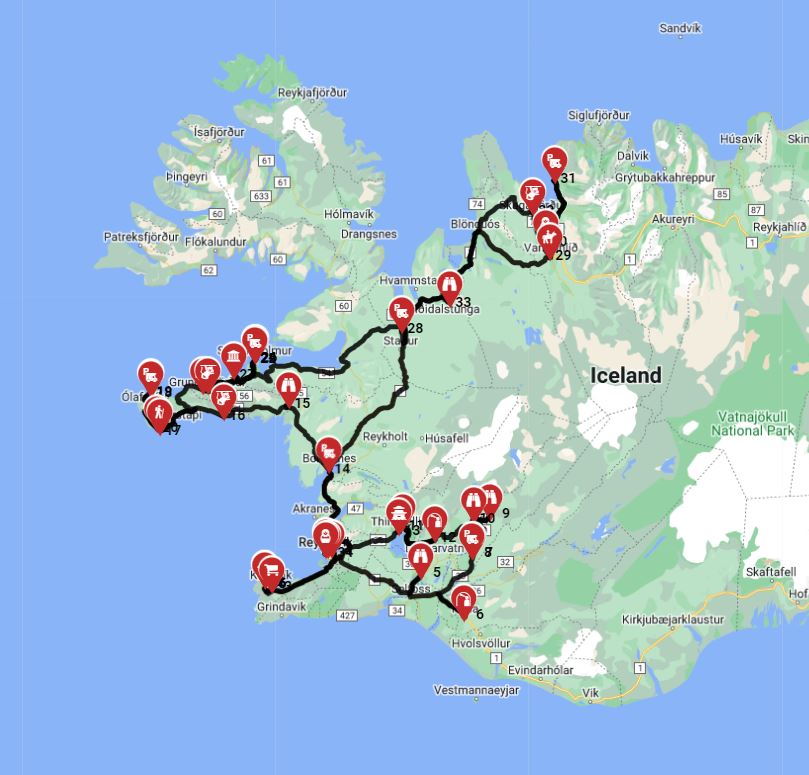
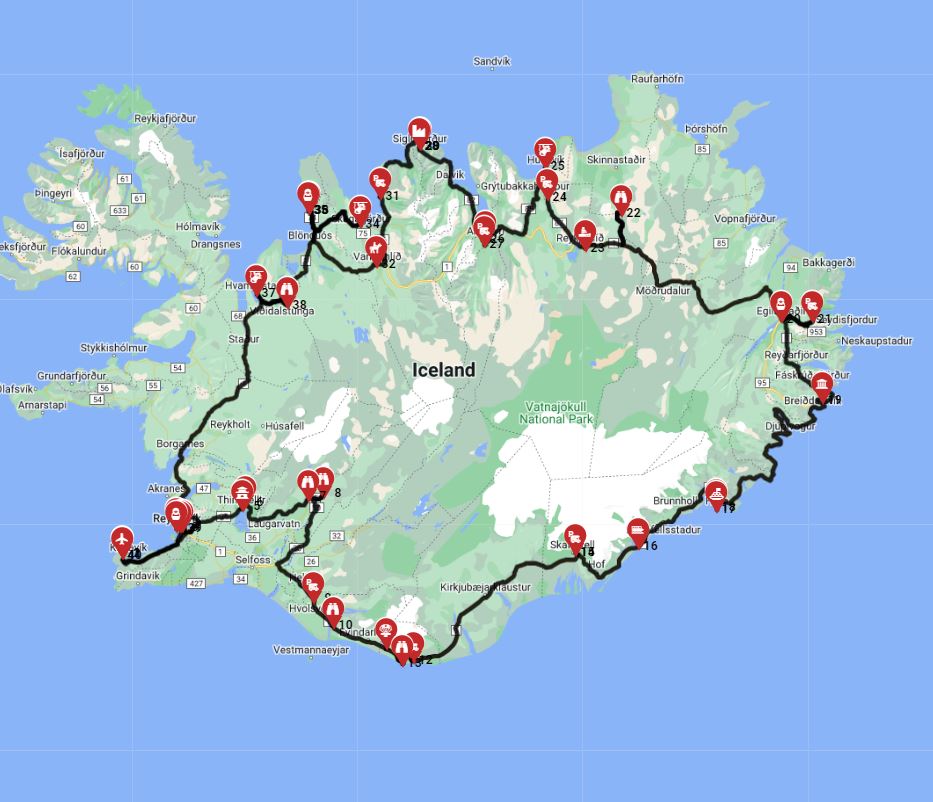
The Ring Road (Route 1), which circumnavigates the entire island, features a comprehensive network of campsites in most towns and key scenic areas. This makes it an ideal choice for extended tours, allowing you to experience the diverse beauty of Iceland at your own pace. With over 170 registered campsites, you'll find plenty of opportunities to pull over and immerse yourself in the landscape. For instance, the "
Campground Types in Iceland (National, Private, Wild)
Iceland offers a variety of camping experiences, primarily through its national park campgrounds and numerous private sites. It's crucial to understand that wild camping in RVs and campervans is highly restricted and largely prohibited to protect the country's fragile environment, meaning overnight stays are generally required at official locations only.
National Park Campgrounds are often situated in breathtaking natural settings, providing basic facilities and serving as excellent bases for hiking and nature exploration within protected areas like Þingvellir and Skaftafell. These sites offer a more immersive experience in nature.
Private Campgrounds are found in or near most Icelandic towns and cities. These typically offer a broader range of amenities, such as electrical hookups, hot showers, and sometimes laundry facilities, with service levels and prices varying. For finding these and understanding their offerings, resources like Tjalda.is are invaluable.
Wild Camping (Freedom Camping), as mentioned, is largely forbidden for RVs and campervans in Iceland. Overnight stays outside designated campsites are illegal on private land without explicit permission and are generally prohibited on public land. This strict policy is in place to safeguard Iceland's delicate ecosystems.
Featured RV Park or Campground in Iceland
When selecting an RV park in Iceland, travelers should prioritize sites that offer a balance of natural beauty with essential amenities and convenient access to key attractions. Many highly-rated campsites throughout Iceland, including those near popular hubs like Reykjavík, Akureyri, or along the scenic South Coast near Vík or Höfn, are renowned for their stunning views and proximity to major tourist points of interest.
Prioritize sites that provide critical amenities such as electrical hookups, well-maintained waste disposal facilities (for both grey and black water), and clean shower and toilet blocks. These are particularly crucial for comfort during cooler travel periods and for maintaining your RV.
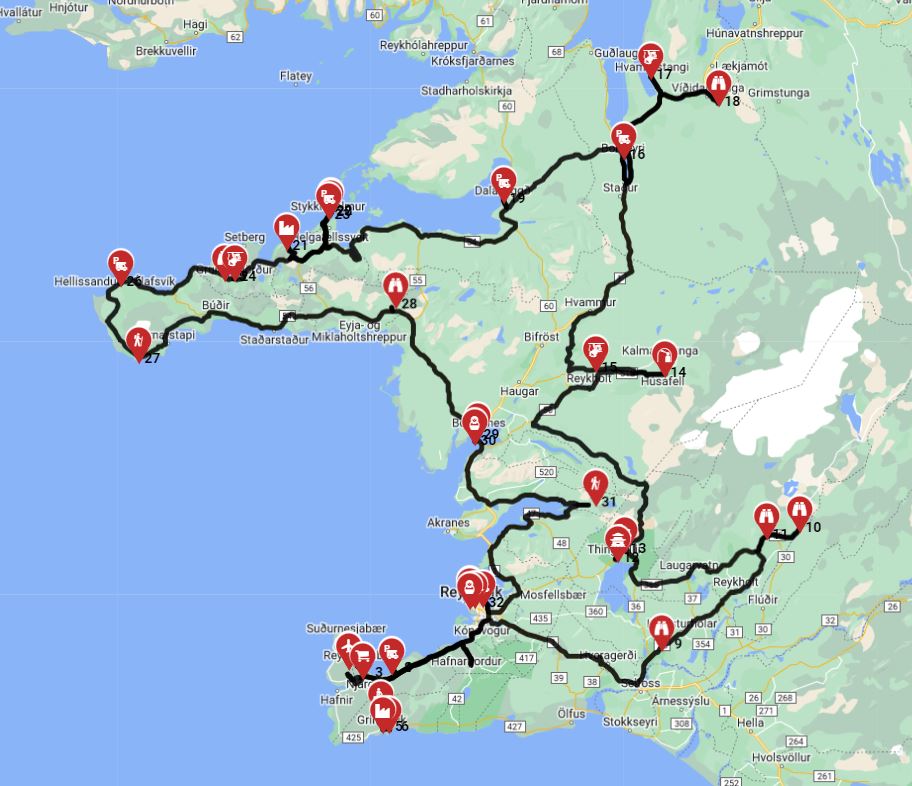
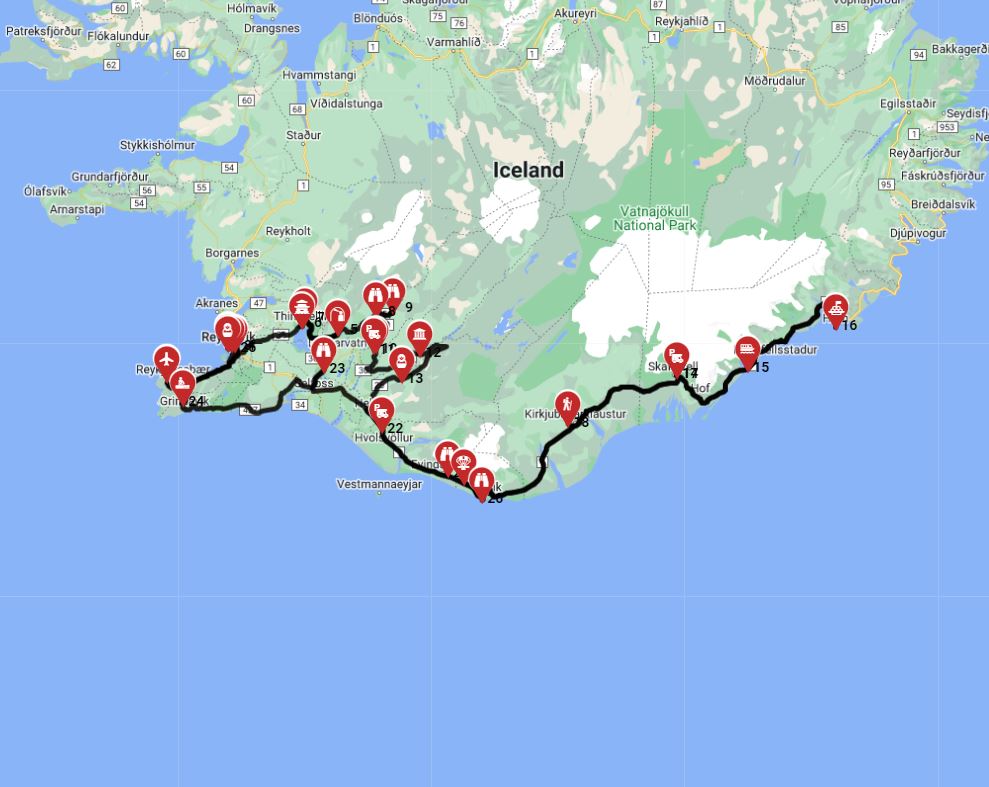
For a well-rounded experience, consider campgrounds that act as excellent bases for exploration. For example, the campgrounds featured along the "
Hookups & Amenities — What to Expect
When it comes to hookups and amenities, RV campsites in Iceland generally offer a good range of services, with electrical hookups (230V, CEE blue plug) and fresh water access being quite common. However, it's worth noting that some services, such as hot showers and laundry facilities, may incur extra fees, so always be prepared for this.
Electrical Hookups are standard in Iceland, utilizing a 230V system with a two-pin CEE blue plug. If your RV's system differs, ensure you bring the appropriate adapter. The majority of RVs rented in Iceland are equipped with integrated heating systems, typically diesel-powered, which are highly effective and necessary for comfort, especially during colder nights or off-season travel.
Water and Waste Disposal facilities are widely available and well-maintained at most official campgrounds across the country. You can expect to find fresh water refill stations and designated dump stations for both grey water (from sinks and showers) and black water (toilet waste). Many larger, more developed private campsites might also offer Wi-Fi connectivity, though it can be sporadic or available for a fee. Laundry facilities are less common and are usually found only at the more established campgrounds. On the routes offered through RV PLANET routes, you can itemize and track every expense along the way for easy budgeting.
While modern and clean shower and toilet blocks are common, remember that hot showers often require payment, usually via coins or sometimes card, and may have time limits. Booking campgrounds in advance, especially during the peak summer season, is highly recommended, though spontaneous travelers can often find spots by calling ahead. For peace of mind, consider upgrading to a top-level deductible to cover any unforeseen events.
Booking Windows & Reservations in Iceland
For RV travel in Iceland, planners should ideally book campgrounds well in advance, particularly during the peak summer season (June to August). However, spontaneous travelers can often find availability by calling ahead, especially during the shoulder or off-seasons. The Icelandic Camping Card can also significantly simplify this process, offering access to a network of over 40 participating campsites for a set period.
During the Peak Season (June-August), booking 3-6 months in advance is highly recommended for popular campsites, especially those located in high-demand areas like the Golden Circle and the South Coast. This is due to limited availability and high demand.
In the Shoulder Season (May, September-October), there is generally more flexibility. While booking ahead for prime spots is still advisable, it's often possible to find same-day or next-day availability. This period offers a good balance of decent weather and fewer tourists.
During the Off-Season (Winter), many campsites close, but those that remain open usually have ample space. Booking a day or two ahead is typically sufficient for winter camping. It’s important to note that many national park campgrounds only release about 25%-30% of their spots for advance reservations, leaving the majority available on a first-come, first-served basis.
While specific highly sought-after sites might be full, you will almost certainly find a place—if not at the first campground, then at the next. Always recommend calling ahead before driving long distances to a specific site, especially outside of peak season.
Nearby Supermarkets & Resupply Points
Resupplying your RV in Iceland is a straightforward process, thanks to the presence of major supermarket chains like Bónus, Krónan, and Nettó, which are conveniently located in towns along the Ring Road and popular tourist routes. These stores offer a wide range of groceries, fresh produce, and other travel essentials, making it easy to keep your pantry stocked.
Bónus and Krónan are known for being budget-friendly options, easily recognizable by their distinctive pig logo (Bónus) and orange branding (Krónan). They provide competitive prices on a wide selection of items, making them excellent choices for stocking up.
Nettó is another common chain that offers a good variety of everyday goods. It often features more extended opening hours than the discount stores, which can be very convenient for later resupply stops.
You’ll find that most towns, even smaller ones located off the main routes, will have at least one grocery store. This widespread availability ensures you can regularly and conveniently replenish your food, water, and other necessary travel supplies throughout your Icelandic RV adventure.
Best RV Class for Camping in Iceland
For camping in Iceland, Class B Camper Vans or Class SI Semi-integrated RVs are often the most suitable choices, as they offer an excellent balance of maneuverability with essential comfort and amenities. These vehicle classes are well-suited to navigating Iceland's roads and accessing various campsites.
Class B Camper Vans, typically averaging 5.8m in length and accommodating around 3-4 sleeping places, are ideal for couples or solo travelers. Their compact size facilitates easy driving and parking in smaller campsites or urban areas. Bandana's fleet of these vans generally consumes about 8-10 Liters/100 Km, making them quite fuel-efficient.
Class SI Semi-integrated RVs, typically around 6.9m in length and offering about 3-4 sleeping places, provide more space and comfort than camper vans, which is beneficial for small families or groups. These vehicles remain manageable on Iceland's roads, offering a good balance of living amenities and practicality. Fuel consumption is usually around 10-11 Liters/100 km.
For those planning to explore Iceland's more rugged terrain, including the interior highlands via F-roads (which are restricted to 4x4 vehicles), a 4x4 Truck Camper could be an excellent choice. Bandana's fleet in this category averages 5.5m in length, accommodates 2-3 people, and has a fuel consumption of 12-17 Liters/100km, offering superior off-road capability combined with compact living space.
How to Save on Campgrounds in Iceland
To significantly save on campground costs in Iceland, consider purchasing a Camping Card, traveling during the shoulder season, opting for municipal sites, and taking advantage of weekly rates. These strategies can help make your RV trip more budget-friendly without sacrificing the experience.
The Camping Card is a major saving lever, offering unlimited stays at a network of over 40 participating campsites across Iceland for up to 28 nights within a specific season. It typically covers two adults and up to four children under 16, simplifying campsite access and costs.
Traveling during the Shoulder Season (May, September) means both RV rental prices and campground fees are generally lower compared to the peak summer months. This period also offers fewer crowds and excellent opportunities for unique experiences like Northern Lights viewing.
Municipal and Regional Campgrounds often provide more basic facilities but at a lower price point than larger, private resort-style campgrounds. These can be a great way to save money while still enjoying a comfortable stay.
Many campgrounds offer discounts for longer stays, such as rates for 3 or more nights or weekly rates that can significantly reduce the per-night cost. If traveling with another RV or campervan, some sites might allow two vehicles to share a single electric hookup at a reduced rate for the second vehicle, another simple way to manage expenses.
How much does it cost to rent an RV in Iceland
Renting an RV in Iceland typically ranges from $100-$400+ per day, but the total cost of an RV trip significantly includes additional expenses for fuel, campsite fees, comprehensive insurance, and food, which can add substantial amounts to the overall budget. Understanding these ancillary costs is key to accurate budgeting for your Icelandic adventure.
Rental Fees vary widely based on the RV class (e.g., camper van vs. larger Class C motorhome), the season (peak summer is the most expensive), and the rental duration. Booking early often secures better rates, so planning ahead is beneficial.
Fuel Costs are a major consideration as Iceland has high fuel prices. Expect average fuel consumption around 10-12 Liters/100 km for most RVs (Bandana's Class SI typically averages 10-11 Liters/100km), making fuel a significant expense, especially for a Ring Road trip.
Campsite Fees can range from approximately €15-€30 per night per vehicle, with additional costs often applying for amenities like hot showers (€3-€5), electrical hookups (€5-€10), and laundry facilities. Plan accordingly for these daily expenses.
Insurance is essential for peace of mind. Standard rental insurance might not cover all potential damages (e.g., ash and sand damage, F-road incidents), so consider comprehensive insurance packages for better protection. For finding campsites and tracking all trip expenses, we recommend using RV PLANET routes, which allows travelers to itemize and track every expense along the way for easy budgeting.
Don't forget to factor in costs for desired Activities & Tours, such as glacier hikes, whale watching, or entry fees to geothermal spas. Additionally, be aware of potential Hidden Costs like one-way rental fees, charges for additional drivers, specific cleaning fees, and penalties for late returns or excessive mileage.
Can you RV around Iceland
Yes, RV travel is a highly popular and recommended way to explore Iceland, offering unparalleled flexibility to discover its diverse landscapes. Careful planning for the country's unique weather and road conditions is essential for a smooth journey. The flexibility an RV provides allows you to set your own schedule, make spontaneous stops at scenic viewpoints, and adapt your itinerary based on weather changes or personal interests.
The Ring Road (Route 1), which circles the entire island, is predominantly paved and easily traversable by most 2WD RVs, connecting virtually all major attractions and towns. This makes circumnavigating the island in a rented RV a very feasible and rewarding experience. The vast majority of Iceland's popular sights, including waterfalls, glaciers, and geothermal areas, are accessible via paved roads or well-maintained gravel roads suitable for 2WD RVs.
However, be aware of F-Roads, which are certain highland roads strictly restricted to 4x4 vehicles and often require specific insurance coverage. Standard 2WD RVs are prohibited on these routes, so always plan your route to avoid them unless you have a suitable 4x4 vehicle. Iceland's weather can be highly unpredictable, with strong winds, rain, and even snow possible throughout the year. RV travelers must be prepared for these conditions and diligently monitor forecasts and road conditions via road.is.
Is it worth it to RV in Iceland
RV travel in Iceland is highly worth it for those seeking flexibility, cost savings on accommodation, and a deeper connection to nature. While the upfront rental and fuel costs might be higher compared to car rental with separate hotel stays, the overall experience often justifies the investment.
The flexibility and freedom an RV provides are unmatched. You can adjust your itinerary on the fly, stay longer at favorite spots, and actively chase good weather or the elusive Northern Lights, making spontaneous discoveries part of your adventure. Combining transportation and lodging into one package often makes RV travel more economical than booking separate car rentals and hotels, especially for families or groups.
RVing allows you to connect more closely with nature. Wake up to unparalleled, ever-changing views of glaciers, volcanoes, or the dramatic coastline right outside your window, fostering an intimate and personal connection with Iceland's raw beauty. The ability to carry and cook your own food also significantly reduces dining costs, which can be substantial at Icelandic restaurants.
However, consider the factors like high fuel prices and significant rental costs, particularly during peak season. Driving a larger vehicle on Iceland's sometimes narrow roads or in strong winds requires confidence and experience. If these factors align with your travel style and budget, then RVing in Iceland is undoubtedly a rewarding choice.
What is the best time to RV in Iceland
The best time to RV in Iceland is generally during the summer months (June to August) for mild weather and long daylight hours, though the shoulder seasons (May, September) offer fewer crowds and excellent opportunities for Northern Lights viewing. Each season provides a distinct Icelandic experience for RV travelers.
Summer (June-August) features the longest daylight hours, including the magical midnight sun, mildest temperatures (typically 10-15°C), and nearly all roads, including most F-roads, are open. This is the most popular time, so expect larger crowds and higher prices for both rentals and campsites. Booking well in advance is essential for this period.
The Shoulder Seasons (May, September) offer a sweet spot with decent weather, fewer tourists, and more affordable prices. May brings melting snow and blossoming landscapes, while September showcases vibrant autumn colors and the first chances to witness the Northern Lights. Be aware that some F-roads may still be closed in early May or begin closing in late September.
Winter (October-April) presents challenging but uniquely rewarding conditions. You'll find stunning snowscapes and the best opportunities to witness the aurora borealis. However, many campsites are closed, driving conditions can be severe (ice, snow, high winds), and daylight hours are very short. Winter travel requires specific winter-equipped RVs and experienced drivers.
Is it easy to find campsites in Iceland
Finding campsites in Iceland is generally quite easy due to a well-distributed network of over 170 registered sites. However, booking ahead is highly recommended during the peak summer months to secure spots at popular locations.
Campsites are strategically located along major routes like the Ring Road and near popular attractions, ensuring convenient access throughout your journey. During July and August, however, highly sought-after sites, especially those near the Golden Circle or along the South Coast, can fill up quickly. Arriving early or securing reservations in advance is crucial during these busy months.
It becomes much easier to find space without reservations during the shoulder months and winter. Many sites operate on a first-come, first-served basis outside of peak demand. Utilizing dedicated apps like Park4Night or Campercontact can help you locate campsites, check amenities, and verify operational statuses, which is particularly useful when traveling outside of the main tourist season.
The Icelandic Camping Card simplifies the process significantly by granting access to many sites within its network, although you typically still need to check in upon arrival.
What are the rules for camping in Iceland
The primary rule for camping in an RV in Iceland is to only stay overnight at officially designated campsites, as wild camping is largely prohibited. This strict policy is in place to protect the country's fragile environment and preserve its natural beauty for future generations.
It is legally mandated to camp in an RV only at registered campgrounds or specific designated areas. Unless you have explicit, written permission from the landowner for private land, overnight stays are not permitted elsewhere. Iceland's nature is incredibly delicate, so always adhere to marked trails, never drive off-road, and strictly follow a 'leave no trace' principle by taking all your trash with you.
Waste Disposal is a critical aspect of responsible RV travel. Always use designated dump stations at campgrounds for both grey and black water. Improper disposal is illegal, environmentally damaging, and can lead to significant fines. Similarly, be mindful of using public toilets available in towns, gas stations, and visitor centers when convenient to minimize the frequency of emptying your RV's tanks.
Fires are generally prohibited throughout Iceland outside of specific, designated fire pits at a few campgrounds. Rely on your RV's cooking facilities instead. Always respect local regulations, as they can vary slightly between municipalities and national parks. For ideas you can prep on the road, watch our RV-friendly recipes playlist on YouTube.
Do I need a 4x4 campervan for Iceland
A 4x4 campervan is only necessary in Iceland if you specifically plan to drive on restricted F-roads in the highlands. For exploring the main Ring Road and popular attractions, a standard 2WD RV is perfectly sufficient and often more cost-effective.
The Ring Road and Major Routes, including the Golden Circle, South Coast, and Snaefellsnes Peninsula, are predominantly paved or consist of well-maintained gravel roads that 2WD vehicles can handle with ease. These routes connect most of Iceland's key sights and towns.
However, F-roads, the unpaved mountain roads leading into Iceland's interior highlands, are legally restricted to 4x4 vehicles only. These roads can feature challenging conditions like loose gravel, sharp rocks, and unbridched river crossings. Attempting to drive a 2WD RV on an F-road can void your rental insurance and result in substantial fines, not to mention the risk of getting stuck or damaging the vehicle.
While a 4x4 provides superior traction in challenging conditions like snow or mud, even 2WD RVs can navigate most Icelandic weather with appropriate caution and, in winter, with studded tires. The decision factor hinges on your itinerary: if exploring the remote highlands via F-roads is a priority, a 4x4 RV or a truck camper is indeed a requirement.
What should I pack for RVing in Iceland
When packing for RVing in Iceland, prioritize versatile layers of warm, waterproof, and windproof clothing. Essential navigation and safety gear are also crucial to adapt to the country's famously unpredictable weather and ensure a safe journey.
Clothing: Layers are key for adapting to rapid temperature changes. Include base layers (merino wool is excellent), mid-layers (fleece or down jackets), and a waterproof and windproof outer shell jacket and pants. Don't forget wool socks, a warm hat, gloves or mittens, and a scarf, even during summer months, as temperatures can drop quickly.
Footwear: Sturdy, waterproof hiking boots are essential for exploring trails. Waterproof sandals or flip-flops are useful for hot springs or quick trips outside the RV.
RV Essentials: Bring offline maps (e.g., Google Maps, Maps.me) and/or a reliable GPS device, as cell service can be spotty in remote areas. For your self-catering experience, pack basic spices, sturdy reusable bags, and an insulated coffee mug. A European power adapter (CEE blue plug for hookups) is necessary for electrical connections, and a portable power bank is useful for charging devices on the go.
Safety & Personal Items: A comprehensive first-aid kit, an emergency roadside kit, a bright headlamp, and a fully charged phone are crucial. Don't forget a swimsuit for Iceland's numerous hot springs and pools, a quick-dry towel, sunglasses, and a camera to capture the stunning landscapes. Always carry your valid driving license, RV rental agreement, and insurance details.
How long does it take to drive around Iceland in an RV
Driving around Iceland's main Ring Road in an RV typically requires a minimum of 7 days, but 10 to 14 days is ideal to comfortably explore major sights, enjoy activities, and allow for weather flexibility. Rushing the trip can detract from the experience.
A 7-Day Itinerary (Fast-paced) allows completion of the Ring Road, but this involves long driving days with limited time for extensive stops or in-depth exploration. It's best suited for seeing only the main highlights.
A 10-Day Itinerary (Recommended) provides a more relaxed pace on the Ring Road. This duration allows ample time to thoroughly explore the South Coast, Golden Circle, and perhaps a quick visit to the Snaefellsnes Peninsula without feeling rushed. This is often the sweet spot for experiencing Iceland's highlights.
A 14-Day Itinerary (Ideal) offers the most comprehensive experience. You can fully circumnavigate the Ring Road, venture into the Westfjords or specific highland areas (with a 4x4 RV), and dedicate more time to hiking, activities, and local immersion. For shorter trips (e.g., 5 days), it's advisable to focus on a specific region, such as the Golden Circle and South Coast, or the Snaefellsnes Peninsula, to avoid excessive driving and truly appreciate each area.
Always build in buffer days for unexpected weather delays or spontaneous discoveries. Lingering longer in a favorite spot can greatly enhance the overall RV travel experience in Iceland.
How do you dispose of human waste in Iceland
In an RV in Iceland, human waste must always be disposed of at designated dump stations found at official campgrounds. These facilities are specifically equipped to handle black and grey water responsibly, ensuring environmental protection.
Black Water (Toilet Waste) must be disposed of using the specific black water dump points at campgrounds. Emptying black water anywhere else is illegal, environmentally damaging, and strictly prohibited. Similarly, Grey Water (Sink/Shower Water) must also be disposed of at designated grey water dump stations. Avoid emptying grey water directly into nature, as even biodegradable soaps can harm the delicate Icelandic ecosystem.
Improper waste disposal severely damages Iceland's pristine environment, contaminates water sources, and can lead to significant fines and penalties for offenders. Utilizing public toilets available in towns, gas stations, and visitor centers when convenient is also a good practice to minimize the frequency of emptying your RV's tanks.
Can you drink tap water in Iceland
Yes, tap water in Iceland is among the purest and safest in the world to drink directly from the tap or from many natural sources. It is entirely unnecessary to buy bottled water, making it an eco-friendly and cost-effective choice.
Icelandic tap water originates from natural springs and is renowned for its exceptional purity, often delivered unfiltered and chlorine-free directly to faucets. Travelers can feel confident filling their RV's fresh water tank at campgrounds or designated water refill stations across the country.
Many streams and rivers in uninhabited areas also offer safe drinking water directly from the source. However, it's always wise to exercise caution and ensure the water is clear, free-flowing, and away from any potential sources of contamination. Carrying a reusable water bottle and refilling it from taps and safe natural sources is an eco-friendly practice that helps reduce plastic waste and supports sustainable tourism in Iceland.
Is it easy to drive an RV in Iceland
Driving an RV in Iceland is generally straightforward on the main Ring Road, but it requires constant vigilance for sudden weather changes, strong winds, and gravel sections, especially when navigating larger vehicles. Being prepared and driving cautiously is key.
The Ring Road (Route 1) is predominantly paved and well-maintained. However, many secondary roads leading to attractions are gravel, necessitating reduced speeds and increased caution to avoid damage to the RV or loss of control.
Iceland is notorious for its strong, sudden winds. RVs, with their larger surface area, are particularly susceptible to crosswinds. Always check weather forecasts and road conditions before driving, and be prepared to pull over if winds become dangerous. Heeding warning signs and local advice is paramount for safety.
F-Roads, as mentioned, require 4x4 vehicles and experienced drivers due to their challenging conditions. Standard 2WD RVs are not permitted on these roads. Always be aware of sheep on or near roads, especially in rural areas; they roam freely and have the right of way, so drive defensively and be prepared to brake suddenly.
Keep emergency numbers (112) handy, ensure your phone is charged, and stay informed about road closure information via Vegagerðin (the Icelandic Road and Coastal Administration) website. Fuel stations are strategically located along the Ring Road, but plan your fuel stops carefully in more remote areas to avoid running out of gas.
Are there unique experiences RV travel offers in Iceland
RV travel in Iceland uniquely enhances the journey by providing the flexibility to chase the Northern Lights, wake up to breathtaking natural landscapes, and access remote hot springs, fostering a deeper, more immersive cultural and environmental connection.
The mobility of an RV is perfect for Northern Lights chasing. It allows you to drive away from city light pollution to optimal viewing spots, maximizing your chances of witnessing the spectacular aurora borealis on clear nights. This freedom to move based on real-time conditions is a significant advantage over fixed accommodations.
Imagine waking up to unparalleled, ever-changing views of glaciers, volcanoes, or the dramatic coastline right outside your window. This offers an intimate and personal connection with Iceland's raw beauty that is hard to replicate otherwise. Similarly, the RV enables discovery of hidden gems like lesser-known waterfalls or secluded hot springs not easily accessed by fixed tours, with the freedom to linger and explore at your own pace.
RV travel also offers genuine local immersion. Enjoy the authentic experience of shopping at local grocery stores, cooking with Icelandic ingredients, and experiencing the unique rhythm of small towns, fostering genuine cultural interaction. The inherent flexibility of an RV allows you to adapt your itinerary based on weather conditions, local recommendations, or unexpected discoveries, leading to truly unique and memorable experiences.
How to stay warm in an RV in Iceland winter
Staying warm in an RV during Iceland's winter requires utilizing the vehicle's integrated heating system, ensuring proper insulation, and packing appropriate winter gear to combat the cold and often windy conditions. Modern rental RVs are well-equipped for winter travel.
All winter-ready RVs for rent in Iceland come equipped with robust integrated heating systems, often diesel-powered, designed to maintain a comfortable interior temperature even in freezing external conditions. Familiarize yourself with its operation and efficiency upon pickup. Ensure all windows and doors are properly closed and sealed, and utilize thermal window covers or curtains if available to prevent significant heat loss and reduce condensation buildup.
It's vital to monitor your fuel levels for the heater, as running out in cold weather can be dangerous. Plan refills at gas stations along your route. Dress in warm, layered clothing even inside the RV, especially when the heater isn't running at full capacity or during colder parts of the day/night.
While aiming for warmth, ensure some minimal ventilation to prevent excessive condensation buildup, which can lead to dampness and a chillier interior. Bringing a high-quality warm sleeping bag or extra blankets, even if the RV provides bedding, is recommended for added comfort on very cold nights.
What are F-roads in Iceland
F-roads in Iceland are designated mountain or highland roads, characterized by unpaved, often rough terrain and river crossings. They are strictly restricted to 4x4 vehicles and are typically only open during the summer months, usually from late June to September.
The 'F' in F-roads stands for 'Fjallvegir,' which translates to 'mountain roads.' These routes lead into Iceland's uninhabited, rugged interior highlands, offering access to some of the country's most remote and dramatic landscapes. However, their condition varies significantly, and many require experienced drivers even in 4x4 vehicles.
It is a legal requirement to drive a 4x4 vehicle on F-roads. Attempting to drive a 2WD vehicle on these roads can result in substantial fines and will void most rental RV insurance policies. Always check the official Vegagerðin (Road and Coastal Administration) website for current road statuses before venturing out, as F-roads are highly susceptible to weather conditions and can close with little notice.
When driving on F-roads, expect challenging conditions including loose gravel, sharp rocks, and unbridged river crossings. It is advisable to travel with a full tank of fuel and emergency supplies, as services are extremely limited in the highlands. Always drive slowly and cautiously, and carefully assess river crossings before attempting them.
What You Shouldn't Miss
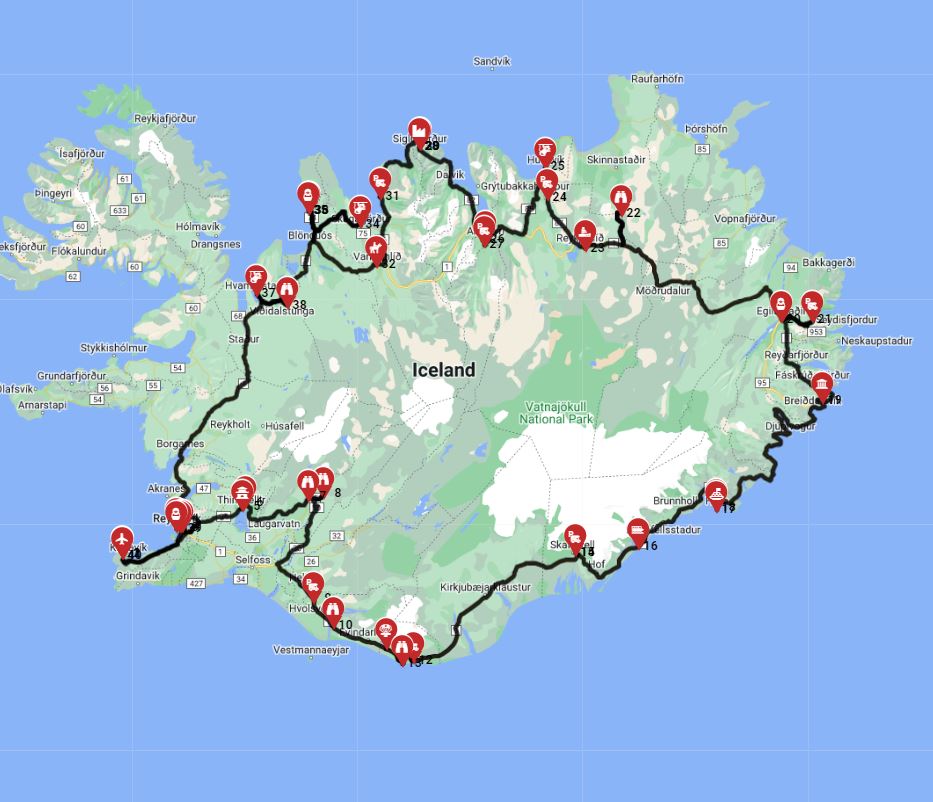
- Drive the iconic Ring Road (Route 1), a 1,322 km journey around Iceland's perimeter, offering access to a vast array of natural wonders and campsites. Consider the RV PLANET "Iceland - Full ring road" route for a comprehensive 15-day itinerary.
- Explore the famous Golden Circle, encompassing Gullfoss waterfall, the Geysir geothermal area, and Þingvellir National Park, all accessible via well-maintained roads and often near designated campsites.
- Witness the power of waterfalls like Seljalandsfoss and Skógafoss along the South Coast, and marvel at the dramatic black sand beaches of Reynisfjara. Many campsites offer stunning views of these natural landmarks.
- Hike in Þingvellir National Park, a UNESCO World Heritage site, and experience the raw geothermal energy at the Geysir area.
- Relax in one of Iceland's many geothermal hot springs or pools, a unique way to experience the country's natural heat and a perfect respite during your RV journey.
- Consider a Northern Lights hunt during the shoulder or winter seasons; the flexibility of an RV allows you to drive away from light pollution to optimal viewing spots.
Final Thoughts
Embarking on an RV adventure in Iceland offers a unique and intimate way to experience its stunning, otherworldly landscapes. From the dramatic coastlines to the geothermal wonders, traveling by motorhome provides the freedom to explore at your own pace, to linger where the scenery captivates you, and to discover hidden gems off the beaten path.
Remember to plan ahead, especially for campsite reservations during peak season, and to always prioritize safety by checking weather and road conditions regularly. With the right preparation and a spirit of adventure, your Icelandic RV camping trip promises to be an unforgettable journey, connecting you deeply with the raw, untamed beauty of this incredible island.
Get inspired for your next trip! Discover top destinations, planning tips, all in one place! Plan a trip itinerary in advance with minimal effort and maximum enjoyment.