In This Guide
- Where to Camp in Tokyo - Top Options
- Specific, actionable strategies for RV parking and overnight stays near or on the outskirts of Tokyo, beyond just mentioning Michi-no-Eki
- Campground Types in Tokyo (National, Private, Wild)
- Detailed guidance on navigating Tokyo's unique urban driving environment: narrow roads, complex toll systems (e.g., Metropolitan Expressway), specific parking challenges for RVs (size restrictions, automated garages)
- Featured RV Park or Campground in Tokyo
- Hookups & Amenities - What to Expect
- Practicalities of RV life in a dense urban setting without traditional campgrounds: where to refill water, dispose of greywater/blackwater, access electricity
- Cultural etiquette and local regulations specific to RVing/car camping (shachuhaku) at Michi-no-Eki and other parking areas (e.g., no setting up camp chairs, quiet hours)
- Booking Windows & Reservations in Tokyo
- Nearby Supermarkets & Resupply Points
- Best RV Class for Camping in Tokyo
- The most suitable RV sizes for Tokyo-centric travel, distinguishing between compact campervans ideal for city navigation and larger motorhomes better suited for surrounding prefectures
- How to Save on Campgrounds in Tokyo
- Comprehensive cost breakdown for an RV trip focused on Tokyo: tolls, fuel, specific parking fees, rental costs, and a realistic budget
- Multimodal travel strategies: how to effectively combine RV travel (parking on the outskirts) with Tokyo's extensive public transportation for inner-city exploration
- Specific itinerary suggestions that leverage an RV for exploring Tokyo and its surrounding regions (e.g., day trips from a base camp outside the city, scenic drives to Hakone or Fuji Five Lakes with Tokyo as a start/end point)
- Insurance and breakdown support specifics for foreigners renting an RV in Japan, especially crucial for navigating an unfamiliar environment
Embarking on a one-way RV rental in Tokyo offers an unparalleled adventure, blending the vibrant energy of Japan's capital with the freedom of the open road. Imagine yourself cruising from the dazzling neon lights of Shinjuku to the serene temples of Kyoto or the volcanic landscapes of Mount Fuji, all from the comfort of your mobile home. At Bandana RV, we specialize in making these unique journeys a reality, providing full transparency and 24/7 support every step of the way. For live availability and current prices, start with our RV Rental Tokyo - Complete Guide 2026 guide.
Where to Camp in Tokyo - Top Options
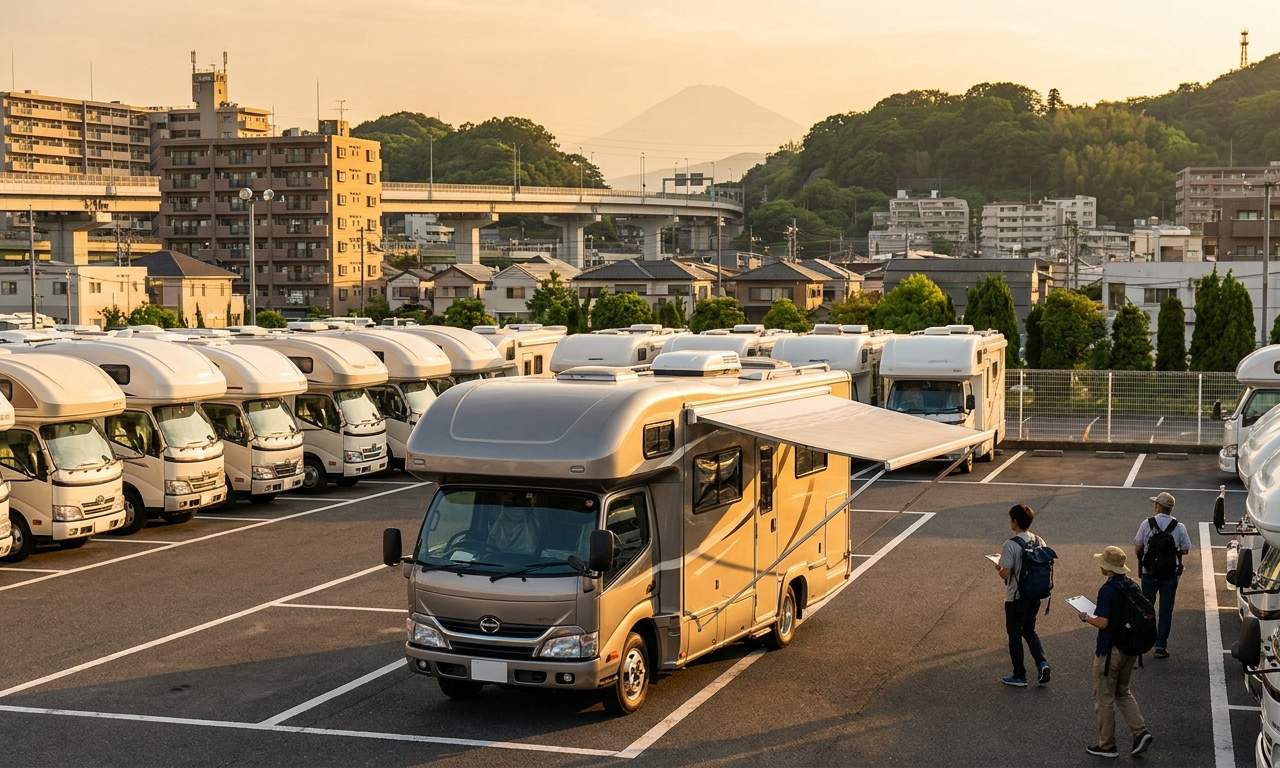
Traditional campgrounds with full hookups are generally located on the outskirts of Tokyo, or in neighboring prefectures like Chiba, Saitama, or Kanagawa, requiring a short drive. Michi-no-Eki (Roadside Stations) offer free overnight parking for RVs and are a popular alternative, though they are not traditional campgrounds. For an authentic Tokyo experience with an RV, consider parking your rental motorhome on the city's periphery and utilizing Tokyo's extensive public transportation system for inner-city exploration.
Specific, actionable strategies for RV parking and overnight stays near or on the outskirts of Tokyo, beyond just mentioning Michi-no-Eki
For RV parking and overnight stays near Tokyo, consider designated roadside stations (Michi-no-Eki), larger suburban shopping center parking lots, and specific urban pay-per-hour parking facilities designed for larger vehicles. Michi-no-Eki like Kawagoe (in Saitama Prefecture) offer excellent bases, providing convenient access to the historic town and relatively easy train links into central Tokyo. Another option is Michi-no-Eki Fureai Park in Chiba, which is further out but also provides a good starting point for exploring. Look for multi-story parking garages with clear height restrictions, or surface lots near major train stations on the Tokyo periphery, such as those in Yokohama or Hachioji, that can accommodate a rental campervan and offer direct public transport into the heart of Tokyo. You can also investigate private campgrounds in neighboring prefectures like Mother Farm Campgrounds in Chiba or Fumotoppara Campground near Mount Fuji in Kanagawa, which provide traditional camping experiences and can serve as a relaxed base for day trips into Tokyo.
Campground Types in Tokyo (National, Private, Wild)
In Tokyo and its immediate vicinity, traditional campgrounds are predominantly private or municipal, offering varying levels of amenities for your rented RV. National park campgrounds are typically found further afield from Tokyo's urban core, situated within Japan's extensive national park system. Wild camping (boondocking outside designated areas) is generally not permitted or tolerated in Japan, especially in densely populated regions like Tokyo, making designated spots essential. Michi-no-Eki provide designated parking for overnight stays, commonly referred to as 'shachuhaku' (sleeping in a car), but these are primarily rest stops, not full-service campgrounds. The crucial aspect of RV Camping for One-Way Trips in Tokyo 2026 is adapting to these unique options.
Detailed guidance on navigating Tokyo's unique urban driving environment: narrow roads, complex toll systems (e.g., Metropolitan Expressway), specific parking challenges for RVs (size restrictions, automated garages)
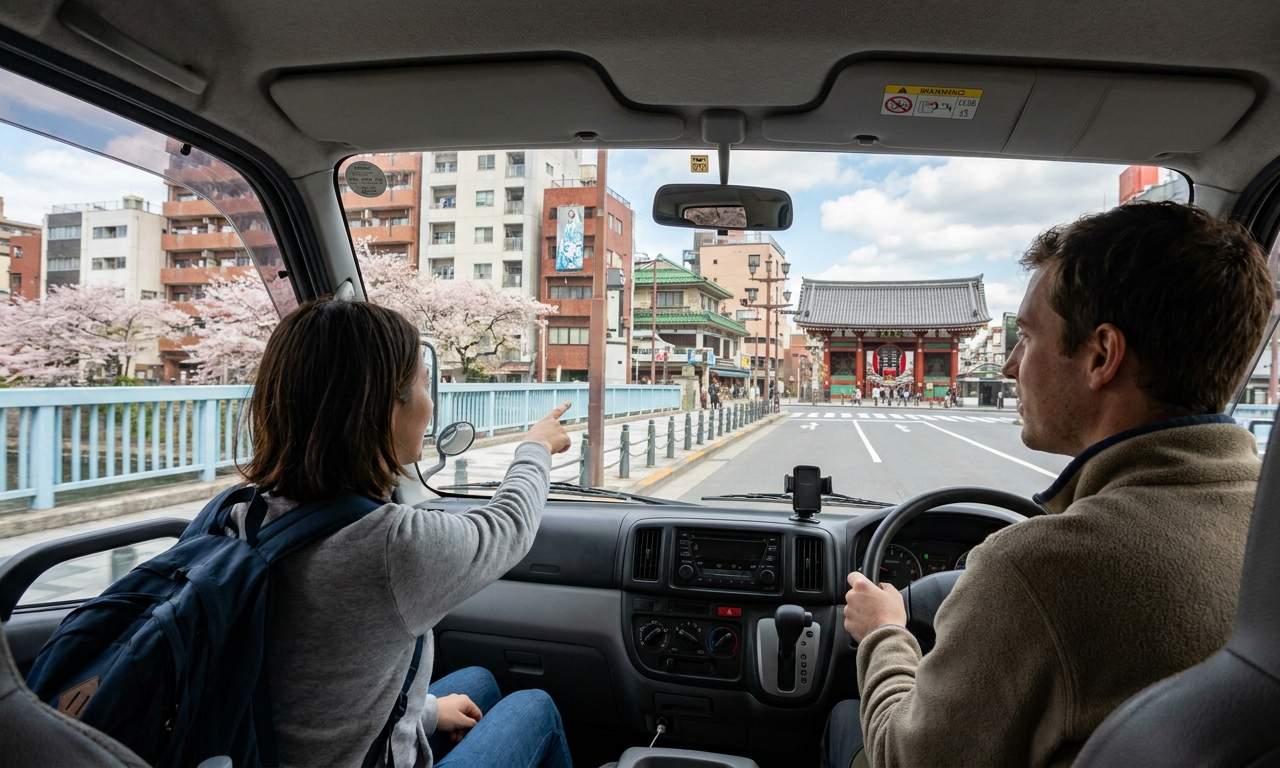
Navigating Tokyo's urban environment with a rented RV requires careful planning due to narrow streets, complex toll systems, and limited parking suitable for larger vehicles. Many residential and side streets in Tokyo are extremely narrow; stick to main arteries and use GPS systems designed for larger vehicles, if available, or manually set a 'no narrow roads' preference to avoid tight spots. Japan's toll road system, especially the Metropolitan Expressway network, can be complex with varying prices; consider renting an ETC (Electronic Toll Collection) card with your RV to streamline payments and potentially receive discounts on your journey. Parking a large motorhome is a significant challenge in central Tokyo; prioritize parking on the city's outskirts at larger facilities like Michi-no-Eki, major shopping centers, or dedicated RV parks, and then utilize public transport. Most automated parking garages in Tokyo have strict size, weight, and height restrictions (often a 2.1m height limit), making them unsuitable for nearly all RVs like an "MHC28" or "MH-C"; always check specifications before attempting to park your caravan. On the routes offered through RV PLANET routes, you can itemize and track every expense along the way for easy budgeting.
Featured RV Park or Campground in Tokyo
As specific data for Tokyo-based RV parks with full hookups is not readily available for traditional camping, when looking for a featured spot, prioritize locations offering easy access to public transport for your rented camper. Since central Tokyo lacks conventional RV parks, the most practical 'featured' spots are often Michi-no-Eki or parking facilities in surrounding prefectures. For instance, Michi-no-Eki Kawagoe in Saitama provides basic amenities like restrooms and local produce markets, coupled with good access to JR lines for trips into Tokyo. Seek out Michi-no-Eki or private campgrounds in the greater Tokyo area that boast clean facilities, basic amenities like restrooms, and proximity to local attractions or essential services. Always check recent reviews for comments on RV size compatibility, English-speaking staff, and security to ensure a comfortable stay for your one-way RV rental in Tokyo.
Hookups & Amenities - What to Expect
Access to full hookups (electricity, water, sewer) is less common in Japan, particularly at Michi-no-Eki, and more prevalent in dedicated private RV parks or larger campgrounds typically found further from Tokyo. Japanese electrical outlets are 100V with Type A/B plugs, which means you will definitely require an adapter for many foreign 220V/110V appliances, and sometimes a voltage transformer for conversion. You can expect basic amenities like clean restrooms and sometimes coin-operated showers at Michi-no-Eki, while private campgrounds may offer more robust facilities like laundry and Wi-Fi. Water refill points and greywater/blackwater disposal stations are often found at specific Michi-no-Eki, dedicated service areas, or larger campgrounds, but require pre-planning in an urban setting like Tokyo. When preparing meals in your rental RV, our RV-friendly recipes playlist offers great inspiration.
Practicalities of RV life in a dense urban setting without traditional campgrounds: where to refill water, dispose of greywater/blackwater, access electricity
In Tokyo's dense urban setting, managing RV practicalities without traditional campgrounds requires strategic planning for water, waste, and power. Fresh water can often be refilled at Michi-no-Eki that have dedicated service areas, larger petrol stations (often equipped with a spigot), or by discreetly asking at public parks with spigots, though direct hookups are rare. Designated dump stations for greywater/blackwater disposal are primarily found at specialized RV parks, some Michi-no-Eki, or occasionally at larger campgrounds further from the city; always avoid illegal dumping, which carries significant penalties. Consistent electricity access is challenging without hookups at Michi-no-Eki; rely on solar panels (if your rental campervan is equipped), a generator (use responsibly and courteously away from residential areas), or plan stays at the few RV parks with electrical hookups. Conserving battery power by turning off unnecessary lights and appliances, and considering portable power banks for charging devices, are smart strategies.
Cultural etiquette and local regulations specific to RVing/car camping (shachuhaku) at Michi-no-Eki and other parking areas (e.g., no setting up camp chairs, quiet hours)
Adhering to cultural etiquette and local regulations is paramount when RVing or practicing 'shachuhaku' (sleeping in a car) in Japan, particularly at Michi-no-Eki and other parking areas in and around Tokyo. Michi-no-Eki are primarily designed for resting during travel, not as full campgrounds; avoid extended stays beyond one or two nights. Crucially, do not set up external camping equipment like tables, chairs, awnings, or BBQ grills in Michi-no-Eki parking areas; keep all activities confined within your rental RV. Observe quiet hours, typically from late evening (e.g., 9 PM or 10 PM) until early morning, to respect other travelers and local residents; avoid running generators during these times. Always dispose of trash properly in designated bins or take it with you; never leave waste bags outside your motorhome. Utilize the clean public restrooms at Michi-no-Eki respectfully, and avoid emptying portable toilets or greywater tanks in non-designated areas.
Booking Windows & Reservations in Tokyo
For pre-planners, booking private campgrounds or popular Michi-no-Eki with reservable spots several months in advance is advisable, especially during peak seasons like cherry blossom (spring) and autumn foliage, when demand for one way RV rental in Tokyo is high. Spontaneous travelers can often find availability at less popular Michi-no-Eki or smaller municipal sites, particularly if willing to call ahead on the day or the day prior. Many national park campgrounds in Japan release a limited percentage (e.g., 25%-30%) of spots for reservations, with the remainder available on a first-come, first-served basis, offering flexibility for your trip. While specific locations might be full, travelers with a one-way RV rental in Tokyo will almost certainly find a place to stay-if not the first campground, then often the next nearby option-making it wise to have backup locations and call ahead before driving.
Nearby Supermarkets & Resupply Points
Major supermarket chains in Japan, such as Aeon, Seiyu, Ito-Yokado, and Life, are excellent points for restocking groceries, fresh produce, and RV essentials for your one-way RV trip. Convenience stores like 7-Eleven, FamilyMart, and Lawson are ubiquitous, offering quick access to snacks, drinks, and some basic necessities 24/7, even in dense urban areas. Look for supermarkets with large parking lots, often found outside the immediate city center, which are more accommodating for larger Class C motorhomes. Michi-no-Eki also frequently feature local produce and some grocery items, making them convenient stops for fresh supplies. When planning your route and budgeting for these expenses, keep in mind that RV PLANET routes allow travelers to itemize and track every expense along the way for easy budgeting.
Best RV Class for Camping in Tokyo
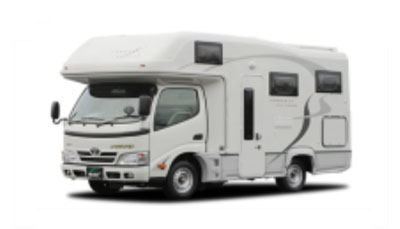
The best RV class for camping in Tokyo largely depends on whether you prioritize urban maneuverability or on-site comfort and self-sufficiency. Compact campervans, similar to a "Class I Van" or "Duo," are ideal for navigating Tokyo's narrower roads and accessing more parking options, though they offer fewer amenities for extended stays. Larger RVs, such as the Class C - Alcove motorhome (averaging 5 meters in length and sleeping up to 6 people, like the "Paradise Family 5" or "Glamys 40"), provide more living space and amenities but require careful planning for parking and driving within Tokyo. For true 'camping' with hookups at dedicated sites outside the city, a larger motorhome might be preferable, while urban 'shachuhaku' at Michi-no-Eki favors smaller, more agile campervans. Drive slowly and carefully, and you can drive almost anywhere without issues. No need to stress - just use common sense and pay attention.
🎬 Video coming soon
The most suitable RV sizes for Tokyo-centric travel, distinguishing between compact campervans ideal for city navigation and larger motorhomes better suited for surrounding prefectures
For Tokyo-centric travel, the most suitable RV sizes prioritize maneuverability and parking ease within the urban environment, strongly favoring smaller vehicles. Compact campervans, often measuring under 5 meters in length, are ideal for navigating Tokyo's narrow streets, fitting into smaller parking spots, and blending in more easily; they typically offer basic sleeping and cooking facilities but limited overall space. For instance, a "Chaser" (4.7 meters) or "Crib" (4.6 meters) could be good choices. While Bandana's fleet includes Class C - Alcove RVs averaging 5 meters in length and sleeping up to 6 people, such as the "CA-25" or "C-Small", these are on the larger side for central Tokyo navigation and parking. Motorhomes exceeding 5-6 meters are generally better suited for exploring Japan's surrounding prefectures (e.g., Hakone, Fuji Five Lakes) where roads are wider and dedicated RV parking is more plentiful. If your primary focus is exploring Tokyo itself, a campervan or the most compact RV available (under 5 meters) is highly recommended; if using Tokyo as a start/end point for regional exploration, a Class C - Alcove can be manageable with careful planning for city-edge parking.
How to Save on Campgrounds in Tokyo
Utilizing discount cards, such as those potentially offered by rental providers like Bandana, can provide significant savings on campground fees in Japan. Choosing municipal or regional campgrounds over private resorts often results in lower nightly rates, though amenities might be more basic for your rental RV. Booking during the shoulder seasons (late spring/early autumn, avoiding national holidays like Golden Week) typically yields better prices and fewer crowds for your one-way RV rental. Staying for three or more nights at a single location can sometimes qualify for weekly rates or longer-stay discounts, reducing the per-night cost. Parking overnight at Michi-no-Eki is generally free, representing the most cost-effective option for overnight stays, albeit without traditional campground services. Explore our Cheap RV Rental in Tokyo - Budget Guide 2026 for more ideas.
Comprehensive cost breakdown for an RV trip focused on Tokyo: tolls, fuel, specific parking fees, rental costs, and a realistic budget
A realistic budget for an RV trip focused on Tokyo requires accounting for rental costs, tolls, fuel, and parking, which can be significant in an urban setting. One-way RV rental in Tokyo will typically include a daily rental fee, comprehensive insurance, and a one-way surcharge, varying significantly by RV class (e.g., a "V3" campervan vs. a larger "MHC30" motorhome) and season. Japan's expressways have a robust toll system, and the Metropolitan Expressway in particular can incur high costs; budget for potentially high toll expenses, with an ETC card highly recommended for efficiency. Fuel prices in Japan are comparable to other developed nations; factor in consumption based on your RV's fuel efficiency (e.g., a Class C - Alcove's consumption of around 11-13 liters per 100 km) and planned mileage. Parking in and around Tokyo can range from free (Michi-no-Eki) to expensive hourly rates at commercial parking lots; factor in ¥300-¥1000+ per hour (approximately $2-$7 USD+) for urban parking, or several thousand yen for overnight garage parking on the outskirts. For a 7-day trip, a realistic daily budget might range from ¥15,000-¥30,000+ (approximately $100-$200 USD+) including rental, fuel, and basic parking/overnight fees, excluding food and activities. For current and detailed pricing, check our RV Rental in Tokyo - Prices and Best Deals 2026.
Multimodal travel strategies: how to effectively combine RV travel (parking on the outskirts) with Tokyo's extensive public transportation for inner-city exploration
Effectively combining RV travel with Tokyo's public transportation is the most practical strategy for inner-city exploration, minimizing driving stress and parking difficulties. Identify Michi-no-Eki, large suburban parking lots (e.g., near major train stations like Tachikawa, Hachioji, or Shin-Yokohama), or RV parks on Tokyo's periphery where you can comfortably leave your rented campervan. Choose parking locations that offer direct access to JR lines, subway stations, or private railways that can quickly take you into central Tokyo, often for a few hundred yen per ride. Purchase a Suica or Pasmo IC card for seamless travel on trains, subways, and buses across Tokyo; these cards are rechargeable and widely accepted, making navigation effortless. Use your RV as a comfortable base camp outside the city, then commute into Tokyo for day trips, exploring different districts without the hassle of urban RV driving and parking. This approach allows you to experience the best of Tokyo's city life while enjoying the freedom and flexibility of your motorhome for regional excursions.
Specific itinerary suggestions that leverage an RV for exploring Tokyo and its surrounding regions (e.g., day trips from a base camp outside the city, scenic drives to Hakone or Fuji Five Lakes with Tokyo as a start/end point)
Leveraging a rental RV for Tokyo and its surrounding regions is best achieved by establishing a base camp outside the immediate city and planning day trips, or using Tokyo as an entry/exit point for broader exploration. For a Tokyo Base Camp & Day Trips, park your RV at a Michi-no-Eki or campground in a neighboring prefecture (e.g., Chiba or Saitama) with good public transport links. Spend 2-3 days commuting into Tokyo to explore iconic sites like Shibuya Crossing, the historic Senso-ji Temple in Asakusa, and the vibrant districts of Shinjuku, returning to your comfortable mobile home in the evenings. For a Scenic Drive to Hakone, from Tokyo, take a scenic drive southwest to Hakone, parking your RV at designated lots (like those near Lake Ashi or the Open-Air Museum) to enjoy cruises, hot springs, and views of Mount Fuji, before returning to a perimeter Tokyo base or continuing your journey. A Fuji Five Lakes Excursion is another popular choice; drive to the Fuji Five Lakes region, setting up camp at one of the many RV-friendly sites or Michi-no-Eki (e.g., Michi-no-Eki Fujiyoshida) to explore Lake Kawaguchiko, Chureito Pagoda, and panoramic views of Mount Fuji. Our RV Travel Guide to Tokyo - Tips and Top Spots 2026 offers more detailed route plans. Remember to travel slowly - max 100-150 km per day on average - to take time to feel the place, connect to the culture, the food, and the scenery.
Insurance and breakdown support specifics for foreigners renting an RV in Japan, especially crucial for navigating an unfamiliar environment
For foreigners renting an RV in Japan, understanding insurance and breakdown support is crucial for peace of mind in an unfamiliar driving environment. Ensure your rental agreement includes comprehensive insurance (CDW/LDW) covering accidental damage, theft, and third-party liability, often with options to reduce the deductible, which you can upgrade to a top-level deductible for extra peace of mind. Verify that the rental provider offers 24/7 roadside assistance or a clear emergency contact number for breakdowns, flat tires, or other mechanical issues, even if Bandana’s direct 24/7 support is limited to pre-booking and booking coordination. Confirm if roadside assistance or emergency contacts offer English language support, which is vital for clear communication during a crisis with your rental motorhome. Always carry your valid International Driving Permit (IDP) and your home country's driver's license, along with your passport and rental agreement, as these documents are mandatory for driving and insurance claims in Japan. We handle the details, you live the journey - personal service from day one until your booking is confirmed.
What You Shouldn't Miss
- Shibuya Crossing at Night: Witness the iconic scramble crossing in Shibuya with its dazzling neon lights, a true spectacle of urban energy.
- Mount Fuji Views from Hakone: Take your rental campervan to Hakone and enjoy breathtaking panoramic views of Mount Fuji across Lake Ashi, possibly combined with a relaxing dip in an onsen.
- Senso-ji Temple in Asakusa: Explore Tokyo's oldest temple, Senso-ji, and wander through Nakamise-dori market for traditional snacks and souvenirs.
- Michi-no-Eki Roadside Stations: Experience Japan's unique roadside culture by staying overnight at a Michi-no-Eki, enjoying local produce and crafts, like the one in Fujiyoshida with Mt. Fuji views.
- Imperial Palace East Garden: Find serenity amidst the bustling city with a peaceful stroll through the Imperial Palace East Garden, home to ancient ruins and manicured landscapes.
- Looking for expert insights from Avi Bandana? Top 5 Adventures - recommendations from Avi Bandana.
Final Thoughts
A one-way RV rental in Tokyo offers an incredible opportunity to dive into Japan's unique blend of ancient tradition and futuristic innovation, all with the flexibility of your own mobile home. While urban driving and camping require a strategic approach, embracing multimodal travel and utilizing resources like Michi-no-Eki allows for an enriching and authentic Japanese adventure. Remember that the journey is just as important as the destination-travel slowly, max 100-150 km per day on average. Take time to feel the place, connect to the culture, the food, and the scenery.
From navigating the vibrant streets to finding peaceful overnight spots on the outskirts, Bandana RV is here to support you in planning your perfect one-way RV trip. Our expertise and commitment to transparency ensure you'll embark on your Tokyo adventure with confidence and excitement. So, ready to discover the magic of Japan on your own terms?
Find Motorhome Rentals in Tokyo