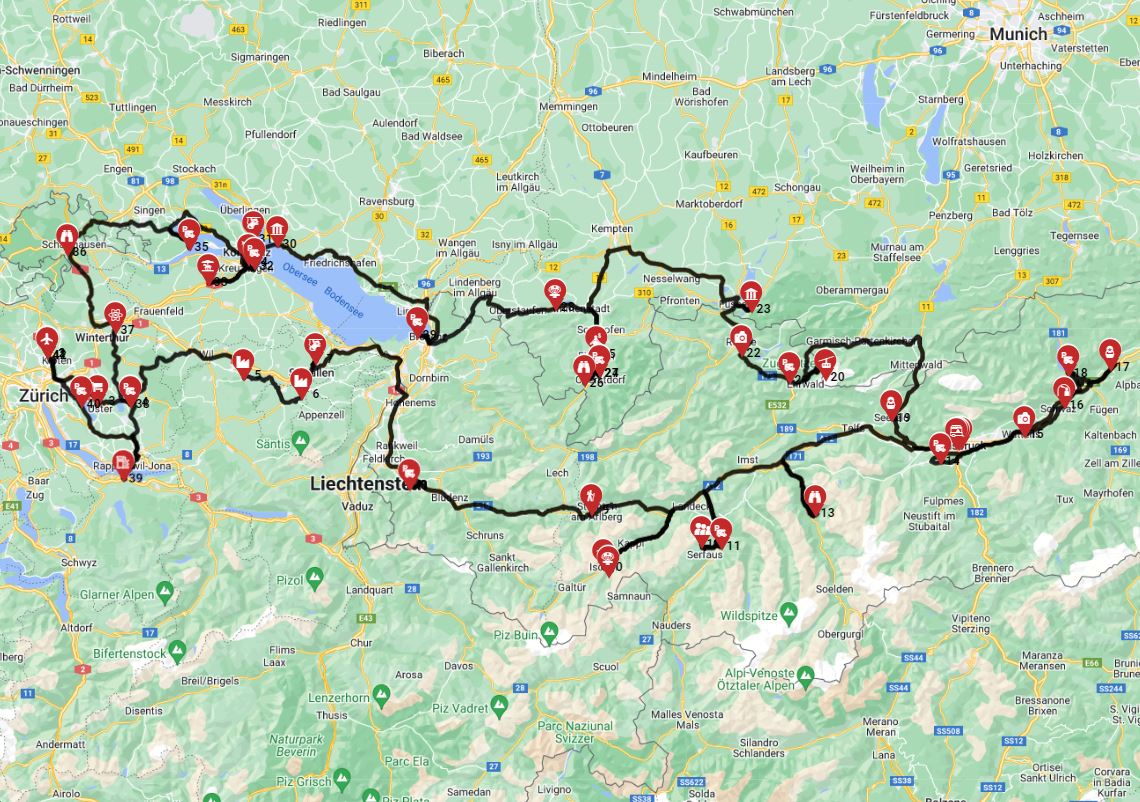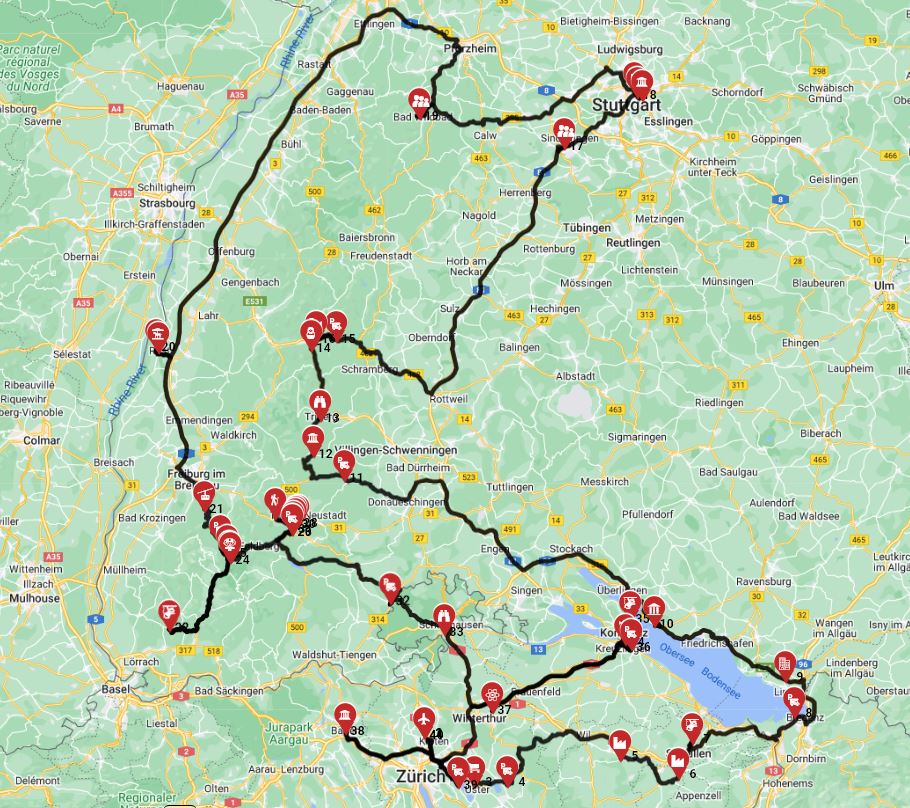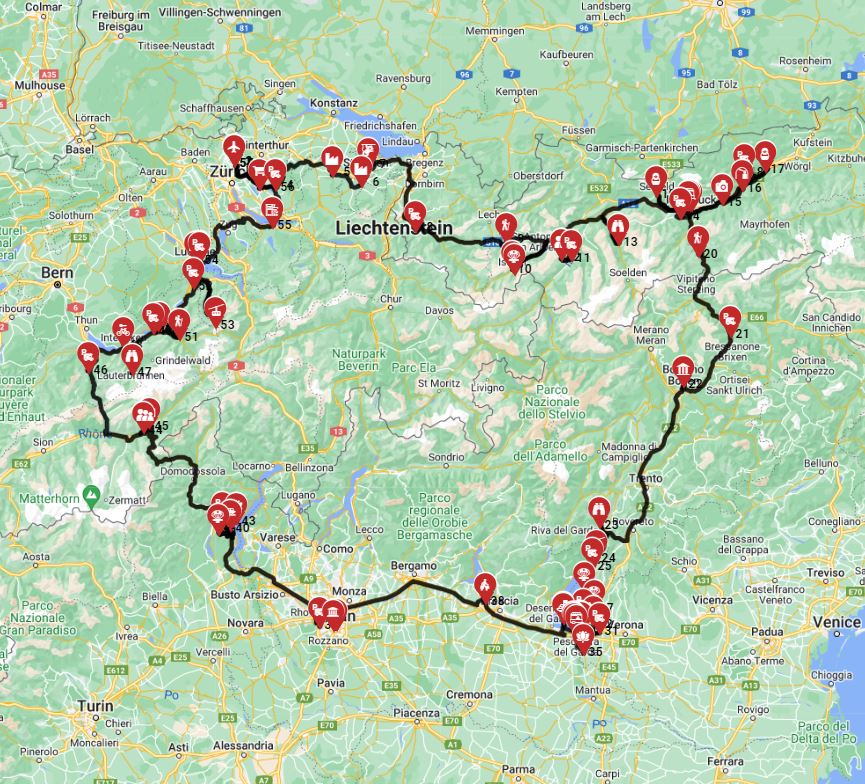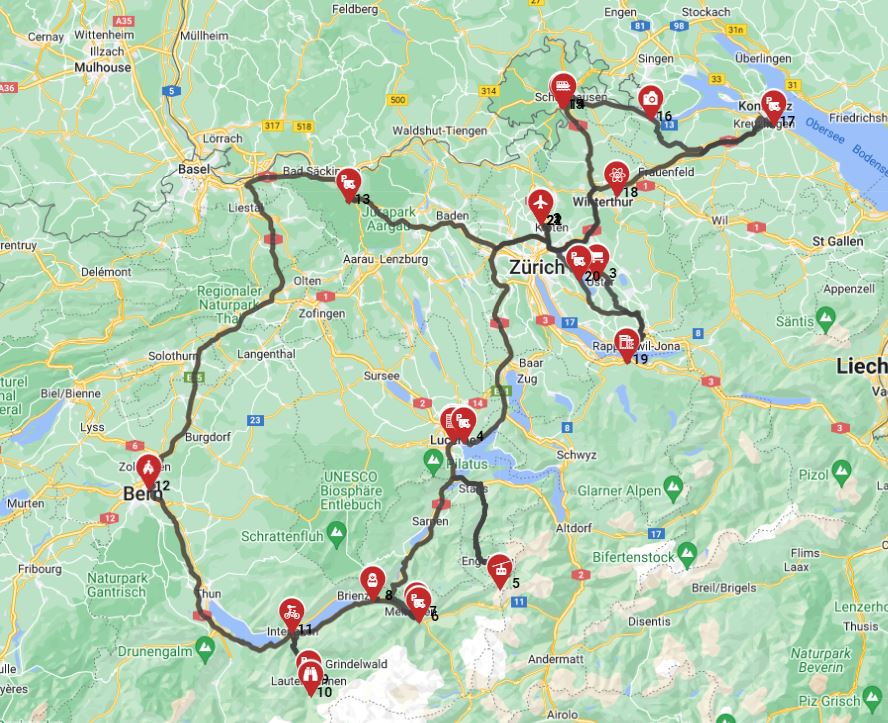
For live availability and current prices, start with our RV Rental Switzerland - Complete Guide 2026 guide.
In This Guide
- Where to Camp in Switzerland - Top Options
- Campground Types in Switzerland (National, Private, Wild)
- Featured RV Park or Campground in Switzerland
- Hookups & Amenities - What to Expect
- Booking Windows & Reservations in Switzerland
- Nearby Supermarkets & Resupply Points
- Best RV Class for Camping in Switzerland
- How to Save on Campgrounds in Switzerland
- Is it easy to drive an RV in Switzerland
- Can you wild camp in Switzerland in an RV
- How much does it cost to RV in Switzerland for 7 days
- Is it worth it to rent an RV in Switzerland
- What is the best way to travel Switzerland
- Sustainable RV Travel in Switzerland
- Top Cities for One-Way RV Rental in Switzerland
- Practical Information for RV Travel in Switzerland
Where to Camp in Switzerland - Top Options
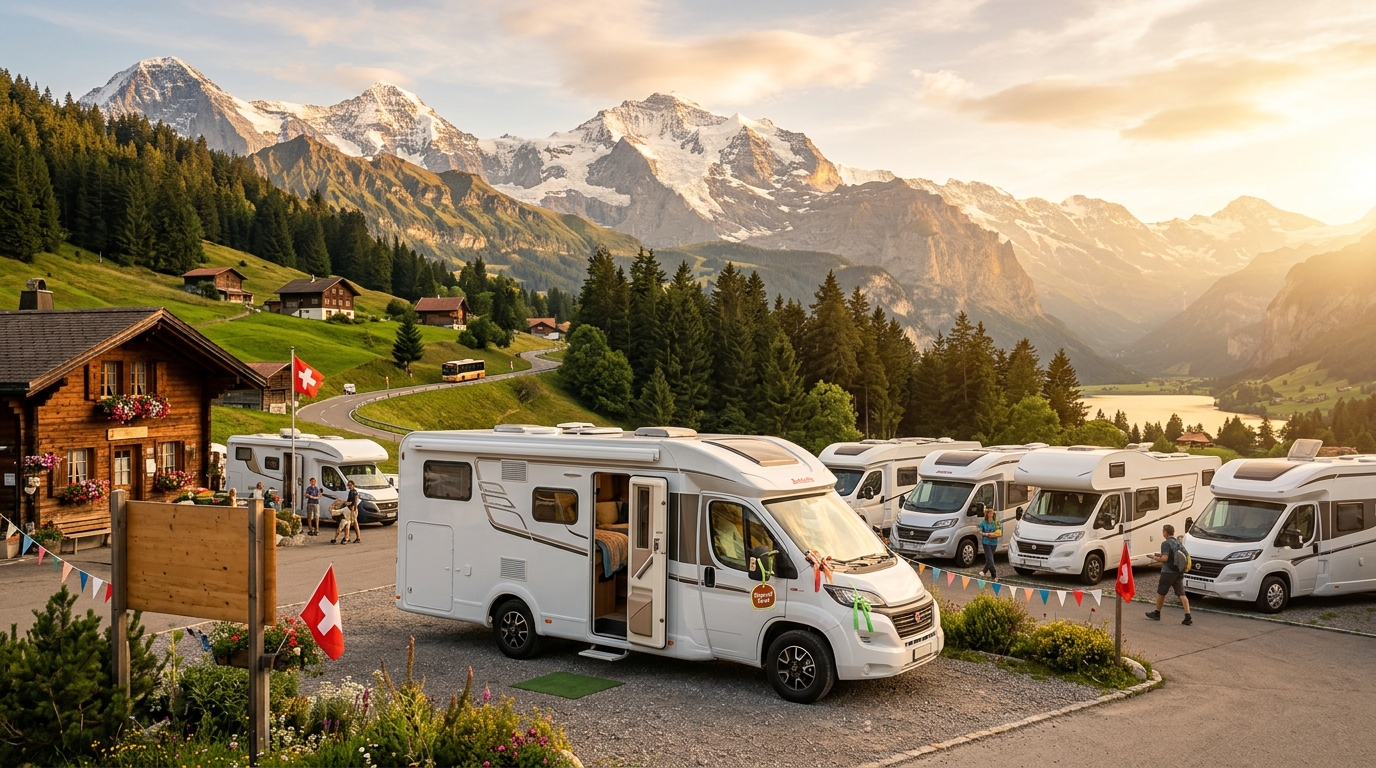
Switzerland offers diverse camping experiences, ranging from serene lakeside pitches in Ticino to breathtaking alpine retreats in the Bernese Oberland. Imagine parking your rented motorhome with a backdrop of towering peaks or alongside a crystal-clear lake, ready for adventure at your doorstep. For live availability and current prices, start with our RV Rental Switzerland - Complete Guide 2024 guide. You can find lakeside options around iconic bodies of water like Lake Geneva, Lake Lucerne, or Lake Maggiore, which are renowned for their scenic beauty and water activities. If mountain adventures call your name, alpine region campgrounds near Grindelwald or Interlaken provide direct access to world-class hiking, climbing, and winter sports. Many sites are also conveniently located just outside major cities, offering easy access to public transport for exploring urban centers like Zurich or Bern without the hassle of moving your RV. Exploring our RV PLANET routes can help you discover optimal camping locations tailored to your interests and easily itemize and track every expense along the way for easy budgeting.Campground Types in Switzerland (National, Private, Wild)
Switzerland predominantly offers well-equipped private campgrounds and designated Stellplätze (motorhome parking areas), with stringent rules against unauthorized overnight stays. Private campgrounds are the most common, providing full amenities like electricity (230V AC with Type J or C/F sockets, usually 6A or 10A connections), fresh water, and grey/black water dump stations. These sites are often found in exceptionally scenic locations and may offer membership discounts or require advance booking, especially during peak seasons. Stellplätze are legal, often simpler parking spots specifically for RVs, sometimes with basic services like water and waste disposal, and typically more affordable than full campgrounds. Wild camping, or free camping, is generally illegal and strongly discouraged in most Swiss areas, including national parks, nature reserves, and agricultural land, carrying significant fines for violations. While some very remote, high-alpine areas might tolerate a single night of wild camping, explicit local permission is always advised to avoid legal issues and respect the environment.Featured RV Park or Campground in Switzerland
When selecting an RV park in Switzerland, prioritizing locations that offer a blend of natural beauty, convenient access to attractions, and essential amenities will enhance your one-way RV adventure. Look for campgrounds situated near national parks or famous hiking areas for direct access to stunning trails and nature. For example, Camping Jungfrau in Lauterbrunnen offers unparalleled views of the Eiger, Mönch, and Jungfrau peaks and direct access to hiking paths. Another excellent option is Camping Manor Farm in Interlaken, which sits on the shore of Lake Thun, providing watersports and easy public transport links to Interlaken's bustling town center and surrounding mountains. Consider sites with good public transport connections to explore cities like Bern or Lucerne without needing to move your rented RV. Many family-friendly options feature playgrounds, swimming pools, and organized activities, ensuring entertainment for all ages. For an authentic alpine experience, seek out campgrounds nestled in high mountain valleys with breathtaking views, often offering direct access to cable cars or mountain railways. To efficiently plan your stops and manage costs, consider leveraging RV PLANET routes.Hookups & Amenities - What to Expect
Swiss campgrounds are generally well-equipped, providing essential hookups and a range of amenities for a comfortable RV experience throughout your one-way trip. You can expect standard 230V AC electricity with Type J (3-pin) or Type C/F (Schuko) sockets, usually offering 6A or 10A connections, sufficient for most onboard appliances. Fresh water taps are widely available, and grey/black water dump stations (Entsorgung) are standard at almost all registered campgrounds, making waste management simple. WiFi is increasingly common, though often available for an additional fee and with variable signal strength, especially in remote areas. Most sites provide clean, modern toilet and shower facilities, often included in the nightly rate or accessible via a token/coin system for hot water; on-site laundry facilities are also frequently available. Many larger campgrounds feature additional amenities like restaurants, small shops for essentials, playgrounds for families, and sometimes even swimming pools or direct lake access, enhancing your camping experience.Booking Windows & Reservations in Switzerland
For popular Swiss campgrounds, especially during peak summer months (July-August) and national holidays, booking your RV pitch several months in advance is highly recommended to ensure availability. If you are a pre-planner who likes everything organized, aim to book 3-6 months ahead for prime locations and peak season, as these popular sites fill up quickly. However, spontaneous travelers need not worry excessively; while challenging in high season, it is often possible to find a spot by calling campgrounds a day or two in advance, particularly municipal or smaller regional sites. Many national and state park campgrounds release only 25-30% of their spots for advance reservations, keeping the rest for first-come, first-served arrivals. Always call ahead before driving to a specific campground, especially with a one-way RV rental where itinerary flexibility might be limited. As we often say, "You will almost certainly find a place - if not at the first campground, then the next one." Our extensive partnerships with 50+ leading RV suppliers worldwide, including El Monte, Cruise America, Apollo, and Britz, mean you have a vast array of options.Nearby Supermarkets & Resupply Points
Switzerland boasts an excellent network of supermarkets, making resupplying your rented RV convenient during your one-way journey, with major chains like Migros, Coop, and Denner found in most towns and cities. Migros and Coop are the largest, offering a wide selection of fresh produce, local specialties, and international goods, perfect for stocking your RV kitchen. Denner is a good option for discount staples and can help keep your budget in check. Most larger supermarkets are conveniently situated near main roads or on the outskirts of towns, providing ample parking suitable for RVs, so you won't need to stress about maneuvering. Be aware that most supermarkets have limited hours on Sundays and public holidays, particularly outside of major urban centers, so plan your shopping accordingly. For fresh, regional produce and a taste of local culture, consider visiting weekly markets in the towns you explore. If you enjoy cooking in your RV, exploring different markets can be a fun part of your trip, and our RV-friendly recipes playlist can offer inspiration for delicious meals on the road.Best RV Class for Camping in Switzerland
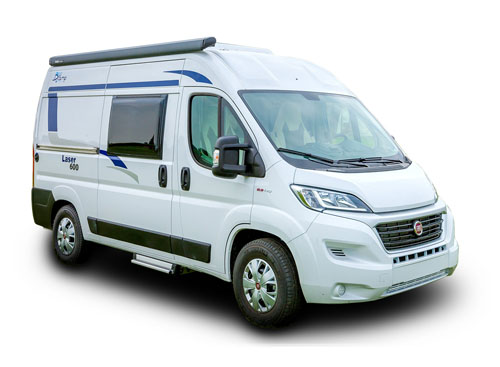
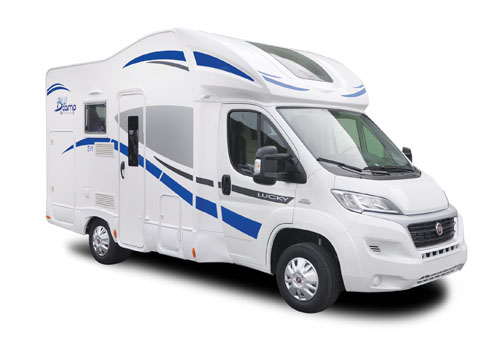
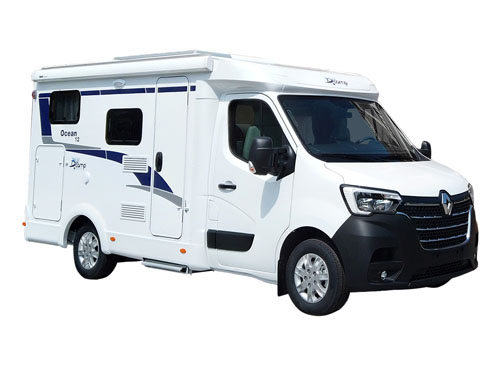
For navigating Switzerland's diverse terrain, including winding mountainous roads and charming village streets, a Class B Camper Van or a Class SI Semi-integrated RV generally offers the best balance of maneuverability and comfort for a one-way trip. Bandana's fleet includes agile Class B Camper Vans that average around 5.8 meters in length, making them easy to drive and park in tighter spots; these typically sleep 3.2 people and consume about 8-10 Liters/100 km. If you need a bit more space, a Class SI Semi-integrated RV offers a good compromise, with Bandana's fleet averaging 6.9 meters, sleeping 3.8 people, and typically consuming 10-11 Liters/100 km. While larger RVs like Class C Alcoves (Bandana's fleet averages 7.5m, sleeping 5.8) or Class A Integrated units (Bandana's fleet averages 7.5m, sleeping 4.4) provide more interior room, they can be more challenging on Switzerland's winding mountain roads and in smaller towns. Always consider the average fuel consumption (e.g., Class C: 10-12 L/100 km; Class A: 8-12 L/100 km) and ease of maneuverability when choosing your ideal motorhome. Our team of true RV specialists can help you find the perfect rented vehicle.How to Save on Campgrounds in Switzerland
To reduce campground costs in Switzerland during your one-way RV rental, strategic planning can make a significant difference. Consider utilizing campground discount cards like Camping Card International or an ACSI Card, which are often available through rental providers or directly, and can provide substantial savings on nightly rates. Traveling during the shoulder season (late spring: May-June, or early autumn: September-October) offers pleasant weather, fewer crowds, and typically lower campground rates compared to peak summer. Choose wisely between campground types: municipal or regional campgrounds are often more budget-friendly than private, resort-style sites, and Stellplätze are a cost-effective alternative for simple overnight parking. Opting for longer stays can also save you money, as many campgrounds offer weekly rates that are cheaper per night than daily rates. While less common, some private pitches might allow sharing power and water if traveling in a convoy, but always confirm with the campground beforehand.Is it easy to drive an RV in Switzerland
Driving a rented RV in Switzerland is generally manageable due to well-maintained roads and excellent signage, but it requires careful attention to specific challenges like narrow mountain passes, tunnels, and vehicle size restrictions. Expect steep ascents and descents, numerous switchbacks, and sometimes narrow roads in the mountainous terrain; a smaller RV (e.g., a Class B Camper Van or a Class SI Semi-integrated) is highly recommended for easier navigation. Switzerland uses a mandatory vignette system for highways, costing CHF 40 for a year; specific tunnels like the Gotthard can experience heavy traffic, especially for RVs during peak season, and some passes may have additional tolls. Always pay close attention to road signs indicating height, weight, and width restrictions, as well as warnings for steep grades. If traveling in colder months, winter tires are legally required, and snow chains may be necessary or even mandatory on certain passes. Finding suitable parking for larger RVs in towns and popular tourist spots can be challenging, so utilize designated RV parking areas or consider using Switzerland's efficient public transport from your campsite. Drive slowly and carefully, and you can drive almost anywhere without issues. No need to stress - just use common sense and pay attention.Can you wild camp in Switzerland in an RV
Wild camping in a rented RV is largely prohibited across Switzerland, with strict regulations in place to protect its pristine natural environment, and breaking these rules can result in substantial fines. Generally, wild camping is illegal in national parks, nature reserves, agricultural areas, and on private property without explicit owner permission. To ensure you stay within legal bounds and respect local communities and nature, utilize designated alternatives such as Stellplätze (motorhome parking areas), private campgrounds, or consider unique options like farm stays (Bauerntrekking) for permitted overnight stops. Even where technically tolerated (e.g., some very high-alpine areas), practicing responsible RVing dictates a strict 'leave no trace' policy, including proper waste disposal and respecting wildlife and local ecosystems. Always verify local regulations, as rules can vary between cantons and even individual municipalities.How much does it cost to RV in Switzerland for 7 days
A 7-day one-way RV trip in Switzerland can range from approximately CHF 1,500 to CHF 3,000+ (Swiss Francs), depending significantly on your chosen RV rental class, seasonality, booking lead time, fuel efficiency, campground choices, and spending on food and activities. Your RV rental for 7 days might typically range from CHF 700 to 1400+, with daily rates varying widely; a Class B Camper Van, for instance, might cost CHF 100-200/day, plus any applicable one-way fees. Fuel is a significant expense in Switzerland, which has high prices, so for an estimated 1000-1500 km at an average 10 L/100km (typical for Bandana's Class SI/C fleet) and CHF 1.80-2.00/liter, expect CHF 350-600+. Campground fees typically range from CHF 30-60+ per night for a pitch with hookups, while Stellplätze are cheaper at CHF 10-30, and discount cards can help reduce these costs. A mandatory highway vignette costs CHF 40 for a year, with potential extra tolls for specific tunnels or mountain passes. Cooking in your RV from groceries purchased at Migros or Coop (CHF 200-400+) can significantly reduce dining expenses, which are notoriously high in Switzerland. Activity costs are highly variable; cable cars, mountain railways, and museum entries add up, but a Swiss Travel Pass could offer savings for extensive public transport use. For a comprehensive overview of costs and to compare various rental options, consider our "One-Way RV Rental in Switzerland - Price Guide 2024".Is it worth it to rent an RV in Switzerland
Renting an RV in Switzerland is highly worth it for travelers seeking unparalleled flexibility, direct access to stunning natural landscapes, and a more immersive, off-the-beaten-path travel experience. A rented motorhome provides a mobile headquarters, allowing you to spontaneously change your itinerary, chase good weather, and stay in beautiful locations that might be inaccessible by public transport or traditional hotels. This freedom maximizes your time outdoors, whether you're parking at the base of hiking trails, by serene lakes, or in charming alpine villages, connecting deeply with the scenery. Self-catering in your RV significantly reduces dining expenses, which are notoriously high throughout Switzerland. Beyond the major tourist hubs, RV travel enables you to discover quieter villages, local markets, and hidden gems that are often missed on conventional tours. For families, an RV offers a comfortable, self-contained base with its own kitchen, bathroom, and living space, making travel with children much easier. While potentially more expensive than budget train travel for solo travelers, the benefits of autonomy, deep exploration, and the unique sense of adventure often outweigh the costs, especially for week-long trips or longer.What is the best way to travel Switzerland
The "best" way to travel Switzerland depends entirely on individual preferences for flexibility, budget, and desired experiences, with RV travel offering distinct advantages over Switzerland's renowned public transport system for specific traveler types. RV travel is ideal for those who value spontaneity, exploring off-the-beaten-path locations, self-catering, and staying directly amidst nature, effectively offering a home on wheels. In contrast, Switzerland's public transport system, encompassing trains, buses, and boats, is legendary for its punctuality and scenic routes, making it excellent for visiting cities and car-free villages, with a Swiss Travel Pass offering cost-effectiveness. A conventional rental car provides more flexibility than public transport but lacks the integrated convenience of an RV, requiring daily accommodation bookings and dining out, plus still presenting parking challenges. Many travelers find a combined approach to be optimal: using a Swiss Travel Pass for major city-to-city transfers and then renting an RV for a specific region to explore more deeply and with greater autonomy. For a truly immersive, flexible, and nature-focused adventure, especially if you enjoy preparing meals and avoiding traditional tourist crowds, an RV rental often stands out as a superior choice, letting you travel slowly, averaging max 100-150 km per day, to truly feel the place. Consider our "RV Rental Europe - Complete Guide 2024" for a broader perspective on RV travel across the continent.Sustainable RV Travel in Switzerland
Practicing sustainable RV travel in Switzerland is essential to preserving its pristine alpine environment, requiring conscious efforts in waste management, resource consumption, and respecting local ecosystems. Always utilize designated dump stations for grey and black water at campgrounds, and diligently sort and recycle your waste at campground facilities or public recycling points. Be mindful of water usage during showers and dishwashing, and conserve electricity in your RV, especially when not on full hookups. Embrace the "Leave No Trace" principles: pack out everything you pack in, stick to marked trails when hiking, and avoid disturbing wildlife or damaging flora. Using biodegradable soaps and cleaning products can further minimize your environmental impact. To support the local economy and reduce food miles, purchase local produce and goods from farmers' markets or small shops. Always respect local etiquette by observing quiet hours at campgrounds and being mindful of noise levels in natural areas, contributing positively to the Swiss experience for everyone.Top Cities for One-Way RV Rental in Switzerland
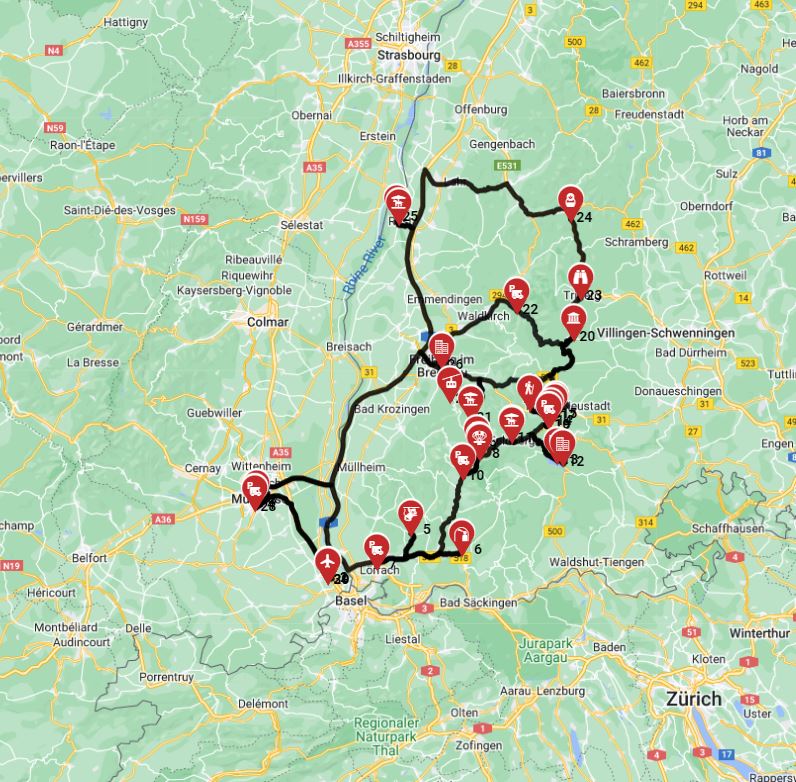
Switzerland offers several excellent starting or ending points for a one-way RV adventure, providing flexibility for your route planning. You can pick up your rented motorhome in major cities and drop it off in another, whether you're traversing the country or combining it with a broader European journey.- **Basel:** As a border city with France and Germany, Basel is a fantastic hub for starting a one-way trip, offering easy access to the scenic Black Forest or the French Alsace region before heading into the Swiss Alps.
- **Bern:** Switzerland's charming capital provides a central starting point for exploring the country's diverse landscapes, from the Jura mountains to the Interlaken region.
- **Geneva:** Located on the shores of Lake Geneva with views of Mont Blanc, this international city is perfect for beginning a journey through the Swiss and French Alps.
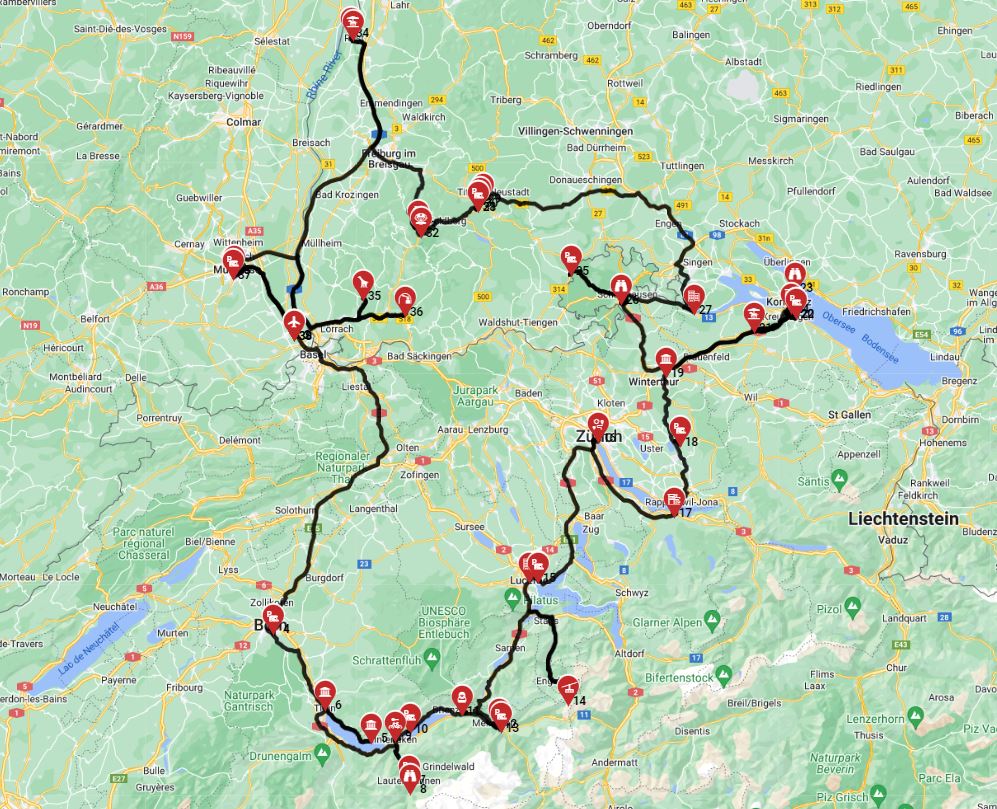
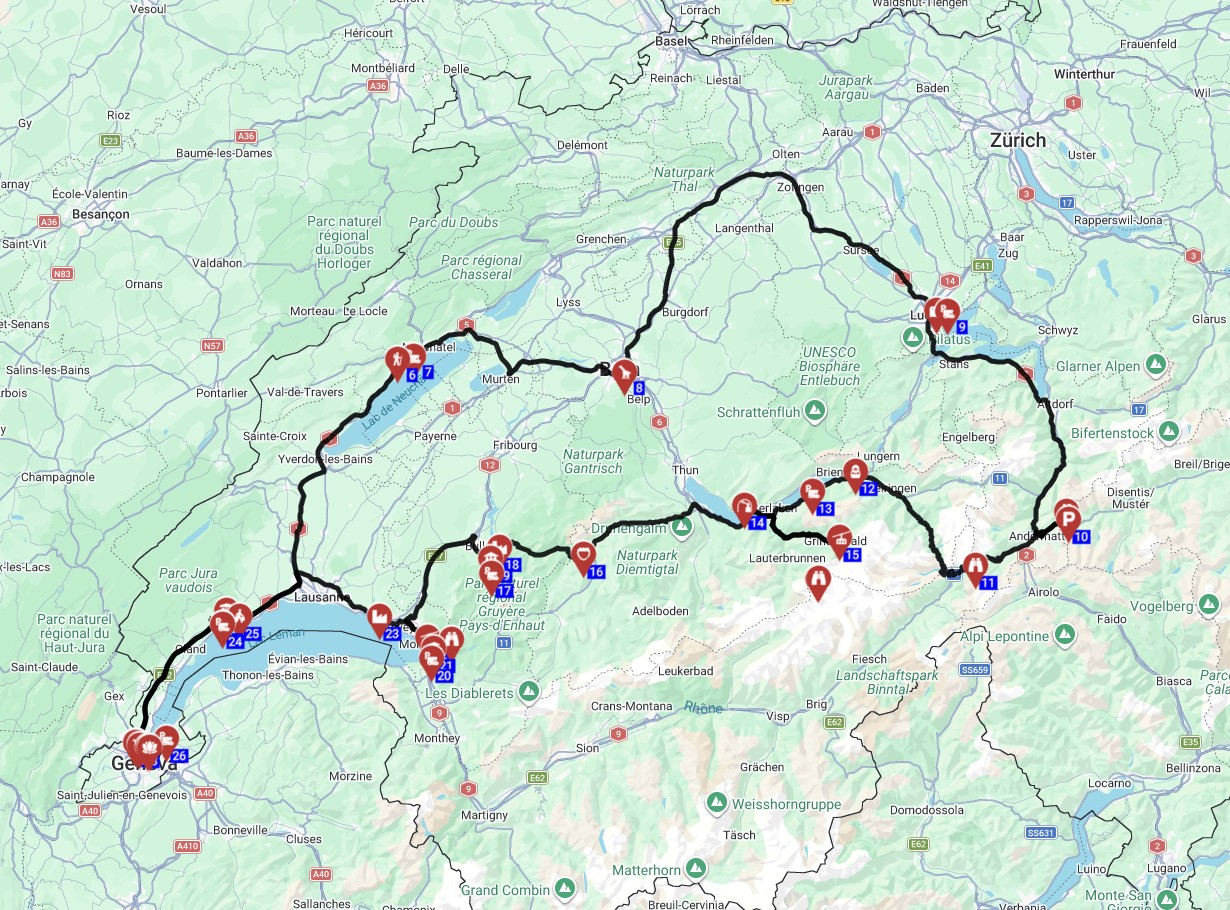
- **Zurich:** Switzerland's largest city and financial hub, Zurich offers numerous rental options and excellent connections to the eastern Alps, Lake Lucerne, and beyond. This is an ideal starting point for a "
" which covers 766.8 km with multiple natural features and activities.
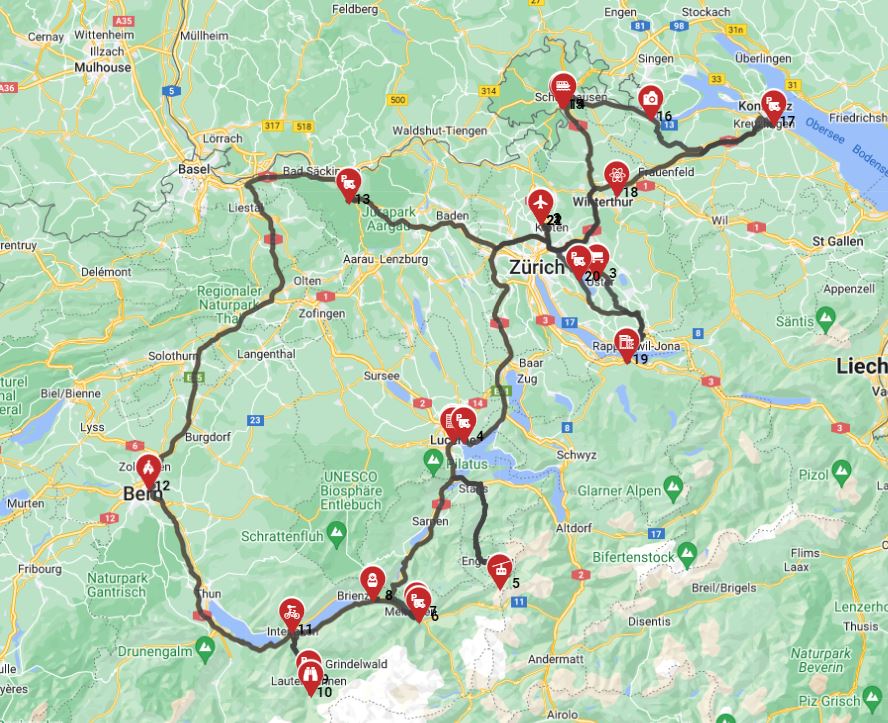 Zurich Roundtrip - Switzerland Short
 - **Interlaken:** Nestled between Lake Thun and Lake Brienz and surrounded by mountains, Interlaken is a natural choice for those focusing on the Bernese Oberland's alpine beauty.
- **Lucerne:** This picturesque city on Lake Lucerne serves as an excellent base for exploring central Switzerland, known for its iconic Chapel Bridge and surrounding peaks.
🎬 Video coming soon
Practical Information for RV Travel in Switzerland
Navigating Switzerland in a rented motorhome is an incredibly rewarding experience, but being prepared with a few key practical tips will make your journey smoother.Road Rules and Speed Limits:
In Switzerland, you will drive on the **right-hand side of the road**. Speed limits are strictly enforced: 50 km/h (31 mph) in urban areas, 80 km/h (50 mph) outside urban areas, 100 km/h (62 mph) on semi-motorways, and 120 km/h (75 mph) on motorways. However, as noted in our fun facts, if your RV or motorhome weighs over 3.5 tons, your maximum speed limit on Swiss motorways is strictly 80 km/h (50 mph). Ensure your headlights are on at all times, even during the day, as this is mandatory. A standard car driver's license is sufficient for all motorhome classes (Class A, Class B, and Class C) for rental purposes. An International Driving Permit (IDP) is recommended for visitors from non-English-speaking countries but is not mandatory in most cases.Toll Roads and Vignette:
All vehicles using Swiss motorways must display an annual vignette, costing CHF 40. There are no individual toll booths for general highway use; instead, you purchase a sticker (available at border crossings, post offices, and gas stations) and affix it to your windshield. Failure to display a valid vignette can result in significant fines. Certain tunnels, like the Great St Bernard Tunnel, operate as separate toll roads.Emergency Numbers:
For any emergency while traveling in Switzerland, the general emergency number is **112**. Other key numbers include **117** for police, **118** for fire, and **144** for ambulance services. Keep these numbers handy.SIM Card and Connectivity:
Staying connected is easy in Switzerland. You can purchase local SIM cards from providers like Swisscom, Sunrise, or Salt at airports, train stations, and mobile phone shops. Prepaid options are readily available and can be loaded with data packages suitable for navigation, communication, and staying in touch with loved ones. Many campgrounds offer Wi-Fi, though it's often a paid add-on.Fuel Types:
Diesel and unleaded petrol (Benzin) are widely available at gas stations across Switzerland. Electric charging stations for electric RVs are becoming more common, especially in urban areas and at newer campgrounds, but planning ahead is crucial if you are renting an electric vehicle. Prices for fuel are generally higher than in neighboring countries, so factor this into your overall travel budget. Our "RV Rental in Switzerland - Prices and Best Deals 2024" guide can help you further with overall trip costing.What You Shouldn't Miss
- **Interlaken and the Jungfrau Region:** Explore the adventure capital of Switzerland with activities from paragliding to hiking, surrounded by iconic peaks like the Eiger.
- **Lake Lucerne Cruise:** Take a scenic boat trip on Lake Lucerne, offering stunning views of the surrounding mountains and picturesque towns.
- **Zermatt and the Matterhorn:** Visit the car-free village of Zermatt and witness the majestic Matterhorn, accessible by train or cable car from nearby RV-friendly locations.
- **Lavaux Vineyard Terraces:** Drive through the UNESCO World Heritage Lavaux vineyards overlooking Lake Geneva, stopping for local wine tastings and breathtaking views.
- **Grindelwald's First Cliff Walk:** Experience thrilling alpine vistas from this suspended walkway near Grindelwald, combining adventure with panoramic scenery.
- **Swiss National Park:** Hike through pristine wilderness, Europe's oldest national park, and spot diverse wildlife (note: RV camping is prohibited inside the park, use nearby sites).
Looking for expert insights from Avi Bandana? Top 5 Adventures - recommendations from Avi Bandana
Discover top destinations, planning tips, all in one place!Final Thoughts
Embarking on a one-way RV rental in Switzerland promises an unforgettable journey through some of Europe's most spectacular landscapes. From the shimmering lakes to the towering Alps, the freedom of a rented motorhome allows you to immerse yourself fully in the Swiss experience, discovering hidden gems and iconic sights at your own pace. With Bandana, you're choosing a partner committed to full transparency, dedicated support, and expert guidance every step of the way. Remember to embrace the art of slow travel, allowing ample time to savor the local culture, exquisite food, and breathtaking scenery. Whether you're a meticulous planner or a spontaneous adventurer, Switzerland offers a wealth of opportunities for discovery. We're here to ensure your RV journey is not just a trip, but a cherished memory in the making.On the routes offered through RV PLANET routes, you can itemize and track every expense along the way for easy budgeting.