
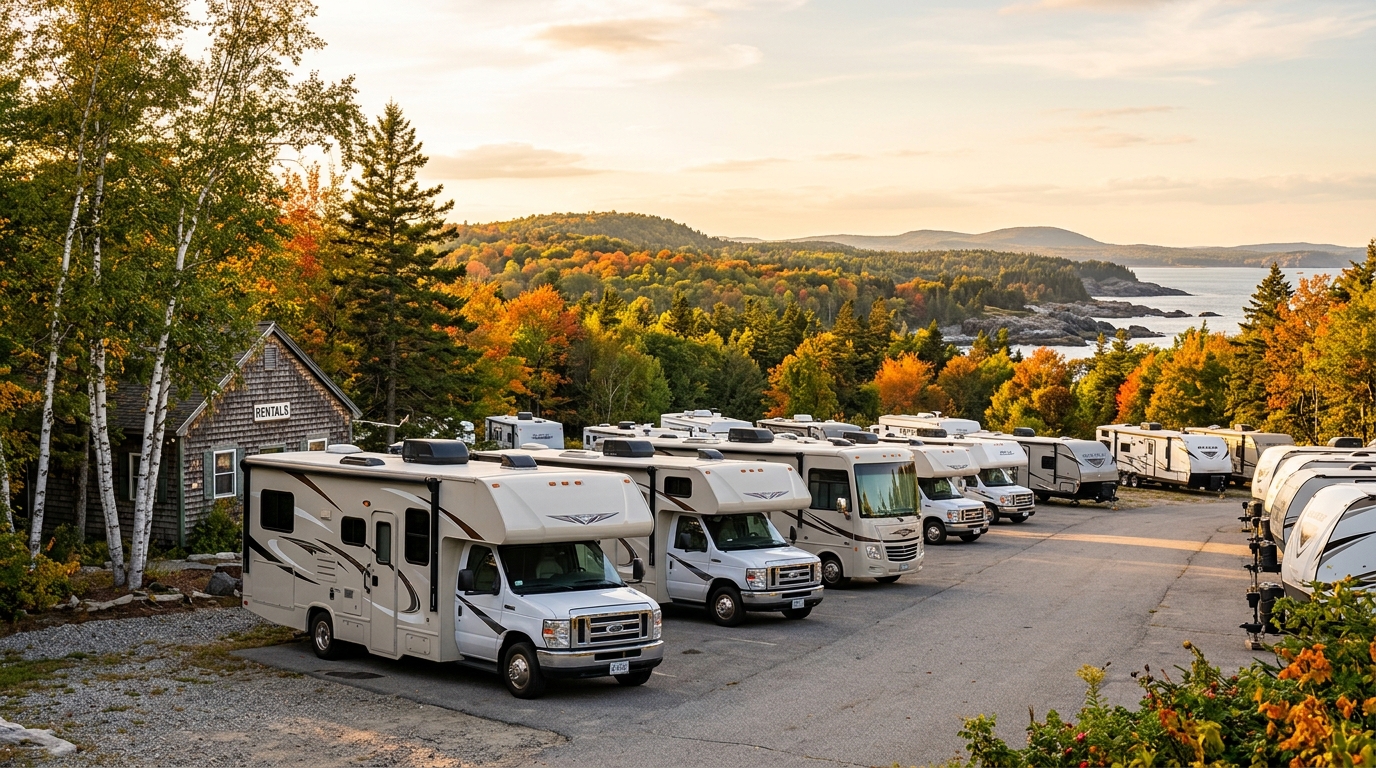
For live availability and current prices, start with our RV Rental Maine - Complete Guide 2026 guide.
In This Guide
- Where to Camp in Maine — Top Options
- Campground Types in Maine (National, Private, Wild)
- Featured RV Park or Campground in Maine
- Hookups & Amenities — What to Expect
- Booking Windows & Reservations in Maine
- Nearby Supermarkets & Resupply Points
- Best RV Class for Camping in Maine
- How to Save on Campgrounds in Maine
- How much does it cost to rent an RV one way in Maine
- What is the best time of year to RV in Maine
- Can you boondock in Maine
- What are the best places to RV in Maine
- How do I plan an RV trip in Maine
- Is it hard to drive an RV in Maine
- Can you take a camper van to Acadia National Park
- Is it worth buying an RV in Maine
Where to Camp in Maine — Top Options
Maine offers diverse camping experiences from coastal charm to rugged inland wilderness, with popular options including the Acadia National Park area, the scenic Midcoast region, and the vast, forested North Woods. When planning your one-way RV rental in Maine, consider these diverse camping locales to tailor your adventure.
Acadia National Park Region: Explore Mount Desert Island with its stunning coastal views and hiking trails; popular sites here, like those within Acadia National Park itself, require advance booking, often many months ahead. Numerous private campgrounds are also available in the surrounding towns, offering varying amenities and accessibility.
Midcoast Maine: This region offers a quintessential Maine experience, with charming coastal towns, iconic lighthouses, and renowned lobster shacks. You'll find a good selection of private and state park campgrounds, many providing scenic waterfront access or proximity to quaint villages.
Maine's North Woods: For those seeking wilderness adventures and a more remote experience, venture into the less-traveled interior. This vast area offers more opportunities for dispersed camping and a chance to truly disconnect, though it requires more self-sufficiency and careful planning for amenities.
State Parks: Maine's state parks, such as Sebago Lake State Park, offer a mix of essential amenities and beautiful natural settings. These parks are generally well-maintained and provide a great base for exploring local attractions, often with RV-friendly sites.
Campground Types in Maine (National, Private, Wild)
Maine offers a spectrum of RV camping options, ranging from fully-serviced private resorts to rustic national park sites and opportunities for dispersed camping in designated wild areas. Understanding these types will help you choose the best fit for your one-way RV rental journey.
National and State Parks: These parks typically provide a more natural setting, with sites often characterized by fewer amenities but greater scenic beauty. Expect options like water hookups and dump stations rather than full hookups. Reservations are highly recommended, especially for popular spots like Acadia National Park, as sites can book up months in advance. On the routes offered through RV PLANET routes, you can itemize and track every expense along the way for easy budgeting.
Private Campgrounds: Offering a wide array of amenities, private campgrounds cater to those seeking comfort and convenience. You'll commonly find full hookups (electric, water, sewer), Wi-Fi, laundry facilities, and recreational activities. These are excellent options for ensuring a smooth experience, particularly if you prefer not to worry about managing your RV's systems constantly.
Wild/Dispersed Camping (Boondocking): Maine allows dispersed camping in certain areas, particularly on state-owned public lands managed by the Bureau of Parks and Lands (BPL) and some private timberlands where permission is granted. This requires a high degree of self-sufficiency and strict adherence to Leave No Trace principles, including proper waste disposal and minimizing your impact.
Featured RV Park or Campground in Maine
When planning your one-way RV rental in Maine, look for campgrounds that offer a balance of essential amenities and convenient access to local attractions to enhance your trip. Prioritizing location and services will significantly impact your overall experience.
Consider locations near major attractions like Acadia National Park, Baxter State Park (though be aware that RVs over 22 feet may have restrictions in certain areas), or popular coastal towns for optimal convenience. This proximity allows for easier exploration and reduces travel time.
Prioritize parks with full hookups (electric, water, sewer) if you desire maximum comfort and wish to minimize reliance on dump stations and fresh water refills. However, many beautiful state park and BPL sites may only offer partial hookups or none at all, requiring a more self-sufficient approach.
Check for additional amenities such as Wi-Fi availability, though it can be spotty in more remote areas. Laundry facilities and clean bathhouses are also valuable considerations for longer trips.
Crucially, review campground policies regarding specific RV types and lengths. Some scenic roads or older, more remote parks might have restrictions on larger rigs, impacting where you can comfortably travel and camp.
Hookups & Amenities — What to Expect
When camping in Maine with a one-way RV rental, expect a range of hookup and amenity options, with private campgrounds generally offering more extensive services than state or national parks. Planning for your RV's needs is key to a comfortable trip.
Electric Hookups: Most developed sites, especially in private campgrounds, provide 30-amp or 50-amp connections, compatible with standard RVs. Always confirm the specific amperage available when booking, as this affects power capacity for your appliances.
Water Hookups: Potable water connections are common at most developed sites. However, it's wise to carry a water pressure regulator to protect your RV's plumbing system from potentially high or fluctuating water pressure.
Sewer/Dump Stations: Full sewer hookups are typically found in private campgrounds, allowing for direct waste disposal. Dump stations are usually available at state/national parks, some rest stops, and private facilities for a fee, essential for maintaining your RV's waste tanks.
Connectivity: Wi-Fi can be spotty or non-existent in Maine's more remote areas. For reliable internet access, consider bringing your own mobile hotspot or a satellite internet device.
Laundry & Showers: These amenities are available in most private campgrounds, often on a coin-operated basis. State parks may offer more basic facilities or none at all, so pack accordingly for longer stays.
Booking Windows & Reservations in Maine
Securing your RV campsite in Maine, especially during peak season, often requires advance planning, though options exist for more spontaneous travelers. Understanding reservation timelines is crucial for a smooth trip.
Planners should book popular sites, particularly state parks and private resorts along the coast or near Acadia, 6-12 months in advance for peak summer (July-August) and fall foliage season. These prime locations are highly sought after and fill up quickly.
Many national park campgrounds only release a limited percentage (e.g., 25%-30%) of their spots for reservations, with the remainder often operating on a first-come, first-served basis. This means arriving early can secure a spot even if reservations are full.
Spontaneous travelers can often find same-day or next-day bookings at less popular private campgrounds or by utilizing first-come, first-served sites, particularly in the shoulder seasons (late spring, early fall) or in less-visited inland areas.
Always recommend calling ahead to the campground before driving to a first-come, first-served site to verify availability, especially crucial when on a fixed one-way itinerary. This simple step can save a lot of driving and disappointment.
Reassure travelers: "You will almost certainly find a place—if not the first campground, then the next," encouraging persistence and flexibility in their search.
Nearby Supermarkets & Resupply Points
Accessing groceries and supplies for your one-way RV trip in Maine is generally convenient, with major supermarket chains located in most towns and cities along common travel routes. Planning your resupply stops will ensure you're always well-stocked.
Look for major chains such as Hannaford, Shaw's, and Walmart Supercenters in larger towns and hubs like Portland, Bangor, Augusta, and along the scenic Route 1 corridor. These offer a wide selection of goods and competitive pricing.
Smaller independent grocery stores, general stores, and co-ops are prevalent in many coastal villages and rural areas. These often provide local produce, fresh seafood, and unique specialty items, adding a local flavor to your provisions.
Always resupply before venturing into Maine's more remote regions, such as the vast North Woods. In these areas, options become scarce, and the distances between stores can be significant, making it essential to plan ahead.
Best RV Class for Camping in Maine
The optimal RV class for a one-way camping trip in Maine largely depends on your travel style, balancing maneuverability for scenic routes with comfort for extended stays. Bandana offers a range of options to suit different needs.
Class B - Camper Van: Ideal for navigating Maine's often narrow coastal roads, tight campground spots, and for boondocking, Bandana's fleet averages 5.8 meters in length and is suitable for about 2-3 adults. Their compact size allows easier access to state park sites and provides better fuel efficiency, typically around 8-10 Liters/100 km.
Class C - Alcove: A popular choice offering a good balance of space and maneuverability, Bandana's fleet averages 7.5 meters in length and accommodates about 4 adults. Class C RVs provide more amenities for comfort in campgrounds, with fuel consumption typically around 10-12 Liters/100 km.
For those prioritizing spaciousness and more extensive amenities at full-hookup campgrounds, a Class SI - Semi-integrated (averaging 6.9 meters, suitable for 3.4 adults) or a Class A - Integrated (averaging 7.5 meters, suitable for 4 adults) might be suitable. However, their larger size can be challenging on some winding Maine roads or in tight campsites, so consider your comfort level with larger vehicles.
The Bandana RV rental fleet ensures you can find a vehicle that perfectly matches your Maine RV adventure, whether you're exploring rugged coastlines or serene inland lakes.
How to Save on Campgrounds in Maine
Saving on campground fees in Maine for your one-way RV rental can significantly reduce overall trip costs, with various strategies available to budget-conscious travelers. Planning your stays wisely can lead to substantial savings.
Utilize campground discount cards, such as those offered through Bandana's network, which can provide savings at participating private campgrounds across Maine. These programs often offer nightly discounts or special package deals.
Travel during the shoulder seasons (May-early June or September-October) to benefit from lower rates, fewer crowds, and often more available sites compared to the peak summer season. This timing also offers pleasant weather for exploring.
Opt for municipal, county, or state park campgrounds over private resorts. They generally offer more budget-friendly rates, albeit with potentially fewer amenities. These parks often provide a more natural and tranquil camping experience.
Book longer stays (3+ nights) where available, as many campgrounds offer weekly rates that are more economical per night compared to daily rates. This can be particularly beneficial for extended exploration.
Consider sharing hookups in groups if traveling with friends, splitting the cost of a larger site for a more economical stay. Many sites can accommodate multiple RVs, especially at private campgrounds with more flexible policies.
How much does it cost to rent an RV one way in Maine
The cost of a one-way RV rental in Maine typically ranges from $150 to $400+ per night, influenced by the RV class, rental duration, season, and the specific one-way relocation fee. Transparency in pricing is essential, which Bandana Caravan provides.
RV Class: Smaller camper vans (like Bandana's Class B, averaging 5.8m) are generally less expensive per night than larger Class C (averaging 7.5m) or Class A models. Consider your group size and comfort needs when choosing a vehicle to manage costs effectively.
One-Way Fees: Expect additional surcharges for one-way rentals, which cover the cost of relocating the vehicle. These fees can vary significantly, from a few hundred to over a thousand dollars, depending on the distance and demand for vehicle repositioning.
Seasonality: Peak summer (July-August) commands the highest rental rates and one-way fees due to high demand. Shoulder seasons (late spring, early fall) offer better value and availability, making them attractive for budget-conscious travelers.
Duration: Longer rentals often have a lower per-night cost, but the fixed one-way fee remains a significant factor in the overall price. Always factor this drop-off charge into your budget.
Budget Tips: To save money, consider booking during the shoulder season, opting for a smaller RV, and inquiring about special promotions or one-way relocation deals that occasionally become available.
What is the best time of year to RV in Maine
The best time of year to RV in Maine depends heavily on your desired activities and tolerance for crowds, with late spring, summer, and fall each offering distinct experiences and seasonal nuances. Planning around these variations will optimize your trip.
Late Spring (May-early June): This period is ideal for avoiding the peak crowds and experiencing Maine's landscape as it awakens. However, some campgrounds may just be opening, and 'mud season' or the prevalence of black flies, especially inland, can be a factor. Pack appropriate gear and repellents.
Summer (July-August): This season offers warm weather perfect for coastal activities like swimming and exploring. Be prepared for peak tourist season, which means higher rental rates, fully booked campgrounds, and bustling towns. Early reservations are absolutely essential for summer travel.
Fall (September-October): Maine in the fall is renowned for its spectacular foliage, offering cooler temperatures and fewer crowds after Labor Day. This is prime time for scenic drives and hiking, but popular leaf-peeping areas require booking well in advance.
Winter (November-April): While challenging for traditional RVing due to snow, potential road closures, and freezing temperatures, intrepid travelers might find unique opportunities. Exploring for winter camping requires specialized, insulated RVs and a focus on activities like cross-country skiing or snowmobiling, demanding specific preparations.
Can you boondock in Maine
Yes, boondocking, or dispersed camping, is possible in Maine, primarily on public lands managed by the Bureau of Parks and Lands (BPL) and on some private timberlands with explicit permission. This requires self-sufficiency and strict adherence to specific regulations.
Public Lands: The Maine Bureau of Parks and Lands (BPL) manages extensive tracts where dispersed camping is generally allowed. These sites are often first-come, first-served and require proper waste disposal and strict adherence to Leave No Trace principles to preserve the natural environment.
Private Timberlands: Many paper and timber companies own vast landholdings in Maine and may permit camping. Always research and obtain permission beforehand, as rules vary significantly, and some areas are strictly off-limits.
Safety & Logistics: Limited cell service is common in remote boondocking areas. Inform others of your plans, carry physical maps, and ensure your RV, like Bandana's Class B Camper Vans (averaging 5.8m, seating 3.2), is equipped for off-grid living with sufficient water, power, and waste capacity.
Regulations: Always check current regulations regarding fire restrictions, maximum length of stay, waste disposal, and any specific no-camping zones before setting up camp to ensure you are compliant.
What are the best places to RV in Maine
Maine offers a wide array of exceptional RV destinations, from its iconic coastline and islands to its vast, rugged interior, catering to various interests and offering in-depth itineraries beyond just coastal drives. Explore these diverse options for your one-way RV adventure.
Coastal Charm & Iconic Beauty: Explore Acadia National Park on Mount Desert Island (reserve campsites well ahead!), the picturesque Midcoast towns like Camden and Boothbay Harbor, and the rocky shores of Down East Maine for classic coastal experiences.
Interior Wilderness & Adventure: Venture into the vast North Woods, including Baxter State Park (note: RVs over 22 feet may have restrictions in some areas) for hiking, fishing, and moose-watching opportunities. The Rangeley Lakes Region also offers beautiful interior scenery, ideal for water sports and scenic drives.
Off-the-Beaten-Path Locations: Discover charming, lesser-known towns like Eastport (the easternmost city in the U.S.), the tranquil Moosehead Lake region for remote beauty, or the quiet villages along the St. Croix International Waterway for a more secluded experience.
Cultural & Historical Exploration: Combine your RV trip with culinary delights in Portland, explore art galleries in Ogunquit, or visit historical maritime sites in Bath. This ensures a diverse and engaging experience, suitable for various interests and trip durations.
How do I plan an RV trip in Maine
Planning a successful RV trip in Maine involves considering seasonal challenges, route specifics, resupply logistics, and embracing local culture to ensure a smooth and enjoyable journey. A well-thought-out plan is essential for maximizing your experience.
Itinerary Development: Beyond popular spots, build in-depth itineraries that match your interests—whether that's adventure, food, art, history, or relaxation. Consider multi-day or multi-week options to explore both coastal and interior regions thoroughly.
Vehicle Suitability: Match your RV type to your chosen route. A nimble Class B Camper Van (Bandana's fleet averages 5.8m) is ideal for narrow coastal roads and remote campsites, while larger Class C (averaging 7.5m) or Class A RVs are better suited for wider routes and developed campgrounds.
Navigation & Connectivity: Download offline maps and consider a satellite communication device, as cell service can be limited in Maine's extensive remote areas. This ensures you won't get lost and can stay connected when needed.
Seasonal Preparations: Be ready for specific seasonal challenges: 'mud season' in spring, black flies/mosquitoes in early summer (pack repellent!), and rapidly changing weather in fall, including potential for early snow. Proper preparation is key to comfort.
Local Culture & Economy: Plan to experience authentic local culture by supporting small businesses, engaging with communities (e.g., at farmers' markets), and understanding local etiquette and environmental practices. This enriches your travel experience.
Practical Challenges: Research specific local regulations for parking and overnight stays. Pre-plan resupply points and water sources, especially for off-grid camping, and be aware of narrow roads and potential for unpaved sections.
Is it hard to drive an RV in Maine
Driving an RV in Maine presents unique challenges, particularly due to winding coastal roads, narrow village streets, and varying road conditions in remote areas, but it is manageable with careful planning and awareness. Understanding these factors will help you navigate with confidence.
Narrow Roads: Many scenic coastal routes, particularly historic Route 1 and local village streets, are quite narrow and winding. Driving larger RVs, like Bandana's Class A or C models (averaging 7.5m), requires more demanding maneuvering and slower speeds.
Unpaved Roads: Venturing into the North Woods or other remote areas may involve unpaved, gravel roads. These require slower speeds and careful navigation, which can impact fuel consumption (e.g., Bandana's Class C averages 10-12 Liters/100km).
Limited Cell Service: Expect vast stretches with no cell reception, especially inland. This necessitates pre-downloading maps and directions and potentially carrying a satellite communicator for safety and navigation.
Parking: Finding suitable parking for larger RVs in popular coastal towns can be challenging. Consider parking on the outskirts and utilizing local shuttles, walking, or public transport to explore town centers.
Seasonal Conditions: Be prepared for potential snow and ice in winter, and muddy conditions in spring. Fall foliage season brings increased traffic on popular routes, requiring patience and flexible scheduling.
Rig Size: Smaller RVs, such as Bandana's Class B Camper Vans (averaging 5.8m) or Truck Campers (averaging 5.5m), offer greater flexibility and ease of driving on Maine's diverse roadways.
Can you take a camper van to Acadia National Park
Yes, camper vans are an excellent choice for visiting Acadia National Park, offering superior maneuverability and easier access to various areas within and around the park compared to larger RVs. Their compact nature is ideal for exploring.
Maneuverability: Class B Camper Vans, like those in Bandana's fleet (averaging 5.8 meters in length), are particularly well-suited for Acadia's Park Loop Road, scenic overlooks, and tight parking spaces that can be challenging for bigger rigs. This allows for more spontaneous exploration of the park's viewpoints.
Campground Access: Acadia's campgrounds, such as Seawall or Blackwoods, have size restrictions. Camper vans fit easily into most sites, whereas larger Class A or C RVs (averaging 7.5 meters) may find fewer available sites or tighter spots, necessitating very early booking.
Exploring Mount Desert Island: The compact size of a camper van allows for easier navigation through charming towns like Bar Harbor and Northeast Harbor, as well as access to smaller, less-traveled roads on the island, revealing hidden gems.
Boondocking Nearby: While boondocking isn't permitted *inside* Acadia National Park, a camper van makes it easier to find dispersed camping spots on surrounding public lands outside the park's boundaries, extending your adventure.
Is it worth buying an RV in Maine
For those planning a one-way trip, renting an RV in Maine is generally more practical and cost-effective than purchasing, offering flexibility without the long-term commitment and expenses of ownership. Bandana Caravan simplifies the rental process.
One-Way Flexibility: Renting allows you to pick up your RV in one location (e.g., Portland) and drop it off in another, which is ideal for a one-way journey through Maine without the logistical headache of returning a purchased vehicle.
Cost Efficiency for Short-Term Use: For a single trip, the cost of renting (including potential one-way fees) is significantly lower than the upfront purchase price, insurance, maintenance, storage, and depreciation associated with RV ownership.
Variety of RV Types: Renting provides access to various RV classes, from compact Class B Camper Vans (Bandana's fleet averages 5.8m) ideal for Maine's roads to more spacious Class C RVs (averaging 7.5m). This allows you to choose the best fit for each specific trip without a long-term commitment.
No Maintenance Worries: Rental RVs are typically well-maintained and inspected, eliminating the burden and unexpected costs of repairs and upkeep that owners often face.
Test Before You Invest: Renting is an excellent way to experience RV travel and determine if it suits your lifestyle before considering a significant financial investment in a purchase. It's the perfect trial run.
What You Shouldn't Miss
- Drive the Park Loop Road in Acadia National Park for stunning coastal vistas, stopping at Thunder Hole and Otter Cliff.
- Explore the charming coastal towns of the Midcoast region, such as Camden or Rockland, with their vibrant harbors and arts scenes.
- Indulge in fresh Maine lobster rolls and chowder from a local seafood shack—a quintessential culinary experience.
- Hike to the summit of Cadillac Mountain in Acadia for sunrise or sunset views, experiencing one of the first rays of sun in the US.
- Discover the vastness of Maine's North Woods, perhaps visiting Baxter State Park for a taste of rugged wilderness and potential moose sightings.
- Take a scenic drive along Route 1, stopping at picturesque lighthouses and coastal villages, especially in the Down East region.
Final Thoughts
Maine's stunning natural beauty and diverse landscapes offer an incredible backdrop for a one-way RV adventure. From the rocky shores of Acadia to the vast inland forests, there’s a discovery waiting around every bend.
With Bandana Caravan, you can embark on your Maine journey with confidence, knowing you have access to a wide range of rental options and transparent pricing. We're here to help you plan an unforgettable road trip, making the process as smooth and enjoyable as the travel itself.
Get inspired for your next trip! Discover top destinations, planning tips, and more, all in one place. Plan your RV itinerary in advance with minimal effort and maximum enjoyment.
