
For live availability and current prices, start with our RV Rental Israel - Complete Guide 2026 guide.
In This Guide
- Where to Camp in Israel — Top Options
- Campground Types in Israel (National, Private, Wild)
- Featured RV Park or Campground in Israel
- Hookups & Amenities — What to Expect
- Booking Windows & Reservations in Israel
- Nearby Supermarkets & Resupply Points
- Best RV Class for Camping in Israel
- How to Save on Campgrounds in Israel
- Is RV travel safe in Israel?
- What are the driving rules for RVs in Israel?
- Do I need an international driver's license for an RV in Israel?
- How much does an RV trip in Israel cost?
- What cultural etiquette should RV travelers know in Israel?
- What are the emergency services for RVs in Israel?
Where to Camp in Israel — Top Options
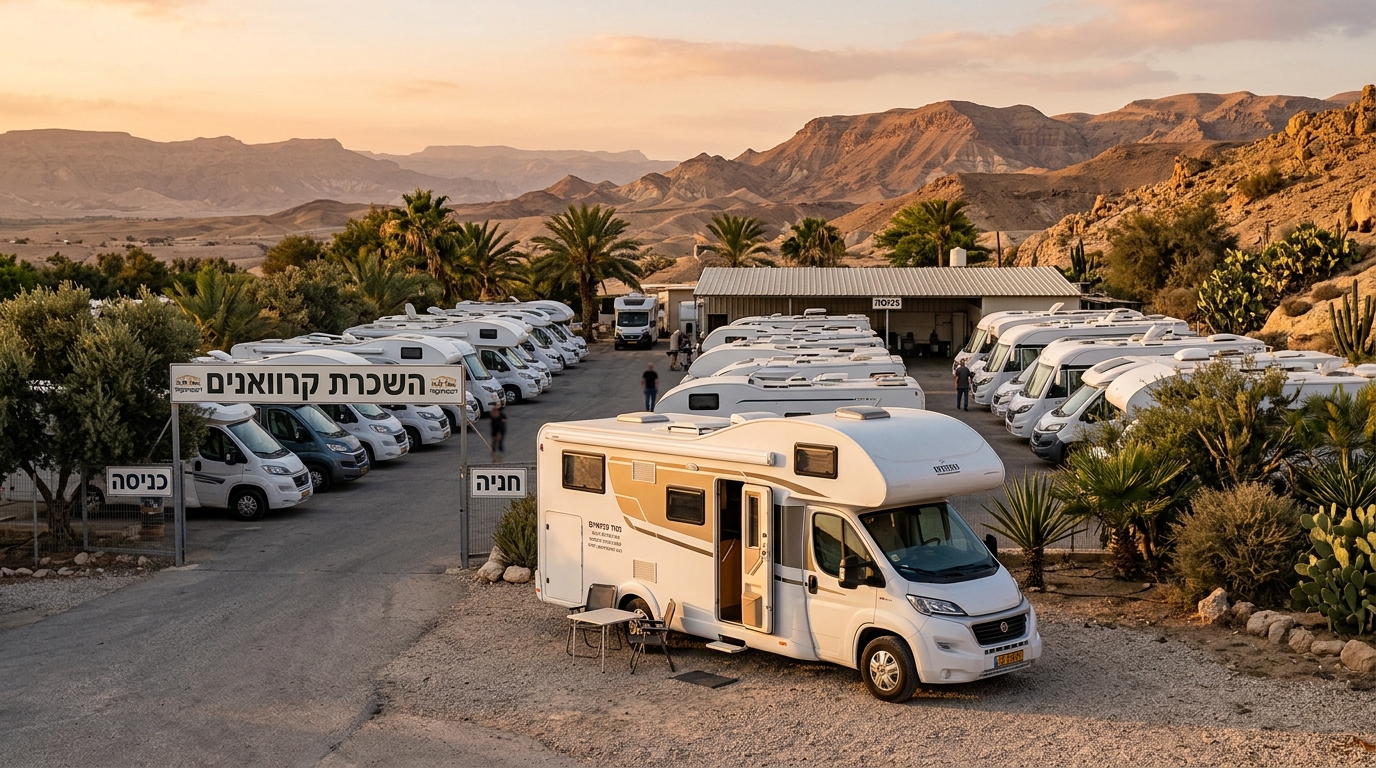
Israel offers diverse RV camping experiences across its distinct geographical regions, from the lush Galilee in the north to the historic Judean Desert and the stark beauty of the Negev in the south. Popular regions for RV exploration include Galilee & Golan for stunning nature and the Sea of Galilee, the Judean Desert & Dead Sea for unique landscapes and historical sites, and the Negev Desert for vast open spaces and adventurous exploration. The Coastal Plains provide access to beautiful beaches and vibrant cities, offering a different camping experience altogether.
Campground Types in Israel (National, Private, Wild)
RV camping in Israel primarily occurs in designated national park sites, privately owned campgrounds, and specific 'night campgrounds' within nature reserves. It's crucial to note that unpermitted wild camping is generally illegal or heavily restricted due to environmental protection and security concerns; always verify local regulations. National Park Campgrounds often provide basic amenities in scenic locations and typically require advance reservations, adhering to Israel Nature and Parks Authority (INPA) rules. Private Campgrounds usually offer more extensive amenities like full hookups, showers, and Wi-Fi, generally at a higher cost and often situated near popular tourist attractions. Adhering to 'Leave No Trace' principles is essential everywhere, particularly in Israel's sensitive natural environments.
Featured RV Park or Campground in Israel
While specific campground recommendations are best explored via resources like RV PLANET, an ideal RV park in Israel would offer essential hookups (electricity, water, grey/black water disposal), clean shower and restroom facilities, and reliable Wi-Fi. These parks are often situated close to key attractions or natural beauty spots. Prioritize locations that offer good security measures, which is particularly important for international travelers. Family-friendly amenities such as playgrounds or picnic areas can significantly enhance your camping experience.
Hookups & Amenities — What to Expect
RV campgrounds in Israel typically provide electric hookups (230V, 50Hz, Type H or C outlets), fresh water access, and grey/black water dumping stations, though availability can vary by location and campground type. The standard electricity is 230V, 50Hz; international visitors should bring appropriate adapters if their equipment has different plug types. Fresh water hookups are common, but always confirm potability. Dumping stations are readily available at most established campgrounds and some service stations. Wi-Fi is increasingly common at private campgrounds but less so at national park sites. Laundry facilities and showers are more prevalent at private sites, often coin-operated or included in the price. LPG (Propane) is available at specialized gas stations or in larger towns; confirm availability along your intended route. Mobile/Internet Coverage is generally good in populated areas but can be spotty in remote desert regions, so plan for offline navigation if venturing off the beaten path. On the routes offered through RV PLANET routes, you can itemize and track every expense along the way for easy budgeting.
Booking Windows & Reservations in Israel
RV travelers planning a trip to Israel should aim to book popular national park campgrounds several months in advance, especially during peak season, although many sites also offer first-come, first-served options. For popular sites, such as those near Ein Gedi or the Masada area, planners should book 3-6 months ahead, particularly for holidays or during the summer months. Spontaneous travelers can often find spots as many national park campgrounds reserve only 25-30% of their sites for reservations, leaving the rest for walk-ins; however, calling ahead is highly recommended. You will almost certainly find a place—if not at the first campground, then at the next—especially if you maintain flexibility with your itinerary. For one-way rentals, factor in travel time and potential booking challenges if your drop-off point is far from your desired camping regions.
Nearby Supermarkets & Resupply Points
RVers in Israel can easily resupply at major supermarket chains like Shufersal, Rami Levy, or Victory, which are found in most cities and larger towns across the country. Major chains include Shufersal (with various formats like 'Deal' and 'Sheli'), Rami Levy, Victory, Yohananof, and Osher Ad, all offering a wide selection of groceries. Smaller towns and kibbutzim often feature local 'makolets' (convenience stores) for basic necessities. For fresh produce, fruits, vegetables, and local specialties, seek out traditional 'shukim' (markets). Be mindful that most stores close early on Friday afternoons and remain closed until Saturday evening or Sunday morning; plan your resupply activities accordingly to avoid disruptions.
1Best RV Class for Camping in Israel
For camping in Israel, Class B Camper Vans and Class SI Semi-integrated RVs are often recommended due to their superior maneuverability on narrower roads and versatility for both organized campgrounds and more remote, permitted spots. Class B Camper Vans are ideal for couples or small families, offering excellent agility for navigating Israeli cities, smaller roads, and both hookup-enabled and permitted boondocking spots. Class SI Semi-integrated RVs provide a good balance of comfort and agility, well-suited for families seeking more amenities while remaining manageable on most roads. Class C Alcove motorhomes offer more sleeping capacity, making them great for larger families, but they can be less agile in dense urban areas and are best suited for established campgrounds. The largest option, Class A Integrated, offers luxury but can be challenging for some Israeli road conditions and parking, making them best for well-developed RV parks. Class TC Truck Campers are compact and robust, good for reaching more remote, rougher terrains if you seek a rugged experience. Consider fuel consumption, as RVs generally consume 8-12 Liters/100 km for most classes, an important factor given local fuel prices.
How to Save on Campgrounds in Israel
To significantly reduce RV camping costs in Israel, leverage campground discount cards, travel during the shoulder season, and prioritize municipal or regional campgrounds over private resorts. Inquire if your RV rental provider offers access to campground discount cards for potential savings. Traveling during spring (excluding Passover) or autumn (excluding Sukkot) often means lower rates and fewer crowds. Municipal or regional campgrounds are typically more affordable than full-service private RV resorts. Many campgrounds offer weekly rates that are more economical than nightly rates for stays of three nights or more. Consider group travel by sharing hookups or splitting site costs with another RV if traveling in a convoy. Legal 'night campgrounds' within nature reserves, while often basic, are typically cheaper or free compared to full-service sites.
Is RV Travel Safe in Israel?
RV travel in Israel is generally considered safe, especially within popular tourist regions. However, travelers should remain aware of current regional stability and adhere to specific road safety guidelines. Monitor official travel advisories from your home country's government before and during your trip for updates on regional stability. Israeli roads are generally well-maintained, but exercise caution regarding aggressive driving in urban areas and the potential for dust storms in desert regions. Stick to well-traveled tourist routes, avoid restricted military zones, and always keep your RV locked with valuables secured. Familiarize yourself with local emergency numbers: Police (100), Ambulance (101), and Fire and Rescue (102).
What are the driving rules for RVs in Israel?
Driving an RV in Israel requires adherence to standard Israeli road laws, including driving on the right, mandatory seatbelt use, and yielding to pedestrians. Exercise extra consideration for your vehicle's size on narrower roads and in city traffic. The standard speed limits are generally 50 km/h in urban areas, 80-90 km/h on intercity roads, and 100-110 km/h on highways; always observe posted signs. Seatbelts are mandatory for all occupants. Parking can be challenging for larger RVs in cities; look for designated parking areas or opt for spots on the outskirts. Be prepared for assertive driving, especially in cities. Traffic circles are common; yield to traffic already in the circle. Road signs are primarily in Hebrew, Arabic, and English, so familiarizing yourself with common symbols is helpful. Use reliable GPS (Waze is very popular) and have offline maps for areas with potentially spotty signal. Be aware of flash flood warnings during rainy seasons and potential sand on roads in desert areas. While less common on tourist routes, cooperate fully if encountered and have your documents ready regarding potential military checkpoints.
Do I need an international driver's license for an RV in Israel?
Yes, international visitors renting an RV in Israel are strongly advised to obtain an International Driving Permit (IDP) in addition to holding a valid driver's license from their home country. An IDP, accompanied by your original license, is legally recognized and facilitates easier interactions with local authorities and rental agencies. Ensure your RV rental includes comprehensive insurance coverage; verify what it covers (e.g., liability, collision, theft) and consider additional personal travel insurance. Be mindful of parking restrictions, speeding, and illegal turns, as fines can be substantial in Israel.
How much does an RV trip in Israel cost?
The total cost of an RV trip in Israel for a one-way rental can vary significantly. This includes rental fees, estimated fuel expenses (around 10-12 L/100km for most RVs), varying campground costs, and daily expenses for food and activities. One-way rentals often incur a surcharge, and rates vary by RV class, season, and duration. Israel has relatively high fuel prices, so budget accordingly for Bandana's fleet average consumption of 10-12 Liters per 100 km for most RV classes. Campground costs can range from $20-$60+ per night for basic to full-service sites, with national park sites typically cheaper than private resorts; primitive 'night campgrounds' may be free or nominal. Budget food expenses similar to grocery costs in Western countries, with significant savings possible by cooking in your RV. Highway 6 (Trans-Israel Highway) is a major toll road; ensure your rental includes a transponder or understand payment methods. Parking fees are common in cities and popular attractions, so factor these into your budget. Entrance fees to national parks, museums, and other attractions will add to your overall trip cost. For ideas you can prep on the road, watch our RV-friendly recipes playlist on YouTube.
What cultural etiquette should RV travelers know in Israel?
RV travelers in Israel should observe local customs and cultural sensitivities, especially when visiting religious sites, rural communities, or during Shabbat, to ensure respectful interaction with local communities. From Friday sunset to Saturday sunset, many businesses close, public transport is limited, and driving in religious neighborhoods is often discouraged; plan your travel and resupply activities accordingly. When visiting holy sites (synagogues, churches, mosques), dress modestly, covering shoulders and knees; some sites may require head coverings for women. A simple 'Shalom' (hello/peace) or 'Boker Tov' (good morning) is always appreciated in greetings. Israelis are often very hospitable; accept offers of coffee or food graciously. Be mindful of noise levels, particularly in quiet neighborhoods or near religious sites, and especially during Shabbat. Haggling is not common in supermarkets but is expected and part of the experience in traditional markets (shukim).
What are the emergency services for RVs in Israel?
In case of an emergency with an RV in Israel, primary emergency services are accessible via standard European emergency numbers. Your RV rental company should also provide specific roadside assistance contacts. Dial 100 for Police, 101 for Ambulance (Magen David Adom), and 102 for Fire and Rescue. Your one-way RV rental agreement will include emergency roadside assistance contact numbers; keep these readily accessible. Look for auto mechanics specializing in commercial vehicles or vans, particularly in larger towns, ensuring they can handle RV-specific issues. Major cities have excellent hospitals, and smaller towns have clinics; know your route and nearest medical points. Ensure your mobile phone has good coverage or consider a local SIM card; always have a portable charger for essential devices.
What You Shouldn't Miss
- Explore the ancient city of Jerusalem, including the Western Wall, the Church of the Holy Sepulchre, and the Old City markets.
- Float effortlessly in the Dead Sea, the lowest point on Earth, and experience the therapeutic mineral-rich mud.
- Drive the scenic coastal highway from Tel Aviv to Haifa, stopping at ancient Roman ruins like Caesarea.
- Journey through the Negev Desert to discover the stunning Ramon Crater and visit the Bedouin communities for a cultural experience.
- Experience the vibrant city life of Tel Aviv, with its Bauhaus architecture, bustling markets, and beautiful beaches.
- Discover the historical sites around the Sea of Galilee, including Capernaum and the Mount of Beatitudes, offering a serene RV journey.
Final Thoughts
Embarking on an RV journey through Israel offers a unique perspective on this ancient and vibrant land. The freedom to explore at your own pace, from the bustling cities to the serene deserts, is unparalleled. With the right planning and a spirit of adventure, your one-way RV rental in Israel promises an experience that is both enriching and deeply personal.
Remember, we're here to support your journey from the moment you start planning. Discovering Israel by motorhome is more than just a trip; it's an opportunity to connect with history, culture, and breathtaking landscapes in a way that only an RV can provide. Get inspired for your next trip and start planning your Israeli adventure today!
For finding campsites and campgrounds during your trip, we recommend using RV PLANET — a great resource for locating available spots along your route.
