For live availability and current prices, start with our RV Rental Cape Town - Complete Guide 2026 guide.
In This Guide
- Where to Camp in Cape Town — Top Options
- Campground Types in Cape Town (National, Private, Wild)
- Featured RV Park or Campground in Cape Town
- Hookups & Amenities — What to Expect
- Booking Windows & Reservations in Cape Town
- Nearby Supermarkets & Resupply Points
- Best RV Class for Camping in Cape Town
- How to Save on Campgrounds in Cape Town
- Is it worth renting an RV in South Africa?
- How much does it cost to rent an RV in Cape Town?
- What do you need to rent an RV in South Africa?
- Can you camp anywhere in South Africa?
- What is the best month to visit Cape Town?
- Are roads in South Africa safe?
- Is it hard to drive an RV in South Africa?
- What side of the road do you drive on in South Africa?
- How much is fuel in South Africa?
- Class B - Camper Van in Cape Town
- Class SI - Semi-integrated in Cape Town
- Class C - Alcove in Cape Town
- Class TC - Truck Camper in Cape Town
Where to Camp in Cape Town — Top Options
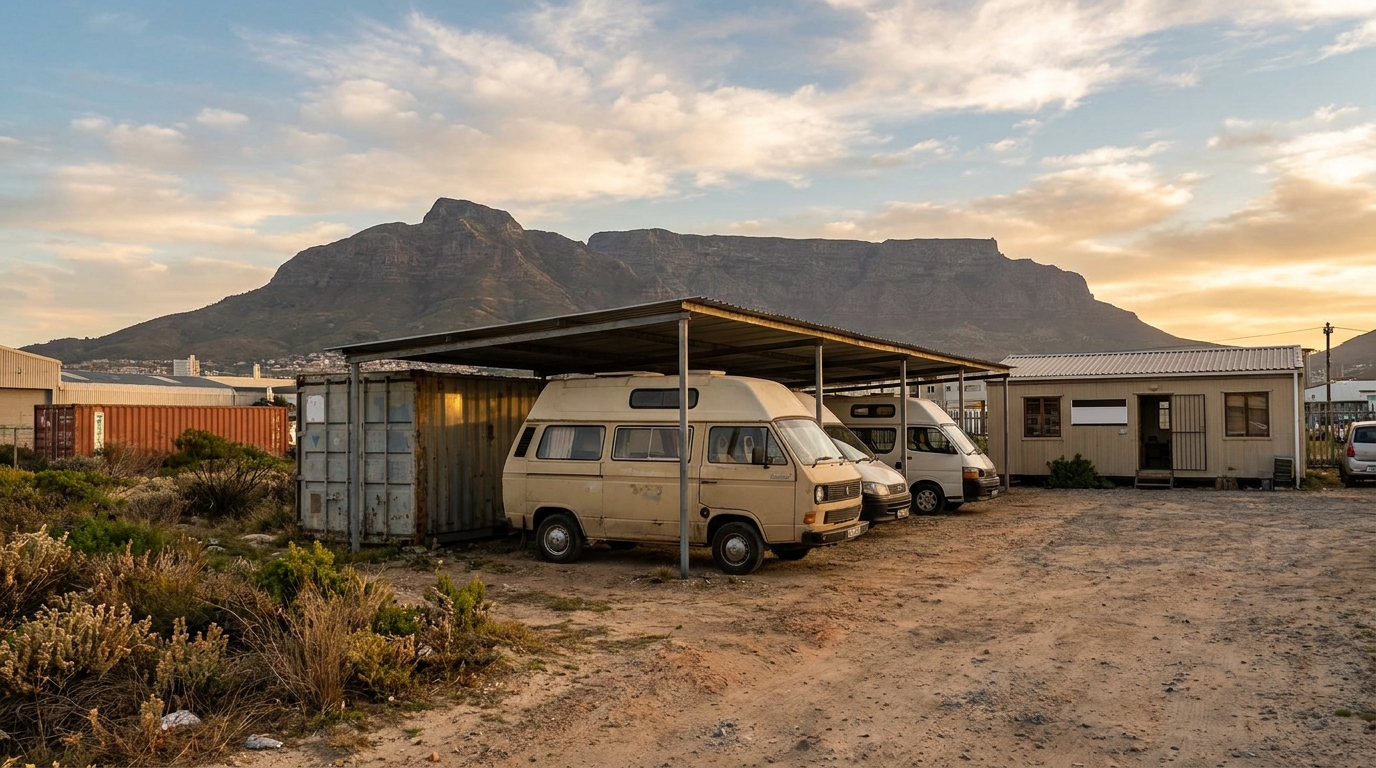
Cape Town's diverse landscapes offer a range of camping experiences, from scenic coastal spots to tranquil Winelands retreats. Popular camping regions include the dramatic West Coast, the picturesque Winelands, and various coastal areas south of the city. When selecting a campsite, prioritize locations that provide secure, well-maintained stands with essential hookups and convenient access to attractions or public transport, offering a balance of natural beauty and urban convenience.
Campground Types in Cape Town (National, Private, Wild)
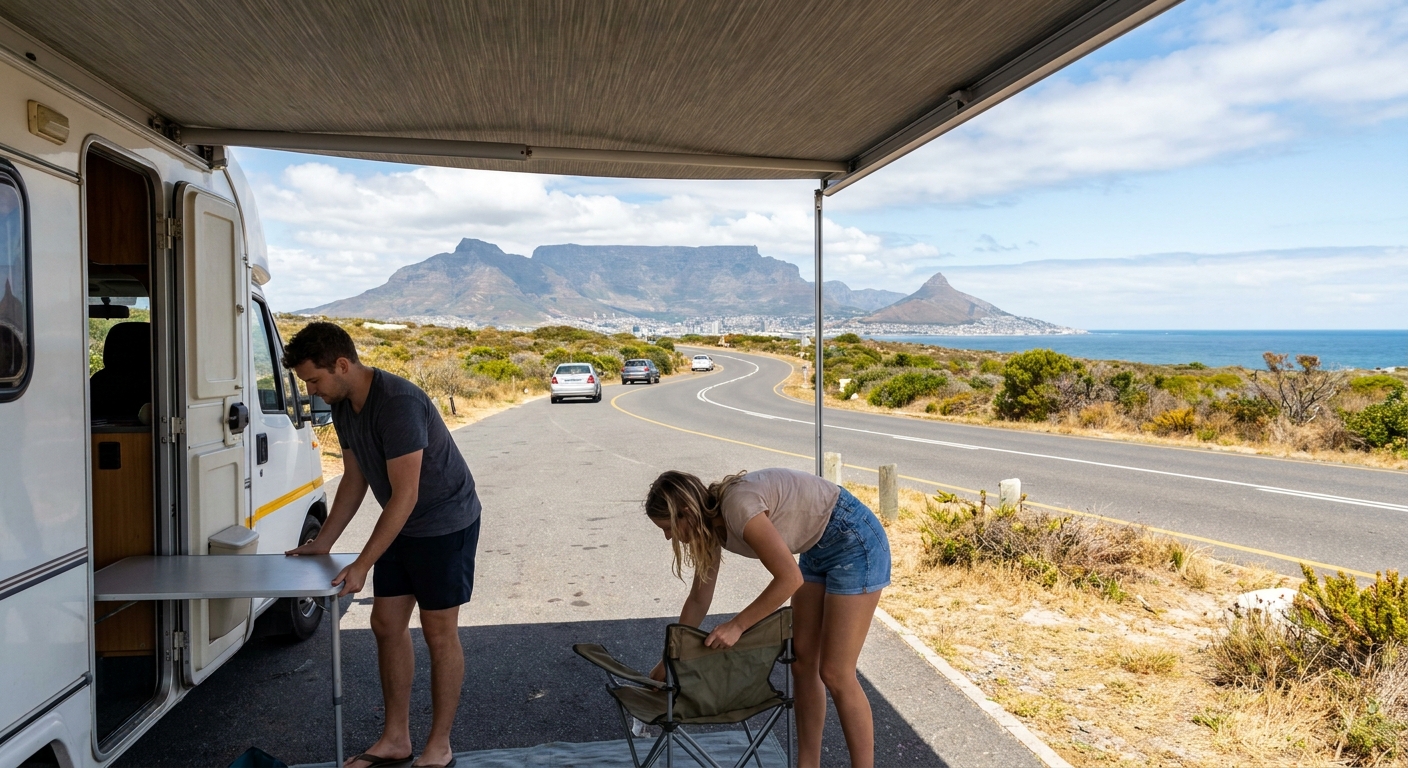
Camping in Cape Town predominantly involves designated national park sites and private campgrounds, with wild camping being strictly prohibited and unsafe due to security concerns and environmental regulations. National parks managed by SANParks (South African National Parks) offer stunning natural settings, often requiring advance bookings and providing a more rustic experience. Private campgrounds generally provide a wider array of amenities, catering well to RVs with varying comfort levels, including essential hookups and often more comprehensive facilities like Wi-Fi and communal areas.
Featured RV Park or Campground in Cape Town
When choosing an RV park in Cape Town, look for facilities offering secure, well-maintained stands with essential hookups and easy access to local attractions or transportation. Prioritize sites that provide reliable 220-240V electricity, fresh water points, and waste disposal facilities (dump stations), alongside clean ablution blocks. Factors like security measures, pet-friendliness, and suitability for your RV's size should also guide your decision, ensuring a comfortable and convenient base for your explorations. On the routes offered through RV PLANET routes, you can itemize and track every expense along the way for easy budgeting.
Hookups & Amenities — What to Expect
Most RV campgrounds in Cape Town offer standard electrical hookups (220-240V, 50Hz, Type M sockets), fresh water access, and waste disposal facilities. For electrical connections, you'll typically need a Type M adapter, which is specific to South Africa. Beyond these essentials, expect shared amenities like ablution blocks with hot showers, laundry facilities, and communal braai (BBQ) areas. Wi-Fi access is often available but can be limited or come with an additional charge.
Booking Windows & Reservations in Cape Town
For popular RV campsites in Cape Town, especially during the peak season from December to February, booking several months in advance is highly recommended. Planners should aim to reserve 3-6 months ahead for guaranteed availability, particularly for one-way RV rentals where precise itinerary planning is key. Many national park campgrounds release only 25-30% of their spots for reservations, with the remainder allocated on a first-come, first-served basis, making calling ahead crucial for spontaneous travelers.
Even without an advance reservation, finding a spot is usually possible. If your first choice campground is full, don't worry—the next one is often just a short drive away. Always call ahead to confirm availability before driving a long distance to a potential campsite.
Nearby Supermarkets & Resupply Points
Travelers in Cape Town can easily resupply their RVs at major supermarket chains like Shoprite, Checkers, Pick n Pay, and Woolworths, which are widely available in urban and peri-urban areas. These supermarkets are conveniently located, often within shopping centers with ample parking suitable for RVs, making them ideal for stocking up on fresh produce, local delicacies, and essentials for your onboard meals. For ideas you can prep on the road, watch our RV-friendly recipes playlist on YouTube.
Best RV Class for Camping in Cape Town
For navigating Cape Town and its surroundings, Class B Camper Vans are an excellent choice due to their maneuverability, making them ideal for both urban exploration and scenic routes. For families or groups seeking more space and comfort, Class C Alcove models offer ample living and sleeping areas. For instance, a Class B Camper Van, typically around 5.6 meters long and sleeping up to three, offers fuel efficiency of 6-11 liters per 100km, while a Class C Alcove, usually 6.7 meters and accommodating up to six, consumes around 12 liters per 100km but provides more generous living space.
Consider the size and amenities that best suit your travel style when choosing your rented RV. For example, the 2 Berth Hi Top (Class B) is perfect for couples, while the 29' Class C Motorhome offers space for larger groups.
How to Save on Campgrounds in Cape Town
To save on RV campground fees in Cape Town, leverage discount cards offered by rental providers, book during the shoulder seasons (March-May, September-November), and consider opting for municipal or regional sites over private resorts. Many campgrounds also offer discounted weekly rates for stays of three or more nights, making longer stays more economical.
Is it worth renting an RV in South Africa?
Renting an RV in South Africa is highly worthwhile for travelers seeking unparalleled flexibility and an immersive way to explore diverse landscapes at their own pace. An RV offers the freedom to alter itineraries spontaneously, granting access to remote natural beauty and facilitating unique cultural interactions beyond typical tourist routes. For families or groups, an RV can be more economical than combining car rental with hotel stays, especially when factoring in self-catering capabilities.
How much does it cost to rent an RV in Cape Town?
The total cost to rent an RV in Cape Town typically ranges from ZAR 1,500 to ZAR 4,000 per day, varying significantly based on RV class, rental season, duration, and additional fees. This daily rate typically excludes fuel, campsite fees, and insurance. A comprehensive budget should also account for fuel consumption (Class B Camper Vans average 6-11 L/100km, Class C Alcoves average 12 L/100km), campsite fees (ZAR 200-800 per night), mandatory insurance, and potential one-way rental drop-off charges specific to your chosen itinerary.
Additional costs may include mileage packages, toll road fees, and differing attraction entrance fees for larger vehicles, so thorough planning is essential to avoid unexpected expenses. For travelers exploring the region, our guide to RV PLANET routes can help itemize and track every expense for easy budgeting.
What do you need to rent an RV in South Africa?
To rent an RV in South Africa, you generally need a valid driver's license. An International Driving Permit (IDP) is often recommended for non-SA residents as a legal translation of your home license. You'll also need a major credit card for a security deposit, which can amount to several thousand Rand. Rental companies typically require renters to be over 21 or 23 years old, depending on the company and vehicle class, so check specific requirements.
Can you camp anywhere in South Africa?
No, wild camping is generally illegal and strongly discouraged throughout South Africa due to safety concerns and environmental protection laws. Travelers must utilize designated campsites or private properties with explicit permission. Attempting wild camping can lead to legal penalties, exposure to crime, and environmental damage, making official national parks, provincial parks, and private campgrounds the only safe and legal options for RVers.
While some rest stops might permit overnight parking, these are not secure or amenity-rich camping spots. RVers should always prioritize established, secure facilities for their safety and peace of mind.
What is the best month to visit Cape Town?
The best months to visit Cape Town for pleasant weather and outdoor activities, including RV travel, are during the shoulder seasons of March to May and September to November. These periods offer agreeable weather for exploration, fewer tourists, and more competitive rates for RV rentals and campsites compared to the bustling, often windy, summer peak (December-February). Winter (June-August) brings cooler, wetter conditions but also lush landscapes and opportunities for whale watching, offering a different, often more serene, RV travel experience with typically lower costs.
Are roads in South Africa safe?
While main roads and national routes in South Africa are generally well-maintained and safe for RV travel, vigilance against opportunistic crime and careful planning for remote areas are crucial. Drivers should be alert in urban areas for smash-and-grabs and always secure valuables. Rural and unpaved roads, often encountered when accessing certain campsites or scenic spots, can present challenges like potholes or gravel surfaces, requiring a cautious approach and an RV suitable for such conditions.
Be aware of specific regional hazards such as baboon encounters on scenic drives or wildlife in rural areas, and always have an emergency plan in place, including roadside assistance contact details. For those planning extensive travel, our guide to RV PLANET routes can offer detailed insights into road conditions and recommended itineraries.
Is it hard to drive an RV in South Africa?
Driving an RV in South Africa presents unique challenges, including navigating narrower rural roads, understanding local driving etiquette, and finding suitable parking in urban areas. However, it is manageable with confidence and prior planning, especially for drivers accustomed to larger vehicles. Major highways are generally good, but secondary and regional roads can be winding, narrow, or unpaved, demanding attention, particularly on scenic mountain passes around Cape Town.
Urban areas like Cape Town can have heavy traffic and limited parking suitable for RVs. Consider strategies such as parking on the outskirts and utilizing public transport for city exploration to make your urban adventures smoother.
What side of the road do you drive on in South Africa?
In South Africa, traffic drives on the left-hand side of the road, and vehicles are typically right-hand drive. This left-hand traffic flow is consistent across the country and requires adjustment for drivers accustomed to right-hand driving systems. Paying attention to road signs and local driving customs will ensure a safe and pleasant journey.
How much is fuel in South Africa?
Fuel prices in South Africa are regulated nationally and can fluctuate, but as of 2026, unleaded petrol typically costs around ZAR 22-25 per liter, while diesel is generally slightly cheaper. These prices are uniform across fuel stations within the country. RVers should budget significantly for fuel, considering average consumption rates for different classes, to fully account for trip expenses.
Fuel stations are widely available and usually offer full service, where attendants will pump fuel, check basic levels, and may clean your windshield—tipping is customary for this service. It's always a good idea to have a rough estimate of your daily travel distance to budget fuel costs effectively.
Class B - Camper Van in Cape Town
Class B Camper Vans, averaging 5.6 meters in length and sleeping around 3 people, are an agile choice for one-way RV rentals in Cape Town. They offer excellent maneuverability and fuel efficiency for exploring both urban landscapes and scenic routes, with common fuel consumption rates between 6-11 liters per 100km. Their compact size allows easier access to smaller campsites and tighter urban areas, making them ideal for couples or small families prioritizing flexibility.
Class SI - Semi-integrated in Cape Town
Class SI (Semi-integrated) RVs, typically around 6.7 meters long and accommodating up to 4 people, provide a comfortable balance of living space and driving ease for one-way RV adventures from Cape Town. Consuming approximately 12 liters per 100km, these RVs offer more spacious living areas than camper vans without the full bulk of an alcove model, making them well-suited for small families or couples seeking modern amenities and a comfortable touring experience.
Their larger footprint requires more attention when navigating narrow roads or tight parking spots, so careful maneuvering is advised. For a good example of this class, consider models like the 2 Berth Tamar.
Class C - Alcove in Cape Town
Class C Alcove RVs, averaging 6.7 meters in length and comfortably sleeping up to 6 adults, are ideal for larger families or groups undertaking a one-way RV rental from Cape Town. They provide ample living and sleeping space, consuming around 12 liters per 100km, and are perfect for those needing multiple dedicated sleeping areas and more storage for extended trips.
While offering the most spacious interiors, their larger size and height necessitate careful driving, especially on narrow routes or in urban areas where parking can be challenging. A great example of this class is the 29' Class C Motorhome, which offers significant living space and amenities.
Class TC - Truck Camper in Cape Town
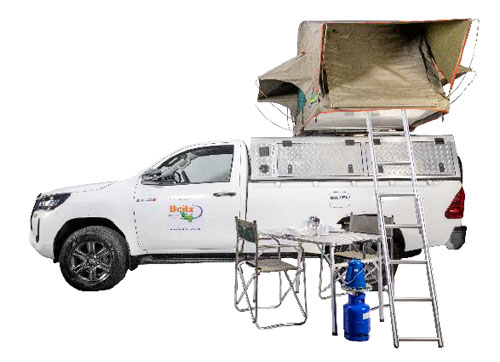
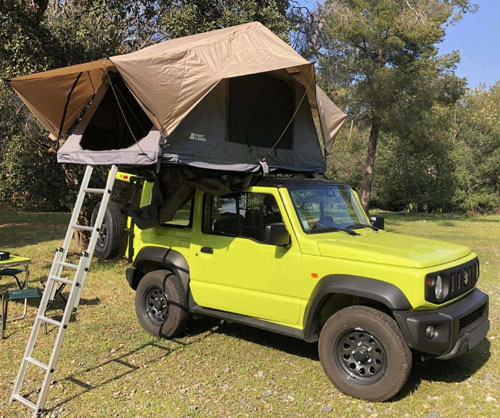
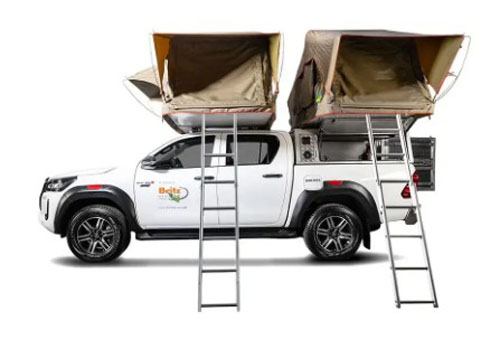
Class TC (Truck Campers), with an average length of 5.6 meters and sleeping 2 adults, offer rugged versatility for adventurous travelers renting one-way from Cape Town. These campers provide compact living spaces atop robust pickup trucks, typically consuming about 11 liters per 100km. Their appeal lies in the underlying truck's capabilities, potentially allowing access to more remote areas (subject to rental agreement restrictions), while still being manageable to drive.
For those seeking this versatile option, the Patagonia 4x4 double cab showcases the rugged capability combined with essential living amenities.
What You Shouldn't Miss
- Drive the scenic Chapman's Peak Drive, a stunning coastal road with breathtaking ocean vistas, but be mindful of its winding nature – drive slowly and carefully.
- Visit Boulders Beach to see the famous African Penguin colony, a unique wildlife encounter easily accessible with your rented RV.
- Explore Kirstenbosch National Botanical Garden, renowned for its vast collection of indigenous South African flora and its beautiful setting against Table Mountain.
- Take a cable car up Table Mountain for panoramic views of Cape Town and its surroundings; ensure you check the weather and operating times.
- Drive through the Cape Winelands (Stellenbosch, Franschhoek) to sample local wines and enjoy picturesque vineyard scenery, a perfect day trip from Cape Town.
- Experience the vibrant V&A Waterfront for shopping, dining, and cultural experiences, often with ample parking available for larger vehicles.
Final Thoughts
Renting an RV in Cape Town offers an unparalleled way to experience the diverse beauty and vibrant culture of South Africa. With careful planning and the right vehicle, your one-way journey promises adventure, flexibility, and memories to last a lifetime. Let us help you find the perfect motorhome for your South African road trip.
From the iconic coastal drives to the tranquil Winelands, Cape Town by RV is an experience like no other. We're here to make your planning seamless and your journey unforgettable.
Find Motorhome Rentals in Cape Town