🎯 Fun Facts About Greece
Greece boasts one of Europe's highest paved roads on Mount Parnassus, reaching over 2000 meters (6560 ft). While offering breathtaking views to RVers, it also presents a challenging drive, especially outside summer, making it an adventurous climb for experienced RV travelers.
Greece is home to an estimated 130 million olive trees, and many are thousands of years old. In regions like Messenia, RVers can park near ancient olive groves, some featuring trees so old they've been declared natural monuments – a unique chance to camp alongside living history.
The iconic Corinth Canal, separating the Peloponnese from mainland Greece, offers designated RV parking and viewpoints. Travelers can witness massive ships squeezed through the narrow, man-made gorge – a surprising and easily accessible roadside attraction.
Far from city lights, many remote Greek camping spots offer incredibly dark skies, making it one of the best European destinations for stargazing directly from your RV. Imagine spotting the Milky Way while enjoying a late-night Ouzo under a canopy of stars!
Featured RV Park or Campground in Greece
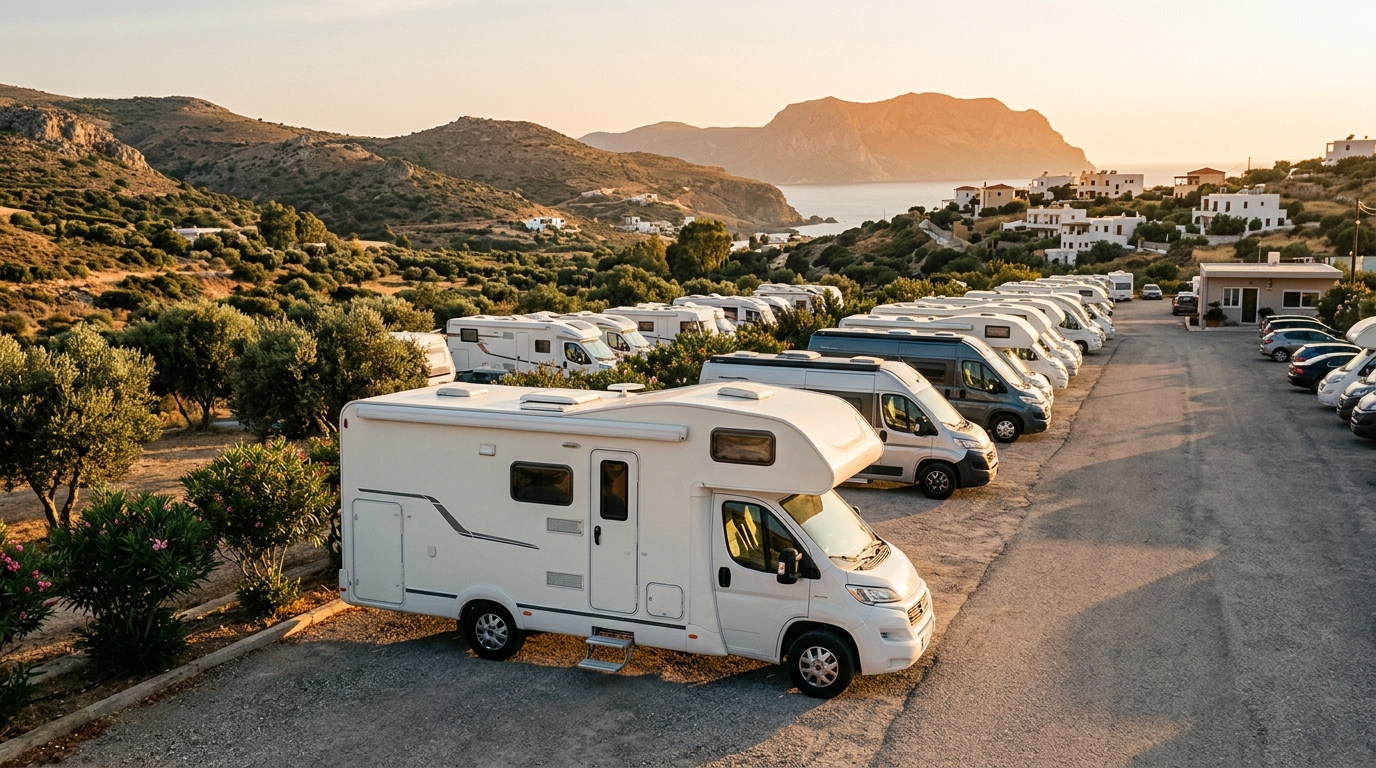
When selecting an RV park in Greece, look for establishments that offer a range of essential amenities, convenient locations, and positive reviews regarding cleanliness and hospitality. Ideal RV parks typically provide pitches with electricity, fresh water hookups, and grey/black water disposal stations – crucial infrastructure that is vital outside major cities. Many popular campgrounds, especially along the coast or near archaeological sites, also offer amenities like clean shower blocks, laundry facilities, Wi-Fi access, and on-site mini-markets or restaurants, enhancing the overall camping experience. For finding campsites and campgrounds during your trip, we recommend using RV PLANET (rvplan.net) — a great resource for locating available spots along your route.
Hookups & Amenities — What to Expect
In Greece, well-equipped private campgrounds generally provide comprehensive hookups and amenities for RV travelers. You can typically expect electric hookups (usually 220-240V, standard European two-pin plug type F/E), fresh water connections, and greywater disposal points at individual pitches or designated service areas. Blackwater dump stations are common, though availability outside established campgrounds can be limited, highlighting the importance of planning routes around known service points. Many sites also offer additional amenities such as clean shower and toilet facilities, laundry rooms, Wi-Fi (which can vary in speed and reliability), and sometimes even swimming pools, restaurants, or mini-markets. To make your trip cost-effective, remember that on the RV PLANET routes , travelers can itemize and track every expense along the way for easy budgeting. On the routes offered through RV PLANET routes , you can itemize and track every expense along the way for easy budgeting.
Booking Windows & Reservations in Greece
For RV travel in Greece, particularly during peak season (July-August) and popular island destinations, booking campgrounds well in advance is highly recommended to secure your preferred spot. Planners should aim to reserve 3-6 months ahead for prime locations and dates, especially if traveling with a larger RV or during national holidays. Spontaneous travelers, particularly during the shoulder seasons (April-June, September-October), may find greater flexibility and can often secure same-day or next-day reservations, though it's always wise to call ahead before driving to a specific site. While private campgrounds handle their own bookings, for any potential national park campsites, remember that many only release a limited percentage (e.g., 25%-30%) of spots for reservations, with the remainder allocated on a first-come, first-served basis, meaning you will almost certainly find a place—if not the first campground, then the next. You can compare final prices across suppliers on Bandana Caravan to ensure what you see is what you pay, with no surprise fees at pickup.
Nearby Supermarkets & Resupply Points
RV travelers in Greece will find ample opportunities for resupply at various supermarket chains and local markets across the mainland and larger islands. Major supermarket chains like Sklavenitis, AB Vassilopoulos, Lidl, and My Market are widespread, particularly in urban centers and larger towns, offering a full range of groceries, fresh produce, and household essentials. For more local flavors and specific produce, traditional 'laiki agora' (farmers' markets) operate in most towns on specific days, providing fresh, seasonal ingredients and a cultural experience. Planning your route to include stops in larger towns ensures convenient access to these essential resupply points for stocking your RV kitchen. For ideas you can prep on the road, watch our RV-friendly recipes playlist on YouTube.
Best RV Class for Camping in Greece
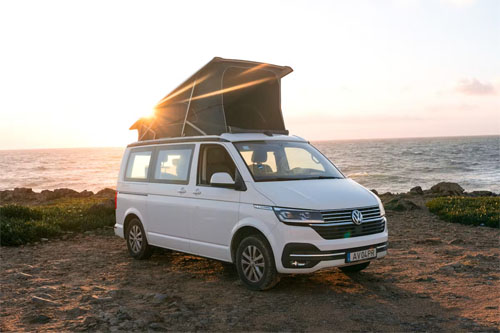
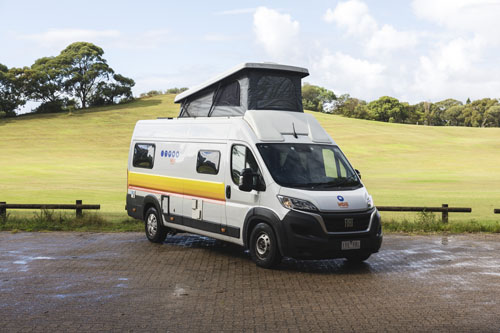
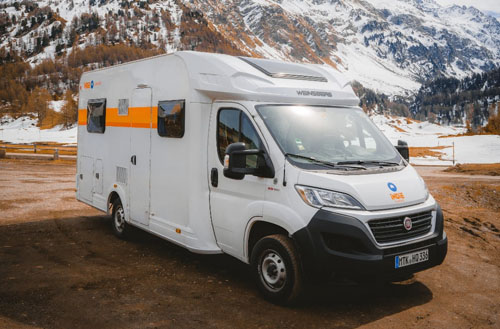
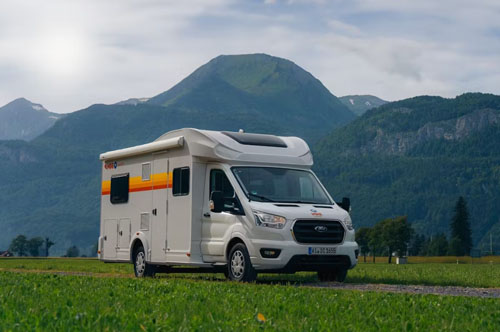
For RV camping in Greece, smaller and more agile RV classes like Class B Camper Vans and Class SI Semi-integrated models are often preferred due to Greece's sometimes narrow roads and challenging urban environments. A Class B Camper Van, averaging around 5.8 meters in length with 3.2 sleeping places across Bandana's global fleet, offers excellent maneuverability for navigating winding coastal roads, small village streets, and easier parking, making it ideal for those seeking flexibility and exploring less accessible areas. A Class SI Semi-integrated RV, with an average length of 6.9 meters and 3.8 sleeping places across Bandana's global fleet, strikes a good balance, providing more living space and amenities than a camper van while remaining manageable on Greek roads compared to larger Class C or A vehicles. Larger RVs, such as Class C Alcove models (avg. 7.5m, 5.8 sleeping places) or Class A Integrated units (avg. 7.5m, 4.4 sleeping places), may offer more comfort and capacity but can encounter difficulties on smaller island ferries, in tight city centers, and on unpaved or steep mountain roads, requiring careful route planning and potentially limiting access to certain destinations. We have direct partnerships with over 50 leading RV suppliers worldwide, ensuring you find the perfect vehicle for your Greek adventure.
How to Save on Campgrounds in Greece
To save on campground costs in Greece, consider utilizing discount cards, traveling during the shoulder season, and opting for municipal or regional sites. Many RV rental providers, including Bandana Caravan, may offer or recommend campground discount cards (e.g., ACSI, CampingCard International) which can provide significant savings on off-peak rates at participating Greek campgrounds. Traveling during the shoulder seasons (spring and autumn) not only offers milder weather and fewer crowds but also generally lower campground fees compared to the peak summer months. Choosing municipal or regional campgrounds over private resorts, especially those without extensive leisure facilities, can also lead to more budget-friendly overnight stays. Additionally, many campgrounds offer weekly rates that are more economical per night if you plan to stay 3 or more nights in one location, and consider sharing hookups with fellow travelers if allowed and practical to split costs.
What is the best time of year to RV in Greece
The best time of year to RV in Greece is typically during the shoulder seasons—spring (April to early June) and autumn (September to October)—when the weather is pleasant, crowds are thinner, and prices for rentals and campgrounds are generally lower. Spring offers blooming landscapes, comfortable temperatures for sightseeing, and fewer tourists, ideal for exploring historical sites and natural beauty. Autumn provides warm sea temperatures for swimming, pleasant weather for hiking, and the grape harvest season, with the added benefit of still-open tourist infrastructure but reduced crowds. Summer (July-August) is peak season, characterized by high temperatures, crowded tourist spots, and higher costs for RV rentals and ferries; while popular, it requires advance booking and tolerance for heat. Winter (November-March) is generally quiet with many coastal campgrounds closed, making it less ideal for typical RV tourism, though some mainland areas offer unique experiences for hardy travelers.
Is Greece RV friendly
Greece is increasingly RV friendly, particularly with a growing number of well-equipped private campgrounds, but success often depends on careful planning and understanding local nuances, including cultural etiquette and infrastructure availability. The country boasts numerous private campgrounds offering essential services like electricity, water, and waste disposal, concentrated along popular coastlines and near major archaeological sites, though infrastructure can be more limited in very remote regions. Navigating roads requires attention, as some routes, particularly in mountainous areas or older towns, can be narrow and challenging for larger vehicles, necessitating a preference for smaller RV classes or careful route selection. Interacting with locals is generally warm and welcoming; showing respect for local customs, dressing modestly near religious sites, and learning a few basic Greek phrases can significantly enhance your experience and facilitate assistance if needed. While essential RV services like dump stations and fresh water refills are reliable within campgrounds, dedicated external service points for propane exchanges or complex repairs outside major cities can be scarce, emphasizing the need for self-sufficiency and preparation.
What are the road conditions like in Greece for RVs
Road conditions in Greece for RVs vary significantly, ranging from excellent modern motorways to narrow, winding mountain passes and unpaved rural roads, requiring drivers to be prepared for diverse terrain. Major highways (e.g., Egnatia Odos, National Road 1) are well-maintained, offer smooth travel, and are generally toll roads, with costs varying by vehicle class; RVs are typically charged at a higher category than standard cars. Secondary roads, especially those leading to smaller villages, beaches, or remote sites, can be narrow, lack shoulders, feature sharp turns, and occasionally be unpaved, making careful driving and consideration of RV size crucial. Urban driving, particularly in older city centers like Athens or Thessaloniki, presents challenges with heavy traffic, limited parking, and intricate street layouts; it's often advisable to park on the outskirts and use public transport. Toll systems in Greece are primarily pay-as-you-go at toll booths, accepting cash and card, with no national vignette system; drivers of larger RVs should be aware of higher toll categories and plan accordingly for these additional travel costs.
Can you take an RV on a ferry in Greece
Yes, you can take an RV on a ferry in Greece to access many of its islands and even cross between parts of the mainland, though specific logistics, booking procedures, and costs require careful consideration. Numerous ferry companies operate routes to Greek islands (e.g., Blue Star Ferries, Hellenic Seaways, Anek Lines), and most accommodate RVs, but it is essential to book well in advance, especially during peak season, as vehicle spaces are limited. When booking, you must accurately declare the exact length, width, and height of your RV (including any roof-mounted accessories) as incorrect measurements can lead to denial of boarding or additional charges. Ferry costs for RVs are significantly higher than for standard cars and vary based on the vehicle's dimensions, the route, the time of year, and the ferry company; prices typically include the vehicle and passengers separately. For inter-island travel, particularly to smaller islands, ensure the ferry is large enough to handle your RV; very large RVs may have limited options for certain routes, and parking on some islands (e.g., Santorini) can be extremely challenging, sometimes warranting leaving the RV on the mainland or opting for a smaller campervan. Bandana RV specialists are not able to assist with ferry bookings, but RV PLANET (rvplan.net) can help you plan routes that may include ferry travel.
Is it safe to wild camp in Greece
While wild camping, or 'free camping,' is technically illegal in Greece and can incur significant fines, its safety and practicality are nuanced, varying by location, season, and the discretion of the camper. Legally, Law 392/1976 and its updates prohibit camping outside of designated campsites; however, local tolerance in truly remote, non-touristy areas away from beaches or archaeological sites can sometimes exist, particularly during the off-season. For safety, it's crucial to choose remote, discreet locations, avoid private land or visible tourist areas, and prioritize leaving absolutely no trace, including waste, to maintain a low profile and respect the environment and local communities. Best practices include arriving late and leaving early, avoiding open fires, being self-sufficient with water and waste, and being prepared to move if asked by authorities or locals; engaging with locals respectfully may sometimes yield permission to park overnight. Identifying suitable spots often involves researching quiet agricultural roads, forest clearings, or remote coastal areas that are not designated beaches or protected zones, while actively avoiding signs of private property or 'no camping' notices.
Can I travel with a dog in Greece
Traveling with a dog in an RV in Greece is generally permissible, but it requires adherence to specific regulations for entry, ferry travel, and consideration of campsite and public access policies. For entry into Greece from another EU country, dogs must have a valid EU Pet Passport, be microchipped, and be vaccinated against rabies; non-EU countries have additional requirements, including potential blood tests. Most Greek ferry companies allow pets, but specific rules vary; often, dogs must remain in designated pet areas (kennels or on deck, leashed and muzzled), and are not permitted inside passenger lounges, cabins, or vehicles during the journey, requiring owners to periodically check on them. Many private campgrounds in Greece are pet-friendly, but it's essential to confirm their specific policies and any potential additional fees or restrictions (e.g., leash requirements, designated dog walking areas) when booking. Public access with dogs can be restrictive; while allowed on leashes in many outdoor public spaces, they are generally prohibited from archaeological sites, museums, public beaches (unless clearly designated as dog-friendly), and inside restaurants (though outdoor seating might be tolerated). Always check the specific requirements with your chosen ferry company and campgrounds.
How Much Does an RV Rental in Greece Cost - Budgeting for Your Trip
The total cost of an RV rental in Greece , including the rental vehicle, fuel, camping fees, food, activities, and ferry expenses, can vary significantly but generally ranges from €100 to €300 per day depending on the season, RV class, and travel style. RV rental prices average from €70-€150 per day in the shoulder season for smaller models like a Class B Camper Van, while larger Class C or A models can cost €120-€250 per day during peak summer, with potential deals available off-season. Fuel is a major expense, with common consumption for a Class SI Semi-integrated RV around 10-11 Liters/100 km; plan for fuel costs of €1.80-€2.20 per liter (as of 2026), adding significantly to a 2-week trip covering extensive distances. Camping fees typically range from €20-€40 per night for a pitch with hookups at private campgrounds, while wild camping, though illegal, carries the risk of a €300-€1000 fine. Ferry expenses for an RV can be substantial, often costing €50-€200 or more for a one-way trip to a major island, depending on distance and RV size; budget for multiple ferry crossings if island hopping. Practical cost-saving tips include booking rentals and ferries in advance, traveling during the shoulder season, cooking your own meals in the RV, utilizing campground discount cards, and minimizing unnecessary driving to reduce fuel and toll expenditures. For a more accurate estimation tailored to your trip, consider using Bandana's comparison tool for a full transparency on pricing.
What is the minimum age to rent an RV in Greece
To rent an RV in Greece, the minimum age is typically 21 years old, although many rental companies impose a higher age requirement, often 23 or 25, and may also require the driver to have held a valid driver's license for a minimum period (e.g., 2-3 years). Drivers under the age of 25 may also be subject to a 'young driver surcharge' by some rental companies, which adds an additional daily fee to the rental cost. For larger RV classes, some rental agencies might have an even higher minimum age or require more extensive driving experience. Always confirm the specific age and license requirements directly with your chosen RV rental provider in Greece before booking to avoid any issues upon collection. Bandana offers a wide range of RVs with rental age flexibility starting from 21, with no young driver surcharges.
Do you need an international driver's license to rent an RV in Greece
Yes, if you hold a driver's license issued outside of the European Union or the European Economic Area, you typically need an International Driving Permit (IDP) to legally rent and drive an RV in Greece. An IDP serves as an official translation of your national driver's license and must always be presented alongside your valid original driver's license; it is not a standalone document. Drivers from EU/EEA countries can use their national driver's license without an IDP, but it's always recommended to carry it if your license is not in English or Greek for easier identification. Rental companies will almost always require an IDP for non-EU/EEA license holders and may refuse rental without one, making it a critical document for planning your Greek RV adventure. It is advisable to obtain your IDP in your home country before traveling, as they cannot be issued in Greece. Remember, a standard car driver's license is sufficient for ALL motorhome classes (Class A, Class B, and Class C) in Greece, with no special license or additional permits required.
What You Shouldn't Miss
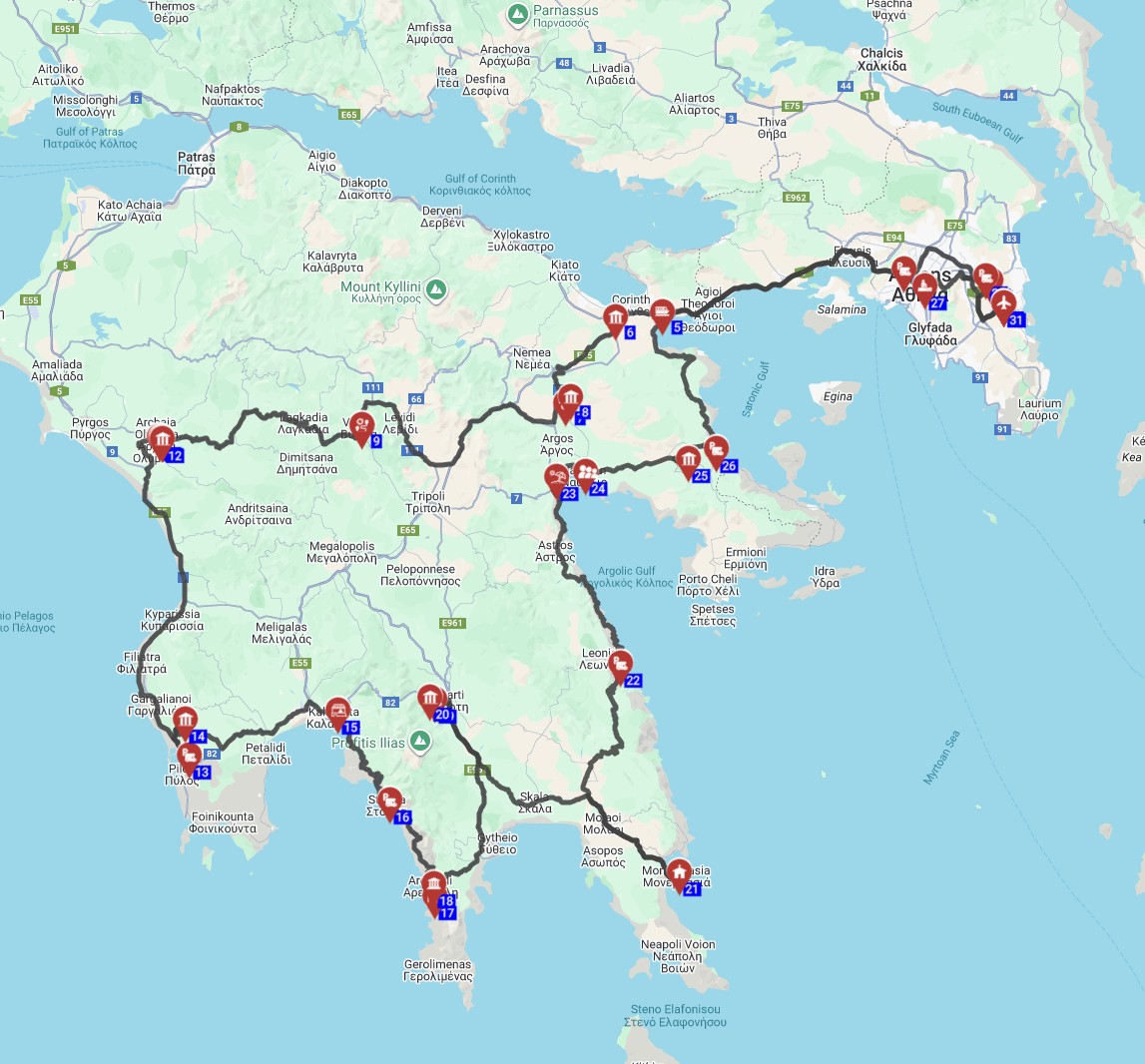
Drive the scenic coastal roads of the Peloponnese, stopping at ancient sites like Mycenae and Epidaurus, before finding a picturesque spot to park your rented RV for the night.
Explore the charming villages and crystal-clear waters of the Ionian Islands by taking your RV on a ferry; consider islands like Lefkada or Kefalonia for their stunning natural beauty and accessible roads.
Discover the unique geological formations and serene beaches of the Halkidiki peninsula, spending your days exploring its three prongs (Kassandra, Sithonia, and Athos) with your RV as your comfortable base.
Visit the Meteora monasteries, a UNESCO World Heritage site where RVs can be parked at designated areas offering incredible views and access to these awe-inspiring spiritual retreats perched atop rock pillars.
Experience the vibrant culture and historical layers of Athens, parking your RV at a campground on the outskirts and using public transport to explore the Acropolis and Plaka district.
Why Book with Bandana Caravan
At Bandana Caravan, we're not just a booking platform; we are true RV specialists who have been passionate about motorhome travel since 2001. With over 25 years of experience, we’ve helped tens of thousands of travelers explore the world by RV. Our direct partnerships with over 50 leading RV suppliers worldwide, including industry giants like El Monte, Cruise America, Apollo, and Britz, allow us to offer an unparalleled selection of vehicles.
We pride ourselves on full price transparency—what you see is what you pay, with no hidden fees or surprise charges at pickup. This commitment extends to our 1,300+ pre-planned routes across 5 continents via our sister company, RV PLANET (rvplan.net), designed to simplify your planning process. With bookings available in over 30 currencies and local expertise in more than 50 countries, we ensure your journey is seamless and supported every step of the way. We believe God is in the small details, and we take care of them, making the big difference in your travel experience.
"We sell the way we'd like to buy – with honesty. No hidden fees, no surprises, no tricks or gimmicks. What you see is what you get."
— Avi Bandana, Founder of Bandana Caravan
"Life is now!"
About the Author
Avi Bandana is the founder and CEO of Bandana Caravan , one of the world's leading RV rental comparison platforms. With over 25 years of hands-on experience in the motorhome travel industry, Avi has personally visited hundreds of destinations and tested countless RV models across 5 continents. His mission: make RV travel accessible, transparent, and joyful for everyone.
Final Thoughts
Embarking on an RV adventure in Greece offers an unparalleled way to explore its stunning landscapes, rich history, and vibrant culture. By choosing the right vehicle, planning your route, and understanding the local nuances, you're set for an unforgettable journey. Remember, the freedom of the open road combined with the comfort of your own mobile home is truly magical.
We’re here to support you before, during, and after your booking, ensuring your Greek RV experience is everything you dreamed of. So, pack your bags, hit the road, and discover the wonders of Greece at your own pace. Get inspired for your next trip with Bandana Caravan!
All the information is based on public information on the web.
All imagery sourced under Creative Commons licenses with attribution provided.
Always check trail conditions and opening hours before travel.