In This Guide
- The 5 RV Families Compared for South America
- Class A (Integrated) - Best For
- Price Comparison by RV Class in South America
- Class SI (Semi-Integrated) - Best For
- Class C (Alcove) - Best For
- Class B (Campervan) - Best For
- Class TC (Truck Camper) - Best For
- Side-by-Side Comparison Table
- Our Recommendation for rv rental for couples Travelers in South America
- How much to rent an RV for a couple months?
- What is the best camper van for couples?
- What is the best company to rent an RV from?
- Can you rent an RV in Chile?
- Is it cheaper to rent an RV or stay in a hotel?
- What exactly is a Wicked camper van?
- What is the 333 rule for campervan?
- Where is the cheapest country to rent a campervan?
- What is the cheapest way to rent an RV?
- What You Shouldn't Miss
The 5 RV Families Compared for South America
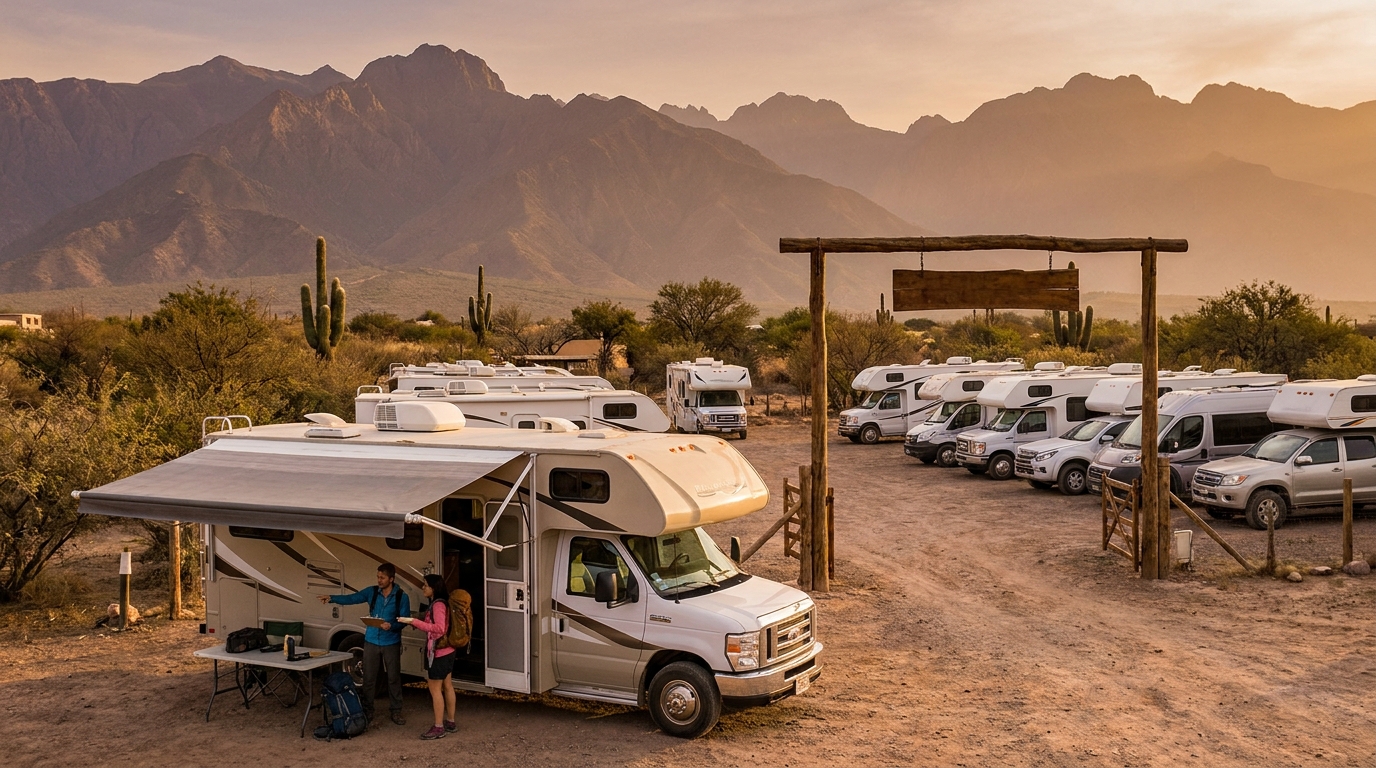
RV choice for couples exploring South America is critical due to the continent's diverse terrains and climates. Imagine yourself and your partner driving through the stunning landscapes of Patagonia or along the scenic coastal routes of Brazil. The vehicle size significantly impacts maneuverability on varying road conditions, from paved highways to unpaved mountain passes, and affects access to more remote areas. Your trip length also influences the need for comfort, amenities, and fuel efficiency, especially for extended road trips where every detail counts. Matching the perfect rented RV family to your adventure type ensures a more enjoyable and practical journey for two. For live availability and current prices, start with our RV Rental South America - Complete Guide 2026 guide.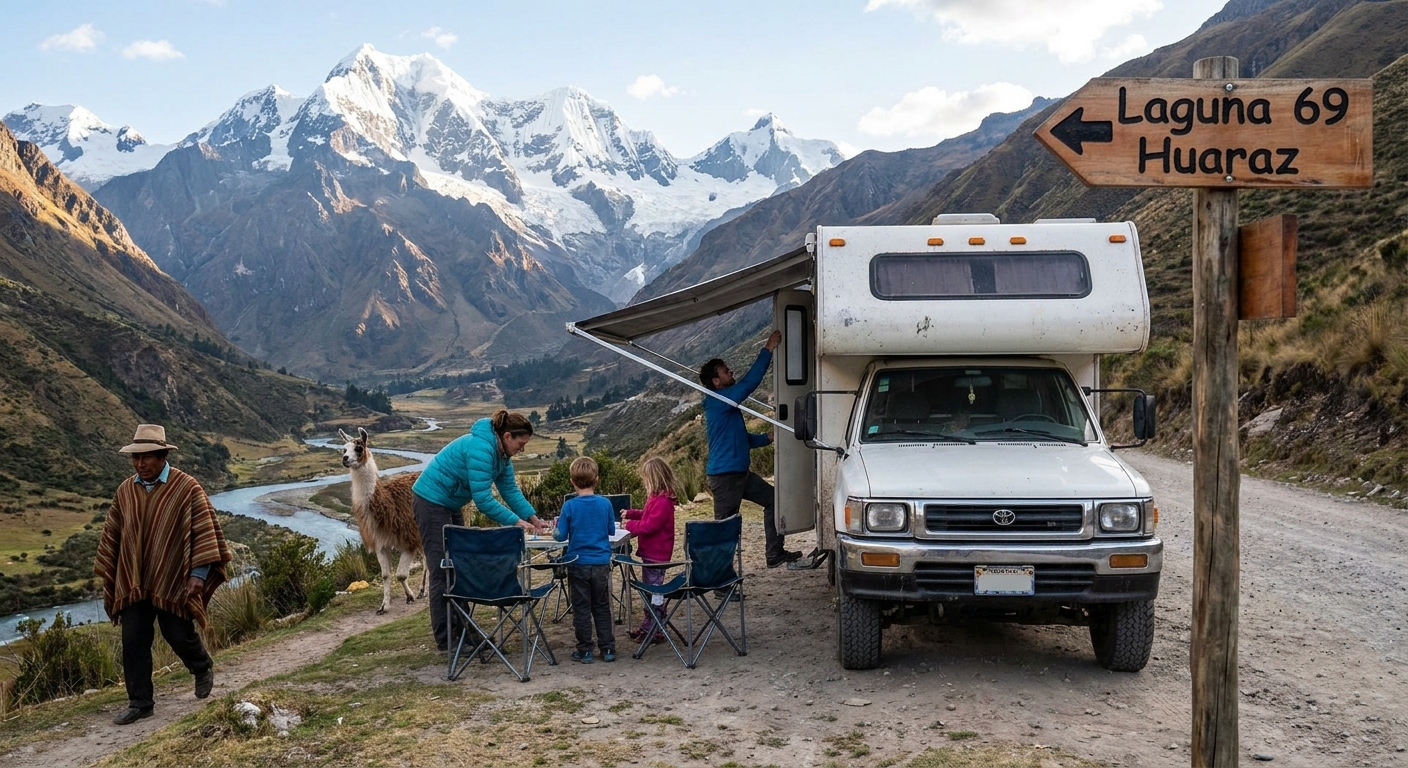
Class A (Integrated) - Best For
Bandana's fleet typically shows Class A Integrated motorhomes averaging 7.5 meters in length and sleeping around 4.4 people, offering maximum comfort and spacious interiors. These larger vehicles provide a luxurious, home-like experience, best suited for couples prioritizing extensive amenities and plenty of living space on longer trips, primarily sticking to well-maintained main roads. Fuel consumption for these models averages 11-12 Liters/100 km, making them less fuel-efficient for very extensive travel. The main trade-offs include limited maneuverability on narrow city streets or unpaved routes, and potentially higher rental and fuel costs compared to smaller RVs. Drive slowly and carefully, and you can drive almost anywhere without issues. No need to stress - just use common sense and pay attention.Price Comparison by RV Class in South America
RV rental prices for couples in South America are dynamic, changing daily based on factors like seasonality, rental duration, vehicle class, and the specific rental provider, much like flight tickets. For this reason, real-time rates are best found by using the search box on this page, as fixed prices cannot be guaranteed. Generally, larger, more luxurious rented RVs like Class A models will command higher daily rates than compact campervans or truck campers. Longer rental periods, such as a two-week adventure or multi-month trips, often result in a lower average daily rate, providing significant cost benefits. Remember to factor in ancillary costs like fuel, campground fees, and tolls when budgeting for your trip, which can all be itemized and tracked on RV PLANET routes for easy budgeting.Class SI (Semi-Integrated) - Best For
Bandana's fleet typically shows Class SI Semi-integrated motorhomes averaging 6.9 meters in length, usually accommodating around 3.8 people, but offering ample space for couples. These models strike an excellent balance between comfort and maneuverability, making them highly versatile for couples exploring diverse South American roads. They are ideal for longer trips, offering more amenities than a campervan, such as a fixed bed, functional kitchen, and bathroom, without the sheer bulk of a Class A. Common fuel consumption is around 10-11 Liters/100 km, providing reasonable efficiency for their size. These RVs are perfect for couples who desire a bit more living space and amenities for a comfortable journey without sacrificing too much agility.Class C (Alcove) - Best For
Bandana's fleet typically shows Class C Alcove motorhomes averaging 7.5 meters in length, designed to sleep around 5.8 people due to the over-cab bed, but they are great for couples who want extra space. For couples, Class C vehicles offer ample interior space, good amenities, and a robust build, which can be advantageous on varying South American road conditions, from the Andes to coastal routes. These are often more cost-efficient than Class A models while still providing a comfortable and self-sufficient travel experience. Fuel consumption typically ranges from 10-12 Liters/100 km, comparable to Semi-integrated models. The extra sleeping capacity can easily be repurposed for additional storage, making a Class C ideal for long-term travel with more gear, such as camping equipment or photography supplies.Class B (Campervan) - Best For
Bandana's fleet typically shows Class B Campervans averaging 5.8 meters in length, ideally sleeping 3.2 people, making them perfect for couples. These vehicles are superb for couples prioritizing maneuverability, fuel economy (around 10 Liters/100 km), and ease of parking, especially in bustling South American cities or remote areas with narrower, winding roads. They are best suited for agile adventures, allowing access to more secluded spots and offering a more immersive, spontaneous travel style. While compact, modern campervans provide essential amenities like a small kitchen, a comfortable sleeping area, and often a basic WC, with some models even offering higher ground clearance or 4x4 options for challenging terrain like the Chilean Andes. Preparing meals together in your campervan's kitchen can be a delightful part of the adventure; check out our RV-friendly recipes playlist for inspiration!Class TC (Truck Camper) - Best For
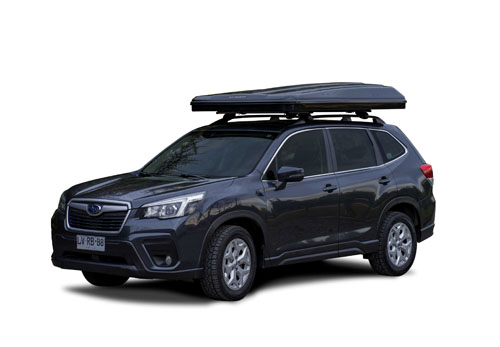
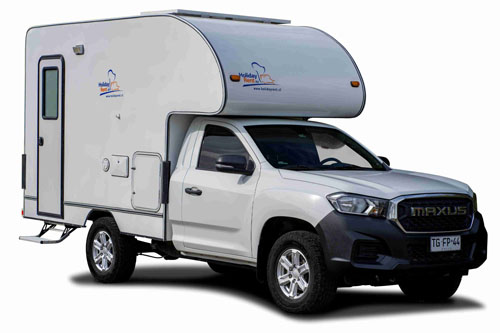
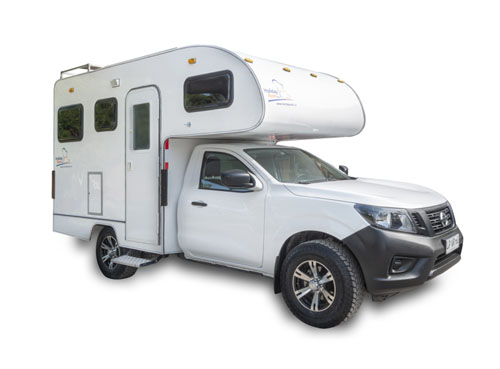
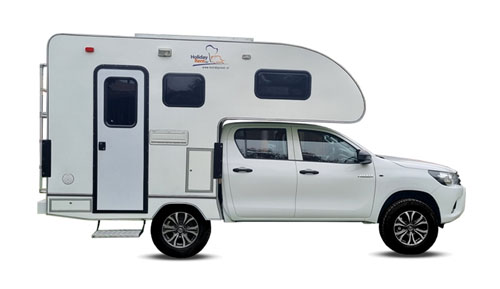
Bandana's fleet typically shows Class TC Truck Campers averaging 5.5 meters in length, explicitly designed for 2.4 sleepers, which makes them ideal for adventurous couples seeking rugged exploration. These vehicles are positioned as the ultimate off-grid and flexible option for South America, often featuring 4x4 capability when paired with a robust truck chassis. They are best for couples who need to tackle diverse and challenging South American terrain, offering greater access to remote locations and extensive boondocking opportunities. Fuel consumption generally ranges from 12-17 Liters/100 km, reflecting their robust nature and off-road capabilities. The detachable nature of some truck campers allows for exploring without the camper itself, adding to their versatility for a dynamic travel style, perfect for reaching secluded viewpoints or trailheads.Side-by-Side Comparison Table
This table provides a quick reference for key specifications and ideal use cases for each RV family in South America, helping couples compare choices like those in "RV Rental Deals in South America - Latest Offers 2026". The 'Avg Length' and 'Sleeps' columns reflect typical global fleet averages from Bandana's inventory, but couples will easily find vehicles perfectly sized for two. 'Fuel Use' indicates common consumption ranges per 100 km, a vital metric for budgeting for a South American road trip. The 'Best Use Case' highlights the primary advantage of each RV type for couples traveling across diverse South American landscapes, from the busy cities to the tranquil remote areas.| Family | Avg Length | Sleeps | Fuel Use | Best Use Case in South America |
|---|---|---|---|---|
| Class A (Integrated) | 7.5 m | 4.4 | 11-12 Liter/100 km | Luxury, space, comfort on main roads |
| Class SI (Semi-integrated) | 6.9 m | 3.8 | 10-11 Liter/100 km | Balanced comfort, maneuverability on varied roads |
| Class C (Alcove) | 7.5 m | 5.8 | 10-12 Liter/100 km | Spacious, robust, good amenities, budget-conscious comfort |
| Class B (Campervan) | 5.8 m | 3.2 | 10 Liter/100 km | Maneuverability, fuel economy, agile exploration |
| Class TC (Truck Camper) | 5.5 m | 2.4 | 12-17 Liter/100 km | Off-road capability, flexible, adventurous exploration |
Our Recommendation for rv rental for couples Travelers in South America
For most couples embarking on an RV adventure in South America, a Class B Campervan is our primary recommendation for optimal travel. Its superior maneuverability, excellent fuel economy (around 10 Liters/100 km), and compact size make it ideal for navigating diverse South American roads, from bustling cities to narrow mountain passes. A campervan provides enough amenities for two, allowing for self-sufficiency while offering the agility to access more off-the-beaten-path locations, creating unforgettable memories. As a strong runner-up, the Class SI Semi-integrated motorhome offers a compelling balance for couples seeking more comfort and amenities on longer trips. Its average length of 6.9 meters provides a more spacious living area and often better bathroom facilities than a campervan, without the bulk that would hinder exploration on less developed routes, a crucial consideration for a flexible "Rent a Motorhome in California - Prices, Routes & Tips 2026" style adventure in South America.How much to rent an RV for a couple months?
Renting an RV for several months in South America involves highly variable costs, typically ranging from $1,500 to $5,000+ USD per month, depending significantly on the RV class, specific country (e.g., Chile vs. Peru), rental company, and season. To find a "Cheap RV Rental in South America - Budget Guide 2026", remember that longer rental durations often qualify for substantial daily rate discounts, making multi-month trips more cost-effective per day. Beyond the base rental, couples must budget for significant expenses like fuel, comprehensive insurance, campground fees (which typically average $10-$40 USD/night), road tolls, and any necessary border crossing permits. Factor in currency exchange rates and local taxes, which can also impact the final cost, all of which can be tracked with RV PLANET routes.What is the best camper van for couples?
For couples traveling in South America, the best campervan is typically a Class B Campervan or a compact Semi-Integrated (Class SI) model due to their excellent maneuverability, fuel efficiency, and right-sized amenities for two people. Key features to look for include adequate ground clearance for varied South American roads, and ideally, 4x4 capabilities for accessing more rugged terrain, particularly in Patagonia or Andean regions. Consider models with sufficient water and solar capacity for extended boondocking, allowing more freedom and cost savings on campground fees, as detailed in many RV Camping in Las Vegas - Best Campgrounds & Tips 2026 style guides. Prioritize a comfortable, fixed bed, a functional galley kitchen, and efficient storage solutions for a long-term trip. A Class B Campervan, averaging 5.8 meters in length like the 'rv rental denver example Category Van' or 'hire campervan example Paradise S/T' model, offers the most agility and ease of parking, while a compact Class SI (around 6.9 meters) provides more interior space and amenities, such as the '2 Berth Tamar' or '2 Berth Rover'.What is the best company to rent an RV from?
Identifying the 'best' RV rental company in South America for couples depends on your specific needs, but reputable platforms like Bandana aggregate various local providers, offering diverse fleet options and competitive pricing. Bandana has direct partnerships with 50+ leading RV suppliers worldwide including El Monte, Cruise America, Apollo, and Britz. When choosing a company, prioritize those with strong customer reviews regarding vehicle reliability, transparent pricing, and robust roadside assistance programs, which are vital for South American travel. Look for providers offering comprehensive insurance packages and clear policies on cross-border travel, as requirements for vehicle import permits and International Driving Permits can be complex. Companies with offices or partnerships in multiple South American countries can offer more flexible pick-up and drop-off options, simplifying one-way trips, a concept explored further in articles like "one-way rv rentals example Overlander".Can you rent an RV in Chile?
Yes, RV rentals are readily available in Chile, particularly in major cities like Santiago, Punta Arenas, and Puerto Montt, making it a popular starting point for couples exploring Patagonia and beyond. Chile offers a well-developed infrastructure for RV tourism, with numerous rental companies providing a range of vehicle types suitable for couples, including agile campervans and robust truck campers like the 'Patagonia Camper 4x4 double cab'. When renting in Chile and planning cross-border travel (e.g., to Argentina), it's crucial to confirm that the rental company provides all necessary paperwork, including a Letter of Authorization for international travel, vehicle registration, and insurance that covers foreign territories. Travelers often need an International Driving Permit (IDP) in addition to their national license, though a standard car driver's license is sufficient for all motorhome classes. Many rental companies in Chile are accustomed to long-term rentals and offer vehicles equipped for the diverse Chilean landscape, including options with higher ground clearance or 4x4.Is it cheaper to rent an RV or stay in a hotel?
For a long-term trip for couples in South America, renting an RV can often be cheaper than staying in hotels, especially when considering the combined costs of accommodation, transportation, and the significant savings from cooking your own meals. While initial RV rental costs and fuel expenses are substantial, the ability to prepare your food in your rented motorhome's kitchen significantly reduces dining-out expenditures, which accumulate rapidly with hotel stays. RV travel offers the flexibility to camp at inexpensive campgrounds or utilize boondocking (free camping) opportunities, drastically cutting accommodation costs compared to nightly hotel stays, as discussed in the "Cheap RV Rental in South America - Budget Guide 2026" guide. Factor in potential hidden costs like campground fees, propane, water refills, and vehicle maintenance, which are not present with hotel stays. The overall cost-effectiveness depends heavily on your travel style, trip duration, the type of RV chosen, and how frequently you cook versus dine out.What exactly is a Wicked camper van?
Wicked Campers is a budget-focused rental company, often recognized for its distinctively painted, colorful, and sometimes irreverent campervans, popular among younger, adventurous travelers seeking basic, affordable accommodation. These rented vans typically offer very basic amenities, focusing on providing a bed and minimal cooking facilities at a lower price point compared to more traditional RV rentals. While Wicked Campers provides a very economical option for couples on a tight budget, they generally do not offer the same level of comfort, modern features, or extensive support as premium rental companies like Apollo or Britz. Their fleet often consists of older, reconditioned vehicles, which might entail higher risks of mechanical issues on demanding South American roads. Couples considering a Wicked Camper should prioritize budget and a minimalist travel style over luxury and extensive amenities, and prepare for potential vehicle quirks.What is the 333 rule for campervan?
The '333 rule' for campervanning is a popular guideline suggesting travelers drive no more than 300 miles (or approximately 500 kilometers) a day, stay at least 3 nights in one spot, and stop by 3 PM each day to ensure a relaxed and enjoyable pace. Following this rule is particularly beneficial for couples exploring South America, as it helps prevent driver fatigue on long, often challenging roads and allows ample time for sightseeing and cultural immersion. Traveling slowly, with a maximum average of 100-150 km per day, allows you to truly feel the place, connect to the culture, the food, and the scenery. Staying in one spot for three nights reduces the stress of constant packing and unpacking, providing a deeper experience of each location. Stopping by 3 PM allows time to find a safe campsite, set up camp, and relax before dark, crucial for safety and comfort in unfamiliar South American environments. Adopting this rule promotes mindful travel, helping couples avoid burnout and genuinely enjoy their long-term RV adventure.Where is the cheapest country to rent a campervan?
Pinpointing the absolute cheapest country to rent a campervan for couples in South America is complex as prices fluctuate significantly, but Chile and Argentina often offer competitive rates due to larger rental markets, varied fleet options, and established tourism infrastructure. The actual cost is influenced by current currency exchange rates, local taxes, insurance requirements, and the specific availability of rental fleets for a given season. Countries with a higher supply of older or smaller campervans might offer lower prices, but this could come with trade-offs in vehicle condition or amenities. Uruguay and Brazil can also offer competitive pricing, especially if you stick to main tourist routes and book well in advance. Long-term rentals (several months), like those explored in "Long-Term RV Rental in South America - Monthly Rates 2026", generally provide the best daily rates, regardless of the country, so focusing on rental duration is a key strategy for cost savings.What is the cheapest way to rent an RV?
The cheapest way for couples to rent an RV in South America often involves booking well in advance, opting for smaller Class B campervans like the 'rv rental denver example Category Van' or Class TC truck campers, taking advantage of longer rental periods for reduced daily rates, and traveling during the off-season. Comparing prices across multiple rental platforms and local providers, a service Bandana excels at, is crucial, as rates can vary significantly, as highlighted in "Last-Minute RV Rental in South America - What to Expect 2026". Consider looking for relocation deals, where companies offer heavily discounted rates to move an RV from one location to another, though these come with fixed schedules and routes. Choosing a self-sufficient RV (e.g., with good solar and water capacity) allows for more boondocking, reducing campground expenses and contributing to overall savings on a long trip.What You Shouldn't Miss
- **Patagonian Road Trip:** Drive Ruta 40 in Argentina or Carretera Austral in Chile, experiencing dramatic glaciers, mountains, and wild landscapes perfect for adventurous couples.
- **Amazon Rainforest Adventure:** Explore the biodiversity of the Amazon basin from a base in Ecuador or Peru, combining RV travel with jungle excursions.
- **Andean Highlands:** Ascend into the stunning high-altitude regions of Peru and Bolivia, visiting ancient Incan sites and vibrant indigenous markets.
- **Brazilian Coastline:** Discover pristine beaches and lively cities along Brazil's extensive coast, enjoying a blend of relaxation and cultural immersion.
- **Colonial Cities:** Wander through the historic streets of Cartagena (Colombia), Cusco (Peru), or Salvador (Brazil), soaking in the rich history and architecture.
Final Thoughts
Embarking on a romantic RV rental adventure in South America as a couple promises an incredible blend of freedom, intimacy, and breathtaking discoveries. Whether you opt for the agile Class B campervan, the balanced comfort of a Semi-integrated motorhome, or the rugged capability of a Truck Camper, the continent offers endless possibilities for connection and exploration. Remember to travel slowly, savor each moment, and immerse yourselves in the vibrant cultures and stunning natural beauty. At Bandana Caravan, we are passionate about helping you craft the perfect journey. We're here to support you in finding the ideal rented RV that fits your romantic vision and practical needs, ensuring full transparency and peace of mind. Get inspired for your next trip and plan a truly unforgettable adventure with your loved one.On the routes offered through RV PLANET routes, you can itemize and track every expense along the way for easy budgeting.