
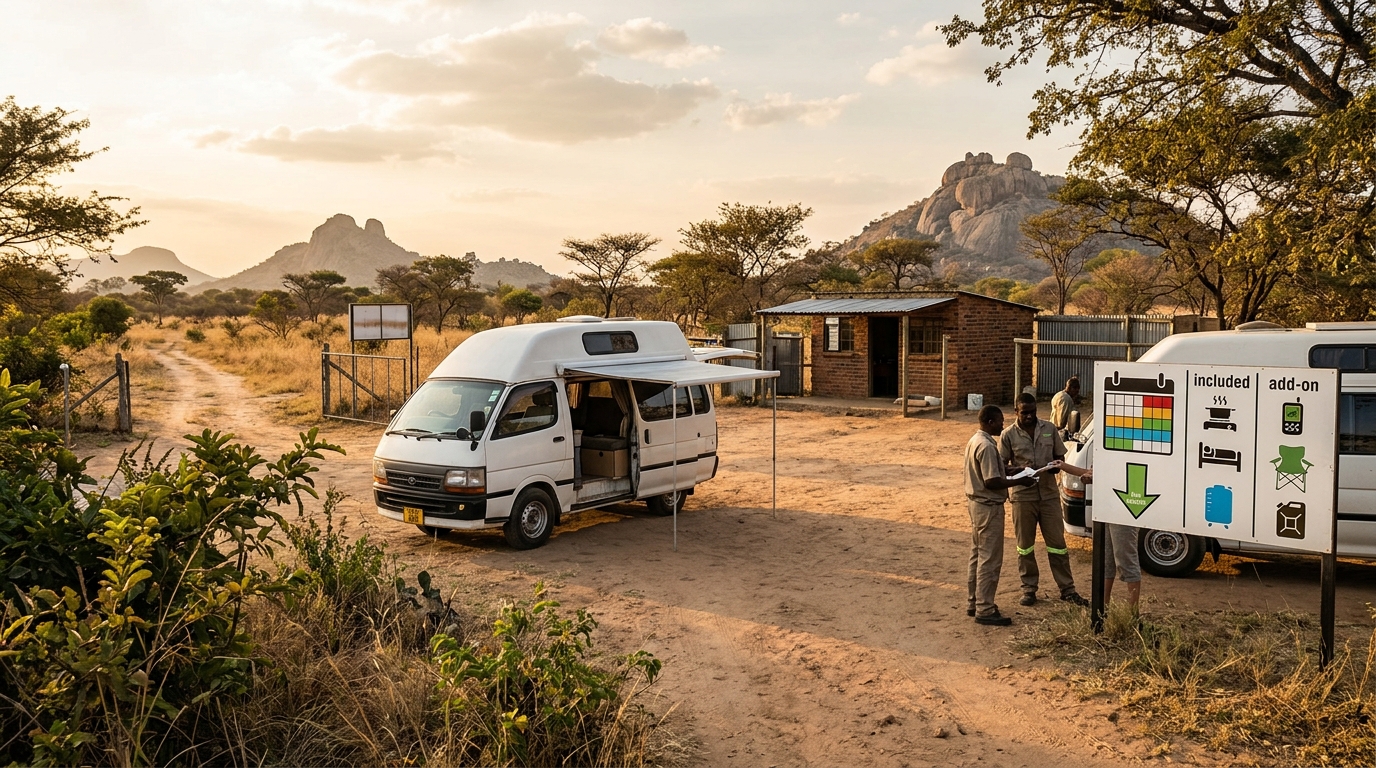
For live availability and current prices, start with our RV Rental Zimbabwe - Complete Guide 2026 guide.
In This Guide
- Can You Drive an RV in Zimbabwe? License & Age Rules
- Road Conditions & Terrain in Zimbabwe
- RV Size Limits, Bridges & Restricted Zones
- Fuel: Diesel vs. Petrol & Cost per 100 km
- Tolls, Vignettes & Border Rules
- Driving Tips for rv rental for couples Travelers
- Recommended RV Class for Zimbabwe Roads
- Should I Choose a Compact Van Instead of a Large RV in Zimbabwe?
- Can I Park Anywhere? Free & Wild Camping Rules in Zimbabwe
- Can I Drive an RV Into the City Center? Heights, Tunnels & Local Signage
- How Much Does it Cost to Rent a Motorhome for Couples in Zimbabwe?
- Is it Safe to Drive an RV in Zimbabwe for Couples?
- What Documents and Permits Do I Need for an RV Rental in Zimbabwe?
- What are the Best RV Campsites for Couples in Zimbabwe?
- When is the Best Time to RV in Zimbabwe for Couples?
- What are the Best RV Routes and Must-See Attractions for Couples in Zimbabwe?
- Can You Rent a 4x4 Camper or Luxury RV in Zimbabwe?
- How to Plan a Self-Drive RV Safari in Zimbabwe, Including National Park Rules
- Connectivity, Utilities, and Resupply for RVs in Zimbabwe
- Common Mistakes to Avoid and Essential Packing for an RV Trip in Zimbabwe
- Benefits of RV Rental for Couples in Zimbabwe & Daily Driving Distances
Can You Drive an RV in Zimbabwe? License & Age Rules
Driving an RV in Zimbabwe is generally feasible with the right documentation and a spirit of adventure. A valid driving license from your country of origin is typically accepted in Zimbabwe for up to 90 days, often best complemented by an International Driving Permit (IDP). For RVs up to 3,500 kg, such as a standard Class B campervan or a semi-integrated RV, a regular Class B (car) license is usually sufficient. Drivers generally need to be at least 21 years old to rent an RV in Zimbabwe, though some rental companies might have higher age requirements or impose surcharges for drivers under 25. Always ensure you carry your original national driver's license and your IDP, alongside your passport and visa if applicable, during your travels.
Road Conditions & Terrain in Zimbabwe
When exploring Zimbabwe by RV, you'll encounter varied road conditions and terrain. Zimbabwe's main roads connecting major cities and tourist hubs like Harare, Bulawayo, and Victoria Falls are generally tarred and in fair to good condition, making them suitable for RV travel. However, it's important to be prepared for secondary roads, especially those leading to national parks, rural areas, or more remote campsites, which are often gravel, dirt, or can be poorly maintained with potholes. These routes necessitate slower speeds and careful driving. Couples should factor in ample time to enjoy the scenic landscapes and navigate the diverse terrain, which can range from flat plains to hilly sections, particularly in the Eastern Highlands. Opting for an RV with good ground clearance can significantly enhance comfort and access to more remote, rewarding locations.
RV Size Limits, Bridges & Restricted Zones
Generally, Zimbabwe does not impose widespread RV size limits, low bridges, or environmental zones that would significantly restrict typical motorhome travel, unlike some urban centers in other continents. Most standard RVs, typically up to 7.5 meters in length, like those often found in Bandana's Class C or A motorhome selections, can navigate major routes and national park entrances without issue. However, it is always prudent to remain vigilant for local signage, particularly any indicating height restrictions for smaller bridges or underpasses that might exist in older urban areas or at specific park entrances. Ferry crossings are not a common concern as major water crossings are typically bridged, but it's always advisable to confirm for very specific, remote island access if your itinerary includes such a unique destination.
Fuel: Diesel vs. Petrol & Cost per 100 km
Diesel is the predominant fuel type for RVs in Zimbabwe and is readily available at most service stations across main routes and towns. For a typical RV in Bandana's fleet, common fuel consumption figures range from 10 to 12 Liters per 100 km, with camper vans generally being more fuel-efficient (8-10 L/100km) compared to larger motorhomes like semi-integrated units (10-11 L/100km) or alcove models (10-12 L/100km). While fuel prices are subject to fluctuation, couples should budget approximately $1.50 - $2.00 USD per liter for diesel. This translates to a cost of roughly $15-$24 USD per 100 km, not including any potential discounts. It's advisable to refuel whenever you have the opportunity, especially before venturing into remote areas or national parks, as service stations can be scarce or experience intermittent supply issues.
Tolls, Vignettes & Border Rules
Zimbabwe operates a system of toll gates on its major highways, which RVs are required to pay upon passage. These are typically cash payments, accepted in local currency or USD. Unlike some European countries, there is no vignette system; payments are made per toll plaza. For couples planning cross-border travel with an RV rented in Zimbabwe, specific permits and documentation are essential. This includes a Temporary Import Permit (TIP) for the vehicle, proof of ownership or a rental agreement, and potentially a letter of authority from the rental company. It is crucial to research and obtain all necessary documentation well in advance for any planned border crossings into neighboring countries like Botswana, Zambia, or South Africa to avoid delays or fines. On the routes offered through RV PLANET routes, you can itemize and track every expense along the way for easy budgeting.
Driving Tips for rv rental for couples Travelers
Embarking on an RV journey in Zimbabwe as a couple is a rewarding experience that requires some key driving considerations. Prioritize safety by driving defensively, always being aware of potential wildlife and pedestrians on rural roads, and crucially, avoiding night driving due to poor visibility and potential hazards. Embrace a slow, scenic pace; Zimbabwe's breathtaking beauty is best savored by taking your time, allowing for spontaneous stops at viewpoints or local markets. Always carry extra water, fuel, and a spare tire, especially when venturing into less populated areas, as facilities can be far apart. Keep valuable items out of sight and secure your RV, even when stopping for short periods, and consider choosing campsites with good security for added peace of mind. For couples, co-navigation using a reliable GPS alongside up-to-date physical maps can significantly enhance the journey and ensure you stay on track, particularly where mobile signal might be intermittent.
Recommended RV Class for Zimbabwe Roads
For couples exploring Zimbabwe, a Class B - Camper Van or a Class SI - Semi-integrated RV offers an excellent balance of comfort, maneuverability, and suitability for the varying road conditions you might encounter. Bandana's Class B Camper Vans, typically averaging 5.8 meters in length, provide compact dimensions that are ideal for navigating both urban areas and narrower, unpaved tracks leading to campsites, while still offering essential amenities for 2-3 adults. Alternatively, a Class SI - Semi-integrated RV, with an average length of 6.9 meters, provides more interior space and enhanced amenities for couples who prefer a higher level of comfort without the larger footprint of an Alcove or Integrated class motorhome. These classes generally offer sufficient ground clearance for most accessible routes, ensuring a comfortable and confident journey across Zimbabwe's diverse terrain.
Should I Choose a Compact Van Instead of a Large RV in Zimbabwe?
For couples planning an RV adventure in Zimbabwe, the decision between a compact camper van (like a Class B) and a larger RV (such as a Class C or A) involves balancing driving ease with onboard comfort. A compact van's smaller footprint can be an advantage on some rural tracks or in bustling market towns like those found in Harare or Bulawayo, where parking might be tighter. However, it's important to note that most main routes in Zimbabwe accommodate larger vehicles without issue. For couples, the enhanced indoor space, often including a dedicated shower/toilet, larger kitchen facilities, and more comfortable sleeping arrangements in a larger RV (such as a Semi-integrated unit), can significantly improve the quality of a longer trip. Ultimately, the choice depends on your priorities; generally, a larger RV is perfectly manageable for most of Zimbabwe's routes and is often preferred for a comfortable, extended couples' adventure. For ideas you can prep on the road, watch our RV-friendly recipes playlist on YouTube.
Can I Park Anywhere? Free & Wild Camping Rules in Zimbabwe
When it comes to overnight stays, free or wild camping in Zimbabwe is generally not permitted outside of designated campsites, particularly within national parks, game reserves, and on private land. For both safety and legal reasons, couples are strongly advised to utilize established campgrounds, which offer essential amenities, security, and often stunning locations within or near tourist attractions. Camping in unauthorized areas can lead to fines, expose travelers to security risks, or result in unwanted encounters with wildlife, especially in game-rich regions. While rules can vary by region, it's always best to check local regulations and adhere to local laws before parking overnight; if in doubt, always opt for a recognized campsite.
Can I Drive an RV Into the City Center? Heights, Tunnels & Local Signage
Navigating urban centers in Zimbabwe with an RV is generally feasible, as cities like Harare or Bulawayo typically lack stringent height restrictions, tunnels, or environmental zones that would impede standard RVs. However, drivers should always pay close attention to local signage for any unexpected height limits, particularly near older buildings or specific entry points into certain areas. Navigating urban traffic can present challenges for larger vehicles, and street parking may be limited, making it advisable to utilize designated parking areas or campsites located on the city outskirts for convenience. While there are no broad, specific watchouts for RVs in Zimbabwean city centers that are unique to larger vehicles, drivers should be prepared for varying road quality and potentially congested areas.
How Much Does it Cost to Rent a Motorhome for Couples in Zimbabwe?
The cost to rent a motorhome for couples in Zimbabwe typically ranges from $150 to $300 USD per day, with variations based on the RV class, the season, the rental duration, and the amenities included. This base price usually covers the vehicle rental, basic insurance, and standard equipment. However, couples must also budget for additional costs, such as fuel (estimated at approximately $15-$24 USD per 100 km), comprehensive insurance options, potential excess mileage fees, and any one-way drop-off charges. Beyond the rental fee, remember to account for daily park entry fees (which can vary significantly for residents versus non-residents), campsite fees (typically $10-$40 USD per night), activity permits, and estimated food and supply costs. For a more detailed and personalized cost breakdown, couples should obtain specific quotes from rental providers and meticulously account for all potential variable expenses related to their chosen itinerary.
Is it Safe to Drive an RV in Zimbabwe for Couples?
Driving an RV in Zimbabwe is generally considered safe for couples, especially when sticking to major routes during daylight hours, but it does require vigilance and adherence to specific safety protocols. The primary safety concerns include the varying road conditions, the possibility of wildlife crossing roads in rural areas, and the need for heightened security awareness when camping or leaving the vehicle unattended. Couples should take precautions such as avoiding night driving, securing all valuables, choosing reputable and secure campsites, and remaining aware of their surroundings, particularly in urban environments. It is highly recommended to have a reliable satellite phone or a local SIM card for emergency communications, carry comprehensive travel insurance that includes medical evacuation, and have local emergency contacts readily available.
What Documents and Permits Do I Need for an RV Rental in Zimbabwe?
To rent and drive an RV in Zimbabwe, couples will need a valid national driving license, an International Driving Permit (IDP), and their passports. For entry into specific national parks or protected areas, various permits are generally required, which typically include park entry fees, vehicle entry fees, and sometimes special activity permits (e.g., for certain hikes or drone usage). If you are planning cross-border travel, a Temporary Import Permit (TIP) for the RV, a letter of authority from the rental company, and specific visa requirements for the destination country are essential. Always confirm the most up-to-date document and permit requirements with your rental company and the relevant Zimbabwean authorities or embassy well before your trip, as regulations can change.
What are the Best RV Campsites for Couples in Zimbabwe?
Zimbabwe offers numerous picturesque RV campsites that are ideal for couples seeking a blend of adventure and comfort. Many of these are located within national parks or scenic private conservancies, often providing basic to moderate facilities. Top recommendations for couples include campsites near Victoria Falls, such as the Victoria Falls Rest Camp, sites within Hwange National Park (like Main Camp or Sinamatella), Matusadona National Park on Lake Kariba for its stunning lake views, and Chimanimani National Park for its breathtaking Eastern Highlands vistas. These campsites typically offer amenities like water points, ablution blocks (showers and toilets, though quality can vary), and braai (barbecue) facilities, with some providing power hookups and waste disposal points. For couples, selecting campsites with good security, serene locations, and proximity to desired activities will greatly enhance the romantic and adventurous aspect of the trip.
When is the Best Time to RV in Zimbabwe for Couples?
The optimal time for couples to RV in Zimbabwe is generally during the dry winter months, from May to October. This period is renowned for its peak wildlife viewing opportunities and consistently cooler, drier weather. During these months, animals tend to congregate around dwindling water sources, making them easier to spot and observe, and road conditions are typically excellent with a significantly lower chance of getting stuck in mud. For specific activities like comfortable safari drives and hiking, the cooler months of June to August are ideal. September and October offer excellent game viewing, though temperatures can become very hot. The wet summer season, from November to April, brings lush, green landscapes and vibrant birdlife but can make some gravel roads impassable due to heavy rains, posing challenges for RV travel.
What are the Best RV Routes and Must-See Attractions for Couples in Zimbabwe?
For couples exploring Zimbabwe by RV, an iconic route often begins in Harare, venturing west to the majestic Victoria Falls, then south through Hwange National Park, and potentially east to Matobo Hills and the Eastern Highlands. This route offers a fantastic blend of safari experiences, natural wonders, and rich cultural insights. Must-see attractions include the awe-inspiring Victoria Falls, world-class wildlife viewing in Hwange National Park, the ancient rock art and unique granite formations of Matobo Hills National Park, and the serene beauty of Lake Kariba. Beyond safaris, couples can delve into history at the Great Zimbabwe Ruins, experience adrenaline-pumping activities at Victoria Falls, or enjoy hiking amidst the scenic Chimanimani Mountains. Consider incorporating opportunities for local cultural interactions, visiting rural villages, or sampling traditional Zimbabwean cuisine to truly enrich the non-safari aspects of your unforgettable journey.
Can You Rent a 4x4 Camper or Luxury RV in Zimbabwe?
Yes, couples can indeed rent both 4x4 campers and luxury RV options in Zimbabwe, although availability might be more limited compared to standard motorhomes, typically requiring advance booking. 4x4 campers, often built on a truck chassis with a pop-top or fixed camper unit (such as a Class TC - Truck Camper), are highly recommended for couples planning to tackle more challenging off-road routes or specific remote national park areas where higher ground clearance and true 4x4 capability are essential. Luxury RV rentals usually provide enhanced amenities, including larger living spaces, premium furnishings, sophisticated kitchen setups, and potentially en-suite bathroom facilities, catering to couples seeking a higher level of comfort and indulgence. It's always best to discuss specific vehicle suitability with your rental provider to ensure it perfectly matches your itinerary and desired level of onboard comfort and adventure.
How to Plan a Self-Drive RV Safari in Zimbabwe, Including National Park Rules
Planning a self-drive RV safari in Zimbabwe for couples involves meticulous route planning, securing necessary park permits and campsite bookings well in advance, and preparing for self-sufficiency in more remote areas. National park rules for RVs typically mandate staying on designated roads, adhering strictly to speed limits, maintaining a safe distance from wildlife, and never feeding animals; off-road driving is strictly prohibited. Couples should research each park's specific entry requirements, fees, and accommodation options, noting that some parks may have limited RV-friendly campsites or necessitate 4x4 access. It is crucial to carry adequate provisions, including sufficient water, fuel, and supplies, have emergency communication devices, and thoroughly familiarize yourselves with wildlife encounter safety guidelines before entering any national parks.
Connectivity, Utilities, and Resupply for RVs in Zimbabwe
When RVing in Zimbabwe, mobile phone signal reliability can be inconsistent; while major towns and main routes generally offer good coverage from providers like Econet, NetOne, and Telecel, remote areas and national parks often have limited or no signal. RV campsites in popular tourist areas typically offer water and power hookups, but in more remote or basic sites, couples should be prepared for self-sufficiency regarding water, power (solar/battery), and waste disposal. Reliable places to resupply an RV with groceries, fuel, and other essentials include major supermarkets in cities like Harare and Bulawayo, as well as smaller towns situated along main tourist routes. Couples should always carry adequate provisions and plan their resupply stops strategically, as facilities become increasingly sparse in more rural or off-the-beaten-path destinations.
Common Mistakes to Avoid and Essential Packing for an RV Trip in Zimbabwe
To ensure a smooth and enjoyable RV trip in Zimbabwe, couples should be mindful of common mistakes. These include underestimating driving times due to variable road conditions, failing to book campsites and park permits in advance, and neglecting comprehensive travel insurance for unforeseen emergencies. Essential packing for an RV trip in Zimbabwe should include a comprehensive first-aid kit, reliable navigation tools (both GPS and physical maps), essential emergency repair tools, sufficient water and non-perishable food supplies, and a high-quality camera for capturing unforgettable wildlife moments. Couples should also pack appropriate clothing for varying temperatures (layers are key), effective insect repellent, sun protection, a power bank for devices, and a local SIM card for essential communications. Always practice 'leave no trace' principles, respect local customs and wildlife, and ensure your RV is well-serviced before embarking on long journeys to minimize the risk of breakdowns.
Benefits of RV Rental for Couples in Zimbabwe & Daily Driving Distances
Renting an RV for a couple's trip to Zimbabwe offers unparalleled freedom and flexibility, allowing for spontaneous detours, personalized itineraries, and the ability to explore at your own pace. The self-contained nature of an RV provides comfort and privacy, with your accommodation traveling with you, significantly reducing the need for constant packing and unpacking. Couples can typically manage daily driving distances of 200-400 km in Zimbabwe, depending on road conditions and planned stops, allowing for substantial exploration without feeling rushed. Ultimately, an RV adventure fosters unique bonding experiences, offering both shared challenges and unforgettable moments amidst Zimbabwe's stunning landscapes and abundant wildlife, creating memories to cherish for a lifetime.
What You Shouldn't Miss
- Witness the awe-inspiring Victoria Falls, one of the world's largest waterfalls, and consider activities like helicopter tours or high-adrenaline bungee jumping.
- Embark on thrilling self-drive safaris in Hwange National Park, known for its vast elephant herds and diverse wildlife, especially around waterholes during the dry season.
- Explore the ancient Great Zimbabwe Ruins, a UNESCO World Heritage site, to uncover the history of a once-powerful civilization.
- Discover the unique rock art and granite formations of Matobo National Park, also a sanctuary for the endangered white and black rhinoceros.
- Experience the tranquility of Lake Kariba, perhaps by visiting Matusadona National Park for a chance to see wildlife from the water and enjoy a serene RV camping experience.
- Hike in the stunning Eastern Highlands, visiting places like Nyanga National Park or the Chimanimani Mountains for spectacular scenery and cooler climes.
Final Thoughts
Embarking on an RV adventure in Zimbabwe as a couple promises an intimate and thrilling exploration of one of Africa's most captivating destinations. The freedom to discover at your own pace, coupled with the unique perspective an RV offers, creates an unforgettable journey. From the thunderous roar of Victoria Falls to the wild encounters in Hwange National Park, your rented RV becomes your comfortable chariot through the heart of Southern Africa.
Remember that thorough planning, flexibility, and an adventurous spirit are your best companions. By considering the road conditions, fuel availability, and essential permits, you'll be well-prepared for a seamless and enriching experience. Get inspired for your next trip and discover top destinations and planning tips all in one place!
Ready to plan your romantic RV getaway? Compare RV rental prices for Zimbabwe and start mapping out your dream adventure today!
