For live availability and current prices, start with our RV Rental Vienna - Complete Guide 2026 guide.
In This Guide
- Can You Drive an RV in Vienna? License & Age Rules
- Road Conditions & Terrain in Vienna
- RV Size Limits, Bridges & Restricted Zones
- Fuel: Diesel vs. Petrol & Cost per 100 km
- Tolls, Vignettes & Border Rules
- Driving Tips for rv rental Travelers
- Recommended RV Class for Vienna Roads
- Should I Choose a Compact Van Instead of a Large RV in Vienna?
- Can I Park Anywhere? Free & Wild Camping Rules in Vienna
- Can I Drive an RV Into the City Center? Heights, Tunnels & Local Signage
- What do I need to drive a motorhome in Austria?
- What is the 3-3-3 rule for RV?
- What requirements do you need to drive an RV?
- Can I drive in Austria with a US driver's license?
- Is Austria motorhome friendly?
- Is renting a car in Vienna worth it?
- How big of an RV can you drive without a special license?
- Who makes the Renegade Vienna?
- What category is a VW camper van?
- How much does the average RV insurance cost?
Can You Drive an RV in Vienna? License & Age Rules
To legally operate a rented RV in Vienna and across Austria, a standard Category B driver's license is generally sufficient for vehicles up to 3,500 kg, covering most camper vans and smaller motorhomes. For drivers holding licenses from outside the EU/EEA, such as those from the US, an International Driving Permit (IDP) is a mandatory companion to your national driver's license for legal driving in Austria. Rental companies typically enforce a minimum driver age, usually between 21 and 25 years old, and may require you to have held your license for at least one to three years. For larger RVs that exceed the 3,500 kg maximum permissible mass, a Category C1 or C driver's license becomes mandatory.
Road Conditions & Terrain in Vienna
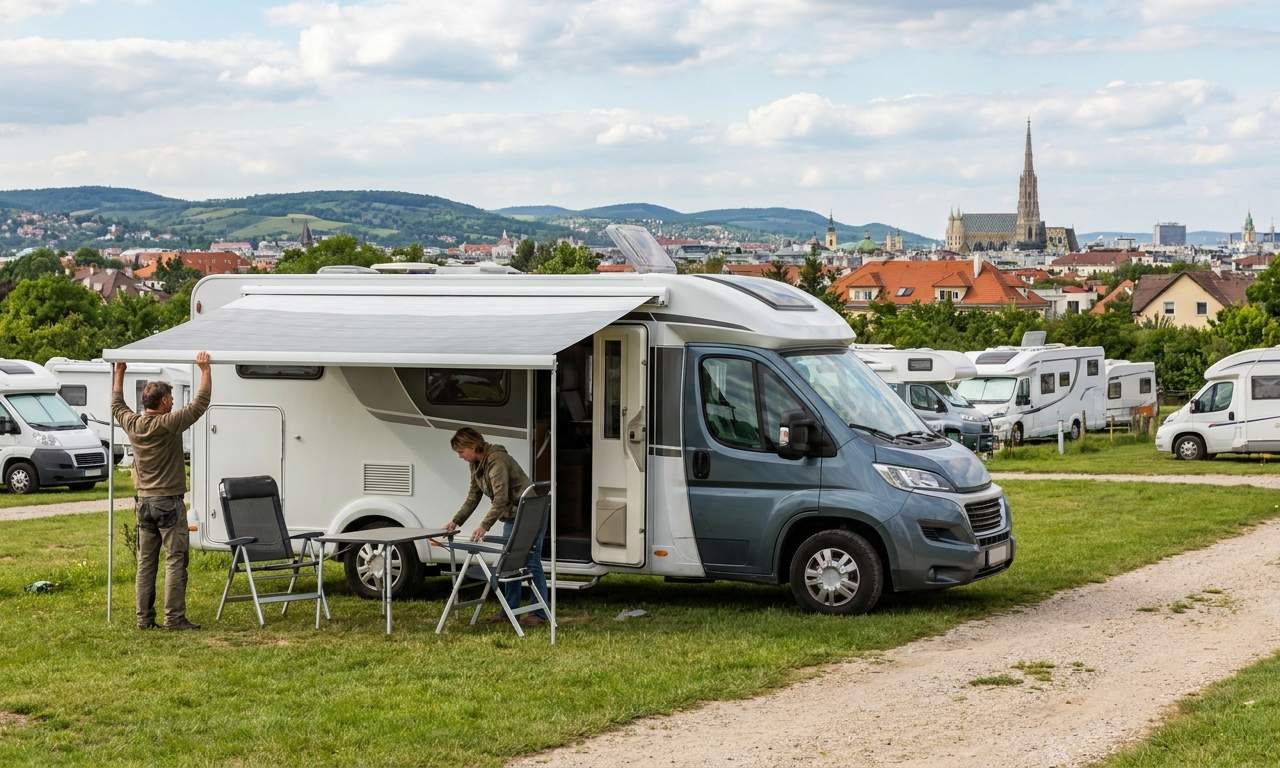
Vienna's urban road network is known for its excellent condition and largely flat terrain, contributing to a smooth and manageable driving experience for RVs within the city. You'll primarily encounter well-maintained asphalt roads, where the main consideration is traffic density rather than challenging topography. Beyond the city, Austria's broader road infrastructure is equally impressive, offering scenic routes that may involve gentle hills and winding paths perfectly suitable for motorhome travel. Roads are generally designed to accommodate various vehicle sizes, but it's always advisable to drive slower and more cautiously, especially when exploring the picturesque regions surrounding Vienna.
RV Size Limits, Bridges & Restricted Zones
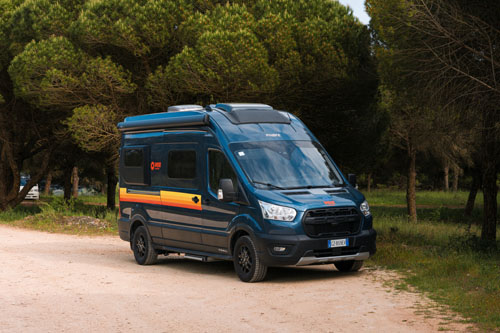
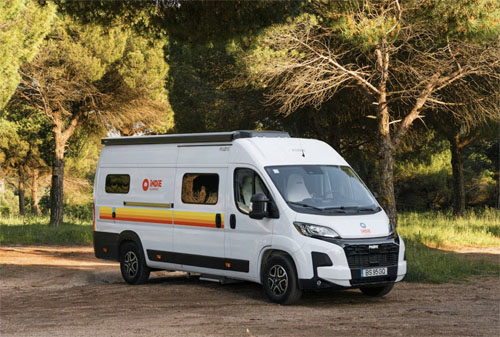
As of 2026, Vienna does not have a permanent low-emission zone that restricts entry for standard passenger vehicles, including RVs. However, RV drivers must remain vigilant for local signage indicating height and weight restrictions, particularly when approaching tunnels, low bridges, or navigating through the older, more compact areas of the city. Standard RVs, such as Bandana's Class B Camper Vans (averaging 5.8m in length) or Class SI Semi-integrated models (averaging 6.9m), are generally well-suited for Austrian roads and urban approaches. While specific environmental badges ('Umwelt-Pickerl') are required for certain commercial vehicles in designated zones within Austria, they typically do not apply to private RVs. It's always best to confirm with your rental provider regarding any specific requirements.
Fuel: Diesel vs. Petrol & Cost per 100 km
The overwhelming majority of RVs available for rental in Vienna, including most vehicles in Bandana's fleet, operate on diesel fuel. Diesel is readily accessible at service stations throughout Austria. Bandana's global fleet data indicates that Class SI Semi-integrated RVs typically consume 10-11 liters per 100 km, while Class C Alcove RVs usually consume 10-12 liters per 100 km. For more economical travel, Bandana's Class B Camper Vans are known for their efficiency, averaging 8-10 liters per 100 km, which translates to a lower cost per 100 km compared to larger models. While fuel prices can fluctuate, strategic route planning and utilizing any available fuel discount cards offered by rental companies can help manage your expenses during your RV trip around Vienna.
Tolls, Vignettes & Border Rules
To legally use Austria's motorways and expressways, all vehicles up to 3.5 tons, including most RVs, are required to purchase and display a 'Vignette.' This can be a physical toll sticker or a digital pass, available for various durations such as 10 days, 2 months, or one year. Vignettes can be purchased online, at border crossings, or at numerous gas stations. For RVs with a maximum permissible mass exceeding 3.5 tons, a GO-Box system is mandatory, which electronically calculates tolls based on distance traveled. When planning international journeys from Vienna, remember that neighboring countries like Slovakia, Hungary, and the Czech Republic each have their own distinct toll systems, often requiring separate vignettes or electronic passes. On the routes offered through RV PLANET routes, you can itemize and track every expense along the way for easy budgeting.
Driving Tips for rv rental Travelers
Before setting off on your Austrian adventure, thoroughly familiarize yourself with your rented RV's specific dimensions—height, width, and length—to confidently navigate underpasses, narrow streets, and parking spaces in Vienna and beyond. In Austria, carrying a reflective safety vest, a warning triangle, and a first-aid kit within the vehicle is legally mandatory; ensure your rental RV is equipped with these essential items. Strictly adhere to Austrian speed limits: 130 km/h on motorways, 100 km/h on expressways, 100 km/h on other main roads (for vehicles up to 3.5t), and 50 km/h within urban areas. To simplify parking in Vienna's city center, consider utilizing the efficient Park & Ride facilities located on the city's outskirts, which offer direct public transport connections into the heart of the city. Always be mindful of Austria's general rule for yielding to traffic from the right (unless otherwise indicated by signage) and observe all local parking regulations to avoid fines.
Recommended RV Class for Vienna Roads
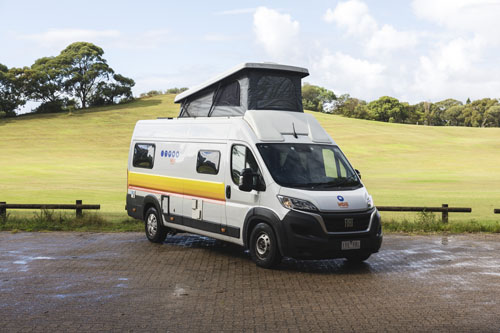
For an optimal balance of maneuverability in Vienna and comfortable touring capabilities across Austria, a Class B Camper Van or a Class SI Semi-integrated RV is highly recommended. Bandana's Class B Camper Vans, averaging 5.8 meters in length, are exceptionally agile for city navigation, easier to park, and offer excellent fuel efficiency, typically consuming 8-10 liters per 100 km. Bandana's Class SI Semi-integrated RVs, averaging 6.9 meters in length, provide more spacious living and sleeping areas while remaining manageable on Austrian roads, with fuel consumption usually around 10-11 liters per 100 km. Both classes generally offer adequate ground clearance for standard road conditions and are well-suited for both city-fringe camping and scenic drives through Austria's diverse landscapes.
Should I Choose a Compact Van Instead of a Large RV in Vienna?
While a compact van, like a Class B Camper Van, offers superior maneuverability and ease of parking in Vienna's urban core, most standard RVs are generally manageable on Austria's well-maintained road network. For travel primarily within Vienna and for agile, short excursions, a compact van (Bandana's Class B averages 5.8m in length) is highly practical, fitting into smaller spaces and offering better fuel economy. Conversely, a larger RV, such as Bandana's Class C Alcove (averaging 7.5m) or Class A Integrated (averaging 7.5m), provides significantly greater comfort, living space, and amenities, which can greatly enhance longer trips or family adventures. The decision ultimately balances ease of city navigation against the desire for onboard living comfort; Vienna's efficient Park & Ride system effectively mitigates parking challenges for larger RVs accessing the city center.
Can I Park Anywhere? Free & Wild Camping Rules in Vienna
Wild camping and unsanctioned free overnight parking are generally prohibited across Austria, including within Vienna and its surrounding regions. This means that using official campgrounds or designated parking facilities is typically required for overnight stays. In Vienna, securing legal overnight parking for an RV usually involves booking a spot at established paid campsites located on the city's periphery or utilizing specific Park & Ride lots that may permit overnight stays, although you should always verify local regulations first. Many municipalities outside Vienna offer designated RV parking areas, known as Stellplätze, which provide basic services for motorhomes, often for a fee. It's crucial to remember that rules regarding overnight parking for RVs can vary significantly by municipality and region across Austria, so always verify local regulations and adhere to them before parking overnight to avoid penalties.
Can I Drive an RV Into the City Center? Heights, Tunnels & Local Signage
Yes, it is generally possible to drive an RV into Vienna's city center, although navigating the narrower streets and securing suitable parking will be the primary challenges. Drivers must be vigilant for local signage indicating height restrictions for tunnels and underpasses, low bridges, and potential environmental zones or residents-only streets, especially within the historic core. Vienna offers an extensive Park & Ride system strategically located on its outskirts, providing convenient and cost-effective parking for RVs with direct and efficient public transport links into the city center. To avoid potential issues with strict parking enforcement and limited availability, consider parking your RV at one of these peripheral Park & Ride facilities and using Vienna's excellent public transport network for your city explorations.
What do I need to drive a motorhome in Austria?
To legally drive a motorhome in Austria, you'll need a valid national driver's license (Category B for vehicles up to 3,500 kg) and an International Driving Permit (IDP) if your license is from a non-EU/EEA country. You must also satisfy the rental company's minimum age and driving experience criteria, typically requiring drivers to be between 21 and 25 years old and to have held their license for a specified period. Mandatory safety equipment, including a reflective safety vest, a warning triangle, and a first-aid kit, must be carried in the vehicle. For motorhomes exceeding 3,500 kg maximum permissible mass, a higher license category like C1 or C is mandatory, along with a GO-Box for distance-based tolls on Austrian motorways. Lastly, ensure you have proof of valid vehicle registration and insurance, which are typically supplied by your RV rental provider.
What is the 3-3-3 rule for RV?
The 3-3-3 rule for RV travel is a popular guideline that promotes a relaxed and safe journey: drive no more than 300 miles a day, arrive at your destination by 3 PM, and stay for at least 3 nights. This rule is particularly beneficial for RV trips around Vienna and Austria as it helps mitigate driver fatigue, allows ample time for campsite setup and local exploration, and ensures a comfortable travel pace. Adhering to the 'arrive by 3 PM' component is especially practical in Austria, where wild camping is restricted, as it increases your chances of securing a spot at a popular campground or Stellplatz before it fills up. Implementing this guideline can significantly enhance your RV rental experience, enabling deeper engagement with the scenic beauty and cultural attractions around Vienna without feeling rushed.
What requirements do you need to drive an RV?
Driving an RV in Austria requires a valid national driver's license (Category B for vehicles up to 3,500 kg) and an International Driving Permit (IDP) if your license originates from a non-EU/EEA country. You must also meet the rental company's minimum age and driving experience requirements, typically 21-25 years old with a minimum license holding period. For RVs exceeding 3,500 kg, a Category C1 or C license is mandatory. Beyond licensing, you are legally obligated to carry specific safety equipment—a reflective safety vest, a warning triangle, and a first-aid kit—and to ensure the RV is equipped with the correct toll system (Vignette or GO-Box). Importantly, all drivers must be explicitly named on the rental agreement and possess all necessary identification and documentation throughout the rental period.
Can I drive in Austria with a US driver's license?
Yes, you can drive in Austria with a valid US driver's license, but it is a legal requirement that your US license **must be accompanied by an International Driving Permit (IDP)**. The IDP serves as an official, multi-language translation of your US license, making it understandable to Austrian authorities and rental companies, and is mandatory for non-EU/EEA residents. You should obtain an IDP from authorized organizations like AAA or AATA in the United States prior to your departure, as it is typically valid for one year from its issue date. Failure to present both your US driver's license and a valid IDP when requested by law enforcement or rental personnel can lead to fines or other legal complications.
Is Austria motorhome friendly?
Austria is widely considered a highly motorhome-friendly country, boasting an excellent network of well-maintained roads, breathtaking scenic routes, and a comprehensive infrastructure of campgrounds and designated Stellplätze (motorhome parking spaces). Road conditions across the country are generally superb, accommodating RVs of various sizes. While wild camping is largely prohibited, numerous official and well-equipped overnight options are available, especially outside major urban centers like Vienna. The country's manageable size and diverse landscapes, from the historic charm around Vienna to the majestic Alps, make it an ideal destination for RV exploration, supported by clear signage and readily available services. However, RV travelers should remain mindful of specific urban restrictions, potential height limits in certain areas, and the mandatory toll system (Vignette or GO-Box) for all motorways.
Is renting a car in Vienna worth it?
Renting a car in Vienna is generally not the most practical choice if your primary travel objective is to explore the city center, given Vienna's highly efficient public transport system and the significant challenges associated with city parking for automobiles. However, for travelers whose itinerary includes extensive exploration of the Austrian countryside, the Alps, or neighboring countries, a car might offer slightly more agility in extremely confined spaces than a very large RV. Nonetheless, an RV rental, especially a compact model like Bandana's Class B Camper Van, offers the unparalleled freedom of combining transportation with comfortable accommodation, allowing for self-sufficient travel and the flexibility to access Vienna via Park & Ride while enjoying scenic overnight stays. Ultimately, the value of a car versus an RV in Vienna hinges on your travel priorities: a car suits those solely focused on external excursions with hotel stays, while an RV provides a complete, flexible road trip experience.
How big of an RV can you drive without a special license?
In Austria and throughout the European Union, you can operate an RV with a maximum permissible mass (MPM) of up to 3,500 kg (approximately 7,700 lbs) using a standard Category B driver's license. This weight category typically covers most popular RV types, including camper vans (Bandana's Class B averages 5.8m in length) and many smaller semi-integrated motorhomes (Bandana's Class SI averages 6.9m in length). For RVs that have an MPM exceeding 3,500 kg, a higher driver's license category such as C1 (for vehicles up to 7,500 kg) or C (for vehicles over 7,500 kg) is required. It is essential to always confirm the specific weight rating of your chosen RV model, usually found in the vehicle's documentation, to ensure your current license category is sufficient before commencing your trip.
Who makes the Renegade Vienna?
The Renegade Vienna is a specific Class C motorhome model manufactured by Renegade RV, an American company recognized for its luxury RVs and high-end motorcoaches. While this particular model is part of Renegade RV's more compact and agile offerings, designed to combine comfort with easier driving characteristics, it is distinct from the European-manufactured RVs commonly available for rental in and around Vienna. When renting an RV in Vienna, you will typically find a diverse selection of models from prominent European manufacturers such as Hymer, Sunlight, or Pössl within Bandana's fleet, which are specifically tailored for European roads and local availability.
What category is a VW camper van?
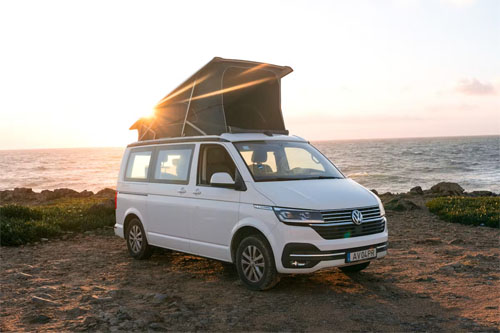
A VW camper van, such as the popular Volkswagen California, is generally classified as a 'Class B - Camper Van' within the standard recreational vehicle categorization system. These vehicles are distinguished by their compact design, integrating living and sleeping spaces within a standard van chassis; Bandana's Class B Camper Vans average 5.8m in length. Class B camper vans are exceptionally suitable for navigating urban environments like Vienna and offer favorable fuel efficiency, with Bandana's fleet averaging 8-10 liters per 100 km, making them a preferred option for couples or small families. Crucially, their gross vehicle weight typically remains well under 3,500 kg, meaning a standard Category B driver's license is sufficient for their operation in Austria.
How much does the average RV insurance cost?
For privately owned RVs, the average cost of insurance varies widely based on factors like the RV's value, type, age, desired coverage level, driver history, and location, typically ranging from a few hundred to over a thousand euros annually. For RV rentals in Vienna, basic liability insurance, which covers damages to third parties and their property, is usually included in the total rental price. Most rental providers offer optional supplemental insurance packages, such as a Collision Damage Waiver (CDW) or theft protection, designed to reduce your financial liability (excess/deductible) in case of damage or theft; these are highly recommended for added peace of mind. It's essential to thoroughly review your rental agreement to understand the extent of the included insurance coverage and to explore any additional, optional coverages that align with your travel needs and risk tolerance.
What You Shouldn't Miss
- Explore Schönbrunn Palace: Immerse yourself in the imperial history and stunning gardens of this UNESCO World Heritage site, easily accessible by RV and then public transport.
- Visit St. Stephen's Cathedral: Admire the Gothic masterpiece in the heart of Vienna, and perhaps climb the tower for panoramic city views.
- Stroll through the Historic Center: Wander Vienna's charming cobblestone streets, soaking in the atmosphere of its imperial past and vibrant modern life.
- Discover Viennese Coffee House Culture: Experience the unique tradition of Viennese coffee houses by enjoying a 'Melange' and a pastry in a historic setting.
- Enjoy the Prater Amusement Park: Visit the iconic Wiener Riesenrad (Giant Ferris Wheel) and experience the joy of this historic amusement park.
- Drive a scenic route into the Vienna Woods (Wienerwald): Take your RV on a scenic drive through the lush Vienna Woods, perhaps stopping at a traditional 'Heuriger' (wine tavern) for local wine and food.
Final Thoughts
Embarking on an RV journey to Vienna offers a unique blend of urban exploration and the freedom of the open road. With a rented RV, you have the flexibility to discover not only the imperial grandeur of Vienna but also the charming landscapes and historical sites that dot the Austrian countryside.
By understanding Austria's driving regulations, toll systems, and parking options, you can ensure a smooth and enjoyable trip. Remember to plan your routes, book your preferred vehicle in advance, and embrace the slower pace of RV travel to truly connect with the places you visit. Get inspired for your next trip!
Find Motorhome Rentals in Vienna