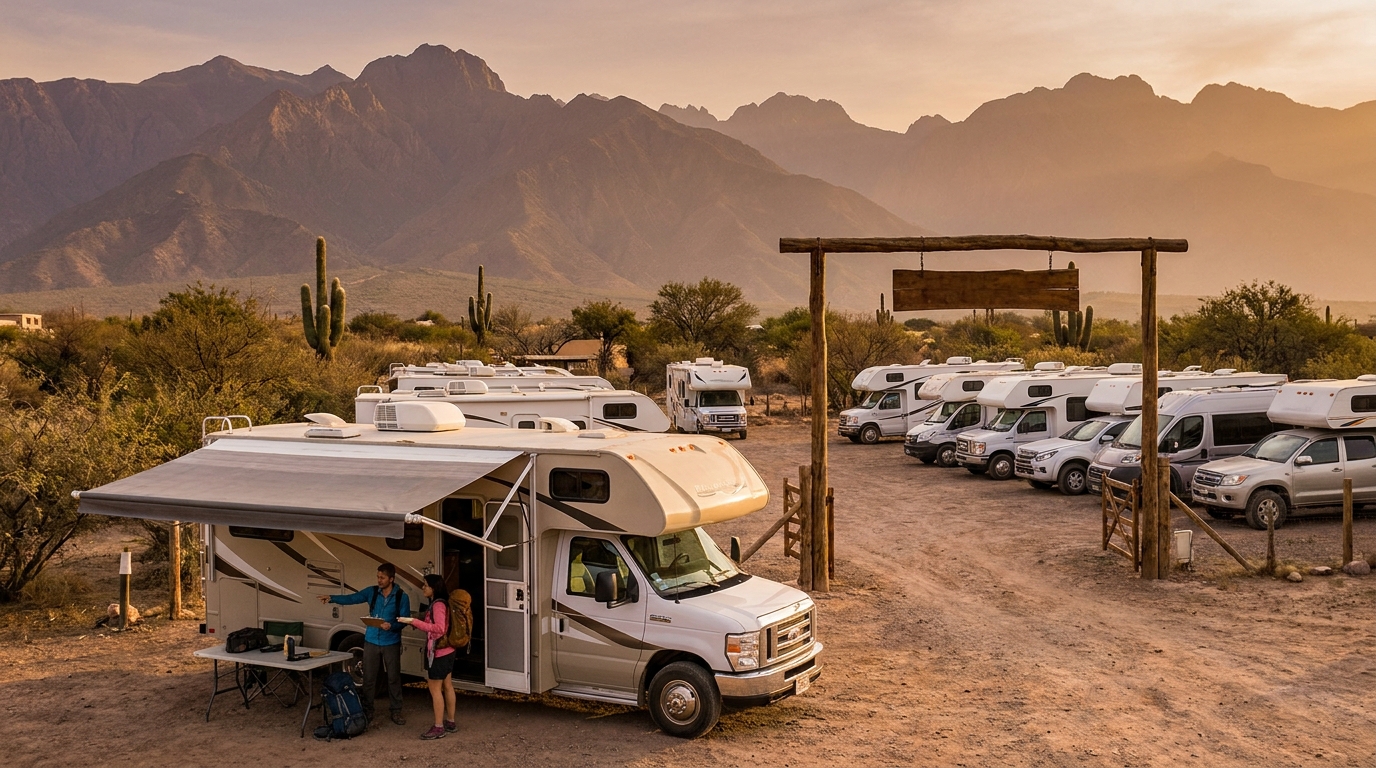
For live availability and current prices, start with our RV Rental South America - Complete Guide 2026 guide.
In This Guide
- Can You Drive an RV in South America? License & Age Rules
- Road Conditions & Terrain in South America
- RV Size Limits, Bridges & Restricted Zones
- Fuel: Diesel vs. Petrol & Cost per 100 km
- Tolls, Vignettes & Border Rules
- Driving Tips for rv rental for couples Travelers
- Recommended RV Class for South America Roads
- Should I Choose a Compact Van Instead of a Large RV in South America?
- Can I Park Anywhere? Free & Wild Camping Rules in South America
- Can I Drive an RV Into the City Center? Heights, Tunnels & Local Signage
- What is the 3-3-3 rule for RV travel?
- Can I rent an RV to drive across country?
- What is the 333 rule for campervan?
- Can you RV in South America?
- Which countries are RV friendly?
- Can you rent an RV in Chile?
- What is the 3-3-3 rule for RV?
- Can you rent an RV with a regular license?
- What is the largest RV you can drive without a special license?
- Will my car insurance cover an RV rental?
Imagine setting off on a couples' adventure, just the two of you, winding through breathtaking landscapes and discovering hidden gems at your own pace. South America offers an incredible backdrop for a romantic RV trip, from the majestic Andes to the stunning coastlines. With a rented RV, you have a mobile headquarters to venture out and create unforgettable memories together. For live availability and current prices, start with our RV Rental South America - Complete Guide 2024 guide, which covers all the essential details for planning your grand journey.
Can You Drive an RV in South America? License & Age Rules
Driving a rented RV in South America is entirely possible for couples, with most campervans and smaller motorhomes under 3,500 kg (7,700 lbs) Gross Vehicle Weight Rating (GVWR) only requiring a standard car driver's license. An International Driving Permit (IDP) is highly recommended and often required alongside your national license in most South American countries to ensure your credentials are universally understood by local authorities. The minimum age for renting an RV in South America through our partners is 21 years old, with no young driver surcharges or vehicle class restrictions based on age, making it accessible for many adventurous couples. We advise always carrying both your national driver's license and your IDP, along with other essential travel documents.
Road Conditions & Terrain in South America
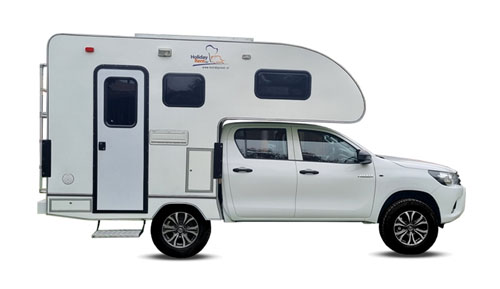
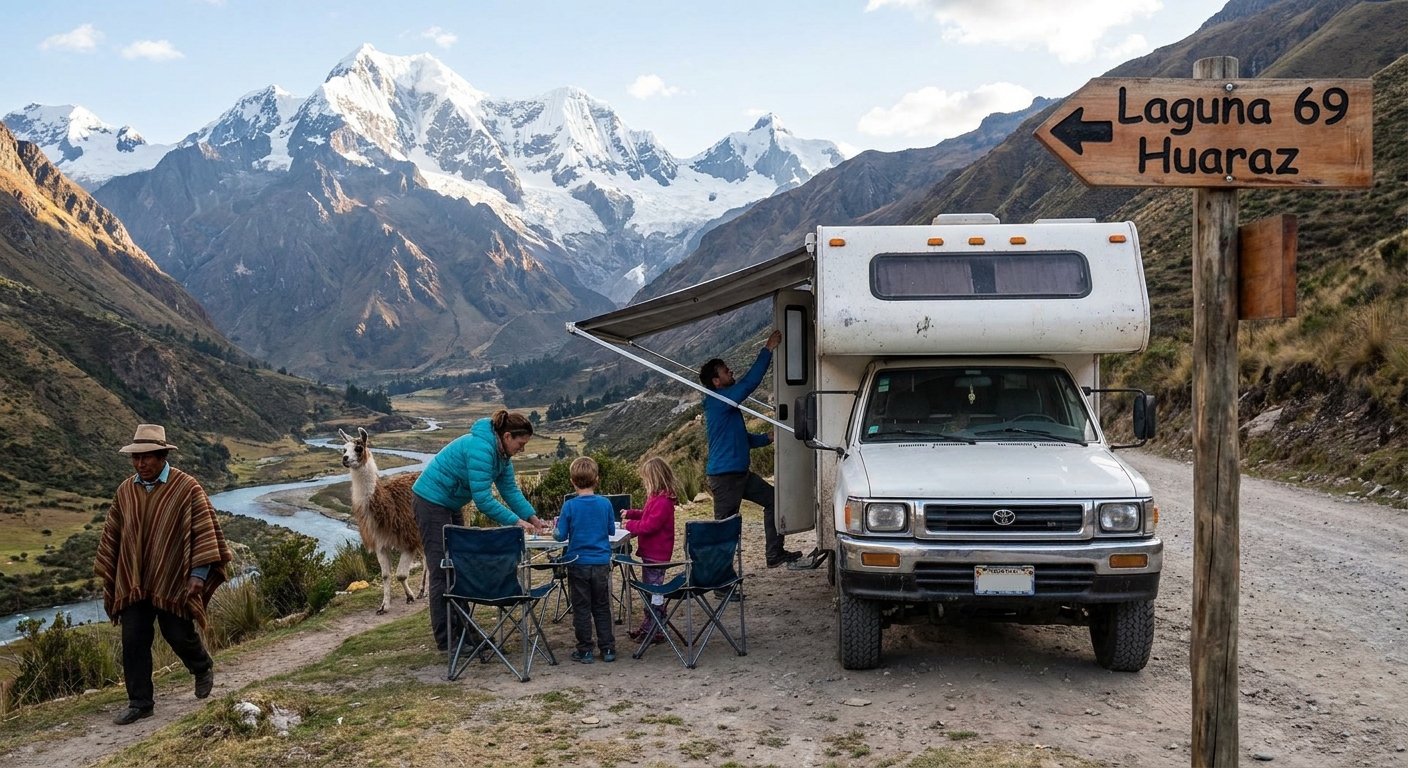
South America's road conditions offer a fascinating variety for couples traveling by RV, ranging from modern, well-maintained paved highways to challenging gravel, dirt, and unpaved secondary roads, particularly in remote or mountainous regions. Couples should anticipate diverse terrains, including high mountain passes like those in the Andes, scenic coastal routes, vast desert stretches, and potentially humid rainforest-adjacent roads. The key to successful RV travel here is adopting a slower, more scenic pace, allowing both partners to fully appreciate the stunning landscape and adapt comfortably to varying road quality. For example, a 4 Wheel Drive Class TC - Truck Camper like the "Patagonia Camper 4x4 double cab" is designed for more rugged paths, while a compact Class B campervan like the "2 Berth Hi Top" or "hire campervan example Paradise S/T" offers excellent agility for diverse routes.
RV Size Limits, Bridges & Restricted Zones
RV size limits in South America are primarily a consideration for navigating tight city centers and winding mountain roads, rather than common low bridges or strict height/weight restrictions found in some older European cities. Always pay close attention to local signage for any specific height, weight, or length restrictions, especially when entering smaller towns, crossing older bridges, or utilizing ferries, which often charge based on vehicle length. Environmental zones are less common than in parts of Europe, but specific urban centers might have them, so checking local regulations for your planned route is always a good idea. For couples, choosing a moderately sized RV like a Class B Camper Van or a Class SI Semi-integrated motorhome provides an excellent balance between comfortable interior amenities and ease of navigation on South America's diverse infrastructure.
Fuel: Diesel vs. Petrol & Cost per 100 km
Diesel (known as Gasóleo or Diésel) is generally the more prevalent and often more cost-effective fuel type for RVs in South America, compared to petrol (Nafta or Bencina). Fuel consumption for Bandana's global fleet typically ranges from 8-17 Liters per 100 km, with compact Class B Camper Vans averaging 8-10 L/100km and Class TC Truck Campers averaging 12-17 L/100km. Fuel prices vary significantly by country and even by region within South America, so budgeting for these fluctuating costs is essential for couples. We recommend checking current fuel prices in your destination countries before and during your trip. For easy budgeting, RV PLANET routes allow travelers to itemize and track every expense along the way. On the routes offered through RV PLANET routes, you can itemize and track every expense along the way for easy budgeting.
Tolls, Vignettes & Border Rules
Tolls are common on major highways across various South American countries, and payment methods can range from cash at booths to electronic systems. Specific vignette systems (pre-paid road use stickers) are less common than traditional toll booths in South America, but always confirm local requirements for your specific route plans. Crossing international borders in a rented RV requires special documentation, including Temporary Import Permits (TIPs) for the vehicle, which your rental company typically assists in facilitating. Some rental motorhome providers may offer options to pre-purchase toll passes or provide guidance to avoid fines, which is a valuable inquiry for couples planning extensive cross-country travel.
Driving Tips for rv rental for couples Travelers
Planning a realistic itinerary is crucial for rv rental for couples travelers, accounting for South America's varied road conditions and potential delays; prioritize immersive experiences over covering vast distances quickly. We recommend slow travel, aiming for a maximum of 100-150 km per day on average. Share driving responsibilities to reduce fatigue and allow both partners to fully enjoy the spectacular scenery. Familiarize yourselves with basic Spanish or Portuguese phrases to aid in communication, especially in rural areas or emergencies. Prioritize safety by securing valuables, choosing reputable campgrounds or designated overnight parking spots, and researching current local safety advisories. Pack adaptably for diverse climates and consider equipping your rented RV with essential emergency tools and a reliable GPS or offline maps for easy navigation.
Recommended RV Class for South America Roads
For RV rental for couples in South America, a Class B Camper Van or a Class SI Semi-integrated motorhome often provides the best balance of comfort, amenities, and maneuverability on varied road conditions. Class B Camper Vans, like the "2 Berth Hi Top" or "rv rental denver example Category Van" which average around 5.8m in length, offer excellent agility for winding mountain roads and city navigation, along with good fuel economy (typically 8-10 Liters/100 km). Class SI Semi-integrated motorhomes, averaging 6.9m in length, such as the "2 Berth Rover" or "2 Berth Tamar", provide more interior space and amenities for couples without being overly cumbersome, typically consuming 10-11 Liters/100 km. These classes generally offer sufficient ground clearance and robust construction suitable for the diverse terrains encountered across South America.
Should I Choose a Compact Van Instead of a Large RV in South America?
While a compact campervan (Class B) offers superior maneuverability for tight city centers, narrow mountain passes, and unpaved roads, larger RVs (Class SI, Class C) generally present no insurmountable issues for driving in South America. For couples, the decision often hinges on prioritizing indoor comfort and amenities versus maximum agility and potentially better fuel economy. A compact van, such as the "rent rv example MiniVan", is genuinely helpful for accessing very remote areas or navigating extremely congested urban environments where its smaller footprint is a distinct advantage. However, many couples find the additional living space, kitchen facilities, and storage of a larger semi-integrated RV or even an alcove model to be a more comfortable trade-off for extended travel in South America.
Can I Park Anywhere? Free & Wild Camping Rules in South America
Free or wild camping rules in South America vary significantly by country, region, and specific local regulations, with generally more flexibility in remote areas than near urban centers or protected lands. In many countries, especially Argentina and Chile, "wild camping" (boondocking) is often tolerated in designated remote spots or where no specific restrictions are posted, provided you respect private property and leave no trace. Always prioritize safety when considering overnight parking; official campgrounds, municipal sites, or designated RV parks are generally the safest options for couples. Rules vary by region, so always check local regulations and follow local law before parking overnight, and consider asking locals for advice on safe and appropriate spots. For finding campsites and campgrounds during your trip, we recommend using RV PLANET (rvplan.net) - a great resource for locating available spots along your route.
Can I Drive an RV Into the City Center? Heights, Tunnels & Local Signage
Generally, driving a rented RV into South American city centers is possible, though it often requires careful attention to local conditions and signage due to traffic, narrow streets, and parking challenges. Always pay close attention to local signage indicating height limits for tunnels, low bridges, and parking garages, as well as weight restrictions and environmental zones that may apply in specific urban areas. Many South American cities may have older infrastructure not designed for larger vehicles, necessitating cautious navigation, especially in historic districts or residential areas. Drive slowly and carefully, and you can drive almost anywhere without issues. No need to stress - just use common sense and pay attention. For couples, often the most convenient approach is to park on the outskirts of major cities and use public transport or ride-sharing services to explore the city center.
🎬 Video coming soon
What is the 3-3-3 rule for RV travel?
The 3-3-3 rule for RV travel recommends driving no more than 300 miles (approximately 480 km) in a single day, which is a sensible pace for couples exploring South America. It also suggests arriving at your destination by 3 PM, allowing ample time to set up camp and relax before dark. Lastly, the rule advises staying for at least 3 nights at each chosen location, promoting a relaxed, immersive, and less hurried travel experience for couples. Following this guideline helps prevent driver fatigue, reduces stress, and significantly enhances the enjoyment of your RV adventure in South America, aligning with our recommendation for slow travel.
Can I rent an RV to drive across country?
Yes, you can rent an RV to drive across countries in South America, but it requires specific arrangements and permits from your rental company. Cross-border travel in a rented RV necessitates Temporary Import Permits (TIPs) for the vehicle, which are typically facilitated by the rental provider for approved routes. Couples must clearly communicate their planned international itinerary to the rental company in advance to ensure all necessary documentation and insurance coverages are in place for each border crossing. Careful planning for each border's unique regulations and potential processing times, which can sometimes involve a few hours, is crucial for a smooth multi-country RV adventure in South America, as detailed in guides like "RV Rental Deals in South America - Latest Offers 2024".
What is the 333 rule for campervan?
The 333 rule for campervans is the same practical principle as the 3-3-3 rule for RV travel, offering a guideline for a relaxed and safe travel pace in South America. This rule suggests limiting daily travel to no more than 300 miles (around 480 km), which is especially beneficial for couples exploring South America's varied landscapes in a compact campervan like the "rv rental denver example Category Van". It also recommends arriving at your overnight stop by 3 PM to allow for comfortable setup and enjoyment of your surroundings. Furthermore, staying at each destination for a minimum of 3 nights encourages deeper exploration and reduces the stress of constant movement, making it ideal for a couple's leisurely week-long trip or extended road trip.
Can you RV in South America?
Absolutely, RVing in South America offers an unparalleled adventure for couples, allowing for immersive exploration of its diverse landscapes, vibrant cultures, and remote beauty. While it requires thorough preparation, flexibility, and an understanding of varying road conditions and local regulations, the rewards of freedom and discovery are immense. Popular destinations like Chile and Argentina boast established RV rental infrastructure and stunning routes, but opportunities exist across the continent. Couples planning to RV in South America should budget for fuel, tolls, border crossing fees, and ensure comprehensive insurance, while also researching local connectivity solutions and mechanical support. Bandana has been helping tens of thousands of travelers explore the world by RV since 2001, including extensive itineraries in South America.
Which countries are RV friendly?
Chile and Argentina are widely considered the most RV-friendly countries in South America, offering well-developed infrastructure for motorhomes, including numerous campgrounds and rental services. These nations boast extensive scenic routes, particularly in the vast region of Patagonia, and are accustomed to international travelers exploring by rented RV. Other countries like Uruguay and parts of Brazil also offer good RVing opportunities, particularly along their coastlines and in national parks, albeit with potentially fewer specialized facilities for a "2 Berth Hi Top" campervan. Adventurous couples can find rewarding experiences with careful planning in many parts of the continent, but Chile and Argentina provide the most accessible entry points for an RV adventure, as highlighted in "RV Camping in South America - Best Campgrounds 2024".
Can you rent an RV in Chile?
Yes, Chile is a premier destination for RV rentals in South America, offering numerous options for couples looking to explore its stunning landscapes, from deserts to glaciers. Several reputable rental companies, including Bandana partner suppliers like Apollo and Britz, operate in Chile, primarily with pick-up locations in major cities like Santiago and Punta Arenas, providing a range of vehicles from compact campervans to larger motorhomes suitable for two. Renting an RV in Chile allows couples to comfortably explore iconic regions such as the Atacama Desert, the picturesque Lake District, and the rugged Carretera Austral in Patagonia. It is advisable to book your rental in advance, especially during peak season, and confirm all cross-border travel requirements if planning to visit neighboring countries like Argentina.
What is the 3-3-3 rule for RV?
The 3-3-3 rule for RV travel is a widely recommended guideline for maintaining a relaxed and enjoyable pace during road trips, particularly beneficial for couples exploring South America. This rule suggests driving no more than 300 miles (approximately 480 kilometers) per day to prevent fatigue and allow for spontaneous stops. It also advises aiming to arrive at your campsite or overnight stop by 3 PM, ensuring ample time to set up, explore, and relax before sunset. The final '3' encourages staying for at least 3 nights at each appealing destination, fostering deeper immersion and reducing the constant packing and unpacking inherent in faster travel. This approach lets couples truly connect with the culture, food, and scenery.
Can you rent an RV with a regular license?
Most RVs suitable for couples, including Class B campervans like the "rent rv example A1" and many Class SI semi-integrated motorhomes, can be driven with a standard Class B (car) driver's license in most countries. The determining factor is typically the Gross Vehicle Weight Rating (GVWR) of the RV; in many jurisdictions, vehicles with a GVWR up to 3,500 kg (7,700 lbs) do not require a special license. Always confirm the specific license requirements with your rental company and check the local laws of the South American countries you plan to visit, as regulations can vary. An International Driving Permit (IDP) is almost universally recommended or required to supplement your national license when renting an RV abroad, ensuring your license is understood by local authorities.
What is the largest RV you can drive without a special license?
Generally, the largest RV you can drive without a special license is one with a Gross Vehicle Weight Rating (GVWR) of up to 3,500 kg (approximately 7,700 lbs), which is typically covered by a standard car license (Class B or equivalent). This category often includes many Class B campervans and a significant portion of Class SI semi-integrated motorhomes, popular choices for couples due to their balance of size and amenities. Larger Class C alcove motorhomes or Class A integrated RVs may exceed this 3,500 kg threshold, potentially requiring a higher class of license depending on the specific model and local regulations. Always verify the GVWR of your chosen RV rental and consult with the rental company and local driving authorities in South America to ensure you comply with all licensing requirements before your trip.
Will my car insurance cover an RV rental?
It is highly unlikely that a standard personal car insurance policy will extend coverage to an RV rental, especially for international travel in South America. Specialized RV rental insurance is almost always essential and typically offered by the rental company, covering liabilities, collision damage, and sometimes roadside assistance. For couples, it's crucial to thoroughly review the rental company's insurance options, understand what is covered and excluded (e.g., specific countries, off-road driving), and consider purchasing additional coverage for peace of mind. You can upgrade to a top-level deductible for extra peace of mind, an optional enhancement available through Bandana, allowing you to travel with confidence. Some credit card companies offer rental car insurance benefits, but these rarely cover RVs, so always confirm directly with your card provider before relying on them for your South American RV trip.
What You Shouldn't Miss
- **Patagonia's Route 40 (Argentina) & Carretera Austral (Chile)**: Drive these iconic routes, offering unparalleled access to glaciers, mountains, and pristine national parks.
- **Atacama Desert (Chile)**: Witness the otherworldly landscapes, geysers, and star-filled skies of one of the driest places on Earth.
- **Salar de Uyuni (Bolivia)**: Experience the surreal vastness of the world's largest salt flat, especially magical during the rainy season's reflective effect.
- **Iguazu Falls (Argentina/Brazil)**: Park your campervan nearby and explore the magnificent Iguazu Falls, a UNESCO World Heritage site, from both sides of the border.
- **Colonial Cities & Wineries**: Take detours to charming colonial cities like Salta (Argentina) or enjoy wine country routes in Mendoza (Argentina) and the Central Valley (Chile).
Looking for expert insights from Avi Bandana? Top 5 Adventures - recommendations from Avi Bandana
Final Thoughts
A romantic RV adventure through South America is more than just a trip; it's an opportunity to connect with each other and the incredible world around you. Imagine waking up to a new, breathtaking vista every morning, cooking delicious meals together with your RV-friendly recipes playlist, and sharing quiet moments under starry South American skies. The freedom of a rented motorhome or campervan lets you craft your perfect itinerary, whether you're chasing waterfalls in Brazil or exploring ancient ruins in Peru. Don't let the logistics intimidate you; with a little planning and Bandana's support, your dream journey is well within reach.
We believe travel should be easy and inspiring. That's why we're dedicated to full transparency and personal service, ensuring you feel supported before, during, and after your booking. So, pack your bags, choose your route, and prepare for an unforgettable couples' escape in a rented RV across this magnificent continent. Plan a trip itinerary in advance with minimal effort and maximum enjoyment!
Ready to start planning your perfect getaway? Find rv rental for Rentals in South America and begin your extraordinary journey today!