
In This Guide
- Can You Drive an RV in India? License & Age Rules
- Road Conditions & Terrain in India
- RV Size Limits, Bridges & Restricted Zones
- Fuel: Diesel vs. Petrol & Cost per 100 km
- Tolls, Vignettes & Border Rules
- Driving Tips for RV Rental for Couples Travelers
- Recommended RV Class for India Roads
- Should I Choose a Compact Van Instead of a Large RV in India?
- Can I Park Anywhere? Free & Wild Camping Rules in India
- Can I Drive an RV Into the City Center? Heights, Tunnels & Local Signage
- How much does an RV rental for couples in India cost?
- What are the biggest logistical challenges for RV travel in India?
- What specific safety precautions should couples take for RV travel in India?
- How can couples respectfully experience local culture during an RV trip in India?
- Are there specific RV parks or unique camping spots for couples in India?
- Where can couples find RV rental companies in India?
- Top Cities for RV Rental in India
- What You Shouldn't Miss
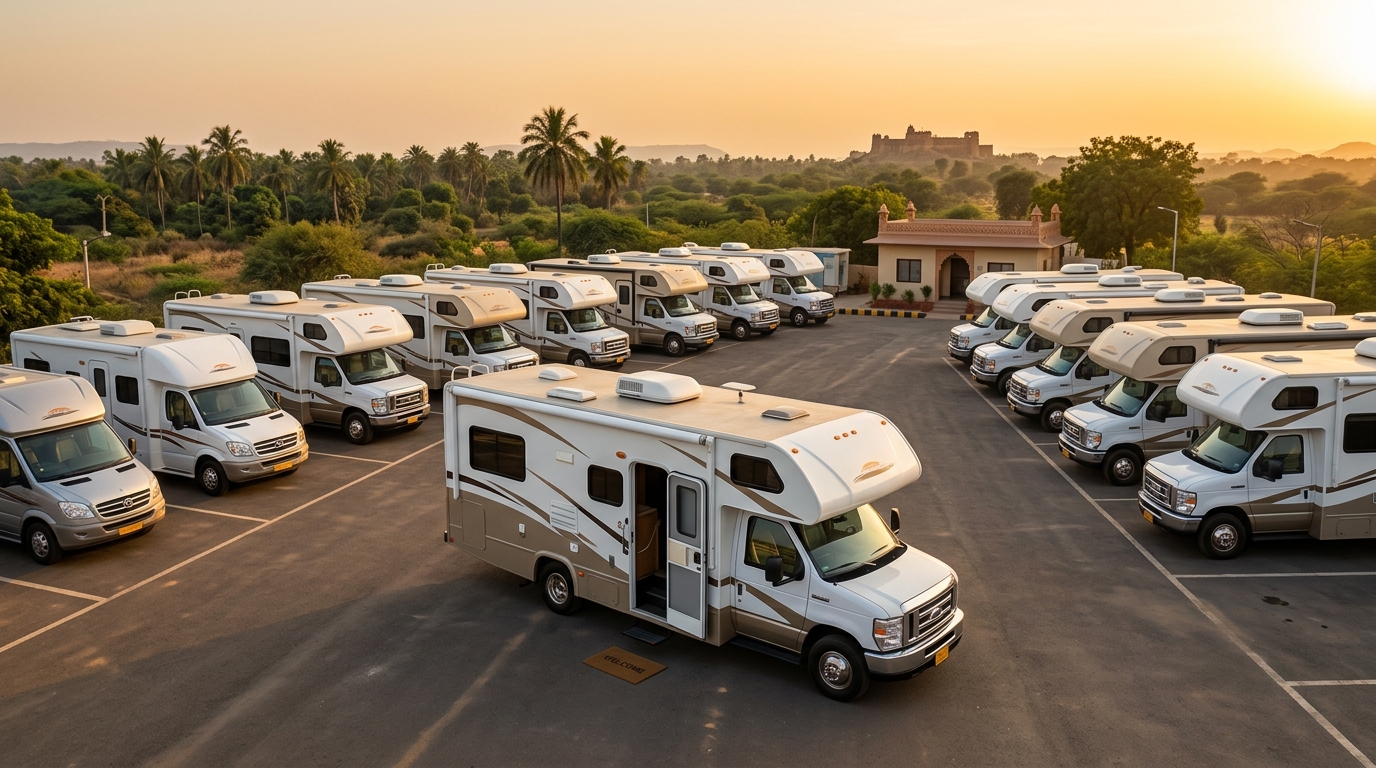
Imagine yourself and your partner waking up to the gentle hum of your motorhome, brewing fresh coffee in your compact kitchen, and stepping out to a breathtaking sunrise over the Himalayas, a serene beach, or a vibrant rural landscape. A romantic RV adventure in India offers unparalleled freedom and intimacy, allowing you to craft a deeply personal journey through a country of incredible diversity. Unlike conventional tours, renting a motorhome for couples in India means every moment is yours to define, from spontaneous detours to cozy nights under the stars. For live availability and current prices, start with our RV Rental India - Complete Guide 2026 guide.
Can You Drive an RV in India? License & Age Rules
Foreigners can generally drive a rented RV in India with an International Driving Permit (IDP) alongside their valid national driver's license, provided the vehicle's Gross Vehicle Weight (GVW) does not exceed 7,500 kg, which typically falls under a standard car license category (B).
A minimum driving age of 21 years is required by most rental companies in India for RV rentals, even though the national minimum is 18 years. It's crucial for both drivers to carry their original license and the IDP at all times, ensuring the IDP is issued in your home country before departure and remains valid for the entire duration of your trip. While specific heavy vehicle licenses are necessary for RVs exceeding 7,500 kg GVW, typical recreational RVs ideal for couples, such as a Class B Camper Van or a Class SI Semi-integrated RV, rarely require such specialized permits.
Road Conditions & Terrain in India
Road conditions in India vary significantly, presenting a diverse range of surfaces from smoothly paved national highways to challenging mountain passes, unpaved village roads, and highly congested urban areas.
Couples planning an RV trip should anticipate varying surfaces, including tarmac, gravel, and potentially rough patches that necessitate slower driving speeds and heightened awareness for obstacles like potholes, unmarked speed breakers, and stray animals. Driving a rented RV in India encourages a slower, more scenic pace, allowing for better appreciation of the landscape and cultural stops, while requiring careful, patient navigation through dense traffic in towns and cities. Remember, drive slowly and carefully, and you can drive almost anywhere without issues. No need to stress - just use common sense and pay attention.
RV Size Limits, Bridges & Restricted Zones
While explicit RV size limits are not universally standardized across India, drivers must be highly mindful of height, width, and weight restrictions, particularly when encountering older bridges, underpasses, and entering specific historic or environmentally sensitive zones.
Low bridges and narrow roads, especially in older towns or mountainous regions, can pose significant challenges for larger RVs; however, standard Class B Camper Vans (averaging 5.8m in length) or Class SI Semi-integrated RVs (averaging 6.9m in length) from Bandana's fleet are generally maneuverable enough for most routes. Always check local signage for specific height, width, and weight restrictions before proceeding, and be aware that some environmentally protected areas or wildlife sanctuaries may enforce specific vehicle size or entry limitations. Planning your route with these considerations in mind will ensure a smoother journey.
Fuel: Diesel vs. Petrol & Cost per 100 km
Most motorhomes available for rental in India, similar to Bandana's global fleet, primarily run on diesel, which is extensively available across the country, while petrol stations are also common, particularly in urban areas.
For a typical Class SI - Semi-integrated RV, Bandana's global fleet averages 10-11 Liters/100 km, while Class B - Camper Vans consume approximately 8-10 Liters/100 km, providing a useful benchmark for couples to budget their fuel expenses. The average cost per 100 km will fluctuate with dynamic fuel prices, but diesel is generally more economical and typically easier to find in rural and remote areas compared to petrol for larger vehicles. Remember that on RV PLANET routes, travelers can itemize and track every expense along the way for easy budgeting, including fuel costs. On the routes offered through RV PLANET routes, you can itemize and track every expense along the way for easy budgeting.
Tolls, Vignettes & Border Rules
Tolls are widely prevalent on India's national highways, primarily managed through the FASTag electronic toll collection system, which is mandatory for most vehicles, including rented RVs.
Foreign RV travelers typically need to ensure their rented motorhome is equipped with a functional FASTag or inquire about purchasing one for their vehicle, as this system allows for automatic toll deduction and significantly reduces wait times compared to manual cash payments, which are less common and often slower. There are no "vignettes" or time-based road tax stickers as found in some European countries; instead, tolls are pay-per-use, either electronically or manually at booths. Crossing international borders from India into neighboring countries like Nepal or Bhutan with a rented RV involves highly complex customs and vehicle import/export regulations, requiring specific permits, vehicle clearance certificates, and often a "No Objection Certificate" from the rental company, making such cross-border trips generally unfeasible or exceedingly complicated for short-term rentals.
Driving Tips for RV Rental for Couples Travelers
For couples embarking on a rented RV adventure in India, prioritizing safety and a relaxed pace is paramount: drive defensively, always maintain a safe distance from other vehicles, and avoid night driving due to poor visibility, unmarked obstacles, and stray animals.
Familiarize yourselves with local driving etiquette, which often includes the liberal use of horns not as an aggressive gesture but as a signal for "please overtake" or "I am here," and be prepared for unpredictable traffic behavior from two-wheelers, pedestrians, and livestock. Planning your routes carefully, especially in remote areas, is essential, considering the availability of fuel, water, and mobile network connectivity, and sharing driving responsibilities will help avoid fatigue on extended road trips. Embrace the journey by allowing ample time for spontaneous stops, engaging in cultural interactions, and enjoying local dhabas (roadside eateries), which will significantly enhance your couple's immersive experience.
Recommended RV Class for India Roads
For couples exploring India, a Class B - Camper Van or a Class SI - Semi-integrated RV from Bandana's diverse fleet offers an excellent balance of maneuverability, comfort, and essential amenities for two travelers.
Class B - Camper Vans, with an average length of 5.8 meters and often ideal for a couple, providing sleeping places for around 2-3 adults like the "2 Berth Hi Top" or "Active Classic" models, are agile enough for narrower roads and easier urban parking, making them perfect for city exploration and accessing remote areas. Class SI - Semi-integrated RVs, averaging 6.9 meters in length and often featuring a comfortable double bed with shower and toilet facilities, provide more spacious living areas, a dedicated dining space, and enhanced comfort for longer trips without being overly cumbersome; examples include the "2 Berth Rover" or "Active Standard Select". Both classes offer adequate ground clearance for varying Indian road conditions and fuel efficiency comparable to other RV types, with Class B averaging 8-10 Liters/100 km and Class SI averaging 10-11 Liters/100 km.
Should I Choose a Compact Van Instead of a Large RV in India?
While a compact van, such as a Class B - Camper Van averaging 5.8 meters in length, offers superior maneuverability in India's often congested cities and narrow rural lanes, a slightly larger RV like a Class SI - Semi-integrated unit might be preferred by couples for enhanced comfort and indoor space on extended journeys.
A compact van simplifies parking and navigating challenging terrain, particularly beneficial for accessing tight historic centers or winding mountain passes, offering features like a compact kitchen and sleeping area ideal for a couple. However, a larger RV, such as a "2 Berth Tamar" or "Active Long Select" (average length 6.9m), provides a more spacious living area, often a fixed bed, and a more comprehensive kitchen and bathroom setup (including shower and toilet), which can significantly improve the quality of life and comfort for a couple on a week-long trip or longer. Ultimately, the choice depends on your itinerary: if frequent city exploration and tight spots are paramount, a compact van excels; for greater comfort, more amenities, and a relaxed touring experience, a mid-sized semi-integrated motorhome often presents a better trade-off.
Can I Park Anywhere? Free & Wild Camping Rules in India
Free or wild camping with a rented RV in India is generally not explicitly regulated in the same comprehensive way as in some Western countries, but it is typically not encouraged in urban areas and requires caution and often local permission in rural settings.
Couples can frequently find informal overnight parking solutions by politely seeking permission from owners of private lands, petrol pump attendants, dhabas (roadside eateries), or even local village heads, which can sometimes lead to unique cultural interactions and hospitality. While traditional, dedicated RV parks with full hookups are relatively rare, some hotels, resorts, or guesthouses in popular tourist areas are increasingly offering designated parking spots with amenities for RVs, providing safer and more comfortable overnight stays. Always prioritize safety, respect local customs, and ensure you have explicit permission before parking overnight; rules and local sensitivities vary significantly by region, so always check local regulations and follow local law before settling in for the night.
Can I Drive an RV Into the City Center? Heights, Tunnels & Local Signage
Yes, in most Indian cities, you can generally drive an RV into the city center, but drivers must pay close and constant attention to local signage regarding height limits, narrow roads, and specific restricted zones.
While most main roads and thoroughfares can accommodate rented RVs, historical city centers, older market areas, and densely populated neighborhoods may have very narrow lanes, low-hanging wires, or even height-restricted underpasses, making navigation challenging for larger vehicles. Be particularly vigilant for "No Entry" signs, environmental zones (which may restrict certain vehicle types or older models), and residents-only streets. Planning your city entries and exits in advance, using GPS with RV-specific settings if available, and scouting parking options outside the densest areas can significantly ease urban driving for couples, allowing you to park and then explore central attractions via public transport or local taxis.
🎬 Video coming soon
How much does an RV rental for couples in India cost?
The cost of an RV rental for couples in India varies significantly based on the RV class, rental duration, season, and included amenities, typically ranging from INR 8,000 to INR 20,000 per day for a comfortable 2-3 berth unit suitable for two people.
For instance, a compact Class B Camper Van like a "rent rv example A1" (ideal for a couple, with shower and toilet) might be on the lower end, while a more spacious Class SI Semi-integrated RV like a "2 Berth Rover" (also ideal for a couple, with shower and toilet) could be higher. A detailed budget for an RV trip should encompass not just the rental fee but also fluctuating fuel costs (Class B Camper Vans average 8-10 Liters/100 km, while Class SI Semi-integrated RVs average 10-11 Liters/100 km), tolls, specific regional permits (e.g., for certain Himalayan regions like Ladakh), groceries for cooking on board (RV-friendly recipes playlist), and potential ancillary expenses like parking fees or additional insurance. You can find up-to-date pricing and compare different options by searching for rv rental for rentals in India. Consider potential savings through extended week-long trip or longer rental periods, or by traveling during the off-season (April-September), and remember to factor in expenses for water sourcing and waste disposal, which are unique logistical considerations for RV travel in India. On RV PLANET routes, travelers can conveniently itemize and track every expense along the way for easy budgeting, ensuring full transparency in your trip costs.
What are the biggest logistical challenges for RV travel in India?
The biggest logistical challenges for RV travel in India include reliable water sourcing and purification for RV tanks, managing waste disposal (greywater, blackwater, and general trash) in areas with limited dedicated infrastructure, and maintaining consistent internet/cellular connectivity, especially in remote regions.
Ensuring access to potable water for RV tanks often requires strategic planning, utilizing reputable petrol pumps, larger hotels, or relying on pre-filled bottled water, coupled with personal water purification systems for an extra layer of safety. Waste disposal, particularly for greywater and blackwater, necessitates careful planning as dedicated dump stations are rare; responsible disposal might involve identifying suitable private facilities (like dhabas or larger guesthouses with septic systems) or discreetly using natural areas with minimal environmental impact, always adhering strictly to 'leave no trace' principles. Consistent internet and cellular connectivity can be spotty in remote areas; carrying multiple SIM cards from different providers (e.g., Jio, Airtel, Vodafone Idea) and potentially a portable Wi-Fi device or satellite communicator can mitigate this challenge for couples who need to stay connected.
What specific safety precautions should couples take for RV travel in India?
Couples embarking on a romantic RV trip in India should prioritize safety by implementing specific protocols for navigating road hazards, preparing for breakdown scenarios, and managing potential medical emergencies, beyond general safe driving practices.
Prepare for common road hazards such as stray animals (cows, dogs), poorly marked obstacles, and sudden braking by maintaining slower speeds, especially outside daylight hours, and ensuring your rented RV's horn and lights are fully functional. In case of a breakdown, having a reliable roadside assistance plan provided by your rental company, readily accessible contact numbers for their support, and basic emergency tools (e.g., spare tire, jack, warning triangle) is crucial, as is knowing how to communicate your precise location effectively using GPS coordinates. For medical emergencies, always carry a well-stocked first-aid kit, research the nearest medical facilities along your planned route, ensure you have comprehensive travel insurance with emergency evacuation coverage, and be aware of any region-specific safety advisories, particularly in remote or politically sensitive areas.
How can couples respectfully experience local culture during an RV trip in India?
Couples can respectfully experience local culture during an RV trip in India by actively engaging with communities, understanding local etiquette, and approaching interactions with humility, openness, and a genuine desire to learn.
When parking or seeking overnight stays in villages or informal spots, always seek explicit permission from locals or village elders, as this demonstrates respect and often opens doors to warm hospitality and unique cultural insights. Manage local curiosity gracefully by engaging in friendly conversation, being patient with questions, and understanding that for many, a large rented RV is an unusual and fascinating sight; a simple "Namaste" (a respectful greeting) and a warm smile go a long way in building rapport. Observe specific etiquette around photography (always ask permission before taking photos of people, especially women), dress modestly, particularly when visiting religious sites, and learn a few basic phrases in regional languages to enhance interaction and facilitate deeper connections with the diverse local population.
Are there specific RV parks or unique camping spots for couples in India?
While traditional, dedicated RV parks with extensive amenities are still a developing concept in India, couples can find unique and culturally rich options for overnight stays beyond conventional campgrounds, offering diverse experiences.
Many larger petrol pumps on national highways offer secure and often brightly lit overnight parking, sometimes with access to basic facilities like restrooms, while dhabas (roadside eateries) are also excellent spots to park with permission, providing delicious local food and a safe, communal environment. Consider collaborating with boutique hotels, eco-resorts, or even farm stays in tourist areas, as many are increasingly offering designated parking spots with amenities like water and electricity connections for RVs, providing a more comfortable and private overnight experience. For a truly unique and spiritual experience, explore parking near certain temples or ashrams that welcome travelers, always ensuring you have prior permission and are respecting local customs and regulations. For finding campsites and campgrounds during your trip, we recommend using RV PLANET (rvplan.net) - a great resource for locating available spots along your route.
Where can couples find RV rental companies in India?
Couples can find RV rental companies in India through specialized online comparison platforms like Bandana, which aggregates local fleets and international suppliers, or by directly searching for domestic RV rental providers operating in major Indian cities such as Delhi, Mumbai, or Bangalore.
When choosing a provider, compare offerings in terms of RV class (e.g., Class B Camper Vans or Class SI Semi-integrated RVs are popular for couples, offering ideal space and amenities), included amenities, mileage limits, and any additional services like pre-planned itineraries or 24/7 support. Bandana, for instance, has been helping tens of thousands of travelers explore the world by RV since 2001, boasting direct partnerships with 50+ leading RV suppliers worldwide, ensuring full transparency with no hidden fees and supporting you from your initial comparison through booking coordination. You might also want to explore options mentioned in our "Luxury RV Rental in India - Premium Prices 2026" guide if you're seeking higher-end amenities. Always read reviews from previous renters to gauge reliability and service quality, and ensure the booking process clearly outlines all legal and bureaucratic requirements for your specific nationality and planned itinerary. This approach helps you find the easiest, safest, and most affordable way to rent an RV, comparing final prices across numerous suppliers.
Top Cities for RV Rental in India
India offers several key cities as excellent starting points for a rented RV adventure, providing convenient access to diverse regions and a growing selection of rental options suitable for couples.
- Delhi: As the capital, Delhi offers a wide range of rental motorhome options and serves as a gateway to the Himalayan North (Himachal Pradesh, Uttarakhand) and the deserts of Rajasthan.
- Mumbai: This bustling metropolis is an ideal pick-up location for exploring the Western Ghats, the beaches of Goa, or the historical sites of Maharashtra with a rented campervan.
- Bangalore: For couples keen on exploring South India, Bangalore provides excellent access to the serene backwaters of Kerala, the Nilgiri Hills, and the cultural sites of Karnataka and Tamil Nadu.
- Chennai: Another significant hub in the South, Chennai is a great starting point for coastal routes along the Bay of Bengal and exploring the rich Dravidian culture of Tamil Nadu with your rented caravan.
- Kochi (Kerala): Ideal for a unique start to a South Indian adventure, Kochi allows couples to quickly immerse themselves in the lush landscapes and backwater charm of Kerala with a compact mobile home.
- Jaipur (Rajasthan): For an immersive cultural experience, starting in Jaipur places you right in the heart of Rajasthan's vibrant forts, palaces, and desert scenery, perfect for a romantic journey by rented RV.
Each of these cities serves as a launchpad for incredible journeys. For those considering broader adventures, our RV Rental Asia - Complete Guide 2026 offers an excellent overview of RV travel across the continent.
What You Shouldn't Miss
An RV trip for couples in India is an open invitation to create unforgettable memories, but some experiences truly stand out. Picture yourselves driving through the majestic landscapes of Ladakh, navigating ancient mountain passes, and finding a secluded spot to gaze at the starlit sky hand-in-hand.
- Drive the Golden Triangle (Delhi-Agra-Jaipur): A classic route offering an iconic blend of history and culture, perfect for couples wanting to experience India's grandest monuments like the Taj Mahal, Amber Fort, and Red Fort.
- Explore the Backwaters of Kerala: Rent a motorhome in Kochi and slowly traverse the lush green landscapes, parking near serene backwater villages and enjoying houseboat cruises.
- Himalayan Road Trip to Spiti Valley: For adventurous couples, a journey through Himachal Pradesh to the remote Spiti Valley offers raw natural beauty, ancient monasteries, and challenging but rewarding roads.
- Coastal Cruise in Goa: Pick up your campervan in Mumbai and head south for a relaxed beach-hopping experience along Goa's vibrant coastline, finding cozy spots to park and enjoy fresh seafood.
- Safari in Ranthambore National Park (near Jaipur): Enhance your wildlife experience by integrating a tiger safari into your Rajasthan RV route plan, creating thrilling memories together.
Looking for expert insights from Avi Bandana? Top 5 Adventures - recommendations from Avi Bandana.
Final Thoughts
Embarking on a romantic RV journey through India is an adventure that promises unparalleled freedom, intimacy, and a chance to truly connect with both the stunning landscapes and each other. From navigating the bustling city centers to finding serene spots for a private dinner under the stars, a rented motorhome or campervan provides a unique perspective on this incredible country.
Remember, the key to a joyful trip is thoughtful planning and an open heart. Travel slowly, aiming for a maximum of 100-150 km per day on average, allowing yourselves plenty of time to feel the place, connect to the local culture, savor the food, and soak in the scenery. With Bandana as your trusted partner, comparing prices from top suppliers and providing full transparency, you're set for an experience of a lifetime.
Don't just dream about it - make it a reality! Discover top destinations and planning tips all in one place. Your perfect romantic RV driving in India adventure awaits. Compare Motorhome Prices for India now and start planning your escape!
