In This Guide
- Best RV Class for Camping in Switzerland
- Where to Camp in Switzerland - Top Options for Couples
- Campground Types in Switzerland (National, Private, Wild)
- Featured RV Park or Campground in Switzerland
- Hookups & Amenities - What to Expect for Couples in Switzerland
- Booking Windows & Reservations in Switzerland for Your Couple's Trip
- Nearby Supermarkets & Resupply Points for RV Travelers in Switzerland
- How much does it cost to rent an RV in Switzerland for a couple?
- What is the best time for RVing in Switzerland as a couple?
- Are there specific RV routes for couples in Switzerland?
- What are the rules for wild camping with an RV in Switzerland?
- What challenges should I expect with a larger RV on Swiss roads?
- RV vs public transport in Switzerland: Which is better for couples?
- How can couples travel sustainably with an RV in Switzerland?
- Can I bring my pet on an RV trip to Switzerland?
- What You Shouldn't Miss
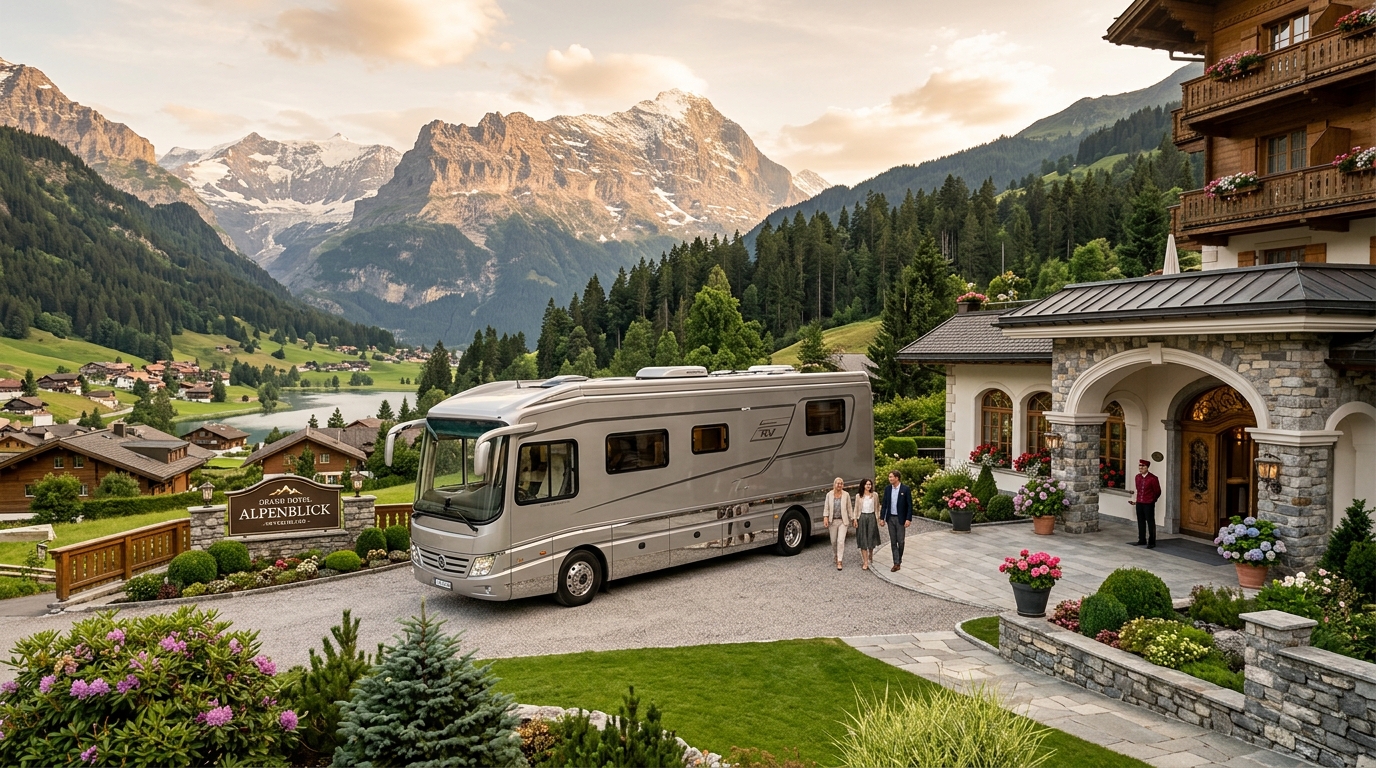
Imagine waking up to the majestic peaks of the Alps, enjoying a freshly brewed coffee right outside your door, and embarking on a day of adventure, all while the comfort of your rented motorhome awaits your return. Switzerland, with its breathtaking landscapes and charming villages, offers an unparalleled setting for a romantic RV camping trip. For couples seeking both intimacy and adventure, a mobile home rental provides the ultimate freedom to explore at your own pace. With Bandana Caravan, we've helped tens of thousands of travelers since 2001 discover the joy of RVing, and we're here to ensure your Swiss adventure is seamless. For live availability and current prices, start with our RV Rental Switzerland - Complete Guide 2026 guide.
🎬 Video coming soon
Best RV Class for Camping in Switzerland
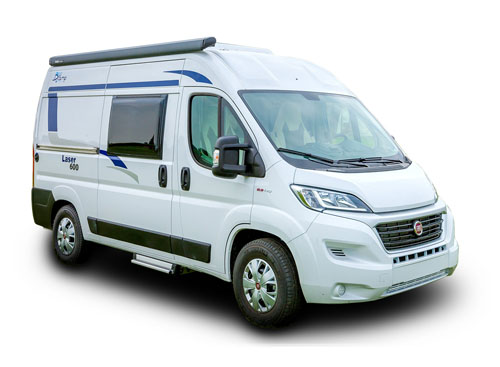
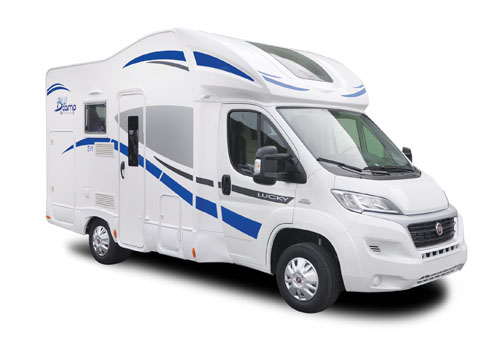
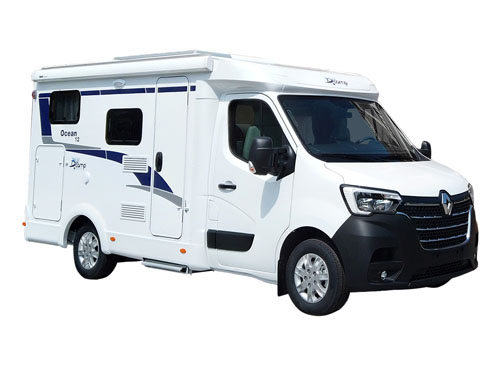
For couples RVing in Switzerland, a compact Class B Camper Van or a Class SI - Semi-integrated motorhome offers the ideal balance of maneuverability on narrow mountain roads and comfortable living space. These smaller vehicles, often described as 'Ideal for a couple', are perfect for navigating the country's diverse terrain without stress. A typical Class B Camper Van, like the "Active Standard", "Camper 2 - LOKI", or "Juliette 2-3", averages around 5.8m in length and can offer features such as a shower, toilet, and compact kitchen, providing all essential amenities for two. Their fuel consumption is typically around 8-10 Liters/100 Km, making them quite efficient for extensive travel. For couples desiring a bit more interior space, a Class SI - Semi-integrated model such as the "Active Compact Select" or "2 Berth Rover", averaging 6.5m to 7m in length, provides enhanced comfort and storage while still being manageable on most routes. Drive slowly and carefully, and you can drive almost anywhere without issues. No need to stress - just use common sense and pay attention.Where to Camp in Switzerland - Top Options for Couples
Switzerland offers diverse camping regions, with top options for couples found near stunning natural landmarks like Lake Geneva, the scenic Interlaken region, and the majestic Valais Alps. These regions provide a variety of campgrounds ranging from idyllic lakeside pitches to breathtaking mountain-view sites, catering to different couple preferences, from serene relaxation to active adventures. For instance, you could find a tranquil spot on Lake Lucerne with stunning views of Mount Pilatus, or choose a site in Lauterbrunnen Valley surrounded by 72 waterfalls. Couples can enjoy activities like hiking on picturesque trails, indulging in water sports on pristine lakes, or exploring charming, historic towns directly from their strategically located campground.Campground Types in Switzerland (National, Private, Wild)
Swiss camping options for couples primarily include well-equipped private campgrounds, often part of national chains like TCS Camping, and smaller regional or municipal sites, while general wild camping is mostly prohibited below the tree line. Private campgrounds typically offer extensive amenities such as modern, heated shower and toilet facilities, on-site restaurants, and sometimes organized activity programs. These provide a comfortable base for a week-long trip. Wild camping is generally illegal or heavily restricted in Switzerland, particularly within national parks, protected natural areas, and at lower altitudes. However, some remote alpine areas or designated 'Stellplätze' (parking spots for motorhomes, sometimes with basic or no facilities) may tolerate overnight stays, provided you strictly adhere to 'leave no trace' principles and respect local communal rules. Always check specific regional regulations before attempting to park overnight outside an official campground.Featured RV Park or Campground in Switzerland
For couples seeking an unforgettable RV experience in Switzerland, a featured RV park should offer amenities like scenic pitches with panoramic mountain or lake views, wellness facilities, and easy access to hiking or biking trails for intimate exploration. Consider campgrounds such as TCS Camping Interlaken, which boasts stunning views of the Eiger, Mönch, and Jungfrau peaks from its pitches, or Camping Jungfrau in Lauterbrunnen, nestled amidst waterfalls and lush valleys. These sites often provide a tranquil atmosphere, perhaps with on-site restaurants serving local cuisine or close proximity to charming Swiss villages like Grindelwald or Zermatt for cultural immersion and romantic dinners. Prioritize sites that cater to adult travelers, potentially offering spa services, quiet zones, or even private bathing facilities, enhancing a truly romantic getaway.Hookups & Amenities - What to Expect for Couples in Switzerland
Most Swiss campgrounds provide comprehensive hookups, typically including 230V electricity (requiring a Type J or Schuko adapter), fresh water, and grey/black water disposal points for RVs. Couples can expect clean, modern shower and toilet facilities, often heated for comfort, along with convenient laundry services and Wi-Fi access, though Wi-Fi might be an extra charge or limited to reception areas. Many sites also offer additional amenities such as communal kitchens, small shops for essentials, and sometimes even swimming pools, private lake access, or sauna facilities. These amenities ensure that even when you're preparing a romantic breakfast inside your campervan, you have all the comforts of home. For creative meal ideas on your trip, check out our RV-friendly recipes playlist.Booking Windows & Reservations in Switzerland for Your Couple's Trip
For couples planning an RV trip to Switzerland, booking popular campgrounds 3-6 months in advance is highly recommended, especially for peak season (July-August) and specific scenic pitches overlooking lakes or mountains. While pre-planners enjoy the certainty of secured spots, spontaneous travelers will find more flexibility during shoulder seasons (May-June, September-October), often discovering same-day or next-day availability by calling campgrounds ahead. Remember, many national and state park campgrounds reserve only 25-30% of spots for online booking, with the remaining proportion typically allocated on a first-come, first-served basis. This means you'll usually find a spot; if not at the first campground, then the next one. Always call ahead before driving, particularly if you have a specific location in mind.Nearby Supermarkets & Resupply Points for RV Travelers in Switzerland
For RV travelers in Switzerland, major supermarket chains like Coop, Migros, and Denner are widely available in most towns and cities, offering convenient resupply points for groceries and essentials, making meal preparation in your rented motorhome simple. Coop and Migros are the largest chains, offering a wide selection of fresh produce, local Swiss cheeses, and specialty items, perfect for a romantic picnic. Budget-conscious couples can also find more affordable options at chains such as Aldi and Lidl, which are increasingly present. It's always advisable to stock up in larger towns, especially before heading into more remote alpine regions where shops may be smaller, less frequent, or have more limited operating hours. Preparing meals on board is part of the charm of RV travel!How much does it cost to rent an RV in Switzerland for a couple?
Renting an RV for a couple in Switzerland typically ranges from CHF 100-250 per day for smaller, couple-friendly models like a campervan or Class C motorhome during the shoulder season. This price can vary significantly based on the RV class, the duration of your rental, and the time of year, with peak summer months seeing higher rates. A comprehensive trip cost breakdown should also include average fuel prices, which are approximately CHF 1.80-2.20 per liter for diesel, and a mandatory annual Swiss motorway 'vignette' costing CHF 40 for highway use. Campsite fees typically range from CHF 30-60 per night for a powered pitch. Remember to budget for additional expenses such as groceries, activities like cable car rides (CHF 20-80 per person), and potential tolls on certain private mountain passes to gain a full understanding of your total trip cost. On RV PLANET routes, travelers can itemize and track every expense along the way for easy budgeting.What is the best time for RVing in Switzerland as a couple?
The best time for couples to go RVing in Switzerland is generally during the shoulder seasons-late May to June and September to early October-as these months offer pleasant weather, fewer crowds, and more favorable rental and campsite rates. During these periods, you can enjoy vibrant spring blooms or stunning autumn foliage. While peak summer (July-August) provides the warmest temperatures and ensures all mountain passes are open for exploration, it also coincides with the highest demand and prices for both RV rentals and campgrounds. Winter RVing is certainly possible for adventurous couples, offering unique experiences like skiing or visiting festive Christmas markets, but it requires specific gear (e.g., winter tires, snow chains), and careful planning for open campsites and accessible routes, as some passes may close due to heavy snow.Are there specific RV routes for couples in Switzerland?
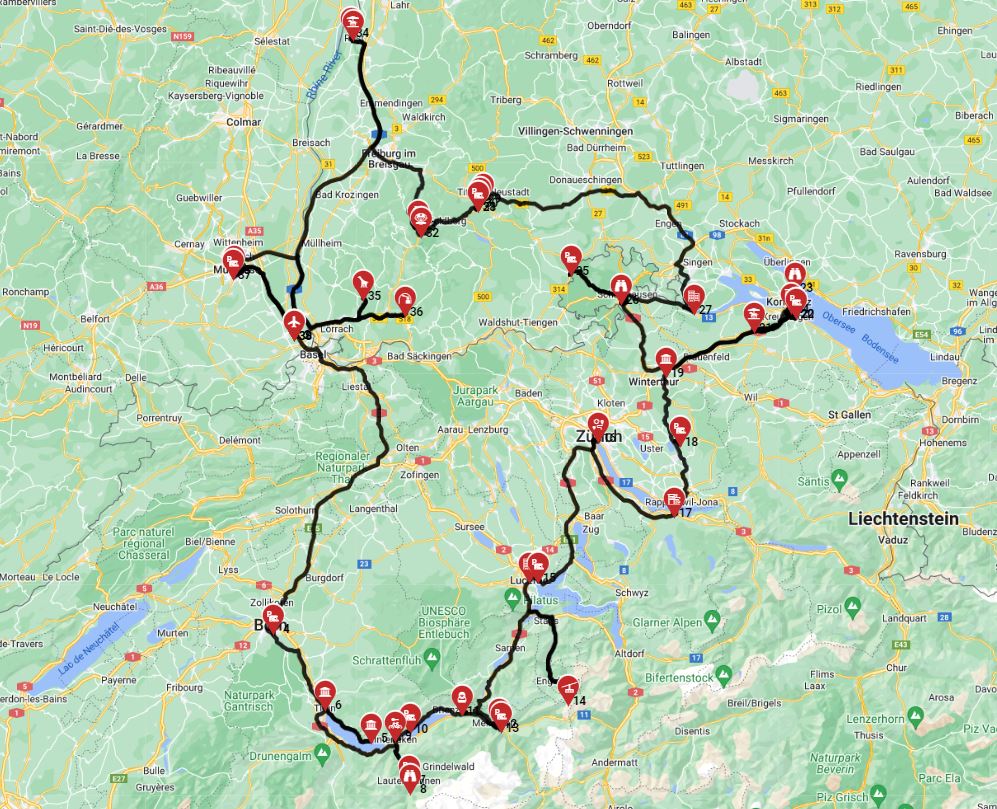
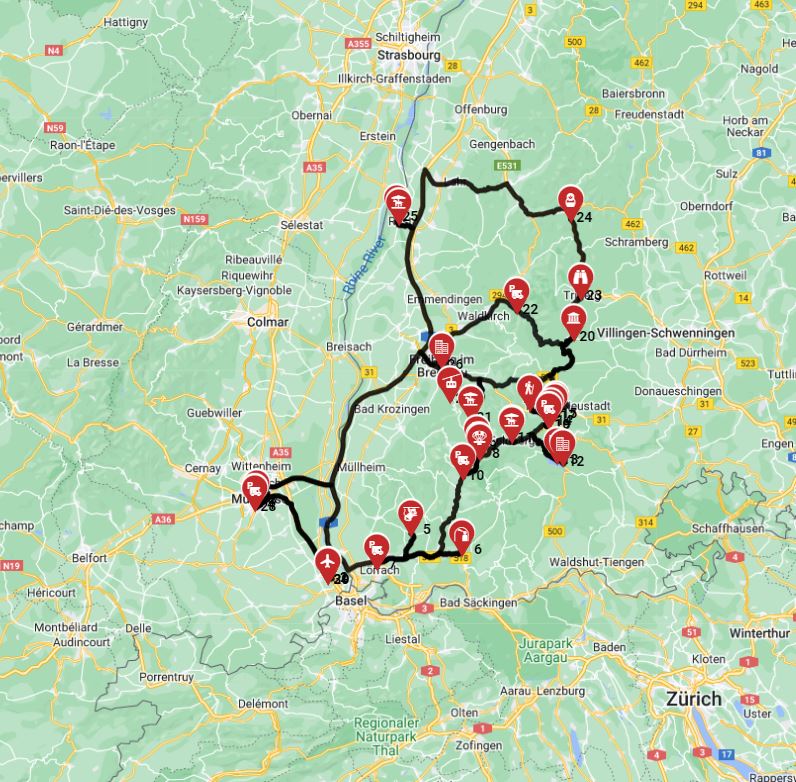
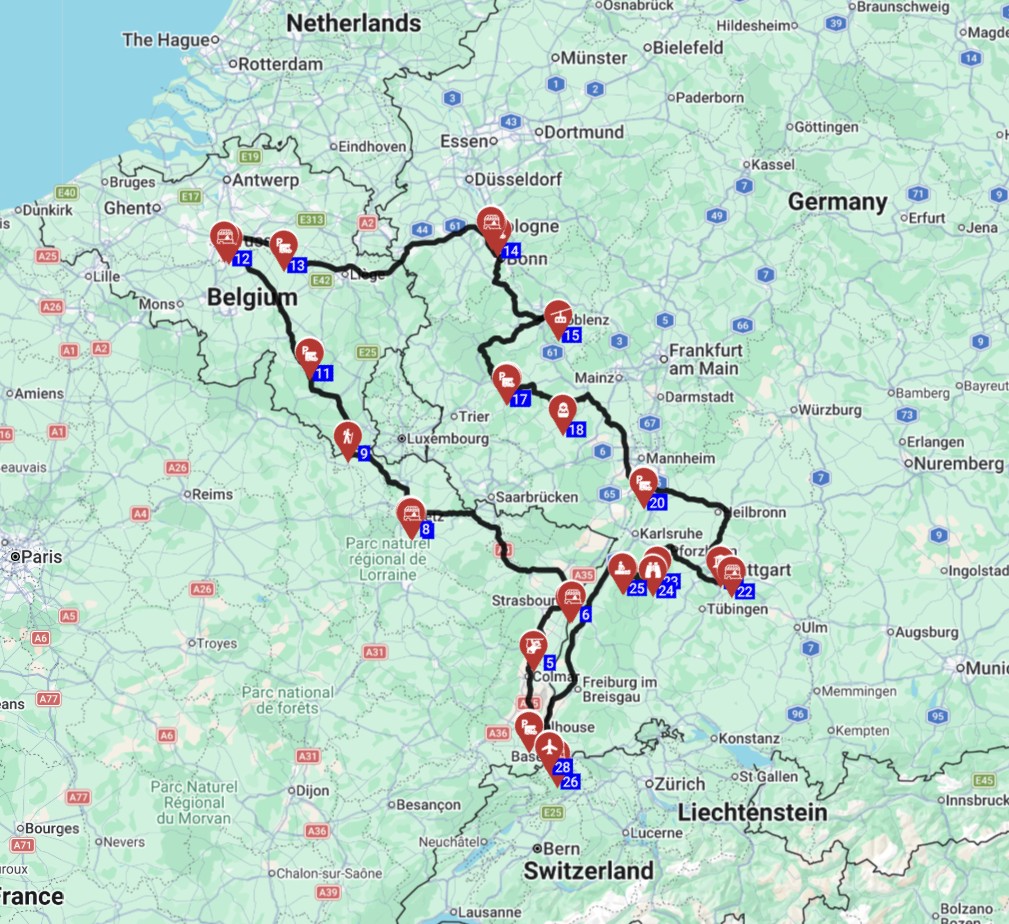
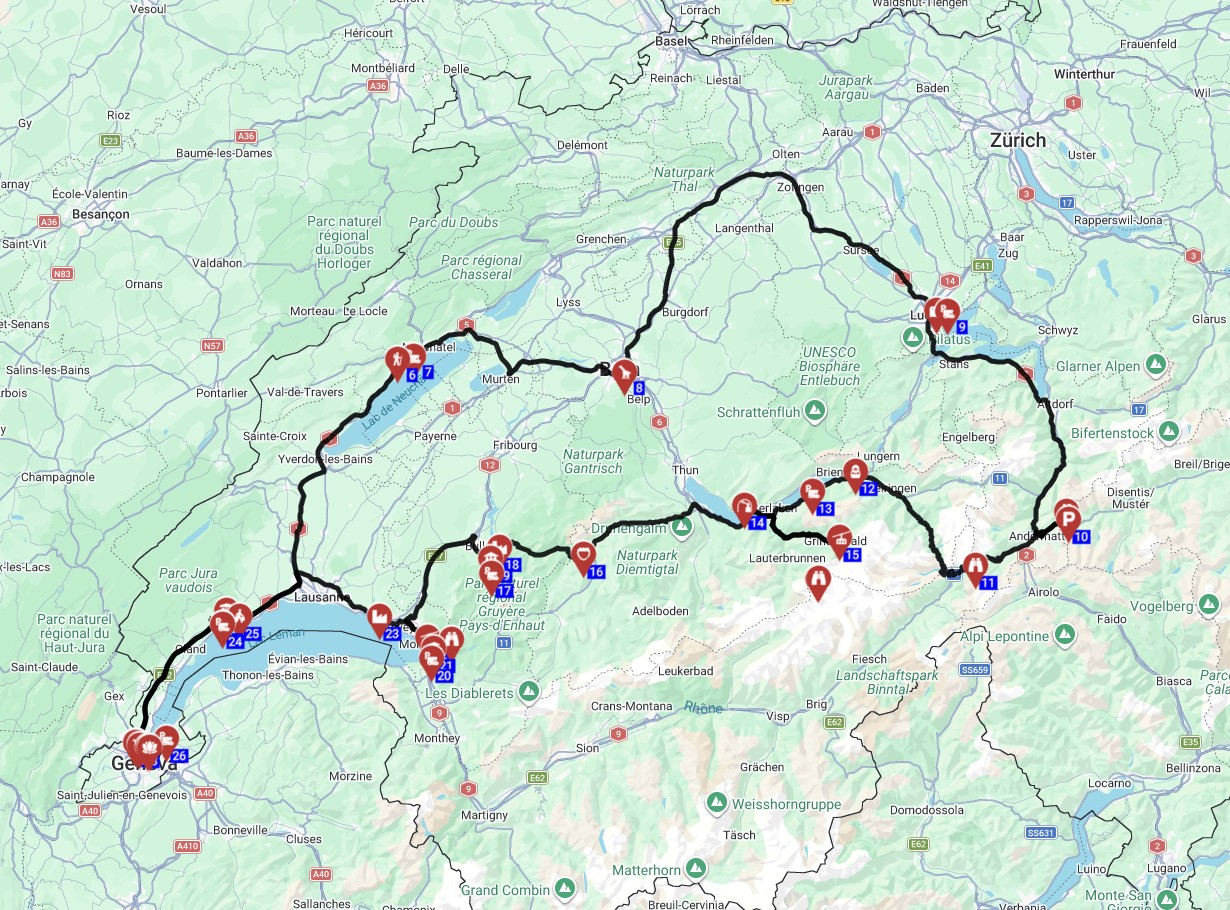
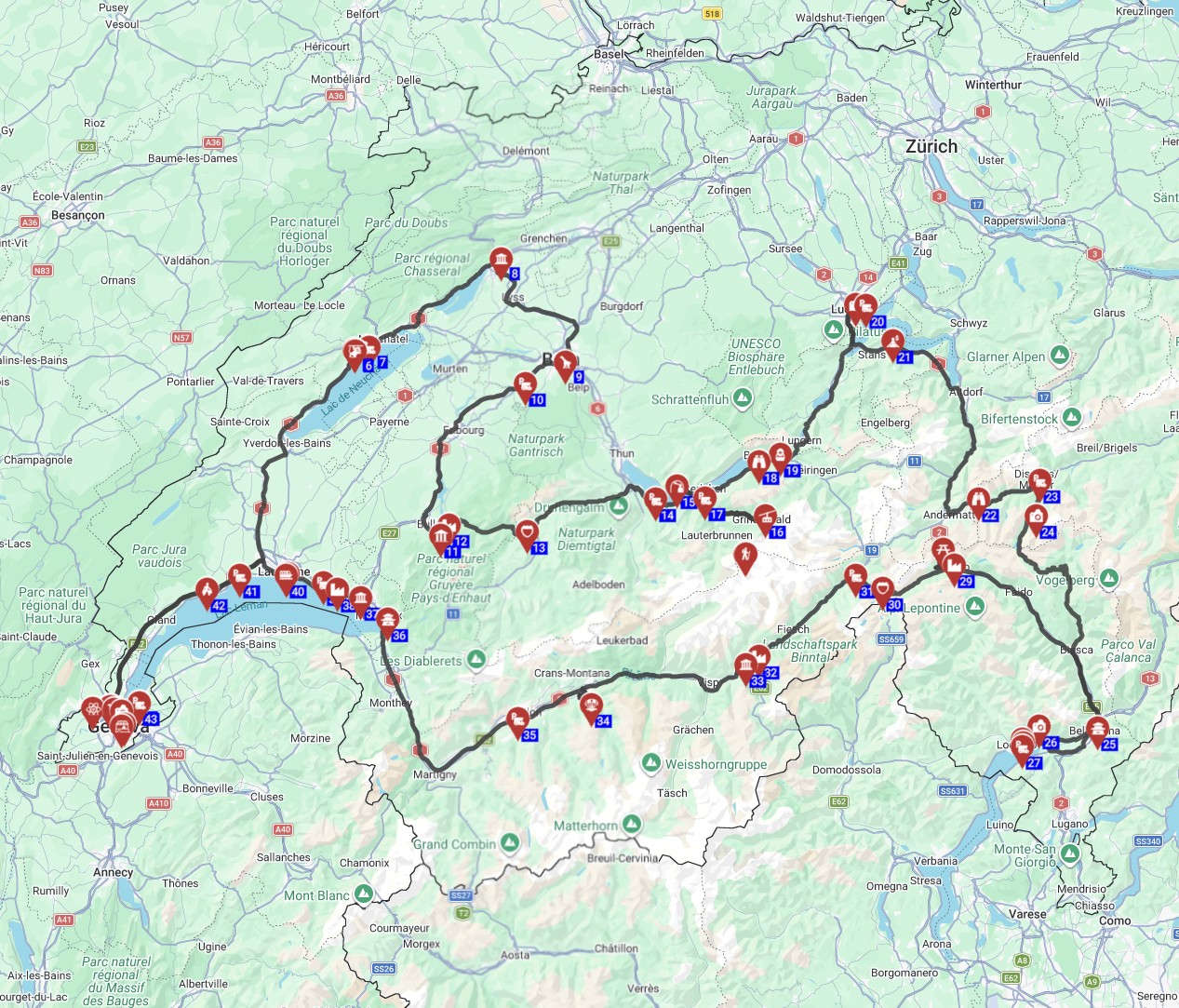
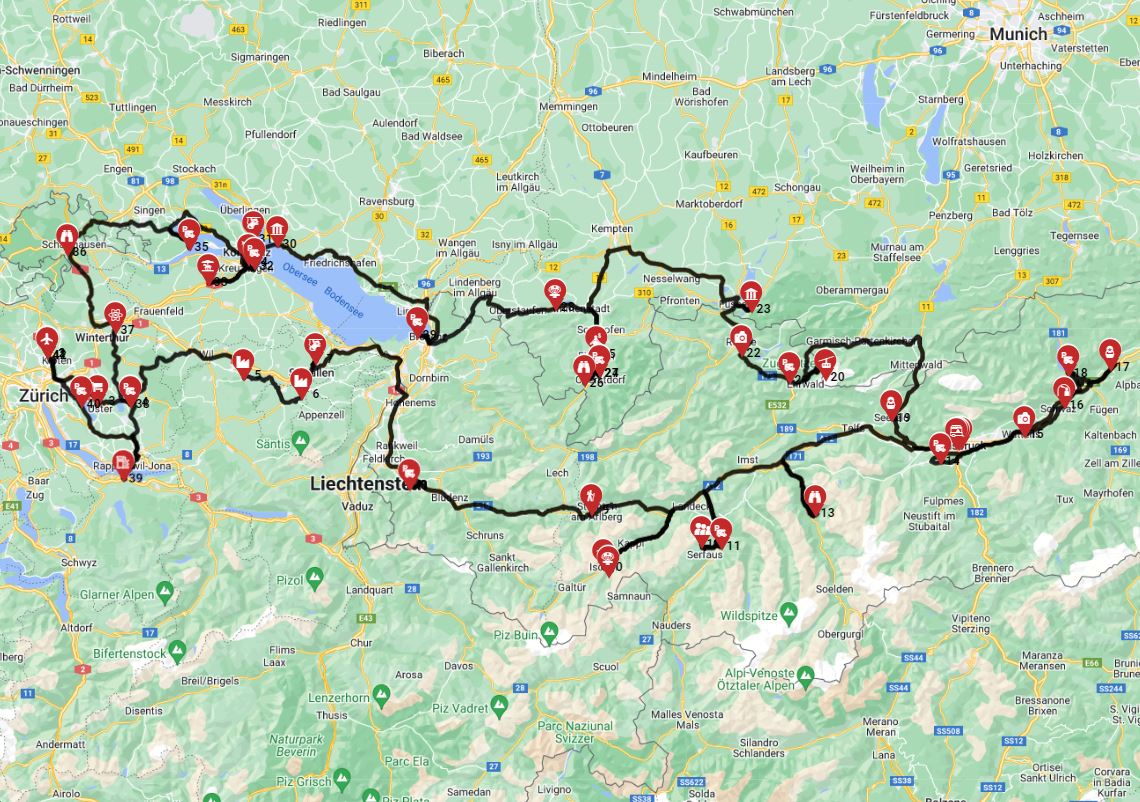
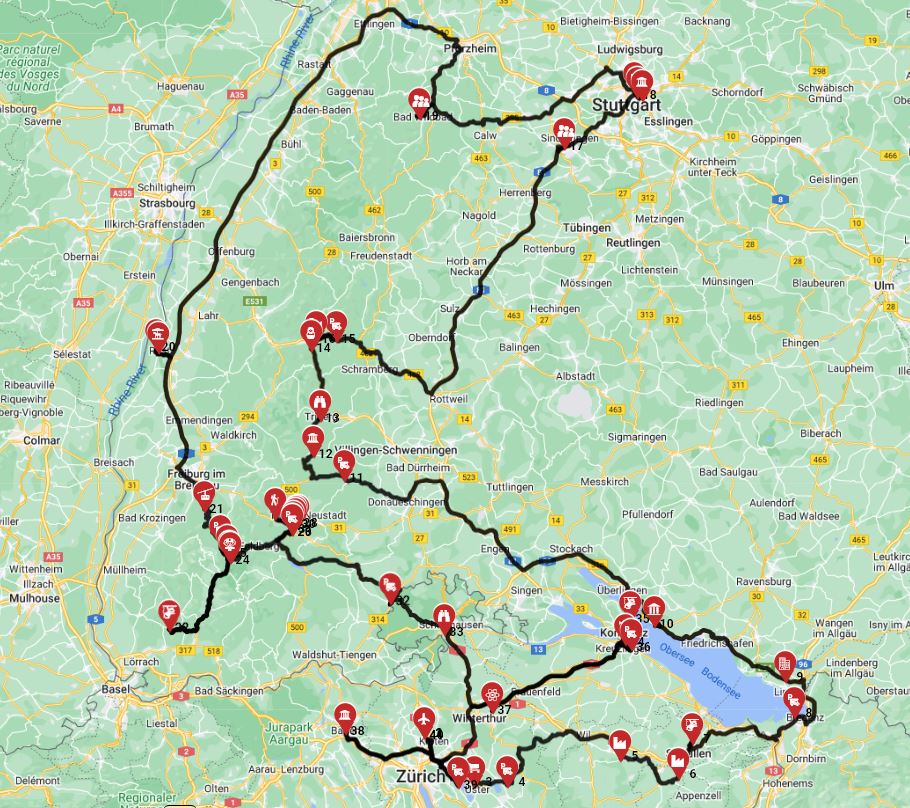
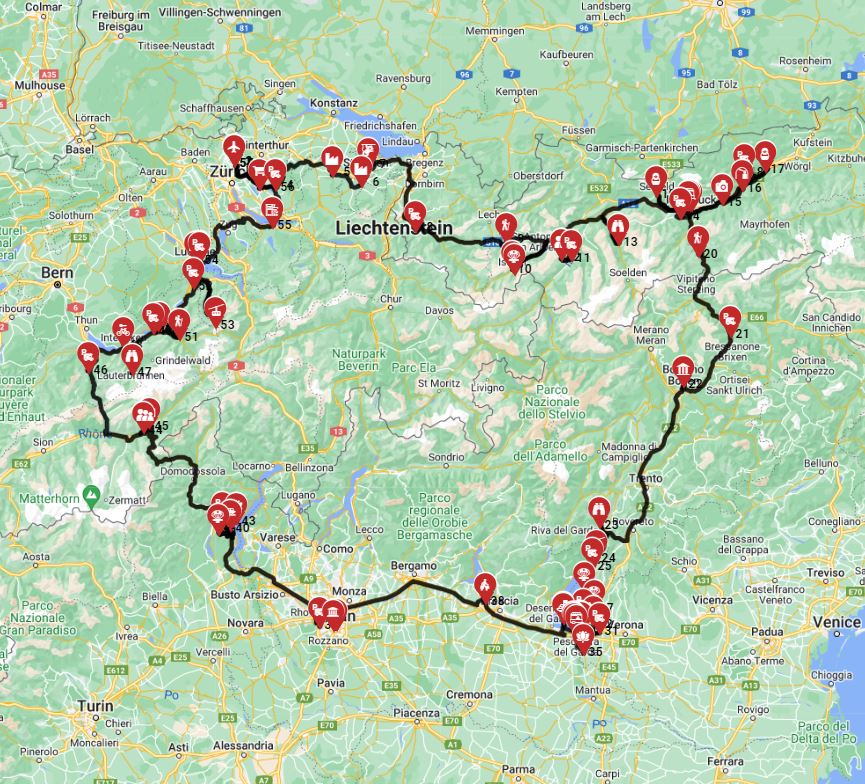
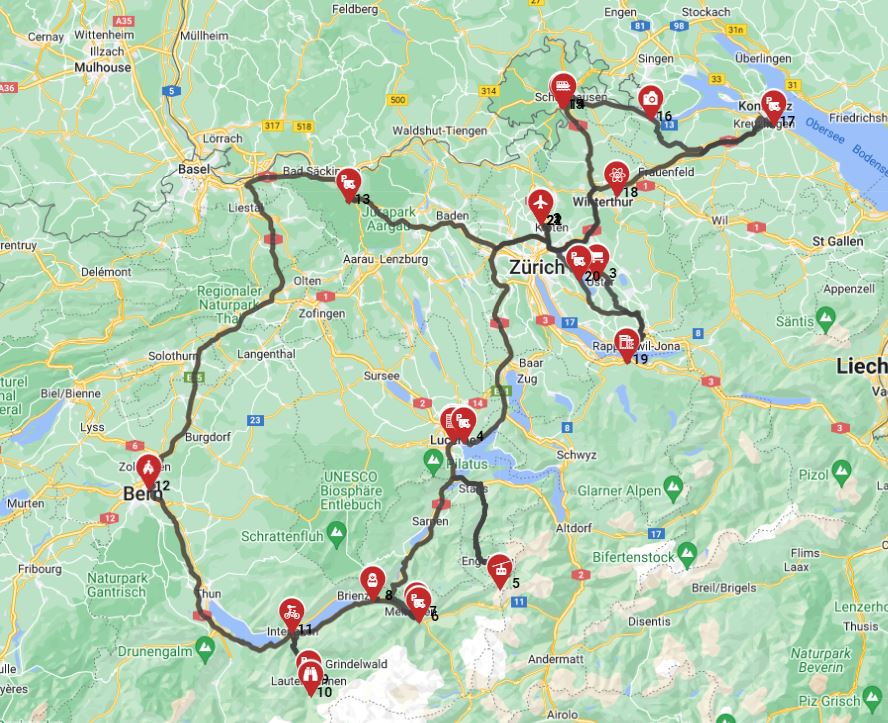
Switzerland offers several enchanting RV routes perfect for couples, including the well-signposted Grand Tour of Switzerland, which encompasses all major scenic and cultural highlights over 1,600 km. More themed itineraries like an "Adventure Alps" route focusing on dramatic mountain passes (e.g., Furka Pass, Grimsel Pass) or a "Swiss Lakes Tour" exploring Lake Geneva, Lake Lucerne, and Lake Thun offer romantic vistas and outdoor activities. Couples can also customize routes to explore specific interests, such as the Emmental Valley for cheese lovers or the Valais wine region for culinary delights, combining stunning landscapes with local cultural immersion. Remember to travel slowly, max 100-150 km per day on average, to truly take time to feel the place, connect to the culture, the food, and the scenery. Consider the "Nice Roundtrip - French Riviera toward North Italy, Switzerland, and the French Alps" for a multi-country adventure. This 15-day, 1742.8 km route includes 2 animal shows, 1 aquarium, and 2 cruise terminals, blending relaxation with exciting couple activities across several beautiful European landscapes. Another excellent option for couples is the "Basel Roundtrip - Switzerland & Black Forest," a 16-day, 1233.4 km itinerary featuring 2 amusement parks, 5 natural features, and 4 museums, perfect for exploring both Swiss and German cultures. For a shorter adventure, the "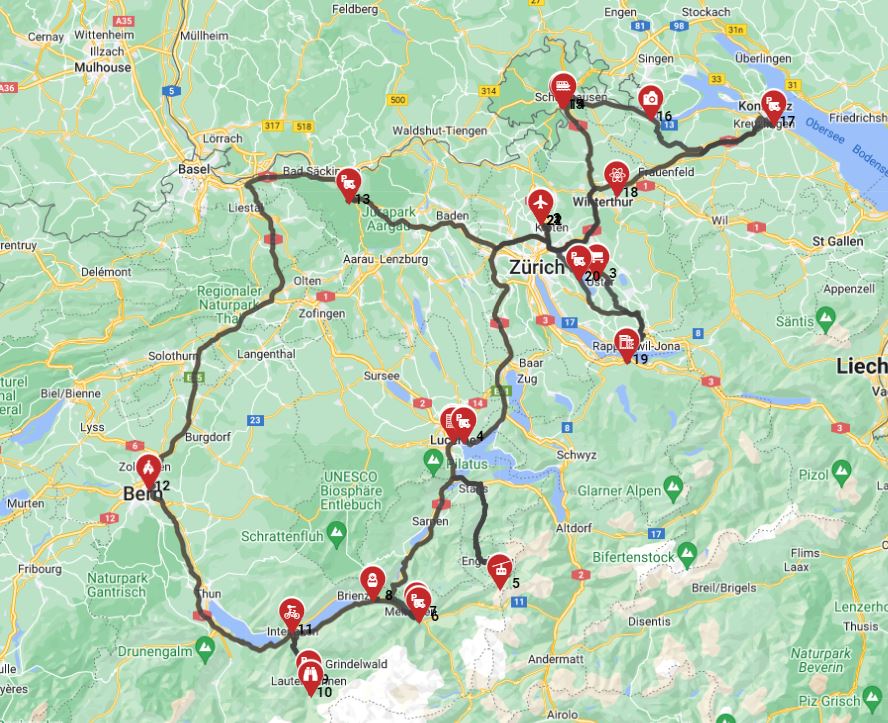
What are the rules for wild camping with an RV in Switzerland?
Wild camping with an RV in Switzerland is largely prohibited below the tree line, in national parks, protected areas, and most populated zones, due to strict environmental regulations and communal rules. Couples seeking free or low-cost overnight stays should instead look for designated 'Stellplätze' (motorhome parking areas, which may have basic or no facilities), farm stays (Agriturismo), or inquire locally about tolerated spots in very remote, high-altitude alpine regions. It is crucial to always respect local communal rules, practice 'leave no trace' principles by taking all waste with you, and avoid parking overnight in areas clearly marked with no-camping signs to prevent potential fines, which can be substantial. For extended trips through Europe, our "RV Rental Europe - Complete Guide 2026" provides broader insights into continental regulations.What challenges should I expect with a larger RV on Swiss roads?
Navigating Switzerland with a larger RV, such as a Class C Alcove (averaging 7.5m in length from Bandana's fleet, like the "24' Class C Motorhome"), presents significant challenges on narrow mountain roads, tight hairpin bends, and through smaller village streets. Couples should be mindful of height and weight restrictions for tunnels and mountain passes, as some routes are unsuitable or even prohibited for longer vehicles. For example, a 7.5m Class C motorhome with a 140 Liter fresh water tank and 75 Liter fuel tank will have different handling characteristics than a smaller campervan. Opting for a smaller RV class like a Class B Camper Van or Class SI - Semi-integrated, such as the "Euro Tourer" or "Kiwi Compact," can significantly mitigate these challenges, offering nimble handling and easier parking. Advance research of specific routes suitable for larger vehicles, along with necessary gear like winter tires or snow chains for seasonal travel, is highly recommended to ensure a smooth journey.RV vs public transport in Switzerland: Which is better for couples?
For couples, RV travel in Switzerland offers unmatched flexibility and direct access to remote natural landscapes, ideal for those who prioritize spontaneous exploration and outdoor adventures away from fixed schedules. Conversely, Switzerland's world-class public transport system (trains, buses, boats, cable cars) is superior for accessing car-free towns like Zermatt, high-altitude attractions, and navigating cities like Zurich or Geneva without parking worries. Couples can strategically combine both modes by parking their RV at a well-located campground near a train station, then using public transport to explore urban centers or designated car-free zones, thus leveraging the strengths of each for a comprehensive and truly Swiss travel experience. This hybrid approach offers the best of both worlds-the freedom of your own rented motorhome and the efficiency of Swiss public transit.How can couples travel sustainably with an RV in Switzerland?
Couples can travel sustainably with an RV in Switzerland by diligently sorting and disposing of waste at designated recycling points widely available at campgrounds and public facilities, conserving precious water and electricity resources, and opting for eco-friendly cleaning products to minimize their environmental footprint. Supporting local businesses, purchasing regional products directly from farmers' markets, and choosing fuel-efficient RVs (like a Class B Camper Van with an average consumption of 8-10 Liters/100 Km, such as the "Active Standard Auto") further contribute to eco-conscious travel. Adhering to local regulations, respecting natural habitats, and minimizing noise pollution, especially during quiet hours, are essential practices for preserving Switzerland's pristine environment for future generations.Can I bring my pet on an RV trip to Switzerland?
Couples can generally bring their pets on an RV trip to Switzerland, provided they meet specific entry requirements, including a valid EU Pet Passport, up-to-date rabies vaccinations, and microchipping. Many Swiss campsites are pet-friendly, but it's crucial to confirm pet policies and any associated fees when booking, as some may have restrictions on certain breeds or require pets to be leashed at all times. Always research pet-friendly hiking trails and attractions in advance, as some national parks or cable cars may have restrictions or require pets to be on a leash and sometimes muzzled in public areas. Having a first-aid kit for your pet is also a smart idea.What You Shouldn't Miss
- **Explore Lake Lucerne by Boat and Cable Car:** Take a romantic cruise on Lake Lucerne, then ascend Mount Pilatus or Rigi for panoramic views, combining serene waters with dramatic alpine vistas.
- **Hike Through the Lauterbrunnen Valley:** Discover the Valley of 72 Waterfalls, a truly magical setting. Park your campervan at a local site and explore the stunning waterfalls like Trümmelbach Falls.
- **Wander Through the Old Town of Bern:** Stroll hand-in-hand through the UNESCO-listed medieval streets of Bern, admire the Zytglogge clock tower, and enjoy Swiss chocolate in a cozy cafe.
- **Drive a Scenic Alpine Pass:** Experience the thrill of driving the Gotthard Pass or Furka Pass, offering exhilarating curves and unforgettable mountain scenery. Remember to check road conditions if traveling outside summer.
- **Indulge in a Cheese & Wine Tasting in Gruyères/Valais:** Visit the charming town of Gruyères for its famous cheese, then head to the Valais region for a wine-tasting experience amidst terraced vineyards.
- Looking for expert insights from Avi Bandana? Top 5 Adventures - recommendations from Avi Bandana
Final Thoughts
An RV adventure through Switzerland offers couples an incredibly romantic and flexible way to experience one of the world's most beautiful countries. From the tranquil lakesides to the dramatic alpine passes, your rented motorhome provides a cozy, private sanctuary amidst stunning scenery. Remember, it's about the journey as much as the destination, so take your time, savor the moments, and let Switzerland's charm envelop you both. With Bandana Caravan's transparent pricing and expert guidance, your dream romantic escape is just a few clicks away. We're with you every step, from comparing the perfect campervan for your needs to providing support as you plan your itinerary. Discover top destinations, planning tips, all in one place!On the routes offered through RV PLANET routes, you can itemize and track every expense along the way for easy budgeting.