In This Guide
- The 5 RV Families Compared for Chile
- Class A (Integrated) — Best For
- Price Comparison by RV Class in Chile
- Class SI (Semi-Integrated) — Best For
- Class C (Alcove) — Best For
- Class B (Campervan) — Best For
- Class TC (Truck Camper) — Best For
- Side-by-Side Comparison Table
- Our Recommendation for pet friendly rv rental Travelers in Chile
- How much does it cost to rent an RV in Chile
- What documents do I need to rent an RV in Chile
- Can I cross borders with a rented RV in Chile
- Is it safe to wild camp in Chile
- What are the best RV routes in Chile for pets
- How do I find pet friendly campsites in Chile
- What is the best time of year to RV in Chile
- What are the road conditions like in Chile for RVs
- How do I manage waste and water in an RV in Chile
- What are the rules for driving an RV in Chile
- How to get internet and cell service in remote areas of Chile
- What to pack for an RV trip in Chile with a pet
- How to handle emergencies when RVing in Chile with a pet
The 5 RV Families Compared for Chile
The RV family you choose significantly impacts its suitability for Chile's diverse terrains and climates. When selecting an RV class for your Chilean adventure, consider the trip length, group size, and your pet's comfort. Key factors for Chilean roads and long journeys include maneuverability and fuel efficiency.
Class A (Integrated) — Best For
Class A integrated motorhomes are best for groups or families with pets prioritizing maximum space, comfort, and luxury, especially when traveling on main paved routes in Chile. These vehicles offer ample interior space, with Bandana's global fleet averaging 7.5 meters in length and sleeping 4.4 people. They also provide a high load capacity, averaging 209.5 kg, making them suitable for extended trips and carrying extra pet supplies. The trade-offs for this comfort include lower maneuverability on narrower roads and higher fuel consumption, with an average of 11-12 liters per 100 km.
Price Comparison by RV Class in Chile
Understanding the cost of a pet-friendly RV rental in Chile involves more than just the daily rate; rental prices are dynamic, influenced by seasonality, demand, and trip duration. Because pricing is flex-rate, the table below pulls real example prices from Bandana's live search for various durations and RV classes. Additional costs like fuel, tolls, specific campsite fees, border crossing documentation, and pet fees should also be factored into your overall budget. Prices shown are flex-rate estimates from Bandana's live search for example dates and may change daily; check the search box at the top of the page for real-time availability and pricing. On the routes offered through RV PLANET routes, you can itemize and track every expense along the way for easy budgeting.
| Family | Avg Length | Sleeps | Fuel Use (L/100km) | Best Use Case in Chile |
|---|---|---|---|---|
| Class A - Integrated | 7.5m | 4.4 | 11-12 | Luxury & space on main paved routes |
| Class SI - Semi-integrated | 6.9m | 3.8 | 10-11 | Balanced comfort & maneuverability for varied landscapes |
| Class C - Alcove | 7.5m | 5.8 | 10-12 | Family-friendly, ample sleeping & living space |
| Class B - Camper Van | 5.8m | 3.2 | 8-10 | Agile, fuel-efficient for small groups/pets, stealth camping |
| Class TC - Truck Camper | 5.5m | 2.4 | 12-17 | Off-road adventure, remote access with detachable camper |
Class SI (Semi-Integrated) — Best For
Class SI semi-integrated motorhomes offer a balanced option, ideal for couples or small families with pets seeking comfort, maneuverability, and fuel efficiency. With an average length of 6.9 meters and sleeping 3.8 people, it provides a good compromise between space and ease of driving, according to Bandana's global fleet average. These are suitable for exploring Chile's diverse landscapes, offering better fuel consumption (10-11 liters per 100 km average) than Class A motorhomes. They provide good living space for small to medium-sized pets and are easier to park compared to larger motorhomes.
Class C (Alcove) — Best For
Class C alcove motorhomes are excellent for families with pets, offering generous sleeping capacity and living space at a generally more accessible price point. They average 7.5 meters in length and sleep 5.8 people, typically featuring an extra sleeping area over the cab, as per Bandana's global fleet average. These are suitable for touring Chile's major attractions and national parks, balancing comfort with practicality. They provide ample space for families plus pets, and their fuel consumption is reasonable, averaging 10-12 liters per 100 km.
Class B (Campervan) — Best For
Class B campervans are perfect for adventurous solo travelers or couples with small pets who prioritize maneuverability, fuel economy, and stealth camping. These are highly agile, with an average length of 5.8 meters and seating for 3.2 people, making them ideal for urban areas and tighter spots, based on Bandana's global fleet average. They offer excellent fuel economy, averaging 8-10 liters per 100 km, making them cost-effective for long-distance travel. They are best suited for small pets due to limited interior space but provide agility for exploring varied Chilean terrains.
Class TC (Truck Camper) — Best For
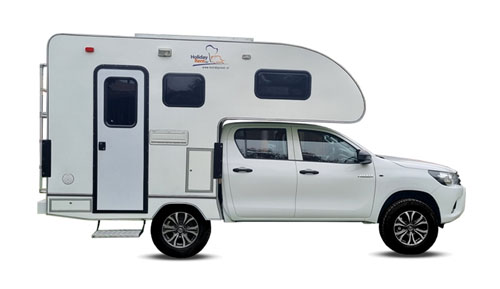
Class TC truck campers are specifically designed for pet-friendly adventurers looking to explore Chile's most remote and rugged areas. They offer excellent off-road capability and the flexibility to detach the camper from the truck base. These are compact, averaging 5.5 meters in length and sleeping 2.4 people, making them best for agile, small groups with small pets, according to Bandana's global fleet average. Their higher fuel consumption, averaging 12-17 liters per 100 km, reflects their robust design for challenging terrains.
Side-by-Side Comparison Table
This table provides a quick overview of key specifications for each RV family available for rental in Chile, aiding in your selection process. Compare average length, sleeping capacity, fuel efficiency, and the best-suited use case to align with your travel style and pet's needs.
| Family | Avg Length | Sleeps | Fuel Use (L/100km) | Best Use Case in Chile |
|---|---|---|---|---|
| Class A - Integrated | 7.5m | 4.4 | 11-12 | Luxury & space on main paved routes |
| Class SI - Semi-integrated | 6.9m | 3.8 | 10-11 | Balanced comfort & maneuverability for varied landscapes |
| Class C - Alcove | 7.5m | 5.8 | 10-12 | Family-friendly, ample sleeping & living space |
| Class B - Camper Van | 5.8m | 3.2 | 8-10 | Agile, fuel-efficient for small groups/pets, stealth camping |
| Class TC - Truck Camper | 5.5m | 2.4 | 12-17 | Off-road adventure, remote access with detachable camper |
Our Recommendation for pet friendly rv rental Travelers in Chile
For most pet-friendly RV travelers in Chile, a Class SI (Semi-integrated) or Class C (Alcove) RV is highly recommended. These classes strike an optimal balance between living space for pets and passengers, maneuverability on Chile's varied road network, and fuel efficiency for long journeys. A Class SI offers a sleeker profile and ease of driving, while a Class C provides ample sleeping berths, which can be repurposed for larger pet crates or additional storage; both prove robust enough for major routes and many secondary roads without the bulk of a Class A or the compact nature of a Class B. For more adventurous travelers targeting truly remote, rugged areas, a Class TC (Truck Camper) offers unparalleled off-road access, ensuring you and your pet can reach secluded natural wonders.
How much does it cost to rent an RV in Chile
The cost to rent a pet-friendly RV in Chile varies significantly by RV class, rental duration, season, and specific amenities, typically ranging from $100-$300+ USD per day before additional expenses. Beyond rental fees, budget for fuel, which can be a significant cost for larger RVs (10-17 L/100km estimates), and potential tolls on major highways. Campsite fees range from free wild camping options to $30-$50+ USD/night for equipped sites, and some rentals may charge additional pet fees. Factor in potential border crossing fees, international insurance extensions, and daily food expenses to create a comprehensive trip budget.
What documents do I need to rent an RV in Chile
To rent an RV in Chile, you will generally need a valid driver's license from your home country, an International Driving Permit (IDP) (highly recommended or often required), your passport, and a major credit card for the security deposit. Non-Spanish speaking license holders will find an IDP essential for legal driving and easier interactions with local authorities. For pet travel, ensure you have your pet's passport or health certificate, proof of current vaccinations (especially rabies), and a microchip for identification. Research any specific import permits or veterinary checks required for your pet's entry into Chile well in advance of your trip.
Can I cross borders with a rented RV in Chile
Yes, it is generally possible to cross international borders from Chile with a rented RV, particularly into Argentina or Bolivia, but it requires explicit permission from the rental company and involves additional documentation, insurance, and fees. Crucially, you must obtain written authorization, often a notarized power of attorney, from your RV rental company to take the vehicle across borders. You will also need an extension of your RV insurance to cover the specific countries you plan to visit, which your rental company can usually arrange for an additional cost. Prepare for potential administrative fees at border crossings and ensure all pet documentation (health certificates, vaccination records) complies with the entry requirements of both Chile and the destination country.
Is it safe to wild camp in Chile
Wild camping, or boondocking, in Chile can be safe and rewarding, especially in remote areas or designated spots, but travelers should prioritize safety by choosing well-lit, visible locations, respecting private property, and understanding local regulations. Legality is often ambiguous; wild camping is generally tolerated outside private land and national parks if done respectfully, but always verify local rules or ask landowners for permission. Best practices include arriving before dark, choosing spots with other campers or in populated areas, and utilizing community-sourced maps like iOverlander for verified safe locations. Adhere strictly to Leave No Trace principles by packing out all waste, properly disposing of greywater, and minimizing your environmental impact, especially when traveling with pets.
What are the best RV routes in Chile for pets
The best pet-friendly RV routes in Chile often combine stunning natural scenery with accessible outdoor activities, such as exploring the Carretera Austral in Patagonia, the Elqui Valley for stargazing and wine, or parts of the Lakes District. The Carretera Austral offers breathtaking landscapes and numerous hiking opportunities, but travelers must diligently check individual national park and reserve rules regarding pet access, as many restrict them to protect wildlife. The Lakes District provides picturesque towns, lakes, and volcanoes, with many areas offering pet-friendly trails and attractions, though popular spots can be crowded during peak season. For a quieter experience, the Elqui Valley in the north offers unique celestial observations and vineyards, generally being more relaxed with pet presence due to fewer strict national park regulations.
How do I find pet friendly campsites in Chile
Finding pet-friendly campsites in Chile is primarily done through online resources like specialized RV park directories, community apps such as iOverlander, direct inquiries to campgrounds, and researching national park regulations. Utilize apps like iOverlander, which feature user-generated content often indicating whether a site is pet-friendly, along with reviews and amenities. It is always recommended to directly contact campgrounds via phone or email to confirm their current pet policies, any associated fees, and specific rules (e.g., leash requirements, restricted areas). Be aware that many Chilean national parks and reserves have strict regulations or outright bans on pets to protect local flora and fauna, so plan accordingly and seek private campgrounds or designated pet-friendly areas outside these zones.
What is the best time of year to RV in Chile
The best time of year to RV in Chile largely depends on the region you plan to visit, with the warmer southern summer months (December to March) being ideal for Patagonia and the Lakes District, though this is also peak tourist season with higher prices and more crowds. The shoulder seasons (October-November and April-May) provide an excellent balance for central and northern Chile, with comfortable temperatures, fewer tourists, and vibrant landscapes. In the Atacama Desert, travel is possible year-round due to consistent dry weather, but extreme daytime heat in summer and cold desert nights in winter require careful consideration for pet comfort and packing.
What are the road conditions like in Chile for RVs
Road conditions in Chile vary significantly, ranging from excellent paved highways like Route 5 (Pan-American Highway) to well-maintained gravel roads, and challenging unpaved or dirt tracks, especially in remote and mountainous regions. The Pan-American Highway (Route 5) is generally well-maintained and suitable for all RV classes, though it includes numerous toll booths. Gravel roads are common, particularly in Patagonia (e.g., Carretera Austral), and while navigable by 2WD RVs with good ground clearance, they require slower speeds and careful driving to avoid punctures or damage. A 4x4 RV is truly necessary only for deeply remote, rugged, or unmaintained tracks; for most popular gravel routes, a robust 2WD RV typically suffices, but always check current conditions, especially after heavy rain or snow.
How do I manage waste and water in an RV in Chile
Managing waste and water in an RV in Chile requires planning due to varying availability of dump stations and potable water sources, particularly in more remote regions. Water refills are typically available at larger campgrounds, some gas stations in bigger towns, and occasionally at municipal taps; always filter or use bottled water for drinking. Dedicated dump stations for grey and black water are less common than in some other countries and are primarily found at larger, more equipped campgrounds, or occasionally specific municipal facilities – consult apps like iOverlander for locations. Plan your route to ensure access to fuel, as availability can be sparse in remote areas; always refuel when opportunities arise, and consider carrying extra fuel if venturing significantly off main routes, while also stocking up on groceries in larger towns.
What are the rules for driving an RV in Chile
Driving an RV in Chile follows standard international road rules, including driving on the right side of the road, wearing seatbelts, and adhering to speed limits, but also requires awareness of specific local regulations and road etiquette. All occupants must wear seatbelts, and strict alcohol limits are enforced, so it's best to avoid drinking entirely if you plan to drive. Be mindful of typical speed limits: 50 km/h in urban areas, 100 km/h on rural roads, and 120 km/h on highways, adjusting significantly for your RV's size and weight. Always carry your valid driver's license, IDP, RV registration, and insurance documents, and be prepared for frequent tolls on major highways.
How to get internet and cell service in remote areas of Chile
Obtaining reliable internet and cell service in remote areas of Chile can be challenging, but options include local SIM cards from major providers (Entel, Movistar, Claro), satellite devices, and utilizing campground Wi-Fi where available. Purchasing a local SIM card from a major provider like Entel (often has the widest coverage), Movistar, or Claro upon arrival is the most common and cost-effective solution for regular cell service. For truly off-grid or emergency communication in remote Patagonia or the Atacama, a satellite communication device such as a Spot X or Garmin inReach is highly recommended, as conventional cell service will be non-existent. Many campgrounds, cafes, and restaurants in towns offer Wi-Fi, but its reliability and speed can vary, making it essential to download offline maps and communicate trip plans before venturing into remote zones.
What to pack for an RV trip in Chile with a pet
Packing for an RV trip in Chile with a pet requires considering Chile's diverse climates and your pet's specific needs, including essential travel documents, pet-specific gear, and versatile clothing for varying temperatures. For your pet, pack all necessary health certificates, vaccination records, a photo for identification, ample food and water, food/water bowls, a comfortable leash and harness, waste bags, a secure crate or carrier for travel, and familiar bedding. For humans, layers of clothing are crucial given Chile's varied climates (desert, mountains, coast, Patagonia), along with robust rain gear, hiking boots, sun protection, insect repellent, and universal adapters. RV essentials should include a GPS, detailed paper maps, a power inverter, headlamps, a basic tool kit, and a spare tire kit, ensuring readiness for diverse conditions from Patagonian winds to Atacama heat.
How to handle emergencies when RVing in Chile with a pet
Handling emergencies while RVing in Chile with a pet involves pre-trip preparation, knowing local emergency numbers, having a comprehensive pet first-aid kit, and understanding where to seek veterinary care or vehicle assistance. Memorize essential Chilean emergency numbers: 133 for police, 131 for ambulance, and 132 for fire, and keep your rental company's emergency contact information readily accessible. Prepare a specific pet first-aid kit, including any necessary medications, bandages, antiseptic wipes, and a pet-safe insect repellent, researching veterinarians in major towns along your route for potential urgent care. For vehicle breakdowns, rely on your rental company's roadside assistance; for personal safety, inform someone of your itinerary, secure your RV doors and windows, and consider a satellite communicator for truly remote areas, while always monitoring your pet for local wildlife dangers.
What You Shouldn't Miss
- Drive the Carretera Austral, a legendary route through Patagonia, for unparalleled natural beauty, but be prepared for unpaved sections and ferry crossings.
- Explore the Elqui Valley in the north for exceptional stargazing opportunities and a taste of Chile's renowned pisco and wines.
- Visit the Atacama Desert for surreal landscapes, geysers, and the clearest night skies, ideal for RV exploration.
- Discover the Lakes District, with its picturesque towns, pristine lakes, and volcanoes, offering numerous pet-friendly trails and activities.
- Experience the unique wildlife and dramatic landscapes of Patagonia, from glaciers near El Calafate (Argentina, accessible via RV) to Torres del Paine National Park in Chile.
- Take a slow journey through the coastal regions, enjoying fresh seafood and the dramatic Pacific coastline, with plenty of opportunities for your pet to enjoy beach walks.
Final Thoughts
Embarking on an RV adventure in Chile with your pet promises an unparalleled journey through diverse landscapes, from the arid north to the glacial south. By carefully selecting the right RV class and planning ahead, you can ensure a comfortable and memorable experience for both you and your furry companion. Remember to book in advance, especially if traveling during peak season, and always factor in the smaller, yet essential, details of RV travel.
We're passionate about helping you create unforgettable road trips. Let Bandana Caravan be your trusted partner in planning your dream Chilean RV adventure. Discover top destinations, planning tips, and everything you need to know to make your journey seamless and enjoyable!
Get inspired for your next trip! Use our tools and expertise to plan a trip itinerary in advance with minimal effort and maximum enjoyment.