For live availability and current prices, start with our RV Rental West Europe - Complete Guide 2026 guide.
In This Guide
- Can You Drive an RV in West Europe? License & Age Rules
- Road Conditions & Terrain in West Europe
- RV Size Limits, Bridges & Restricted Zones in West Europe
- Fuel: Diesel vs. Petrol & Cost per 100 km in West Europe
- Tolls, Vignettes & Border Rules in West Europe
- Driving Tips for Pet-Friendly RV Rental Travelers in West Europe
- Recommended RV Class for West Europe Roads
- Should I Choose a Compact Van Instead of a Large RV in West Europe?
- Can I Park Anywhere? Free & Wild Camping Rules in West Europe
- Can I Drive an RV Into the City Center? Heights, Tunnels & Local Signage
- How much does it cost to rent a pet-friendly RV in West Europe?
- What is the best time of year for a pet-friendly RV trip in West Europe?
- What should I know about pet-friendly campsites and services in West Europe?
- Are there specific safety protocols for RVing with pets in West Europe?
- How do I handle waste management and sustainable practices during my RV trip in West Europe?
- Is it better to rent an RV locally or bring your own to West Europe?
- Can I stay long-term in a rented RV in West Europe?
- What cultural norms and language tips are important for RV travelers in West Europe?
- Top Cities for RV Rental in West Europe
- Practical Information for RV Travel in West Europe
- What You Shouldn't Miss
Imagine yourself and your beloved pet exploring the rolling hills, historic cities, and stunning coastlines of West Europe from the comfort of your own rented motorhome. Traveling with a pet adds an extra layer of joy and memory-making to any adventure, and West Europe, with its diverse landscapes and rich culture, is incredibly accommodating for RVers and their furry companions. From the tranquil countryside of France to the vibrant cities of Germany, a pet-friendly RV rental in West Europe offers unparalleled freedom and flexibility.
At Bandana RV, we're true RV specialists, dedicated to helping you plan the perfect pet-friendly escape. We believe in full transparency, ensuring no hidden fees or surprises throughout your booking journey. For live availability and current prices, start with our RV Rental West Europe - Complete Guide 2024 guide. We're here to support you from the moment you start dreaming until your booking is confirmed.
Can You Drive an RV in West Europe? License & Age Rules
Yes, you can absolutely drive a rented RV in West Europe, and the licensing requirements are generally straightforward for most vacationers. A standard B-category car driver's license is sufficient for motorhomes up to 3,500 kg (Maximum Permissible Mass), which covers the vast majority of rental units, including most Class B campervans and many Class C or Semi-integrated motorhomes. For larger RVs between 3,500 kg and 7,500 kg, a C1 license is required, while over 7,500 kg necessitates a full C license. However, rest assured that no special CDL or additional permits are typically required for any of the motorhome or campervan rentals available through Bandana.
Most rental companies in West Europe require drivers to be at least 21 years old and have held their license for a minimum of 1-3 years. Unlike some regions, there are no young driver surcharges or vehicle class restrictions based on age for Bandana's partners. An International Driving Permit (IDP) is highly recommended for non-EU license holders, especially when venturing outside major tourist hubs where English may be less common, as it provides a certified translation of your domestic license. Always carry your physical domestic driver's license alongside your IDP.
Road Conditions & Terrain in West Europe
West Europe generally boasts an extensive network of high-quality motorways, rural roads, and scenic routes, all well-suited for comfortable RV travel. Road infrastructure is excellent, making navigation with a rented motorhome a pleasant experience. Terrain varies dramatically across the region, from the flat coastal plains of the Netherlands and Belgium to the rolling hills and vineyards of France and Germany, and the challenging mountain passes of the Alps in Switzerland and Austria. While mountain passes can be steep and winding, modern RVs are designed to navigate these roads, though extra vigilance and slower speeds are always advised.
You can expect to encounter narrower roads in charming historic villages and older towns, which adds to the adventure. No need to stress - just use common sense and pay attention, drive slowly and carefully, and you can drive almost anywhere without issues. Embracing slower, more scenic routes, averaging a maximum of 100-150 km per day, allows you to fully appreciate the diverse landscape and discover many hidden, pet-friendly stops along your route. This approach encourages slow travel, allowing you to truly feel the place, connect to the culture, the food, and the scenery.
RV Size Limits, Bridges & Restricted Zones in West Europe
Navigating West Europe in a rented RV requires paying close attention to local signage concerning vehicle dimensions and access restrictions. Always be aware of local signage for height and width restrictions, particularly in older towns, tunnels, and underpasses, where clearance can be as low as 3.2-3.5 meters. It's crucial to know your RV's exact dimensions and keep them in mind, especially when entering parking garages or historic city areas. Weight restrictions also apply to certain smaller bridges and rural roads, so ensure your RV's Maximum Permissible Mass (MPM) is within stated limits to avoid any issues.
A significant consideration for RV travel in West Europe is the increasing number of Low Emission Zones (LEZs) in many major cities. These zones (known as 'Umweltzonen' in Germany or 'Zones à Faibles Émissions' in France) require specific emission stickers (e.g., Crit'Air in France, Umweltplakette in Germany) or online registration for entry. Non-compliance can result in substantial fines, so research city-specific requirements well in advance. When planning ferry crossings, accurately provide your rented RV's length and height, as fees are typically calculated based on these precise dimensions, ensuring there are no surprises.
Fuel: Diesel vs. Petrol & Cost per 100 km in West Europe
Most rented RVs in West Europe, including the diverse fleet available through Bandana, run on diesel fuel, which is widely available at service stations across all countries. It is important to always double-check the fuel type required for your specific motorhome rental to avoid costly mistakes. Average fuel consumption for a typical rental RV or campervan often ranges from 8-12 Liters per 100 km; for example, a Class SI (Semi-integrated) motorhome might consume 10-11 L/100 km, while a compact Class B campervan could be around 8-10 L/100 km.
Based on an estimated diesel price of €1.80/liter in 2024, the cost per 100 km for a Semi-integrated RV would be approximately €18.00-€19.80, and for a Camper Van, €14.40-€18.00. Fuel costs can fluctuate daily and vary significantly between countries, so budgeting for these expenses is key. For easy budgeting and tracking all ancillary trip costs like fuel, campground fees, and tolls, remember that RV PLANET routes allow you to itemize and track every expense along the way. On the routes offered through RV PLANET routes, you can itemize and track every expense along the way for easy budgeting.
Tolls, Vignettes & Border Rules in West Europe
West Europe utilizes various road pricing systems that RV travelers need to be aware of. These include direct tolls on motorways, particularly prevalent in countries like France, Italy, Spain, and Portugal, where you pay based on distance or section traveled. Additionally, some countries, such as Switzerland, Austria, and the Czech Republic (often accessed from West Europe), operate with time-based vignettes, which are stickers purchased for a set period (e.g., 10 days, 1 month, 1 year) that allow unlimited travel on their motorways. Urban congestion charges are also increasingly common in major city centers, designed to reduce traffic and pollution.
Toll systems can range from manual booths where you pay cash or card, to automatic systems requiring transponders (like the "Telepass" in Italy or "Télépéage" in France), or even online registration. It is essential to research country-specific requirements and pre-purchase vignettes or register for toll systems before entering those countries, as non-compliance can result in substantial fines. While internal EU borders typically have no physical checks, always be prepared for potential document requests and be aware of varying rules for carrying certain items, such as pet food or specific goods, across borders.
Driving Tips for Pet-Friendly RV Rental Travelers in West Europe
Traveling with pets in a rented motorhome through West Europe is a wonderful experience, but a few considerations will ensure a smooth journey for everyone. Plan for frequent stops, ideally every 2-3 hours, to allow your pets to stretch their legs, hydrate, and relieve themselves. Prioritize designated pet relief areas at service stations or find safe, grassy spots away from traffic. Always secure your pets safely in a crash-tested carrier or with a harness and seatbelt restraint while driving to prevent injury during sudden stops or accidents, and for their comfort.
Utilize RV-specific navigation apps that account for your vehicle's dimensions (height, width, weight) to avoid unsuitable roads, low bridges, and potential restricted zones. Familiarize yourself with local traffic laws, speed limits, and road signs, as these can differ significantly between West European countries. For example, some countries have different speed limits for RVs than for cars, or specific rules for passing in tunnels. Remember to keep your pet's comfort in mind, ensuring adequate ventilation and access to water, especially during warmer months.
Recommended RV Class for West Europe Roads
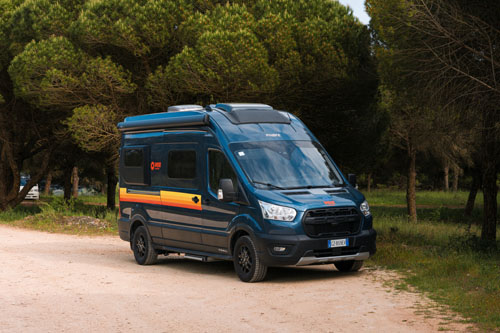
For pet-friendly RV travel in West Europe, Class SI (Semi-integrated) and Class C (Alcove) motorhomes offer an excellent balance of comfort, space, and maneuverability, making them highly suitable for varied roads. A Class SI (Semi-integrated) RV, often averaging 6.9 meters in length with sleeping capacity for 3-4 people, provides ample living space for both humans and pets while remaining manageable on diverse European roads. This class typically features a fixed bed in the rear and a drop-down bed, offering privacy and convenience.
For larger families or groups, a Class C (Alcove) RV, averaging around 7.5 meters in length with sleeping for 4-6 people, still navigates most major and secondary roads effectively. For example, a "6 Berth Discovery" motorhome offers a comfortable rear double bed, a middle double bed, and an over-cab bed, providing plenty of space for larger families and their pets. Both Class SI and Class C options generally provide sufficient storage for pet essentials like food, toys, and bedding, along with indoor space for pets to relax during inclement weather, making them highly suitable for extended week-long or multi-week trips.
Should I Choose a Compact Van Instead of a Large RV in West Europe?
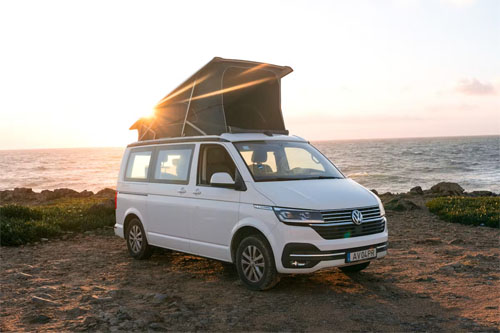
The choice between a compact campervan (Class B) and a larger motorhome (Class C or Class A) in West Europe depends on your travel style, group size, and specific priorities for pet comfort. While compact vans, like Bandana's Class B Camper Vans (averaging 5.8 meters in length), excel in maneuverability for navigating tight city centers and narrow mountain passes, most West European roads, including major highways and many scenic routes, accommodate larger RVs without significant issues. Remember: Drive slowly and carefully, and you can drive almost anywhere without issues. No need to stress - just use common sense and pay attention.
For pet-friendly travel, the added comfort and indoor space offered by a larger RV often outweigh the marginal maneuverability benefits of a compact van, especially on longer trips. A larger rented motorhome provides a dedicated bathroom, more generous kitchen facilities for preparing RV-friendly recipes, and greater storage capacity, which can be crucial for extended pet comfort and self-sufficiency. A compact van is a genuine advantage for frequent urban exploration or exceptionally remote, unpaved routes, where its smaller footprint allows easier access and parking. However, if your trip focuses on scenic drives, diverse landscapes, and comfortable living with your pet, a larger RV often provides a more relaxed and accommodating experience.
Can I Park Anywhere? Free & Wild Camping Rules in West Europe
Wild camping or informal overnight parking is generally prohibited or heavily restricted across most of West Europe, particularly in populated areas, coastal regions, and national parks. Unlike some other continents, specific laws against wild camping are quite common and strictly enforced in countries like France, Germany, Spain, and Italy, with penalties for illegal parking ranging from warnings to significant fines. It is always safest and most responsible to use designated facilities.
Designated 'Stellplätze' (in Germany/Austria), 'Aires de Service' (in France), or similar official motorhome parking areas are widely available throughout West Europe, offering safe and legal overnight stops. These areas can range from simple parking spots with no amenities to more developed sites offering basic services like fresh water, greywater disposal, and blackwater dump stations. While some may be free, others require a small fee (e.g., €5-€15 per night). Always seek permission from landowners before parking on private property, and respect local communities and natural environments by using official facilities for waste disposal and water refills. Rules vary by region, so always check local regulations and follow local law before parking overnight, as penalties for illegal wild camping can be significant.
Can I Drive an RV Into the City Center? Heights, Tunnels & Local Signage
Yes, you can generally drive a rented RV into most West European city centers, but doing so requires careful planning and acute awareness of local signage. Vigilance regarding local signage for height and weight restrictions, as well as specific environmental zones, is crucial for a stress-free experience. Pay close attention to height barriers, which are common at underpasses, tunnels, and parking garage entrances, typically indicated by red circles with numbers in meters (e.g., 3.5m). Always compare this to your RV's actual height before proceeding.
Many city centers implement Low Emission Zones (LEZs) or congestion charges that may restrict RV access or require pre-registration and specific emission stickers. For example, in Paris, certain RVs might be restricted on specific days based on their age and emission class. Research city-specific requirements for every urban destination on your itinerary. To minimize stress, prioritize parking outside the immediate city core in designated RV parks or peripheral parking lots with good public transport links. This allows you to avoid tight streets, residents-only areas, and complex parking situations while still enjoying easy access to city attractions.
How much does it cost to rent a pet-friendly RV in West Europe?
The cost of renting a pet-friendly RV in West Europe varies significantly based on RV class, rental duration, season, and specific country. Daily rates for compact campervans can range from approximately €80 in the off-peak season to €150 during peak, while larger, more luxurious motorhomes might cost €200-€350+ per day in peak season. Remember, prices are dynamic, similar to flight tickets, changing daily based on availability and demand. The final price is always set at the actual booking time, and Bandana ensures full transparency with no hidden fees or surprises.
Additional costs to factor into your budget include a one-time pet fee (typically €50-€150), comprehensive insurance (including an optional upgrade to top-level deductible reimbursement for peace of mind), fuel, tolls, and campsite fees (which can range from €20-€60 per night for a pitch with hookups). A realistic budget for a two-week pet-friendly RV trip might include €1,800-€3,000 for the rental itself, €300-€500 for fuel (assuming approx. 2000 km at €1.80/liter), €100-€200 for tolls/vignettes, €300-€700 for campsites, and €50-€150 for the pet fee. Booking well in advance, especially for popular summer months, can often secure better rates. Bandana's platform allows you to compare final prices across suppliers, ensuring what you see is what you pay.
What is the best time of year for a pet-friendly RV trip in West Europe?
The best time for a pet-friendly RV trip in West Europe is typically during the shoulder seasons, specifically April-May and September-October, when conditions are most favorable for both travelers and their animals. Temperatures are mild and pleasant, crowds are thinner at popular attractions and campsites, and rental prices are generally more affordable than in peak summer, making travel more comfortable and enjoyable for pets. This period allows for comfortable outdoor activities without the intensity of summer heat.
Summer (June-August) offers the warmest weather and longest daylight hours, which can be ideal for beach destinations and extended evenings. However, it also brings significant crowds, higher prices, and potential challenges for pets due to extreme heat, especially in southern regions like Spain, Portugal, and Italy, where pet access might also be restricted in certain public areas or on beaches. Winter (November-March) can provide unique experiences, such as visiting Christmas markets or enjoying winter sports, but it presents challenges like colder temperatures, shorter daylight, potential road closures in mountainous areas, and fewer available pet-friendly campsites. Always consider your pet's specific needs; older or brachycephalic (short-nosed) breeds may struggle in extreme heat, making spring or autumn ideal for their comfort.
What should I know about pet-friendly campsites and services in West Europe?
Many campsites in West Europe are explicitly pet-friendly, offering a range of amenities and services tailored for travelers with animals. These often include designated dog walking areas, convenient waste bins, and sometimes even pet wash stations or specialized pet-sitting services for a fee. When booking your pitch, it is crucial to confirm the specific pet policies, including any breed restrictions or additional fees, as these can vary significantly between campgrounds and countries. Look for campsites with amenities like fenced areas, shady pitches, or proximity to nature trails or dog parks, which are ideal for keeping your pet happy and active.
While pet-friendly, most campsites will have rules regarding leash usage, noise levels (especially at night), and limits on the number of pets per pitch. Always respect these rules to ensure a pleasant stay for everyone. Beyond campsites, many cafes and restaurants in West Europe, particularly those with outdoor seating, welcome well-behaved dogs. It's always best practice to check local signage or politely inquire beforehand if you're unsure about pet access. Similarly, while many parks and nature areas are pet-friendly, some protected zones or sensitive wildlife habitats may have restrictions, so always look for clear indications or ask local tourism offices.
Are there specific safety protocols for RVing with pets in West Europe?
Beyond securing your rented RV and pets safely during transit, critical safety protocols for RVing with pets in West Europe include ensuring your pet has up-to-date microchip registration, all necessary vaccinations (especially rabies), and a valid EU Pet Passport for seamless border crossings between Schengen Area countries. Always carry a well-stocked pet first-aid kit, along with an adequate supply of your pet's usual food and water to prevent stomach upset from new diets. Keeping current photos of your pet on your phone can be invaluable in case they get lost.
Research local veterinarians and emergency services along your planned RV PLANET routes, especially for an extended road trip. While West Europe is generally safe, be wary of common travel issues, such as opportunistic theft from unlocked vehicles or while you are distracted; always secure your RV, especially at service stations or overnight stops. Never leave pets unattended in the RV during extreme temperatures, whether hot or cold, and ensure adequate ventilation and access to water, even for short stops. Just as you protect your family, safeguard your pets' health and well-being on the road.
How do I handle waste management and sustainable practices during my RV trip in West Europe?
Responsible waste management during your RV trip in West Europe involves properly disposing of all waste, especially greywater (from sinks and showers) and blackwater (from toilets), at designated dump stations. These essential facilities are widely found at official campsites, 'Stellplätze', and 'Aires de Service', and it is paramount to never dispose of these wastes in unauthorized areas, which can lead to environmental damage and significant fines. Minimize your environmental footprint by actively sorting your waste into recycling categories (paper, plastic, glass) using public bins or campsite facilities, and make an effort to reduce single-use plastics by opting for reusable items.
Support local economies by purchasing food and supplies from small businesses, local farmers' markets, and artisan shops instead of large chain supermarkets. This not only offers fresh, authentic produce for your onboard cooking but also fosters connection to the local culture. When choosing campsites, prioritize locally run establishments. Conserve resources diligently by using water and electricity sparingly in your rented motorhome, driving efficiently to reduce fuel consumption, and respecting natural environments by staying on marked paths, observing wildlife from a distance, and leaving no trace of your visit. Every small effort contributes to preserving West Europe's beauty for future generations.
Is it better to rent an RV locally or bring your own to West Europe?
For most travelers, renting a pet-friendly RV locally in West Europe offers significantly more convenience and fewer logistical hurdles than attempting to bring your own vehicle from outside Europe. Local rentals avoid the complex processes of international shipping, customs declarations, temporary vehicle registration, and securing suitable international insurance, which can be time-consuming and expensive. A rented motorhome from a Bandana partner supplier will already be compliant with local regulations, road conditions, and often includes roadside assistance, reducing potential headaches and providing peace of mind.
Bringing your own RV involves substantial costs, including thousands in shipping fees, import duties, and potentially extensive modifications to meet European safety and emissions standards. For shorter trips, typically under 3-6 months, or for first-time European RV adventures, renting is almost always the more cost-effective and stress-free option. Bringing your own RV is generally more suited for long-term stays (6+ months) or for individuals planning permanent relocation, where the investment in logistics and compliance might eventually be offset by extended use.
Can I stay long-term in a rented RV in West Europe?
While extended RV rentals are certainly available for several weeks or even a few months, staying long-term, beyond 3 months, in a rented RV in West Europe requires careful consideration of visa regulations. Most non-EU citizens are limited to 90 days within any 180-day period in the Schengen Area, which encompasses much of West Europe. For stays exceeding these typical tourist visa limits, exploring options like long-stay visas for specific countries or special residency permits may be necessary, but these usually require a fixed address and a specific purpose for your stay, which often doesn't align with continuous RV travel.
Continuous booking with one rental company for very long periods might also be less cost-effective than a series of shorter rentals or exploring alternative long-term travel arrangements. While mail forwarding services can be arranged for longer trips, official vehicle registration and insurance implications usually fall to the rental company, simplifying that aspect for the renter. Bandana Caravan focuses on vacation rentals, making it ideal for week-long or multi-week adventures rather than full-time living scenarios. Always check specific visa and residency rules for each country you plan to visit for extended periods to ensure compliance.
What cultural norms and language tips are important for RV travelers in West Europe?
Navigating West Europe as an RV traveler with pets means immersing yourself in diverse cultural norms and language nuances that can greatly enhance your trip. Beyond basic greetings, learning a few key phrases in the local language, such as 'hello' (Bonjour in French, Hallo in German), 'thank you' (Merci, Danke), and 'excuse me' (Pardon, Entschuldigung), for each country you visit can significantly improve interactions, especially in charming rural RV destinations where English may be less common. Locals appreciate the effort, even if your pronunciation isn't perfect.
Always be respectful of local customs, such as observing quiet hours at campsites, which are often strictly enforced, and adhering to proper queueing etiquette. Dining norms can also vary; for example, tipping conventions differ across countries, and meal times can be much later in southern regions like Spain. When parking or camping, ensure you are not obstructing private property, local businesses, or scenic views, and always dispose of your waste responsibly at designated points. Be particularly mindful of differing pet etiquette; while many places are dog-friendly, always keep your pet on a leash in public areas and clean up after them diligently, carrying waste bags at all times. Being a considerate traveler makes a positive impression and opens doors to more genuine interactions.
Top Cities for RV Rental in West Europe
Starting your pet-friendly RV adventure from one of West Europe's major cities offers excellent access to rental depots and diverse routes. These hubs provide a great launchpad for exploring both urban charms and surrounding natural beauty. For an overview of travel across the continent, consider our "RV Rental Europe - Complete Guide 2024".
- Paris, France: Begin your trip near the City of Lights, picking up your rented motorhome and heading out to explore the picturesque French countryside, vineyards, and quaint villages.
- Berlin, Germany: Experience a city rich in history before driving your RV through the vast forests and lakes of Brandenburg, or south towards the Bavarian Alps.
- Amsterdam, Netherlands: After enjoying the canals, take your pet-friendly campervan to explore the Dutch coastline, tulip fields (in spring), or charming medieval towns like Bruges (Belgium).
- Brussels, Belgium: A central starting point, Brussels allows easy access to the Ardennes forests, the coast, or onward travel to neighboring France, Germany, or the Netherlands.
- Vienna, Austria: Immerse yourself in imperial history, then set out in your RV to discover the stunning Alpine scenery, serene lakes, or the Danube River valley.
- Zurich, Switzerland: Nestled amidst mountains and lakes, Zurich offers a perfect blend of urban sophistication and natural splendor, ideal for launching an Alpine RV journey.
- Rome, Italy: Start your Italian adventure near the Eternal City, then drive your pet-friendly motorhome through Tuscany's rolling hills, Umbria's medieval towns, or along the beautiful Amalfi Coast.
- Madrid, Spain: Explore the vibrant capital, then head south in your RV to the sun-drenched beaches of Andalusia, the historical cities of Castile, or the mountainous Picos de Europa.
Each of these cities offers unique experiences and connections to the broader tapestry of West Europe, providing excellent opportunities for a memorable pet-friendly motorhome trip.
Practical Information for RV Travel in West Europe
Preparing for your pet-friendly RV rental in West Europe involves a few key practical considerations to ensure a smooth and enjoyable trip. West Europe predominantly drives on the right side of the road, except for Ireland and the UK, which drive on the left. Speed limits vary by country but are generally well-marked: typically 50 km/h in urban areas, 90-110 km/h on national roads, and 120-130 km/h on motorways, often with lower limits for heavier RVs. Emergency services can be reached by dialing 112 across the entire European Union. For connectivity, consider purchasing a local SIM card upon arrival or an eSIM plan that covers multiple European countries, offering cost-effective data for navigation and communication.
Always carry essential documents, including your passport, driver's license (and IDP if applicable), RV rental agreement, and your pet's EU Pet Passport and health records. Many service stations are self-service, especially in rural areas, so familiarizing yourself with automated payment systems is helpful. While most countries use the Euro, Switzerland uses the Swiss Franc, and the UK still uses the Pound Sterling. Keep some local currency on hand for small purchases or tolls. Remember that our "RV Travel Guide to West Europe - Tips and Top Spots 2026" offers even more detailed advice for your trip.
What You Shouldn't Miss
- Explore the Alsace Wine Route with your dog: Wander through charming villages like Colmar and Riquewihr, stopping at pet-friendly wineries in a rented campervan.
- Hike in the Bavarian Alps, Germany: Discover breathtaking scenery and dog-friendly trails around places like Lake Konigssee, ideal for a Class C motorhome adventure.
- Discover the Loire Valley Châteaux, France: Many château grounds and gardens welcome leashed dogs, offering a blend of history and picturesque walks from your RV.
- Walk the Coastal Paths of Brittany, France: Enjoy dramatic cliffs and sandy beaches with your pet, easily accessible with a comfortable Class SI motorhome rental.
- Visit the Austrian Lake District (Salzkammergut): Explore serene lakes and charming towns like Hallstatt, many of which are very welcoming to pets.
- Looking for expert insights from Avi Bandana? Top 5 Adventures - recommendations from Avi Bandana will inspire your journey with unique, hand-picked experiences.
Final Thoughts
Embarking on a pet-friendly RV adventure in West Europe is an enriching and unforgettable way to experience the continent's diverse cultures and stunning landscapes. With careful planning and attention to local regulations, you and your furry companion can enjoy unparalleled freedom, from historic city visits to tranquil nature escapes. The journey itself becomes part of the destination, creating lasting memories with every kilometer traveled.
At Bandana Caravan, we're passionate about making your RV travel dreams a reality. Our commitment to full transparency, dedicated support, and expert planning resources ensures that your experience, from booking your ideal pet-friendly RV rental to hitting the open road, is seamless and enjoyable. So, gather your bags, leash up your best friend, and get ready to discover the magic of West Europe.
Plan a trip itinerary in advance with minimal effort and maximum enjoyment. Compare pet friendly RV rental prices for West Europe today and start your adventure!