
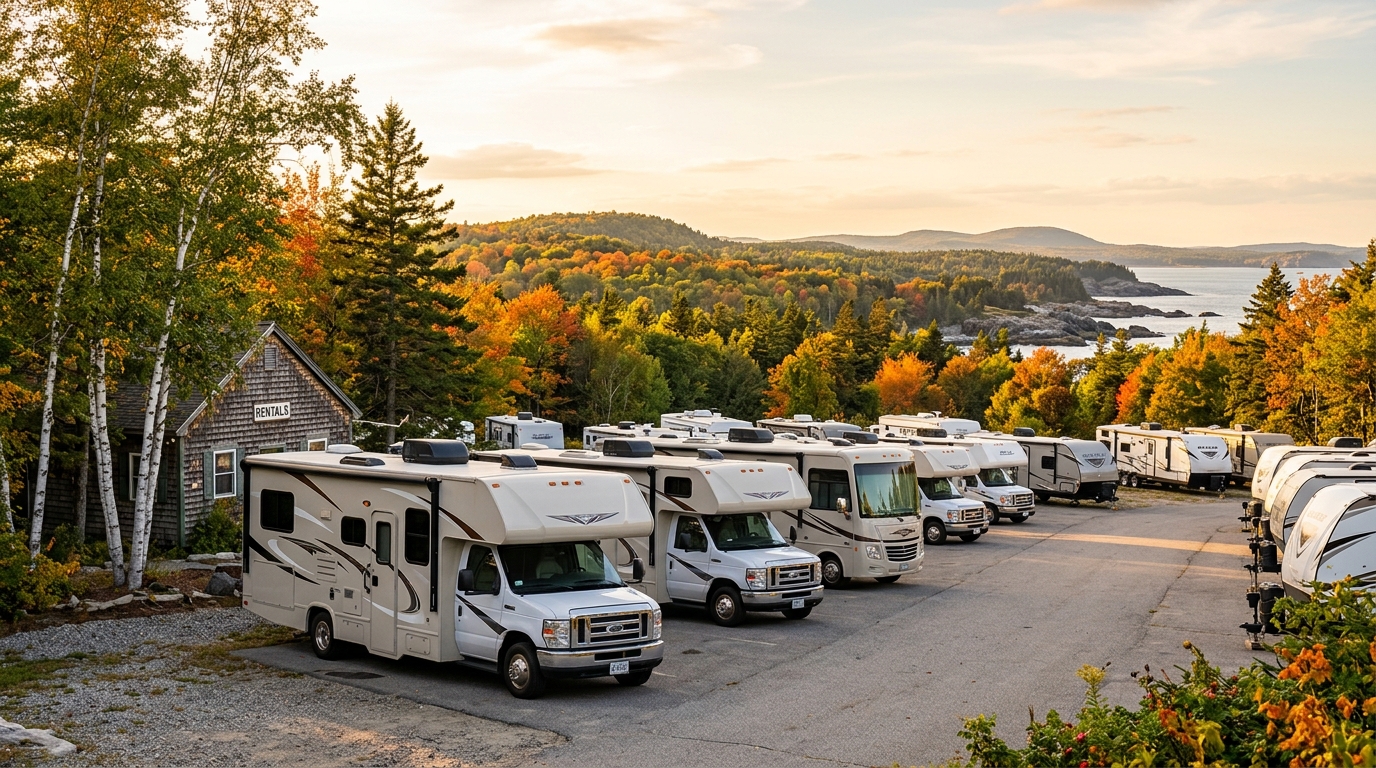
For live availability and current prices, start with our RV Rental Maine - Complete Guide 2026 guide.
In This Guide
- Can You Drive an RV in Maine? License & Age Rules
- Road Conditions & Terrain in Maine
- RV Size Limits, Bridges & Restricted Zones
- Fuel: Diesel vs. Petrol & Cost per 100 km
- Tolls, Vignettes & Border Rules
- Driving Tips for pet friendly rv rental Travelers
- Recommended RV Class for Maine Roads
- Should I Choose a Compact Van Instead of a Large RV in Maine?
- Can I Park Anywhere? Free & Wild Camping Rules in Maine
- Can I Drive an RV Into the City Center? Heights, Tunnels & Local Signage
- What are the best pet-friendly RV parks and trails in Maine?
- How much does a pet friendly RV rental in Maine cost?
- What are some pet-friendly RV itineraries for Maine?
- What unique challenges might I face driving an RV in Maine?
- Is it possible to boondock or wild camp with my RV and pet in Maine?
- Is off-season RV travel recommended in Maine?
Can You Drive an RV in Maine? License & Age Rules
Yes, you can drive a rented RV in Maine with a standard Class C driver's license, provided the vehicle's Gross Vehicle Weight Rating (GVWR) is under 26,001 pounds. This covers most Class B campervans, Class C motorhomes, and many Class A motorhomes available through Bandana. While Maine’s legal driving age is 16 for a standard license, RV rental companies typically require drivers to be at least 21 years old. International drivers are recommended to obtain an International Driving Permit (IDP) to supplement their foreign license, though it's not strictly mandated for short visits. Vehicles exceeding the 26,001-pound GVWR threshold would require a Commercial Driver's License (CDL), which is highly uncommon for recreational RV rentals.
Road Conditions & Terrain in Maine
Maine presents a diverse driving landscape for RV travelers, ranging from smooth, major highways like I-95 to charmingly narrow, winding coastal routes and even unpaved roads in more remote inland areas. The terrain varies from the rugged beauty of its rocky coastline to the mountainous interior, including proximity to the Appalachian Trail. Road quality can differ significantly; while interstates are generally well-maintained, scenic byways and rural roads may be curvier, less predictable, and sometimes have poorer surfaces, especially during spring thaw when potholes can be more prevalent. Embracing pet-friendly RV travel here means adopting a slower pace, allowing ample time to navigate these varied conditions safely and to make frequent stops for your furry companions.
RV Size Limits, Bridges & Restricted Zones
Maine generally adheres to standard federal regulations for RV size, typically capping single RV lengths around 45 feet. However, travelers must remain vigilant for specific low bridge clearances, particularly on older routes, secondary roads, and within historic towns where overhead clearances can be significantly less than on main highways. While Maine doesn't commonly enforce "environmental zones," certain local restrictions might apply, especially concerning access to islands. For instance, ferries to popular destinations like Mount Desert Island may have length or weight limitations, and advance reservations are often essential for larger RVs. Always research your intended route beforehand and pay close attention to all posted height and weight restrictions, especially when venturing off the beaten path.
Fuel: Diesel vs. Petrol & Cost per 100 km
Most rental RVs operate on either diesel or petrol, with fuel consumption typically ranging from 8 to 17 Liters per 100 km, depending on the RV class. For example, Class B camper vans might consume around 8-10 L/100 km, while larger Class C motorhomes or truck campers could be in the 10-17 L/100 km range. Petrol stations are plentiful throughout Maine, and diesel is readily available along major highways, though it can be sparser in the most remote northern regions. It's crucial to factor fuel expenses into your budget, as prices fluctuate. If your rental company offers a fuel discount card, it could help manage these costs effectively.
Tolls, Vignettes & Border Rules
Maine's toll system primarily affects the Maine Turnpike (I-95), where tolls can be paid using E-ZPass or cash. There are no vignettes required for driving within Maine or the broader U.S. If your itinerary includes crossing into Canada, be sure to research specific border regulations, including any required documentation for pets, such as rabies vaccination certificates. Many RV rental companies may offer options for pre-paid toll passes or provide transponders, which can simplify travel and help avoid potential fines. On the routes offered through RV PLANET routes, you can itemize and track every expense along the way for easy budgeting.
Driving Tips for pet friendly rv rental Travelers
When driving a rented RV with pets in Maine, prioritize frequent stops every 2-3 hours for your pets' comfort and safety. Ensure they are securely harnessed or in carriers while the RV is in motion to prevent injury during sudden stops. Be hyper-aware of wildlife, particularly deer and moose, which are common in Maine and can unexpectedly enter roadways, especially at dawn and dusk. During late spring and summer, pack pet-safe insect repellents and ensure window screens are intact to protect against Maine's notorious black flies and mosquitoes. It's also wise to keep a list of veterinary clinics along your planned route, especially when traveling to more remote areas, and to have your pet's vaccination records easily accessible.
Recommended RV Class for Maine Roads
For exploring Maine's diverse roads, a Class B camper van (average length 5.8m) or a Class SI semi-integrated RV (average length 6.9m) from Bandana's fleet are often excellent choices due to their maneuverability and comfort. Camper vans are highly agile, perfect for navigating narrow coastal roads and fitting into smaller campsites. Semi-integrated RVs offer a good balance, providing more amenities and sleeping capacity (averaging 3.8 sleeping places) while remaining manageable on most roads and in state parks. Larger Class C alcove or Class A integrated motorhomes (average length 7.5m) are more suited for highways and larger resort parks, and might be less ideal for the most intimate coastal villages.
Should I Choose a Compact Van Instead of a Large RV in Maine?
Opting for a compact van, like a Class B camper van, over a larger RV can significantly enhance your pet-friendly travel experience in Maine, particularly for accessing specific areas. Compact vans are far more agile on Maine's narrow, winding coastal roads, and they navigate crowded historic town centers like Bar Harbor or Kennebunkport with ease, often finding parking where larger vehicles struggle. The trade-off is typically less indoor living space and fewer amenities compared to larger RVs, which is a key consideration for longer trips or if you travel with extensive pet supplies. However, for accessing hidden gems and more secluded, pet-friendly natural spots, a compact van offers superior flexibility.
Can I Park Anywhere? Free & Wild Camping Rules in Maine
Free camping, or boondocking, in Maine is generally restricted on private land without explicit permission. However, opportunities exist on public lands, particularly those managed by the Maine Bureau of Parks and Lands or designated areas within the White Mountain National Forest. Always adhere strictly to Leave No Trace principles, especially when traveling with pets, ensuring all waste, including pet waste, is properly managed and packed out. Local regulations regarding overnight parking, campfires, and length of stay vary significantly, so it's crucial to research specific areas before parking overnight. While some businesses like Walmart may permit overnight parking, always confirm with store management first, as policies are not guaranteed and can change.
Can I Drive an RV Into the City Center? Heights, Tunnels & Local Signage
Yes, you can generally drive an RV into Maine's city centers, but it requires careful attention to local signage for height restrictions, narrow streets, and parking availability, especially in historic coastal towns. Be particularly mindful of height restrictions for underpasses, tunnels (though rare in major city centers for RV routes), and low bridges, which are more common on older roads and side streets. Parking for larger RVs is often challenging and limited in densely populated urban areas like downtown Portland; consider parking on the outskirts and utilizing public transport or ride-sharing services. Consulting an RV-specific GPS or navigation app that accounts for vehicle dimensions is highly recommended to avoid unexpected obstacles in urban environments.
What are the best pet-friendly RV parks and trails in Maine?
Maine offers numerous pet-friendly RV parks and campgrounds, with many coastal and inland options readily welcoming leashed dogs, though specific rules and amenities vary. For trails, pets are permitted on all carriage roads within Acadia National Park, providing over 45 miles of scenic paths. However, most hiking trails within the park and specific beaches have pet restrictions, so always check signage and park regulations. Many state parks, such as Camden Hills State Park or Lake St. George State Park, offer pet-friendly camping and trails, but confirming their specific pet policies before arrival is essential. Private campgrounds often provide additional amenities like dog parks and pet washing stations, making them a convenient choice for pet owners.
How much does a pet friendly RV rental in Maine cost?
The cost for a pet-friendly RV rental in Maine typically ranges from $150 to $400 per night, with variations based on RV class, rental season, duration, and any specific pet fees. Expect an additional one-time pet fee, usually between $50 and $150, which covers the extra cleaning required to manage pet hair and dander for subsequent renters. Peak seasons, such as July-August and the fall foliage period, generally see higher prices, while shoulder seasons like late spring or early fall can offer more affordable rates and fewer crowds. Beyond the rental rate and pet fee, budget for fuel, campground fees (typically $30-$70 per night), insurance, and potential add-ons like kitchen kits or linen packages. For ideas you can prep on the road, watch our RV-friendly recipes playlist on YouTube.
What are some pet-friendly RV itineraries for Maine?
A popular 7-day coastal pet-friendly itinerary could start in Southern Maine, exploring Kennebunkport's beaches and Portland's Eastern Promenade, then heading north along the mid-coast towns like Camden and Bar Harbor (utilizing Acadia National Park's carriage roads), and finally venturing into the rugged Down East coastline. For a shorter, 3-day North Woods adventure, consider focusing on the Moosehead Lake region, which provides expansive public lands ideal for hiking and exploring with pets, alongside numerous pet-friendly lakeside campgrounds. When planning, remember to incorporate stops at dog parks, pet-friendly beaches (checking seasonal restrictions), and outdoor dining establishments that welcome well-behaved animals. Always confirm pet policies for all attractions, state parks, and businesses along your chosen route, as regulations can vary significantly.
What unique challenges might I face driving an RV in Maine?
Beyond standard RV driving considerations, Maine presents unique challenges such as its narrow, winding coastal roads and tight turns in historic towns, which can be difficult for larger RVs. Cell service can be patchy, with "dead zones" prevalent in remote areas, particularly in the vast North Woods, necessitating the use of downloaded offline maps and alternative communication plans. Fuel availability can also be limited in very rural regions, especially for diesel, requiring careful planning of fuel stops to avoid running empty. Additionally, dealing with Maine's infamous black flies and mosquitoes, especially from late spring through mid-summer, requires preparation with proper screens and repellents, and careful timing of outdoor activities to ensure comfort for both you and your pets.
Is it possible to boondock or wild camp with my RV and pet in Maine?
Yes, boondocking (dispersed camping) with an RV and pet is possible in Maine, primarily on state-managed public lands and in designated areas of the White Mountain National Forest, provided all "Leave No Trace" principles are strictly followed. When boondocking with pets, it's essential to keep them leashed to protect local wildlife and respect other campers, and to always properly dispose of all pet waste. Researching specific locations thoroughly using resources like iOverlander or state public land guides is crucial, as regulations regarding overnight stays, campfires, and permits vary by area. Prioritize safety by choosing accessible spots, informing someone of your location, and being prepared for limited amenities and potential emergencies in remote areas.
Is off-season RV travel recommended in Maine?
Off-season RV travel in Maine, particularly during spring (May-early June) and fall (mid-September-October), is highly recommended for pet owners. These periods offer fewer crowds, lower rental rates, and often more flexibility for pets on trails and beaches. While beautiful, shoulder seasons can also bring variable weather, including cooler temperatures, rain, or even early snow in late fall, necessitating adequate preparation for heating, insulation, and awareness of potential road closures. It's important to note that some campgrounds, attractions, and businesses may operate on reduced hours or be closed entirely during the off-season, so advance planning and confirmation of availability are key. The benefits for pet travelers include easier access to popular spots, generally more relaxed pet policies, and a more peaceful environment for enjoying Maine's natural beauty without the summer rush.
What You Shouldn't Miss
- Drive sections of the scenic coastal route (US Route 1) from Kittery to Fort Kent, stopping at charming towns like Kennebunkport and Ogunquit.
- Explore Acadia National Park, focusing on pet-friendly carriage roads for biking or walking with your canine companions, and enjoy iconic views from Cadillac Mountain.
- Visit Portland's Old Port for its historic cobblestone streets, unique shops, and many pet-friendly outdoor dining options.
- Take a scenic drive around Moosehead Lake, Maine's largest lake, and look for moose in the surrounding wilderness, especially during dawn and dusk.
- Experience the unique charm of the mid-coast region by visiting towns like Camden, Rockland, and Rockport, known for their picturesque harbors and maritime heritage.
- Enjoy fresh, local Maine flavors like lobster rolls, wild blueberries, and whoopie pies at roadside stands and local eateries.
Final Thoughts
Renting an RV and exploring Maine with your pet can be an incredibly rewarding experience. From the dramatic coastline to the serene inland forests, Maine offers endless opportunities for adventure and relaxation.
Remember to plan ahead, especially regarding popular sites and pet-friendly accommodations, and embrace the slower pace of RV travel. With the right preparation and the flexibility of an RV, you and your furry companion are set for an unforgettable journey through the beautiful state of Maine.
Get inspired for your next trip! Discover top destinations, planning tips, all in one place!
