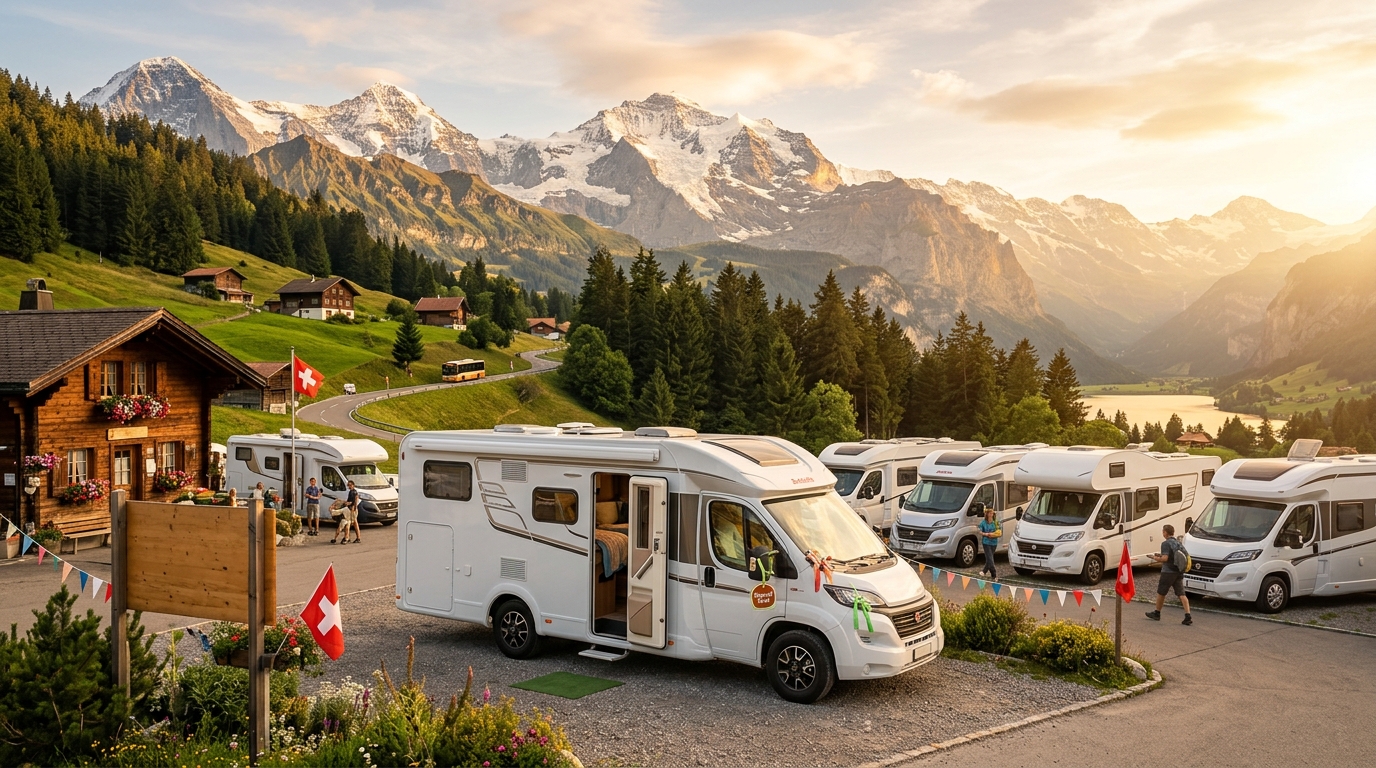
For live availability and current prices, start with our RV Rental Switzerland - Complete Guide 2026 guide.
In This Guide
- What one way rv rental RV Rental Costs in Switzerland (2024)
- Seasonal Pricing - Peak vs. Shoulder vs. Off-Season in Switzerland
- What's Included vs. What's an Add-On
- Hidden Costs to Budget For in Switzerland
- How to Save on one way rv rental RV Rental in Switzerland
- How to budget for an RV trip in Switzerland?
- Tips for driving an RV in the Swiss mountains?
- Is wild camping allowed with an RV in Switzerland?
- Can you travel by RV in Switzerland during off-season or winter?
- What are the regulations for traveling with pets in an RV in Switzerland?
- How to practice sustainable RVing in Switzerland?
- How to combine RV travel with public transport in Switzerland?
- What essential gear is needed for RVing in Switzerland?
- What RV insurance is needed for Switzerland and what about emergencies?
- Top Cities for RV Rental in Switzerland
- Country-Wide Practical Info for RV Travelers
- What You Shouldn't Miss
- Why Book with Bandana Caravan
- Final Thoughts
- Frequently Asked Questions
Embarking on a one-way RV rental adventure in Switzerland offers unparalleled freedom to explore the majestic Alps, pristine lakes, and charming villages at your own pace. Imagine waking up to breathtaking mountain views from your mobile home, enjoying a freshly brewed coffee right there, and then setting off to your next scenic destination. Switzerland, with its incredible landscapes and efficient infrastructure, is perfectly suited for motorhome travel.
At Bandana RV, we understand the dream of hitting the open road. For live availability and current prices, start with our RV Rental Switzerland - Complete Guide 2024. As true RV specialists, we've been helping tens of thousands of travelers since 2001, offering direct partnerships with over 50 leading RV suppliers worldwide, including trusted names like El Monte and Apollo. Our goal is to make your booking process as transparent and stress-free as possible, ensuring you travel with peace of mind. We pride ourselves on full transparency: what you see is what you pay, with no hidden fees or surprises.
This guide will equip you with all the essential knowledge for planning your one-way RV rental in Switzerland, from understanding costs and regulations to discovering hidden gems and practical tips for an unforgettable journey across this beautiful country. For those looking to expand their horizons even further, our comprehensive RV Rental Europe - Complete Guide 2024 offers an excellent overview of continental travel possibilities.
What one way rv rental RV Rental Costs in Switzerland (2024)
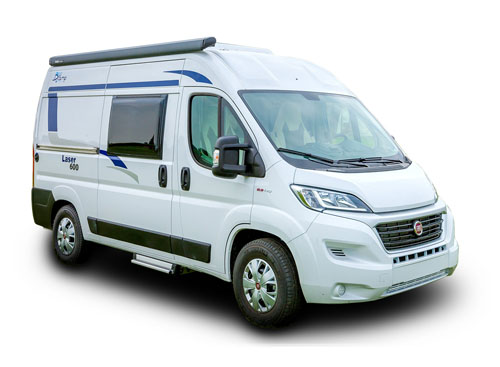
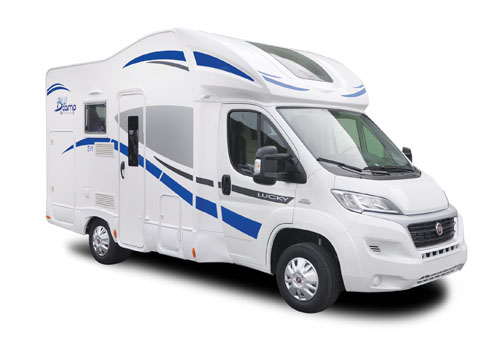
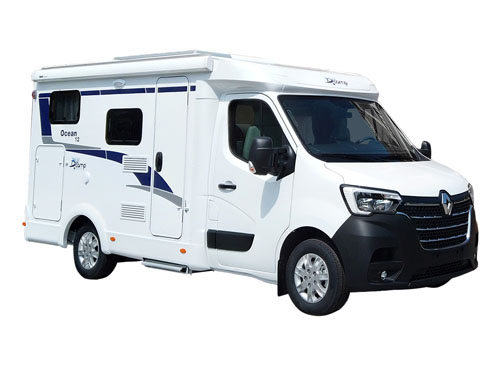
April is typically the cheapest month for RV rental in Switzerland, offering the best value outside of peak season, with average daily rates for a Class C motorhome potentially starting from CHF 90-120. The exact cost of a one-way RV rental will depend on factors like RV class (e.g., a compact campervan like an 'Active Classic' versus a larger 'Family Luxury' Class C), duration, and specific pickup/drop-off locations. Prices are dynamic, changing daily based on availability and demand, much like flight tickets. A 2-berth campervan, ideal for couples, might cost less than a spacious 6-berth motorhome designed for families, which often features a large fresh water tank and multiple sleeping areas.
Costs vary significantly by RV class, rental duration, and specific pickup/drop-off locations. For instance, renting a Class B campervan, such as the "rv rental denver example Category Van" equipped with a shower and toilet, might offer lower daily rates compared to a full-sized Class A motorhome like the "rent rv example E3". These Class A vehicles often boast more luxurious features including a TV and are ideal for longer trips.
Bandana RV compares final prices across over 50 suppliers, ensuring you see what you pay, with no surprise fees at pickup. This full transparency is one of our core differentiators, giving you confidence in your booking decision.
Prices shown are flex-rate estimates and may change daily. For the most accurate, live prices, please check your specific dates and RV preferences via the search box at the top of the page.
Seasonal Pricing - Peak vs. Shoulder vs. Off-Season in Switzerland
RV rental prices in Switzerland fluctuate significantly with the seasons. Peak season, typically from July to August, experiences the highest demand and therefore the most elevated prices, with daily rates for popular 4-berth Class C models potentially reaching CHF 200-250. During these months, prices can change significantly day-to-day, making early booking crucial to secure your preferred vehicle, like a "Class Comfort" Class C motorhome.
Shoulder seasons, spanning May to June and September to October, generally offer a more balanced experience with pleasant weather and more moderate rental costs, often seeing prices drop by 15-20% compared to peak. These periods are ideal for those seeking to avoid the peak crowds while still enjoying good conditions for touring with a well-equipped campervan, such as a "Category Urban Van AT" with front air conditioning.
Off-season, which includes months from November through March (with April often serving as a low-season anchor), presents the lowest rental rates. While offering budget-friendly options, travelers should be prepared for colder weather, potential road closures, and limited campsite availability, especially in mountainous regions. Many suppliers offer winter-ready motorhomes for intrepid travelers during this period, though some amenities like exterior water hookups might be limited.
What's Included vs. What's an Add-On
When renting an RV in Switzerland, understanding what comes standard and what costs extra is key for accurate budgeting. Basic third-party liability insurance is always included with every RV rental. However, additional coverage, often referred to as a more comprehensive insurance tier, mileage packages beyond a standard allowance, generator usage (if applicable), kitchen kits, and bedding are typically considered add-ons. For instance, a Class B campervan or a compact Class C motorhome like the "Adak Argonaut 21 - Bronze" generally includes basic safety features and a front air condition unit. On the routes offered through RV PLANET routes, you can itemize and track every expense along the way for easy budgeting.
It's crucial to stress that these inclusions and add-ons vary significantly by RV model and individual rental station. Always verify the specifics for your chosen vehicle and booking. To see prices including the most comprehensive coverage, select that option during your search; then all relevant insurance options will be shown. You can also upgrade to a top-level deductible for extra peace of mind, a popular optional enhancement for many travelers. Many platforms, like Bandana RV, also offer comparison toggles to easily see if kitchen utensils, tableware, and bedding are included in a particular rental package. We believe in full transparency, ensuring no hidden fees, no surprises.
How to Save on one way rv rental RV Rental in Switzerland
Maximizing savings on your one-way RV rental in Switzerland is achievable with smart planning. One of the most effective strategies is to book during the shoulder season (May-June or September-October) when demand and prices are lower than peak summer by 15-20%, but the weather remains pleasant. Many providers offer discounts during these times, allowing you to secure a quality motorhome like the "Comfort Standard" at a better rate.
Consider pre-paying for tolls or checking if your rental includes a Swiss vignette to avoid on-the-spot costs and potential fines. Utilizing campground discount cards, if offered by your rental provider, can significantly reduce accommodation expenses, which typically run CHF 30-80/night. Opting for a smaller RV class that comfortably fits your group, such as a compact 'Active Classic' campervan or a 'Category Small AT' semi-integrated model, not only lowers the daily rental rate but also typically results in better fuel efficiency, saving on the 10-15 L/100km fuel consumption.
Booking for longer durations, like a two-week adventure or an extended road trip, often unlocks better daily rates, making extended trips more cost-effective. Additionally, keep an eye on flex-rate drops, as rental prices can fluctuate, sometimes offering last-minute deals or seasonal discounts. As true RV specialists, Bandana RV helps you compare final prices across 50+ suppliers, so you find the easiest, safest, and most affordable way to rent an RV, ensuring no surprises when you pick up your vehicle.
How to budget for an RV trip in Switzerland?
To effectively budget for an RV trip in Switzerland, it's essential to consider all expenses beyond the initial rental fee, including fuel, camping fees, groceries, activities, and mandatory tolls or vignettes, which can add up to CHF 50-150 daily. On average, expect to spend CHF 1.80-2.20 per liter on fuel, accounting for mountainous terrain that increases consumption and varying prices. Camping fees can range from CHF 30-80 per night depending on location and amenities, with many national parks offering limited first-come-first-serve spots.
Saving strategies include planning meals to cook in your RV's kitchen, utilizing discount cards for campsites, and researching free or low-cost activities like hiking and picnicking. Remember to budget for the mandatory CHF 40 annual Swiss vignette if it's not included in your rental. Always build in a contingency fund of at least 15-20% for unexpected expenses, and for a detailed breakdown and tracking of all costs, RV PLANET routes allow you to itemize every expense along the way for easy budgeting.
🎬 Video coming soon
Tips for driving an RV in the Swiss mountains?
Driving an RV in the Swiss mountains demands careful preparation and specific techniques for safety and comfort. When ascending, use a lower gear to maintain power and avoid straining the engine, especially with a fully loaded Class C motorhome with an 80-liter freshwater tank. On descents, engage engine braking (downshifting) to control your speed and prevent your service brakes from overheating, which is crucial on steep grades like those found on the Susten or Grimsel Pass. For hairpin bends, approach wide and be mindful of your RV's rear swing, as a 7-meter long 'Euro Deluxe' will require careful maneuvering.
Essential gear includes leveling blocks for uneven campsites and checking tire pressure regularly, especially before heading into higher altitudes. Always be aware of road signs indicating restrictions for large vehicles, as some high-altitude passes may be unsuitable or challenging for larger RVs; always consult road conditions and restrictions beforehand. Drive slowly and carefully, and you can drive almost anywhere without issues. No need to stress - just use common sense and pay attention to road signs for vehicle weight or length restrictions. For example, some narrow routes might advise against vehicles exceeding 2.3 meters in width or 7 meters in length.
Is wild camping allowed with an RV in Switzerland?
Wild camping with an RV in Switzerland is largely forbidden across most cantons and municipalities, particularly in populated areas, agricultural zones, and within nature reserves, with strict enforcement leading to fines up to CHF 10,000 in sensitive areas. Penalties for illegal wild camping can be severe, often resulting in significant fines and being moved on by authorities, especially in popular tourist regions like the Engadine or Lauterbrunnen Valley. Instead, travelers should utilize designated 'Stellplätze' (motorhome parking areas), which often provide basic services for a fee (typically CHF 15-40/night), or seek explicit permission from private landowners for farm-stay parking options, which are becoming increasingly popular.
Many national and state parks reserve only 25-30% of spots for advance booking; the rest are first-come-first-serve. You'll find a spot. If not at the first campground, then the next one. Call ahead before driving to confirm availability. Always opt for official campsites or sanctioned Stellplätze to ensure compliance with local regulations and access to necessary facilities, like fresh water (often 100-150 liter tanks in a typical motorhome) and dump stations.
Can you travel by RV in Switzerland during off-season or winter?
Traveling by RV in Switzerland during the off-season or winter is certainly possible and offers a unique experience, though it comes with specific challenges that require careful planning. Many high-altitude roads and mountain passes are closed due to snow from late autumn until spring, typically from November to May, necessitating route adjustments and reliance on tunnel routes. RVs typically need to be equipped with winter tires, and carrying snow chains is mandatory in designated areas, often marked with signs.
Heating systems, proper insulation, and the availability of winterized campsites become crucial considerations, as fresh water tanks and waste water tanks in non-winterized models can freeze. While many campsites close for the winter, a good number remain open year-round, particularly in lower elevations or near popular ski resorts, offering a cozy base for winter activities. For instance, some Class C motorhomes, like the "Kiwi 6 Berth", are specifically designed with winter readiness features. Always check local weather and road conditions before driving, especially for routes like those found in the "Basel Roundtrip - Switzerland & Black Forest" itinerary.
What are the regulations for traveling with pets in an RV in Switzerland?
Traveling with pets in an RV to Switzerland involves adherence to specific regulations to ensure a smooth entry. All pets must have an EU Pet Passport or a recognized equivalent veterinary certificate, be microchipped, and have a valid rabies vaccination administered after microchipping, which must be at least 21 days old. Proof of tapeworm treatment may also be required depending on the country of origin, particularly for dogs coming from certain non-EU countries. For example, some pet-friendly models, like the '24' Class C Motorhome,' specifically cater to travelers with furry companions.
Within Switzerland, while many campsites welcome pets for an additional fee (typically CHF 5-15/night), it's always advisable to confirm their pet policy when booking. Be aware that some national parks or public transport might have restrictions, so research pet-friendly attractions and transportation options ahead of time. Always ensure your pet's microchip is ISO-compliant (ISO 11784 and 11785) for easy identification across Europe.
How to practice sustainable RVing in Switzerland?
Practicing sustainable and responsible RVing in Switzerland is vital to preserve its stunning natural beauty and respect local communities, as Switzerland values its pristine alpine environment. To minimize your environmental impact, always dispose of waste properly in designated bins and utilize official dump stations for grey and black water, never discharging it into nature; facilities are widely available at campgrounds or dedicated service points. Conserve water and electricity, as a typical motorhome’s freshwater tank might hold 100-150 liters, and consider using eco-friendly cleaning products and refillable water bottles to reduce plastic waste.
When parking or camping, stick to marked areas to protect delicate ecosystems and avoid sensitive agricultural land. Support local businesses by purchasing food from local markets, tasting regional specialties, and dining at traditional restaurants. If you're cooking in your RV's compact kitchen, remember to check out our RV-friendly recipes playlist for delicious and easy meal ideas. Respect local customs and keep noise levels down, especially in quiet areas and residential zones. Traveling slowly, aiming for a maximum of 100-150 km per day on average, allows you to truly feel the place, connect to the culture, the food, and the scenery, leaving no trace behind.
How to combine RV travel with public transport in Switzerland?
Integrating RV travel with Switzerland's world-renowned public transport system is an excellent strategy for exploring cities, remote hiking trails, or areas where RVs are impractical or restricted. You can strategically park your RV at designated 'Park & Ride' facilities often found at the outskirts of cities or at campsites located near train and bus stations for convenient access to the extensive network. Many cities, including Bern and Zurich, have efficient public transport links from peripheral parking zones, allowing you to easily venture into pedestrian-only city centers.
From there, use Switzerland's efficient network of trains, buses, and even boats to reach your desired destinations, which often run with impressive punctuality every 15-30 minutes during peak hours. Consider purchasing a Swiss Travel Pass for unlimited travel on trains, buses, and boats; this can be a cost-effective and convenient way to explore without constantly moving your RV, reducing stress and fuel consumption (typically 10-15 L/100km for an RV). This approach works perfectly for itineraries like the "
What essential gear is needed for RVing in Switzerland?
Having the right gear is crucial for a smooth RV trip in Switzerland. Essential items include a European power adapter (CEE 7/4 'Schuko' plug, 230V) and an extension cord of at least 25 meters for campsite electricity hookups, as well as a potable water hose for refilling your 100-150 liter fresh water tank. For road safety, always carry a warning triangle, a reflective safety vest (mandatory for all occupants exiting a broken-down vehicle on the road), and a first-aid kit; these are legal requirements. Many vehicles, such as the "Active Bunk Auto", come with basic equipment but extras like a navigation system specifically designed for RV dimensions (avoiding low bridges or narrow roads) are highly recommended.
Consider adding leveling blocks for uneven pitches, particularly in alpine campgrounds. If traveling in cooler months (October-April), appropriate winter equipment like snow chains is mandatory in designated areas and often provided as an add-on by rental companies. A good pair of hiking boots for exploring the 65,000 km of marked trails and a Swiss pocket knife will also come in handy! Don't forget basic cooking supplies for your RV kitchen, like those you'd use for recipes from our RV-friendly recipes playlist.
What RV insurance is needed for Switzerland and what about emergencies?
When renting an RV for Switzerland, basic third-party liability insurance is always included, covering damage you might cause to another vehicle or property, as mandated by Swiss law. For comprehensive peace of mind, it's highly recommended to opt for additional, more comprehensive insurance coverage that protects the rental RV itself against theft, damage, or accidents. Many rental companies offer various tiers of collision damage waiver (CDW) or zero-deductible options, with costs typically ranging from CHF 20-50 per day for an enhanced policy. You can choose to upgrade to a top-level deductible reimbursement for added security, as this optional feature significantly reduces your financial exposure.
In the event of a breakdown or accident, the absolute first step is to contact your rental provider's emergency assistance number immediately, which should be clearly provided at the time of pickup. They will guide you through the necessary steps, including arranging roadside assistance or reporting the incident to local authorities if required. Switzerland's emergency number is 112 for general emergencies, 117 for police, and 144 for ambulance. Bandana RV offers real people behind you during your pre-booking and post-booking coordination, ensuring you have all the necessary information for a safe trip.
Top Cities for RV Rental in Switzerland
Switzerland offers several excellent starting points for your motorhome adventure, each providing easy access to different regions and stunning scenery. These cities are typically well-equipped with rental stations and amenities for RV travelers:
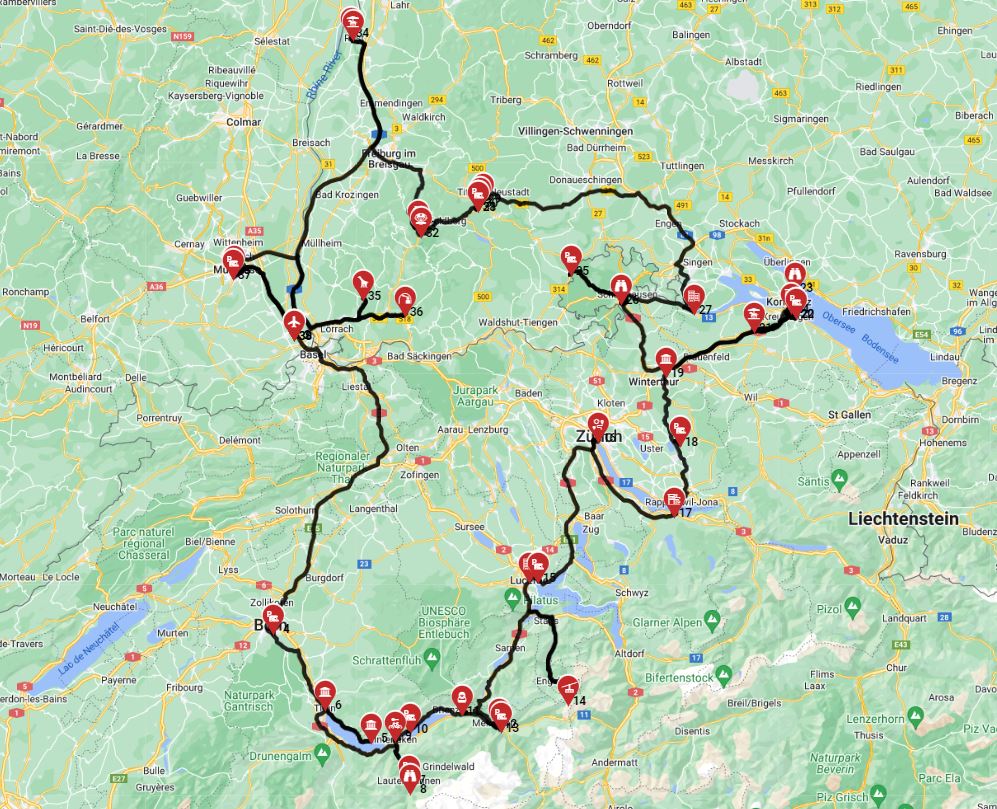
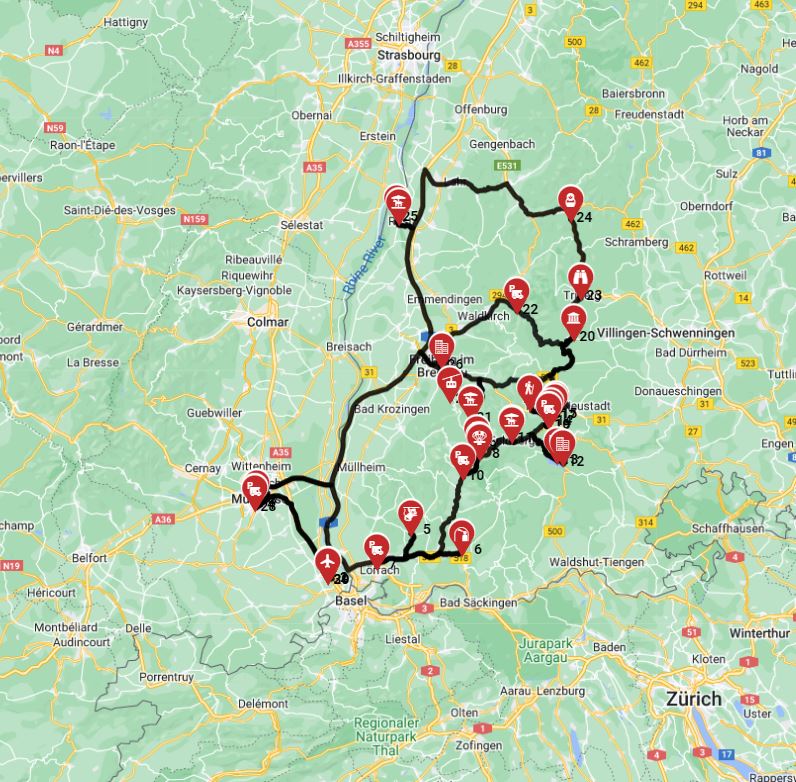
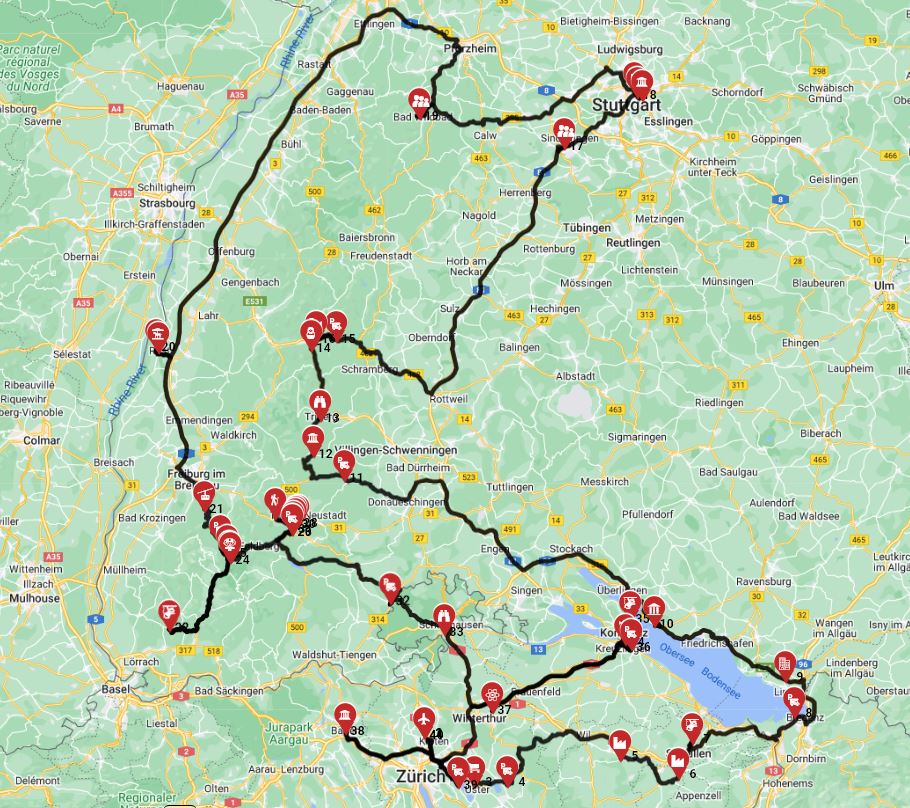
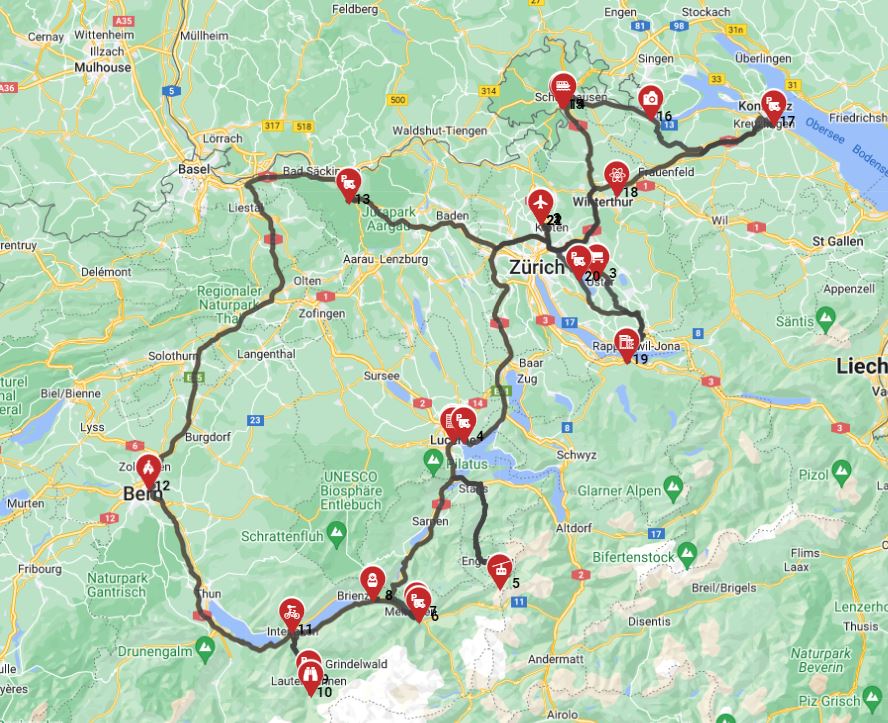
- Basel: Situated at the crossroads of Switzerland, France, and Germany, Basel is a fantastic starting point for exploring not only Swiss landscapes but also the nearby Black Forest. It's an ideal hub for a one-way RV rental if you plan to venture into neighboring countries. Our "Basel Roundtrip - Switzerland & Black Forest" itinerary from RV PLANET covers 1233.4 km over 16 days, including 4 museums and 5 natural features.
- Bern: Switzerland's capital offers a beautiful old town (a UNESCO World Heritage site) and is perfectly positioned for exploring the central Alps and the Emmental region. Renting a campervan here allows quick access to mountainous routes.
- Geneva: Located on the picturesque Lake Geneva, this international city is a gateway to the French-speaking part of Switzerland and the Jura mountains. It's an excellent choice if you're looking for a refined start to your RV trip.
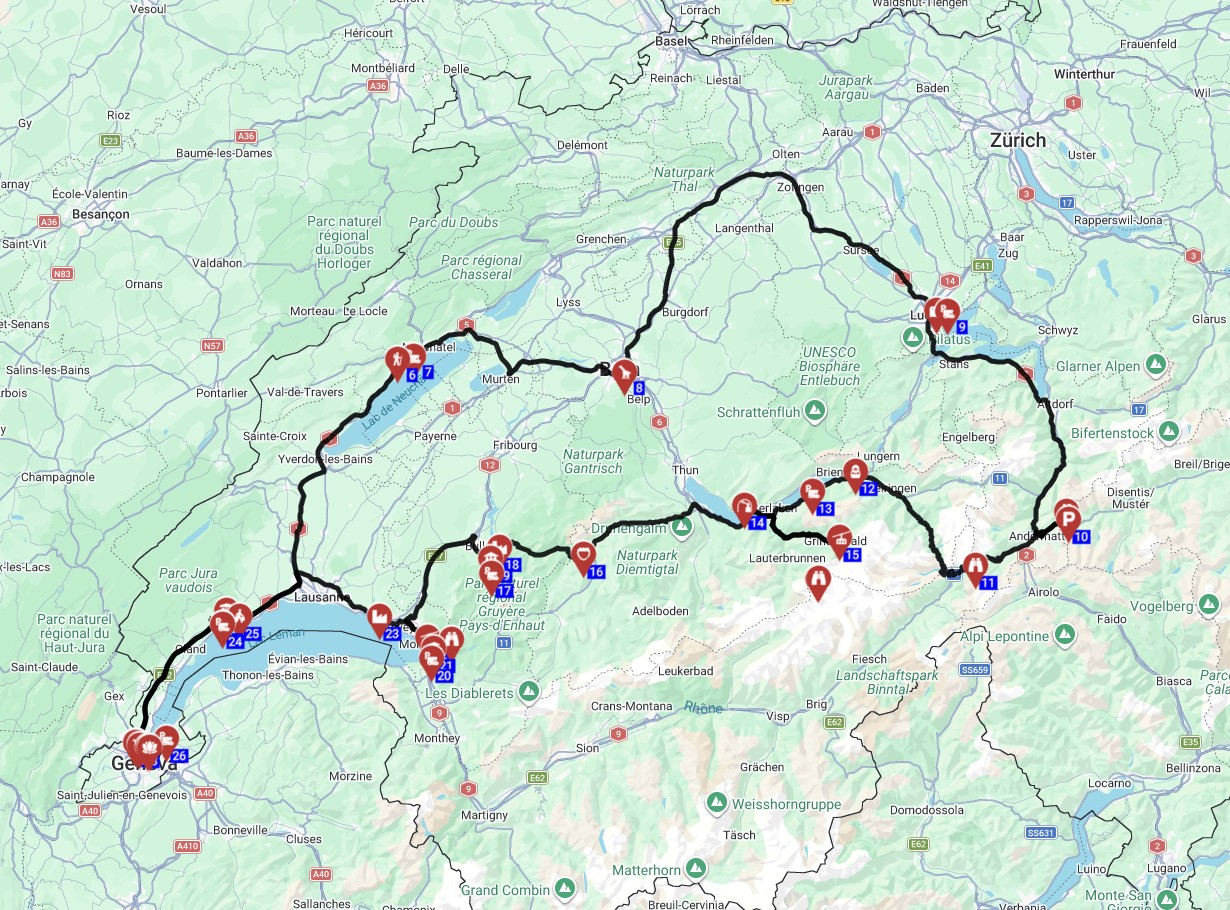
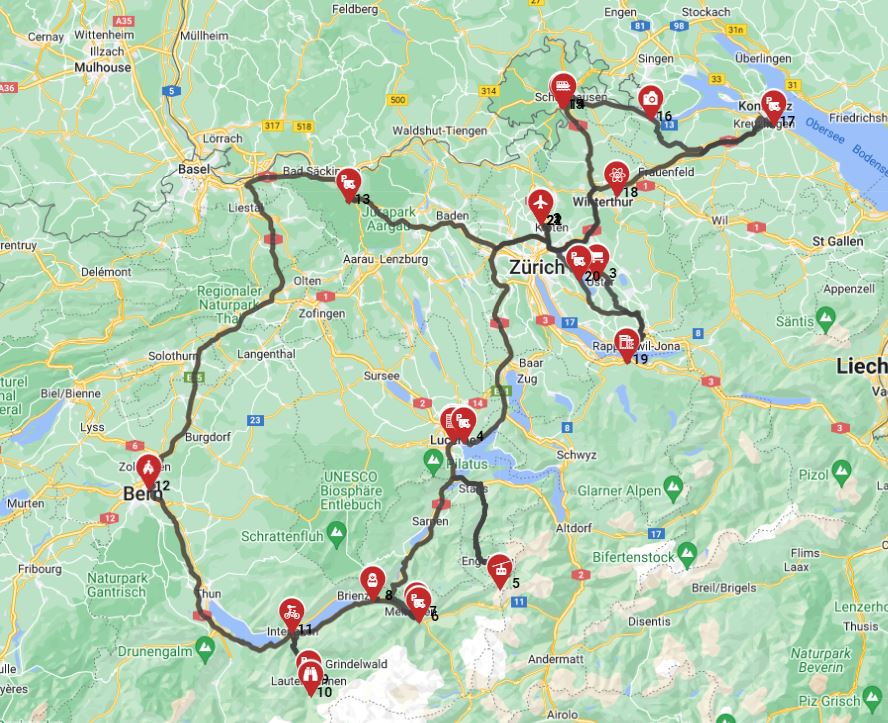
- Zurich: As Switzerland's largest city, Zurich provides a wide array of amenities and services, making it a convenient pick-up location. From here, you can easily access eastern Switzerland, the Lake Zurich region, and the nearby pre-Alps. The "Zurich Roundtrip - Switzerland Short" is an 8-day route covering 766.8 km, ideal for experiencing local culture and nature.
- Lucerne: Nestled by Lake Lucerne and surrounded by mountains, Lucerne offers breathtaking scenery right from the start. It's a great base for exploring central Switzerland's alpine wonders and historic sites.
- Interlaken: Known as the adventure capital of Switzerland, Interlaken is ideal for thrill-seekers and nature lovers. Picking up your RV here immediately immerses you in the heart of the Bernese Oberland, surrounded by iconic peaks.
Many of these cities offer options for Class C motorhomes, like a "rv rentals example Comfort Class" with its spacious interior and capacity for a family of 2+2, or compact campervans such as the "V2L" with a 100-liter freshwater tank for couples.
Country-Wide Practical Info for RV Travelers
Navigating Switzerland with a rented RV is a delightful experience, thanks to its well-maintained roads and stunning scenery. Here's some practical information to ensure a smooth journey:
Road Rules and Driving Customs:
- Driving Side: Switzerland drives on the right side of the road.
- Speed Limits: Speed limits are strictly enforced with high fines. For motorhomes up to 3.5 tons (and cars with trailers), the limits are generally 50 km/h in urban areas, 80 km/h outside urban areas, and 100 km/h on motorways. Vehicles over 3.5 tons may have lower limits. Always observe posted signs, especially on mountain passes.
- Vignette: A mandatory annual motorway vignette (sticker) costing CHF 40 is required for all vehicles using Swiss motorways and expressways. This often needs to be purchased separately and displayed on your windshield. If towing, a second vignette is required for the trailer.
- Mountain Driving: As mentioned, uphill traffic generally has priority on narrow mountain roads. Be prepared for winding roads and tunnels. Drive slowly and carefully, and you can drive almost anywhere without issues. No need to stress - just use common sense and pay attention.
- Headlights: Driving with headlights on during the day is mandatory.
- Driver's License: A standard car driver's license (Class B equivalent) is sufficient for all motorhome classes (Class A, B, and C). No special license, CDL, or additional permits are required. An International Driving Permit (IDP) is recommended for non-EU/EFTA visitors but not always mandatory. The minimum rental age is 21, with no young driver surcharges.
Fuel Stations:
- Fuel stations are widely available, even in rural areas, but can be less frequent in high alpine regions. It's wise to fill up before long mountain drives. Diesel and unleaded (Super 95/98) are common. Expect fuel costs to be around CHF 1.80-2.20 per liter.
Emergency Numbers:
- General Emergency: 112
- Police: 117
- Ambulance: 144
- Roadside Assistance: Contact your rental provider first; they will provide specific numbers.
SIM Card and Connectivity:
- Local SIM cards are readily available from providers like Swisscom, Sunrise, and Salt. Prepaid options are good for travelers, offering data packages for navigation and staying connected. Wi-Fi is often available at campsites and in many towns.
What You Shouldn't Miss
Switzerland is a treasure trove of experiences waiting to be discovered with your rented motorhome or campervan. Here are some must-do adventures:
- The Majestic Matterhorn: Drive your RV to Zermatt (parking just outside town, as it's car-free) and take the train up to witness the iconic Matterhorn.
- Lake Lucerne and Mount Pilatus: Park your RV at a nearby campground and take a boat trip on Lake Lucerne, then ascend Mount Pilatus via the world's steepest cogwheel railway for panoramic views.
- The Jungfrau Region: Explore the stunning Lauterbrunnen Valley, known for its 72 waterfalls. Take a scenic drive and then hike to the Trümmelbach Falls.
- Glacier Express Panoramic Route: While you can't drive your RV on the Glacier Express, you can follow its route with your rental, stopping at charming towns like Zermatt and St. Moritz. This allows you to experience the breathtaking scenery at your own pace, complementing the train journey.
- Swiss Chocolate and Cheese Trails: Drive through the Gruyère region to visit the famous Gruyères Castle, a cheese dairy, and a chocolate factory, indulging in Switzerland's most delicious exports. Many campsites offer easy access to these cultural sites.
- Chaplin's World in Vevey: A unique museum dedicated to Charlie Chaplin, located on the beautiful shores of Lake Geneva. It’s an engaging and entertaining stop for families, easily reachable with a Class C motorhome like the "MHC24" which is ideal for a family of 2+2.
Looking for expert insights from Avi Bandana? Top 5 Adventures - recommendations from Avi Bandana
Avi Bandana, our founder, is a seasoned RV traveler who has personally explored countless routes across five continents. He recommends diving deep into Switzerland's diverse regions:
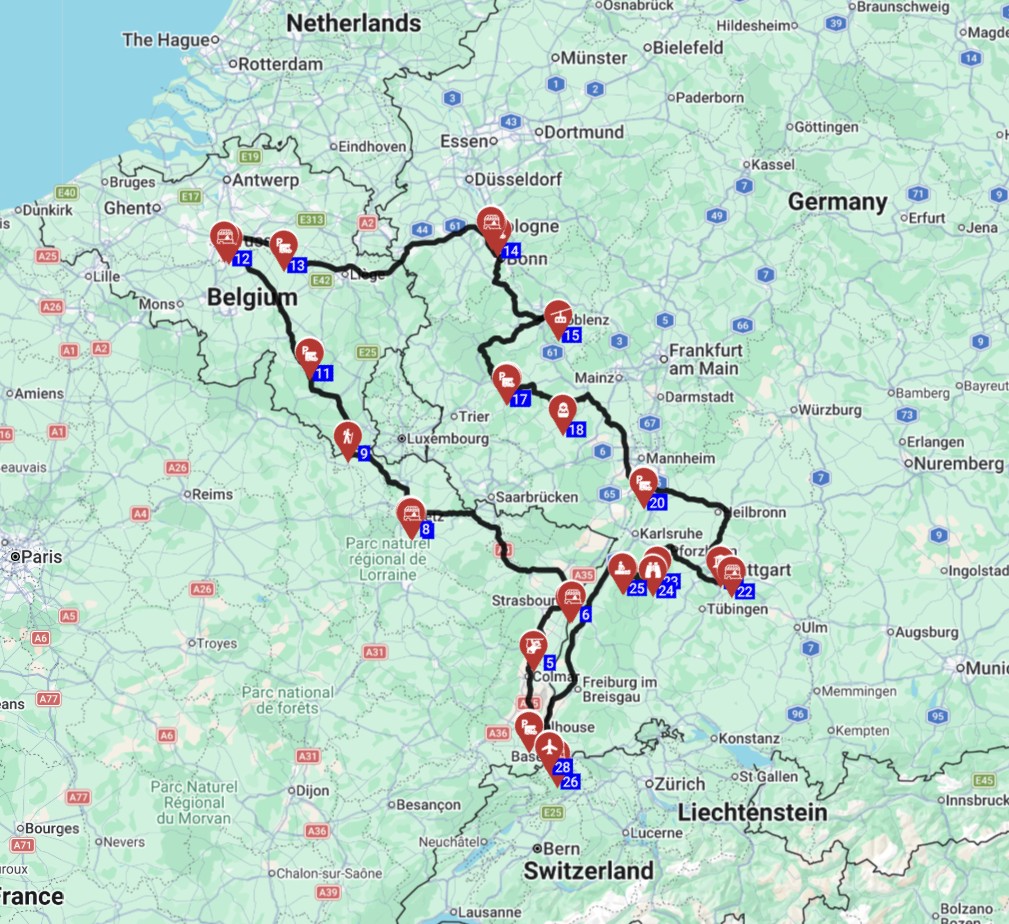
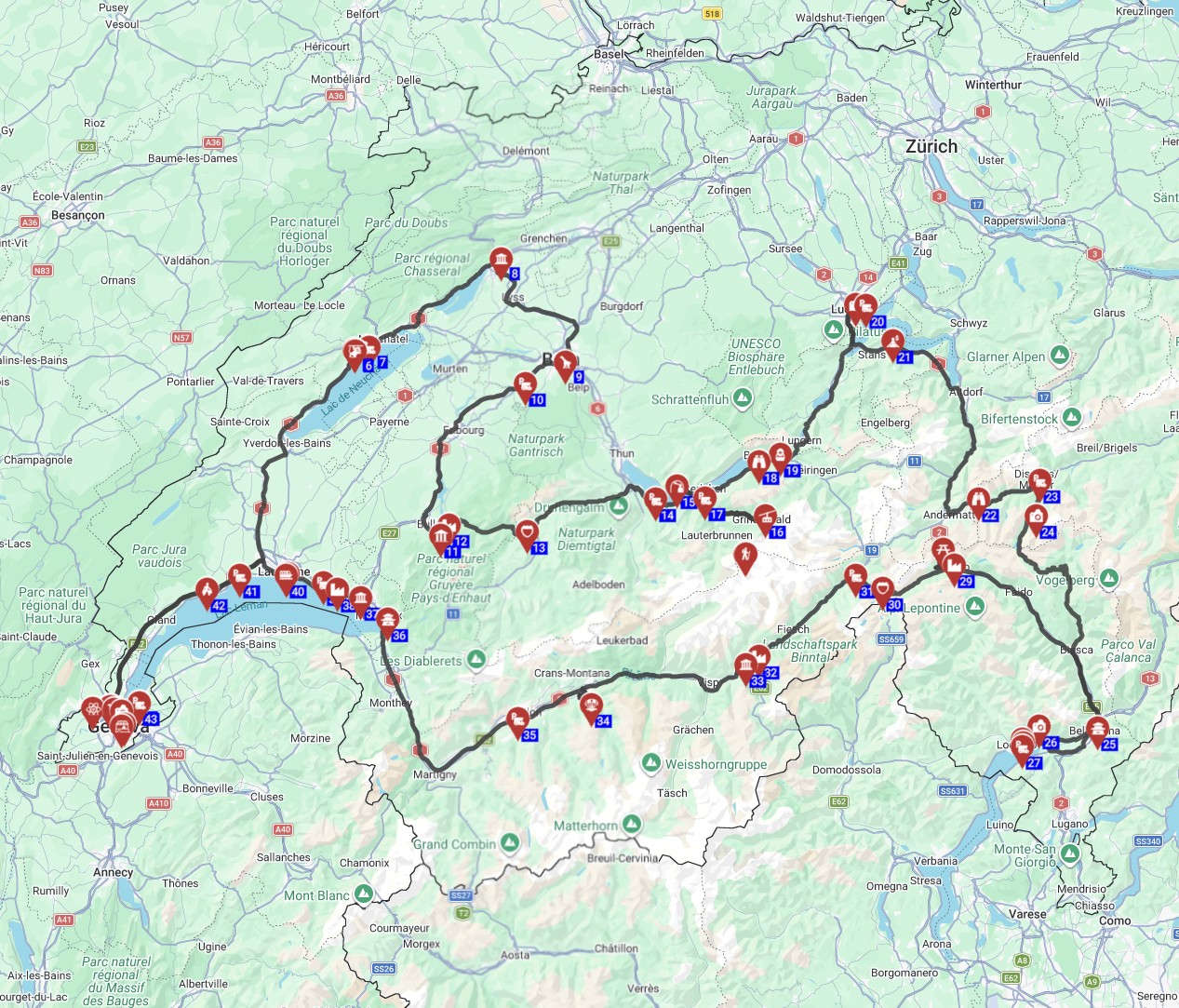
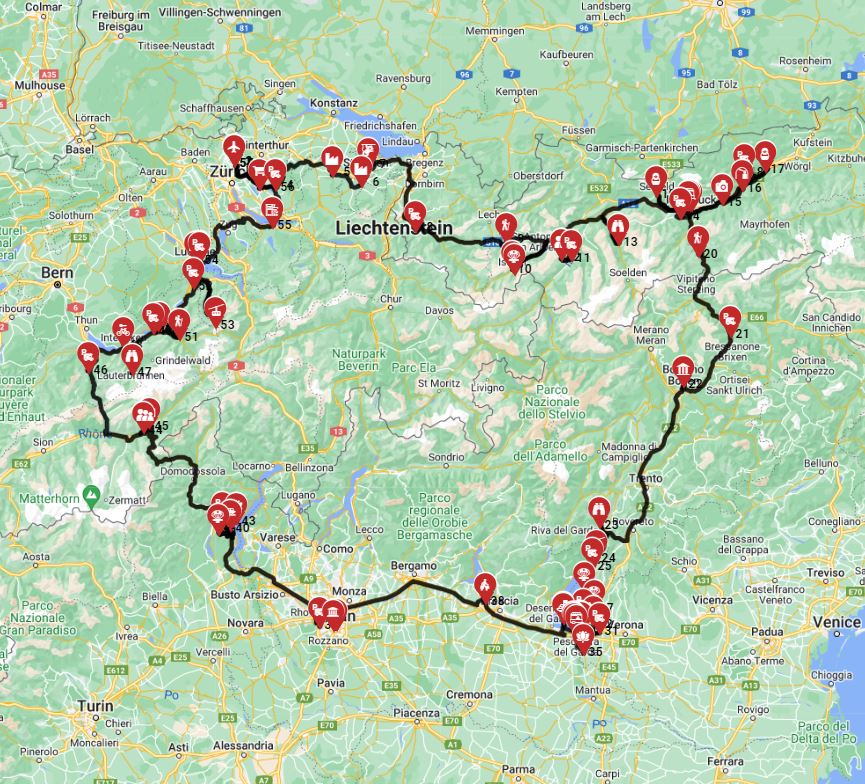
For an incredible European journey, consider the "Nice Roundtrip - French Riviera toward North Italy, Switzerland, and the French Alps" itinerary. This 15-day adventure covers 1742.8 km, offering a blend of coastal beauty and alpine grandeur. It includes 1 Amusement Park, 2 Animals Show / Wildlife watch experiences, an Aquarium, a Beach, Bike Rental opportunities, 2 Botanical gardens, a Cable Railway ride, Canoe / Kayak / Rafting, a captivating cave, 2 Cruise Terminal / Sailing options, 2 Extreme Activities, a Family Activity, a Heritage site, a hiking area, 2 Historical Sites, Horseback Riding, 3 Local Industry visits, a Museum, a Natural Feature, a Point Of Interest, a Scenic Route, a Science Site, 2 Tourist Attractions, a Traditional Market, 2 Traditional Restaurant / Fine Dining experiences, and a Traditional Visit, along with a Zoo. It's truly comprehensive!
Another fantastic option for those starting directly in Switzerland is the "Basel Roundtrip - Switzerland & Black Forest" route. This 16-day, 1233.4 km journey starting and ending in Basel, dives deep into Swiss beauty and even crosses into Germany's famous Black Forest. It features 2 Amusement Park visits, an Animals Show / Wildlife watch, Bike Rental, a Cable Railway, a cave, a Day Tour, 2 Extreme Activities, 4 Museums, 5 Natural Features, a Traditional Visit, a Water Park, and a Zoo. Perfect for families looking for diverse attractions.
For a shorter yet equally rewarding experience, consider the "Zurich Roundtrip - Switzerland Short". This 8-day itinerary covers 766.8 km, originating and concluding in Zurich. It offers a Bike Rental opportunity, a Cable Railway experience, a Cruise Terminal / Sailing excursion, an Extreme Activity, a hiking area, a Museum, a Natural Feature, a Point Of Interest, a Science Site, a Traditional Restaurant / Fine Dining option, a Traditional Visit, and a Water Park. It’s an ideal choice for a week-long RV driving tour in Switzerland.
Final Thoughts
A one-way RV rental in Switzerland is more than just a vacation; it's an opportunity to embrace the freedom of the road and immerse yourself in some of the world's most spectacular scenery. From the charming cities to the awe-inspiring alpine passes, having your own mobile home allows you to chase the sunlight, linger in your favorite spots, and truly connect with the culture and natural beauty of this incredible country. Remember, traveling slowly – ideally no more than 100-150 km per day on average – lets you savor every moment.
Whether you're planning a week-long trip through the valleys or an extended road trip across multiple regions, we're here to support you every step of the way. With Bandana Caravan, you're choosing full transparency, expert guidance, and the peace of mind that comes from renting with true RV specialists. We compare final prices across a wide range of trusted suppliers like El Monte and Apollo, making it easy for you to find the perfect campervan or motorhome for your unique adventure.
So, pack your bags, prepare for unparalleled vistas, and get ready to create unforgettable memories. Switzerland is calling, and your perfect rented RV awaits! Discover top destinations, planning tips, all in one place and plan a trip itinerary in advance with minimal effort and maximum enjoyment.