In This Guide
- Best Vancouver RV Itinerary for one way rv rental — Overview
- 7-Day Classic Route in Vancouver
- 14-Day Extended Journey in Vancouver
- Recommended RVPlan Trip for Vancouver
- Must-See Stops Along the Way (Avi Bandana Picks)
- Daily Driving Distances & Drive Times in Vancouver
- Best RV Class for This Itinerary — Couple & Family Picks
- Can you drive an RV one-way?
- How to find RV friendly routes?
- What is the 4 4 4 rule for RVing?
- What is the 3-3-3 rule for RV travel?
- What is the 2 2 2 rule for RV travel?
- What is the rule of 3 with an RV?
- What is the number one tourist attraction in Vancouver?
- What should you not miss in Vancouver?
- Can I take my RV to Vancouver Island?
- Is Vancouver fun for solo travel?
Best Vancouver RV Itinerary for one way rv rental — Overview
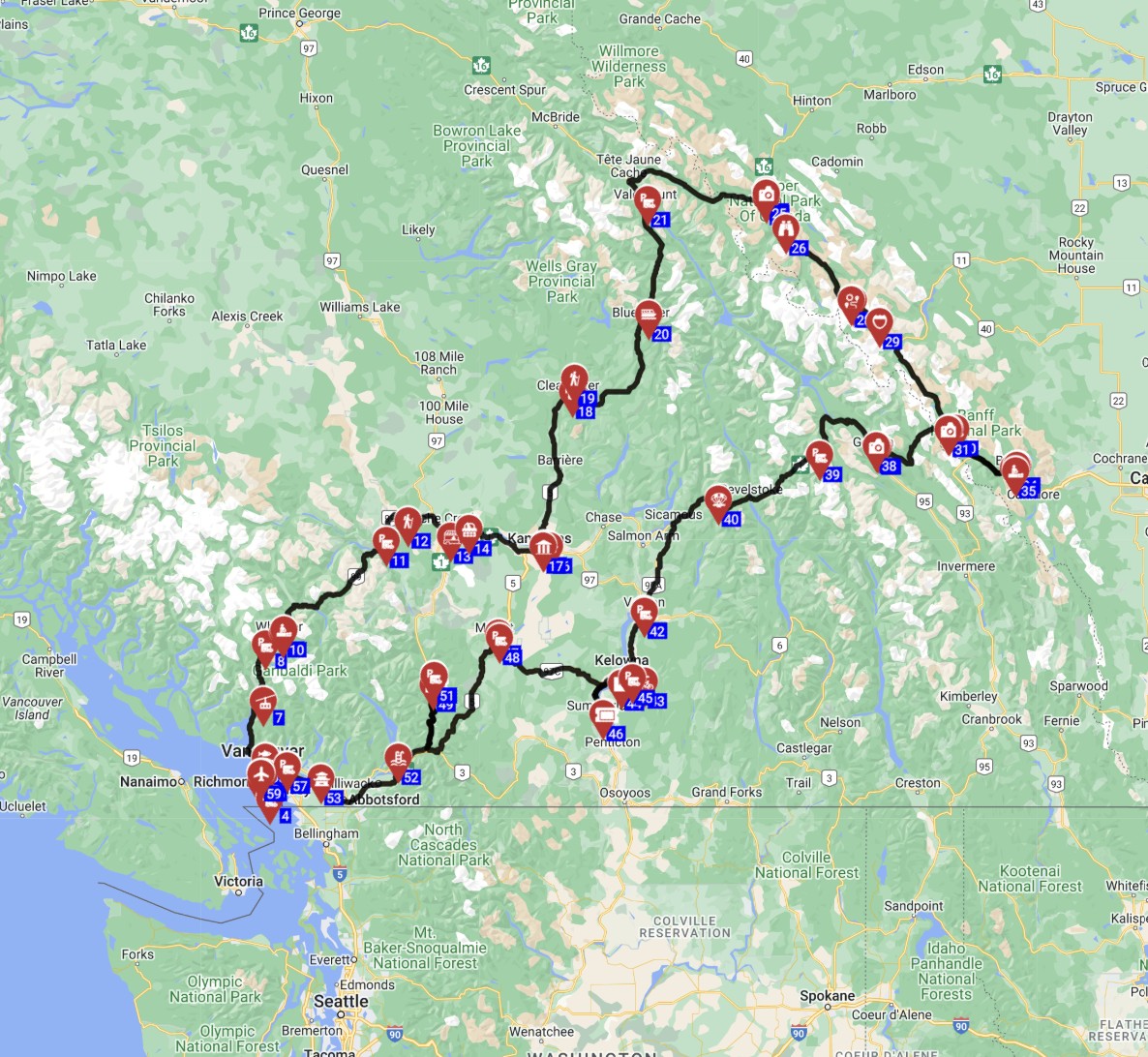
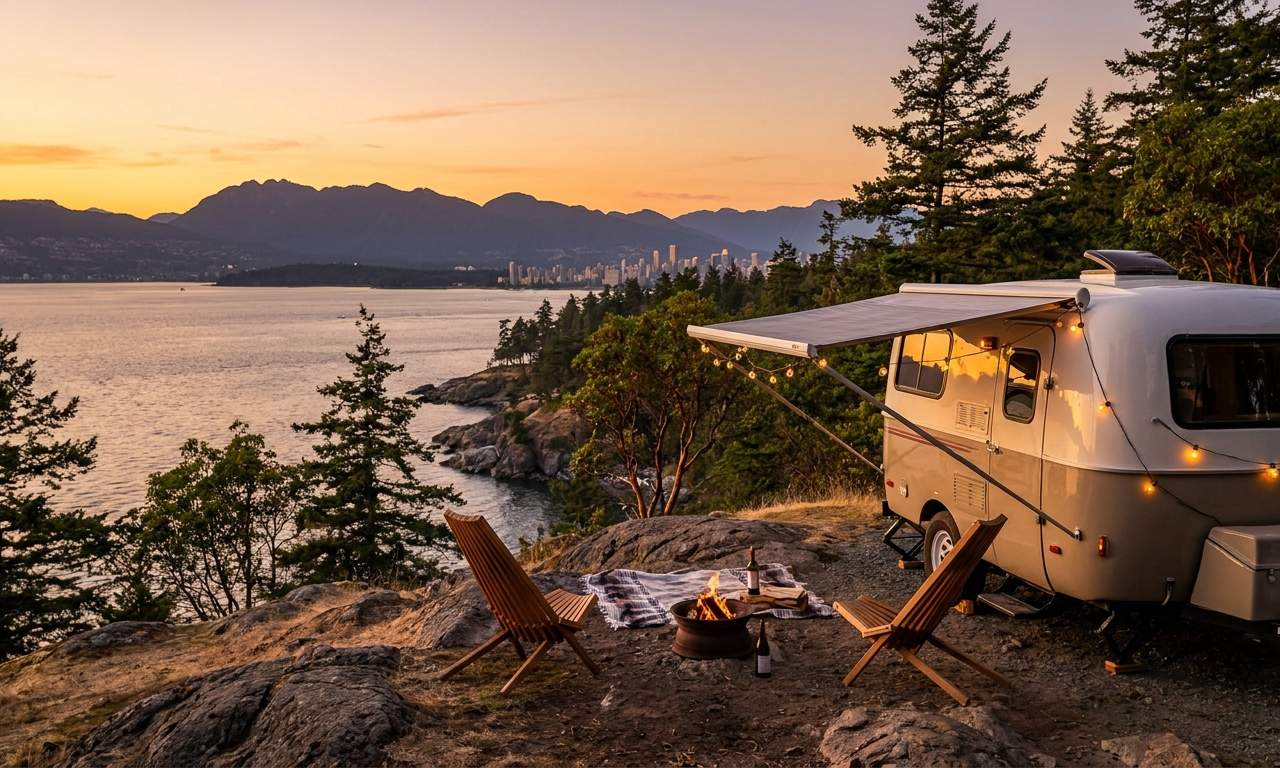
A typical one-way RV rental in Vancouver often involves picking up your vehicle in the city and traveling towards the majestic Canadian Rockies or exploring the stunning Pacific Northwest. Expect total driving distances for a focused regional one-way trip to range from 700-1500 km (430-930 miles), depending on your ultimate destination. For a truly meaningful one-way itinerary starting in Vancouver, a minimum of 7 days is recommended, though 10-14 days will allow for a more relaxed pace and deeper exploration of the region. The best season for an unforgettable RV adventure from Vancouver is generally from late Spring to early Fall (May through October), offering the most optimal weather conditions for driving and enjoying the abundance of outdoor activities available.
7-Day Classic Route in Vancouver
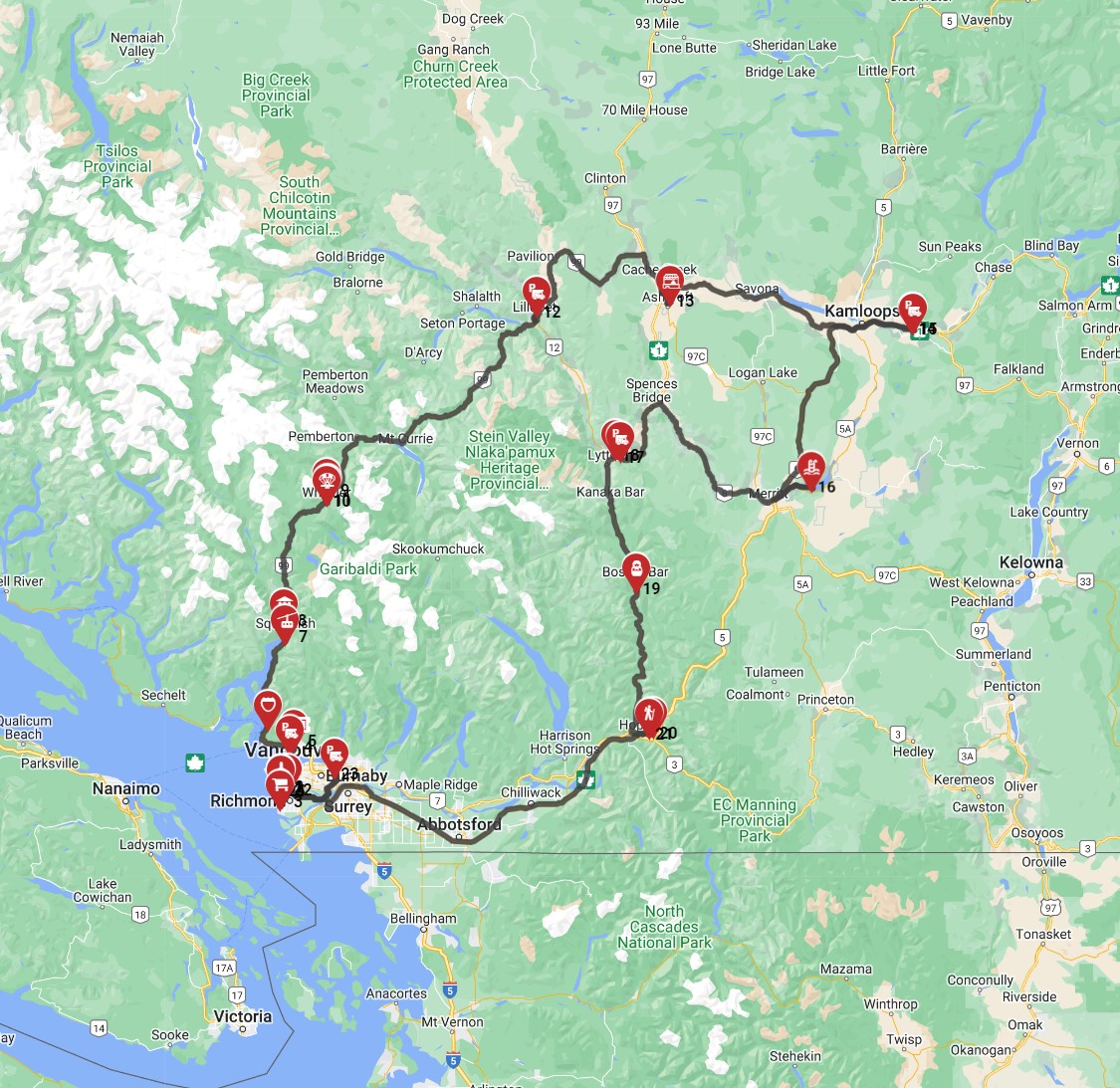
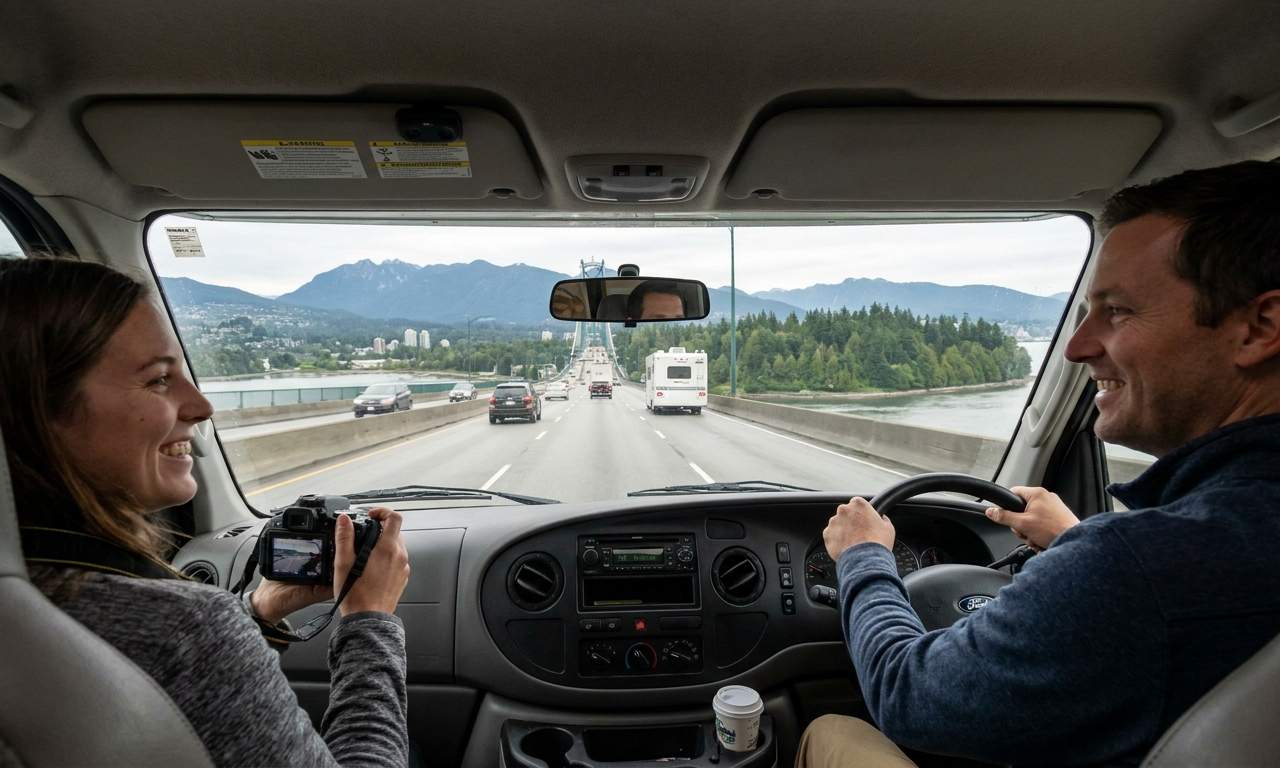
Embark on a classic 7-day one-way RV journey from Vancouver, designed to showcase the best of the coastal and mountain scenery:
- Day 1: Vancouver City Exploration (0 km): Begin by immersing yourself in Vancouver's vibrant city life. Discover the vast beauty of Stanley Park, wander through the historic, cobblestoned streets of Gastown, and savor the local flavors at Granville Island Market. For your first night, consider a comfortable stay at Burnaby Cariboo RV Park or another urban-accessible campground that welcomes RVs.
- Day 2: Vancouver to Squamish (70 km): Drive north along the breathtaking Sea-to-Sky Highway. Key highlights include a ride on the Sea to Sky Gondola for panoramic views and a visit to the majestic Shannon Falls. Settle in for the night at Squamish Riverside Campsite.
- Day 3: Squamish to Whistler (60 km): Continue your scenic journey to the world-renowned mountain resort town of Whistler. Explore Whistler Village, relax by Lost Lake, and perhaps experience the Peak 2 Peak Gondola for unparalleled alpine vistas. Your overnight stop will be at Whistler RV Park & Campground.
- Day 4: Whistler to Pemberton (30 km) & Joffre Lakes Day Trip (60 km return): Head further north to the charming village of Pemberton. Dedicate your day to hiking to the stunning, turquoise Joffre Lakes, a truly magical natural wonder. Overnight at Nairn Falls Provincial Park Campground, conveniently located near Pemberton.
- Day 5: Pemberton to Sunshine Coast (Approx. 50 km drive + Ferry): Begin your journey towards the Sunshine Coast. Drive to Horseshoe Bay and catch a BC Ferries sailing to Langdale. Once on the coast, explore the quaint town of Gibsons. Your accommodation for the night will be at Porpoise Bay Provincial Park in Sechelt.
- Day 6: Sunshine Coast Exploration & Return Prep (Approx. 40 km): Spend your day exploring Sechelt, browsing local artisan shops, and enjoying the coastal atmosphere. Begin preparing for your return journey by heading back towards the ferry terminal. Overnight at Golden Ears Provincial Park, located near Maple Ridge for a relaxed final day.
- Day 7: Golden Ears to Vancouver Drop-off (50 km): Enjoy one last scenic stretch of highway as you make your way back to Vancouver. Drop off your rented RV, concluding your memorable one-way adventure.
14-Day Extended Journey in Vancouver
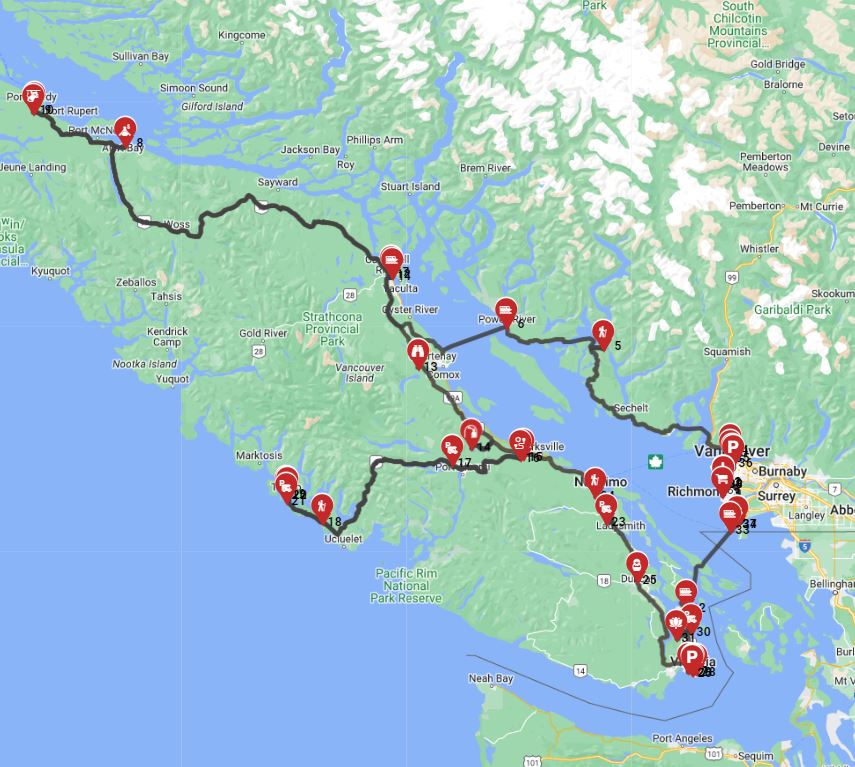
For a more in-depth exploration, consider this 14-day itinerary that includes Vancouver Island:
- Days 1-3: Vancouver City & North Shore (0-70 km per day): Dedicate these days to a thorough exploration of Vancouver. Visit Stanley Park, Gastown, and Granville Island Market. Include a day trip to the North Shore's attractions like Capilano Suspension Bridge Park and Grouse Mountain. Stay at urban campgrounds like Burnaby Cariboo RV Park before moving to Golden Ears Provincial Park.
- Day 4: Vancouver to Victoria (Ferry + 30 km): Take a BC Ferries sailing from Tsawwassen to Swartz Bay on Vancouver Island. Upon arrival, visit the world-renowned Butchart Gardens. Overnight at Goldstream Provincial Park.
- Day 5: Victoria & Sooke (40 km): Explore Victoria's Inner Harbour and the Royal BC Museum, then drive along the picturesque coastline to Sooke. Don't miss the natural beauty of Sooke Potholes. Stay at French Beach Provincial Park.
- Day 6: Sooke to Parksville/Qualicum Beach (140 km): Travel north through the scenic Cowichan Valley. Be sure to stop and marvel at Cathedral Grove, home to ancient Douglas Fir trees. Overnight at Rathtrevor Beach Provincial Park.
- Day 7: Parksville to Port Alberni (50 km): Head inland towards Port Alberni. Visit Coombs Old Country Market (famous for its goats on the roof!) and explore Stamp Falls Provincial Park. Overnight at Stamp Falls Provincial Park.
- Day 8: Port Alberni to Tofino (130 km): Brace yourself for a stunning, winding drive through old-growth forests to the wild west coast. Highlights include the Pacific Rim National Park Reserve and the expansive Long Beach. Reservations at Green Point Campground are essential.
- Day 9: Tofino Exploration (0 km): Immerse yourself in Tofino's natural wonders. Enjoy surfing, whale watching tours, exploring the wild coastline, or simply relaxing on the beach. Stay another night at Green Point Campground.
- Day 10: Tofino to Comox Valley (160 km): Begin your journey back, heading north on the island. Consider a scenic detour through Strathcona Provincial Park for more breathtaking mountain and wilderness views. Overnight at Miracle Beach Provincial Park.
- Day 11: Comox Valley to Powell River (Ferry + 10 km): Take a BC Ferries sailing from Little River (Comox) to Powell River on the Sunshine Coast. Explore the historic Townsite. Your overnight spot will be Saltery Bay Provincial Park.
- Day 12: Powell River to Egmont & Skookumchuck Narrows (50 km): Continue south along the Sunshine Coast. Experience the power of nature at Skookumchuck Narrows, where you can witness impressive tidal rapids. Stay at a campground in the Earls Cove or Egmont area.
- Day 13: Egmont to Squamish Area (Approx. 60 km drive + Ferry): Catch the BC Ferries sailing from Earls Cove back to Horseshoe Bay, then drive to a campground near Squamish. Enjoy a final night amidst nature at Alice Lake Provincial Park.
- Day 14: Squamish Area to Vancouver Drop-off (70 km): Savor one last scenic drive along the Sea-to-Sky Highway before returning your RV in Vancouver, concluding your extensive one-way adventure.
Recommended RVPlan Trip for Vancouver
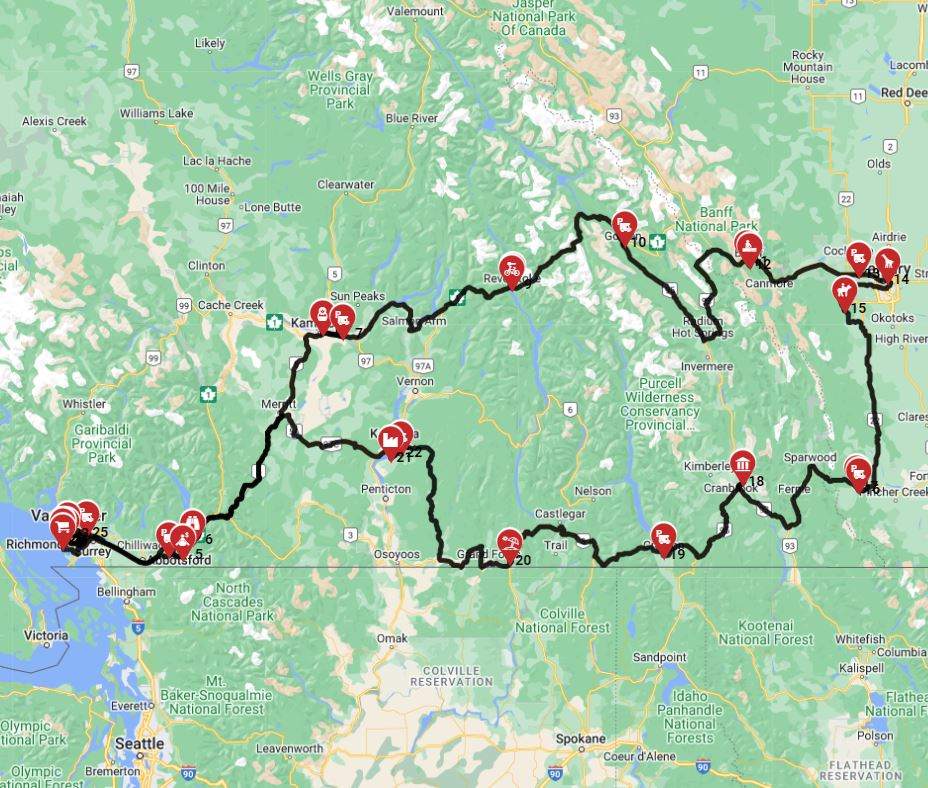
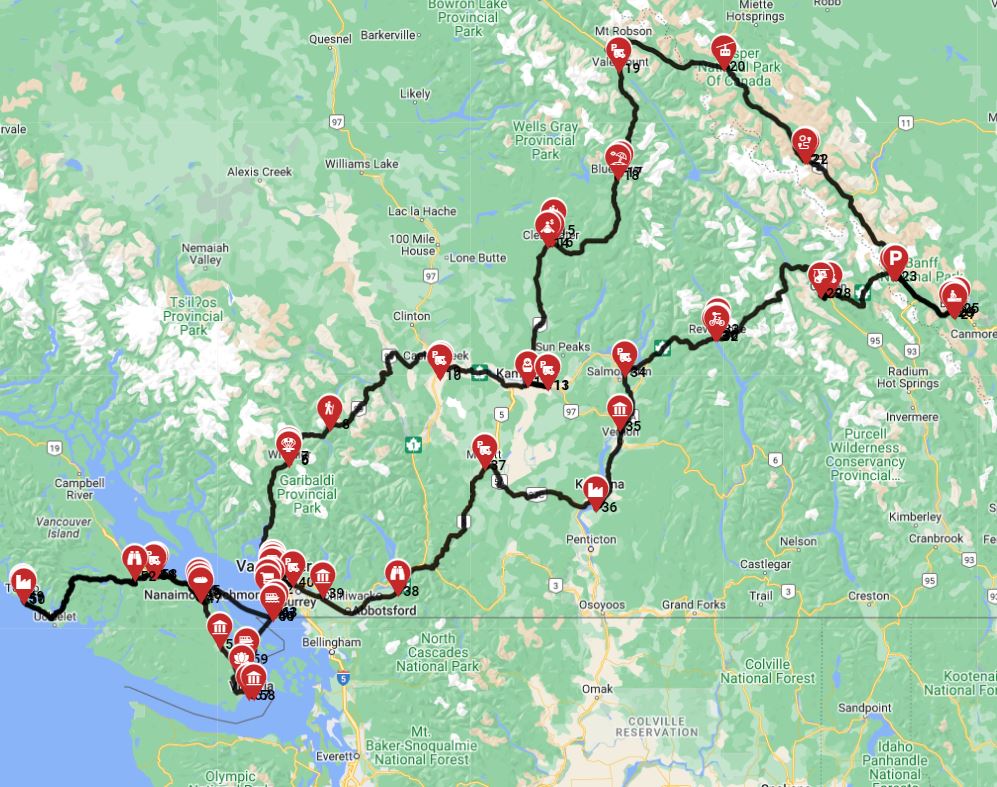
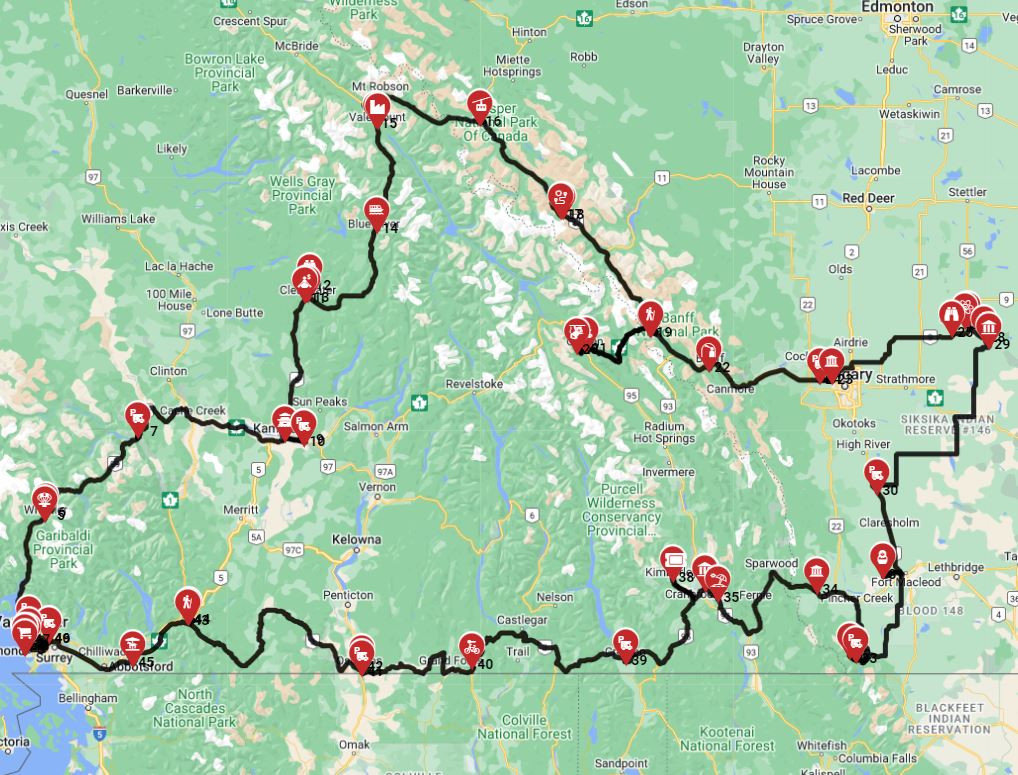
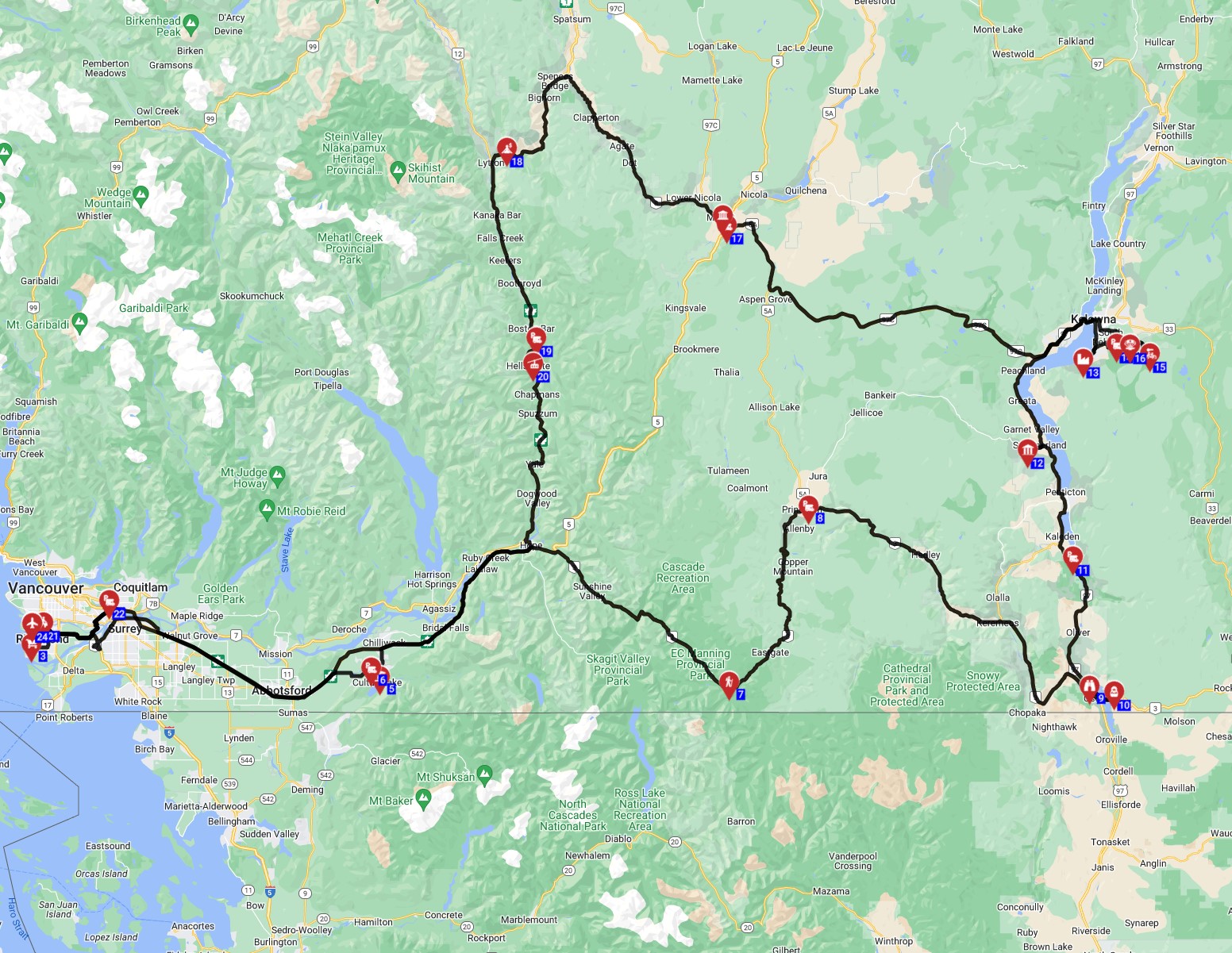
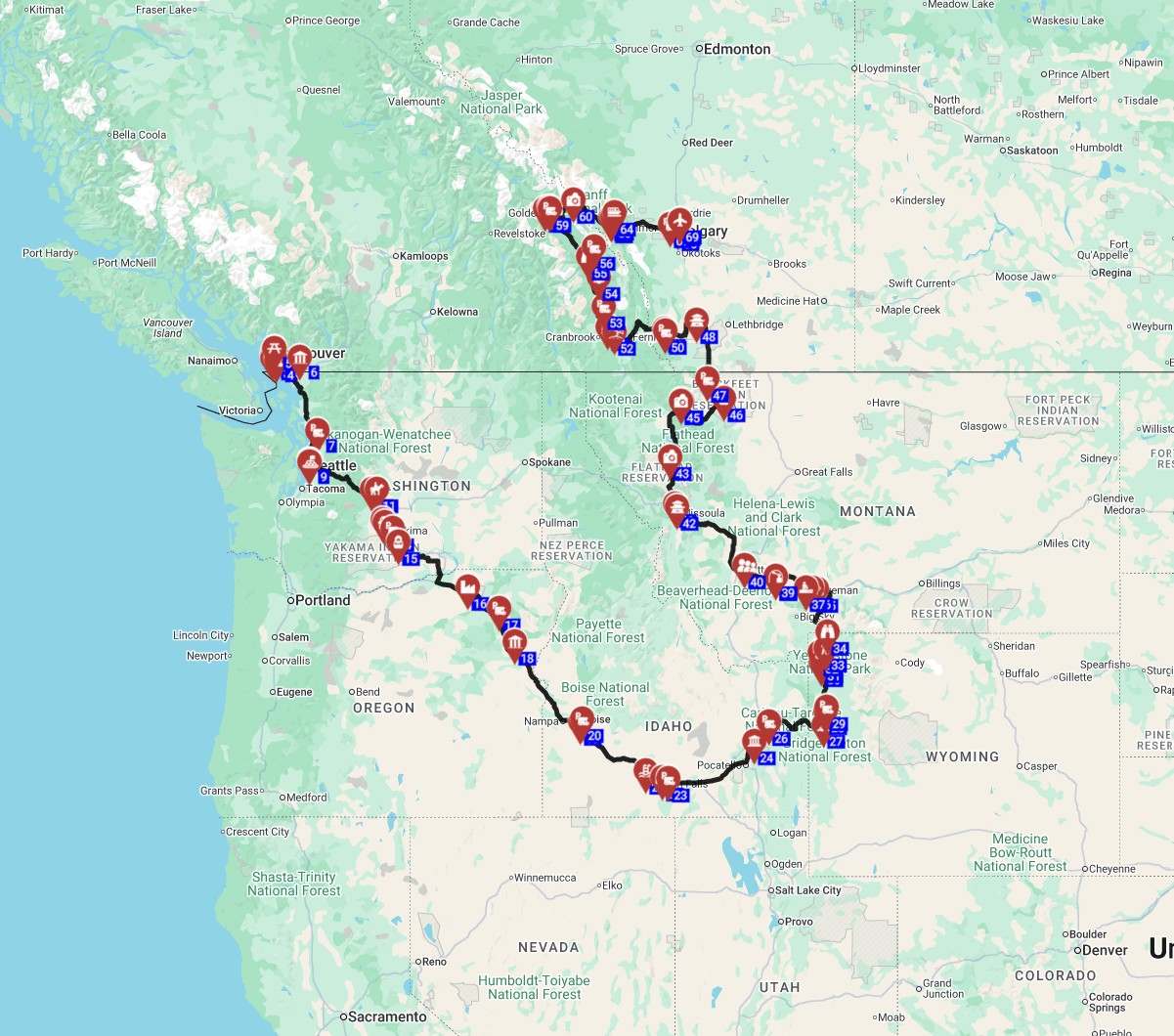
For an epic one-way RV adventure that brings you to Vancouver, consider the expertly crafted itineraries available through RVPlan. For instance, the "
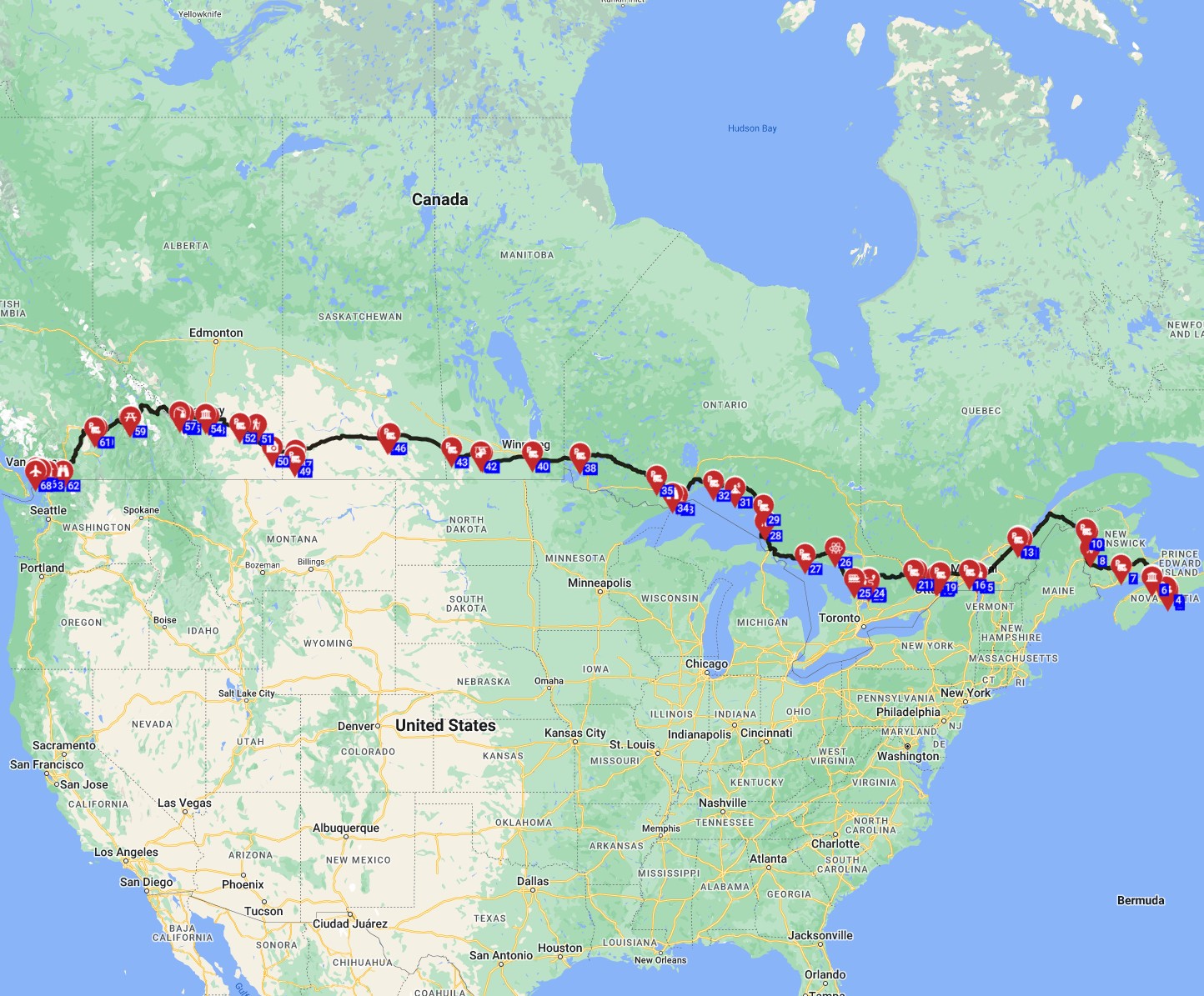
This extensive 32-day journey covers a remarkable 7,652.8 kilometers, showcasing the vast and diverse landscapes of Canada from the Atlantic to the Pacific. While this specific route concludes in Vancouver, RVPlan also features numerous other one-way RV options that can start from Vancouver and explore other stunning regions like the Canadian Rockies or the Pacific Northwest. Discover the full itinerary and other customizable one-sips by visiting the official RVPlan trip page.
Must-See Stops Along the Way (Avi Bandana Picks)
Avi Bandana, our founder and a seasoned RV traveler, has hand-picked some unique experiences that truly capture the essence of the region:
- Fort Langley National Historic Site (Traditional Visit): Just a short drive from Vancouver, Avi recommends exploring this remarkably preserved 19th-century fur trading post. It offers a fascinating glimpse into British Columbia's colonial past and the compelling stories of the Hudson's Bay Company, providing a tangible connection to history.
- Granville Island Public Market (Traditional Market): This vibrant hub is a must-visit for any foodie or culture enthusiast. Discover an incredible array of local produce, artisanal foods, and unique crafts, making it a perfect spot to experience Vancouver's diverse culinary scene and lively community spirit.
- Gastown (Traditional Visit): As Vancouver's iconic historic district, Gastown is perfect for a leisurely stroll. Admire the beautiful Victorian architecture, wander along the charming cobblestone streets, and be sure to see the famous Steam Clock. You'll find numerous traditional restaurants and unique shops to explore.
- Local Craft Breweries or Wineries (Local Industry): Vancouver and its surrounding areas, including the picturesque Fraser Valley, boast a thriving craft beverage scene. Avi suggests visiting a local brewery or winery for a tasting and to learn about the brewing or winemaking process, offering a taste of the region's growing local industry.
Daily Driving Distances & Drive Times in Vancouver
To truly savor your RV adventure, Avi Bandana recommends a relaxed pace, suggesting a maximum of 100 miles or approximately 150 km per day on average. This mindful approach ensures you have ample time for sightseeing, spontaneous roadside discoveries, and simply enjoying the journey itself. Embracing slow travel not only prevents driver fatigue but also offers more opportunities to immerse yourself in the stunning natural beauty and rich local culture of British Columbia.
For example, here are some estimated drive times for common routes near Vancouver:
- Vancouver to Whistler: Approximately 1.5 to 2 hours (120 km / 75 miles).
- Vancouver to Harrison Hot Springs: Around 1.5 to 2 hours (130 km / 80 miles).
- Vancouver to Victoria (via BC Ferries from Tsawwassen to Swartz Bay): Expect a total travel time of about 3.5 to 4 hours, which includes time for ferry boarding and the 1.5-hour scenic sailing.
Best RV Class for This Itinerary — Couple & Family Picks
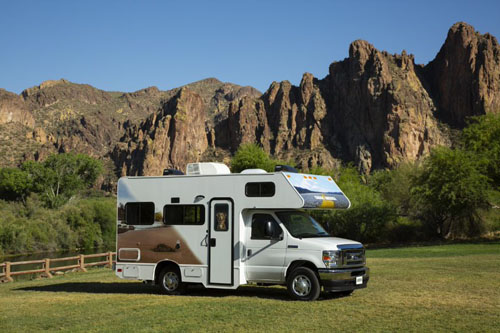
Choosing the right RV class is key to a comfortable journey. For couples, we recommend the nimble Class B camper van. These vehicles typically average 5.8 meters in length, making them exceptionally easy to maneuver through urban areas and compact enough to fit into most provincial park campsites. They offer an average of 3.2 sleeping places and a functional, cozy living space perfect for two, with ample room for gear.
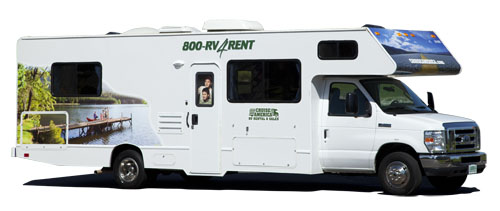
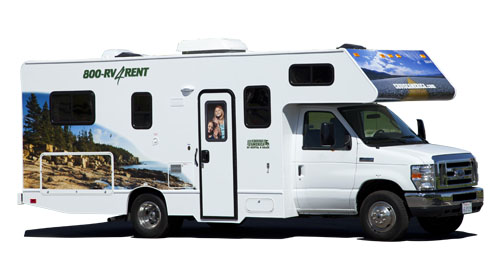
For families, the Class C motorhome, often referred to as an 'Alcove' model, is an excellent choice. These vehicles typically average 7.5 meters in length and provide more spacious accommodations, including an average of 5.8 sleeping places. They offer plenty of room for families or groups, ensuring comfort on longer journeys with a suitable load capacity for all your essentials. To further simplify your planning, consider Bandana's "Rent & Plan" service, which seamlessly combines your RV rental with a professionally crafted itinerary, giving you full access to our expert trip-planning software.
Can you drive an RV one-way?
Yes, one-way RV rentals are readily available and a very popular choice, particularly for popular routes between major cities or specific tourist regions like Vancouver to the Canadian Rockies. This flexible rental option allows travelers to conveniently pick up their RV in one location and drop it off at a different depot, effectively eliminating the need to backtrack and maximizing your exploration time.
One-way rentals are ideal for exploring linear routes, experiencing diverse landscapes without repeating scenery, and making the most of your travel time. It's important to note that one-way rentals often come with a surcharge or 'one-way fee' to cover the cost of relocating the vehicle to its original depot. Be sure to factor this additional cost into your overall budget when comparing rental prices. On the routes offered through RV PLANET routes, you can itemize and track every expense along the way for easy budgeting.
How to find RV friendly routes?
Identifying RV-friendly routes involves checking for potential challenges like height restrictions on bridges, steep grades, and overall road conditions suitable for larger vehicles. This information is readily available through specialized tools and reliable resources.
Utilize dedicated RV GPS systems, such as those from Garmin RV, or navigation apps like Allstays or CoPilot RV. These tools are specifically designed to factor in your RV's dimensions and weight, helping you avoid unsuitable roads, low bridges, or excessively steep inclines. Always consult provincial Department of Transportation websites, such as DriveBC for British Columbia, which provide up-to-date information on road conditions, ongoing construction, and any potential closures. Additionally, engaging with online forums and blogs from fellow RVers can provide invaluable first-hand accounts and recommendations for specific routes. As a safety measure, it's always wise to have a physical map as a backup.
What is the 4 4 4 rule for RVing?
The "4-4-4 rule" is a popular guideline among RV travelers, suggesting a balanced approach to daily travel. It recommends driving no more than 4 hours, covering no more than 400 kilometers (approximately 250 miles), and aiming to stop for the day by 4 PM. This structured guideline is designed to prevent driver fatigue, making your RV journey safer and more enjoyable by breaking up long travel days.
Adhering to the 4-4-4 rule allows you sufficient daylight hours to arrive at your chosen campground, comfortably set up your RV, and still have time to explore your immediate surroundings before dusk. By avoiding the rush, you reduce stress and open yourself up to more opportunities for spontaneous roadside attractions or simply enjoying longer, more relaxed breaks.
What is the 3-3-3 rule for RV travel?
The "3-3-3 rule" is another well-loved guideline for RV travel, recommending driving no more than 300 miles (approximately 480 km) per day, stopping by 3 PM, and staying at each location for at least 3 nights. This variation emphasizes an even slower, more deliberate pace, encouraging longer stays at destinations to truly immerse yourself in the area rather than constantly moving from place to place.
By settling in for three nights, you minimize the repetitive tasks of packing up and setting up camp, freeing up more time for genuine relaxation and in-depth local exploration. This rule is particularly beneficial for families with young children or anyone prioritizing a truly leisurely and stress-free RV journey, allowing you to truly savor each stop.
What is the 2 2 2 rule for RV travel?
The "2-2-2 rule" for RV travel is the most relaxed guideline, advising drivers to cover no more than 200 miles (approximately 320 km) per day, stop by 2 PM, and stay at least 2 nights at each campsite. This approach promotes the slowest and most deliberate pace among common RV travel guidelines.
It's an ideal strategy for first-time RVers, families with very young children, or anyone who prioritizes a completely stress-free journey above all else. Arriving by 2 PM ensures you have a great selection of available campsites (if not pre-booked) and plenty of time to set up camp comfortably, allowing for immediate enjoyment of the campground's amenities or the local area. Staying for at least two nights at each stop provides a relaxed rhythm, reducing the feeling of constantly being on the move and significantly enhancing the overall vacation experience.
What is the rule of 3 with an RV?
While there isn't one single, universally agreed-upon "rule of 3" specifically for RVs, the term often refers to variations of travel pace guidelines, such as the "3-3-3 rule" or generally encourages balancing driving time, stopping points, and exploration.
Other common interpretations of a "rule of 3" could relate to safety checks (e.g., checking three key items before driving off), basic maintenance (e.g., monitoring three essential fluid levels), or even planning strategies (e.g., ensuring you have at least three days of supplies). However, the most common association relates to travel pacing, promoting a slower, more deliberate approach to the journey itself, rather than solely focusing on reaching the destination.
Ultimately, adopting a "rule of 3" or a similar structured approach can help ensure a more comfortable, safer, and less rushed RV experience, allowing you to truly savor every moment of your adventure.
What is the number one tourist attraction in Vancouver?
Stanley Park is consistently regarded as Vancouver's premier tourist attraction, drawing visitors with its expansive green spaces, scenic seawall paths perfect for cycling, and a wide array of family-friendly activities.
This magnificent 400-hectare natural rainforest park offers breathtaking panoramic views of the city skyline, surrounding mountains, and the sparkling ocean. It's also home to popular spots like the Vancouver Aquarium and the iconic totem poles. For RVers, navigating and parking large vehicles requires a bit of planning; while RVs cannot access all areas of the park's core, ample paid parking is available in designated lots around the park's perimeter, such as near Brockton Point or Ferguson Point. Alternatively, utilizing public transit options from nearby RV parks is a convenient way to reach Stanley Park without the added stress of urban parking with your motorhome.
What should you not miss in Vancouver?
When visiting Vancouver by RV, certain experiences are simply unmissable, offering a true taste of the city's unique charm and attractions. Key highlights include exploring the natural oasis of Stanley Park, wandering through the historic and atmospheric Gastown, and indulging in the culinary delights at Granville Island Market.
Stanley Park: Dedicate at least half a day, if not a full day, to cycling the famous Seawall or exploring its numerous forest trails. Remember that RV parking is available in designated lots outside the park's central areas, and using local transit or ride-sharing services can easily transport you to key entry points.
Gastown: Take time to stroll through its charming cobblestone streets, admire the well-preserved Victorian architecture, and experience the novelty of the famous Steam Clock. Parking an RV directly within Gastown can be challenging, so consider parking at an urban RV park and using public transit or a taxi for easy access.
Granville Island Market: This is a paradise for food lovers, offering an incredible array of fresh produce, gourmet foods, and unique artisan crafts. Large vehicle parking is limited here as well, making transit from a nearby RV park often the most practical approach.
Beyond these, don't miss the Museum of Anthropology at UBC for its world-renowned First Nations art collection. For a dose of adventure, the Capilano Suspension Bridge Park offers thrilling experiences, but always check RV parking availability in advance.
Can I take my RV to Vancouver Island?
Yes, you absolutely can take your RV to Vancouver Island via BC Ferries. However, it's crucial to book your ferry crossing in advance, especially during peak season and for larger vehicles, as space is limited.
BC Ferries operates frequent sailings from the mainland's Tsawwassen and Horseshoe Bay terminals to Vancouver Island's Swartz Bay (for Victoria) and Departure Bay (for Nanaimo) terminals. Booking your ferry reservation online well in advance is highly recommended to secure your spot and often results in better pricing, particularly for RVs where fares are determined by length and height. Ensure you arrive at the terminal at least 30-60 minutes prior to your booked sailing time, especially with an RV, to allow sufficient time for check-in and vehicle staging. The ferry journey itself is a scenic delight, offering stunning views of the Gulf Islands and surrounding marine landscapes.
Is Vancouver fun for solo travel?
Vancouver is exceptionally fun and safe for solo travelers, offering a wide array of activities, excellent public transportation, and a welcoming atmosphere that makes independent exploration a breeze.
Solo RVers will particularly appreciate the city's stunning natural beauty, which provides numerous opportunities for safe and memorable hiking, biking, and kayaking adventures in incredible environments like Stanley Park or the North Shore mountains. The city's diverse neighborhoods, from the historic charm of Gastown to the lively atmosphere of Granville Island, are easily navigable by foot or public transit, allowing solo travelers to fully immerse themselves in the local culture at their own pace. For accommodation, many provincial and private campgrounds near Vancouver are known to be solo-friendly, offering a sense of community while still providing privacy. When exploring the city itself, utilizing secure RV parking combined with efficient public transit is often the most convenient strategy.
What You Shouldn't Miss
- Explore the Capilano Suspension Bridge Park: Experience the thrill of walking amongst the treetops on the suspension bridge and the Treetops Adventure. Plan for RV parking in advance.
- Hike the Grouse Grind: For the adventurous, this steep but rewarding hike up Grouse Mountain offers spectacular views over Vancouver.
- Visit the Museum of Anthropology at UBC: Discover an unparalleled collection of world-renowned First Nations art and cultural artifacts.
- Cycle the Stanley Park Seawall: Rent a bike and enjoy a leisurely ride along the 9km seawall, offering iconic views of the city, mountains, and ocean.
- Wander through Granville Island Market: Indulge your senses with local delicacies, artisan crafts, and street performers in this vibrant public market.
- Drive the Sea-to-Sky Highway: This scenic route offers unparalleled vistas as you travel towards Whistler, with opportunities to stop at viewpoints and attractions like Shannon Falls.
Final Thoughts
Renting an RV for a one-way trip from Vancouver opens up a world of possibilities, from the stunning coastal drives to the majestic mountain landscapes of British Columbia and beyond. By planning with Bandana Caravan, you ensure a transparent, stress-free booking process, allowing you to focus on the adventure ahead.
Remember to book in advance, especially if you're traveling during peak season, and consider utilizing the detailed itineraries available on RV PLANET (rvplan.net) to make your planning even smoother. Get inspired for your next trip and discover the freedom and flexibility of RV travel!
Compare Motorhome Prices for Vancouver