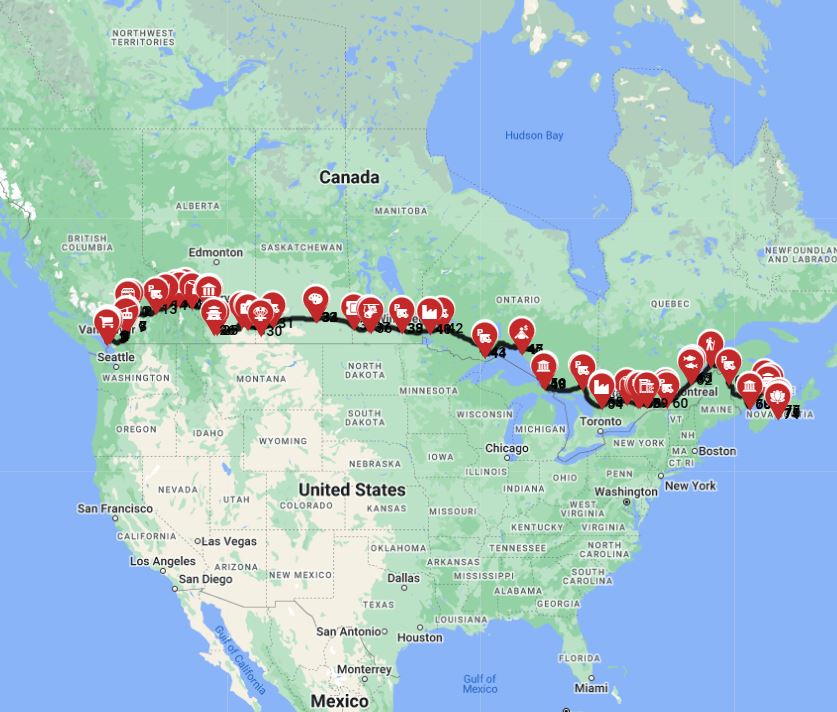
For live availability and current prices, start with our RV Rental Vancouver - Complete Guide 2026 guide.
In This Guide
- Can You Drive an RV in Vancouver? License & Age Rules
- Road Conditions & Terrain in Vancouver
- RV Size Limits, Bridges & Restricted Zones
- Fuel: Diesel vs. Petrol & Cost per 100 km
- Tolls, Vignettes & Border Rules
- Driving Tips for one way rv rental Travelers
- Recommended RV Class for Vancouver Roads
- Should I Choose a Compact Van Instead of a Large RV in Vancouver?
- Can I Park Anywhere? Free & Wild Camping Rules in Vancouver
- Can I Drive an RV Into the City Center? Heights, Tunnels & Local Signage
Can You Drive an RV in Vancouver? License & Age Rules
Most rental RVs in Vancouver can be driven with a standard Class 5 driver's license, which is equivalent to a non-commercial license in other provinces. This applies to RVs under 11,000 kg (24,250 lbs) gross vehicle weight rating, common for typical rental motorhomes. International visitors will need their valid driver's license from their home country, and if it's not in English or French, an International Driving Permit (IDP) or certified translation is recommended. While the legal driving age in British Columbia is 16, most RV rental companies in Vancouver set their minimum driver age at 21 or 25, with some larger Class A motorhomes potentially having higher age requirements. Always confirm specific license and age criteria with your chosen rental provider to ensure a smooth start to your one-way journey.
Road Conditions & Terrain in Vancouver
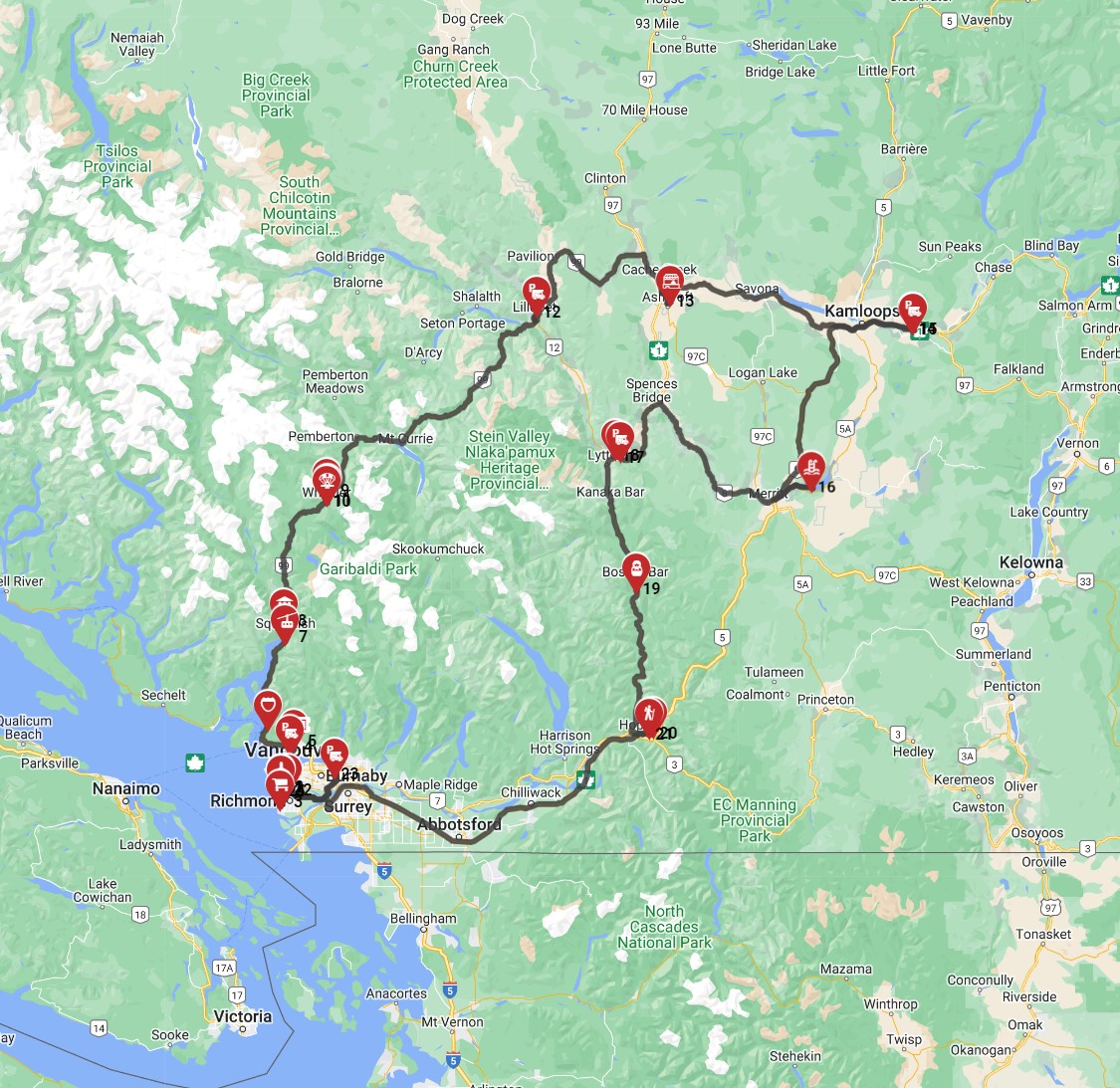
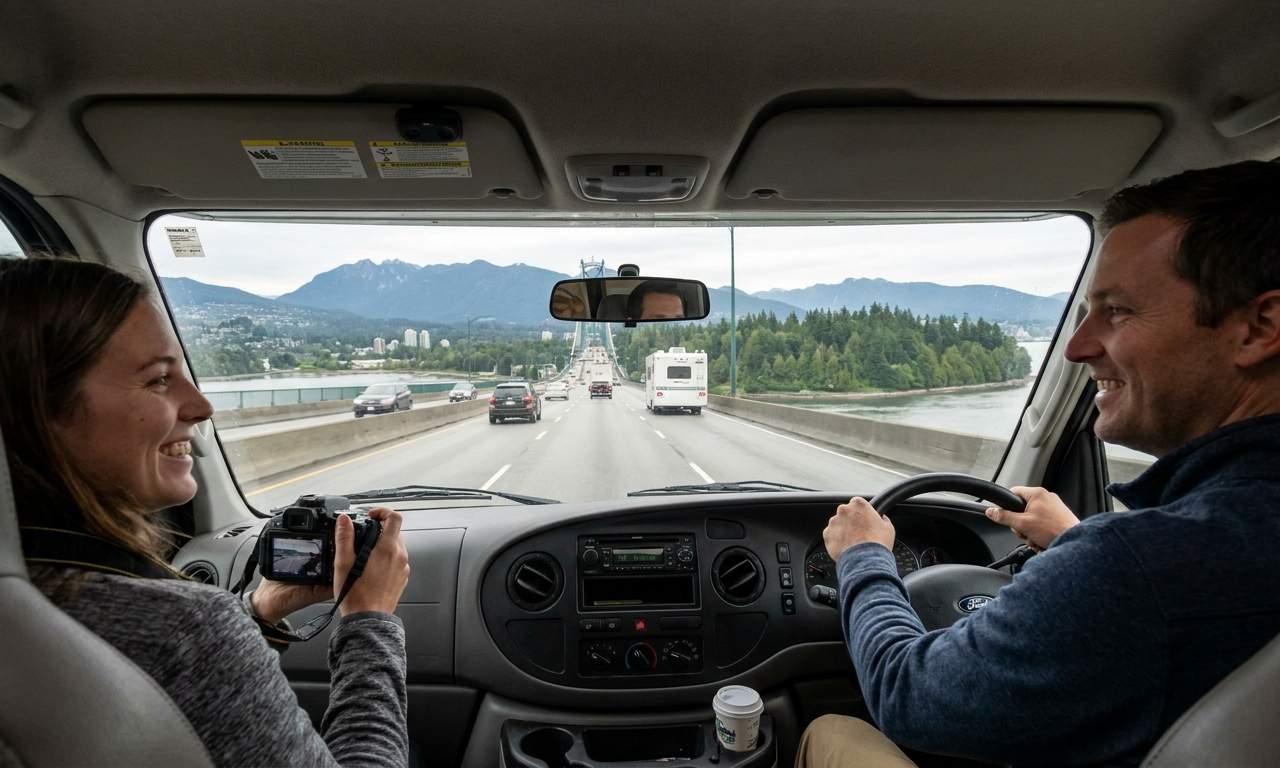
Vancouver and its surrounding areas feature generally well-maintained paved roads, but the terrain presents a significant variety. Drivers of one-way RV rentals from Vancouver can expect to traverse urban centers, scenic coastal routes like Highway 99 (the Sea-to-Sky Highway), and potentially challenging mountain passes, such as the Coquihalla Highway (Hwy 5). These mountain roads can include steep grades and sharp turns, requiring extra caution, especially during adverse weather. Driving slowly and defensively is crucial for navigating these diverse landscapes safely. Be prepared for potential wildlife encounters outside of urban areas, and always adhere to 'bear aware' practices, including proper food storage and waste management, which are critical for safety in British Columbia's wilderness.
RV Size Limits, Bridges & Restricted Zones
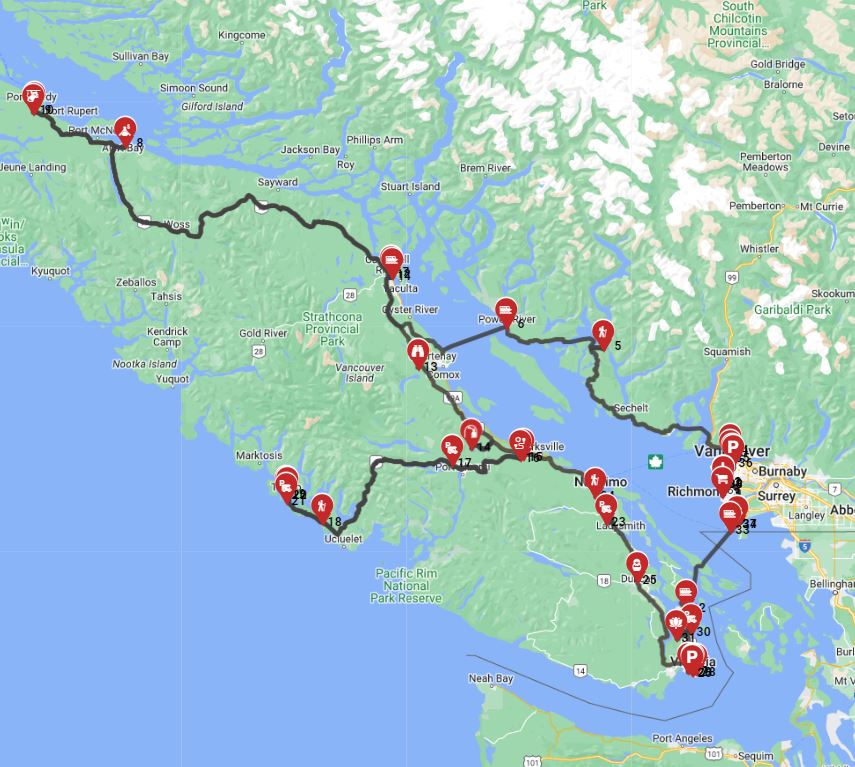
When planning your one-way RV adventure from Vancouver, be mindful of potential height, length, and weight restrictions, especially when considering underground parking garages or older city tunnels. Most standard rental RVs are well within typical height clearances of 4 to 4.5 meters (13 to 15 feet), but always check overhead signage before entering any restricted areas. For ferry travel, particularly to Vancouver Island or the Gulf Islands, RV length is a crucial factor for booking and calculating fares; advance reservations are highly recommended to secure a spot and avoid delays, especially during peak travel times. While Vancouver generally doesn't enforce widespread 'environmental zones' that restrict RV access, always be aware of local parking regulations, which may have time limits or size restrictions in certain areas.
Fuel: Diesel vs. Petrol & Cost per 100 km
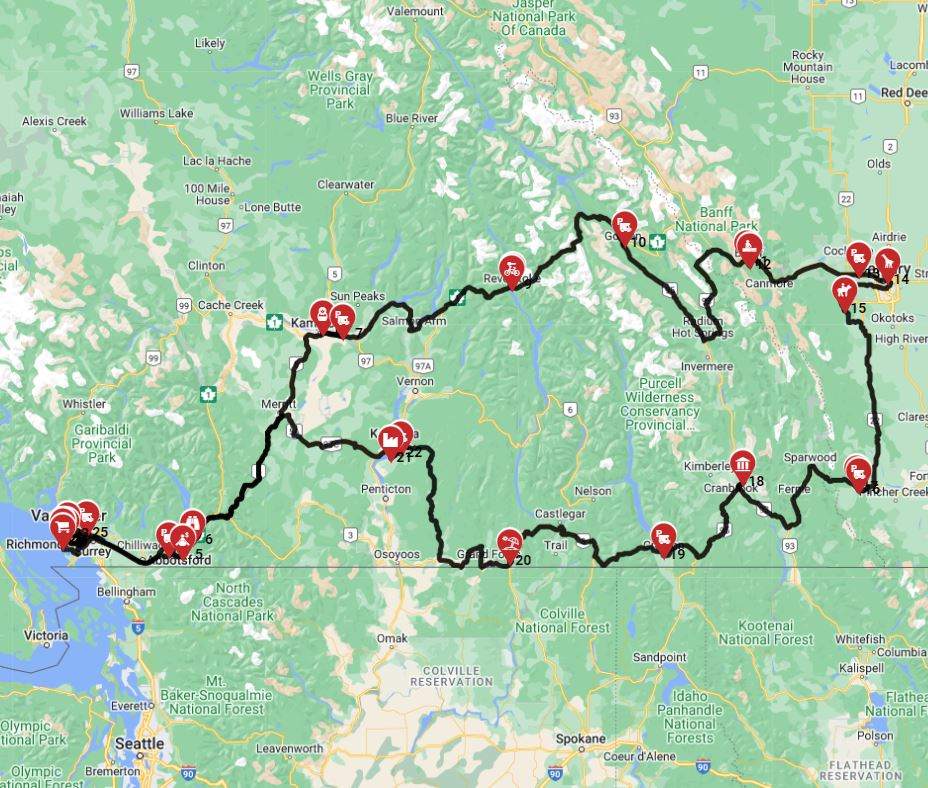
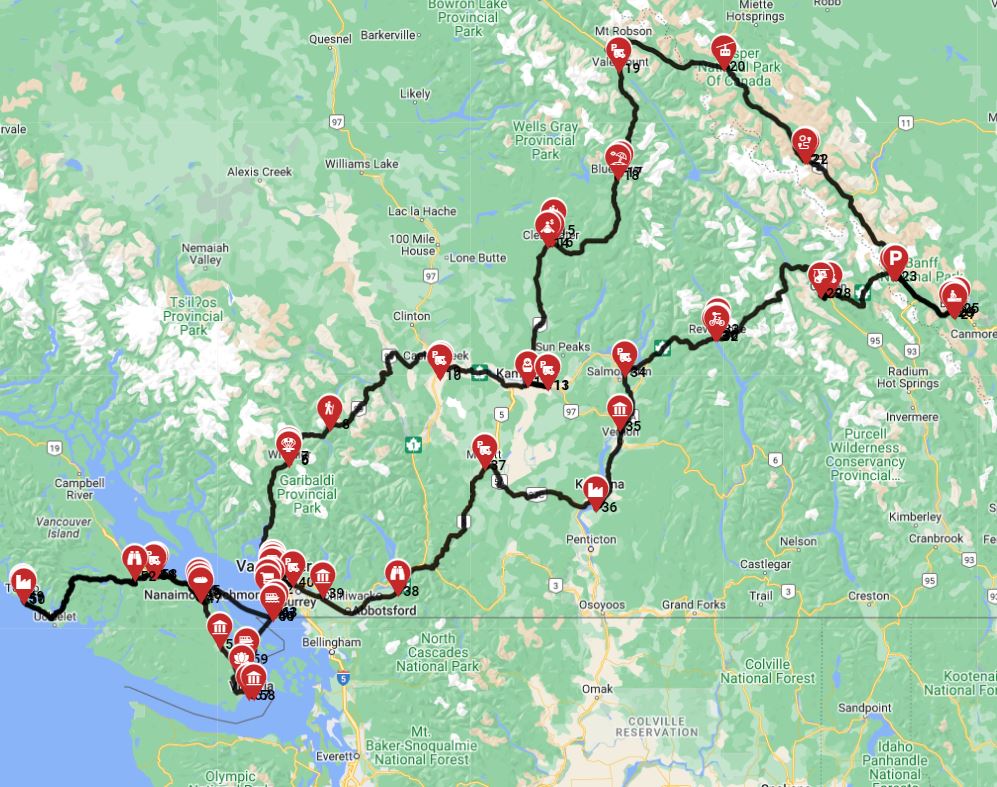
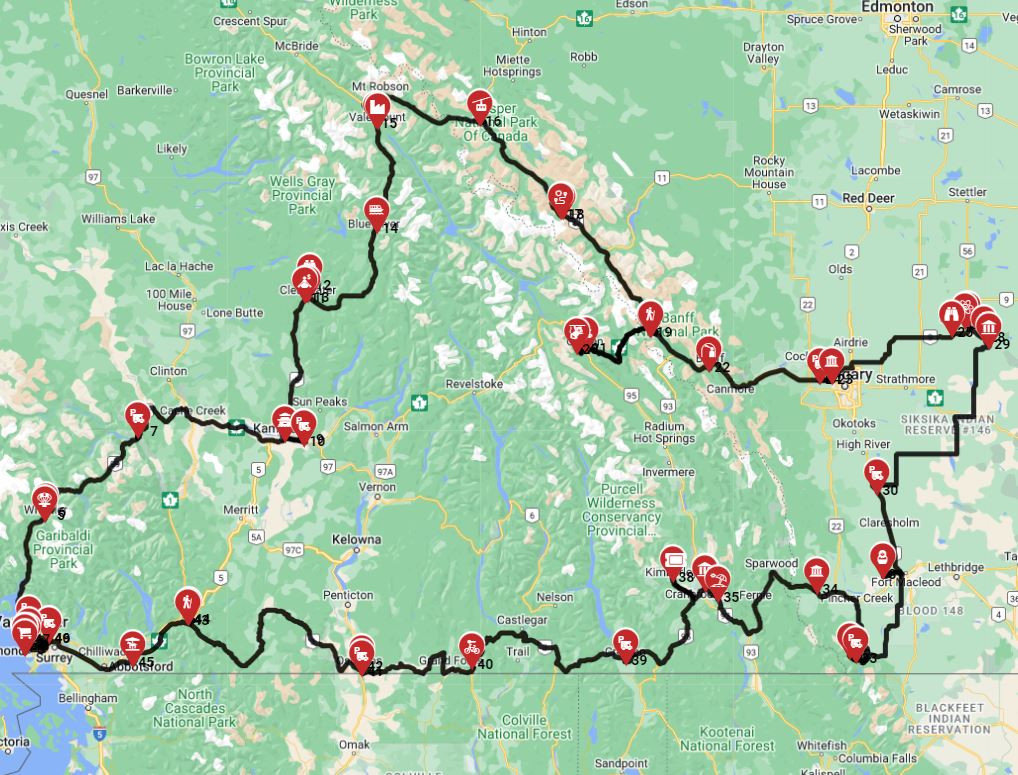
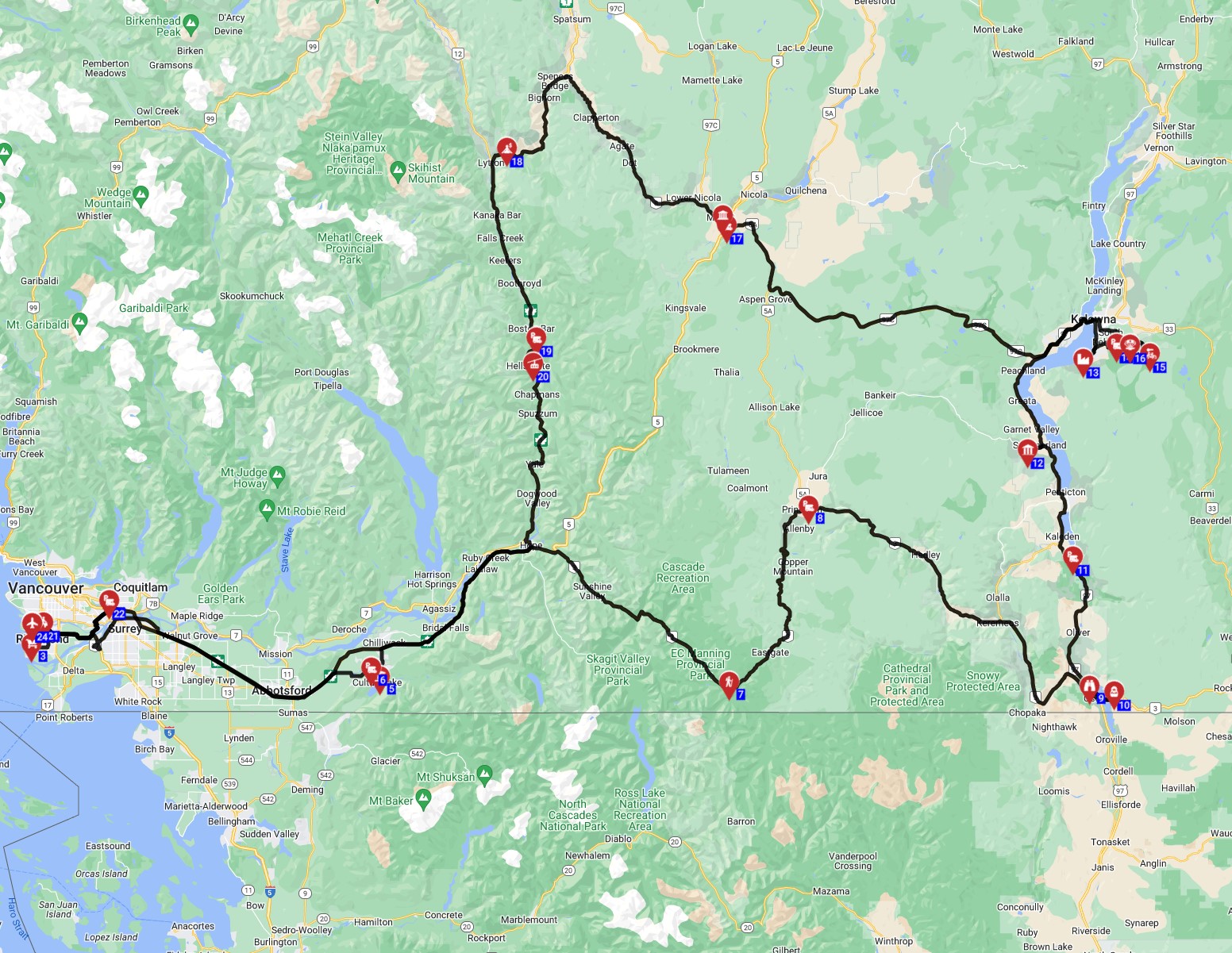
Most rental RVs in Vancouver operate on either petrol (gasoline) or diesel fuel. Diesel engines generally offer better fuel efficiency, especially for larger vehicles, though the per-liter cost can sometimes be higher. For context, Bandana's fleet data suggests Class B campervans typically consume 8-10 liters per 100 km, while larger Class C RVs might use 10-12 liters per 100 km. Both fuel types are widely available throughout Vancouver and British Columbia, though diesel pumps can be less common in very remote areas. Estimating your fuel cost is straightforward: multiply your RV's expected fuel consumption (liters/100 km) by the current average fuel price per liter in BC. On the routes offered through RV PLANET routes, you can itemize and track every expense along the way for easy budgeting.
Tolls, Vignettes & Border Rules
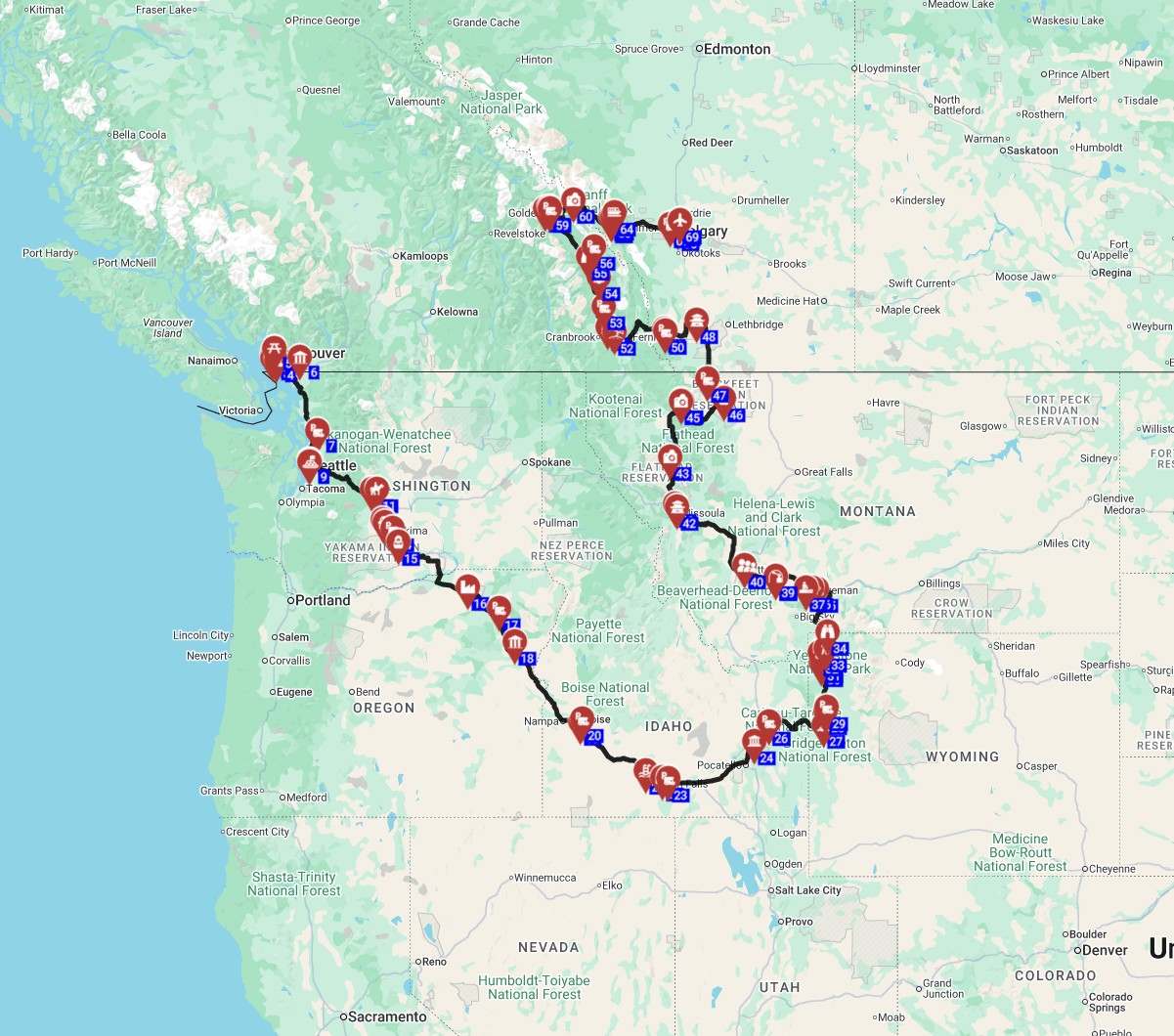
Currently, British Columbia, including the Vancouver area, has no toll roads or vignette systems for standard RV travel. While some bridges historically had tolls, these have been removed. However, if your one-way RV journey extends into the United States, be aware that tolls are common in many US states, and you will be responsible for any applicable fees. When crossing the Canada-US border, ensure all occupants have valid passports. The RV's registration and rental agreement, explicitly stating cross-border travel is permitted, should be readily accessible for customs officials.
Driving Tips for one way rv rental Travelers
Pace Yourself: For family travelers embarking on a one-way trip, planning regular stops every 2-3 hours is key to making the journey part of the adventure, not just transit. Consider the fuel consumption of your chosen RV class, as larger vehicles will naturally use more fuel. Utilize apps to identify the most cost-effective fuel stops along your route. Secure campsites well in advance, especially for popular destinations in BC, as they can book up months ahead during peak season. Download offline maps for remote areas where cell service can be sporadic, and always be conscious of your RV's dimensions (height, length, weight) to navigate unfamiliar roads, parking lots, and potential ferry crossings safely.
Wildlife Preparedness: Being 'bear aware' is crucial in British Columbia. This includes practicing proper food storage and waste disposal, particularly when camping or stopping in natural areas, to ensure safety for both you and the wildlife.
Recommended RV Class for Vancouver Roads
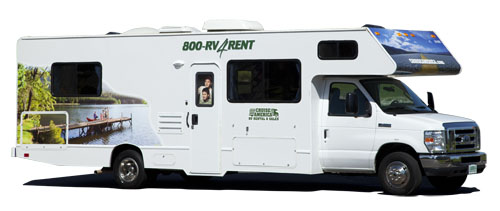
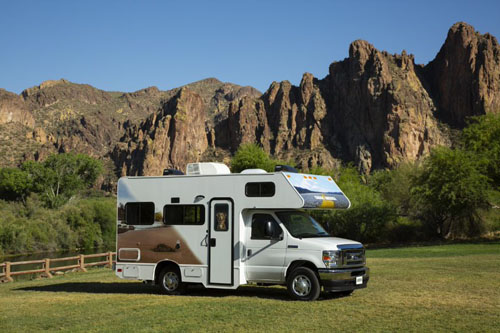
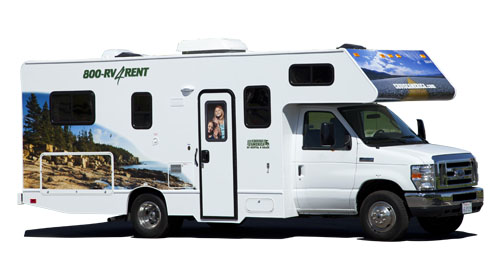
For navigating British Columbia's diverse roads, Class B camper vans and Class SI semi-integrated RVs are highly recommended for one-way rentals from Vancouver. Class B camper vans, typically around 5.8 meters (19 feet) long, offer superior agility for city driving and winding coastal roads, making them ideal for couples or small families. The Class SI semi-integrated RVs, averaging 6.9 meters (22.6 feet), provide more living space and amenities while remaining manageable on BC highways, suitable for small groups of 3-4 adults. Larger Class C alcove (approx. 7.5m/24.6ft) and Class A integrated RVs are also capable, but their increased size demands more careful planning for specific routes, ferry bookings, and urban parking.
Should I Choose a Compact Van Instead of a Large RV in Vancouver?
While a compact van, like a Class B camper van, offers superior maneuverability and easier parking in urban Vancouver, larger RVs are generally manageable on most main roads. The decision often hinges on prioritizing driving ease in all situations versus enhanced comfort and amenities for your one-way trip. If your itinerary includes frequent city center parking or navigating extremely narrow rural roads, a compact van is a strong contender. However, for those who value indoor living space, a full kitchen, a private bathroom, and ample storage for a longer journey, a larger RV (Class SI or Class C) typically provides significantly more comfort, especially during unpredictable weather. For ideas you can prep on the road, watch our RV-friendly recipes playlist on YouTube.
Can I Park Anywhere? Free & Wild Camping Rules in Vancouver
Strict rules govern free and wild camping near Vancouver and throughout most of British Columbia, making it generally not permitted within city limits or developed areas. Overnight parking in Vancouver's parks, on public streets, or in private lots without explicit permission is typically prohibited and can lead to fines or towing. The primary legal options for overnight RV stays are designated campgrounds in provincial parks, national parks, and private RV parks, which often require advance reservations, especially during peak seasons. While 'wild camping' or 'boondocking' on Crown land (public land) outside developed areas is sometimes permitted in BC, regulations are complex, require thorough research into specific zones, and generally prohibit stays longer than 14 days in one spot.
Can I Drive an RV Into the City Center? Heights, Tunnels & Local Signage
Yes, you can generally drive an RV into Vancouver's city center, as major roads are designed to accommodate larger vehicles. However, careful attention to local signage is crucial. Be mindful of height restrictions for underground parking garages, as RV-friendly options are rare, and watch for low overhead structures. While Vancouver doesn't have specific 'environmental zones' restricting RVs, some residential streets or heritage areas might have narrower passages or tighter turning radii that are best avoided with larger motorhomes. Always check for local signage regarding weight limits, turning restrictions, and any temporary road closures or construction zones.
What You Shouldn't Miss
- Drive the Sea-to-Sky Highway (BC-99): This world-renowned scenic route from Vancouver towards Whistler offers breathtaking coastal and mountain vistas, with numerous pull-offs for RV parking and photo opportunities.
- Explore Stanley Park: Vancouver's iconic urban rainforest offers ancient trees, seawall paths perfect for cycling (consider bike rentals!), and stunning views of the city and harbor, all accessible by RV.
- Visit Granville Island: A vibrant public market and cultural hub, Granville Island is easily reachable and offers a fantastic array of local food, artisan shops, and street performers.
- Take a BC Ferries trip: Experience a unique aspect of coastal BC RV travel by taking a ferry to Vancouver Island or the Gulf Islands, requiring specific booking strategies and offering spectacular ocean scenery.
- Embrace 'Bear Smart' practices: When venturing into parks or natural areas near Vancouver, adhering to strict wildlife safety regulations, especially regarding food storage and waste, is paramount for your safety and protecting the ecosystem.
Final Thoughts
Renting a one-way RV in Vancouver offers an unparalleled way to experience the diverse beauty of British Columbia. By understanding the driving regulations, choosing the right RV class for your needs, and planning ahead, you're set for an incredible adventure.
From navigating the scenic Sea-to-Sky Highway to exploring the urban oasis of Stanley Park, your rented RV will be your comfortable basecamp. For campsite reservations and route planning, remember to utilize resources like RV PLANET (rvplan.net) to ensure a seamless and enjoyable journey.
Ready to start planning your dream one-way RV trip from Vancouver? Compare your options and book with confidence!
Find Motorhome Rentals in Vancouver