In This Guide
- Can You Drive an RV in Toronto? License & Age Rules
- Road Conditions & Terrain in Toronto
- RV Size Limits, Bridges & Restricted Zones
- Fuel: Diesel vs. Petrol & Cost per 100 km
- Tolls, Vignettes & Border Rules
- Driving Tips for One Way RV Rental Travelers
- Recommended RV Class for Toronto Roads
- Should I Choose a Compact Van Instead of a Large RV in Toronto?
- Can I Park Anywhere? Free & Wild Camping Rules in Toronto
- Can I Drive an RV Into the City Center? Heights, Tunnels & Local Signage
- Do you need a license to drive an RV in Canada?
- Can you drive an RV from the US to Canada?
- What is the new RV law in Ontario?
- Can Americans RV in Canada?
- Can you drive an RV one way?
- Do they search your RV at the Canadian border?
- Can you walk around in a motorhome while driving in Canada?
- How does one-way insurance work in Ontario?
- Does Costco Canada have RV insurance?
- RV Camping and Parking Near Toronto
Embarking on a one-way RV rental adventure from Toronto offers unparalleled freedom to explore Canada's diverse landscapes, from urban charm to rugged wilderness. With Bandana RV, you're not just renting a motorhome; you're gaining a partner who understands the nuances of RV travel, ensuring full transparency with no hidden fees and 24/7 support before and after your booking. For live availability and current prices, start with our RV Rental Toronto - Complete Guide 2026 guide.
Can You Drive an RV in Toronto? License & Age Rules
A standard Class G driver's license is sufficient for driving most recreational vehicles (RVs) in Ontario, including Toronto, provided the RV's Gross Vehicle Weight Rating (GVWR) does not exceed 11,000 kg and it is not equipped with air brakes. For foreign visitors, a valid driver's license from your home country is typically accepted for up to 90 days, but an International Driving Permit (IDP) is highly recommended for translation purposes, particularly if your license is not in English or French. The minimum age for renting an RV in Toronto generally ranges from 21 to 25 years old, depending on the rental company and specific RV class, but Bandana RV partners offer rentals from 21 with no young driver surcharges. Drivers needing to operate an RV over 11,000 kg GVWR or equipped with air brakes would require a higher license class, such as a Class D or Class A with appropriate endorsements, though these are rarely necessary for vacation rental motorhomes.
Road Conditions & Terrain in Toronto
Toronto's road conditions are generally well-maintained, particularly on major highways like the 401 and arterial roads such as Yonge Street, but urban areas can feature potholes, heavy traffic, and dense navigation challenges typical of a large city. The terrain around Toronto is largely flat, making for relatively easy driving with a rented motorhome, though you may encounter gentle inclines on highways leading in and out of the city. When planning a one-way RV rental through Toronto and beyond, drivers can expect smooth highway travel for inter-city portions, but should prepare for slower speeds and increased vigilance when navigating Toronto's urban sprawl. For scenic driving outside the immediate city, routes along the Great Lakes or through conservation areas like Rouge National Urban Park offer pleasant, winding roads suitable for RVs, encouraging a slower pace to enjoy the scenery.
RV Size Limits, Bridges & Restricted Zones
While there are no broad city-wide RV size bans in Toronto, drivers of one-way RV rentals must be mindful of specific height and weight restrictions, particularly for bridges, underpasses, and multi-level parking garages. Typical height restrictions in older urban underpasses or parking garages, common around areas like the Entertainment District, can be as low as 2.1 meters (7 feet), making them unsuitable for most RVs which often exceed 3 meters (10 feet) in height. Ontario does not have environmental zones like some European cities that restrict vehicle access based on emissions, but heavy vehicle restrictions may apply on certain residential streets or historical areas. Always check posted signage carefully for weight limits on smaller bridges, though major routes are typically built to accommodate commercial vehicles, including large Class A and Class C motorhomes. Drive slowly and carefully, and you can drive almost anywhere without issues. No need to stress - just use common sense and pay attention.
Fuel: Diesel vs. Petrol & Cost per 100 km
Both diesel and petrol (gasoline) are readily available at fuel stations throughout Toronto and across Ontario, with diesel generally powering larger RVs and petrol used by smaller campervans. Based on Bandana's local fleet data for Toronto, Class SI - Semi-integrated and Class C - Alcove RVs typically consume around 25-30 Liters per 100 km, while Class TC - Truck Campers use 12–17 Liters per 100 km, and Class B - Camper Vans are the most fuel-efficient at 11–15 Liters per 100 km. The average cost per 100 km for an RV in Toronto varies significantly based on fuel type, market prices, and vehicle efficiency, so budgeting for substantial fuel expenses is crucial for a one-way rental. Some rental motorhome providers may offer fuel discount cards, which can help mitigate costs, though these perks should be confirmed at the time of booking. For comprehensive budgeting and tracking of all trip costs, including fuel, our RV PLANET routes allow you to itemize every expense along your journey. On the routes offered through RV PLANET routes, you can itemize and track every expense along the way for easy budgeting.
Tolls, Vignettes & Border Rules
In Toronto, the primary electronic toll route is Highway 407 ETR, which is entirely cashless and automatically bills vehicles via transponder or license plate recognition, so one-way RV rental drivers should be aware of this system. Ontario does not utilize a vignette system for road access; tolls are typically pay-per-use on specific highways. For cross-border travel between Canada and the US, all occupants of a rented RV must present valid passports or enhanced driver's licenses when entering or exiting, along with vehicle registration and proof of insurance. A copy of your rental agreement is also essential. Some rental motorhome RVs may include pre-purchased toll passes or transponders, simplifying travel on toll roads and potentially avoiding higher administrative fees for unbilled tolls.
Driving Tips for One Way RV Rental Travelers
Planning your route carefully, especially through urban Toronto, is crucial to minimize navigating tight turns or congested areas with a large vehicle. Remember to travel slowly, averaging a maximum of 100-150 km per day, allowing you to truly immerse yourself in the culture, food, and scenery of each destination. Budget for higher fuel consumption typical of RVs, particularly for Class C and SI models which can consume 25-30 Liters/100km, and factor this into your one-way travel costs for Toronto. Familiarize yourself with your specific rental RV's dimensions (height, length, width) before driving to confidently assess clearance for bridges, tunnels, and parking structures. Taking frequent breaks, especially if traveling with family, helps prevent driver fatigue and makes the journey more enjoyable. Practice parking and backing up in an open area before navigating busy campgrounds or city parking spots, as RVs handle differently than standard vehicles.
Recommended RV Class for Toronto Roads
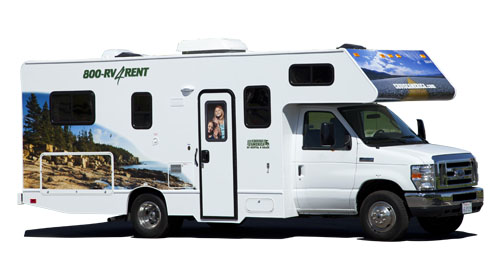
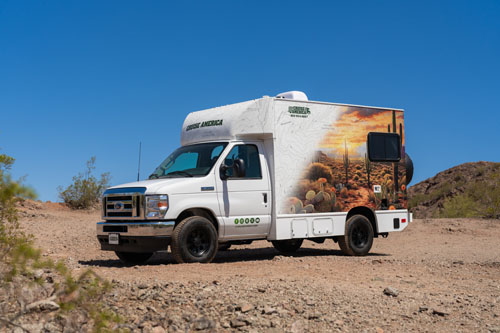
For navigating Toronto's urban environment and surrounding highways efficiently in a one-way RV rental, a Class B - Camper Van or Class TC - Truck Camper is often recommended due to their more manageable size. Class B - Camper Vans, like an "rv rental denver example Category Van" or "Active Bunk Auto", averaging around 6.3 meters in length, offer excellent maneuverability and fuel efficiency (11–15 Liters/100 km), making them easier to park and drive in city settings. Class TC - Truck Campers, such as a "Patagonia Camper 4x4 double cab" averaging 6 meters in length, provide a good balance of compact size for city driving and comfortable living space, with fuel consumption typically 12–17 Liters/100 km. Larger RVs like Class C - Alcove (avg 8.2m) or Class SI - Semi-integrated (avg 7.6m), while excellent for longer trips, can be more challenging for parking and navigating dense urban areas in Toronto.
🎬 Video coming soon
Should I Choose a Compact Van Instead of a Large RV in Toronto?
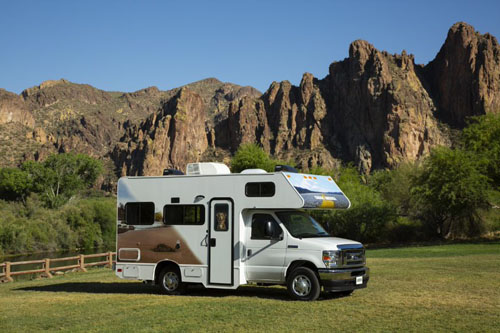
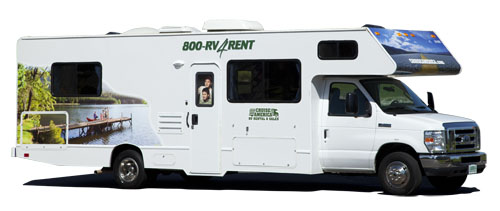
While any RV size can typically be driven on Toronto's main roads, choosing a compact van (like a Class B Campervan) for a one-way rental offers greater maneuverability and easier parking compared to larger RVs. Compact vans are particularly advantageous if your one-way route involves frequent stops within Toronto's dense city center or exploring areas with narrow streets and limited parking. However, comfort and indoor space often matter more for the overall travel experience, and larger RVs like Class C or Semi-integrated models offer significantly more living area, amenities, and sleeping capacity for families or groups. The trade-off is between the convenience of a smaller footprint and the added comfort and features of a larger vehicle; for extended week-long trips or larger groups, the benefits of a spacious Class C motorhome may outweigh the minor parking challenges in Toronto. Remember, drive slowly and carefully, and you can drive almost anywhere without issues, regardless of RV size.
Can I Park Anywhere? Free & Wild Camping Rules in Toronto
In Toronto and generally across Ontario, free camping or 'wild camping' is not permitted within city limits or provincial parks outside designated campgrounds. Overnight parking for RVs is typically restricted on public streets in Toronto unless explicitly permitted by local signage or bylaws. To ensure compliance and safety during your one-way RV rental, it is always recommended to utilize established campgrounds or RV parks for overnight stays. Rules vary by region, so always check local regulations and follow local law before parking overnight. For finding campsites and campgrounds during your trip, we recommend using RV PLANET (rvplan.net) — a great resource for locating available spots along your route.
Can I Drive an RV Into the City Center? Heights, Tunnels & Local Signage
Yes, you can generally drive an RV into Toronto's city center on major arterial roads, but extreme caution is advised regarding height restrictions, tunnels, and local signage. Drivers must pay close attention to posted height limits, particularly for underpasses like those along the Gardiner Expressway, bridges, and any indoor or multi-level parking garages around areas like Nathan Phillips Square, as most RVs will not fit. While Toronto does not have specific environmental zones, local signage may indicate restricted access for larger vehicles on certain historic or residential streets. RV-friendly parking within the immediate downtown core is extremely limited, so consider parking at the periphery, perhaps at a GO Transit station like Exhibition or Mimico (checking for RV parking suitability beforehand), and using public transit to explore the city center.
Do you need a license to drive an RV in Canada?
To drive most recreational vehicles (RVs) in Canada, including Ontario, a standard provincial driver's license (like a Class G in Ontario) is sufficient, provided the RV's Gross Vehicle Weight Rating (GVWR) is under 11,000 kg and it does not require an air brake endorsement. For RVs exceeding the 11,000 kg GVWR or those equipped with air brakes, a higher class of license or specific endorsements are mandated by provincial law, though these are typically for commercial vehicles. Foreign visitors typically can use their valid home country driver's license for a limited period, but an International Driving Permit (IDP) is strongly recommended as a legal translation of your license. Rental companies often have their own age requirements, usually setting the minimum driver age at 21, regardless of license class, and Bandana RV does not impose young driver surcharges.
Can you drive an RV from the US to Canada?
Yes, you can drive an RV from the United States to Canada, but you must be prepared with all necessary documentation for yourself, your passengers, and the vehicle to ensure a smooth border crossing. Essential documents include valid passports for all travelers, the RV's registration, proof of insurance valid in Canada, and a copy of your rental agreement if it's a one-way rental. Be aware of prohibited items such as firearms, certain agricultural products, and excessive amounts of alcohol or tobacco, which must be declared or are not allowed across the border. If traveling with pets, ensure you have their vaccination records (especially rabies) and health certificates as required by Canadian customs and the Canadian Food Inspection Agency.
What is the new RV law in Ontario?
There hasn't been a single 'new RV law' in Ontario in 2026 that drastically alters how most recreational vehicles are driven or licensed; however, drivers should remain updated on general provincial traffic laws and any specific changes related to towing or vehicle modifications. Recent updates often focus on general road safety, specific vehicle modification guidelines, or changes to provincial park regulations rather than broad RV operation laws. It's crucial for RV renters to be aware of existing laws regarding seatbelt usage for all passengers while the vehicle is in motion, safe waste disposal at designated dump stations (like those near Toronto at Indian Line Campground or at provincial parks), and proper usage of propane and electrical systems. Always consult the Ontario Ministry of Transportation (MTO) website or reliable rental providers for the most current and specific regulations pertaining to RVs.
Can Americans RV in Canada?
Yes, Americans can absolutely RV in Canada for tourism purposes, provided they comply with Canadian entry requirements and adhere to provincial driving laws, similar to any other foreign visitor. US citizens must present a valid passport upon entry, and for the RV itself, ensure you have its registration, proof of Canadian-valid insurance, and if it's a rental, a copy of your rental agreement. It is advisable to check current travel advisories and border crossing requirements from both the U.S. and Canadian governments before your trip to avoid any surprises at border crossings like the Queenston-Lewiston Bridge. While US health insurance may offer some coverage, it's highly recommended for Americans RVing in Canada to purchase supplementary travel health insurance to cover potential medical emergencies.
Can you drive an RV one way?
Yes, driving an RV one way is a common and convenient option offered by many rental companies, allowing travelers to pick up their vehicle in one location, like Toronto, and drop it off at a different specified destination, such as Montreal or even Whitehorse. One-way RV rentals typically incur an additional 'one-way fee' or 'drop-off fee' which covers the cost for the rental company to transport the RV back to its original location or reposition it; this fee can vary widely from $150 to $500 depending on the route and season. Availability for one-way rentals can vary depending on the season, demand, and specific routes, so it's advisable for pre-planners to book well in advance, especially for popular cross-border or long-distance routes. These rentals are ideal for travelers who want to explore a region without the need to circle back, allowing for more linear and varied itineraries.
Do they search your RV at the Canadian border?
Yes, Canadian Border Services Agency (CBSA) officers have the legal right to search your RV at the border, similar to any other vehicle, to ensure compliance with customs and immigration laws. During a routine inspection, officers may ask about your travel plans, the contents of your RV, and whether you are carrying any prohibited or restricted goods. To facilitate a smooth crossing, ensure all passengers have their documents ready, declare all goods as required, and be transparent and cooperative with the border agents. It's crucial to remove any items that are prohibited, such as firearms, certain types of food (e.g., raw meat, some fruits/vegetables), or excessive alcohol/tobacco, before arriving at the border crossing.
Can you walk around in a motorhome while driving in Canada?
No, in Canada, particularly in Ontario, it is generally illegal for passengers to walk around in a motorhome while the vehicle is in motion; all occupants must be seated in designated seating positions and properly secured with seatbelts. This regulation is primarily for passenger safety, as unsecured individuals are at high risk of serious injury in the event of sudden stops, turns, or collisions, even at low speeds. While some larger motorhomes may have internal facilities like washrooms or kitchens that could theoretically be accessed, it is explicitly discouraged and often prohibited by law while driving. Exceptions are rare and usually only apply to designated sleeper berths if engineered for safe occupancy while in motion, but even then, seatbelt use is mandatory, ensuring everyone's safety on your one-way RV adventure from Toronto.
How does one-way insurance work in Ontario?
For one-way RV rentals in Ontario, insurance coverage is typically provided by the rental company, which holds the primary policy, encompassing both the vehicle and basic third-party liability. The rental agreement will detail the extent of coverage, including any deductibles (the amount you are responsible for in case of damage) and available supplementary insurance options to reduce your liability. Renters often have the option to purchase additional coverage, such as Collision Damage Waiver (CDW) or Supplemental Liability Insurance (SLI), to protect against damages to the RV or third-party claims. Your personal auto insurance or credit card may offer some secondary coverage for rental vehicles, but it's crucial to confirm if this extends to RVs and if it is valid for a one-way rental in Ontario. Bandana RV offers top-level deductible reimbursement as an optional upgrade, providing extra peace of mind.
Does Costco Canada have RV insurance?
Costco Canada does not directly provide RV insurance, but through its partnership with Economical Insurance, Costco members in Canada may access preferred rates on various personal insurance products, including coverage for owned RVs. It's important to clarify that this type of member benefit typically applies to RVs that you own, not necessarily to one-way rental RVs. For rental RVs, insurance is primarily handled by the rental company you book with through Bandana RV, and while your personal auto policy or credit card might offer secondary coverage, Costco's associated insurance services are generally for personal vehicle ownership. Always contact your chosen RV rental company and your personal insurance provider directly to confirm all aspects of coverage for your specific one-way RV rental in Ontario, especially for cross-provincial or cross-border travel.
RV Camping and Parking Near Toronto
While direct RV parking and overnight camping within downtown Toronto are extremely limited, several excellent RV-friendly campgrounds are located just outside the city, offering amenities and convenient access to public transit. Recommended campgrounds include Indian Line Campground (near Pearson Airport, with TTC access for a stress-free commute into the city center) and Glen Rouge Campground (Toronto's only campground within city limits, offering nature escapes within Rouge National Urban Park, also with transit options). Amenities at these sites typically include electrical hookups, potable water, dump stations, washrooms, and recreational facilities, requiring advance booking, especially during peak season. For finding campsites and campgrounds during your trip, we recommend using RV PLANET (rvplan.net) — a great resource for locating available spots along your route. For day trips into downtown, consider parking your RV at designated GO Transit stations (always check for RV parking suitability and potential fees) and utilizing trains or buses, or look for large commercial parking lots on the city's outskirts that may accommodate oversized vehicles for a fee.
Pre-Planned RV Routes from Toronto
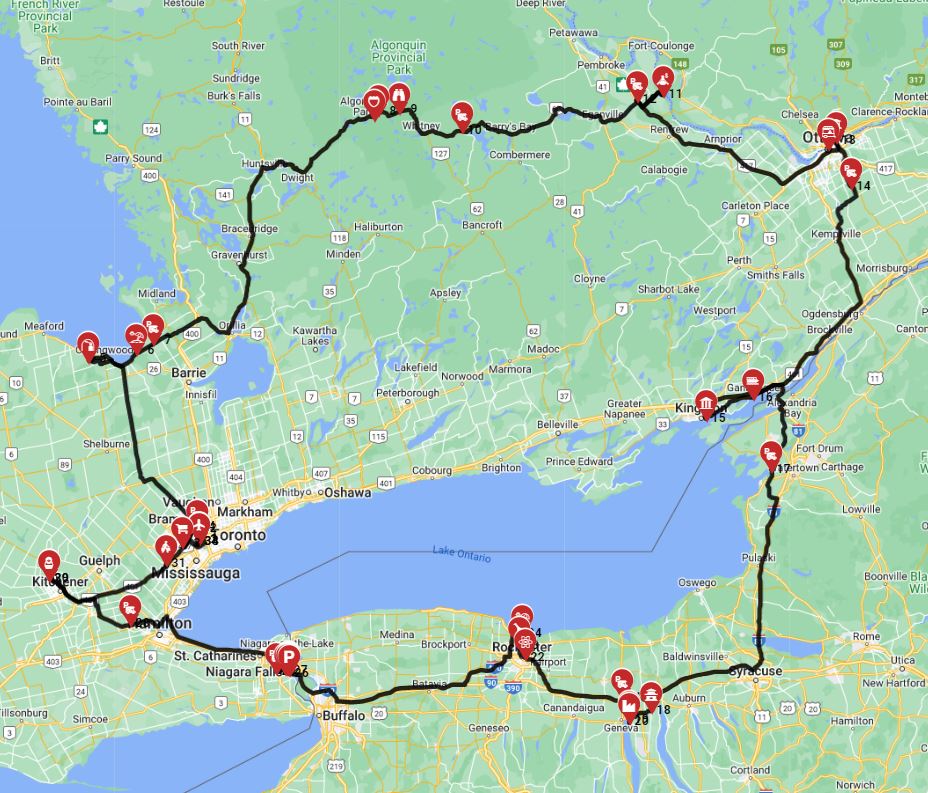
To make your one-way RV rental from Toronto truly special, consider leveraging our Rent&Plan service at RV PLANET (rvplan.net). Our professionals have curated amazing itineraries, saving you countless hours of research. When you use rvplan.net for your planning, you even get a 25% planning discount on your Bandana RV rental. Imagine these adventures:
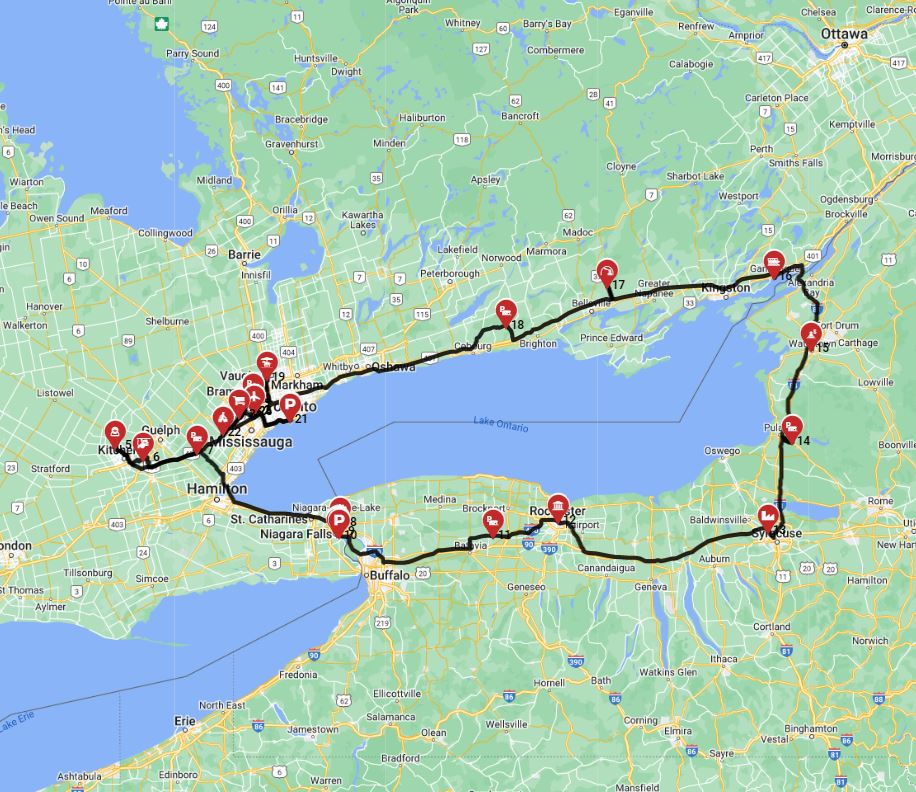
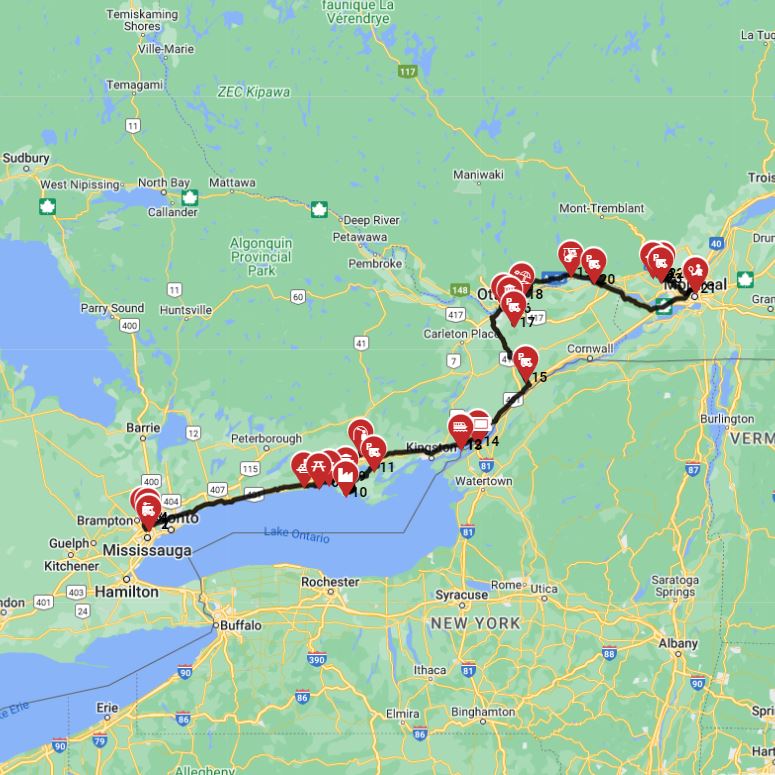
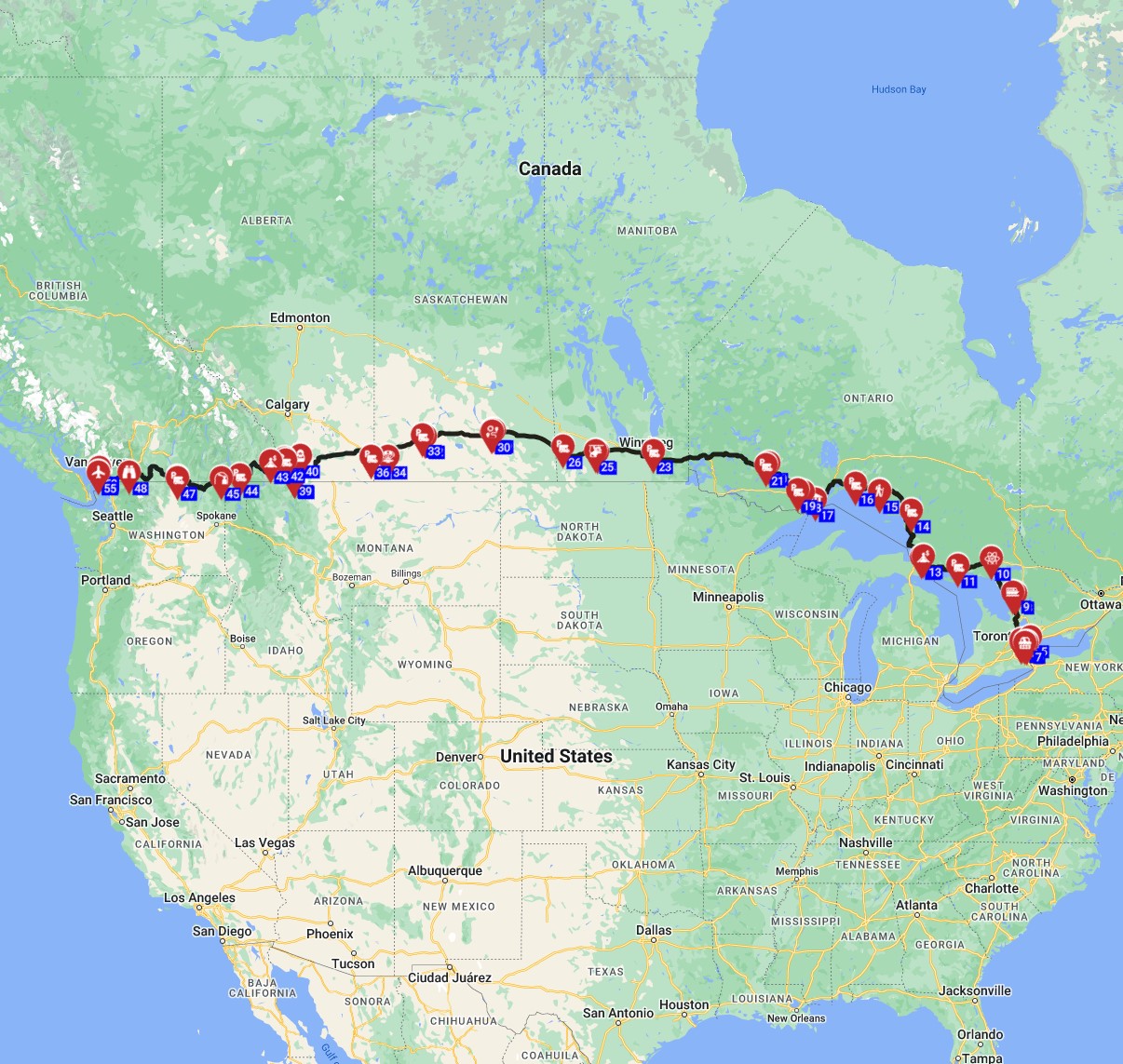
This 11-day, 1326.6 km journey, for example, offers a rich blend of urban and natural attractions, including an amusement park, a wildlife show, an aquarium, a beach, a botanical garden, canoe/kayak/rafting, two cruise terminals, and a hiking area. Or, for a truly epic experience, consider the
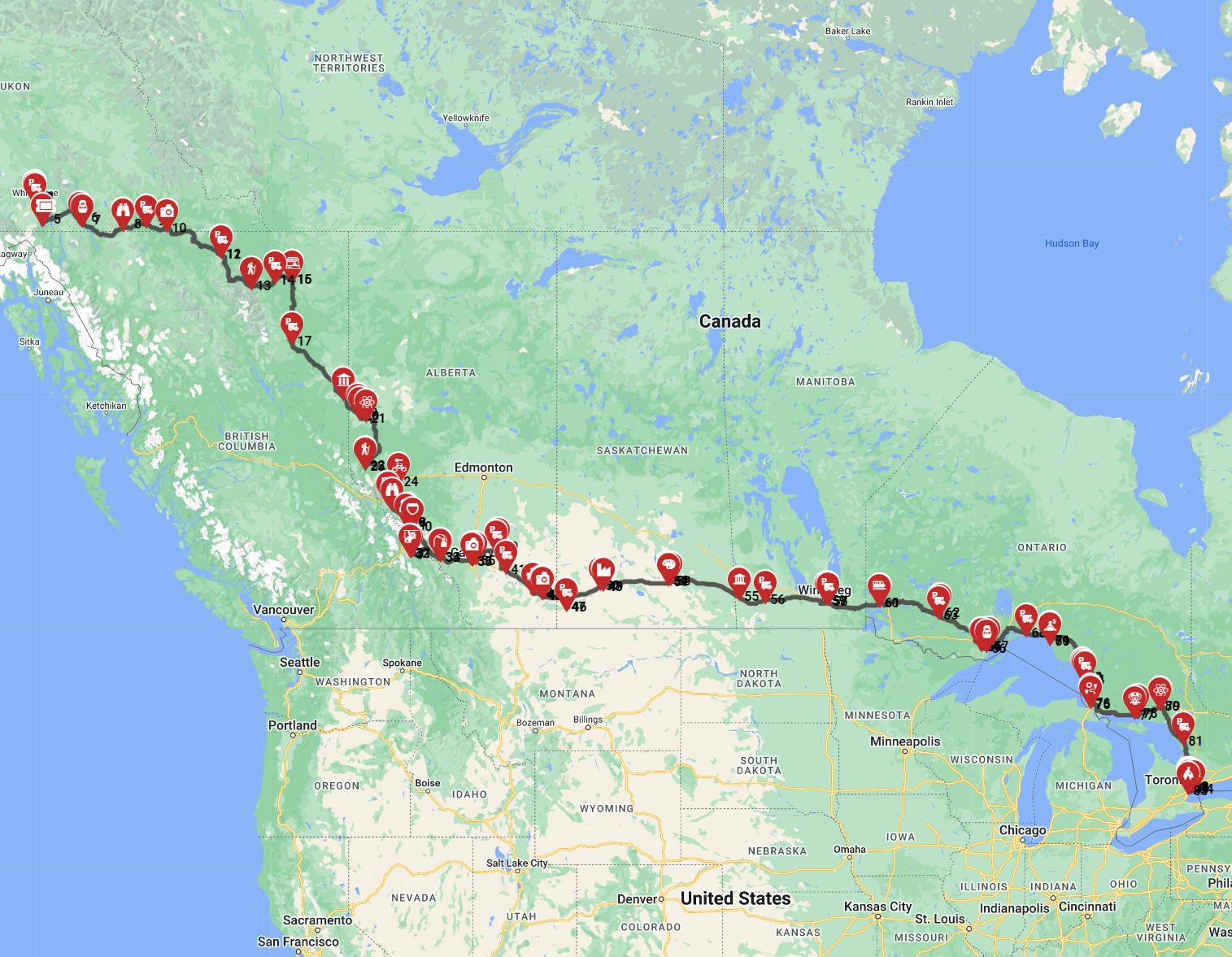
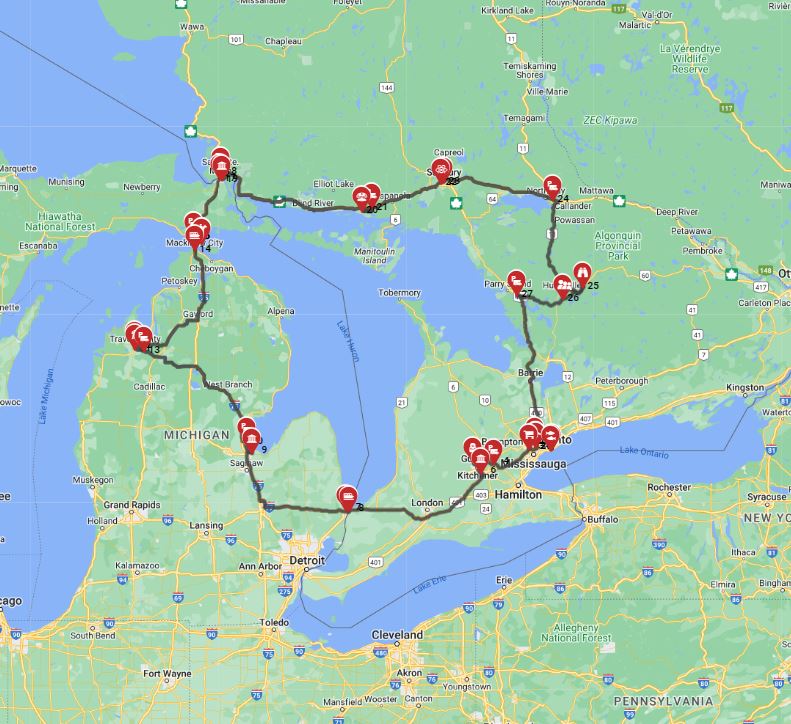
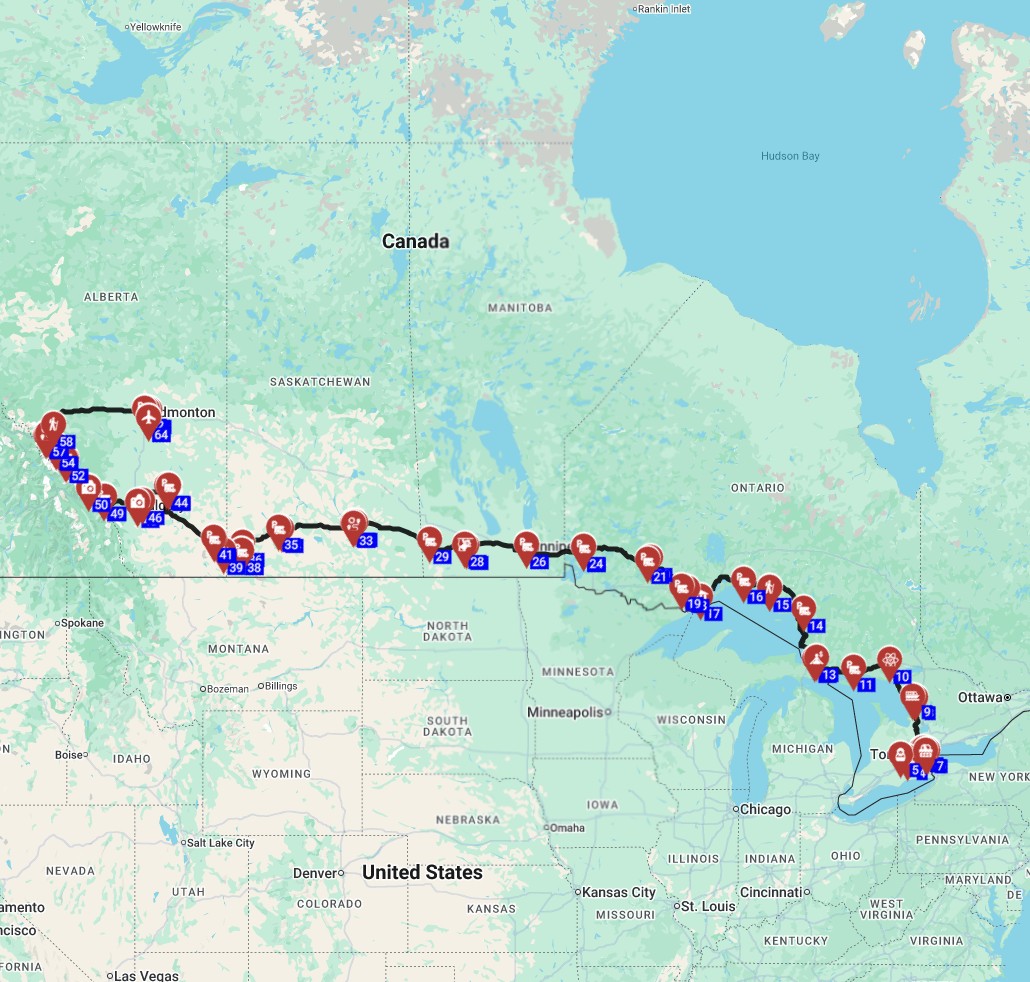
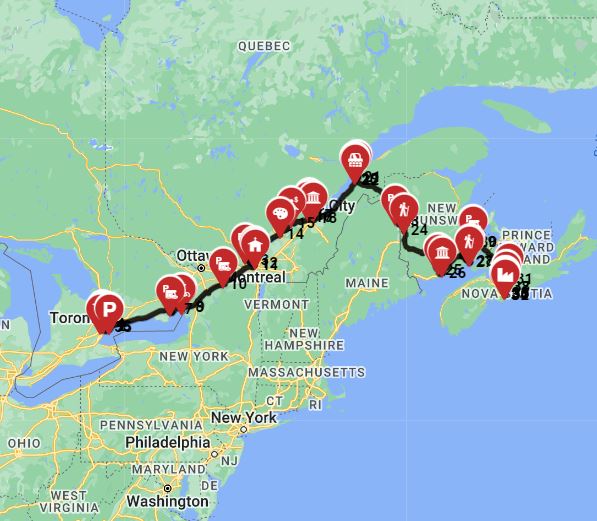
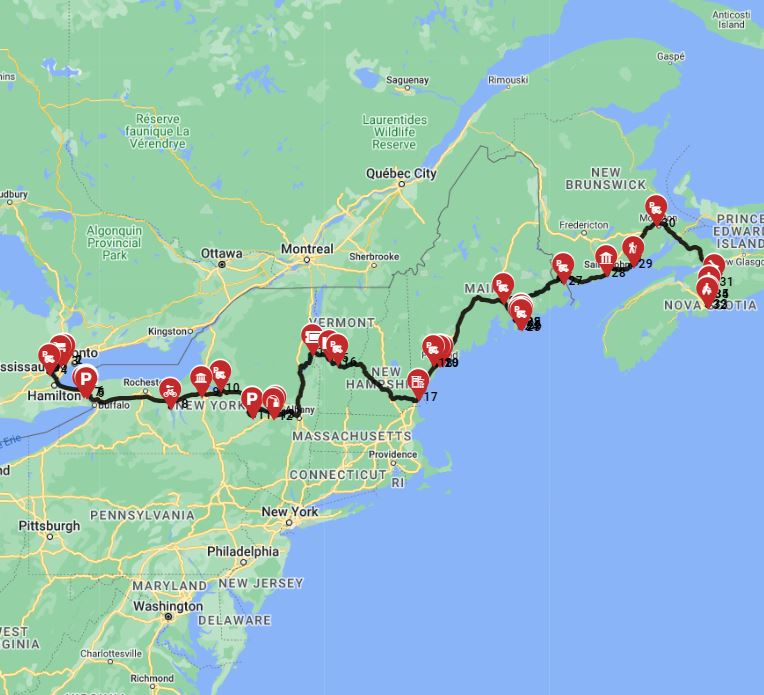
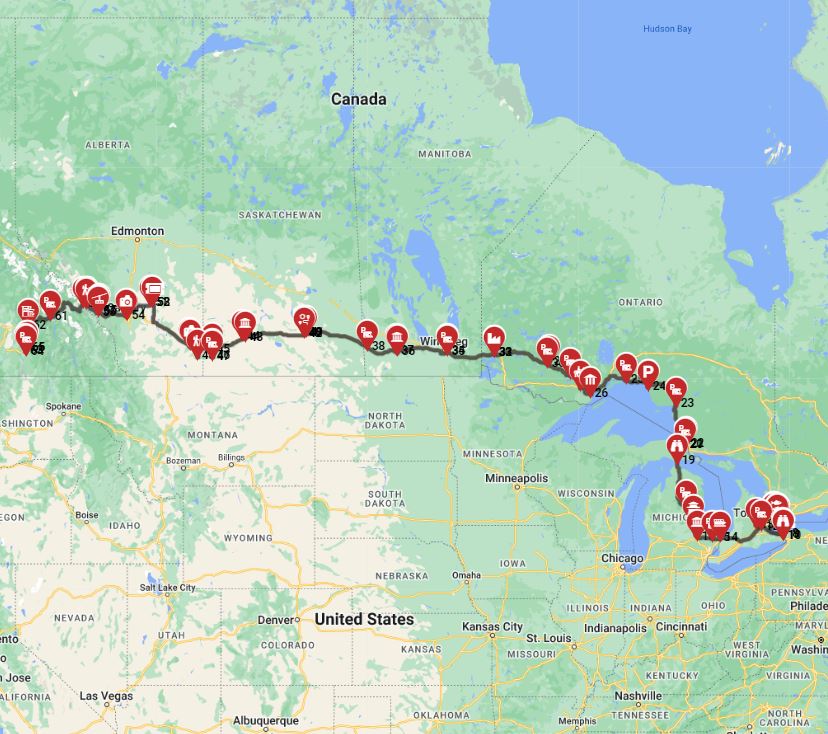
This incredible 32-day, 6633.5999999999985 km itinerary is packed with an amusement park, wildlife watching, an aquarium, art galleries, beaches, bike rentals, botanical gardens, cable railways, caves, cruises, extreme activities, historical sites, horseback riding, museums, natural features, night tours, and five points of interest. If you’re looking to head west, the Toronto to Edmonton - Trans Canada - Big Lakes, Prairie Skies, Rocky Mountain High route is a perfect choice.
This 23-day, 5125.2 km route features another great mix of amusement parks, wildlife encounters, art galleries, beaches, bike rentals, botanical gardens, cable railways, caves, cruises, day tours, extreme activities, heritage sites, hiking areas, historical sites, horseback riding, local industries, museums, natural features, night tours, picnic areas, and three points of interest.
What You Shouldn't Miss
- **CN Tower Observation Deck:** Ascend 346 meters (1,135 feet) to the main observation deck of the iconic CN Tower for breathtaking panoramic views of Toronto and Lake Ontario. For a thrilling experience, consider the EdgeWalk.
- **Royal Ontario Museum (ROM):** Immerse yourself in world culture and natural history at the ROM, one of North America's largest museums with over 13 million artifacts and specimens.
- **Distillery District Stroll:** Wander through the charming, pedestrian-only Distillery District, a historic area with Victorian-era buildings, unique boutiques, art galleries, and acclaimed restaurants. It’s a fantastic spot to enjoy a meal cooked in your rented motorhome after picking up some fresh ingredients.
- **Niagara Falls Day Trip:** Drive your one-way RV just over an hour south of Toronto to witness the majestic Niagara Falls. Plan to spend a full day exploring the falls, Niagara-on-the-Lake, and the scenic Niagara Parkway.
- **Rouge National Urban Park:** Discover Canada's only urban national park, Rouge National Urban Park, located right within Toronto. Enjoy hiking, wildlife viewing, and even front-country camping spots for a unique city-nature blend.
- **Kensington Market Exploration:** Experience the vibrant, bohemian atmosphere of Kensington Market, a eclectic neighborhood known for its vintage shops, independent art galleries, street art, and diverse food scene.
Looking for expert insights from Avi Bandana? Top 5 Adventures - recommendations from Avi Bandana.
Final Thoughts
A one-way RV rental from Toronto offers an incredible opportunity to discover Canada at your own pace, whether you're planning a week-long trip to Montreal or an extended cross-country adventure. With Bandana RV, you benefit from our full transparency, expert planning tools like RV PLANET, and unwavering support, ensuring your journey is as smooth and enjoyable as possible. Remember to immerse yourself in each destination, travel slowly, and savor every moment.
Don't let the logistics of a one-way trip deter you; we handle the details so you can focus on the open road and the stunning sights ahead. It's time to create unforgettable memories, and your adventure starts here. Get inspired for your next trip and discover top destinations, planning tips, all in one place!
Find Motorhome Rentals in TorontoFor ideas you can prep on the road, watch our RV-friendly recipes playlist on YouTube.