In This Guide
- Can You Drive an RV in South America? License & Age Rules
- Road Conditions & Terrain in South America
- RV Size Limits, Bridges & Restricted Zones
- Fuel: Diesel vs. Petrol & Cost per 100 km
- Tolls, Vignettes & Border Rules
- Driving Tips for One Way RV Rental Travelers
- Recommended RV Class for South America Roads
- Should I Choose a Compact Van Instead of a Large RV in South America?
- Can I Park Anywhere? Free & Wild Camping Rules in South America
- Can I Drive an RV Into the City Center? Heights, Tunnels & Local Signage
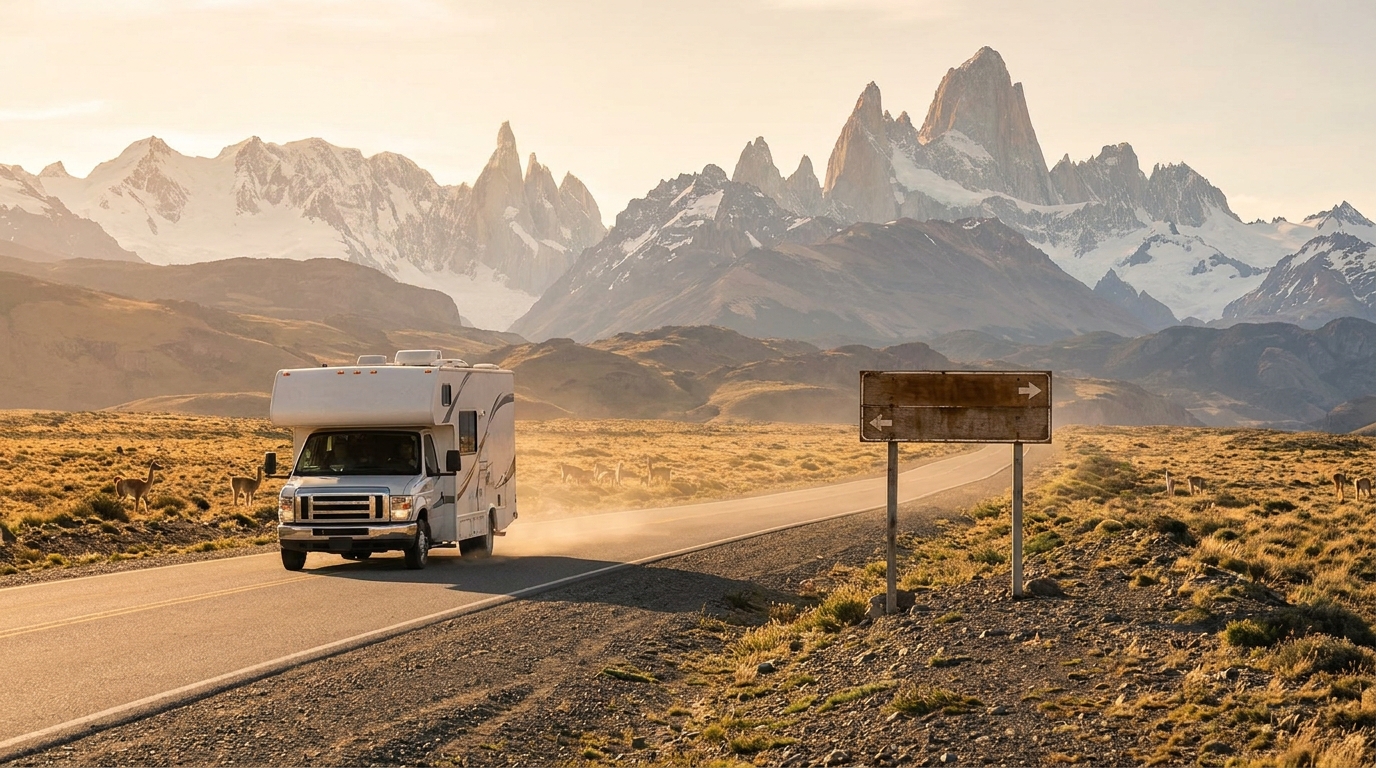
South America offers an incredible canvas for one-way RV travel, inviting adventurers to explore its majestic mountains, vibrant cities, and serene coastlines at their own pace. Imagine waking up to the Andean sunrise in a rented motorhome or preparing a fresh breakfast with a view of the Pacific Ocean. For ideas you can prep on the road, watch our RV-friendly recipes playlist on YouTube.
This continent, rich in biodiversity and cultural heritage, is a dream destination for a memorable road trip. For live availability and current prices, start with our RV Rental South America - Complete Guide 2026.
Can You Drive an RV in South America? License & Age Rules
Yes, foreign drivers can absolutely operate a rented RV in South America, provided they hold a valid driver's license from their home country and often an International Driving Permit (IDP). An IDP translates your existing license into multiple languages and is highly recommended, though not always legally mandatory in every South American country.
The minimum driver age for most motorhome rentals in South America is 21 years old, with no young driver surcharges or vehicle class restrictions based on age. Most standard RVs, including Class A, Class B, and Class C models, can be driven with a regular B-class driver's license from your home country, as their Gross Vehicle Weight (GVW) typically falls under the 3,500 kg (7,700 lbs) limit. For longer stays beyond standard tourist visas, always verify specific vehicle import permits or extended visa requirements for each country you plan to visit.
Road Conditions & Terrain in South America
South America features widely diverse road conditions, ranging from well-maintained, modern highways connecting major cities like Santiago and Buenos Aires to challenging gravel roads, unpaved tracks, and winding mountain passes in more remote regions. When embarking on a one-way RV rental, anticipate encountering various terrains, including picturesque coastal routes, high-altitude Andean roads, and potentially less-developed stretches through deserts or jungles.
Driving slowly and carefully is key to navigating South America effectively. Iconic routes such as the Carretera Austral in Chile or segments of Ruta 40 in Argentina are celebrated for their natural beauty but include significant unpaved sections that demand attentiveness. While urban areas can present heavy traffic and narrower streets, driving slowly and carefully allows you to navigate almost anywhere without issues, making common sense and attention your best allies.
RV Size Limits, Bridges & Restricted Zones
RV size limits in South America are generally more accommodating than in certain European cities, but drivers should remain aware of potential height and weight restrictions, especially when planning their route. Always look out for posted height and weight limits on bridges, particularly in older towns or rural areas, and when approaching tunnels.
Environmental zones or emissions-based restrictions are less common than in some other continents, but it is always wise to research specific major urban centers you plan to visit for any potential local regulations or permits. Ferry crossings, essential for reaching certain island destinations or traversing large rivers, can impose length, height, and weight limits on larger RVs, so booking these in advance is crucial. While universal numerical limits aren't broadly standardized, a careful and considered approach is always best when maneuvering larger rented motorhomes on diverse roads.
Fuel: Diesel vs. Petrol & Cost per 100 km
Diesel is the predominant fuel type for larger vehicles, including most rented motorhomes, throughout South America and is generally widely available at service stations. Petrol (gasoline) is also common, particularly for smaller campervans.
Bandana's Class SI - Semi-integrated RVs typically consume between 10-11 Liters/100 km, while Class C - Alcove models typically consume 10-12 Liters/100 km, and Class B - Camper Vans consume 8-10 Liters/100 km. Fuel costs in South America vary significantly by country and region, so budgeting for approximately $0.80 - $1.50 USD per liter of diesel is a general guideline. For example, a Class C motorhome covering 100 km could cost roughly $8.00 - $18.00 USD in fuel. When planning your route, consider that RV PLANET routes allow you to itemize and track every expense, making budgeting for fuel and other ancillary costs much easier. On the routes offered through RV PLANET routes, you can itemize and track every expense along the way for easy budgeting.
Tolls, Vignettes & Border Rules
Tolls are a common feature on major highways across South America, typically collected manually in local currency at booths. Electronic toll systems are also becoming more common in countries like Chile and Argentina, while vignettes (pre-paid road use stickers) are not a widespread system on the continent.
Border crossings between South American countries require careful preparation, involving immigration and customs procedures for both individuals and your rented motorhome. You will need your passport, vehicle registration, and temporary import permits, so having all documentation readily accessible is essential. Expect varying levels of efficiency at border crossings; some may be quick, while others can involve lengthy waits and multiple stops for document verification. Always confirm the specific requirements of each border you plan to cross in advance, and remember that full transparency is our promise – no hidden fees or surprises.
Driving Tips for One Way RV Rental Travelers
Driving a rented RV in South America calls for a defensive approach and readiness for diverse road conditions, which may include unpaved sections, potholes, and unexpected hazards like pedestrians or wandering livestock. Plan your daily route plans meticulously, taking into account distances, terrain, and daylight hours, as night driving in rural or unfamiliar areas can be riskier.
Prioritize safety by securing your mobile home, avoiding overt displays of wealth, and researching safe overnight parking locations, such as established campgrounds or well-regarded 'wild camping' spots. For communication, carry a local SIM card, offline maps, and possibly a satellite phone for remote regions where cell service might be intermittent. Remember to travel slowly, aiming for a maximum of 100-150 km per day on average, to truly connect with the local culture, food, and stunning scenery.
Recommended RV Class for South America Roads
For navigating the diverse roads of South America, a Class SI - Semi-integrated RV (averaging 6.9m in length) or a Class B - Camper Van (averaging 5.8m in length) is often recommended, as they offer an excellent balance of comfort and maneuverability. Class B Camper Vans provide superior agility for urban navigation and less developed tracks due to their compact size and often higher ground clearance, making them an excellent choice for couples or solo adventurers. Consider the "rv rental denver example Category Van" or "rv rentals san antonio example Knaus Van 600Ti ME" as typical examples of agile campervans.
Class SI Semi-integrated motorhomes, like the "2 Berth Tamar" or "Active Bunk Auto", deliver a good blend of interior space and drivability, making them suitable for longer journeys and a wider range of terrains without being excessively large. While larger Class C - Alcove motorhomes, such as the "cruise america rv rental example Explorer" (7.1m length) or the "MHC28" (7.3m length) offer more living space and amenities for families, their size might be more challenging on very narrow or rough roads, though they are certainly a viable option. Ultimately, the best choice depends on your comfort preferences, the specific regions within South America you plan to explore, and your confidence in driving a larger rented caravan.
Should I Choose a Compact Van Instead of a Large RV in South America?
While a compact van certainly provides superior maneuverability in very tight urban centers and on extremely narrow mountain passes, most standard Class B, Class SI, and Class C motorhome sizes can generally be driven without significant issues throughout South America. For many one-way RV travelers, the enhanced comfort, spacious indoor living area, and comprehensive amenities of a larger motorhome often outweigh the marginal maneuverability benefits of a compact van.
A Class B - Camper Van, such as an "Active Classic" campervan, is genuinely advantageous for extensive city driving, venturing off-the-beaten-path on less developed tracks, or for solo travelers and couples prioritizing stealth and agility. However, for families or those planning an extended road trip, the extra space for sleeping, cooking, and storage in a Class SI or Class C rented RV provides a considerably better travel experience. Consider your specific itinerary: if you anticipate a lot of time in remote areas or dense city cores, a compact van might be preferable; for a more diverse travel experience across various landscapes, a larger motorhome offers greater comfort and convenience.
Can I Park Anywhere? Free & Wild Camping Rules in South America
Free and wild camping for rented RVs in South America is generally more widely accepted and permissible than in many other continents, though specific rules and local tolerance can vary significantly by country and precise region. Designated campgrounds are widely available and often recommended for enhanced security, access to amenities like showers and electricity, and the opportunity to connect with other travelers.
When considering wild camping, always prioritize safety, choose well-lit areas, avoid isolated spots, and always seek permission from private landowners if you are on their property. Observing where other RVers or locals park overnight can be a good indicator of safe and accepted spots. Always check local regulations and adhere to local law before parking overnight to ensure a safe and legal stop. For finding campsites and campgrounds during your trip, we recommend using RV PLANET (rvplan.net) - a great resource for locating available spots along your route.
Can I Drive an RV Into the City Center? Heights, Tunnels & Local Signage
You can almost always drive a rented RV into city centers in South America, but it demands careful attention to local signage, particularly concerning height limits, tunnels, and low bridges. Major cities are generally equipped with clear routes designed to accommodate larger vehicles, though navigating narrow historic streets or specific restricted zones (e.g., residents-only areas) can be challenging or prohibited for RVs. No need to stress - just use common sense and pay attention.
Always observe traffic signs indicating vehicle dimensions, including height, weight, and length limits, especially when approaching tunnels, underpasses, or entrances to older city districts. Parking a motorhome in city centers can be difficult due to limited space and height restrictions in underground parking garages; look for designated large vehicle parking areas or peripheral lots instead. Researching specific city regulations before entry, such as potential environmental zones or congestion charges in larger metropolitan areas during peak times, will help ensure a smooth journey.
🎬 Video coming soon
What You Shouldn't Miss
- **Explore Patagonia's Glaciers (Argentina & Chile):** Drive a rented campervan along the Ruta 40 or Carretera Austral, stopping at iconic spots like Perito Moreno Glacier and Torres del Paine National Park for unparalleled natural beauty.
- **Journey through the Atacama Desert (Chile):** Experience the moon-like landscapes, geysers, and vibrant lagoons, a truly unique experience best explored with the flexibility of a motorhome.
- **Discover the Amazon Rainforest Gateway (Ecuador/Peru/Brazil):** From cities like Manaus (Brazil) or Iquitos (Peru), venture into the world's largest rainforest, perhaps combining your RV trip with a river cruise.
- **Wander through Colonial Cities (Colombia/Peru):** Immerse yourself in the history and architecture of cities like Cartagena or Cusco, easily accessible from your mobile home base on the outskirts.
- **Relax on Uruguay's Coastline:** Enjoy the laid-back beaches and charming towns of Uruguay, perfect for a slower paced RV trip.
Looking for expert insights from Avi Bandana? Top 5 Adventures - recommendations from Avi Bandana
Final Thoughts
A one-way RV rental in South America promises an adventure unlike any other, offering the freedom to explore diverse landscapes and vibrant cultures at your own leisurely pace. Whether you dream of tracing the dramatic Patagonian fjords or exploring the historical depths of Peru, a rented motorhome provides your ideal mobile base. Remember, planning is part of the fun, and with the right preparation, your journey across this incredible continent will be filled with unforgettable moments.
We're here to support you from the moment you start comparing prices until your booking is confirmed, ensuring all the small details that make a big difference are handled with care. Get inspired for your next trip and discover top destinations, planning tips, all in one place!
Ready to embark on your epic South American road trip? Compare One Way RV Rental Prices for South America today and start planning your route with RV PLANET (rvplan.net).