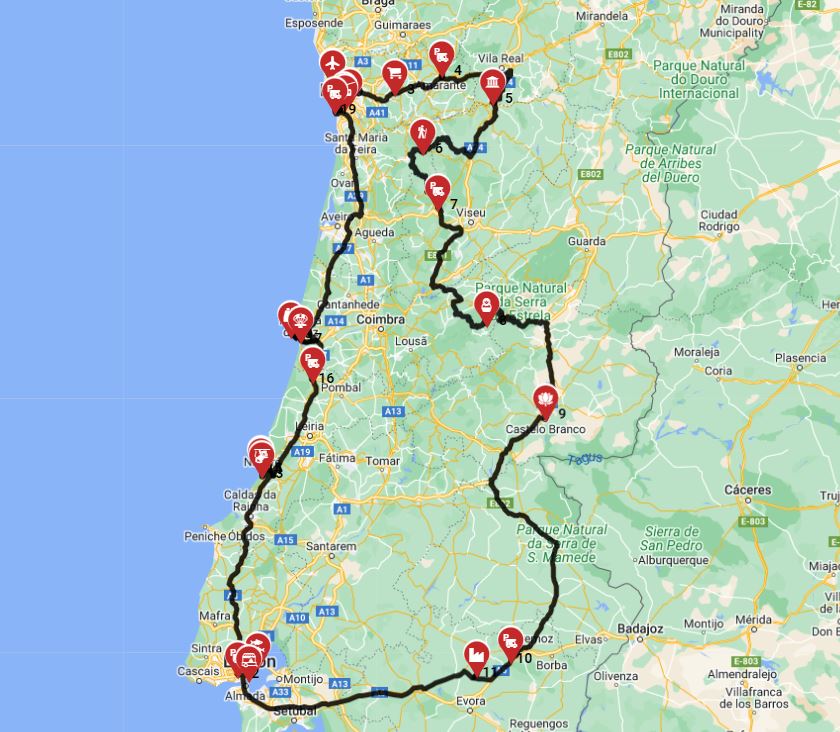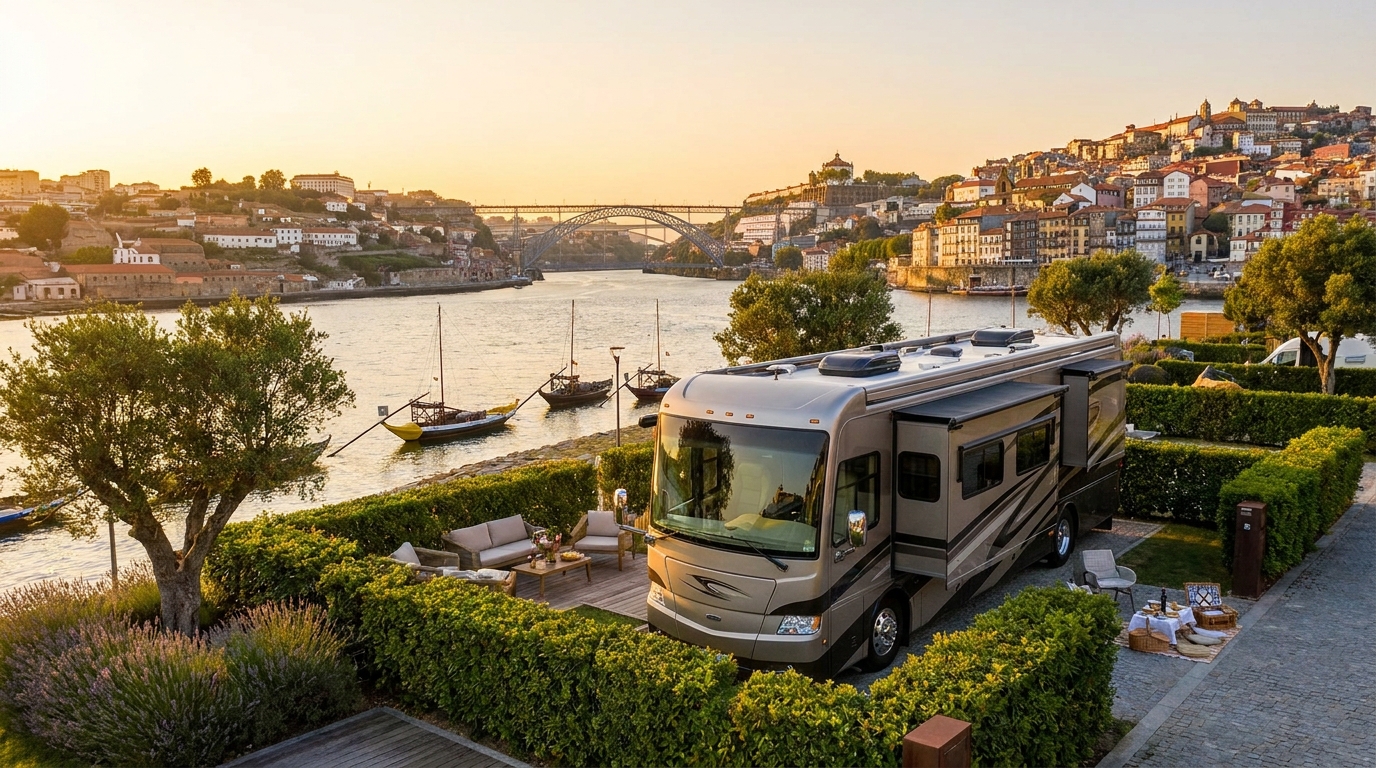
For live availability and current prices, start with our RV Rental Porto - Complete Guide 2026 guide.
In This Guide
- Can You Drive an RV in Porto? License & Age Rules
- Road Conditions & Terrain in Porto
- RV Size Limits, Bridges & Restricted Zones
- Fuel: Diesel vs. Petrol & Cost per 100 km
- Tolls, Vignettes & Border Rules
- Driving Tips for one way rv rental Travelers
- Recommended RV Class for Porto Roads
- Should I Choose a Compact Van Instead of a Large RV in Porto?
- Can I Park Anywhere? Free & Wild Camping Rules in Porto
- Can I Drive an RV Into the City Center? Heights, Tunnels & Local Signage
- What is the 3-3-3 rule for RV?
- Can you drive an RV one-way?
- Is Portugal camper friendly?
- Can you park a motorhome anywhere in Portugal?
- What is the largest motorhome you can drive on a car licence?
- Is it worth renting a car in Porto, Portugal?
- Can you get temporary RV insurance?
Can You Drive an RV in Porto? License & Age Rules
In Portugal, a standard B license typically allows driving RVs with a Maximum Authorized Mass (MAM) of up to 3,500 kg, which covers most campervans and smaller semi-integrated models like the "Category Van" or the "Compact Plus." For RVs exceeding 3,500 kg, such as larger Class C Alcove or Class A Integrated models often found in larger rental fleets, a higher license category (e.g., C1 or C) is legally required. The minimum driver age for RV rentals in Porto is generally 21, although some companies, like those offering the "Premium Plus Alcove 6," may require drivers to be 23 or 25 and possess 2-3 years of driving experience. Foreign drivers from EU/EEA countries can typically use their national license, while non-EU drivers will generally need an International Driving Permit (IDP) in addition to their valid national license for full legal compliance.
Road Conditions & Terrain in Porto
Road conditions in Portugal vary significantly; major highways (autoestradas) leading to and from Porto are generally excellent and well-maintained, providing smooth travel for your rented RV. However, rural roads and historic city centers, like parts of Porto itself, can be narrow, cobbled, and steep, demanding careful navigation. The terrain around Porto is notably hilly, both within the city limits and as you venture inland towards scenic regions like the Douro Valley, requiring mindful gear selection and braking. Coastal routes generally offer smoother driving, but older towns demand extra vigilance due to their compact layouts and occasionally challenging one-way systems for larger vehicles. For a one-way RV rental journey from or to Porto, planning routes that accommodate your vehicle's size and encourage slow, scenic driving is highly recommended to fully appreciate Portugal's diverse landscapes.
RV Size Limits, Bridges & Restricted Zones
While there are no blanket RV size limits across Portugal, drivers must remain vigilant for local signage indicating specific height, weight, and width restrictions, particularly in Porto's historic urban areas. Porto's old town features numerous narrow streets and some low bridges, making navigation with larger RVs challenging and potentially restricted to specific access routes. Although environmental zones (Zonas de Emissões Reduzidas - ZER) are less common in Porto compared to Lisbon, it's always wise to check for any local updates or new restrictions before entering specific areas with your rental RV. If planning to use ferries during your travels, always confirm specific vehicle size limits, as RV length and weight can affect availability and cost.
Fuel: Diesel vs. Petrol & Cost per 100 km
The vast majority of RVs available for rent in Porto, including Bandana's fleet, operate on Diesel (Gasóleo), which is readily available at service stations throughout Portugal. Based on Bandana's local fleet data for Porto, common fuel consumption for RVs ranges from approximately 9-11 Liters per 100 km for Class B Camper Vans to 10-14 Liters/100 km for larger Class C Alcove models. Fuel costs in Portugal can fluctuate, but budgeting for an average of €1.70-€1.90 per liter for diesel is a reasonable estimate for 2026. Some RV rental companies offer fuel discount cards or options to pre-purchase fuel, which can be a helpful way to manage expenses during your one-way journey from Porto. On the routes offered through RV PLANET routes, you can itemize and track every expense along the way for easy budgeting.
Tolls, Vignettes & Border Rules
Portugal primarily uses electronic tolls (Via Verde) on its autoestradas, and it is crucial for RV renters to ensure their vehicle is equipped with a transponder to avoid fines, as many main highways are exclusively electronic toll roads. While specific regional data on toll costs for Porto isn't provided here, many RV rental companies facilitate toll payment by offering pre-purchased passes or including a Via Verde transponder, simplifying travel. Unlike some European countries, no vignettes are required for driving in Portugal; tolls are typically paid per distance traveled or per section. If your one-way RV rental might extend beyond Portugal's borders into Spain, be aware of differing toll systems and vehicle requirements in those countries.
Driving Tips for one way rv rental Travelers
When embarking on your one-way RV rental from Porto, planning your route and breaks is essential. Utilize GPS systems, preferably RV-specific ones, to navigate and incorporate the '3-3-3 rule' by scheduling stops every 2-3 hours, especially when traveling with family, to prevent fatigue and enjoy the scenery. It’s crucial to understand your vehicle's dimensions, turning radius, and blind spots before departing Porto; this knowledge is vital for navigating unfamiliar roads and parking confidently. For budget-conscious travelers, ensure your RV has a Via Verde transponder for Portugal's electronic tolls, and keep an eye on fuel levels, as service stations can be sparse in very rural areas. Consider parking your RV on the outskirts of Porto or other historic cities and utilizing public transport to explore city centers, as parking can be scarce and streets narrow. Finally, stay connected with reliable mobile connectivity (a local SIM card can be helpful) for navigation and emergencies (dial 112 in Portugal), and always keep valuable items out of sight to deter theft.
Recommended RV Class for Porto Roads
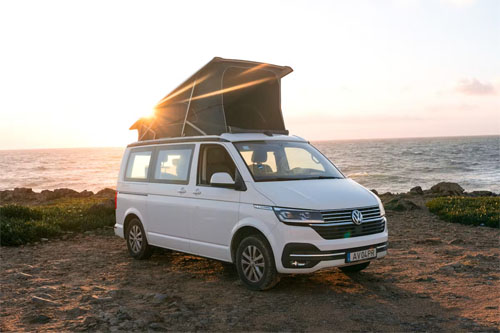
For navigating the diverse roads around Porto and its surrounding regions, Class SI (Semi-integrated) RVs and Class B (Camper Vans) models are highly recommended due to their balanced size and excellent maneuverability. Class B Camper Vans, like the "Category Van," typically measuring around 6.2 meters in length, offer superior agility for narrower roads and easier parking while still providing essential amenities for 2-3 people, making them ideal for exploring both urban peripheries and rural routes. The Class SI Semi-integrated RVs, averaging 6.9 meters in length, provide significantly more living space for 4-5 people, such as the "Comfort Standard 4," without being overly cumbersome, making them well-suited for regional touring from Porto. While larger Class C Alcove (7.1m) and Class A Integrated (7.5m) RVs offer maximum comfort, their increased size can make urban navigation and securing suitable parking in Porto more challenging.
Should I Choose a Compact Van Instead of a Large RV in Porto?
Generally, driving most RV sizes in Portugal presents few issues on main routes, and the enhanced comfort and indoor space of a larger RV often outweigh minor maneuverability concerns, especially for longer trips. For example, a Class C motorhome like the "24' Class C Motorhome" offers ample space for a family while still being manageable on many Portuguese roads. A compact camper van (Class B), such as the "Category Urban Van AT," genuinely offers advantages if your one-way itinerary heavily involves navigating the tight, historic city centers of Porto or venturing frequently into very narrow mountain passes. However, for those planning to explore the broader Porto region and enjoy a more comfortable touring experience, a larger RV (such as a Class SI "Comfort Plus" or a Class C "Premium Plus Alcove 6") provides significantly more living space, storage, and amenities, which can be a better trade-off for extended trips. Consider your travel style: a compact van for maximum urban agility and minimalist travel, versus a larger RV for superior comfort and amenities on a scenic one-way journey.
Can I Park Anywhere? Free & Wild Camping Rules in Porto
No, you cannot generally park a motorhome anywhere in Portugal; wild camping and unregulated overnight parking outside designated areas are largely prohibited. While specific regional data for Porto's parking rules isn't provided here, the general rule is to use official campsites (parques de campismo) or designated motorhome service areas (áreas de serviço para autocaravanas) for overnight stays. Many municipalities in Portugal have specific bylaws regarding RV parking, which may restrict overnight stays or require parking only in designated spots, which should be respected. Always check local regulations and follow local law before parking overnight; fines can be imposed for unauthorized wild camping or parking in restricted areas, especially near Porto's popular tourist sites.
Can I Drive an RV Into the City Center? Heights, Tunnels & Local Signage
Yes, you can often drive an RV into parts of Porto's city center, but extreme caution is advised, and it's generally recommended to park on the outskirts and use public transport for central exploration. Drivers must pay close attention to local signage, which will clearly indicate height limits for tunnels and parking garages, weight restrictions, and any environmental zones. Porto's historic areas are characterized by very narrow, often one-way streets and steep hills, which can be particularly challenging for even medium-sized RVs like a "Class SI - Semi-integrated" model to navigate. It's advisable to look for designated RV parking areas near metro or bus stops on the periphery of the city to easily access the center without the hassle of navigating congested streets or searching for suitable parking.
What is the 3-3-3 rule for RV?
The '3-3-3 rule' is a popular guideline for RV travel, advising drivers to travel no more than 300 miles a day, arrive at their destination by 3 PM, and stay for at least 3 nights. This rule is particularly beneficial for one-way RV rentals from Porto, as it promotes a relaxed travel pace, allowing ample time to explore destinations thoroughly and avoid driver fatigue. Adhering to the 3-3-3 rule helps ensure you arrive at campsites before dark, making setup easier and allowing for a better selection of spots. It also encourages a deeper immersion in each location, rather than rushing through your itinerary, maximizing the value of your RV adventure in Portugal.
Can you drive an RV one-way?
Yes, one-way RV rentals are widely available and a popular option for exploring regions like Porto and Portugal more broadly without the need to loop back to your starting point. Many rental companies, including those offering RVs in Porto, facilitate one-way rentals, allowing you to pick up in one city and drop off in another, such as picking up in Porto and dropping off in Lisbon. While one-way rentals often incur an additional 'one-way fee,' the convenience and flexibility they offer for varied itineraries, especially when exploring different regions like the Algarve after starting in Porto, can be well worth the cost. It's crucial to book one-way RV rentals in advance, as availability can be limited, and always confirm all associated fees and drop-off instructions with your rental provider.
Is Portugal camper friendly?
Portugal is increasingly camper friendly, offering a diverse range of landscapes from stunning coastlines to historic towns and vineyard-clad hills, all accessible by RV. The country boasts a growing infrastructure of designated campsites (parques de campismo) and motorhome service areas (áreas de serviço para autocaravanas) equipped with facilities for waste disposal, water, and electricity. Its pleasant climate, particularly outside peak summer, makes it an ideal destination for RV travel, with many regions offering mild weather year-round. While wild camping is generally prohibited, the abundance of official sites and the warm hospitality of the Portuguese people contribute to a positive experience for RV travelers.
Can you park a motorhome anywhere in Portugal?
No, you generally cannot park a motorhome anywhere in Portugal, as strict regulations prohibit wild camping and overnight parking outside of designated areas. Overnight stays in laybys or undesignated public spaces are not permitted and can result in fines, as these areas are primarily for short rest stops, not residential use. It is essential to utilize official campsites (parques de campismo) or recognized motorhome service areas (áreas de serviço para autocaravanas) for overnight parking and to access necessary amenities like waste disposal. Always adhere to local signage and municipal bylaws, which can vary by region, to ensure legal and responsible RV parking throughout your trip from Porto.
What is the largest motorhome you can drive on a car licence?
In Portugal, as in most of the EU, a standard B category car driving license permits you to drive a motorhome with a Maximum Authorized Mass (MAM) or Gross Vehicle Weight Rating (GVWR) of up to 3,500 kg. This typically covers most camper vans (Class B), many semi-integrated RVs (Class SI) like the "Compact Plus," and some smaller integrated models available for one-way rental in Porto. For motorhomes exceeding 3,500 kg, such as larger Class C Alcoves or Class A Integrated RVs, a higher license category like C1 (up to 7,500 kg) or C (over 7,500 kg) is legally required. Always verify the specific MAM of the RV you intend to rent in Porto and ensure your driving license category aligns with its requirements to avoid legal issues.
Is it worth renting a car in Porto, Portugal?
Whether renting a separate car in Porto is 'worth it' largely depends on your specific travel itinerary and how you plan to utilize your one-way RV rental. If your RV trip primarily involves exploring the broader region outside Porto's immediate urban area and visiting other towns, the RV itself may suffice, reducing the need for an additional car. However, if you plan to spend significant time within Porto's historic city center, where parking an RV is challenging and public transport is efficient, a separate compact rental car or reliance on local transport might be more practical. For those who value maximum flexibility for day trips from a campsite base, or need to navigate very tight city streets for specific sightseeing, a compact car can complement an RV rental, but it adds to the overall cost.
Can you get temporary RV insurance?
Yes, temporary RV insurance is often available and typically included or offered as an optional add-on when you rent an RV in Porto or elsewhere. Most RV rental companies provide basic liability insurance as part of their rental package, but this often comes with a high deductible (excess). Travelers may opt for additional coverage, such as collision damage waiver (CDW) or zero-deductible options, directly through the rental company or via third-party providers specializing in temporary vehicle insurance. It is crucial to thoroughly review the insurance policy details, including what is covered, any exclusions, and the deductible amount, to ensure adequate protection for your one-way RV adventure in Portugal.
What You Shouldn't Miss
- Explore the historic Ribeira district, a UNESCO World Heritage site, with its narrow, winding streets perfect for a leisurely stroll (consider parking your RV in a designated lot outside the immediate center).
- Take a scenic drive through the Douro Valley in your RV to visit Port wine quintas, many of which offer RV parking and tastings.
- Enjoy the Atlantic coast by driving your RV along the scenic routes north or south of Porto, stopping at charming seaside towns.
- Visit the Livraria Lello, one of the most beautiful bookstores in the world, which has inspired some of J.K. Rowling's Harry Potter series.
- Savor a Francesinha sandwich, a Porto specialty that's hearty enough to fuel any RV adventure.
- Experience Fado music in a local tavern for an authentic Portuguese cultural evening.
Final Thoughts
Embarking on a one-way RV rental adventure from Porto is an incredible way to experience the diverse beauty and rich culture of Portugal. With careful planning and our expert guidance, you can navigate the roads with confidence and make the most of your journey. Remember to book in advance for the best selection and consider utilizing the comprehensive resources available through RV PLANET (rvplan.net) to plan your route and find suitable campsites. Get ready for an unforgettable road trip!
Find Motorhome Rentals in Porto