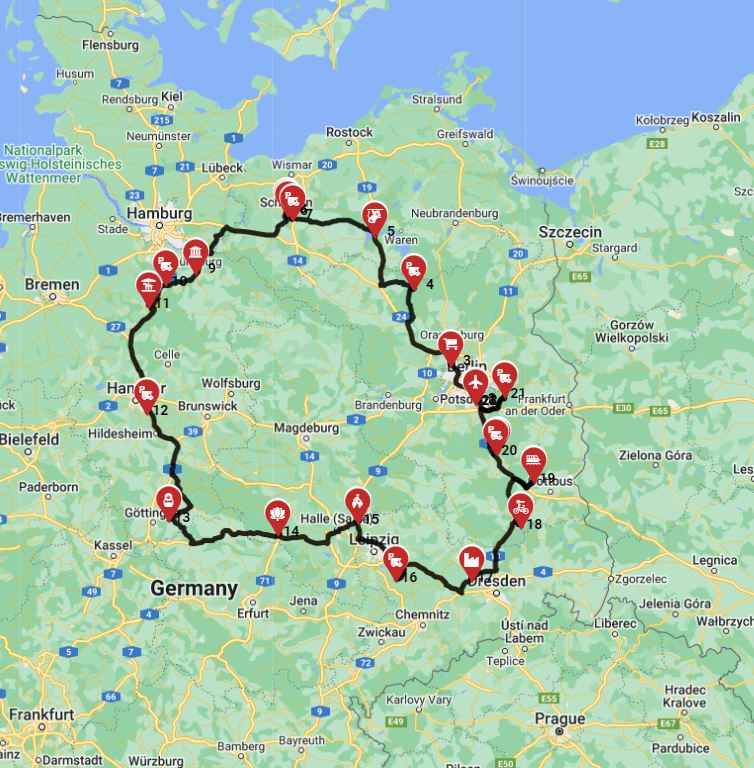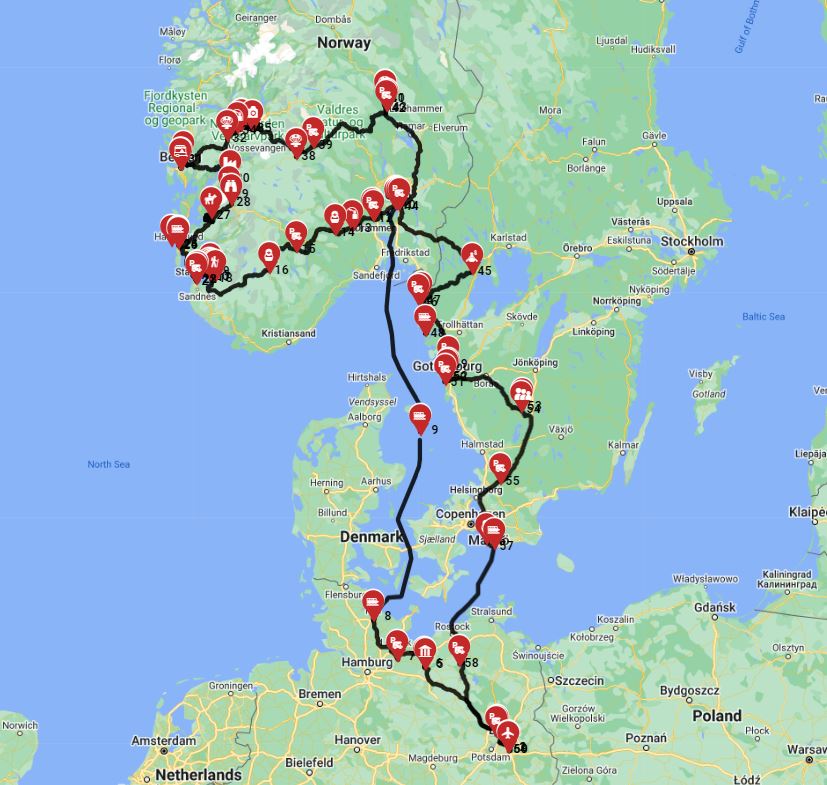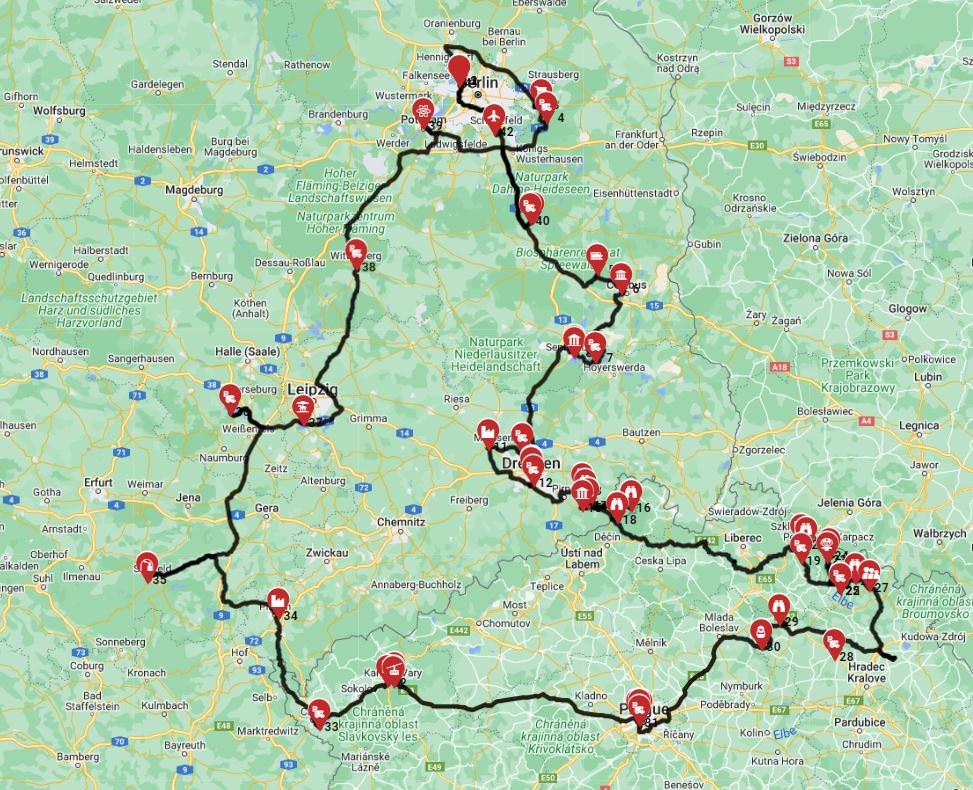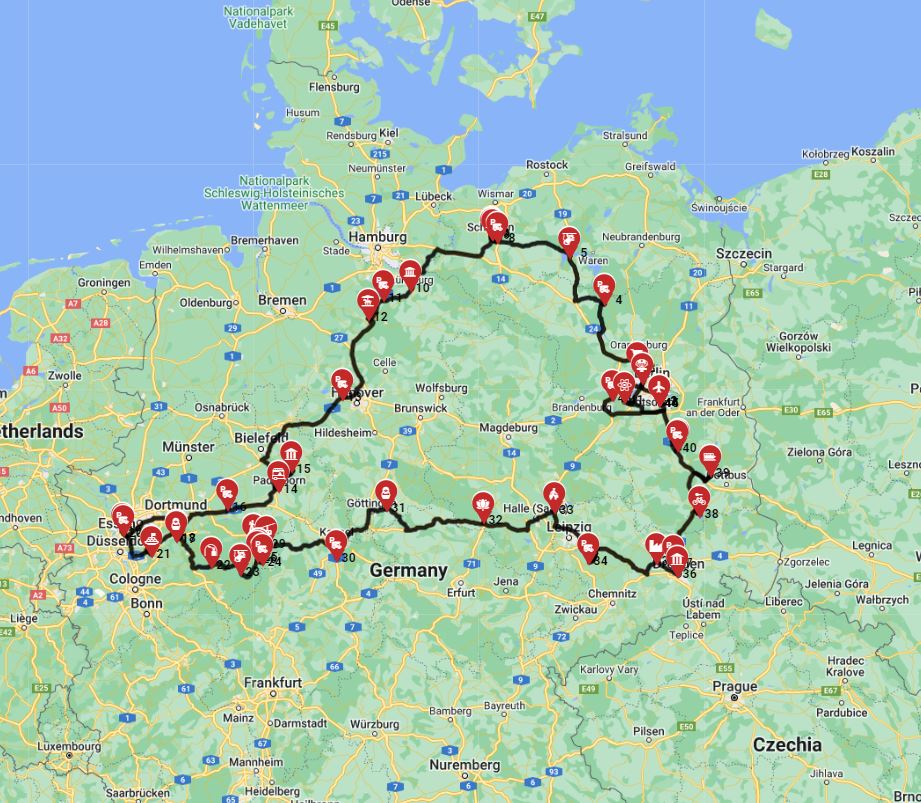
For live availability and current prices, start with our RV Rental North Europe - Complete Guide 2026 guide.
In This Guide
- Can You Drive an RV in North Europe? License & Age Rules
- Road Conditions & Terrain in North Europe
- RV Size Limits, Bridges & Restricted Zones
- Fuel: Diesel vs. Petrol & Cost per 100 km
- Tolls, Vignettes & Border Rules
- Driving Tips for one way rv rental Travelers
- Recommended RV Class for North Europe Roads
- Should I Choose a Compact Van Instead of a Large RV in North Europe?
- Can I Park Anywhere? Free & Wild Camping Rules in North Europe
- Can I Drive an RV Into the City Center? Heights, Tunnels & Local Signage
- What is the 3-3-3 rule for RV travel?
- What is the 444 rule for RV?
- Can you drive an RV in Europe?
- Can you sleep anywhere in a campervan in Europe?
- What is the 333 rule for campervan?
- Is Europe RV friendly?
- Is there such a thing as a one-way RV rental?
- How long can I stay in Europe in my motorhome?
- What is the best motorhome for touring Europe?
Can You Drive an RV in North Europe? License & Age Rules
Most standard RVs under 3,500 kg Maximum Authorized Mass (MAM) can be driven in North Europe with a standard B driving license, generally available to drivers aged 21 and above. For RVs exceeding 3,500 kg MAM, an equivalent to a C1 (up to 7,500 kg) or C (over 7,500 kg) license is required, which often entails higher age restrictions and specific medical examinations. Non-EU/EEA citizens should carry an International Driving Permit (IDP) alongside their national license for certified translation, particularly useful in countries like Finland and the Baltic states. Always confirm specific age requirements with your rental provider, as insurance policies may set higher minimum ages, such as 25 years old, for certain RV categories.
Road Conditions & Terrain in North Europe
North Europe presents a diverse range of road conditions, from the well-maintained motorways found in Sweden and Denmark to winding coastal roads, occasional gravel stretches in rural Finland and Norway, and challenging mountain passes. The region's road infrastructure is generally excellent and well-suited for RV travel. However, drivers should anticipate narrower roads off the main routes and within historic village centers, which naturally encourage a slower, more scenic driving approach. Expect significant variations in terrain, from the relatively flat landscapes of Denmark to the majestic fjords and mountains of Norway, involving steep ascents, descents, and numerous tunnels. Winter driving conditions from October to April, especially in northern Norway, Sweden, and Finland, may include snow and ice, necessitating appropriate tires (winter/studded) and careful driving techniques.
RV Size Limits, Bridges & Restricted Zones
While North Europe comfortably accommodates various RV sizes, drivers must remain vigilant about height, width, and weight restrictions, particularly on older bridges, in tunnels, and within specific urban areas. Ferry travel is a common necessity for navigating Norway's fjords or inter-island routes; RV length and height are critical factors for pricing and booking, with categories often differentiating vehicles exceeding 6 or 8 meters. Several North European cities, notably Stockholm and Gothenburg in Sweden, and Copenhagen in Denmark, operate environmental zones (Low Emission Zones) that may restrict older, more polluting vehicles. Always meticulously check local signage, paying attention to restrictions like "Durchfahrt verboten für Fahrzeuge über X Tonnen" (No entry for vehicles over X tonnes) or height limit signs, as these vary by municipality.
Fuel: Diesel vs. Petrol & Cost per 100 km
Diesel is the predominant fuel type for RVs in North Europe and is widely available at service stations across all countries. Petrol (gasoline) is less common for larger motorhomes. Based on Bandana's global fleet averages, a Class SI - Semi-integrated RV typically consumes 10-11 Liters/100 km, a Class B - Camper Van might achieve 8-10 Liters/100 km, and a Class C - Alcove might consume 10-12 Liters/100 km. Fuel costs in North Europe, particularly in Norway and Denmark, tend to be higher than the European average; travelers should budget approximately €1.80 - €2.20 per liter for diesel, with prices varying by country and market rates. Factor these fuel expenses into your overall trip budget; some rental companies may offer fuel discount cards that can provide savings over the course of a longer one-way rental. On the routes offered through RV PLANET routes, you can itemize and track every expense along the way for easy budgeting.
Tolls, Vignettes & Border Rules
North Europe features diverse toll systems: Norway has extensive automated tolls, Denmark charges for major bridges (e.g., Øresund, Storebælt), and Sweden imposes city congestion charges in Stockholm and Gothenburg, while Finland generally has no tolls. Unlike Central Europe, North Europe does not typically utilize a vignette system for standard RVs; tolls are usually distance-based, bridge-based, or city-entry fees, rather than flat-rate stickers. For Norway, many rental RVs come equipped with an AutoPASS toll tag, automatically registering tolls and simplifying payment; ensure your rental includes this or understand the payment process to avoid fines. Crossing borders between Nordic countries and within the Schengen Area is generally seamless with minimal checks, but always carry your passport/ID, vehicle registration, and insurance documents.
Driving Tips for one way rv rental Travelers
Plan your one-way route with regular stops, particularly if traveling with family, aiming for breaks every 2-3 hours to prevent driver fatigue and enhance enjoyment of the journey. Pre-program your GPS with RV-specific settings (height, weight, length) to avoid unsuitable roads, and consider downloading offline maps for areas in North Europe with limited mobile data coverage. Utilize the extensive ferry networks in coastal Norway, Sweden, and Finland strategically; pre-booking is often advisable for larger RVs or popular routes to save time and guarantee space. Prepare for rapidly changing North European weather by packing versatile clothing layers and essential emergency gear, especially if driving in shoulder seasons or higher latitudes. Familiarize yourself with local speed limits, which are often lower for RVs than cars, and be vigilant for wildlife crossings (e.g., moose, reindeer) common in more rural North European areas.
Recommended RV Class for North Europe Roads
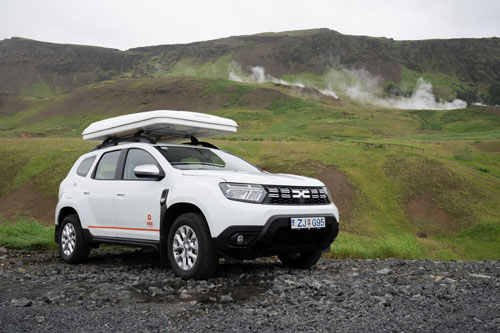
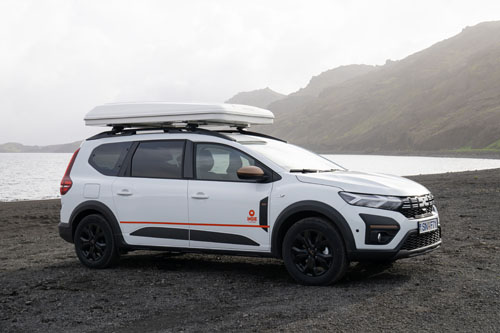
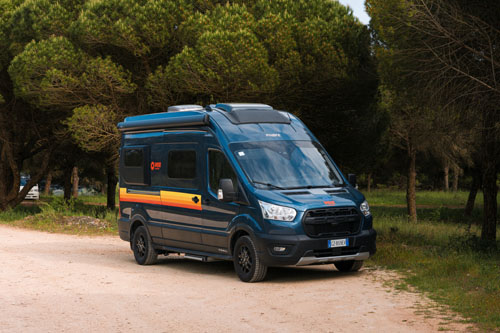
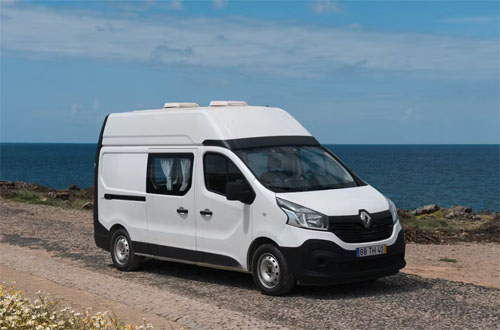
For touring North Europe, Class SI - Semi-integrated RVs are highly recommended, offering an excellent balance of comfort and maneuverability with an average length of 6.9 meters, suitable for both highways and narrower scenic routes. Alternatively, Class B - Camper Vans are superb choices for couples or small families, boasting an average length of 5.8 meters, which provides exceptional agility for navigating tighter city streets and more remote areas with ease. While larger options like Class C - Alcove (avg. 7.5m) or Class A - Integrated (avg. 7.5m) offer more living space, their increased length can be more challenging on some North European roads, especially when accessing ferries or parking in smaller towns. When selecting, prioritize models with good insulation and heating, as North European climates can be cool even in summer, ensuring comfort for your one-way journey.
Should I Choose a Compact Van Instead of a Large RV in North Europe?
While a compact van offers superior maneuverability and easier parking in tight historic city centers or on very narrow mountain passes, most standard RV sizes, like semi-integrated or alcove models, generally navigate North Europe's primary road network without significant issue. The choice often boils down to comfort and indoor amenities versus ultimate agility. A larger RV provides more living area, a more comprehensive kitchen, and a separate washroom, which can significantly enhance the travel experience, especially on longer one-way trips. Opt for a compact van if your itinerary heavily prioritizes frequent city exploration, seeking out very confined wild camping spots, or if you prefer a more 'stealth' camping experience. However, for families or those undertaking a multi-week one-way journey across varied landscapes, the added comfort, storage, and amenities of a medium-sized RV, like a semi-integrated model, often provide a better trade-off than the marginal maneuverability gains of a compact van. For ideas you can prep on the road, watch our RV-friendly recipes playlist on YouTube.
Can I Park Anywhere? Free & Wild Camping Rules in North Europe
Wild camping (boondocking) rules in North Europe vary significantly by country. While Norway, Sweden, and Finland generally permit "Allemansrätten" (Right to Roam), allowing temporary overnight stays in uncultivated areas away from dwellings, Denmark and more populated regions are much stricter. In countries upholding "Right to Roam," you can typically park responsibly for a night or two, ensuring you leave no trace, respect private property, and do not disturb locals, always maintaining a safe distance from houses and cultivated land. Conversely, in Denmark, Germany (often an entry point), and parts of the Baltic states, wild camping is largely prohibited outside designated campsites or specific overnight parking spots. Always dispose of grey and black water responsibly at official service points (tömställe in Swedish/Norwegian), as illegal dumping can lead to hefty fines and environmental damage. Rules vary by region—always check local regulations and follow local law before parking overnight, especially concerning protected areas, national parks, and private land.
Can I Drive an RV Into the City Center? Heights, Tunnels & Local Signage
Yes, you can almost always drive an RV into North European city centers, though drivers must be highly attentive to specific local signage regarding height limits, narrow streets, tunnels, and environmental zones. Many historic city centers feature low bridges, narrow alleyways, and pedestrianized zones, which may necessitate parking on the outskirts and using public transport or walking to explore. Be particularly aware of environmental (Low Emission) zones in cities like Oslo, Copenhagen, Stockholm, and Gothenburg, which may restrict older RVs or require prior registration; fines apply for non-compliance. Always watch for road signs indicating maximum height (e.g., "Max. 3.0m"), weight restrictions, or "Residents Only" parking areas, and utilize an RV-specific GPS to avoid problematic routes.
What is the 3-3-3 rule for RV travel?
The 3-3-3 rule for RV travel is a widely adopted guideline encouraging safe and enjoyable pacing: drive no more than 300 miles (approximately 480 km) per day, arrive at your destination by 3 PM, and stay for at least 3 nights. This rule is particularly beneficial for one-way RV rentals in North Europe as it promotes a relaxed pace, allowing ample time for sightseeing, rest, and exploring the diverse landscapes without feeling rushed. Adhering to the 3-3-3 rule helps prevent driver fatigue, ensures you secure a campsite or parking spot before it gets dark, and provides sufficient time to experience each location, rather than constantly being on the road. While a guideline, adapting it to North Europe's unique conditions, such as shorter driving distances due to scenic stops or ferry schedules, can enhance your overall journey.
What is the 444 rule for RV?
The 444 rule for RV travel is a planning guideline suggesting you drive no more than 400 miles (approximately 640 km) in a day, stop driving by 4 PM, and ideally stay at least 4 nights in a location. This rule, slightly more ambitious than the 3-3-3 rule, might be more suitable for longer one-way RV rentals across larger distances in North Europe where you need to cover ground more quickly. However, North Europe's captivating scenery and often winding roads in countries like Norway might make sticking to 400 miles challenging without sacrificing exploration time. Always prioritize safety and enjoyment over strict adherence to mileage rules; adjust your daily driving based on road conditions, daylight hours, and your personal energy levels.
Can you drive an RV in Europe?
Yes, you can absolutely drive an RV in Europe, with North Europe being a particularly popular and well-equipped region for motorhome adventures. Europe's road network, camping infrastructure, and diverse landscapes make it an excellent destination for RV travel, offering everything from urban exploration to remote nature experiences. Specific rules regarding driving licenses, road conditions, tolls, and wild camping vary by country; for detailed information pertinent to North Europe, refer to sections like 'Can You Drive an RV in North Europe? License & Age Rules' and 'Road Conditions & Terrain in North Europe'. Most European countries are accustomed to RVs, and designated campsites are plentiful, ensuring a comfortable journey.
Can you sleep anywhere in a campervan in Europe?
No, you cannot universally sleep anywhere in a campervan in Europe; regulations for free or wild camping vary significantly by country and even by local municipality, especially in North Europe. While countries like Norway, Sweden, and Finland embrace "Allemansrätten" (Right to Roam), permitting responsible temporary overnight stays in uncultivated public land, highly developed or tourist-heavy areas strictly prohibit it. In countries such as Denmark, Germany, and the Netherlands, wild camping is generally forbidden outside of designated campsites or official overnight parking areas, with fines for violations. Always consult local laws and signage, respect private property, and ensure you leave no trace; for detailed information specific to North Europe, refer to the 'Can I Park Anywhere? Free & Wild Camping Rules in North Europe' section.
What is the 333 rule for campervan?
The "333 rule" for campervans is essentially the same as the "3-3-3 rule" for RV travel, advocating for driving no more than 300 miles (or roughly 3-4 hours), arriving by 3 PM, and staying at least 3 nights. This guideline is particularly well-suited for campervan travel in North Europe, where the focus is often on exploring smaller towns, scenic detours, and enjoying the natural environment at a leisurely pace. For smaller vehicles like campervans, the rule helps ensure you have sufficient time to find suitable parking or a pitch at a smaller, often more charming campsite before they fill up. It promotes a relaxed travel style, allowing more time for outdoor activities like hiking or kayaking, which are popular in North European destinations.
Is Europe RV friendly?
Yes, Europe is generally very RV friendly, offering a well-developed infrastructure, diverse landscapes, and numerous campsites to support motorhome travel. The continent boasts an extensive road network, and most countries have dedicated facilities for RVs, including service points for water and waste management. North Europe, in particular, is known for its stunning natural beauty, excellent road quality in many areas, and a culture that often embraces outdoor activities and responsible tourism. While challenges like city center navigation, specific environmental zones, or varying wild camping rules exist, these are manageable with proper planning, making Europe an ideal RV destination.
Is there such a thing as a one-way RV rental?
Yes, one-way RV rentals are indeed a popular and convenient option, allowing travelers to pick up an RV in one location and drop it off at a different, pre-determined location, often in another city or country. This flexibility is ideal for exploring a region like North Europe without retracing your steps, enabling more efficient itineraries, such as starting in Denmark and ending in Norway, or traversing the Baltics to Finland. One-way rentals typically incur an additional "one-way fee" or "relocation fee" to cover the cost of returning the vehicle to its original depot, which should be factored into your budget. Booking one-way rentals well in advance is advisable, especially for peak seasons, as availability can be limited, and specific routes may have higher demand.
How long can I stay in Europe in my motorhome?
The duration you can stay in Europe in your motorhome largely depends on your nationality and visa status, primarily governed by the Schengen Area's 90/180-day rule for non-EU/EEA citizens. Non-Schengen visa holders, such as US, Canadian, or UK citizens, can typically stay within the Schengen Area—which includes most North European countries like Denmark, Sweden, Norway, Finland, Estonia, Latvia, and Lithuania—for a maximum of 90 days within any 180-day period. For longer stays, non-EU/EEA citizens would need to apply for a long-stay visa or residency permit from a specific European country, a complex process not suited for casual tourism. EU/EEA citizens, however, have the right to free movement and can stay indefinitely, although they may need to register with local authorities for stays exceeding three months in a particular country.
What is the best motorhome for touring Europe?
The "best" motorhome for touring Europe, especially North Europe, largely depends on your group size, budget, and travel style, but generally, a versatile and well-equipped vehicle is preferred. For couples or small families seeking a balance of comfort and maneuverability, Class SI - Semi-integrated RVs (avg. 6.9m length) are often ideal due to their efficient design and relative ease of driving on varied European roads. Families requiring more space and sleeping capacity might opt for a Class C - Alcove RV (avg. 7.5m length), which provides ample room, though it requires more careful navigation in tight spaces. For ultimate flexibility and access to remote areas, Class B - Camper Vans (avg. 5.8m length) are superb, blending vehicle agility with essential amenities, perfect for off-the-beaten-path adventures.
What You Shouldn't Miss
- Explore the dramatic fjords of Western Norway, perhaps following the iconic Atlantic Road or Geirangerfjord.
- Drive the scenic Ring Road in Iceland (though this article focuses on mainland North Europe, it's a popular adjacent route).
- Experience the stunning archipelago of Stockholm's outer islands via a compact campervan and local ferries.
- Discover the charming medieval towns of Denmark, like Ribe or Ærøskøbing, offering a glimpse into history.
- Witness the Northern Lights in Lapland (Finland/Sweden/Norway) during the winter months – a truly magical experience for RV travelers.
- Navigate the scenic coastal roads of Sweden's West Coast, stopping at picturesque fishing villages.
Final Thoughts
Embarking on a one-way RV adventure through North Europe is an incredible way to experience the region's diverse landscapes and cultures at your own pace. The freedom of the open road, combined with the comfort of your mobile home, creates unforgettable memories. Remember that planning ahead, especially for popular routes or seasons, is key, but the journey itself is about flexibility and embracing the unexpected.
From the dramatic fjords of Norway to the pristine lakes of Finland and the historic cities of Denmark, North Europe offers a rich tapestry of experiences for RV travelers. With the right preparation and a spirit of adventure, your one-way RV rental will unlock the wonders of this captivating region. Discover the ease of planning with tools like RV PLANET (rvplan.net) to find the perfect route and campsites, ensuring a smooth and enjoyable trip.
Ready to start planning your North European RV escapade? Compare RV rental prices and availability across top suppliers to find the perfect vehicle for your journey. Let Bandana Caravan help you turn your travel dreams into reality!