In This Guide
- Can You Drive an RV in Namibia? License & Age Rules
- Road Conditions & Terrain in Namibia
- RV Size Limits, Bridges & Restricted Zones
- Fuel: Diesel vs. Petrol & Cost per 100 km
- Tolls, Vignettes & Border Rules
- Driving Tips for one way rv rental Travelers
- Recommended RV Class for Namibia Roads
- Should I Choose a Compact Van Instead of a Large RV in Namibia?
- Can I Park Anywhere? Free & Wild Camping Rules in Namibia
- Can I Drive an RV Into the City Center? Heights, Tunnels & Local Signage
- What Type of RV is Best for Namibia's Terrains and Travel Styles?
- What Are Essential Logistics for Remote RV Travel in Namibia?
- How Can RV Travelers Ensure Safety and Emergency Preparedness in Namibia?
- How Can RV Travelers Experience Authentic Cultural Immersion and Responsible Tourism in Namibia?
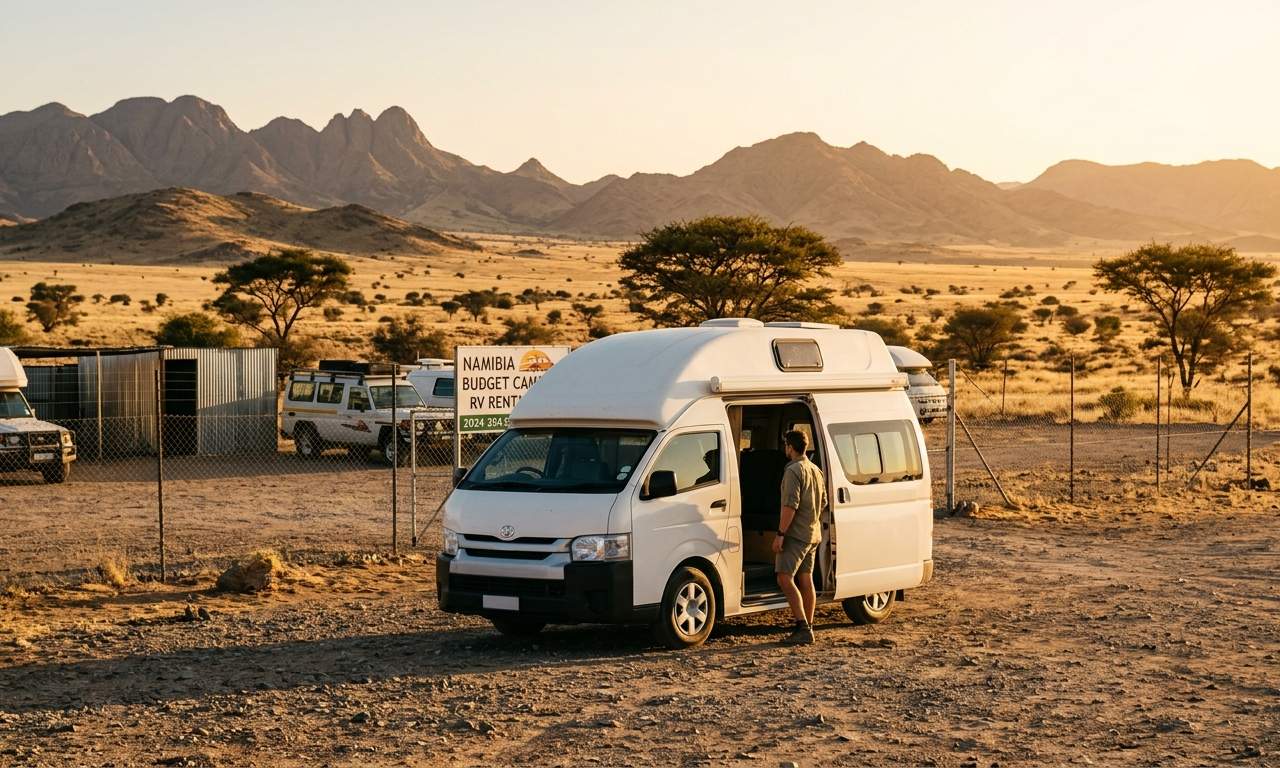
Imagine yourself traversing vast, open landscapes, waking up to the sound of the desert, and witnessing incredible wildlife right from your doorstep. This dream becomes a reality with a one-way RV rental in Namibia, offering unparalleled freedom and flexibility for your adventure. Whether you're looking for a week-long trip through dramatic canyons or an extended road trip across ancient deserts, Namibia provides a truly unique motorhome experience. For live availability and current prices, start with our RV Rental Namibia - Complete Guide 2026 guide. We are true RV specialists, dedicated exclusively to motorhome and campervan rentals, ensuring you get expert advice and support every step of the way.
Can You Drive an RV in Namibia? License & Age Rules
Yes, most standard international driving licenses are accepted for driving rented RVs up to 3.5 tonnes in Namibia. Foreign drivers, however, generally require an International Driving Permit (IDP) alongside their national license if their license is not in English, to avoid any potential issues with local authorities or rental companies. The minimum age to rent and drive an RV in Namibia is typically 21 years old, although this can vary by rental provider. Some suppliers may require a license to have been held for at least 2-5 years. Unlike many other destinations, there are no young driver surcharges or vehicle class restrictions based on age, making RV travel accessible for younger adventurers.
For larger Class A or Class C motorhomes exceeding 3,500 kg Gross Vehicle Mass (GVM), a higher license category (e.g., C1 or C) might be required, depending on your country of origin's specific licensing system. It's always best to check with Bandana RV specialists before booking to ensure your license meets all local requirements for your chosen RV class. We pride ourselves on full transparency, ensuring you have no hidden fees or surprises related to licensing or any other aspect of your one way rv rental in Namibia.
Road Conditions & Terrain in Namibia
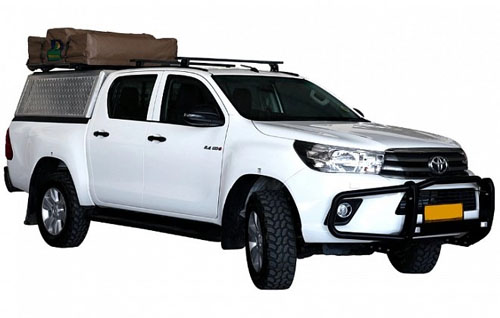
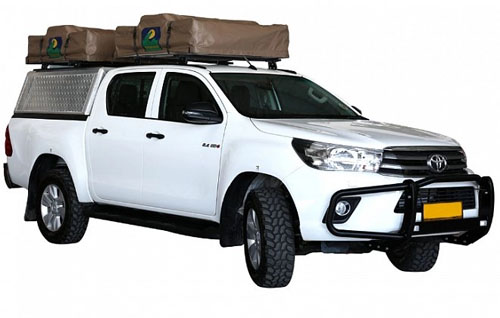
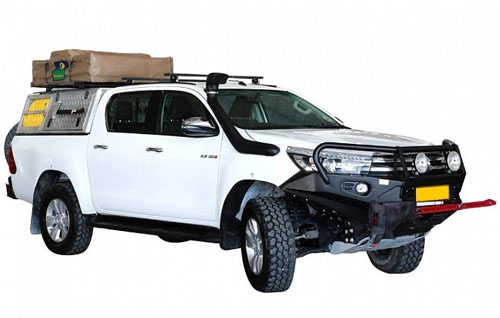
Namibia's road network primarily consists of well-maintained tarred roads (B-roads) connecting major towns, complemented by an extensive system of gravel roads (C and D roads) that lead to national parks and remote attractions. Expect significant stretches of gravel, sand, and corrugated roads, particularly in regions like Damaraland, Kaokoland, and within national parks such as Etosha, which demand slower speeds and careful driving to prevent damage. These varied conditions impact driving speed, vehicle choice, and overall trip planning, making robust vehicles like 4x4 campers, such as the "Patagonia Camper 4x4 double cab" or "4x4 Scout Adventure Truck Camper Gold", more suitable for off-the-beaten-path exploration. Driving a rented RV in Namibia encourages a slower pace, allowing travelers to fully appreciate the dramatic landscapes and wildlife, with speeds rarely exceeding 80 km/h on gravel and 120 km/h on tar. We recommend traveling slowly, ideally a maximum of 100-150 km per day on average, to truly immerse yourself in the scenery and local culture.
RV Size Limits, Bridges & Restricted Zones
Generally, Namibia does not have strict RV size limits for height or weight that would significantly impede travel on main routes, as most infrastructure is designed to accommodate larger trucks and buses. Low bridges are uncommon on primary RV routes; however, always be aware of your rented vehicle's height and weight, especially when navigating smaller, less-traveled roads or entering camp sites. Environmental zones are primarily found within national parks and protected areas, such as Etosha or Namib-Naukluft, where vehicle access might be restricted to specific tracks or require permits, but typically not based on the sheer size of the motorhome. Ferry limits are not a common concern for RV travel within Namibia, as major river crossings are generally handled by bridges. So, whether you opt for a compact campervan like the "2 Berth Hi Top" or a larger Class C motorhome, you'll find Namibia's roads accommodating. Just drive slowly and carefully, and you can drive almost anywhere without issues. No need to stress-just use common sense and pay attention.
Fuel: Diesel vs. Petrol & Cost per 100 km
Diesel is the predominant fuel type and is widely available across Namibia, especially for the larger RVs in Bandana's fleet, with petrol also accessible in most towns. For a Class SI - Semi-integrated RV (avg. length 6.9m), like the "2 Berth Tamar", expect fuel consumption of 10-11 Liters/100 km. A larger Class C - Alcove motorhome (avg. length 7.5m), such as a "24' Class C Motorhome", typically consumes 10-12 Liters/100 km (global fleet averages). Smaller Class B - Camper Vans (avg. length 5.8m) like the "2 Berth Hi Top" are more economical at 8-10 Liters/100 km, whereas Class TC - Truck Campers (avg. length 5.5m), often geared for tougher terrain, can range from 12-17 Liters/100 km, depending on the specific model and whether it is a 4x4. Fuel prices in Namibia are generally regulated and competitive, but costs per 100 km can vary significantly based on vehicle type, terrain, driving style, and current fuel prices, which travelers should budget for. Fuel stations can be sparse in remote areas, so it's crucial to refuel whenever possible and consider carrying extra fuel if venturing into very isolated regions. For tracking all your trip expenses, including fuel and other ancillary costs, RV PLANET routes allow you to itemize and budget every detail along the way. On the routes offered through RV PLANET routes, you can itemize and track every expense along the way for easy budgeting.
Tolls, Vignettes & Border Rules
Namibia generally does not have an extensive system of tolls or vignettes on its national road network, making one-way RV travel straightforward without the need for pre-purchased passes. For cross-border trips, especially into neighboring countries like South Africa or Botswana, travelers must adhere to specific customs and immigration procedures, including potential road user charges or permit requirements. An International Driving Permit (IDP) is essential for foreign drivers crossing international borders in Southern Africa, alongside vehicle registration documents and a letter of authorization from the rental company for a one-way RV rental. Always confirm specific border crossing requirements and any applicable road fees for neighboring countries well in advance of your trip, as regulations can change. Our true RV specialists can offer guidance on these requirements during your booking process.
Driving Tips for one way rv rental Travelers
Driving a rented motorhome through Namibia is an incredible experience, but it requires mindful preparation. Firstly, always slow down on gravel roads to maintain control, minimize the impact of corrugation, and prevent punctures. Speeds above 80 km/h on gravel can quickly lead to loss of control or damage to the vehicle, so stick to 60-70 km/h for comfort and safety. Secondly, be vigilant for wildlife, as animals, both domestic and wild, can frequently cross roads, particularly at dawn and dusk; drive cautiously and scan the verges. Thirdly, carry sufficient supplies, as Namibia's vast distances mean long stretches between towns; ensure you have adequate water, fuel, and non-perishable food for at least 2-3 days. Fourthly, plan your route and refuel strategically: map out your daily drives, consider the limited availability of fuel stations in remote areas, and always refuel when the tank is half-full. Finally, be prepared for potential breakdowns; while your rental RV will have breakdown assistance, cell phone reception is sporadic outside major towns, so consider a satellite phone for emergencies, especially for more remote areas. Remember our mantra: travel slowly, max 100-150 km per day on average, to fully feel the place, connect to the culture, the food, and the scenery.
🎬 Video coming soon
Recommended RV Class for Namibia Roads
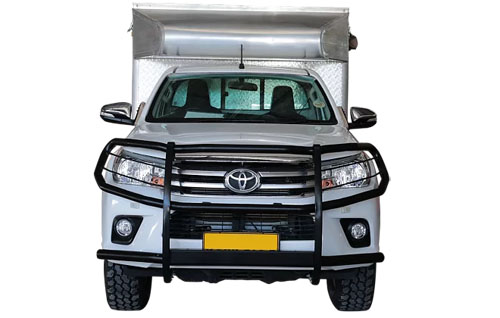
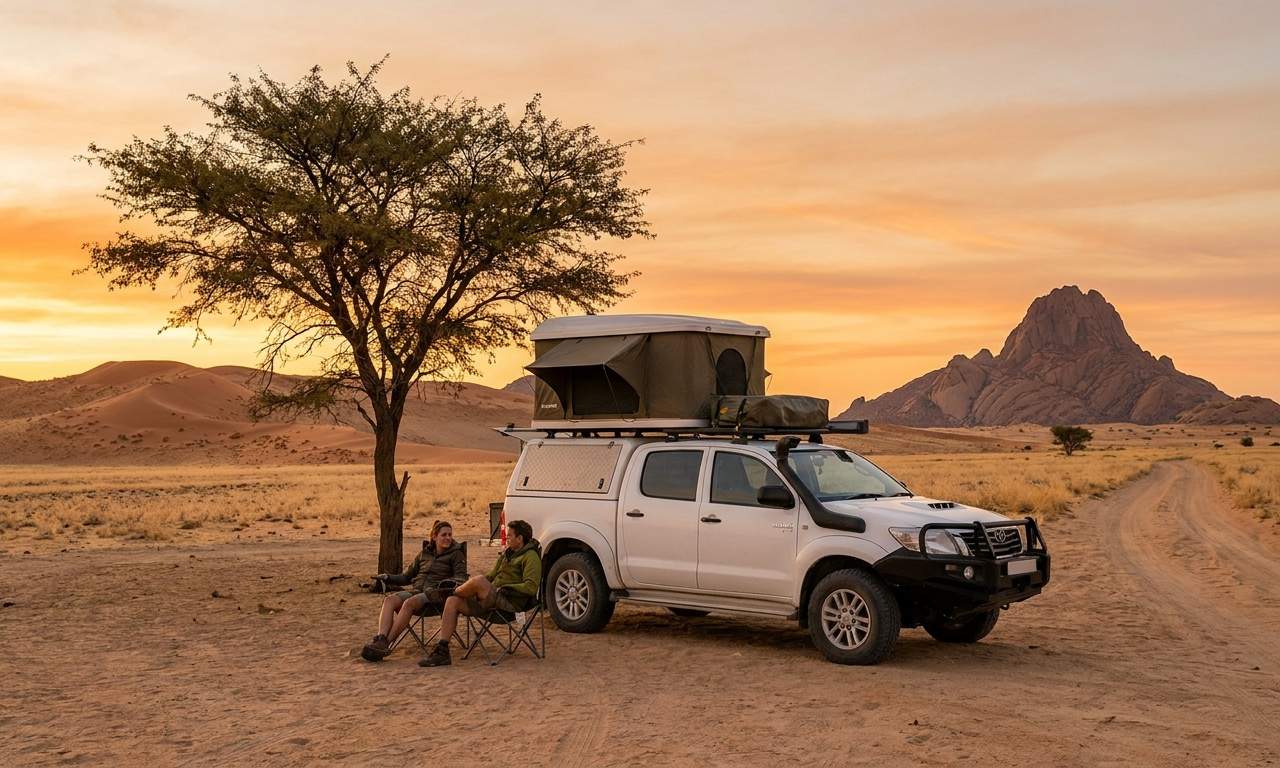
For diverse Namibian terrain, including the challenging unpaved and corrugated roads, the Class TC - Truck Camper, such as the "4x4 Scout Adventure Truck Camper Silver", is highly recommended. This vehicle class is robust, often features superior ground clearance, and its compact size (avg. length 5.5m) makes it ideal for navigating gravel and slightly rougher tracks without compromising maneuverability. Alternatively, a Class B - Camper Van (avg. length 5.8m) like the "Camper Van" offers a good balance of maneuverability, fuel efficiency (8-10 Liter/100 Km), and comfort for couples or small groups, suitable for major routes and well-maintained gravel roads. While a Class SI - Semi-integrated motorhome (avg. length 6.9m), like the "Cruz", offers more comfort and living space, it's generally best suited for tarred roads and primary gravel routes, as its lower ground clearance might be a limiting factor on very uneven or sandy tracks. When choosing your rented motorhome, prioritize ground clearance, robust suspension, and potentially 4x4 capability (if available for the specific rental) over sheer size, especially if planning to venture off the main 'B' roads.
Should I Choose a Compact Van Instead of a Large RV in Namibia?
While larger Class C motorhomes offer unparalleled comfort and indoor space for an extensive one way rv rental in Namibia, a compact campervan can be a more practical choice due to its better maneuverability on narrower gravel roads and potentially superior fuel economy. A compact van (like a Class B - Camper Van with an average length of 5.8m), such as the "Campervan for 2 - Automatic", generally handles Namibia's varied road conditions, including corrugations and some sandy tracks, with greater ease than a larger, heavier Class C or Class A motorhome. The decision often comes down to personal travel style: compact vans are excellent for active travelers prioritizing accessibility to more remote campsites and efficiency, while larger RVs provide a 'home-away-from-home' experience best enjoyed on main routes and well-established campgrounds. However, most RV sizes (up to Class C - Alcove at 7.5m) can generally navigate Namibia's primary tourist routes without significant issues; comfort and amenities often outweigh marginal gains in maneuverability for many travelers.
Can I Park Anywhere? Free & Wild Camping Rules in Namibia
Wild camping and free parking overnight are generally restricted in Namibia, particularly within national parks, protected areas, and on private land without explicit permission. The best and safest option for RV travelers in Namibia is to utilize the extensive network of designated campsites, which are often well-equipped and located in scenic areas or near major attractions. Many of these offer amenities like ablution blocks, braai facilities, and sometimes even a small shop. Some remote public lands outside of protected areas might permit wild camping, but it is critical to confirm local regulations, practice Leave No Trace principles, and be acutely aware of wildlife. Rules vary by region, so always check local regulations and follow local law before parking overnight. Consider the safety implications of isolated overnight stops. For finding campsites and campgrounds during your trip, we recommend using RV PLANET (rvplan.net) - a great resource for locating available spots along your route and planning your itinerary.
Can I Drive an RV Into the City Center? Heights, Tunnels & Local Signage
Yes, RVs can generally be driven into city centers in Namibia, such as Windhoek, Walvis Bay, or Swakopmund, as these cities are not typically characterized by the narrow, restrictive streets or numerous low bridges found in older European cities. Namibia's urban infrastructure is generally spacious enough to accommodate most motorhomes and campervans. However, drivers should always pay close attention to local signage, especially regarding parking restrictions, weight limits in certain areas, and any temporary road closures. While tunnels and specific height limits are rare on primary city access routes, always be mindful of your rented RV's dimensions when navigating urban environments and seeking parking. Parking a large RV in city centers can be challenging due to space availability, so consider parking on the outskirts and using local transport or simply walking to explore downtown areas. Drive slowly and carefully, and you can drive almost anywhere without issues. No need to stress-just use common sense and pay attention.
What Type of RV is Best for Namibia's Terrains and Travel Styles?
For adventurous travelers tackling diverse terrains in Namibia, including unpaved and corrugated roads, a 4x4 camper or a Class TC - Truck Camper, like the "4x4 Truck Camper Gold", is highly recommended for its superior ground clearance and robust build. If your journey primarily sticks to well-maintained tarred roads and major gravel routes, a Class SI - Semi-integrated RV offers a comfortable balance of amenities and drivability, averaging 6.9m in length, ideal for couples or small families on a one way rv rental. Budget-conscious travelers or those seeking greater maneuverability will find Class B - Camper Vans (avg. length 5.8m) suitable, offering efficient fuel consumption (8-10 Liter/100 Km) for exploring many areas, particularly popular for young couples or small friend groups. Families or larger groups prioritizing spaciousness and comfort for longer trips will appreciate Class C - Alcove RVs (avg. length 7.5m), which are best suited for primary routes and established campsites, providing ample space for sleeping and onboard cooking. Ultimately, the 'best' rented RV depends on your planned itinerary, comfort preferences, and willingness to navigate Namibia's varied road conditions, with 4x4 capability being a significant advantage for off-road exploration. For fresh meals on the go, check out our RV-friendly recipes playlist.
What Are Essential Logistics for Remote RV Travel in Namibia?
For remote RV travel in Namibia, meticulous planning of fuel and water sourcing points is critical, as stations and potable water can be hundreds of kilometers apart. Always refuel and refill tanks when opportunities arise; many Class C motorhomes, for instance, have a 75-liter fuel tank and a 82-liter fresh water tank (e.g. "cruise america rv rental example Explorer"). Effective communication solutions are essential due to unreliable cell phone coverage outside populated areas; consider renting a satellite phone or carrying a reliable two-way radio for emergencies. Travelers planning to visit restricted areas, such as specific tribal lands or sections of the Skeleton Coast, must obtain the necessary permits in advance from local authorities or tour operators. Stocking up on non-perishable food, a comprehensive first-aid kit, and essential vehicle spare parts (e.g., spare tires, basic tools) is crucial, as assistance can be hours away in isolated regions. Inform a trusted contact of your itinerary, especially when venturing into very remote areas, and check in regularly to ensure your safety. To simplify planning for such remote adventures, consider our Rent&Plan service, which offers pre-planned routes by professionals, including detailed logistical information.
How Can RV Travelers Ensure Safety and Emergency Preparedness in Namibia?
Beyond general road safety, RV travelers in Namibia must be prepared for wildlife encounters; avoid driving at night, keep campsite food secured, and maintain a safe distance from animals, especially in national parks like Etosha. For breakdown preparedness in isolated areas, ensure your RV rental includes comprehensive roadside assistance, carry spare tires and a repair kit, and know how to perform basic checks (e.g., tire pressure, fluid levels). Establish comprehensive emergency protocols before your trip, including knowing emergency contact numbers (10111 for police, 112 for ambulance/fire), understanding how to use communication devices like satellite phones, and familiarizing yourself with your medical aid options. Always inform someone of your route and expected arrival times, especially for longer drives through remote regions where cell signal is non-existent. Consider travel insurance that specifically covers medical emergencies, vehicle recovery in remote areas, and personal liability for peace of mind. You can also upgrade to a top-level deductible for extra peace of mind through Bandana, ensuring that unexpected incidents are covered.
How Can RV Travelers Experience Authentic Cultural Immersion and Responsible Tourism in Namibia?
To foster authentic cultural immersion during your one-way RV rental in Namibia, seek out opportunities to visit local markets, engage with community-based tourism projects, and consider staying at campsites near local villages (where permitted) for interaction. Support responsible and sustainable tourism practices by choosing locally-owned businesses, purchasing handcrafted goods directly from artisans, and respecting local customs and traditions, particularly when visiting indigenous communities in regions like Damaraland or Kaokoland. Beyond typical safari tours, explore the cultural heritage sites, rock art galleries (like Twyfelfontein, a UNESCO World Heritage site), and museums in towns like Windhoek or Swakopmund to gain deeper insights into Namibia's diverse history and peoples. Engage respectfully with local communities, learn a few basic phrases in a local language (e.g., "Hello" in Afrikaans is "Goeie dag"), and always ask permission before taking photographs of people. Minimize your environmental impact by practicing Leave No Trace principles, conserving water, and properly disposing of waste throughout your RV journey in Namibia. Remember, traveling slowly, an average of 100-150 km per day, allows you to truly feel the place and connect to its rich culture.
What You Shouldn't Miss
- Etosha National Park: Spend several days driving through this iconic park in your rented RV, especially visiting waterholes like Okaukuejo, Halali, and Namutoni, for unparalleled wildlife viewing including elephants, lions, rhinos, and giraffes.
- Sossusvlei and Deadvlei: Drive into Namib-Naukluft National Park to witness the towering red dunes and the stark, ancient camel thorn trees of Deadvlei, best experienced at sunrise or sunset.
- Fish River Canyon: Explore the second-largest canyon in the world, offering breathtaking panoramic views, especially from the main viewpoint near Hobas.
- Swakopmund: Enjoy coastal adventures in this charming German colonial town, from dune boarding and quad biking to scenic flights over the Skeleton Coast. It's a great spot to park your campervan and enjoy some city amenities.
- Damaraland: Journey through this rugged region to encounter desert-adapted elephants, rhinos, and the ancient rock engravings of Twyfelfontein. A 4x4 camper or truck camper is highly recommended here.
- Quiver Tree Forest: Near Keetmanshoop, this surreal landscape of giant aloes makes for a unique photo opportunity and a peaceful overnight camping spot.
Final Thoughts
A one-way RV adventure in Namibia is more than just a trip; it's an opportunity to connect deeply with some of Africa's most breathtaking and untamed landscapes. From the towering dunes of Sossusvlei to the wildlife-rich plains of Etosha and the rugged beauty of Damaraland, a rented motorhome or campervan provides the ultimate freedom to explore at your own pace. With Bandana as your trusted partner, you benefit from transparent pricing, expert advice, and the peace of mind that comes from knowing real RV specialists are supporting your journey.
Embrace the call of the wild, plan your route carefully using resources like RV PLANET (rvplan.net), and prepare for an unforgettable experience. Namibia is waiting to unveil its wonders to you, one scenic kilometer at a time. Get ready to discover top destinations, planning tips, all in one place, and plan a trip itinerary in advance with minimal effort and maximum enjoyment!
Compare One Way RV Rental Prices for Namibia Now!