
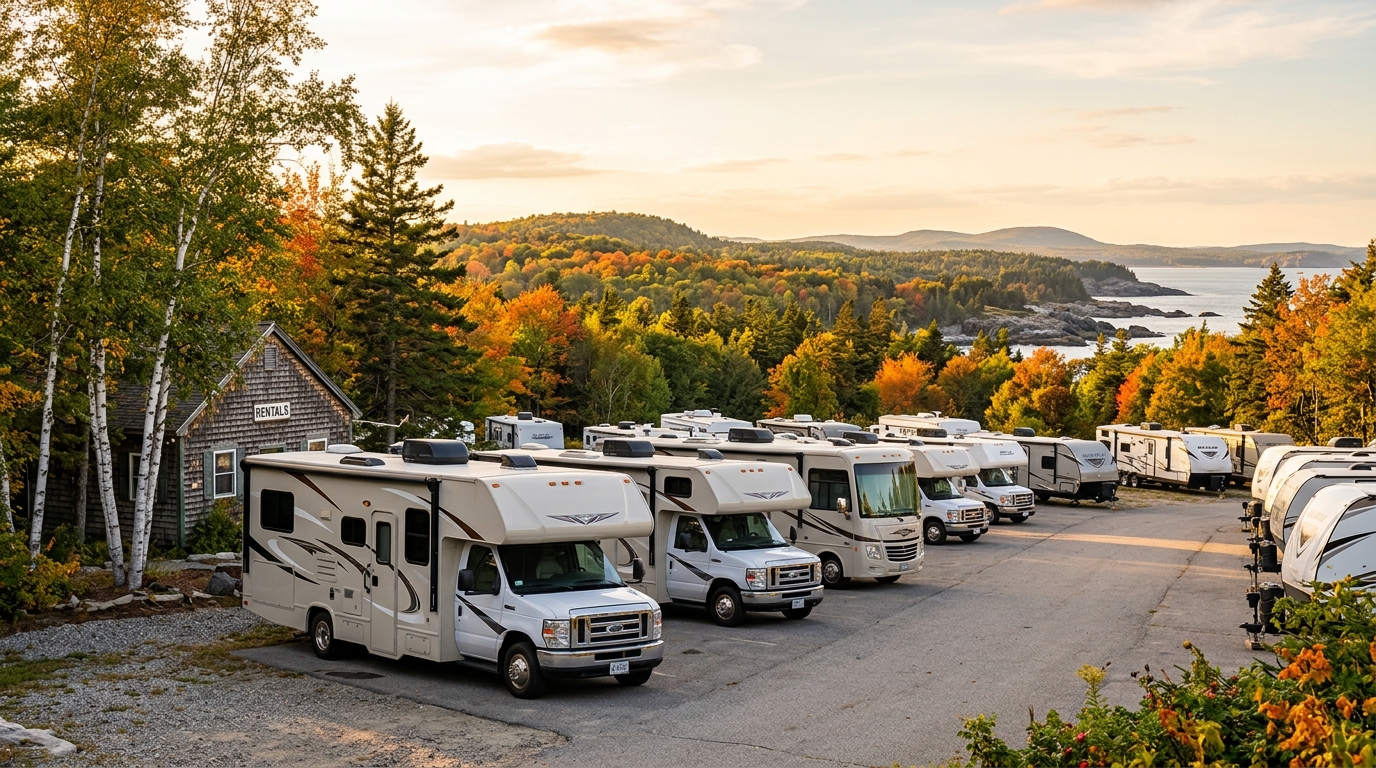
For live availability and current prices, start with our RV Rental Maine - Complete Guide 2026 guide.
In This Guide
- What luxury rv rental RV Rental Costs in Maine (2026)
- Seasonal Pricing — Peak vs. Shoulder vs. Off-Season in Maine
- What's Included vs. What's an Add-On
- Hidden Costs to Budget For in Maine
- How to Save on luxury rv rental RV Rental in Maine
- Detailed logistics and challenges specific to RVing in Maine
- Comprehensive guide to boondocking, dispersed camping, and free overnight parking rules and specific locations across Maine
- In-depth budgeting guide: A realistic cost breakdown for different types of Maine RV trips
- Off-the-beaten-path destinations and hidden gems beyond Acadia National Park and the popular southern coastal routes
- RV-specific foodie experiences: How to find, access (with an RV), and incorporate local Maine delicacies
- Wildlife safety and preparedness, specifically for moose and bear encounters
- Tips for shoulder-season RV travel in Maine, particularly for fall foliage
- Sustainability and 'Leave No Trace' principles tailored for Maine's unique and often fragile ecosystems
What luxury rv rental RV Rental Costs in Maine (2026)
Luxury RV rental costs in Maine can vary significantly, influenced by the RV class, rental duration, and time of year. April is typically the most affordable month for rentals, offering substantial savings compared to peak summer months. Rental prices operate on a dynamic, flex-rate system, meaning they fluctuate daily based on demand, specific RV class chosen, and how long you plan to rent. For precise, up-to-the-minute pricing for various RV classes and rental durations, it's essential to check live availability using a comparison platform. Using tools like rvplan.net can help you compare final prices across multiple suppliers, ensuring you find the best value for your Maine RV adventure. Remember, the final price is always set at the time of booking.
Seasonal Pricing — Peak vs. Shoulder vs. Off-Season in Maine
The season in Maine dramatically impacts luxury RV rental prices. Peak season, generally July through August, sees the highest rates due to intense demand. During these months, booking well in advance is crucial to secure a vehicle and potentially better pricing. The shoulder seasons—May to June and September to October—offer a sweet spot with moderate pricing, fewer crowds, and pleasant weather, making them ideal for experiencing Maine's stunning fall foliage or early summer blooms. Off-season, from November to April, generally presents the lowest prices, though availability is limited, and specific winter-ready RV models are often required. Keep in mind that prices even within peak season can change significantly day-to-day, so always verify rates for your specific travel dates.
What's Included vs. What's an Add-On
When you rent a luxury RV in Maine, basic insurance coverage is typically included, providing fundamental protection for your journey. However, many other features are commonly offered as optional add-ons, significantly affecting the final cost. These can include comprehensive insurance upgrades for enhanced peace of mind, mileage packages (such as unlimited mileage), generator usage hours, and convenience kits. Kitchen kits, which contain essential utensils and tableware, along with bedding and linen packages, are frequently offered as optional extras. It's important to note that inclusions and add-ons vary considerably between different RV models and rental stations, so always verify what's included with your specific rental. To see prices that encompass the most comprehensive coverage, simply select the relevant insurance options during your search, and all associated costs will be clearly displayed. You can also use rental comparison tools to see which RVs include kitchen utensils, tableware, and bedding as standard features. For ideas you can prep on the road, watch our RV-friendly recipes playlist on YouTube.
Hidden Costs to Budget For in Maine
Beyond the base rental rate for your luxury RV in Maine, several other costs should be factored into your budget to avoid surprises. Tolls are a common consideration, particularly on the Maine Turnpike (I-95), though some RV rental providers may offer toll passes to help manage these expenses and avoid potential fines. Campsite fees can vary widely, from more affordable state parks to pricier private resorts that offer extensive amenities; some rental platforms might even offer campground discount cards. Fuel costs for a luxury RV touring Maine's often expansive routes can be substantial, influencing your overall trip expenses – remember to check if any RVs include fuel discount cards. You might also encounter dump-station charges at private facilities if they aren't included with your campground stay. Finally, be mindful of parking fees, especially when visiting popular coastal towns like Bar Harbor or Kennebunkport, where larger rigs might incur higher charges or face parking restrictions. Always clarify these potential costs with your rental provider at pickup to understand what's covered and if any discounts are available. On the routes offered through RV PLANET routes, you can itemize and track every expense along the way for easy budgeting.
How to Save on luxury rv rental RV Rental in Maine
To make your luxury RV rental in Maine more affordable, consider several money-saving strategies. Booking during Maine's shoulder seasons—May to June or September to October—can often lead to lower rental rates and fewer crowds, enhancing your experience. If your route involves significant driving, pre-paying tolls or inquiring about toll passes with your provider can help avoid higher pay-by-mail fees and potential fines. Utilize campground discount cards if offered by your rental platform or included with certain RVs to save on nightly fees. When choosing your vehicle, consider a slightly smaller RV class if it adequately meets your group's needs, as smaller rigs typically have lower rental rates and better fuel efficiency. Opting for longer rental durations often results in a decreased daily rate, making extended trips more economical. Lastly, keep an eye out for last-minute deals or flex-rate drops, especially if your travel dates are flexible; by comparing options, you can often secure a great value.
Detailed logistics and challenges specific to RVing in Maine
Navigating Maine in a luxury RV presents unique logistical considerations and potential challenges. Many of the state's beautiful coastal roads, particularly those in Acadia National Park and the Down East region, are narrow and winding. This requires careful driving and a heightened awareness of your RV's dimensions to safely maneuver. Always be aware of specific bridge heights and tunnel restrictions, which are common on scenic routes and secondary roads; double-checking your RV's clearance is essential before proceeding. In the more remote areas, such as the vast North Maine Woods, you can expect variable cell service blackouts. It's wise to plan for this by downloading offline maps and establishing alternative communication methods. Parking can also be a challenge for larger rigs in popular coastal towns like Bar Harbor, Kennebunkport, and Ogunquit; advance planning for parking is highly recommended. Additionally, some interior and logging roads in Maine's vast interior might be unpaved or less maintained, requiring cautious driving and a flexible itinerary.
Comprehensive guide to boondocking, dispersed camping, and free overnight parking rules and specific locations across Maine
Maine offers dispersed camping and boondocking opportunities, primarily within the expansive North Maine Woods. Accessing these areas typically requires permits, often available for a small fee, and a strict adherence to Leave No Trace principles is paramount. Maine's Bureau of Public Lands also manages numerous recreational sites where primitive camping may be permitted, but it's always advisable to verify specific rules for each unit before setting up camp. For overnight parking at retail establishments like Walmart, policies vary; always seek explicit permission from store management upon arrival to confirm their current policy. Public rest areas generally have time limits for parking, and while truck stops often accommodate RVs, checking signage or asking staff is recommended for overnight stays. When boondocking in Maine, preparedness is key—ensure you have sufficient supplies as amenities are often non-existent, and always practice diligent waste management and respect for private property and the natural environment.
In-depth budgeting guide: A realistic cost breakdown for different types of Maine RV trips
Crafting a realistic RV trip budget for Maine requires accounting for several key expenses. Fuel costs can be significant, especially for larger luxury RVs like a Class A motorhome, which typically gets 8-12 MPG. This impacts expenses for routes like the scenic coastal US-1 or the inland I-95. Campground fees vary considerably, ranging from approximately $25-$50 per night for state parks to $60-$120+ per night for private luxury RV resorts with full hookups. Don't forget activity expenses, which can include national park entrance fees (such as for Acadia National Park), whale watching tours, or tickets to various attractions. Food budgeting is highly variable, from $75-$150+ daily if dining out frequently (especially for local seafood) to much less when cooking meals in your RV using fresh, local ingredients. Potential tolls, primarily on the Maine Turnpike (I-95), should also be factored in, with costs typically ranging from $5-$10+ per segment, or consider an EZ-Pass for convenience. Finally, always include a buffer for miscellaneous costs like propane refills, laundry, or unforeseen incidentals to ensure a stress-free trip.
Off-the-beaten-path destinations and hidden gems beyond Acadia National Park and the popular southern coastal routes
While Acadia National Park and the southern coast are popular draws, Maine offers many off-the-beaten-path destinations for RV explorers. The vast North Maine Woods provides unparalleled remote camping, fishing, and wildlife viewing opportunities, accessible via logging roads and requiring permits for a truly immersive, off-grid experience. Maine's Down East coast, particularly Washington County, presents rugged coastlines, quiet fishing villages, and expansive blueberry barrens, including Roque Bluffs State Park, for an authentic, less crowded adventure. The Maine Lakes and Mountains Region, encompassing areas like Sebago Lake State Park and the Rangeley Lakes region, offers abundant scenic drives, freshwater recreation, and hiking trails. For dramatic gorges and waterfalls, explore less-visited state parks like Grafton Notch State Park, or venture into Aroostook County for its unique cultural landscape and deep solitude. Consider venturing inland from popular mid-coast towns to places like Camden Hills State Park for breathtaking views without the peak-season crowds.
RV-specific foodie experiences: How to find, access (with an RV), and incorporate local Maine delicacies
Maine's culinary landscape is a treasure trove for RV travelers. Sourcing fresh lobster directly from working wharves in places like Stonington or Port Clyde, or from roadside lobster pounds, is a quintessential Maine RV foodie experience, and these delicacies are easily prepared in an RV kitchen. In late July and August, especially Down East, you can find wild blueberries at U-pick farms or local farmers' markets, perfect for RV breakfasts or desserts. Local maple syrup is available year-round at sugar shacks (primarily in spring) or farm stands, ideal for sweetening coffee or pancakes. Maine's farmers' markets, found in towns across the state, are excellent for stocking up on local produce, artisan cheeses, and meats, all easily accessible with an RV and simple to incorporate into meals. When cooking in a compact RV kitchen, planning simple, one-pot meals, utilizing outdoor grills at campgrounds, and maximizing space with multi-functional cookware are key. Remember to research RV-friendly parking options near markets, wharves, or farm stands to ensure convenient access for your vehicle.
Wildlife safety and preparedness, specifically for moose and bear encounters
When RVing in Maine, understanding wildlife safety, particularly for moose and bear encounters, is crucial. Moose are most prevalent at dawn and dusk on rural roads; drive slowly and be prepared to stop, as they can appear suddenly and are extremely dangerous to hit due to their height and weight. In campgrounds, practice strict bear safety by storing all food, scented items, and trash in bear-resistant containers or locked securely inside your RV, and never feed any wildlife. If you encounter a moose on the road, maintain a safe distance and wait for it to move; never approach or provoke them, especially cows with calves. In the unlikely event of a bear encounter, make noise to announce your presence, appear large, and back away slowly. If an attack occurs, fight back vigorously. Always observe wildlife from a safe distance and familiarize yourself with local wildlife behavior and safety guidelines for the specific areas you plan to visit in Maine.
Tips for shoulder-season RV travel in Maine, particularly for fall foliage
Shoulder-season RV travel in Maine, especially during the peak fall foliage period from late September to mid-October, offers distinct advantages. You'll benefit from fewer crowds, stunning scenery, and often lower rental and campground prices. However, challenges include variable weather, with cooler temperatures, potential rain, or even early snow. Some campgrounds and attractions may also close after Columbus Day weekend. Recommended fall foliage routes for RVers include scenic Route 27 through the western mountains, Route 17 known for its "Height of Land" views, and portions of coastal Route 1 or the Moosehead Lake region. When booking campgrounds, prioritize state parks or private campgrounds that you confirm will be open later into the fall season and check their operational dates. Be prepared for colder nights by packing layers and ensuring your RV's heating system is fully operational and well-stocked with propane.
Sustainability and 'Leave No Trace' principles tailored for Maine's unique and often fragile ecosystems
Practicing 'Leave No Trace' principles is vital for RVers aiming to protect Maine's diverse and often fragile ecosystems, including its delicate coastal dunes, extensive forests, and mountainous regions. Always plan ahead and prepare by researching specific area regulations and packing out all trash, including food scraps, to leave natural areas as you found them. Travel and camp on durable surfaces, sticking to established roads, trails, and campsites to prevent damage to fragile soils and vegetation. Properly dispose of all waste by utilizing designated dump stations for grey and black water; never discharge wastewater directly into the environment. Minimize campfire impacts by using established fire rings, keeping fires small, and ensuring they are completely extinguished before leaving, always adhering to any local burn bans. Respect wildlife by observing from a distance, never feeding animals, and securing all food and scented items to prevent wildlife access. Be considerate of other visitors by adhering to campground quiet hours and respecting privacy to maintain a peaceful experience for everyone. Tailor your practices to Maine's specific environments, such as avoiding sensitive coastal dune ecosystems and cleaning your RV and gear to prevent the spread of invasive species in forested areas.
What You Shouldn't Miss
- Acadia National Park: Explore the iconic Park Loop Road, hike to Cadillac Mountain for sunrise, and enjoy the rugged coastline from Sand Beach.
- Coastal Maine Scenic Byway (US Route 1): This classic route offers a quintessential Maine experience, with opportunities to stop in charming towns like Kennebunkport, Ogunquit, and Camden, renowned for their maritime heritage and seafood.
- The Wilds of Northern Maine: Venture into the vast North Maine Woods for remote camping, stunning lakes, and a chance to spot moose. Explore areas around Moosehead Lake or Baxter State Park for a true wilderness escape.
- Lobstering Experience: Take a scenic boat tour that includes a lobstering demonstration or visit a working wharf to learn about this vital Maine industry and enjoy the freshest lobster.
- Fall Foliage Drives: If traveling in autumn, plan routes through western Maine’s mountains or around Moosehead Lake for spectacular fall colors.
- Portland's Food Scene: Explore the vibrant culinary landscape of Portland, from its renowned food trucks to its award-winning restaurants, easily accessible with an RV parked nearby.
Final Thoughts
Renting a luxury RV in Maine opens up a world of breathtaking scenery and unforgettable experiences. From its rugged coastline dotted with charming fishing villages to its vast inland wilderness, Maine offers something for every traveler. By understanding the pricing, inclusions, and potential hidden costs, you can plan a journey that perfectly balances adventure with your budget.
Embrace the freedom of the open road, the convenience of having your accommodation on wheels, and the joy of discovering Maine at your own pace. We’re here to support you every step of the way, ensuring your RV rental experience is as smooth and inspiring as the landscapes you'll explore. Get inspired for your next trip and start planning your Maine adventure today!
Discover top destinations, planning tips, and everything you need to know for an incredible RV vacation. Plan a trip itinerary in advance with minimal effort and maximum enjoyment!
