In This Guide
- Can You Drive an RV in Toronto? License & Age Rules
- Road Conditions & Terrain in Toronto
- RV Size Limits, Bridges & Restricted Zones
- Fuel: Diesel vs. Petrol & Cost per 100 km
- Tolls, Vignettes & Border Rules
- Driving Tips for Luxury RV Rental Travelers
- Recommended RV Class for Toronto Roads
- Should I Choose a Compact Van Instead of a Large RV in Toronto?
- Can I Park Anywhere? Free & Wild Camping Rules in Toronto
- Can I Drive an RV Into the City Center? Heights, Tunnels & Local Signage
- Do you need a CDL to drive a luxury RV?
- Do you need a license to drive an RV in Canada?
- Can Americans RV in Canada?
- What is the 3-3-3 rule for RVs?
- Can you park an RV on the street in Toronto?
- What is the new law on RV licensing in Ontario?
- Who insures expensive motorhomes?
- How much is RV insurance in Canada?
- How much is insurance on a million dollar RV?
Exploring Toronto and the stunning landscapes of Ontario in a rented luxury RV offers an unparalleled sense of freedom and comfort. Imagine yourself waking up to the peaceful sounds of nature, enjoying a gourmet breakfast in your mobile home, and then heading out to explore vibrant cityscapes or serene provincial parks. With Bandana Caravan, we've been helping tens of thousands of travelers discover the joy of RV travel since 2001, making sure every detail is handled so you can simply live the journey.
For live availability and current prices, start with our RV Rental Toronto - Complete Guide 2026 guide. We're here to provide full transparency, so you'll never encounter hidden fees or surprises along the way.
Can You Drive an RV in Toronto? License & Age Rules
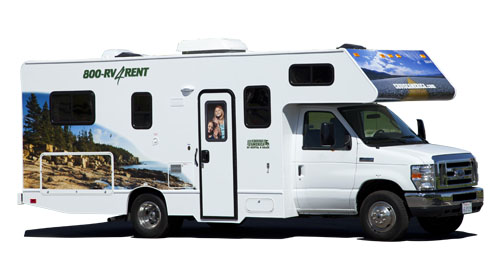
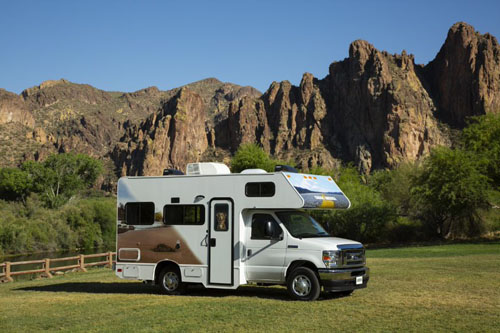
Most recreational RVs in Ontario, including luxury motorhomes under 11,000 kg (24,250 lbs) Gross Vehicle Weight Rating (GVWR), can be driven with a standard Class G driver's license. This means that for a Class C - Alcove, often around 8.2 meters long and sleeping 5-7 people, your regular car license is all you need. A minimum age of 21 is required for rental, and we're proud to say there are no young driver surcharges at Bandana Caravan, allowing more travelers to experience luxury RV driving in Toronto. Foreign visitors must possess a valid driver's license from their home country, and an International Driving Permit (IDP) is recommended for licenses not issued in English or French, though not always mandatory. RVs exceeding 11,000 kg or equipped with air brakes (over 4,600 kg) may require a higher license class (e.g., Class D or A) or an air brake endorsement ('Z' endorsement), but these are generally for much larger, specialized commercial vehicles not typically found in our rental fleet.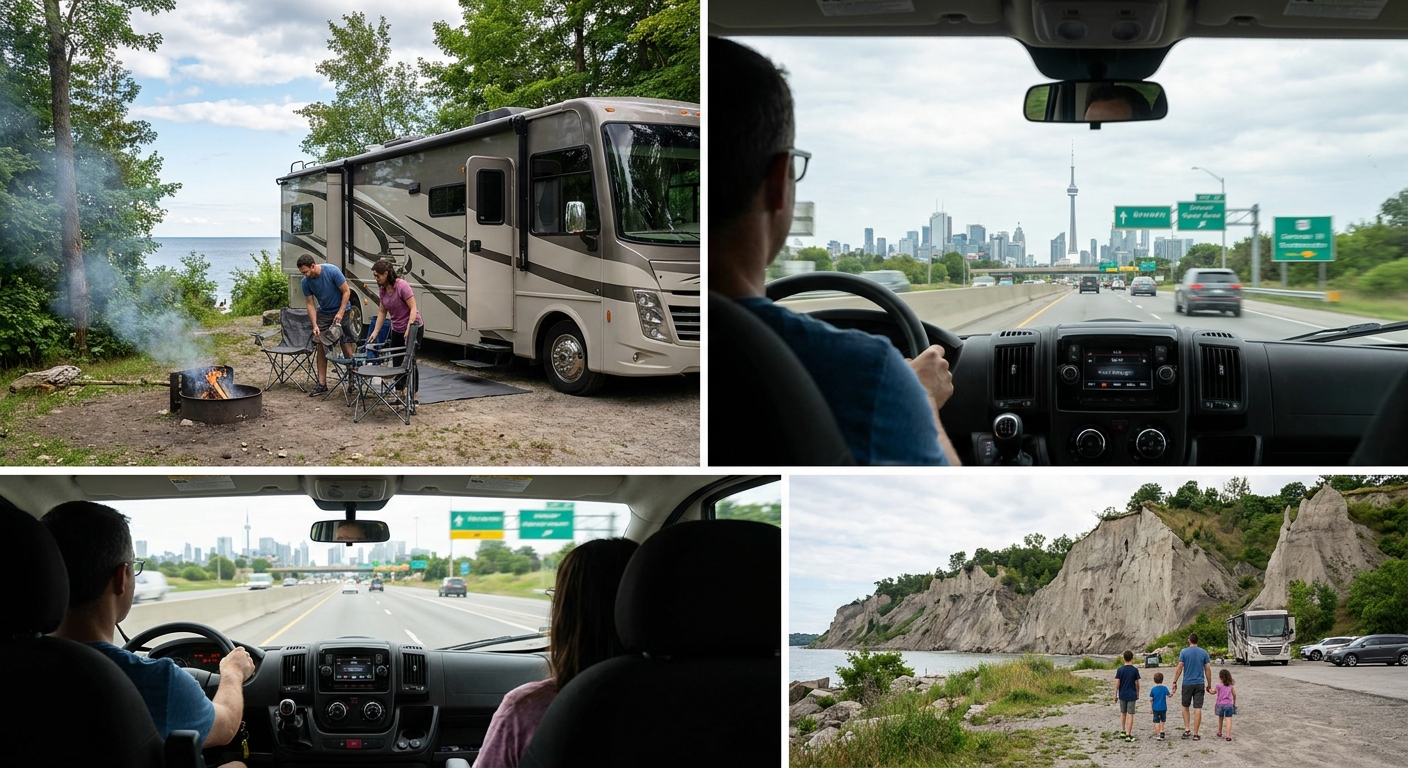
Road Conditions & Terrain in Toronto
Toronto's road conditions are generally well-maintained, particularly on major highways and arterial roads like the Gardiner Expressway and Highway 401, which are perfectly suitable for luxury RVs. The terrain in the Greater Toronto Area (GTA) is predominantly flat to gently rolling, presenting no significant challenges for larger vehicles such as Class A or Class C motorhomes. Urban density, especially in downtown Toronto, means navigating city streets requires heightened awareness for wider and longer vehicles, with construction zones being common. However, drive slowly and carefully, and you can drive almost anywhere without issues. No need to stress - just use common sense and pay attention. For luxury RV travelers, the smooth roads allow for a comfortable ride, encouraging scenic drives along Lake Ontario or through nearby wine regions like Niagara-on-the-Lake, just a 1.5-hour drive away.RV Size Limits, Bridges & Restricted Zones
While there are no general height or weight restrictions on major highways in Toronto, drivers of larger luxury RVs must be mindful of specific urban limitations, particularly overhead clearances. Most luxury RVs, such as a Class A (average 8.9m length) or Class C (average 8.2m length) from Bandana's fleet, will fit under standard highway overpasses and bridges. Low bridge clearances are primarily a concern in older, non-highway urban areas or when attempting to enter underground parking garages, which are generally unsuitable for RVs due to typical height limits of under 2 meters. Toronto does not have specific environmental zones that restrict RV access based on emissions, unlike some European cities, but attention to local 'no parking' or 'no stopping' signage is crucial to avoid issues in busy areas.Fuel: Diesel vs. Petrol & Cost per 100 km
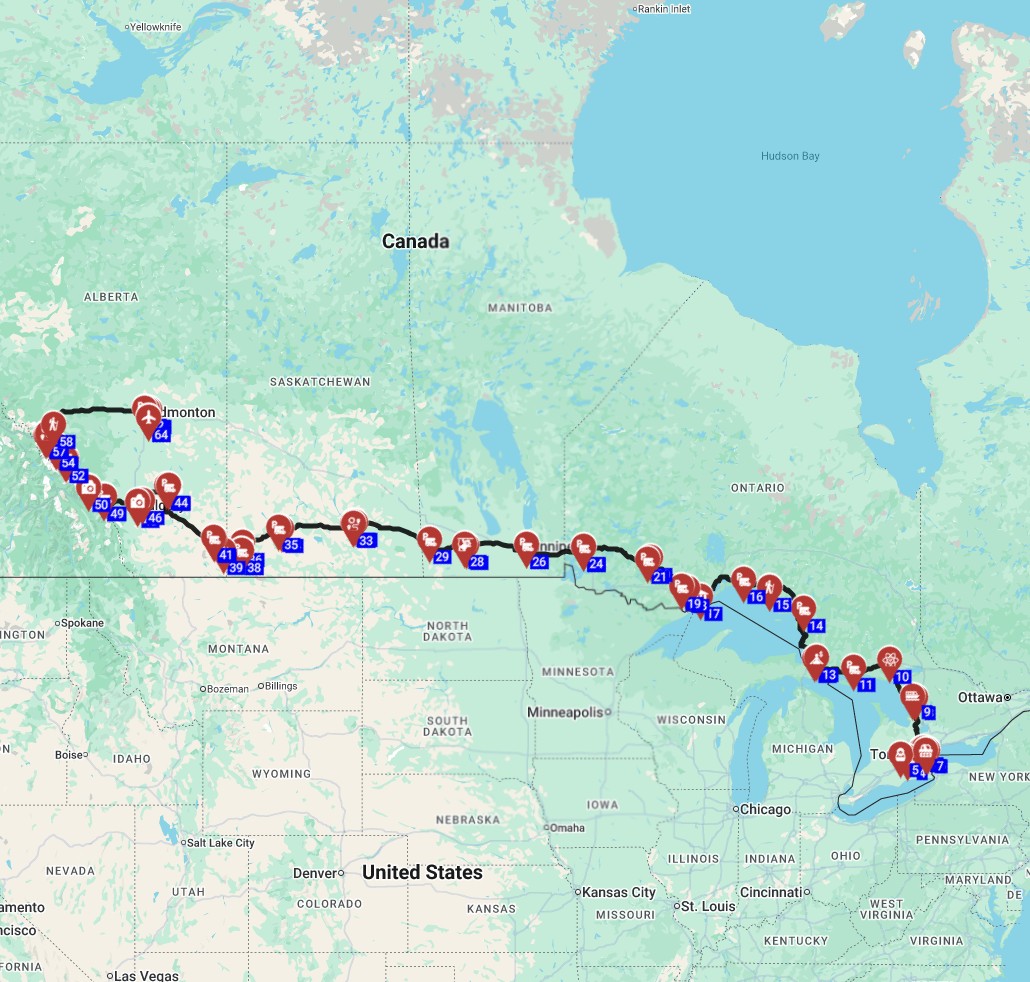
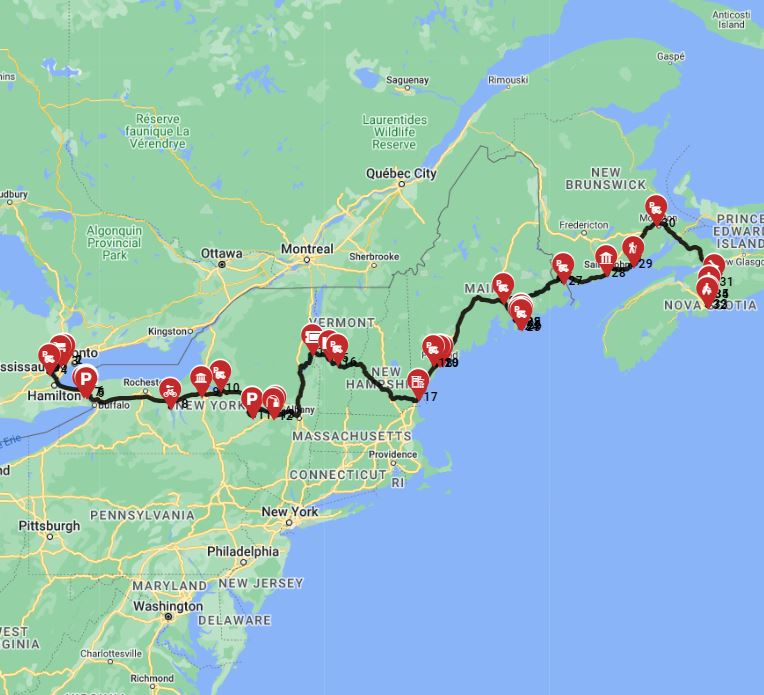
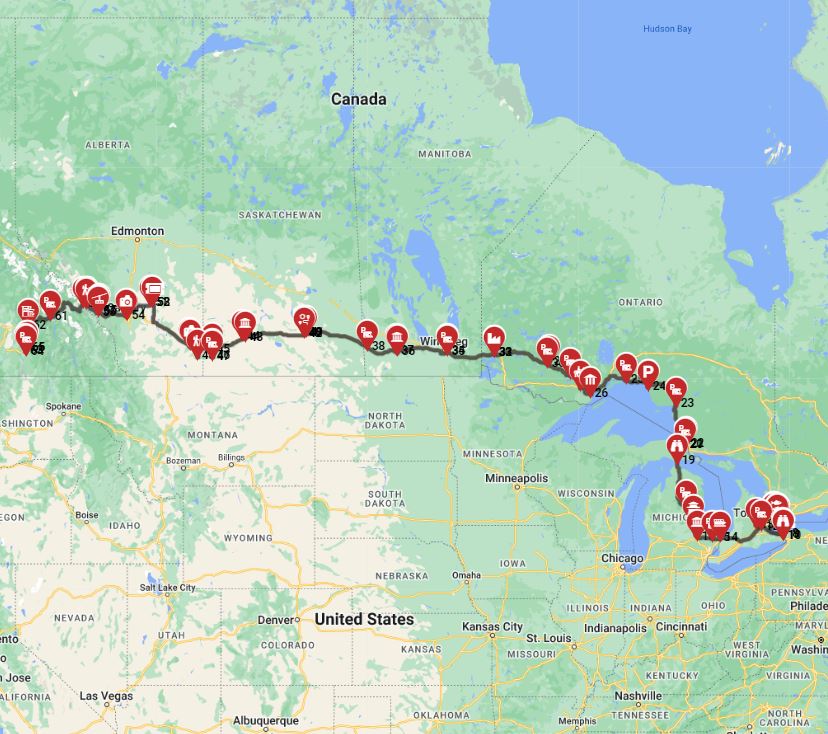
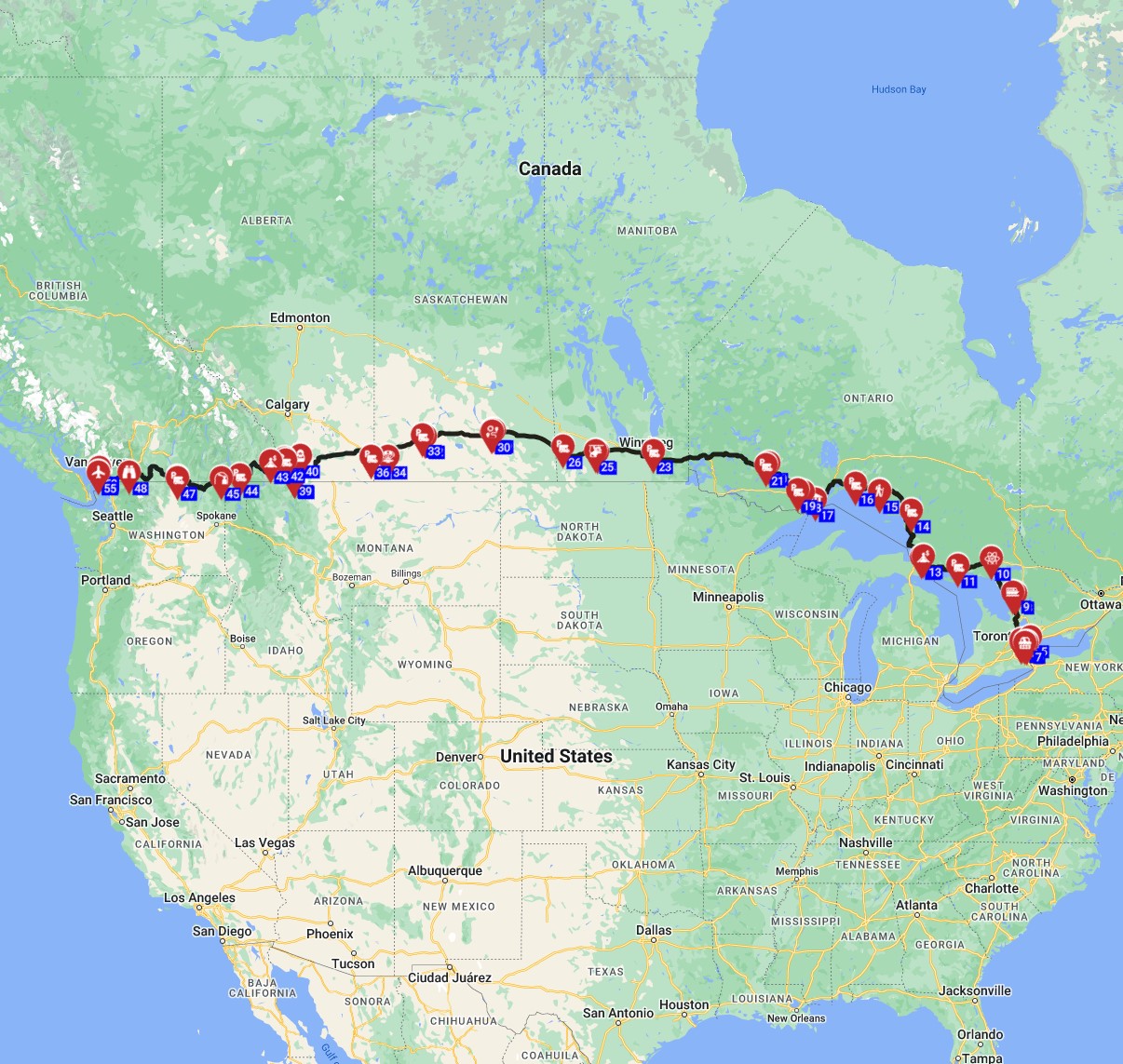
Most larger luxury RVs available for rent in Toronto, such as our Class C, Class SI, and Class A models, typically run on diesel fuel, while smaller Class B campervans may use petrol. Fuel is widely available across Toronto and throughout Ontario at numerous service stations, including major brands like Esso, Petro-Canada, and Shell. Average fuel consumption for Bandana's Toronto fleet varies: Class SI and Class C RVs consume approximately 25-30 Liters per 100 km, leading to an estimated cost of $42.50 - $51.00 per 100 km (based on an average ~$1.70/L diesel price). Class B campervans, with consumption around 11-15 Liters per 100 km, offer lower costs, roughly $17.60 - $24.00 per 100 km (based on an average ~$1.60/L petrol). When planning your budget for an extended road trip like our Toronto to Edmonton - Trans Canada - Big Lakes, Prairie Skies, Rocky Mountain High route plan, remember that on RV PLANET routes, travelers can itemize and track every expense along the way for easy budgeting: RV PLANET routes.Tolls, Vignettes & Border Rules
In Ontario, the only major toll highway is Highway 407 ETR, an electronic toll road without physical toll booths, operating between Burlington and Brock Road in Pickering. Fees are automatically charged to the vehicle owner, so be sure to discuss toll transponder options with your rental supplier. Vignettes, common in parts of Europe for road access, are not used in Canada. For Americans RVing in Canada, key border requirements include valid passports for all occupants, vehicle registration, and proof of insurance. Bringing pets requires up-to-date vaccination records (especially a rabies certificate) presented at the border, and temporary vehicle import for tourism typically doesn't require special permits for stays under 6 months. It’s always a good idea to check current Canada Border Services Agency (CBSA) guidelines before your trip.Driving Tips for Luxury RV Rental Travelers
Driving a luxury rented RV in Toronto requires a confident yet cautious approach, ensuring a smooth and enjoyable journey. Firstly, pre-plan your route: utilize RV-specific navigation apps to account for vehicle dimensions and identify suitable roads, especially when approaching urban areas or campgrounds like Glen Rouge Campground on the eastern edge of the city. Maintain safe distances: larger motorhomes, particularly models like the spacious "MHLUX" Class A RV which can be 10.7m long, require significantly longer stopping distances; always leave ample space between your vehicle and others on highways like the QEW. Be mindful of clearances: pay constant attention to height and width signs, especially under bridges, in tunnels, and when entering gas stations or drive-thrus, as these can vary unexpectedly. Utilize your mirrors: regularly check all mirrors to monitor blind spots and the position of your RV, crucial for safe lane changes and turns. Lastly, take frequent breaks: for family or group travelers in luxury RVs, plan stops every 2-3 hours to prevent driver fatigue and allow passengers to stretch and enjoy amenities. Slow travel, max 100-150 km per day on average, is always recommended to truly experience the places you visit.🎬 Video coming soon
Recommended RV Class for Toronto Roads
For navigating Toronto roads while enjoying luxury, the **Class C - Alcove** RVs strike an excellent balance. These models, averaging 8.2 meters in length and comfortably sleeping 5-7 people, like the "29' Class C Motorhome" or "Glamys 265", offer ample living space and amenities without being overly cumbersome for major highways and suburban roads leading to Toronto's attractions. Alternatively, the **Class SI - Semi-integrated** motorhomes (averaging 7.6m in length) provide a more streamlined, integrated feel with similar luxury features, making them agile enough for most Toronto area drives. Both classes offer comfortable driving positions and the necessary power for Ontario's mostly flat terrain, making them ideal for a luxury RV experience around Toronto. If you're seeking a blend of convenience and premium features, you can easily find luxury rv rentals in Toronto through our platform.Should I Choose a Compact Van Instead of a Large RV in Toronto?
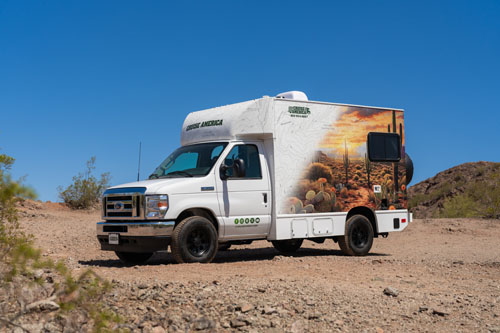
For a luxury RV rental experience in Toronto, choosing a compact campervan (like a Class B Camper Van, averaging 6.3m, such as the "V3") instead of a large RV is often a trade-off between urban maneuverability and onboard comfort. Larger RVs (Class C, SI, A) generally pose no issue on Toronto's main roads and highways, offering superior indoor space, amenities, and a true 'home-away-from-home' feeling, complete with full kitchens for preparing delightful meals. You can find inspiration for cooking on the road in our RV-friendly recipes playlist. A compact van offers easier parking and better fuel economy (11-15 L/100km for Class B) for navigating tighter city streets and finding spots near attractions like the St. Lawrence Market. However, for those prioritizing expansive living areas, separate sleeping zones, and full kitchen/bathroom facilities, a larger RV remains the better choice, often best combined with parking at peripheral campgrounds, such as Conservation Halton Parks, and using Toronto's excellent public transit system (TTC) into the city center.Can I Park Anywhere? Free & Wild Camping Rules in Toronto
Overnight parking and wild camping for RVs are generally not permitted on public streets or undesignated areas within the city of Toronto due to strict municipal bylaws. RV travelers must utilize designated campgrounds or private RV parks in and around the Greater Toronto Area for overnight stays. Popular options include Toronto North KOA Holiday in Thornton (about an hour north of Toronto) or Glen Rouge Campground within Rouge National Urban Park. While some private parking lots (e.g., certain Walmart locations) may allow overnight RV parking with permission, this is not a guarantee and should always be confirmed directly with management before settling in. Rules vary by region - always check local regulations and follow local law before parking overnight to avoid fines or towing. For finding campsites and campgrounds during your trip, we recommend using RV PLANET (rvplan.net) - a great resource for locating available spots along your route.Can I Drive an RV Into the City Center? Heights, Tunnels & Local Signage
Yes, you can generally drive an RV into the city center of Toronto on main arterial roads, but careful attention to infrastructure and parking is essential. Crucially, most underground parking garages in Toronto have height restrictions (typically under 2 meters) that make them unsuitable for any RV, whether it's a Class B campervan or a larger Class A motorhome. Drivers must pay close attention to local signage, which will indicate height limits for underpasses, restricted turning movements, or resident-only parking zones, especially on smaller streets. For a luxury RV experience, it's often more practical to park your rented motorhome at an RV-friendly campground just outside the city, such as Indian Line Campground near Toronto Pearson International Airport, and use Toronto's extensive public transit system (TTC) to explore downtown attractions like the CN Tower and Ripley's Aquarium. This strategy offers peace of mind and avoids the stress of urban RV parking.Do you need a CDL to drive a luxury RV?
No, a Commercial Driver's License (CDL) is typically not required to drive a recreational luxury RV in Canada for personal use, provided its Gross Vehicle Weight Rating (GVWR) is under 11,000 kg (24,250 lbs). Most luxury RVs, including large Class A models like the "MHLUX" (even at 10.7m length), are manufactured to fall within the weight limits for a standard Class G driver's license in Ontario when used recreationally. A CDL or higher license class is generally only mandated for commercial vehicles, RVs exceeding the 11,000 kg threshold, or those equipped with air brakes and a GVWR over 4,600 kg. Our comprehensive approach to RV Rental Toronto - Complete Guide 2026 ensures all licensing information is clear for your journey.Do you need a license to drive an RV in Canada?
Yes, a valid driver's license is always required to operate an RV in Canada; for most recreational vehicles in Ontario, a standard Class G license is sufficient. This license category covers vehicles with a GVWR up to 11,000 kg, which encompasses the majority of rental RVs, including luxury models. For example, a 6-berth Class C motorhome like the "Euro Deluxe" would fall comfortably within these limits. Foreign visitors must present a valid license from their home country, and an International Driving Permit (IDP) is strongly recommended for licenses not in English or French to avoid any misunderstandings with local authorities. There's no special CDL needed for your adventure.Can Americans RV in Canada?
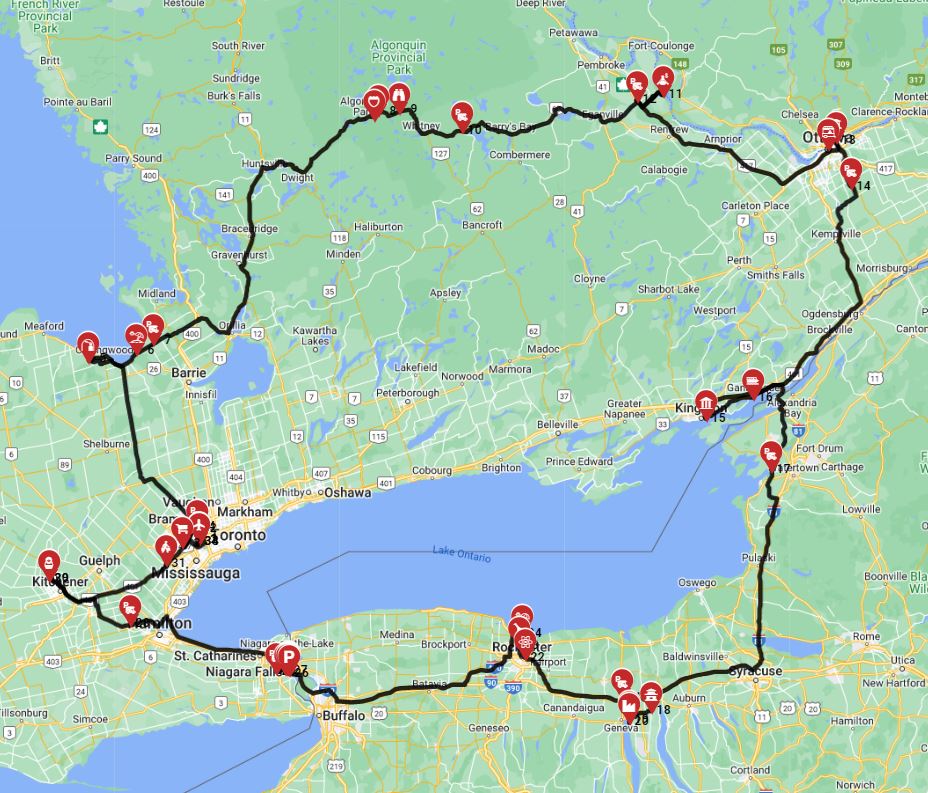
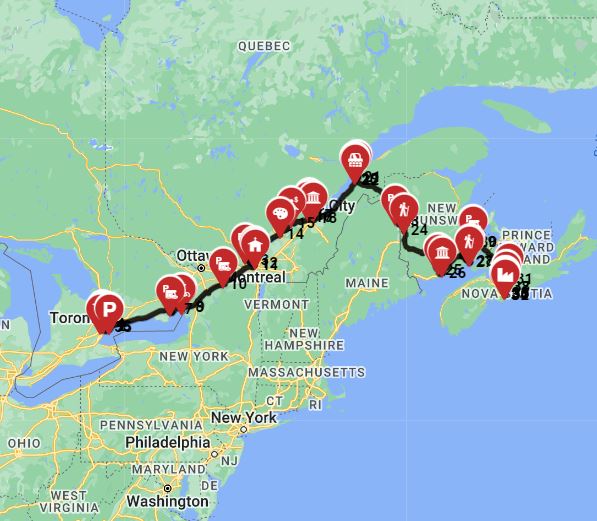
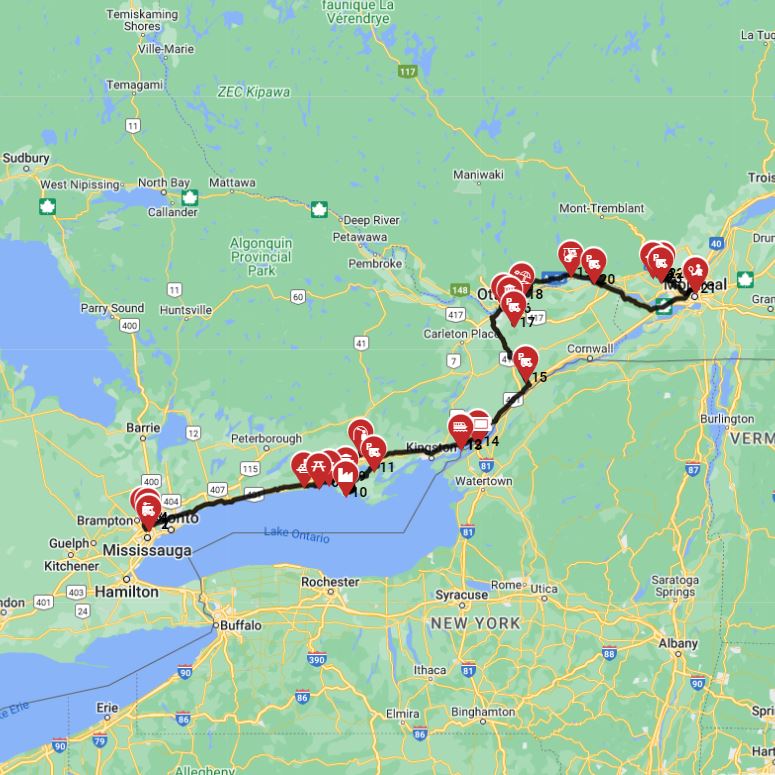
Yes, Americans can generally RV in Canada for tourism purposes, provided they possess valid passports for all occupants, proper vehicle registration, and proof of insurance, and adhere to Canadian customs regulations. Entry requirements include a valid passport for each traveler and the vehicle's registration papers; no special temporary import permits are typically needed for recreational vehicles for stays under six months. Bringing pets requires official vaccination records, particularly for rabies, and potentially a veterinary health certificate. It's advisable to check mobile data roaming plans or consider a local SIM card, and be prepared for currency exchange to Canadian dollars (CAD). Many of our American clients enjoy extended trips, such as the "Montreal to Toronto" route plan, which covers 1326.6 km over 11 days, including visits to 3 traditional markets and 1 amusement park. For longer journeys like the epic "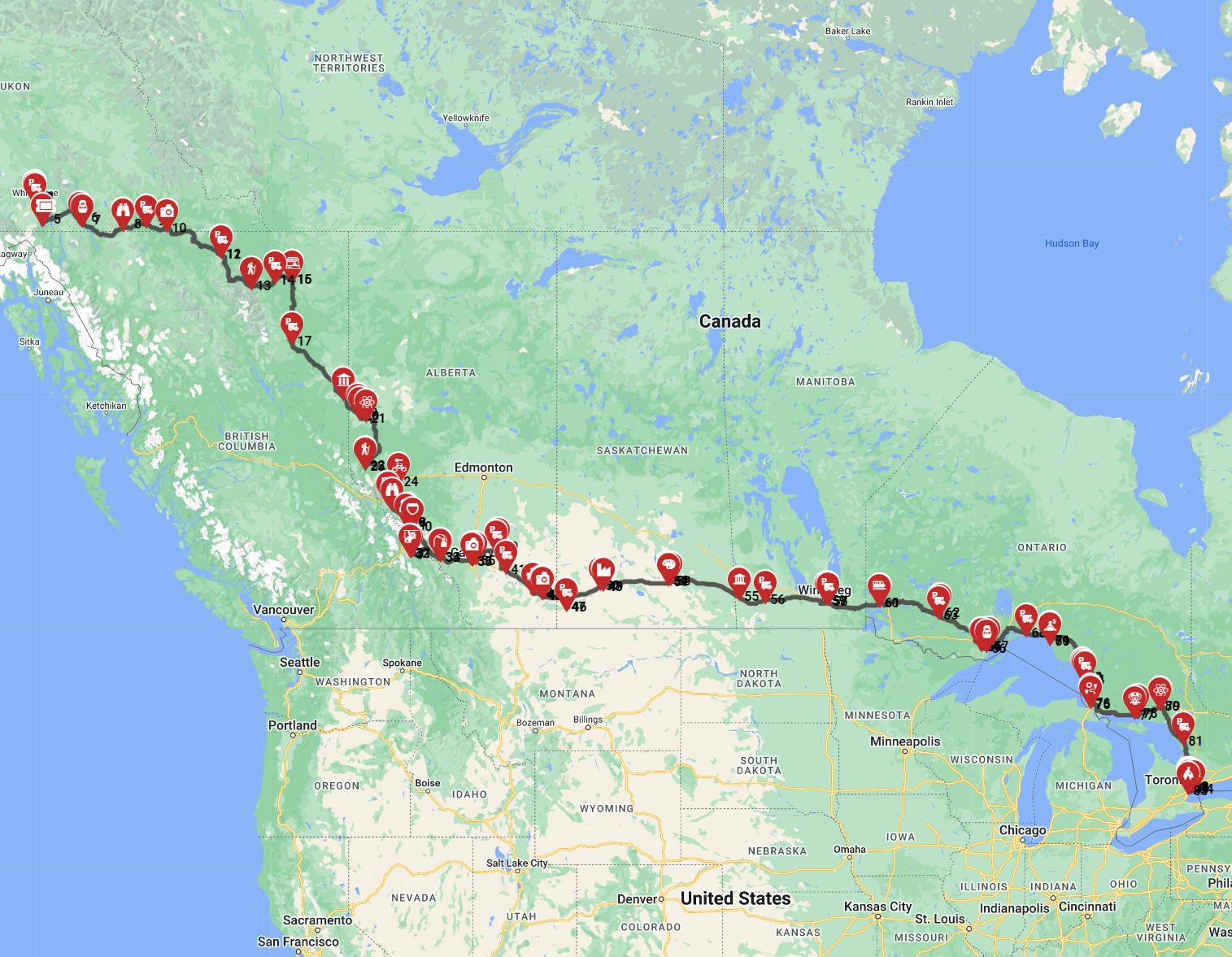
What is the 3-3-3 rule for RVs?
The '3-3-3 rule' is an informal, widely recognized guideline for RV travel that suggests limiting daily driving to no more than 300 miles (approximately 480 kilometers), arriving at your destination by 3 PM, and staying for a minimum of 3 days. This rule aims to promote a more relaxed and enjoyable RV experience, reducing driver fatigue and allowing ample time for setting up camp, exploring the area, and utilizing the luxury amenities of your rented motorhome. While not a strict regulation, adhering to this guideline can enhance the quality of your RV vacation, especially for luxury rentals where comfort and leisure are priorities. For instance, on a 23-day "Toronto to Edmonton - Trans Canada - Big Lakes, Prairie Skies, Rocky Mountain High" route plan, covering 5125.2 km, adhering to this rule would allow you to truly savor each of the 4 hiking areas and 4 museums along the way.Can you park an RV on the street in Toronto?
Parking an RV on the street in Toronto for overnight stays or extended periods is generally not permitted and can lead to fines or towing due to local bylaws and parking restrictions. Toronto's municipal parking regulations are stringent, with many streets having time limits, permit-only zones, or 'no parking' rules that apply to all vehicles, especially larger ones like motorhomes and campervans. For safe and legal overnight parking, RVers should plan to stay at designated campgrounds or RV parks located outside the immediate city center, such as the various conservation areas or private parks found just beyond the GTA. We focus on helping you find RV Rental Toronto - Prices and Best Deals 2026 with reliable suppliers, and their teams can often advise on suitable parking solutions near their depots.What is the new law on RV licensing in Ontario?
As of 2026, there hasn't been a significant new law on RV licensing in Ontario that fundamentally changes the requirements for driving recreational vehicles under 11,000 kg GVWR. The standard requirement remains a Class G driver's license for most RVs used for personal purposes, encompassing the vast majority of our rental fleet, from smaller Class B campervans to larger Class C and A motorhomes. Any changes related to air brake endorsements ('Z' endorsement) primarily affect heavy commercial vehicles or RVs with air brakes exceeding 4,600 kg, which are not recent legislative updates for typical recreational users. You can rest assured that if you have a valid Class G license, you're good to go for a luxury RV rental in Toronto.Who insures expensive motorhomes?
Expensive motorhomes in Canada are typically insured by specialized RV insurance providers or major national insurers that offer dedicated, comprehensive RV policies. These providers, which often include well-known names like Aviva and TD Insurance, commonly offer tailored coverage options such as agreed value, total loss replacement, and protection for custom features specific to luxury RVs. When you rent through Bandana Caravan, your rental will include basic insurance coverage; however, for extra peace of mind, especially with a luxury RV rental in Toronto, you can upgrade to a top-level deductible reimbursement plan. Our role as true RV specialists means we understand these nuances and ensure clarity in your booking, unlike a travel agency side department.How much is RV insurance in Canada?
RV insurance costs in Canada vary significantly based on factors such as the RV's class, value, age, intended use, the owner's driving record, and the chosen coverage options. For a mid-range rented RV, premiums might fall between $800 and $3,000 per year for personal owners, while luxury or high-value motorhomes will command significantly higher premiums due to their replacement cost and specialized coverage needs. Factors like a clean driving history, a higher deductible, and bundling with other insurance policies can help reduce overall costs. For rentals, basic liability coverage is usually included, and you may have the option to purchase additional protection or verify if your personal auto insurance or credit card provides coverage for rental RVs. We ensure full transparency on all insurance options when you compare Motorhome Prices for Toronto.How much is insurance on a million dollar RV?
Insuring a luxury RV valued at one million dollars or more typically involves specialized high-value policies that can cost several thousand dollars annually, potentially ranging from $5,000 to over $10,000, depending on comprehensive coverage and specific factors. These policies often feature 'agreed value' coverage, ensuring the full market value is paid in a total loss, along with specialized riders for custom interiors, advanced electronics, and other luxury amenities not found in standard RVs. Premiums are influenced by the RV's make and model (e.g., a high-end Class A versus a custom Class B campervan), the owner's claims history, the geographic regions of travel, and the level of liability and comprehensive coverage selected. For renters of such high-end luxury RVs in Toronto, it is crucial to consult with specialized RV insurance brokers to understand how existing personal insurance policies may apply and what supplemental coverage is available, including our top-level deductible reimbursement.What You Shouldn't Miss
- **Niagara Falls Day Trip:** Just a 1.5-hour drive from Toronto, witness the magnificent Horseshoe Falls, take a boat tour, and explore the charming town of Niagara-on-the-Lake.
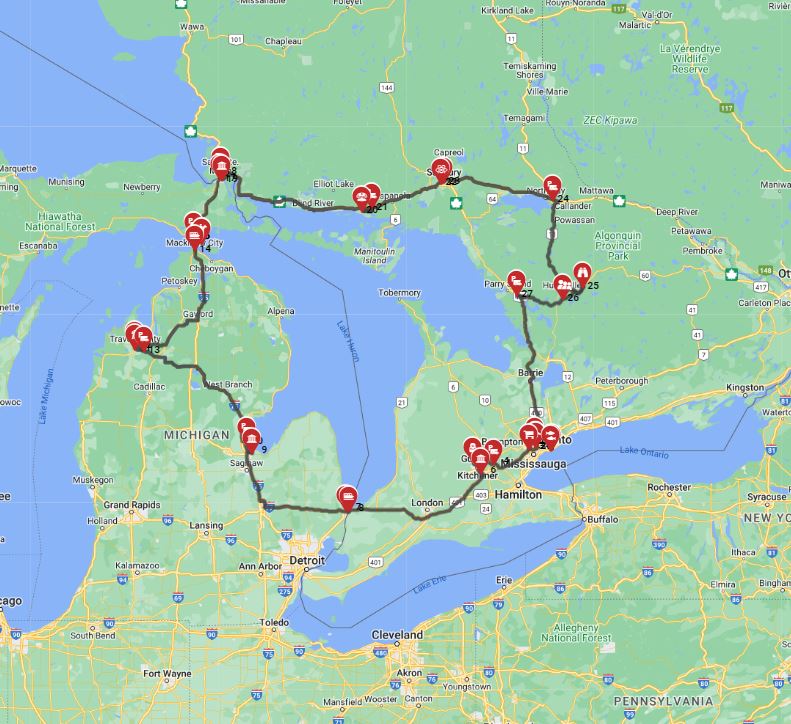
- **Bruce Peninsula National Park:** A scenic 3-hour drive north offers stunning cliffs, turquoise waters, and the famous Grotto. This is perfect for an extended road trip with your luxury RV.
- **Toronto Islands Ferry Ride:** Park your RV at a peripheral campground and take the ferry from Jack Layton Ferry Terminal for breathtaking skyline views and a car-free island escape.
- **Kensington Market Exploration:** Immerse yourself in Toronto's bohemian and diverse neighborhood, known for its vintage shops, street art, and eclectic food scene.
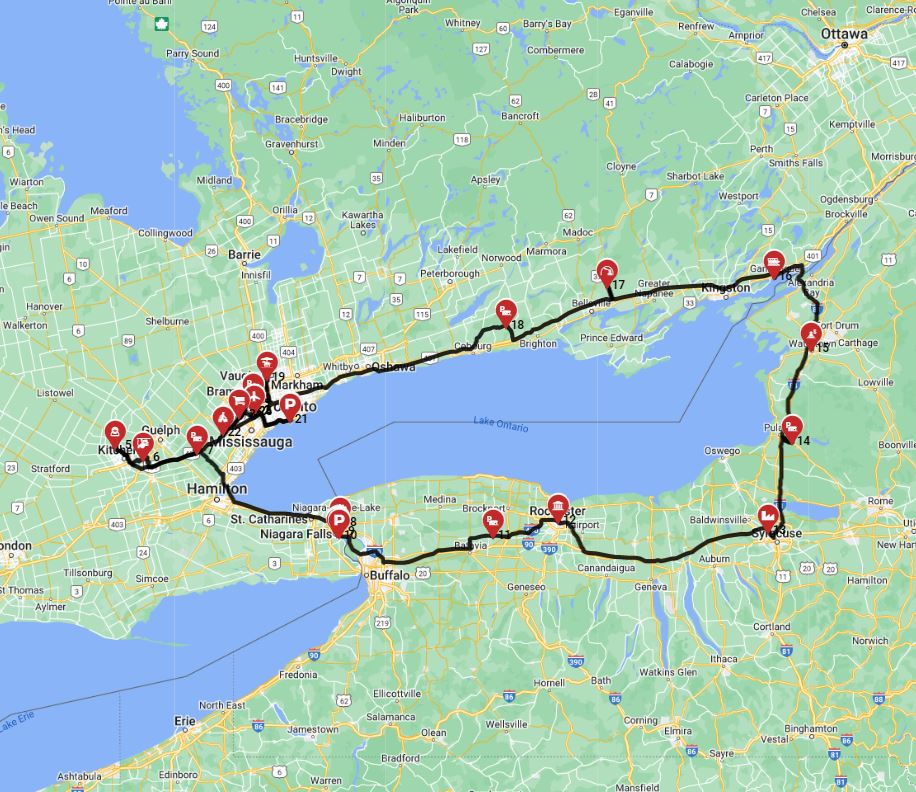
- **Scenic Drive along Lake Ontario:** Enjoy a leisurely drive along the waterfront, stopping at various parks and lookout points between Toronto and Prince Edward County.
- **Algonquin Provincial Park:** Venture 3-4 hours north for unparalleled canoeing, hiking, and wildlife viewing opportunities, with numerous RV-friendly campgrounds.
Final Thoughts
Toronto, with its vibrant city life and surrounding natural beauty, is an incredible destination to explore with a luxury RV rental. Whether you dream of a leisurely week-long trip along Lake Ontario or an extended adventure through Canada's vast landscapes, the freedom of a rented motorhome or campervan makes it all possible. Remember to travel slowly, averaging max 100-150 km per day, allowing yourself to truly connect with the culture, food, and scenery of Ontario. At Bandana Caravan, we are true RV specialists, dedicated to making your booking experience seamless and transparent. We're here to help you compare final prices across suppliers, ensuring what you see is what you pay, with no surprise fees at pickup. So, pack your bags, choose your luxury RV, and get ready for an unforgettable journey. Find Motorhome Rentals in TorontoOn the routes offered through RV PLANET routes, you can itemize and track every expense along the way for easy budgeting.