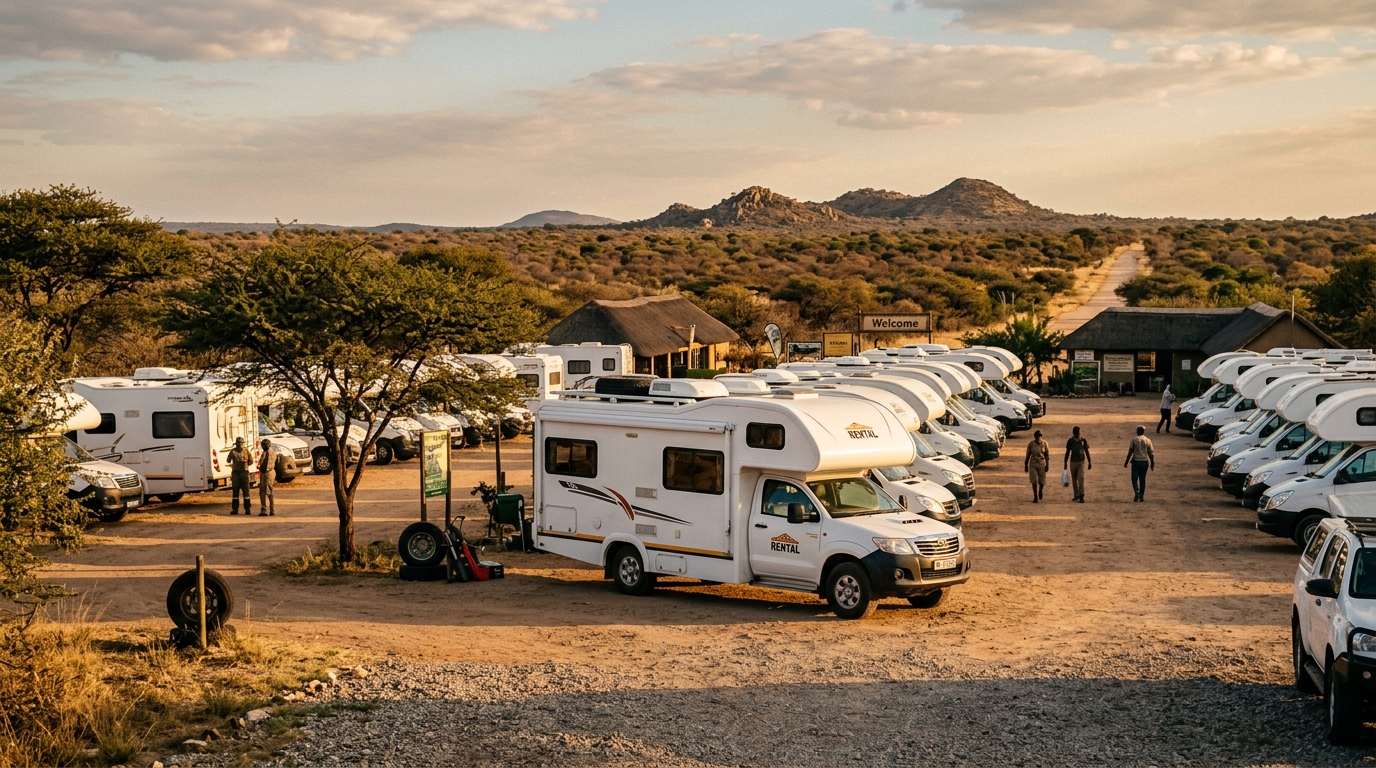
For live availability and current prices, start with our RV Rental Botswana - Complete Guide 2026 guide.
In This Guide
- Can You Drive an RV in Botswana? License & Age Rules
- Road Conditions & Terrain in Botswana
- RV Size Limits, Bridges & Restricted Zones
- Fuel: Diesel vs. Petrol & Cost per 100 km
- Tolls, Vignettes & Border Rules
- Driving Tips for luxury rv rental Travelers
- Recommended RV Class for Botswana Roads
- Should I Choose a Compact Van Instead of a Large RV in Botswana?
- Can I Park Anywhere? Free & Wild Camping Rules in Botswana
- Can I Drive an RV Into the City Center? Heights, Tunnels & Local Signage
- What are the essential safety tips for RV travel in Botswana, especially concerning wildlife and emergencies?
- What documents are needed for border crossings and RV travel in Botswana?
- What are the camping regulations and etiquette for RVs in Botswana?
- How to manage connectivity and utilities in a luxury RV in remote Botswana?
- How can luxury RV travelers practice responsible tourism in Botswana?
- What are the specific driving conditions in Botswana, and what 4x4 skills are needed?
- What are the best luxury RV routes in Botswana for different interests and skill levels?
- What is a detailed budget breakdown for luxury RV travel in Botswana?
Can You Drive an RV in Botswana? License & Age Rules
Yes, you can drive an RV in Botswana, and it's a fantastic way to experience the country's vast landscapes and incredible wildlife. Foreign visitors can typically drive an RV using their valid national driver's license. However, it's highly recommended to obtain an International Driving Permit (IDP) to accompany your national license, especially if it's not in English or issued by a country outside the Southern African Development Community (SADC). Botswana generally accepts foreign licenses for up to 90 days, provided the accompanying IDP is valid for non-SADC licenses. It's crucial to verify that your RV's Gross Vehicle Mass (GVM) does not exceed the weight category covered by your license. Most rental companies have a minimum driver age, often 23 or 25 years old, regardless of the national driving age, so always check these requirements when booking.
Road Conditions & Terrain in Botswana
Botswana's road network offers a diverse driving experience, from smoothly paved highways to challenging off-road tracks. The main routes connecting major towns like Gaborone, Francistown, and Maun are generally well-maintained tarred roads. However, as you venture into national parks and game reserves such as Moremi, Chobe, or the Central Kalahari, expect to encounter gravel, sand, and potentially muddy tracks. These areas often necessitate a robust 4x4 vehicle due to deep sand, corrugations, and possible water crossings. Driving on secondary or unpaved roads requires a slower pace, heightened vigilance for wildlife, and a preparedness for remote conditions. Embracing slow, scenic driving not only enhances your safari experience by allowing you to truly connect with the environment but also helps in maintaining the integrity and comfort of your rented RV.
RV Size Limits, Bridges & Restricted Zones
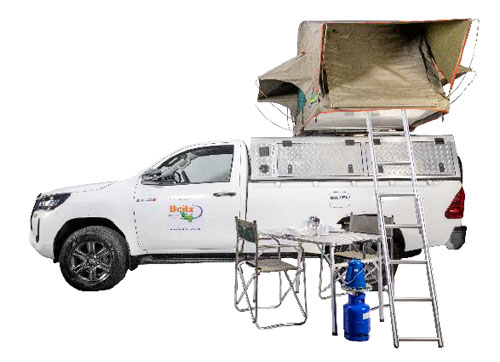
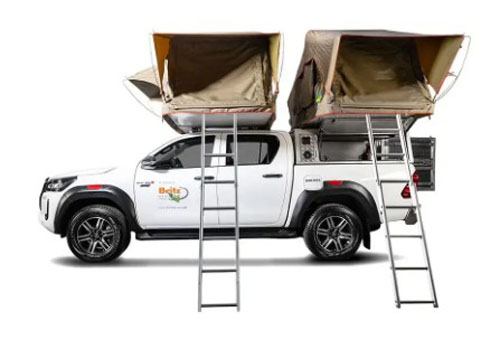
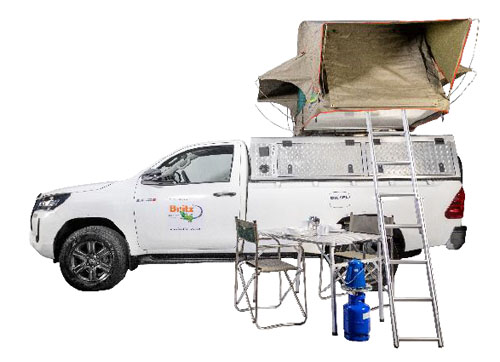
Botswana's infrastructure is generally accommodating for RV travel on its primary routes, with no widespread restrictions on RV size or low bridges that would hinder standard motorhome navigation. Most luxury RVs, including Class SI - Semi-integrated models (typically around 6.9 meters in length) and Class C - Alcove motorhomes (averaging 7.5 meters), can comfortably navigate the main tarred roads and commonly used secondary gravel roads without issue. However, when planning to explore very remote 4x4 tracks within conservation areas or national parks, longer RVs might find certain passages challenging, making a more compact 4x4 camper, such as a Class TC - Truck Camper, a more versatile option for deep sand and rough terrain. The primary restrictions you'll encounter are related to obtaining entry permits for national parks and reserves, rather than vehicle size limits. Within these protected areas, strict 'Leave No Trace' policies are enforced to preserve the environment.
Fuel: Diesel vs. Petrol & Cost per 100 km
Diesel is the predominant fuel type for RVs and 4x4 vehicles in Botswana, and it is widely available in major towns and cities. Prices are generally competitive, making diesel the practical choice. For budgeting purposes, Bandana's fleet averages suggest that a Class SI - Semi-integrated RV consumes approximately 10–11 liters per 100 km, a Class C - Alcove RV around 10–12 liters per 100 km, a Class B - Camper Van typically uses 8-10 liters per 100 km, and a Class TC - Truck Camper can expect 12–17 liters per 100 km. Factoring in fuel prices, which can fluctuate but are roughly estimated at 15-20 BWP per liter, your daily fuel cost could range from approximately 150 to 340 BWP per 100 km, depending heavily on the RV class and your driving style. It is critical to plan fuel stops meticulously, as fuel stations become scarce in remote areas. Carrying extra fuel in approved jerry cans is highly advisable for any excursions off the main routes. On the routes offered through RV PLANET routes, you can itemize and track every expense along the way for easy budgeting.
Tolls, Vignettes & Border Rules
Botswana generally does not impose tolls or require vignettes on its road network, offering a straightforward driving experience in that regard. However, international RV travel involves specific border crossing procedures and vehicle documentation. Essential documents typically include your valid passport, your driver's license (accompanied by an IDP if not from a SADC country), the RV's original registration papers, a letter of authorization from the rental company, and crucially, proof of cross-border insurance, often provided in the form of a COMESA Yellow Card. Border posts, such as the popular Martin's Drift crossing to South Africa or Kazungula (serving Zambia and Zimbabwe), have established procedures which may include vehicle inspections and potential disinfection fees. Ensure your rental provider assists you in gathering and understanding all necessary documentation to facilitate a smooth passage.
Driving Tips for luxury rv rental Travelers
To ensure a safe and enjoyable adventure in your rented luxury RV in Botswana, prioritize careful planning, maintain slow and steady speeds, and always be prepared for the diverse road conditions you'll encounter. Wildlife vigilance is paramount; always drive cautiously, especially at dawn and dusk when animals are most active, and remain inside your RV when in designated wildlife areas. If your luxury RV is 4x4 capable, such as a Class TC - Truck Camper, familiarize yourself with sand and mud driving techniques, including tire pressure adjustments and basic recovery methods. Plan your fuel stops meticulously, carry ample extra water, and for remote areas, consider renting a satellite phone or emergency beacon for communication. Expect and prepare for corrugations and potholes on gravel roads by reducing speed to preserve vehicle integrity and passenger comfort.
Recommended RV Class for Botswana Roads
For a luxurious and capable RV experience in Botswana, the Class SI - Semi-integrated and Class TC - Truck Camper are excellent choices, offering a great balance between comfort and off-road readiness. The Class SI - Semi-integrated RVs, typically around 6.9 meters long and with fuel consumption of 10–11 liters per 100 km, provide spacious living quarters perfect for navigating tarred and well-maintained gravel roads. For those venturing deeper into national parks with more challenging terrain, the Class TC - Truck Campers, often mounted on a 4x4 chassis and averaging 5.5 meters in length with fuel consumption of 12–17 liters per 100 km, offer superior off-road capability for deep sand and rough tracks. The ultimate choice depends on your itinerary: prioritize interior luxury and space for routes with better roads, or opt for rugged 4x4 capability if extensive off-road exploration is planned.
Should I Choose a Compact Van Instead of a Large RV in Botswana?
While a compact campervan certainly offers enhanced maneuverability, a larger luxury RV in Botswana typically provides a superior level of comfort and interior space that generally outweighs the need for extreme agility across the country's vast landscapes. Larger RVs, such as Class C - Alcove motorhomes (around 7.5 meters) or Class A - Integrated motorhomes (also around 7.5 meters), navigate most of Botswana's main roads and popular park routes without significant issues. The added living space and amenities of a luxury RV are often highly appreciated for longer trips, particularly in remote areas where external facilities are limited. A compact Class B - Camper Van (typically under 6 meters) might offer slightly easier navigation on very tight tracks, but it comes at the cost of interior space and luxury features. Therefore, unless your itinerary specifically demands extreme off-roading in highly confined areas, opting for a larger, more comfortable luxury RV is generally the preferred choice.
Can I Park Anywhere? Free & Wild Camping Rules in Botswana
No, wild camping or 'free camping' is generally not permitted in Botswana, especially within its pristine national parks and game reserves. All overnight stays must be in designated campsites or authorized private concessions to protect the fragile ecosystems. Botswana's conservation policies are strict, requiring all overnight camping within national parks and game reserves to be pre-booked at official campsites, and availability can be very limited, sometimes requiring booking up to a year in advance for peak seasons. It's crucial to adhere to 'Leave No Trace' principles: pack out all trash, dispose of greywater and blackwater only at designated facilities, and stay on marked tracks to minimize environmental impact. Always research and follow local regulations for any specific region you plan to visit before parking overnight.
Can I Drive an RV Into the City Center? Heights, Tunnels & Local Signage
Yes, you can generally drive an RV into city centers in Botswana, including major urban areas like Gaborone or the gateway town of Maun. The country's urban infrastructure is largely accommodating for RVs, lacking the prevalent narrow streets or numerous low bridges that can be found in older European cities. The primary consideration when navigating city centers will be finding suitable parking for larger vehicles, which may require some pre-planning or using designated RV parking areas. Always pay close attention to local signage, as specific height limits might exist, particularly in underground parking garages or underpasses, and be mindful of any restricted zones or residents-only streets. In smaller urban centers, such as Maun or Kasane, navigating with a luxury RV is generally straightforward and stress-free.
What are the essential safety tips for RV travel in Botswana, especially concerning wildlife and emergencies?
Essential safety for RV travel in Botswana hinges on rigorous trip planning, constant vigilance for wildlife, utilizing robust communication tools, and maintaining a clear emergency response strategy. Always maintain a safe distance from all animals, never feed them, and stay securely inside your RV when in wildlife areas. Drive cautiously, particularly during the low-light conditions of dawn and dusk. Equip your luxury RV with essential recovery gear, such as a tow rope, shovel, and air compressor, and ensure you understand how to use them for scenarios like getting stuck in sand or mud. Due to limited mobile network coverage in remote areas, carrying a satellite phone or an emergency satellite messenger/beacon is highly recommended. A comprehensive first-aid kit is a must, along with basic wilderness first-aid knowledge. Consider travel insurance that includes emergency medical evacuation. Lastly, practice common-sense security measures: keep valuables out of sight, lock all doors and windows when unattended, and avoid driving at night in unfamiliar locations.
What documents are needed for border crossings and RV travel in Botswana?
For a smooth RV journey and successful border crossings in Botswana, ensure you have all essential documents in order: a valid passport, your driver's license with an accompanying International Driving Permit (IDP) if applicable, a Temporary Import Permit (TIP) for the RV, and valid cross-border insurance. Personally, you'll need your passport, and if your national driver's license is not from a SADC country, an IDP is crucial alongside your national license. For the vehicle, gather original registration papers or certified copies, a letter of authorization from the rental company, and the aforementioned TIP. Mandatory third-party cross-border insurance, often provided via the COMESA Yellow Card system, is required; confirm that your rental insurance package covers international travel adequately. Be prepared for vehicle checks and potential road permits or fees at border posts like Martin's Drift or Kazungula. Having your rental provider assist with documentation significantly simplifies these procedures.
What are the camping regulations and etiquette for RVs in Botswana?
RV camping in Botswana is strictly regulated to preserve its unique and fragile ecosystems, mandating pre-booked stays in designated campsites and adherence to 'Leave No Trace' principles. All overnight camping within national parks, game reserves, and most public lands must occur in official, pre-booked campsites, as wild camping is prohibited. Securing these campsites, especially in popular areas like Chobe or Moremi, requires advance booking, sometimes months ahead, particularly for peak seasons due to limited availability. Upholding 'Leave No Trace' is vital: pack out all trash, conserve water and power, and use designated dump stations for greywater and blackwater; never release waste into the natural environment. Always be mindful of wildlife, never approach or feed animals, and store all food securely in your RV to prevent unwanted nocturnal visitors at campsites.
How to manage connectivity and utilities in a luxury RV in remote Botswana?
Managing connectivity and utilities in a luxury RV while exploring remote Botswana relies on robust off-grid power solutions, efficient water management, and reliable satellite-based communication. Your luxury RV should ideally be equipped with dual battery systems, efficient solar panels, and inverters to ensure consistent power supply, as many remote campsites lack electricity hookups. Carry ample fresh water in your RV's tanks and consider a portable purification system for emergencies, while practicing diligent water conservation as sources can be scarce. For essential communication, opt for a satellite phone or a personal locator beacon (PLB)/satellite messenger, as mobile phone reception is sporadic at best. Implement a strict 'pack it in, pack it out' policy for all trash and utilize designated dump stations for waste; never discharge into the wilderness. Always carry extra fuel in secure jerry cans for the long stretches between sparse fuel stations, ensuring you are self-sufficient.
How can luxury RV travelers practice responsible tourism in Botswana?
Luxury RV travelers can champion responsible tourism in Botswana by prioritizing minimal environmental impact, engaging ethically with wildlife, and actively supporting local communities and conservation initiatives. Strict adherence to 'Leave No Trace' principles is fundamental: pack out all waste, conserve water and energy, and always stay on designated tracks to prevent habitat damage. Practice ethical wildlife viewing by maintaining respectful distances, never disturbing animals, and strictly following all park regulations. Support local communities by purchasing goods and services from local vendors, and consider patronizing community-run campsites. Choose RV rental companies that demonstrably contribute to conservation efforts, and consider making donations to reputable Botswana conservation organizations. Finally, exercise cultural sensitivity by learning about local customs, seeking permission before photographing people, and dressing respectfully when visiting local villages.
What are the specific driving conditions in Botswana, and what 4x4 skills are needed?
Botswana's driving conditions are incredibly varied, ranging from smooth tar roads to challenging deep sand and corrugated gravel tracks, necessitating specific 4x4 skills for confident navigation. For deep sand, prevalent in areas like the Kalahari and Okavango Delta, it’s crucial to lower tire pressure (e.g., to 1.5-1.8 bar), maintain momentum, and avoid sudden steering or braking. Always engage 4-Low and have recovery gear like sand ladders ready. On corrugated gravel roads, finding a consistent speed that allows the vehicle to 'float' over bumps (typically 60-80 km/h) is key to minimizing vibrations and maintaining control. For mud and water crossings, always assess the depth carefully, drive slowly and steadily in a low gear, and watch for submerged obstacles. Carrying and knowing how to change at least two spare tires is essential, as punctures are common. Proficiency in using recovery gear, including a high-lift jack, shovel, kinetic rope, and snatch strap, is vital for self-sufficiency.
What are the best luxury RV routes in Botswana for different interests and skill levels?
Botswana offers a wealth of luxury RV routes catering to diverse interests and skill levels, from accessible tar-road journeys for beginners to demanding 4x4 adventures for seasoned off-roaders. For beginner or family-friendly routes, consider journeys primarily on tarred roads, such as the Gaborone to Francistown route, which incorporates easy cultural stops and wildlife viewing opportunities, well-suited for Class SI - Semi-integrated or Class C - Alcove RVs. Intermediate routes, like traversing from Maun towards Moremi and Chobe, will involve significant gravel and some sand, requiring basic 4x4 knowledge and is best tackled with a Class TC - Truck Camper or a robust Class B - Camper Van. Expert or adventure-focused routes, such as exploring the Central Kalahari or the northern Okavango wilderness, demand advanced 4x4 skills, considerable self-sufficiency, and thorough preparation, ideally with a 4x4 Class TC - Truck Camper. Tailor your route to specific interests, whether it's bird-watching in the Okavango Delta, exceptional photography opportunities along the Chobe Riverfront, or immersive cultural experiences with local communities.
What is a detailed budget breakdown for luxury RV travel in Botswana?
A comprehensive budget for a luxury RV trip in Botswana must account for several key expenses: vehicle rental, substantial fuel costs, tiered national park and camping fees, varied food strategies, and a critical contingency fund. Vehicle rental costs will vary significantly by RV class (e.g., Class SI vs. a 4x4 Class TC), rental duration, and any additional equipment like recovery gear or satellite phones. Fuel expenses are considerable; budget for consumption rates of 10-17 L/100 km (depending on RV class) at an estimated 15-20 BWP per liter, potentially totaling 150-340 BWP per 100 km. National park fees for international visitors are typically around $30-50 USD per person per day, with campsite fees within parks often being higher and requiring pre-booking. Factor in food costs based on your preference for self-catering versus dining out, remembering the limited options in remote areas, and add budget for activities like guided safaris. Crucially, allocate a substantial contingency fund (15-25% of your total budget) for unexpected vehicle issues, medical needs, or other unforeseen circumstances. If planning regional travel, include costs for temporary import permits, road permits, and specific cross-border insurance.
What You Shouldn't Miss
- Okavango Delta Exploration: Whether by mokoro (traditional dugout canoe) or guided 4x4 safari, experiencing the unique inland delta is essential for understanding Botswana's natural wonders.
- Chobe National Park's Elephant Herds: Witnessing the massive elephant herds, especially along the Chobe Riverfront, is a breathtaking wildlife spectacle best viewed at sunrise or sunset from your RV or a game drive vehicle.
- Makgadikgadi Pans Serenity: Drive or camp amongst the ancient baobabs and vast salt pans for an unforgettable sense of isolation, incredible stargazing, and a surreal desert landscape.
- Moremi Game Reserve's Wildlife Diversity: Known for its rich predator populations and diverse habitats, Moremi offers exceptional game viewing opportunities, making it a must-visit for any safari enthusiast in an RV.
- Kalahari Desert's Vastness: Experience the profound solitude and unique desert-adapted wildlife of the Kalahari, perhaps visiting a San community for a cultural exchange.
- Nxai Pan National Park's Baobabs and Baines' Baobabs: Combine the allure of ancient baobab trees with excellent game viewing, especially during wetter seasons.
Final Thoughts
Embarking on an RV adventure in Botswana is an unparalleled journey, offering a unique blend of wildlife encounters, vast landscapes, and cultural immersion. From the moment you plan your route to the final scenic drive, the freedom and flexibility of an RV rental allow you to truly connect with this incredible country. Remember that thorough preparation, especially regarding vehicle choice and road conditions, is key to a seamless and unforgettable experience.
By choosing the right RV for your adventure, understanding the local driving nuances, and respecting the environment and wildlife, you're set for an incredible expedition. Don't forget to leverage resources like RV PLANET (rvplan.net) for route planning and campsite discovery, making your Botswana RV journey as smooth and enriching as possible. Get inspired for your next trip and discover the magic of Botswana!