In This Guide
- Best Tokyo RV Itinerary for long term rv rental - Overview
- 7-Day Classic Route in Tokyo
- 14-Day Extended Journey in Tokyo
- Recommended RVPlan Trip for Tokyo
- Must-See Stops Along the Way (Avi Bandana Picks)
- Daily Driving Distances & Drive Times in Tokyo
- Best RV Class for This Itinerary - Couple & Family Picks
- How do you navigate Tokyo with an RV and where can you park it?
- Where can I find RV-friendly campgrounds or overnight parking near Tokyo?
- What are the costs associated with a long-term RV rental in Tokyo?
- How can I combine RV travel with Tokyo's public transport system?
- What cultural etiquette should RVers observe in Japan, especially near cities?
Best Tokyo RV Itinerary for long term rv rental - Overview
A long term rv rental in Tokyo offers an exceptional way to experience both the vibrant city and the serene natural beauty of the Kanto region, providing a blend of urban and regional exploration over a period of 7 days or more. While a week-long trip can cover key highlights, an ideal duration of 14 days allows for a deeper dive into Japan's culture and landscapes. This travel style, focused on a rented motorhome, typically covers approximately 500-1000 km across the Kanto region, with the best seasons for such an adventure being Spring (March-May) for cherry blossoms and Autumn (September-November) for stunning foliage. For live availability and current prices, start with our RV Rental Tokyo - Complete Guide 2026 guide. Imagine the freedom of waking up to a new view every day, with your mobile home providing comfort and flexibility as you explore.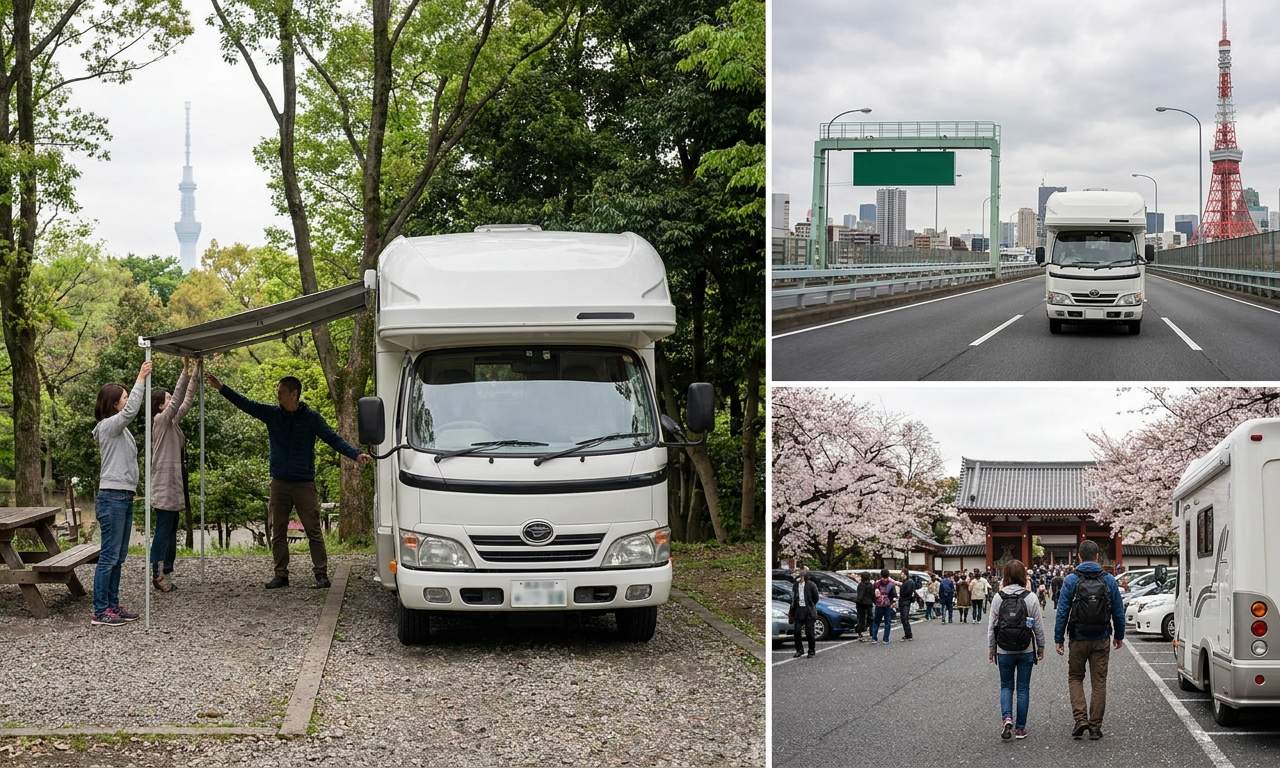
7-Day Classic Route in Tokyo
A compact 7-day RV itinerary from Tokyo allows travelers to experience metropolitan sights alongside natural wonders, with daily driving distances carefully capped at 150 km to encourage slow travel. This route combines Tokyo city exploration, best accessed via its efficient public transport system, with regional RV travel to nearby scenic spots. Begin your adventure by parking your rented motorhome at a peripheral RV park near Tokyo, like the ones found in Saitama or Chiba, then utilize train lines to explore iconic Tokyo landmarks such as Shibuya Crossing, the historic Asakusa district, and the tranquil Shinjuku Gyoen National Garden. The route then expands to include picturesque Hakone, known for its hot springs and views of Mount Fuji, followed by the breathtaking Fuji Five Lakes region with overnight stays at local campgrounds or welcoming Michi-no-Eki. Conclude the week with visits to coastal Kamakura and the bustling port city of Yokohama, ensuring each day offers a rich blend of experiences.14-Day Extended Journey in Tokyo
An extended 14-day RV journey provides ample opportunity for deeper Kanto region exploration, allowing for more immersive cultural and natural experiences without exceeding the recommended maximum daily driving of 150 km. This itinerary groups days by region, starting with Tokyo and Hakone for 3-4 days, then moving to the Fuji and Izu Peninsula area for another 4-5 days, known for its volcanic landscapes and hot springs. Subsequently, dedicate 2-3 days to Yokohama and Kamakura, blending urban charm with coastal history. Finally, spend 3-4 days exploring the UNESCO World Heritage sites of Nikko, with its ornate shrines and beautiful waterfalls, and potentially venturing into the lesser-known areas of Gunma or Ibaraki prefectures for more rural tranquility. This pace ensures travelers have time to connect with the local culture, savor regional food, and fully appreciate the diverse scenery of Japan, rather than rushing between destinations. For a broader context of RV travel in Japan, our RV Rental Japan - Complete Guide 2026 offers comprehensive insights.Recommended RVPlan Trip for Tokyo
Currently, there is no single pre-designed RV PLANET trip specifically available for Tokyo, but this offers a fantastic opportunity for travelers to customize their own long-term RV adventure with ease. You can utilize RV PLANET's trip-planning software at rvplan.net to craft a tailored itinerary that perfectly matches your interests and preferred pace. The platform allows you to explore various destinations and RV-friendly stops around Tokyo, from the scenic coastlines of the Izu Peninsula to the tranquil mountains of Nikko. By building your own route plan, you gain the flexibility to spend more time where you want, discover hidden gems, and incorporate activities like visiting an onsen or exploring local markets. Plus, using RV PLANET for your planning can reward you with a 25% planning discount, making your journey even more budget-friendly.Must-See Stops Along the Way (Avi Bandana Picks)
"Looking for expert insights from Avi Bandana? Top 5 Adventures - recommendations from Avi Bandana":- Michi-no-Eki Exploration: Prioritize visits to local Michi-no-Eki (roadside stations) in the Kanto region, such as Michi-no-Eki Hakone Pass (Kanagawa) or Michi-no-Eki Nikko Kaido Nikko Colonnade (Tochigi), for fresh local produce, unique snacks, and clean amenities. These spots are not just convenient rest stops, but vibrant community hubs where you can truly connect with local life.
- Traditional Izakaya and Shotengai: Seek out traditional izakaya (Japanese pubs) for authentic regional dishes and explore local shotengai (shopping streets) in towns surrounding Tokyo. Areas like Kawagoe's Kurazukuri Street or Odawara's shopping district offer a taste of traditional Japanese life and delicious local food. If you're inspired to try some Japanese-style cooking in your rented RV, check out our RV-friendly recipes playlist for ideas!
- Pottery Towns and Fishing Villages: Venture to pottery towns like Mashiko in Tochigi Prefecture to witness traditional craftsmanship, or visit coastal fishing villages on the Izu Peninsula to experience local maritime culture. These excursions offer cultural insights beyond the typical tourist trails.
- Mount Fuji Views from Lesser-Known Spots: Instead of just Lake Kawaguchiko, explore alternative viewpoints of Mount Fuji from areas like Lake Tanuki in Shizuoka Prefecture or the panoramic views from the Subaru Line 5th Station (seasonal access) for a fresh perspective.
- Onsen Hopping in Hakone: Dedicate a day to onsen-hopping in Hakone. Many traditional ryokan (Japanese inns) and public bathhouses offer day-use options, allowing you to experience the therapeutic hot springs after a day of RV travel. Hakone Yuryo is a popular choice for its beautiful open-air baths.
Daily Driving Distances & Drive Times in Tokyo
Avi Bandana, our founder, always recommends a maximum of 100 miles or 150 km per day on average when on an RV adventure, and this advice holds especially true for navigating around Tokyo and the Kanto region. This slower pace encourages travelers to fully appreciate the journey and immerse themselves in the local environment, rather than rushing through. For instance, the drive from Saitama to Hakone, covering approximately 100-120 km, typically takes 2-3 hours, allowing plenty of time for scenic stops. Similarly, the route from Lake Kawaguchiko to Kamakura, spanning 90-110 km, can be completed in about 2-2.5 hours. Traveling from the Tokyo periphery to Nikko, a distance of 130-150 km, usually requires 2.5-3.5 hours of driving. These realistic drive times ensure you're not spending your entire day behind the wheel of your rented campervan, but instead enjoying the sights, sounds, and flavors of Japan.Best RV Class for This Itinerary - Couple & Family Picks
For families planning a long term rv rental in Tokyo, a Class C - Alcove motorhome is often the ideal choice, offering ample space and comfort for up to 6 people while averaging around 5 meters in length, making it manageable on Japanese roads. While it can sleep 6, it's particularly comfortable for a family of 2 adults and 2 children, or up to 3 adults. This class provides features like a comfortable bed over the cab, a small kitchen, and a dining area, as seen in models like a "24' Class C Motorhome". For couples, a compact campervan, typically a Class B or Micro Camper, is generally preferred for its superior maneuverability through narrower streets and easier parking in urban-adjacent areas. However, if a smaller vehicle is unavailable, a 5-meter Class C - Alcove can still be a viable option, providing extra space and amenities. Bandana's 'Rent&Plan' service not only helps you secure the perfect RV rental but also provides expert-designed itineraries and planning software to ensure your vehicle is suitable for your chosen route.How do you navigate Tokyo with an RV and where can you park it?
Navigating Tokyo with a rented RV requires strategic planning due to the city's dense urban sprawl and intricate road network. While you can drive almost anywhere without issues if you drive slowly and carefully, relying on accurate GPS with real-time traffic updates is crucial, and it's best to avoid peak hour traffic on major expressways, especially in central Tokyo. For parking, the most effective strategy is to utilize 'park and ride' options on the city's outskirts. Designated RV parking facilities or Michi-no-Eki in surrounding prefectures like Saitama, Chiba, or Kanagawa Prefecture, offer secure overnight parking with convenient access to public transport directly into Tokyo. This approach allows you to comfortably explore the city's core using trains and subways while keeping your motorhome safely parked away from crowded urban centers.Where can I find RV-friendly campgrounds or overnight parking near Tokyo?
RV-friendly campgrounds and Michi-no-Eki are readily available within a reasonable driving distance of Tokyo, providing excellent options for overnight stays. For instance, Auto Camping Mori-no-Mura in Kanagawa Prefecture is a popular choice, offering amenities like power hookups and clean restrooms. Many Michi-no-Eki located in the prefectures surrounding Tokyo, such as Michi-no-Eki Hakona-Touge in Hakone or those near the Fuji Five Lakes region, welcome overnight RV parking, often providing basic services and access to local markets. Private campgrounds typically require online reservations well in advance, especially during peak seasons, whereas Michi-no-Eki usually operate on a first-come, first-served basis, though it's always wise to check specific rules upon arrival.What are the costs associated with a long-term RV rental in Tokyo?
The costs associated with a long-term RV rental in Tokyo encompass several components beyond the base rental fee, which averages ¥15,000-¥30,000 (approximately $100-$200 USD) per day for a Class C motorhome, fluctuating with seasonality and vehicle availability. Additional expenses include fuel, which is generally higher in Japan compared to many Western countries, and expressway tolls that can accumulate quickly around Tokyo's complex network (an ETC card is highly recommended for convenience and potential discounts). Urban RV parking, typically found on the city's periphery, can cost around ¥1,000-¥3,000 (approximately $7-$20 USD) per day, while campground fees range from ¥3,000-¥6,000 (approximately $20-$40 USD) per night. Other ancillary costs might include propane refills, dump fees at some facilities, and groceries. On RV PLANET routes, travelers can itemize and track every expense along the way for easy budgeting. Bandana maintains full transparency, ensuring you compare final prices across suppliers with no hidden fees or surprises. To find the latest offers and best deals, consider checking our "RV Rental Deals in Tokyo - Latest Offers 2026" or "Cheap RV Rental in Tokyo - Budget Guide 2026".How can I combine RV travel with Tokyo's public transport system?
Combining your RV travel with Tokyo's world-class public transport system is highly efficient for urban exploration, allowing you to bypass the challenges of city driving and parking. The recommended strategy is to utilize 'park and ride' facilities located on Tokyo's outskirts, often near major train stations in neighboring prefectures such as Chiba, Saitama, or Kanagawa. After parking your rented motorhome at a designated RV-friendly spot, you can purchase an IC card (like Suica or Pasmo) for seamless and convenient access to Tokyo's extensive train and subway networks. This approach not only avoids potentially high urban parking fees and navigating dense traffic but also maximizes your city sightseeing experience, giving you the freedom to explore diverse districts like Ginza or Shinjuku with ease, then returning to your comfortable RV "home base" later.What cultural etiquette should RVers observe in Japan, especially near cities?
RVers in Japan should diligently observe local cultural etiquette, which emphasizes respect for public spaces and community harmony, especially when traveling near cities like Tokyo. Always park your rented motorhome only in designated areas, whether it's a Michi-no-Eki or a private campground, and strictly avoid unnecessary engine idling, particularly at night, to minimize noise and emissions. Meticulously sorting and disposing of trash according to Japan's strict recycling rules is mandatory and reflects respect for the environment and local communities. Additionally, maintaining low noise levels at campgrounds and Michi-no-Eki, especially during quiet hours (typically 9 PM to 7 AM), is crucial to ensure a peaceful environment for everyone. Understanding these customs will enhance your RV travel experience and foster positive interactions with locals. For a comprehensive guide on costs and routes, consider "RV Rental in Tokyo - Prices and Best Deals 2026".What You Shouldn't Miss
- Sunrise at Lake Kawaguchiko: Wake up early at an RV park near Lake Kawaguchiko to capture the stunning sunrise views of Mount Fuji reflecting on the lake's surface – it’s an iconic sight.
- Exploring Hakone's Open-Air Museum: Park your rented motorhome near Hakone and spend a leisurely day at the Hakone Open-Air Museum, blending art with nature, then relax in a nearby footbath onsen.
- Traditional Crafts in Kawagoe: Drive your campervan to Kawagoe, known as "Little Edo," and immerse yourself in its preserved historical district, complete with traditional warehouses and an old bell tower.
- Coastal Drives on the Izu Peninsula: Enjoy the scenic coastal roads of the Izu Peninsula, stopping at picturesque beaches and sampling fresh seafood. Many small towns offer charming local eateries.
- Nikko's Shrines and Waterfalls: Dedicate at least a full day to explore Nikko's Toshogu Shrine and the magnificent Kegon Falls. Consider staying at an RV-friendly Michi-no-Eki in the Nikko area.
- Yokohama's Chinatown and Bay Area: Park your RV on the outskirts of Yokohama and take public transport to explore Japan's largest Chinatown, followed by a stroll through the modern Minato Mirai bay area.
Final Thoughts
Embarking on a long-term RV rental in Tokyo and the surrounding Kanto region promises an unparalleled adventure, blending the iconic energy of the city with the tranquil beauty of Japan's countryside. With a rented motorhome or campervan, you unlock the freedom to explore at your own pace, savoring every moment from ancient temples to modern marvels. Remember to plan your route, embrace slow travel, and leverage tools like rvplan.net for seamless itinerary creation. We're here to support you before, during, and after your booking, ensuring your Tokyo RV rental experience is as smooth and enjoyable as possible. So, get ready to create lasting memories on the open road. It's time to discover the magic of Japan with the comfort and flexibility of your very own mobile home! Find Motorhome Rentals in TokyoOn the routes offered through RV PLANET routes, you can itemize and track every expense along the way for easy budgeting.