
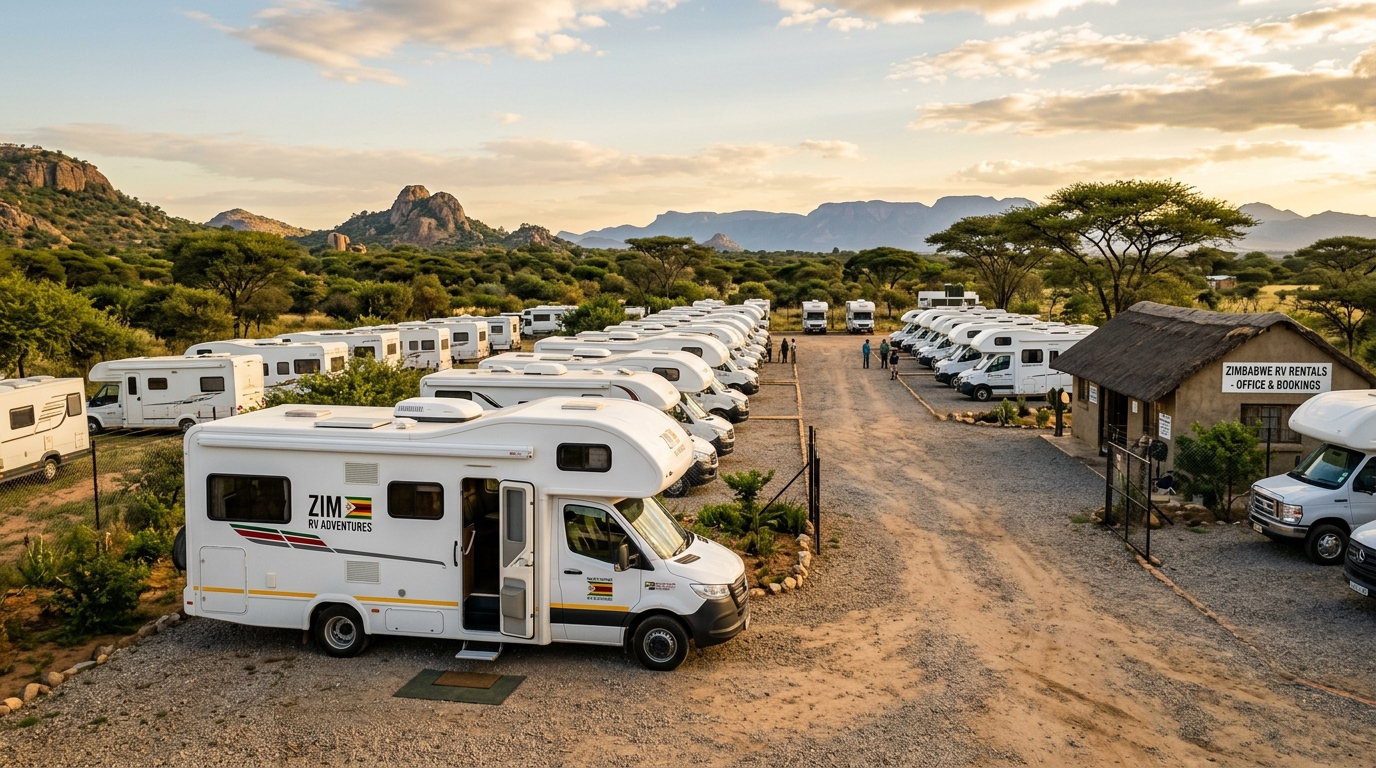
For live availability and current prices, start with our RV Rental Zimbabwe - Complete Guide 2026 guide.
In This Guide
- Can You Drive an RV in Zimbabwe? License & Age Rules
- Road Conditions & Terrain in Zimbabwe
- RV Size Limits, Bridges & Restricted Zones
- Fuel: Diesel vs. Petrol & Cost per 100 km
- Tolls, Vignettes & Border Rules
- Driving Tips for long term rv rental Travelers
- Recommended RV Class for Zimbabwe Roads
- Should I Choose a Compact Van Instead of a Large RV in Zimbabwe?
- Can I Park Anywhere? Free & Wild Camping Rules in Zimbabwe
- Can You Drive an RV Into the City Center? Heights, Tunnels & Local Signage
- Should I Choose a Traditional RV or a 4x4 Camper for Zimbabwe?
- Where Can I Find Dedicated RV Campsites in Zimbabwe and What Amenities Do They Offer?
- Can I Rent an RV Locally in Zimbabwe or Bring My Own?
- How Much Does a Long Term RV Rental Trip in Zimbabwe Cost?
- What Are the Best Connectivity and Communication Options for RVers in Zimbabwe?
- How Do RVers Manage Water and Waste Disposal in Zimbabwe?
- What Cultural Etiquette Should RV Travelers Observe in Zimbabwe?
Can You Drive an RV in Zimbabwe? License & Age Rules
Driving an RV in Zimbabwe is permissible for individuals holding a valid driver's license from their home country, typically accompanied by an International Driving Permit (IDP), provided they meet the minimum age and license category requirements. Zimbabwe generally recognizes foreign driver's licenses for up to 90 days. However, an International Driving Permit (IDP) is highly recommended by rental companies and for smoother interactions with local authorities, serving as a helpful translation of your domestic license. For most standard RVs, up to 3,500 kg Gross Vehicle Mass, a Class B or equivalent foreign license is usually sufficient. For heavier RVs, a higher license category might be necessary, so it's wise to verify this with your chosen rental provider. It's crucial to always carry your original driver's license, your IDP, and your passport when driving your rented RV.
Road Conditions & Terrain in Zimbabwe
Zimbabwe's road network presents a varied landscape, featuring well-maintained primary tarred roads that efficiently connect major cities and popular tourist destinations. Alongside these, you'll find secondary gravel and dirt roads, whose quality can differ significantly and may pose challenges for larger RVs. Major routes, such as the Harare-Bulawayo and Harare-Victoria Falls roads, are generally in good condition and suitable for all RV classes. However, away from these primary routes, drivers should anticipate gravel, dirt, and sometimes poorly maintained roads with potholes, particularly in rural areas and as you approach national parks. During the rainy season (typically November to March), river crossings and muddy sections can occur, potentially requiring vehicles with 4x4 capabilities or higher ground clearance. Given these varying conditions and the stunning, sometimes unpredictable, scenery and wildlife, slow, scenic driving is highly encouraged. Larger RVs like Class A and C motorhomes are best suited for sticking to the main roads and well-established routes to prevent potential damage, while Class B campervans and truck campers offer more flexibility for navigating less-travelled paths.
RV Size Limits, Bridges & Restricted Zones
While Zimbabwe generally lacks explicit, widely published RV-specific height or weight restrictions on its main road networks, it's essential for travelers to exercise caution. Be mindful of potential low bridges, particularly in older urban areas, and be aware that certain rural bridges may have posted weight limits. Some national parks and wildlife reserves might also impose restrictions on vehicle types or sizes, especially for specific off-road tracks within self-drive tours, often favoring 4x4 vehicles. Most popular tourist routes do not involve major ferries with strict RV size limitations, but it's always prudent to confirm for any remote crossings you might plan. Standard RV sizes, like Bandana's Class C Alcove motorhomes which average around 7.5 meters in length, can generally navigate the primary routes. However, always observe local signage, which will indicate any applicable height clearances, especially underpasses or railway bridges; while limits are typically above 4 meters, careful attention to signage is key. Environmental zones or residents-only streets are not a significant concern for RVs in Zimbabwean cities.
Fuel: Diesel vs. Petrol & Cost per 100 km
Diesel is the predominant fuel type for RVs and is generally widely available in major towns across Zimbabwe. However, prices and availability can fluctuate, making careful planning and regular refueling essential. Most RVs in Bandana's global fleet, encompassing Class SI, C, B, A, and TC models, are diesel-powered and consume approximately 10-12 liters per 100 km on average. For instance, a Class SI Semi-integrated RV typically consumes 10-11 liters/100 km, while a Class C Alcove might use 10-12 liters/100 km. Petrol is also available but is less common for larger vehicles; always confirm your RV's specific fuel type before your journey. Fuel prices in Zimbabwe can vary significantly and are often paid in USD. Budget approximately $1.50-$2.00 USD per liter, though this is subject to change. To estimate costs, a Class SI RV traveling 2,000 km would consume around 200-220 liters, costing roughly $300-$440 USD. It's crucial to refuel in major towns as stations can be sparse in rural areas; consider carrying extra fuel if you plan to venture significantly off the main routes.
Tolls, Vignettes & Border Rules
As you navigate Zimbabwe in your rented RV, you will encounter toll gates on major highways, requiring cash payments in USD. It's important to be aware of specific border crossing regulations if you plan to enter or exit neighboring countries. Toll fees on Zimbabwean national roads are typically paid per entry and generally range from $1-$5 USD, depending on the vehicle class. When crossing international borders into countries like South Africa, Botswana, or Zambia, prepare for detailed immigration and customs procedures for both passengers and the vehicle. Temporary import permits for the RV are usually required, along with specific third-party insurance valid for cross-border travel. Ensuring all your documentation is complete is vital to avoid delays or fines. Some Bandana RV rentals may offer assistance with the necessary permits or documentation for cross-border travel, so inquire about this service when booking. On the routes offered through RV PLANET routes, you can itemize and track every expense along the way for easy budgeting.
Driving Tips for long term rv rental Travelers
Successful long-term RV travel in Zimbabwe hinges on strategic planning, patient driving, and adherence to local customs and road rules. This approach ensures a safe and memorable adventure. Always drive defensively, being alert for potholes, livestock, pedestrians, and other road hazards, especially when outside urban areas or at night. Plan your fuel stops meticulously; refuel frequently in major towns as distances between fuel stations can be significant in rural regions. Carrying essential spare parts, such as a spare tire and basic tools, is crucial, particularly if you intend to venture off main routes. Be mindful of wildlife, especially in national park areas or during dawn and dusk, as animals frequently cross roads. Respect local laws by adhering to speed limits, which are typically 120 km/h on highways, 100 km/h on regional roads, and 60 km/h in urban areas for cars; RV limits may be lower, typically around 80-100 km/h. To stay connected, especially when traveling in remote areas, consider obtaining a local SIM card or arranging for satellite communication for emergencies.
Recommended RV Class for Zimbabwe Roads
For long-term RV rentals in Zimbabwe, Class B Camper Vans and Class SI Semi-integrated RVs are generally recommended due to their favorable balance of maneuverability, comfort, and suitability for the country's varying road conditions. Class B camper vans, averaging about 5.8 meters in length and often possessing good ground clearance, are agile for navigating both tarred and light gravel roads, offering easier parking and better fuel efficiency (Bandana's fleet averages 8-10 Liters/100 km). These are ideal for 2-3 adults. Class SI Semi-integrated RVs, averaging 6.9 meters in length, provide more interior space and amenities for up to 3-4 adults while remaining manageable on major routes and some improved secondary roads (Bandana's fleet averages 10-11 Liters/100 km). For those seeking superior off-road capability and higher ground clearance, particularly for exploring national parks and more remote areas, a Class TC Truck Camper is an excellent choice; these vehicles, averaging 5.5 meters, are typically mounted on 4x4 truck chassis and have fuel consumption around 12-17 Liters/100 km. While larger RVs like Class C Alcove (7.5m avg. length) and Class A Integrated (7.5m avg. length) offer superior comfort and space for 4-5 adults, they are best reserved for primary tarred roads and well-maintained camp facilities.
Should I Choose a Compact Van Instead of a Large RV in Zimbabwe?
The decision between a compact van and a larger RV in Zimbabwe largely depends on your specific travel itinerary, comfort preferences, and desired level of off-road access, as each option offers distinct advantages for a long-term rental. A compact van, such as a Class B camper van, offers superior maneuverability for navigating smaller towns and less-traveled gravel roads, along with better fuel economy and easier parking. These are typically ideal for 2-3 travelers seeking a more agile adventure. In contrast, a larger RV, like a Class SI, C, or A motorhome, provides significantly more interior space, dedicated sleeping areas, a larger kitchen, and enhanced amenities, which greatly enhances comfort for longer trips or larger groups. These are best suited for staying on main roads and utilizing established campsites. For Zimbabwe's generally well-maintained primary road network, a larger RV presents no significant driving challenges and often offers enhanced comfort over sheer maneuverability in most cases. If your itinerary includes extensive off-road exploration or remote national park routes with rough tracks, a 4x4 equipped compact van or a Truck Camper (Class TC) would undoubtedly be a more suitable choice. Ultimately, consider the trade-off between comfort and amenities versus agility and off-road capability to align with your specific long-term travel style. For ideas you can prep on the road, watch our RV-friendly recipes playlist on YouTube.
Can I Park Anywhere? Free & Wild Camping Rules in Zimbabwe
Free and wild camping in Zimbabwe is generally discouraged outside of designated campsites, particularly within national parks and protected areas, due to a combination of safety concerns, the presence of wildlife, and legal restrictions. It is generally illegal to wild camp in national parks, game reserves, and other protected areas without obtaining specific permits and utilizing designated sites. Outside of these protected areas, while enforcement might be less stringent, it is still advisable to seek permission from landowners or local authorities before parking overnight in undesignated spots. Safety remains a primary concern in remote areas, with potential risks ranging from wildlife encounters to opportunistic crime; designated, secure campsites offer significantly more peace of mind. Rules can vary by region, so always check local regulations and follow local law before deciding to park overnight in any unmarked location.
Can You Drive an RV Into the City Center? Heights, Tunnels & Local Signage
Yes, RVs can generally be driven into most city centers in Zimbabwe, although drivers should remain highly attentive to local signage, potential height restrictions, and the availability of suitable parking. Major cities like Harare and Bulawayo typically feature wide roads that can accommodate RVs. However, be cautious of narrower streets in older districts or market areas, which might present challenges. Always pay close attention to local signage indicating height limits, particularly underpasses or parking garages, and weight restrictions, although these are less common for typical RVs on main city routes. Environmental zones or residents-only streets are not a significant concern for RVs in Zimbabwean cities, unlike in some other parts of the world. Parking can be challenging for larger RVs, so look for designated large vehicle parking areas or commercial lots, perhaps on the outskirts of the city center. It is always wise to check local regulations before driving into city centers.
Should I Choose a Traditional RV or a 4x4 Camper for Zimbabwe?
The choice between a traditional RV and a 4x4 camper for your Zimbabwe adventure largely depends on your intended itinerary, comfort priorities, and the extent to which you plan to venture onto rugged, unpaved roads. Traditional RVs, including Class A, B, C, and SI models, offer significantly more indoor space, comfort, and amenities such as a kitchen, bathroom, and multiple sleeping areas, making them ideal for long-term travel focused on major tarred routes and established campsites. They truly provide a "home away from home" experience. In contrast, 4x4 campers, often based on rugged 4x4 pickup trucks or SUVs with rooftop tents, are specifically built for off-road capability, higher ground clearance, and accessing remote areas, particularly within national parks or challenging terrain where traditional RVs might struggle. While 4x4 campers excel in delivering true wilderness access and adventure, they typically offer less indoor living space and fewer amenities compared to traditional RVs. For travelers prioritizing comfort, ample space, and a more relaxed pace along Zimbabwe's generally good primary road network, a traditional RV is an excellent choice. For those seeking intrepid exploration and genuine wilderness access, a 4x4 camper is undeniably superior. Carefully consider where you intend to spend most of your time: well-equipped campsites and main attractions, or remote wilderness and challenging tracks.
Where Can I Find Dedicated RV Campsites in Zimbabwe and What Amenities Do They Offer?
Dedicated RV campsites in Zimbabwe are primarily found within national parks, private game reserves, and at various lodges and resorts, offering a range of amenities that can vary from basic to quite luxurious. Popular RV-friendly locations include areas around Victoria Falls, Hwange National Park, Mana Pools, and Lake Kariba, which often have designated sites suitable for larger vehicles. Amenities typically include clearly defined parking bays, communal ablution blocks with hot showers and toilets, and often braai (BBQ) facilities. Higher-end campsites and private lodges may also offer electrical hookups (220V), fresh water points, and sometimes grey/black water dump stations. Booking in advance is highly recommended, especially during peak tourist seasons, and security is generally good at established sites. It's advisable to research individual campsite details beforehand to confirm specific amenities, booking procedures, and security measures, as these can differ significantly across the country.
Can I Rent an RV Locally in Zimbabwe or Bring My Own?
While dedicated local RV rental companies operating solely within Zimbabwe are limited compared to the availability of traditional safari vehicle rentals, bringing your own RV from a neighboring country is a common logistical option for extended stays, though it requires careful preparation. International RV rentals often originate from hubs like South Africa, offering cross-border travel packages. Bandana provides access to a global fleet, and while direct local Zimbabwe pick-ups might be rare, cross-border arrangements from nearby hubs are certainly feasible. If you plan to bring your own RV into Zimbabwe, you will need temporary import permits, proof of ownership, international vehicle registration, and specific third-party insurance valid for the country. The process for temporary import can be quite complex, potentially involving customs duties (which are usually refundable upon exit) and specific declarations. Therefore, it's essential to allow ample time for this process and consider seeking assistance from a customs clearing agent. Always verify all required documentation and associated fees with the Zimbabwean embassy or customs authority well in advance of your trip.
How Much Does a Long Term RV Rental Trip in Zimbabwe Cost?
The overall cost of a long-term RV rental trip in Zimbabwe can vary significantly based on several factors: the RV class chosen, the rental duration, fuel consumption, campsite fees, national park entry fees, and daily living expenses. Regarding RV rental rates, long-term rentals typically offer better daily rates than short-term rentals, with expected daily costs ranging from $100-$300+ USD, depending on the RV size and amenities. Fuel will be a significant expense; for an RV averaging 10-12 liters per 100 km, budget around $1.50-$2.00 USD per liter. A 30-day trip covering 5,000 km could incur $750-$1200 USD in fuel costs alone. Designated RV campsites generally range from $15-$50 USD per night, with national park sites often being more affordable but sometimes more basic, while private lodges offer higher amenities at a premium. National park entry fees are also a considerable cost, often $20-$30 USD per person per day for international visitors, plus a vehicle entry fee. For food and supplies, budget for groceries and essentials, which can be sourced in major towns; local markets offer fresh produce at affordable prices. Miscellaneous expenses can include activities, potential minor repairs, local SIM cards, and unforeseen costs; having an emergency fund is highly recommended. Therefore, a total daily budget for a long-term RV trip could realistically range from $150-$400+ USD, excluding international flights.
What Are the Best Connectivity and Communication Options for RVers in Zimbabwe?
RVers in Zimbabwe primarily rely on local cellular networks for connectivity when in populated areas, while satellite communication is recommended for reliable contact in more remote regions or during emergencies. Purchasing a local SIM card upon arrival, from providers like Econet, NetOne, or Telecel, offers the most cost-effective and widespread mobile data and call coverage in urban centers and along major routes. Pairing a local SIM with a MiFi device can create a portable Wi-Fi hotspot for multiple devices, enhancing internet access. Some private campsites and lodges may offer Wi-Fi, though it can sometimes be limited, slow, or incur an additional charge. For those planning extensive travel in national parks and remote areas where cellular coverage is non-existent, a satellite phone or a satellite messenger device, such as a Garmin inReach, is invaluable for emergencies and staying in touch. Be prepared for patchy or non-existent coverage in deep wilderness areas, even with local SIMs, so plan your communication strategy accordingly to account for potential outages.
How Do RVers Manage Water and Waste Disposal in Zimbabwe?
RVers in Zimbabwe typically manage their fresh water supply by planning for refills and utilize designated dump stations at established campsites and some lodges for grey and black water disposal. Fresh potable water can be sourced from municipal taps in towns, at established campsites, and from reputable lodges; it's always wise to filter or boil water from unknown sources for drinking. Ensure you carry sufficient water storage for periods between refills. Grey water, which includes water from sinks and showers, must be disposed of at designated grey water dump stations, which are usually available at most formal campsites. It's critical never to dump grey water indiscriminately, especially near water sources or in sensitive ecosystems. Black water, human waste from the RV toilet, must be emptied into specific black water dump stations, which are less common than grey water points but are available at larger, well-equipped RV parks. Using biodegradable chemicals in your toilet if possible is also recommended. All other waste should be managed by carrying trash bags and disposing of them responsibly in designated bins at campsites or in towns, ensuring you leave no trace behind, especially in wilderness areas. Planning routes with known water and dump station availability in mind is essential, as these facilities can be sparse in rural or remote regions.
What Cultural Etiquette Should RV Travelers Observe in Zimbabwe?
RV travelers in Zimbabwe are encouraged to observe local cultural etiquette by demonstrating respect, dressing modestly, engaging politely with communities, and supporting local businesses to foster positive interactions and ensure a responsible travel experience. Always greet people politely, using local greetings like "Mhoro" (hello) and "Ndatenda" (thank you) in Shona, or "Sawubona" and "Siyabonga" in Ndebele; such gestures go a long way in building rapport. When visiting rural areas, religious sites, or interacting with elders, conservative dress that covers shoulders and knees is greatly appreciated. Always ask for permission before photographing people, particularly children. In informal markets, respectful bargaining is a common practice, but in established shops, prices are usually fixed. Prioritize buying local crafts, produce, and services to directly contribute to the communities you visit. Practice leave-no-trace principles, especially when camping or visiting natural sites, to help preserve Zimbabwe's pristine environment. Above all, cultivate patience with services and maintain a polite and friendly demeanor; a smile and a positive attitude are highly valued by the local people.
What You Shouldn't Miss
- Explore Victoria Falls: Witness the awe-inspiring Victoria Falls, one of the Seven Natural Wonders of the World, and consider a sunset cruise on the Zambezi River.
- Safari in Hwange National Park: Embark on a safari in Hwange National Park, Zimbabwe's largest park, renowned for its vast elephant herds and diverse wildlife, offering excellent RV-accessible campsites.
- Discover Great Zimbabwe Ruins: Visit the enigmatic Great Zimbabwe Ruins, a UNESCO World Heritage site, and explore the ancient stone city that gives the country its name.
- Scenic Drive through the Eastern Highlands: Experience the cooler, mountainous landscapes of the Eastern Highlands, offering a different perspective with hiking, waterfalls, and unique flora, perfect for a scenic RV drive.
- Wildlife spotting in Mana Pools National Park: Known for its stunning riverine landscapes and walking safaris, Mana Pools offers incredible wildlife viewing opportunities, including large concentrations of elephants and hippos, with designated camping areas suitable for RVs.
Final Thoughts
Embarking on an RV adventure in Zimbabwe offers an unparalleled opportunity to connect with its diverse landscapes and rich culture at your own pace. From the thundering majesty of Victoria Falls to the sweeping savannas teeming with wildlife, a rented RV provides the perfect mobile basecamp for exploration. Remember to plan your routes, be mindful of road conditions, and embrace the journey. With Bandana Caravan, finding the right RV for your long-term Zimbabwean exploration is straightforward, transparent, and supported every step of the way.
We encourage you to travel slowly, savoring each destination and connecting with the local culture, cuisine, and scenery. Whether you choose a nimble campervan for navigating the highlands or a spacious motorhome for longer stays, Zimbabwe's wonders await. Let the spirit of adventure guide you, and prepare for an unforgettable long-term RV experience!
