In This Guide
- Can You Drive an RV in Tokyo - Airport? License & Age Rules
- Road Conditions & Terrain in Tokyo - Airport
- RV Size Limits, Bridges & Restricted Zones
- Fuel: Diesel vs. Petrol & Cost per 100 km
- Tolls, Vignettes & Border Rules
- Driving Tips for long term rv rental Travelers
- Recommended RV Class for Tokyo - Airport Roads
- Should I Choose a Compact Van Instead of a Large RV in Tokyo - Airport?
- Can I Park Anywhere? Free & Wild Camping Rules in Tokyo - Airport
- Can I Drive an RV Into the City Center? Heights, Tunnels & Local Signage
- Where can I pick up and drop off an RV near Tokyo airports (NRT & HND)?
- Which Tokyo airport is better for RV travel - Narita (NRT) or Haneda (HND)?
- What are the best RV parking options near Tokyo airports (NRT & HND)?
- Are there RV parks or Michi-no-Eki near Tokyo airports for immediate stays?
- How do I drive an RV from Narita (NRT) or Haneda (HND) to my first destination?
- What unique driving rules and cultural etiquette should RVers know in Japan?
Embarking on a long-term RV rental adventure in Tokyo - Airport offers an unparalleled opportunity to explore Japan at your own pace, transforming a standard vacation into a truly immersive experience. Imagine waking up to the serene views of Mount Fuji, cooking a delicious breakfast in your rented motorhome, and then setting off to discover ancient temples or vibrant cities. With Bandana RV, we provide full transparency, ensuring no hidden fees and no surprises throughout your booking and travel planning journey. For live availability and current prices, start with our RV Rental Tokyo - Airport - Complete Guide 2026 guide.
Can You Drive an RV in Tokyo - Airport? License & Age Rules
Foreigners can drive RVs in Japan with an International Driving Permit (IDP) issued under the 1949 Geneva Convention, alongside their national driver's license and passport. This IDP must be obtained in your home country *before* arriving in Japan and is valid for one year from the date of entry into Japan, making it a critical document for your long-term RV driving in Tokyo - Airport. The minimum driving age for an RV rental in Japan is typically 21 years old, ensuring that a wide range of adventurous travelers can experience the freedom of the open road without young driver surcharges or vehicle class restrictions based on age.
For standard RVs, including Class A, Class B, and Class C motorhomes, a regular Class B license (or equivalent international permit) is usually sufficient, as Bandana only rents vehicles that can be driven with a standard car license. This means you won't need any special commercial driver's license (CDL) to enjoy your extended road trip from Tokyo - Airport. Planning your license requirements in advance is a simple step that ensures a smooth start to your unforgettable journey. For more comprehensive details on general RV travel in Japan, you might also find our RV Rental Japan - Complete Guide 2026 helpful.
Road Conditions & Terrain in Tokyo - Airport
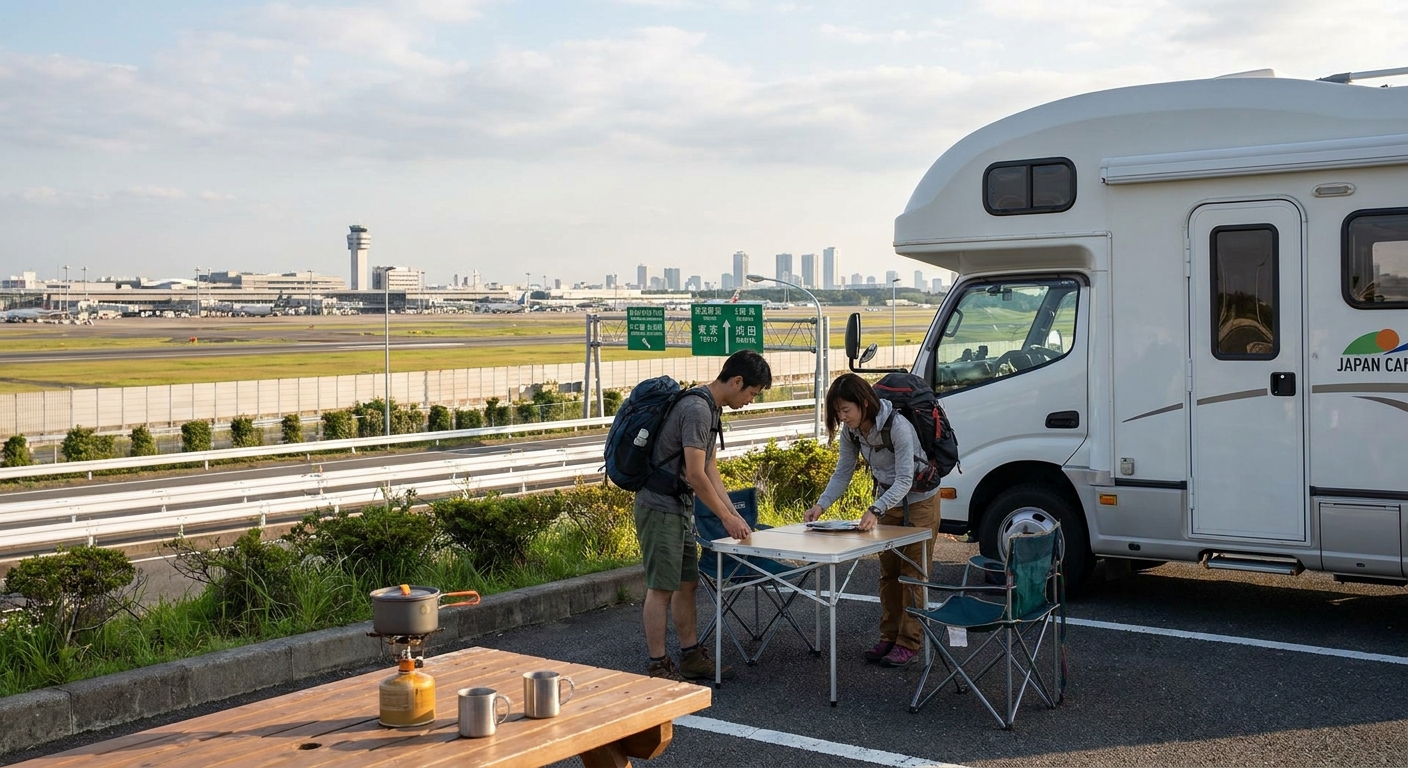
Road conditions around Tokyo's airports, both Narita (NRT) and Haneda (HND), are generally excellent, featuring well-maintained, multi-lane expressways that facilitate efficient travel. While urban areas can become congested with dense traffic, especially during peak hours, driving slowly and carefully allows you to navigate almost anywhere without issues, so there's no need to stress – just use common sense and pay attention. The terrain directly around the airports and into central Tokyo is mostly flat, providing an easy start for your long-term RV rental journey.
As you venture further into rural Japan, the landscape transitions to more mountainous and winding roads, which require careful RV navigation. Highways are smooth and well-signposted, often with English translations, making navigation straightforward. Remember that Japan drives on the left side of the road, a key consideration for international visitors. Embrace slow travel, aiming for a maximum of 100-150 km per day on average, to truly take time to feel the place, connect to the culture, the food, and the scenery. Our Rent&Plan service can even help you pre-plan routes by professionals, ensuring you get the most out of your multi-week adventure.
RV Size Limits, Bridges & Restricted Zones
RV travelers in Tokyo - Airport must be mindful of vehicle height limits, especially for older tunnels, bridges, and parking garages in urban centers, where clearances can be as low as 2.5 meters. Japan's infrastructure, while modern, is often designed with smaller local vehicles in mind, meaning a larger motorhome requires extra vigilance. Most standard RVs from Bandana's fleet, such as the Class B Camper Van (averaging 5.8m in length) or Class SI Semi-integrated (averaging 6.9m), are typically manageable on Japanese roads, offering a good balance of comfort and maneuverability.
Larger Class C Alcove (averaging 7.5m) and Class A Integrated (averaging 7.5m) RVs require greater caution in tighter spaces and when seeking parking. Japan does not have widespread environmental zones restricting RV access based on emissions, but specific urban areas or historical sites might have vehicle size or access limitations, which are clearly marked with local signage. There are no ferry limits directly impacting long-term RV rentals from Tokyo airports for initial travel, but if planning island excursions, always check specific ferry operator regulations for RV dimensions and weight to avoid any surprises. For options tailored to specific needs, such as a "Luxury RV Rental in Tokyo - Airport - Premium Prices 2026" or "Family RV Rental in Tokyo - Airport - Pricing Guide 2026", considering vehicle size will be key.
Fuel: Diesel vs. Petrol & Cost per 100 km
Japan primarily uses gasoline (petrol), but diesel fuel is widely available at most service stations, with many Bandana RVs typically running on diesel, which is often more fuel-efficient for long-term RV rentals. Based on Bandana's global fleet averages, a Class SI Semi-integrated RV consumes approximately 10–11 Liters/100 km, while a Class B Camper Van uses around 8-10 Liters/100 km, showcasing the varying efficiency across different vehicle classes. The average cost per 100 km in Japan for an RV varies significantly with dynamic fuel prices, which, like flight tickets, can change daily.
You can estimate costs by factoring in current fuel prices (e.g., ¥170/liter for diesel, ¥180/liter for petrol as of 2026) and your rented motorhome's specific consumption rate. Budgeting for fuel is a major component of your total trip cost, especially for an extended road trip across Japan. On the RV PLANET routes offered, travelers can itemize and track every expense along the way for easy budgeting, ensuring full transparency in your travel finances. If you're looking to minimize your expenses, exploring a "Cheap RV Rental in Tokyo - Airport - Budget Guide 2026" can offer valuable insights into managing costs. On the routes offered through RV PLANET routes, you can itemize and track every expense along the way for easy budgeting.
Tolls, Vignettes & Border Rules
RV travel in Japan heavily relies on a comprehensive network of toll expressways, which are essential for covering long distances efficiently, as there are no vignettes or border rules to consider within Japan. The expressways connect major cities like Tokyo to scenic regions, making them vital for a long-term RV rental adventure. The most convenient way to manage these tolls is with an Electronic Toll Collection (ETC) card, which many rental RVs allow you to rent or may come pre-equipped with for seamless travel and discounted rates on some sections of the network.
Toll costs can accumulate quickly, particularly around major metropolitan areas like Tokyo, making proper budgeting crucial for your long-term RV rental plan. While some Bandana RVs allow for pre-purchasing toll passes to potentially avoid fines or simplify payments, it is best to confirm ETC card availability and usage instructions with your specific rental provider during the pre-booking comparison process. This proactive approach helps ensure you face no hidden fees or unexpected surprises on the road, reflecting our commitment to full transparency.
Driving Tips for long term rv rental Travelers
Planning your route carefully is paramount for a long-term RV rental in Tokyo - Airport, as Japan's intricate road network requires thoughtful navigation to avoid narrow streets, low bridges, and congested city centers; use reliable GPS with RV mode if available. Master left-hand driving by practicing in less congested areas around the airport before venturing into heavy traffic or complex interchanges, allowing you to adapt comfortably. Utilizing ETC cards for tolls is highly recommended to streamline payments on Japan's extensive toll road network and often provides discounts, which is essential for budget-conscious long-term travelers.
Embrace Michi-no-Eki, Japan's unique roadside stations that offer safe, free overnight parking, clean restrooms, and local produce, serving as vital stops for families and budget travelers seeking comfortable breaks. When preparing meals in your RV kitchen, remember you have a mobile home, perfect for enjoying fresh local ingredients. Explore our RV-friendly recipes playlist for inspiration. Always be mindful of vehicle size and parking; Japan's infrastructure is not always built for large vehicles, so prioritize smaller RVs (like a Class B Camper Van or Class SI Semi-integrated) and always pre-check parking availability and height restrictions, especially in popular tourist areas. Traveling slowly, perhaps an average of 100-150 km per day, allows you to truly immerse yourself in the culture and scenery.
🎬 Video coming soon
Recommended RV Class for Tokyo - Airport Roads
For navigating Tokyo-Airport roads and Japan's broader network, the Class B Camper Van and Class SI Semi-integrated RVs are generally the most recommended rental classes due to their optimal balance of maneuverability and living comfort. Class B Camper Vans, with an average length of 5.8 meters from Bandana's global fleet, offer excellent agility for city driving, parking in tighter spots, and accessing smaller roads, making them ideal for urban exploration and scenic routes. Imagine navigating charming Japanese towns with ease, having your comfortable mobile headquarters always ready.
Class SI Semi-integrated RVs, averaging 6.9 meters in length, provide more interior space and amenities than camper vans, such as a full shower and toilet, while still being manageable on Japanese roads. This makes them a good compromise for couples or small families on a long-term rental who seek enhanced comfort without sacrificing too much agility. While larger Class C Alcove and Class A Integrated RVs (both averaging 7.5 meters) offer superior comfort and more generous living quarters, like the "cruise america rv rental example Explorer" model with a 7.1m length and seating for 4, they may present challenges with parking, narrower country roads, and navigating some urban areas. We handle the details of comparing these options across suppliers, so you can live the journey.
Should I Choose a Compact Van Instead of a Large RV in Tokyo - Airport?
Choosing between a compact van (Class B Camper Van) and a larger motorhome (Class SI Semi-integrated or Class C Alcove) for your Tokyo - Airport RV rental depends primarily on your travel style, comfort needs, and the balance between rural exploration and urban immersion. A compact van offers unparalleled maneuverability in Tokyo's dense urban environment, easier parking, and lower fuel consumption, averaging 8-10 Liters/100 km, making it perfect for quick stops and city exploration.
However, for long-term RV rentals, a larger RV like a Class SI Semi-integrated (averaging 6.9m length, typically 2-4 sleeping places) or a Class C Alcove (averaging 7.5m length, 4-6 sleeping places) provides essential amenities such as a proper bathroom, a more spacious kitchen, and dedicated sleeping areas, greatly enhancing comfort and convenience for extended trips. Generally, for travelers planning to venture beyond Tokyo's immediate urban core and spend substantial time on the road, the increased comfort and space of a larger RV often outweigh the minor challenges of navigating tight spots, especially given Japan's well-developed highway system. If you're traveling as a couple and prioritizing agility, check out "RV Rental in Tokyo - Airport for Couples - Pricing 2026" for tailored options.
Can I Park Anywhere? Free & Wild Camping Rules in Tokyo - Airport
Free or wild camping (boondocking) is generally not permitted and highly discouraged in Japan, especially around urban centers like Tokyo and its airports, due to strict land ownership laws and cultural norms. Violating these rules can lead to fines and negatively impact the local community's perception of RV travelers. Instead of wild camping, RV travelers in Japan extensively use 'Michi-no-Eki' (roadside stations), which offer safe, free overnight parking, clean restrooms, and sometimes local amenities like shops and restaurants. These stations are an invaluable resource, though true camping, such as setting up tables or awnings, is usually forbidden.
For a more traditional camping experience, designated RV parks and campgrounds are available throughout Japan, offering full hookups and facilities for a fee. These are essential for long-term RV rentals needing regular utility access to refresh fresh water tanks (e.g., 82 Liter capacity on a "cruise america rv rental example Explorer") and empty waste water tanks. Rules vary by region, so always check local regulations and follow local law before parking overnight, particularly respecting private property and public signage. Planning your overnight stops is a key aspect of a successful long-term RV journey in Japan.
Can I Drive an RV Into the City Center? Heights, Tunnels & Local Signage
You can generally drive an RV into Tokyo's city center, but it requires careful attention to signage, especially regarding height limits, narrow streets, and challenging parking. The major roads are well-maintained, but central Tokyo is a dense urban environment. Drivers must pay close attention to local signage indicating height restrictions for tunnels, underpasses, and multi-story parking garages, which can be significantly lower than in other countries, often around 2.5 to 3.0 meters. Always be aware of your RV's height to prevent accidents and avoid costly damages.
Tokyo's urban core features dense traffic, numerous one-way streets, and limited parking for larger vehicles, making navigation potentially stressful for those unfamiliar with driving larger RVs. It's often advisable to park your rented motorhome on the periphery and use Japan's excellent public transportation for city exploration. While environmental zones are not a major concern, some residential areas or historic districts may have specific vehicle access restrictions, which are always clearly marked, so vigilance is key. Driving slowly and carefully, paying attention to signs, will ensure a smooth experience. Our professional planners can help map out routes that consider these city challenges, offering a 25% planning discount when you use rvplan.net.
Where can I pick up and drop off an RV near Tokyo airports (NRT & HND)?
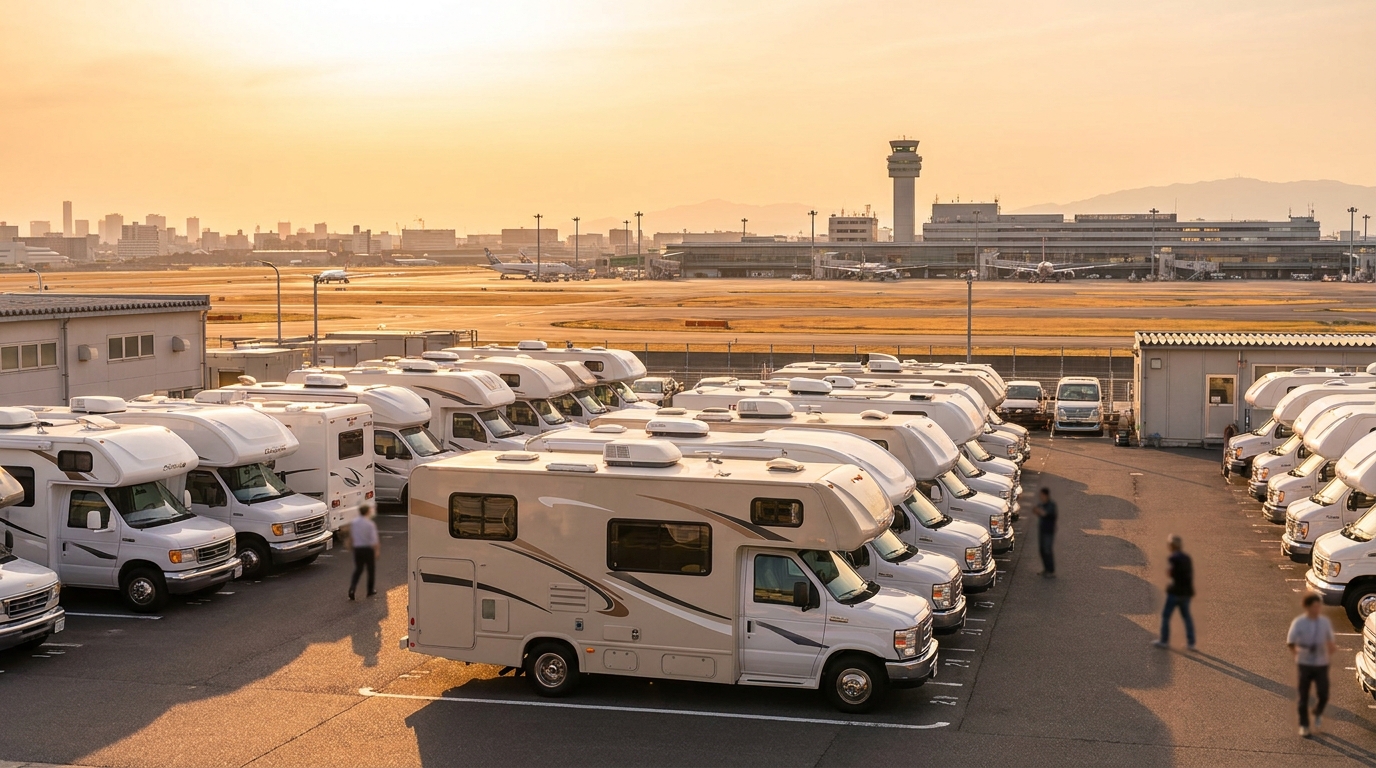
RV rental pickup and drop-off logistics for Tokyo airports (Narita and Haneda) typically involve shuttle services to off-site rental depots rather than direct on-airport facilities. Most major RV rental companies, including Bandana partner suppliers like Apollo and Britz, have branches located a reasonable driving distance from either NRT or HND, offering transfers that require pre-booking and confirmation of their specific pickup/drop-off procedures. This ensures a seamless transition from your flight to your long-term RV rental.
For Narita (NRT), rental depots are often found in nearby Chiba Prefecture, usually within a 30-60 minute drive. For Haneda (HND), locations might be more dispersed towards Kawasaki or Yokohama, requiring specific travel arrangements from the airport. Always confirm with your specific Bandana rental provider about their exact location, shuttle availability, operating hours, and any requirements for international travelers (e.g., IDP presentation) well in advance of your arrival. Our 24/7 support is here to assist with pre-booking comparison and post-booking coordination, making the process straightforward.
Which Tokyo airport is better for RV travel - Narita (NRT) or Haneda (HND)?
For RV travelers, Haneda Airport (HND) is generally more convenient than Narita Airport (NRT) due to its closer proximity to central Tokyo and slightly better accessibility for larger vehicles. Haneda's more central location often means shorter transfer times to RV rental depots and quicker access to major expressways leading out of Tokyo, potentially reducing initial urban driving stress for your long-term RV adventure. This can be a significant advantage when you're eager to start your journey.
Narita Airport, while further out in Chiba Prefecture, also has several RV rental depots nearby and offers routes that can bypass central Tokyo for travelers heading north or east, potentially reducing initial city traffic. The rural surroundings of NRT can make the initial drive less daunting for those new to driving larger vehicles in Japan. Ultimately, the 'better' airport depends on your specific RV rental provider's nearest depot, your intended first destination, and whether you prioritize quicker airport egress or closer proximity to diverse onward routes. Comparing options for your "long term rv rental in Tokyo - Airport" thoroughly will help you make the best choice, and our true RV specialists are here to offer expert insights.
What are the best RV parking options near Tokyo airports (NRT & HND)?
Specific guidance on RV parking availability, regulations, and costs directly at or around Tokyo airports for overnight options is limited; dedicated long-term RV parking is typically found at nearby RV parks or 'Michi-no-Eki'. For immediate post-arrival or pre-departure stays, your RV rental company might offer parking at their depot, or you may need to utilize designated paid parking facilities at or near the airports that can accommodate larger vehicles. It's crucial to plan these stops ahead of time for your long-term RV rental.
Public parking garages at both NRT and HND generally have height restrictions, often 2.1-2.5 meters, making them unsuitable for most RVs; open-air, oversized vehicle parking options are rare and expensive. The best approach for overnight RV parking near NRT and HND is to reserve a spot at a dedicated RV park or check for a suitable Michi-no-Eki (roadside station) within a reasonable driving distance, ensuring proper amenities and security. Utilizing resources like RV PLANET (rvplan.net) is a great way to locate available spots and plan your long-term route, keeping your travel organized and stress-free.
Are there RV parks or Michi-no-Eki near Tokyo airports for immediate stays?
Yes, there are several RV parks and 'Michi-no-Eki' (roadside stations) located conveniently within an hour's drive of both Narita (NRT) and Haneda (HND) airports, providing excellent immediate post-arrival or pre-departure stay options for RV travelers. Michi-no-Eki are widespread across Japan and serve as invaluable free rest stops, often featuring clean restrooms, local shops offering fresh produce, and designated overnight parking areas suitable for RVs, though not typically offering full hookup camping facilities. These stations provide a unique cultural experience for long-term renters.
Dedicated RV parks and campgrounds near Tokyo include options like Auto Campground Mori Park (closer to Narita) or various sites around Chiba and Kanagawa prefectures, offering full hookups and amenities for a fee, essential for long-term RV rentals needing regular utility access. It's highly recommended to research and book an RV park or identify suitable Michi-no-Eki locations in advance, especially for your first night, to ensure a smooth transition from the airport to your RV adventure. Remember, booking ahead often secures the best spots, though many Michi-no-Eki are first-come-first-serve.
How do I drive an RV from Narita (NRT) or Haneda (HND) to my first destination?
Driving an RV from Narita (NRT) or Haneda (HND) to your initial camping or RV park destination requires careful planning to navigate Japan's excellent but sometimes complex road network. From NRT, you'll typically access the Higashi-Kanto Expressway, which can lead you south towards Tokyo Bay Aqualine or further east into Chiba, or connect to other major highways depending on your destination. From HND, access to the Shuto Expressway (Metropolitan Expressway) is quick, offering routes into central Tokyo or south towards Yokohama via the Bayshore Route, allowing for relatively smooth transitions onto main arterial roads for your long-term RV driving in Tokyo - Airport.
Be prepared for tolls on all major expressways; utilize a pre-rented ETC card or pay manually, and pay close attention to road signs, which are often in both Japanese and English, for directions and speed limits. Be mindful of denser traffic patterns, especially during rush hour around urban areas. Drive slowly and carefully, and you can drive almost anywhere without issues. No need to stress - just use common sense and pay attention. For a pre-planned route, consider using RVPLAN.NET's professional services, which offer a 25% planning discount, simplifying your journey from the moment you pick up your rented motorhome.
What unique driving rules and cultural etiquette should RVers know in Japan?
RVers in Japan must adhere to unique driving rules and cultural etiquette, including strict left-hand traffic, polite parking practices, and careful waste disposal, which are essential for a respectful long-term RV rental experience. Always drive on the left side of the road, and note that right-hand turns are made from the left-most lane, which can feel counter-intuitive for drivers from right-hand traffic countries. This will require focus, especially when first driving your rented motorhome from Tokyo - Airport.
Japanese parking etiquette dictates parking within designated lines and avoiding taking up excessive space, especially with larger RVs; parking outside of designated areas is highly frowned upon and often illegal. Be mindful of speed limits, which are often lower than in Western countries (e.g., 80-100 km/h on expressways, 40-60 km/h in urban areas), and always give way to pedestrians, particularly at crosswalks. Proper waste disposal is crucial; do not dispose of grey or black water haphazardly, but rather at designated RV parks or facilities, aligning with Japan's high standards of cleanliness and environmental respect. God is in the small details, and we take care of them, helping you navigate these nuances for a memorable trip.
What You Shouldn't Miss
- Mount Fuji's Five Lakes Region: Drive your rented motorhome to the scenic Fuji Five Lakes area, such as Lake Kawaguchiko, for breathtaking views of Mount Fuji, especially during sunrise or sunset. Many campgrounds and Michi-no-Eki offer excellent vantage points.
- Hakone Open-Air Museum: Explore an outdoor sculpture park nestled in the natural beauty of Hakone, a mountainous town easily accessible from Tokyo. Park your RV and take a scenic bus or train to explore the art.
- Nikko's Shrines and Temples: Journey north to Nikko, home to UNESCO World Heritage shrines and temples, including Toshogu Shrine. The drive through forested mountains is stunning, and local RV-friendly parking is available.
- Izu Peninsula Coastline: Head south from Tokyo - Airport to the Izu Peninsula for its beautiful beaches, hot springs, and dramatic coastal drives. Discover hidden coves and charming fishing villages with your mobile home.
- Yokohama's Waterfront: Experience a vibrant urban escape in Yokohama, just a short drive from Haneda Airport. Park your RV in a designated spot and explore Minato Mirai's modern architecture, diverse dining, and beautiful bay views.
- Looking for expert insights from Avi Bandana? Top 5 Adventures - recommendations from Avi Bandana
Final Thoughts
A long-term RV rental from Tokyo - Airport truly opens up Japan in a unique and personal way. From the bustling energy of Tokyo's periphery to the serene beauty of rural landscapes and the spiritual tranquility of ancient sites, your rented motorhome is your ticket to discovery. Remember to plan your routes, embrace local etiquette, and allow yourself the luxury of slow travel – no more than 100-150 km per day on average, so you can truly savor every moment.
Whether you're exploring the "RV Travel Guide to Tokyo - Airport - Tips and Top Spots 2026" or planning a broad itinerary with RV PLANET, Bandana RV is with you every step of the way, offering peace of mind and full transparency. We're here to ensure your long-term adventure is effortless and memorable, handling the details so you can focus on living the journey.
Get inspired for your next trip! Discover top destinations, planning tips, all in one place. Your ultimate Japanese road trip awaits!
Find Motorhome Rentals in Tokyo - Airport