In This Guide
- Can You Drive an RV in Scotland? License & Age Rules
- Road Conditions & Terrain in Scotland
- RV Size Limits, Bridges & Restricted Zones
- Fuel: Diesel vs. Petrol & Cost per 100 km
- Tolls, Vignettes & Border Rules
- Driving Tips for long term rv rental Travelers
- Recommended RV Class for Scotland Roads
- Should I Choose a Compact Van Instead of a Large RV in Scotland?
- Can I Park Anywhere? Free & Wild Camping Rules in Scotland
- Can I Drive an RV Into the City Center? Heights, Tunnels & Local Signage
- What are specific driving tips for Scottish single-track roads?
- What are the logistics for taking an RV on a Scottish ferry?
- What are the best alternative RV routes in Scotland beyond the NC500?
- How much does a long term RV rental trip in Scotland cost?
- How can I experience local culture during my RV trip in Scotland?
- How can I travel responsibly and sustainably by RV in Scotland?
- What types of RV campsites are available in Scotland, and how do I book them?
Can You Drive an RV in Scotland? License & Age Rules
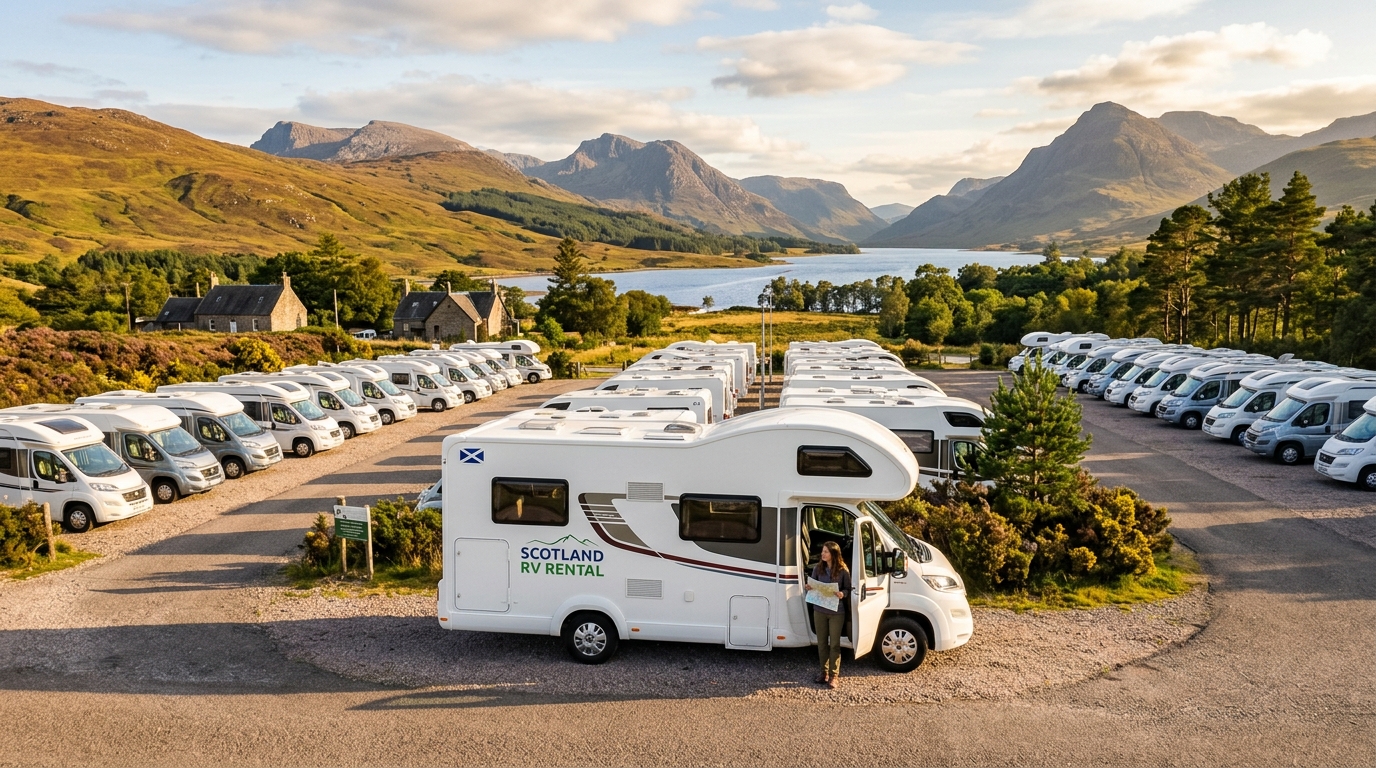
Most standard car licenses (Category B) allow driving RVs up to 3,500 kg Maximum Authorised Mass (MAM) in Scotland, making it accessible for many.
For RVs weighing between 3,500 kg and 7,500 kg MAM, a Category C1 license is typically required. It's essential to check your rental agreement and license validity beforehand. The minimum driver age for most RV rentals in Scotland is generally between 21 and 25 years old, although a standard driving license can be obtained at 17. Foreign drivers need a valid national driving license, and an International Driving Permit (IDP) is recommended or legally required for non-EU/EEA licenses to ensure smooth communication with authorities.
Road Conditions & Terrain in Scotland
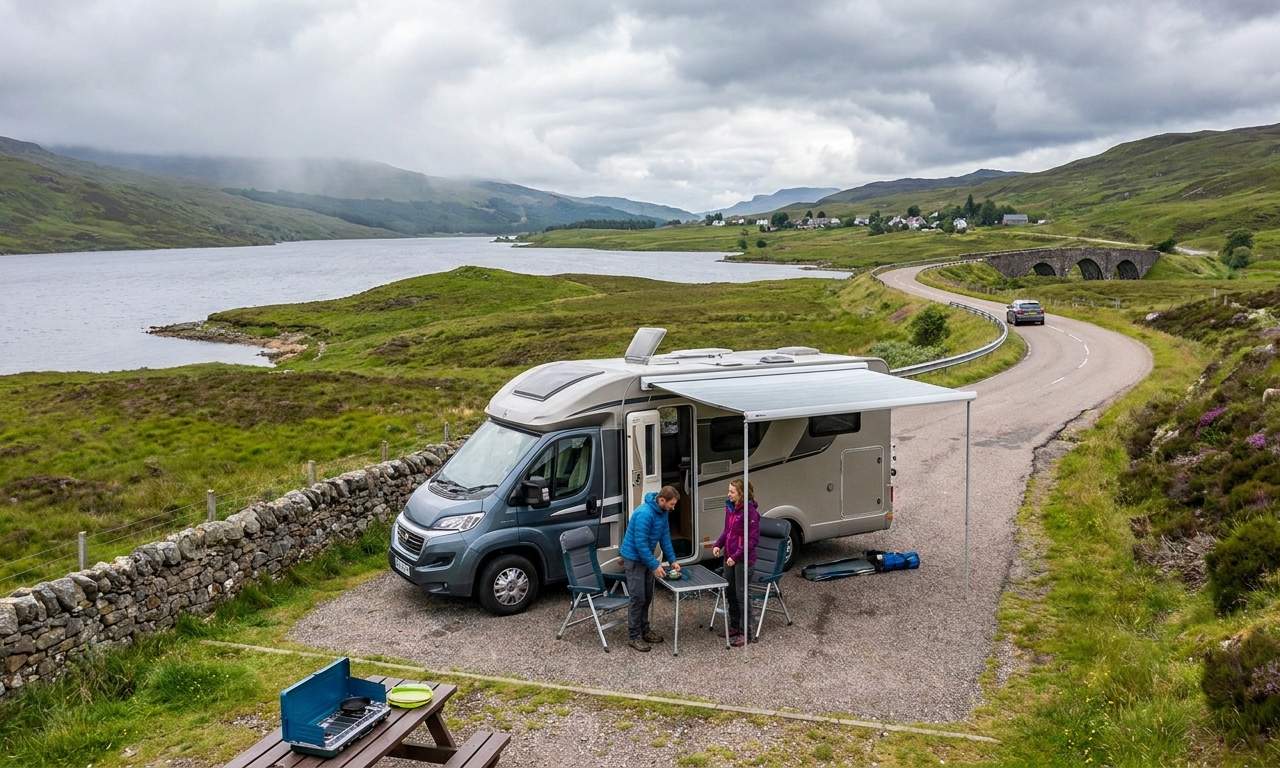
Scotland's road conditions offer a diverse driving experience, ranging from expansive, well-maintained motorways and A-roads to the more intimate, winding single-track roads prevalent in rural areas and the Highlands.
Expect varied terrain, including steep hills, dramatic mountain passes, and picturesque coastal routes, all of which often necessitate slower speeds and a heightened sense of awareness and careful driving. Many of the most scenic routes, particularly those through the Highlands and to the Islands, are characterized by single-track roads, featuring strategically placed passing places to facilitate the movement of oncoming traffic or faster vehicles.
Driving an RV in Scotland is an invitation to embrace a slower, more immersive pace of travel, allowing you to fully appreciate the breathtaking landscapes and the journey itself.
RV Size Limits, Bridges & Restricted Zones
While there are no universal, strict RV size limits across all of Scotland, drivers must be acutely mindful of their vehicle's dimensions when navigating specific routes, particularly those with low bridges or through historic village centers.
Always confirm your rented RV's precise height, width, and weight to ensure safe passage under low bridges or through narrow village streets. Some areas, notably within national parks or on remote islands, may impose specific weight or length restrictions on certain roads; it is crucial to consult local signage and detailed maps. For those planning island excursions, be aware that Scottish ferry services often have specific vehicle size restrictions and require advance booking, so plan accordingly.
Fuel: Diesel vs. Petrol & Cost per 100 km
The vast majority of RVs available for long-term rental through Bandana are diesel-powered, a fuel type that is widely and conveniently available at fuel stations across Scotland.
Fuel consumption figures can vary by RV class. For instance, a Class SI - Semi-integrated RV typically consumes between 10-11 Liters per 100 km, while a more spacious Class C - Alcove RV might average 10-12 Liters per 100 km. More compact Class B - Camper Vans are generally more fuel-efficient, consuming around 8-10 Liters per 100 km, making them an excellent choice for those prioritizing economy.
Fuel costs represent a significant portion of any RV trip budget. Some rental agreements may include or offer fuel discount cards to help manage these expenses. On the routes offered through RV PLANET routes, you can itemize and track every expense along the way for easy budgeting.
Tolls, Vignettes & Border Rules
Scotland, as an integral part of the United Kingdom, does not operate a widespread system of road tolls or require vignettes for the use of its national road network.
Notable exceptions, such as the Forth Road Bridge and Queensferry Crossing near Edinburgh, are free of charge for all vehicles, as is the iconic Skye Bridge. While most roads are toll-free, be aware that some privately owned roads or specific parking facilities might levy a fee, so always observe local signage. As there are no internal borders within Great Britain, driving an RV from England or Wales into Scotland involves no specific border rules or checks, ensuring a seamless transition.
Driving Tips for long term rv rental Travelers
When planning your routes, especially in the Highlands, meticulously use resources that identify narrow roads and always factor in extra travel time to accommodate Scotland's unique road conditions.
Take frequent breaks, particularly when traveling with family, to prevent driver fatigue and to allow everyone to enjoy Scotland's stunning, ever-changing scenery. Familiarize yourself with the crucial etiquette of passing places on single-track roads: pull into them on your left to let oncoming traffic pass, or if a vehicle is tailing you and wishes to overtake.
Consider opting for an automatic transmission RV, which can significantly reduce the strain of navigating Scotland's winding, hilly terrain and frequent gear changes. Always remain vigilant for wildlife, especially deer and sheep, on rural roads, particularly during dawn, dusk, and the autumn rutting season, as they can present unexpected hazards.
Recommended RV Class for Scotland Roads
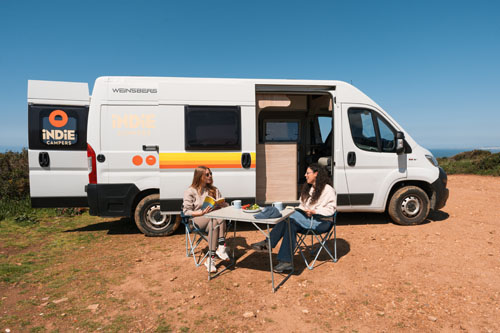
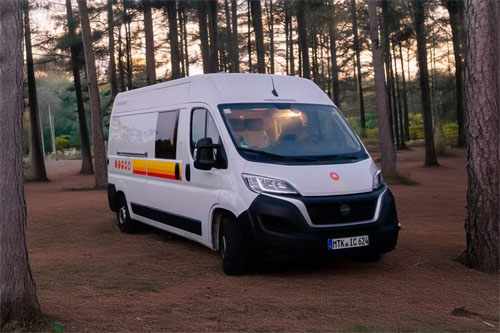
The Class B - Camper Van, typically measuring around 5.8 meters in length, is highly recommended for navigating Scotland's diverse road network, offering excellent maneuverability and easier access to more remote locations.
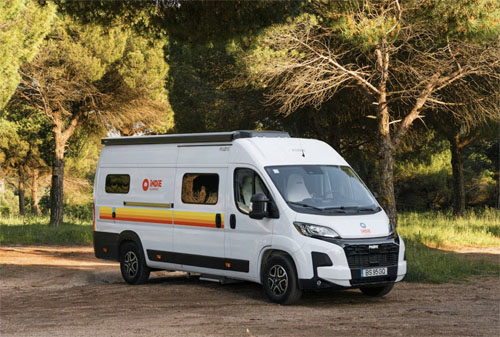
A Class SI - Semi-integrated RV, averaging about 6.9 meters in length, provides a comfortable balance of interior living space and manageable handling for longer tours across Scotland's varied landscapes. These classes generally offer sufficient amenities for comfortable long-term travel without being overly cumbersome on narrow rural roads or when seeking parking in smaller towns.
Selecting an RV within these size parameters will significantly enhance your ability to explore Scotland's less-traveled paths and allow for greater flexibility in your journey.
Should I Choose a Compact Van Instead of a Large RV in Scotland?
Generally, driving a larger RV in Scotland poses no insurmountable issues on most main routes, and comfort and indoor living space are often key considerations for extended rentals.
However, a compact camper van truly excels when navigating extremely tight historic city centers, particularly challenging mountain passes, or when seeking out remote parking spots. For extended trips, the superior living space, more substantial kitchen facilities, and dedicated bathroom amenities of a larger RV, such as a Class SI or C motorhome, often provide a more enjoyable and comfortable travel experience. For ideas you can prep on the road, watch our RV-friendly recipes playlist on YouTube.
Consider your planned itinerary carefully: if extensive off-the-beaten-path exploration is your priority, a compact van might offer a distinct advantage; otherwise, the enhanced comfort and amenities of a larger RV are usually preferred for a well-rounded Scottish adventure.
Can I Park Anywhere? Free & Wild Camping Rules in Scotland
In Scotland, the principles of wild camping, as defined by the Land Reform (Scotland) Act 2003, primarily apply to non-motorized activities like hiking and cycling, not to the overnight parking of motorized vehicles.
Overnight parking or 'wild camping' in an RV requires explicit permission from the landowner, or it must be done in a designated campsite or an approved stopover point. The Scottish Outdoor Access Code strongly emphasizes responsible behavior, including adhering to the 'leave no trace' principle, respecting private property, and avoiding any form of damage to the landscape.
Rules can vary significantly by region, with some local authorities implementing specific bylaws; always verify local regulations and adhere to local laws before parking overnight. Resources like Brit Stops or Park4Night can help identify approved locations for RV parking.
Can I Drive an RV Into the City Center? Heights, Tunnels & Local Signage
Yes, you can generally drive an RV into most Scottish city centers, but it is essential to exercise caution and pay very close attention to all local signage.
Be vigilant for any height and width restrictions, particularly when approaching multi-story car parks, low railway bridges, or entering historic districts which may have narrower thoroughfares. Always observe local signage related to environmental zones, residents-only streets, and weight limits to avoid potential fines and restricted access. Parking a larger RV directly within city centers can be challenging; consider utilizing park-and-ride facilities on the outskirts and exploring the city using public transport for a more convenient experience.
What are specific driving tips for Scottish single-track roads?
Navigating Scotland's challenging roads, especially the iconic single-track routes, with an RV demands a good measure of confidence, patience, and strict adherence to specific etiquette.
Always utilize passing places: pull into these designated areas on your left to allow oncoming traffic to pass, or to let a faster vehicle behind you overtake safely. If a passing place is situated on your right, stop opposite it to allow the other vehicle to pull in and pass you safely. Reduce your speed considerably, particularly on blind bends, and anticipate encountering other vehicles or even livestock around any corner.
For novice RV drivers, practicing slow-speed maneuvering and gaining a solid understanding of your vehicle's turning circle will greatly enhance your confidence and safety on these unique, often demanding roads.
What are the logistics for taking an RV on a Scottish ferry?
Taking an RV on Scottish ferries to explore the stunning islands (such as Mull, Skye, or Arran) is a popular and incredibly rewarding experience, but it necessitates meticulous planning and advance booking.
Accurately measure your RV's total length, including any extensions like bike racks, and its overall height, as incorrect dimensions can lead to booking complications or even refusal of boarding. It is highly recommended to book ferry crossings well in advance, particularly during peak season (June-August) and for popular routes, as vehicle spaces are strictly limited. Ferry costs vary significantly based on vehicle length, the number of passengers, and the specific route, so obtaining quotes from operators like Caledonian MacBrayne (CalMac) early in your planning process is essential.
Ensure you arrive at the ferry terminal at least 30-60 minutes before the scheduled departure time, as specified by the operator, to allow ample time for check-in and boarding procedures.
What are the best alternative RV routes in Scotland beyond the NC500?
Beyond the renowned North Coast 500, Scotland offers a wealth of captivating alternative RV routes, each providing unique regional deep-dives and opportunities for less-crowded, more intimate travel experiences.
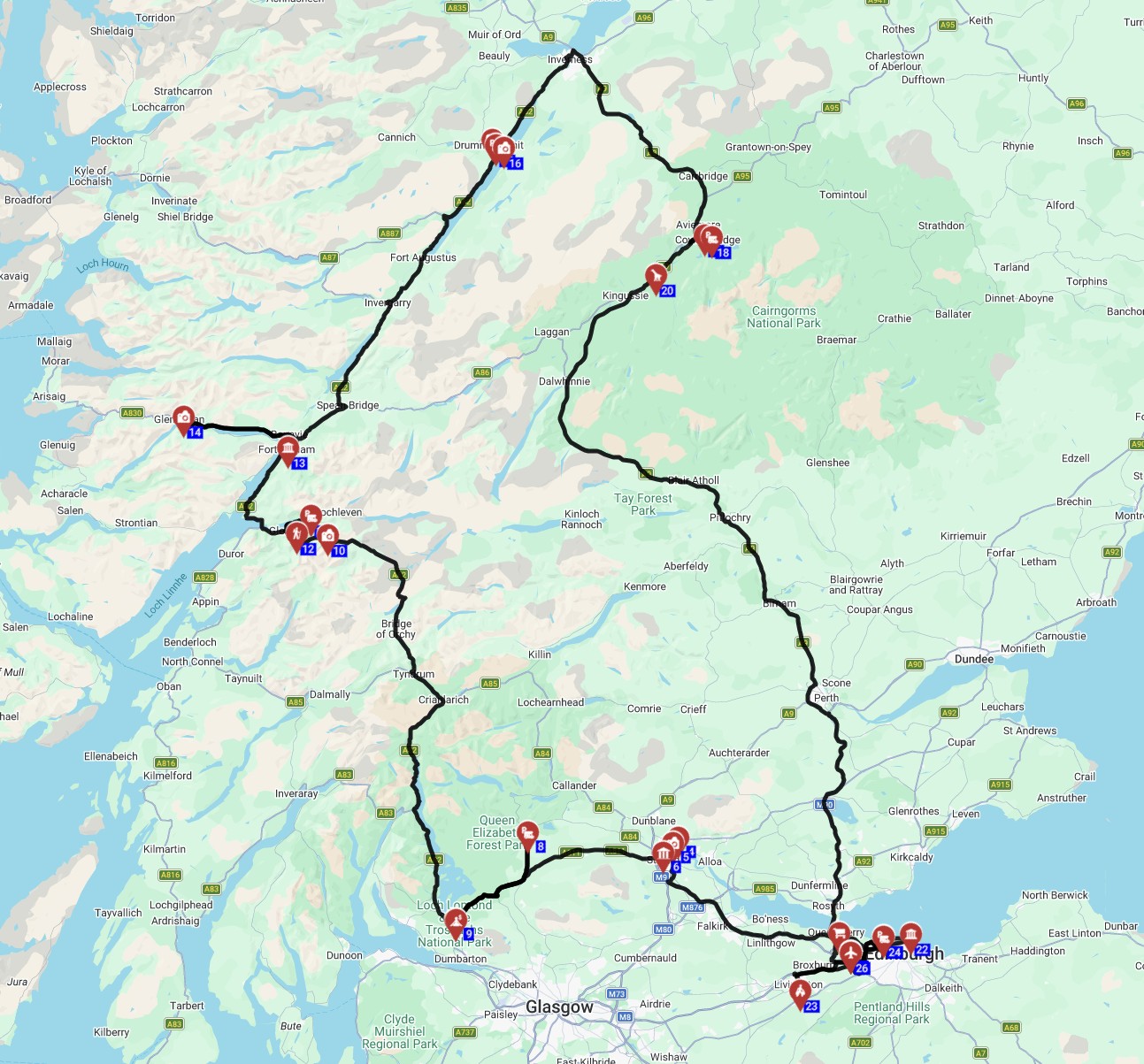
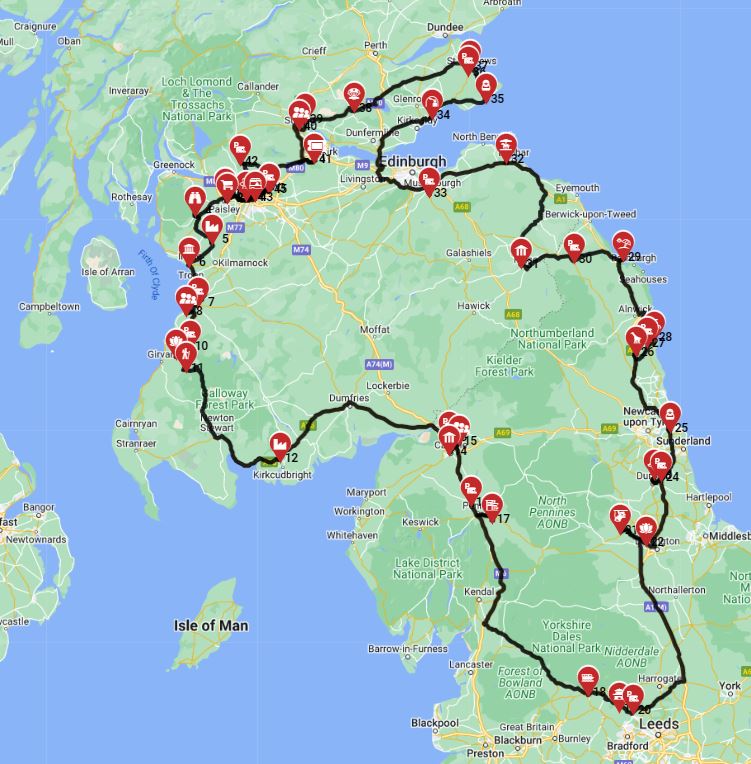
Consider embarking on the South West Coastal 300 (SWC300) for a journey through the scenic Solway Coast, the majestic Galloway Forest Park, and a route dotted with historic castles. The Argyll Coastal Route (following the A83 and A82) showcases dramatic scenery, grants access to charming coastal towns, and offers vital ferry links to the Inner Hebrides. For a taste of Scotland's famous spirit, explore themed itineraries such as Scotland's Whisky Trails in Speyside or Islay, allowing you to visit distilleries directly from your RV.
The Borders Historic Route provides a rich cultural immersion through rolling hills, ancient abbeys, and quaint market towns, offering a tranquil contrast to the wilder Highland adventures.
How much does a long term RV rental trip in Scotland cost?
A comprehensive budget for a long-term RV rental trip in Scotland should account for rental fees, fuel, campsite costs, groceries, and attraction admissions.
RV rental prices for extended durations fluctuate significantly based on the RV class, rental duration, and time of year, generally ranging from approximately £80 to over £200 per night. Fuel will inevitably be a major expense; calculate this based on your chosen RV's typical consumption (e.g., 10-12 L/100km) and your anticipated mileage, factoring in current fuel prices.
Campsite fees typically range from £20-£50 per night for a serviced pitch, with premium locations or glamping sites potentially costing more. Remember to also budget for groceries (self-catering significantly reduces costs), entrance fees for desired attractions, potential ferry costs if island-hopping, and a contingency fund for unexpected expenses like propane refills or potential cleaning charges.
How can I experience local culture during my RV trip in Scotland?
For an authentic taste of local culture and truly immersive experiences, seek out RV-friendly activities that provide a genuine connection to Scotland.
Visit local food markets, such as Edinburgh's Farmers Market or Glasgow's Barras, to discover fresh artisan produce and sample local delicacies. Check regional tourism websites or community notice boards for information on specific festivals, Highland Games, or traditional music 'ceilidhs' happening during your travels, offering vibrant glimpses into Scottish life. Support local craftspeople and artists by visiting independent artisan shops, historic wool mills, or small distilleries directly from your RV.
Consider staying at smaller, community-run campsites or farm stays, as these often provide invaluable opportunities to interact with locals and gain deeper insights into the area's heritage and daily life.
How can I travel responsibly and sustainably by RV in Scotland?
Responsible and sustainable RV travel in Scotland involves consciously minimizing your environmental impact and actively supporting the local communities you visit.
Always utilize designated waste disposal points for grey and black water, typically found at official campsites and some service stations, to prevent water pollution. Adhere strictly to 'leave no trace' principles: carry out all rubbish, minimize single-use plastic consumption, and practice water and electricity conservation within your RV. Support the local economy by purchasing groceries, fuel, souvenirs, and dining at independent shops, markets, and restaurants in the towns and villages you explore.
Respect the Scottish Outdoor Access Code by not disturbing wildlife or livestock, and ensure your RV is parked only in approved, safe locations away from sensitive natural areas.
What types of RV campsites are available in Scotland, and how do I book them?
Scotland offers a diverse range of RV campsites, catering to various preferences, from basic pitches to luxurious glamping sites and unique farm stays.
Options include full-service holiday parks with extensive amenities like playgrounds and laundry facilities, smaller certified sites (often affiliated with organizations like The Camping and Caravanning Club), independent campsites, and 'aires' or community stopover points that offer basic facilities. Farm stays present a particularly unique opportunity to experience rural life, often providing dedicated RV facilities and direct access to fresh local produce.
For travel during peak season (June-August and school holidays), it is highly recommended to book all campsites well in advance, especially in popular regions such as the Highlands and the Islands. Utilize online booking platforms like Pitchup.com or UKCampsite.co.uk, along with direct campsite websites and RV club directories, to secure reservations and gather detailed information on available facilities.
What You Shouldn't Miss
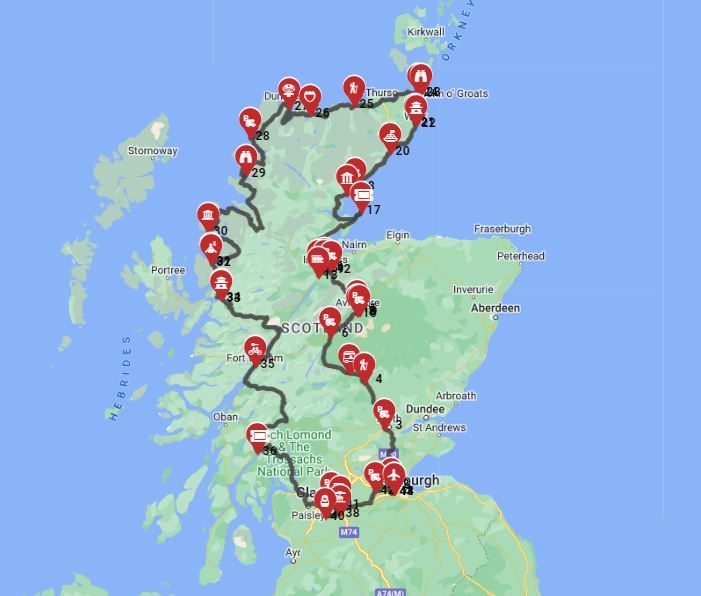
- Drive the North Coast 500: Even if it's popular, this iconic 500-mile route is a must-do for its dramatic coastal scenery, historic castles, and charming villages. Plan for at least 5-7 days to truly enjoy it.
- Explore the Isle of Skye: Iconic landscapes like the Old Man of Storr, the Quiraing, and the Fairy Pools are unforgettable. Be prepared for potentially busy conditions and consider booking ferries and accommodations well in advance.
- Discover the Trossachs National Park: Known as "Scotland in Miniature," this area offers beautiful lochs, forests, and rolling hills, perfect for a more relaxed pace of RV travel with plenty of accessible campsites.
- Visit the Cairngorms National Park: Britain's largest national park provides vast mountain scenery, ancient Caledonian pine forests, and opportunities for wildlife spotting. It’s ideal for longer-term stays with numerous campsites.
- Experience the Whisky Trails: Whether it's Speyside or Islay, follow Scotland's famous whisky trails, visiting distilleries and enjoying the picturesque landscapes, often with RV-friendly access.
- Explore the Borders Abbeys: Discover the rich history and architectural grandeur of Melrose, Jedburgh, Dryburgh, and Kelso Abbeys, offering a cultural counterpoint to the rugged Highlands. Many routes through the Borders are RV-friendly.
Final Thoughts
Embarking on a long-term RV rental adventure in Scotland offers an unparalleled opportunity to immerse yourself in the country's dramatic landscapes and rich history at your own pace. From the rugged Highlands to the enchanting islands, a rented RV provides the freedom and flexibility to craft a truly unique journey.
We hope this comprehensive guide equips you with the knowledge and confidence to plan an unforgettable Scottish road trip. Remember, the open road awaits, and Scotland's beauty is best discovered one mile at a time, from the comfort and convenience of your own mobile home.
Get inspired for your next trip! Discover top destinations, planning tips, all in one place! Plan a trip itinerary in advance with minimal effort and maximum enjoyment.