
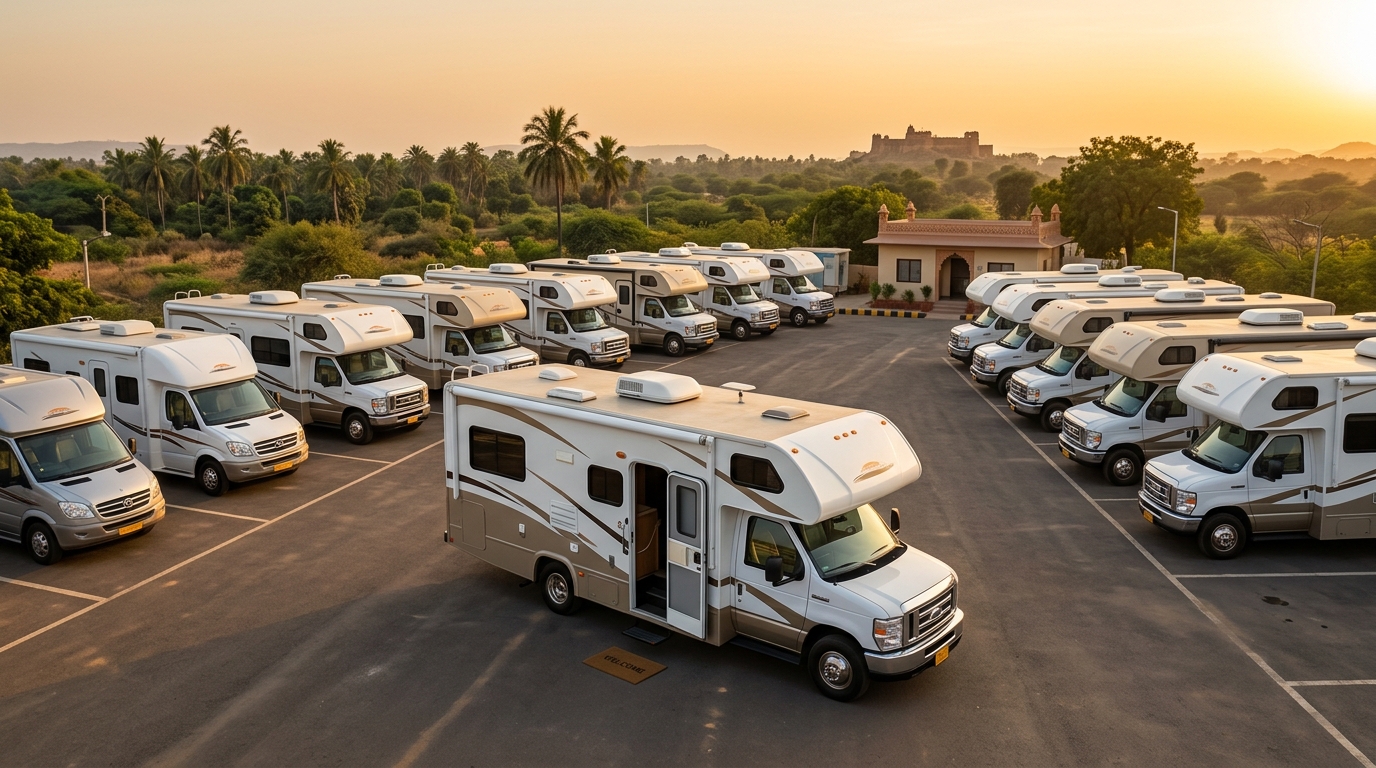
For live availability and current prices, start with our RV Rental India - Complete Guide 2026 guide.
In This Guide
- Can You Drive an RV in India? License & Age Rules
- Road Conditions & Terrain in India
- RV Size Limits, Bridges & Restricted Zones
- Fuel: Diesel vs. Petrol & Cost per 100 km
- Tolls, Vignettes & Border Rules
- Driving Tips for Long Term RV Rental Travelers
- Recommended RV Class for India Roads
- Should I Choose a Compact Van Instead of a Large RV in India?
- Can I Park Anywhere? Free & Wild Camping Rules in India
- Can I Drive an RV Into the City Center? Heights, Tunnels & Local Signage
- What are the road conditions like for RV travel in India?
- Is it safe to travel in an RV in India?
- What are the challenges of long term RV travel in India?
- Can you cook in an RV in India, and is the water safe?
- Can I travel with pets in an RV in India?
- Top Cities for RV Rental in India
- Traveling Through Asia by Motorhome
Embarking on a long-term RV rental adventure in India offers an unparalleled journey through a land of vibrant cultures, breathtaking landscapes, and rich history. From the snow-capped peaks of the Himalayas to the serene backwaters of Kerala, a rented motorhome gives you the freedom to explore at your own pace, truly connecting with the spirit of this incredible country. For live availability and current prices, start with our RV Rental India - Complete Guide 2024 guide, your go-to resource for comprehensive information.
Can You Drive an RV in India? License & Age Rules
Yes, you can absolutely drive a rented RV in India, and the licensing requirements are straightforward for most travelers. Foreigners need an International Driving Permit (IDP) to drive an RV in India, which must be carried alongside their home country driver's license. Indian citizens generally require a Light Motor Vehicle (LMV) license, which covers most RVs up to 7500 kg Gross Vehicle Weight (GVW), encompassing typical Class B, Class C, and smaller Class A motorhomes. The minimum driving age for an LMV in India is 18 years, though rental companies often impose a higher minimum age for their vehicles, typically 21 years old, and some might require 25 years for larger Class A motorhomes. There are no young driver surcharges for those aged 21 and above, nor are there vehicle class restrictions based on age when renting with Bandana Caravan's partners.
Road Conditions & Terrain in India
India's extensive road network presents a diverse mix of conditions, offering everything from well-maintained national highways, some of which are multi-lane expressways, to variable state highways, and numerous rural roads that can change significantly in quality. You'll experience diverse terrains, from the expansive plains of Rajasthan and the scenic coastal routes of Goa to winding mountain passes in the Himalayas and occasional unpaved tracks in remote areas. Driving a rented RV in India requires adopting a slow, mindful, and highly attentive approach, as you'll navigate dense urban traffic, narrow village lanes, and encounter a unique blend of vehicles, pedestrians, and animals like sacred cows or goats. This varied environment makes every journey part of the adventure, allowing you to safely enjoy the rich landscapes and vibrant local life.
RV Size Limits, Bridges & Restricted Zones
While there are no universal strict size limits specifically for RVs in India, drivers must remain highly aware of their vehicle's dimensions when navigating various infrastructure. Low bridges, narrow underpasses, and congested city streets are common, with typical height restrictions for underpasses and city entries ranging from 3.5m to 4.5m, necessitating vigilance, especially for taller Class C or Class A motorhomes. India does not feature widespread environmental zones like those in some European cities, but local authorities in certain urban centers or heritage sites might impose temporary or permanent restrictions on larger vehicles; always check local signage. For any route involving ferry crossings, it is crucial to verify specific length, height, and weight limitations, as these can vary significantly by operator and vessel.
Fuel: Diesel vs. Petrol & Cost per 100 km
Most rented RVs in India, especially the larger classes like Class C motorhomes and Class SI semi-integrated models, operate on diesel fuel, which is widely available at fuel stations across the country. Based on Bandana Caravan's global fleet averages, Class SI and Class C RVs typically consume between 10-12 Liters per 100 km. Smaller Class B Camper Vans offer better fuel efficiency, averaging 8-10 Liters per 100 km. Assuming an average diesel price of approximately 90 INR per liter (as of 2024), the estimated cost to drive 100 km would range from 720 INR to 1080 INR. It's always advisable to inquire with your rental provider about any specific fuel arrangements or discount cards that might be included in your long term rv rental package. For budgeting your overall trip, remember that on RV PLANET routes, you can itemize and track every expense, including fuel, for easy financial planning. On the routes offered through RV PLANET routes, you can itemize and track every expense along the way for easy budgeting.
Tolls, Vignettes & Border Rules
India primarily utilizes the FASTag system for electronic toll collection on its national highways, which is mandatory for most vehicles, including rented RVs and motorhomes. FASTag uses RFID technology, allowing for cashless and seamless passage through toll plazas, avoiding delays. Toll costs for RVs in India are generally higher than for passenger cars, varying based on the vehicle class and the distance traveled. Many Bandana partner RV rental packages include vehicles equipped with pre-activated FASTag devices, which is a great convenience for travelers. For cross-border trips to neighboring countries like Nepal or Bhutan, specific customs declarations, permits, and vehicle clearances are required and must be arranged well in advance, often several months ahead, as these regulations are strict.
Driving Tips for long term rv rental Travelers
When embarking on a long-term RV rental adventure in India, embracing defensive driving is crucial, as traffic etiquette can be quite dynamic and unpredictable, requiring constant vigilance and anticipation. Plan for regular stops every 2-3 hours, especially when traveling with family, to ensure everyone stays rested and engaged, truly making the journey an integral part of the adventure. Utilize GPS navigation with reliable offline maps, but also remain open to asking friendly locals for directions; their insights can be invaluable, especially as real-time road conditions can change rapidly. To ensure seamless travel on highways and avoid delays or fines, consider pre-purchasing or verifying that your rented motorhome is equipped with a FASTag for tolls.
🎬 Video coming soon
Top Cities for RV Rental in India
India's diverse landscape offers numerous excellent starting points for your long-term RV journey. Here are some of the top cities:
- Delhi: As the capital, Delhi provides excellent connectivity and is a gateway to the northern states, including the Himalayas. You can easily pick up your RV rental here and embark on a route towards Himachal Pradesh or Rajasthan.
- Mumbai: This bustling metropolis on the west coast is ideal for exploring Maharashtra, Goa, and further south. Its major airport and robust infrastructure make it a convenient starting point for your adventures.
- Bengaluru: Located in the south, Bengaluru serves as a perfect base for exploring the serene landscapes of Karnataka, the beaches of Kerala, or the historical sites of Tamil Nadu.
- Chennai: On the southeastern coast, Chennai offers access to the cultural richness of Tamil Nadu and its stunning temple towns, as well as coastal drives along the Bay of Bengal.
- Kochi: In Kerala, Kochi is a charming entry point for those eager to explore the backwaters and lush greenery of South India.
- Jaipur: The Pink City in Rajasthan is a fantastic starting point for an RV trip through the desert state's forts, palaces, and vibrant markets.
- Kolkata: On the eastern side, Kolkata can serve as a gateway to exploring the Bengali countryside, the Sundarbans, or even onward journeys to the northeastern states.
Each of these cities offers unique experiences and routes, catering to different travel preferences. Remember, Bandana Caravan offers long term rv rental options from these key locations, making your planning flexible and convenient.
Recommended RV Class for India Roads
For a balanced blend of comfort and maneuverability on India's varied roads, Class SI - Semi-integrated RVs are often highly recommended, with models from Bandana's fleet averaging around 6.9 meters in length, providing a good middle ground. Class B - Camper Vans, averaging about 5.8 meters, offer excellent agility for navigating narrower rural roads and congested urban areas, making them an ideal choice for solo travelers or couples seeking maximum flexibility. While larger Class C motorhomes (around 7.5m) or spacious Class A RVs (often exceeding 7.5m) provide more expansive living and amenities, their length might pose a greater challenge on certain winding mountain roads or very narrow village lanes. Ground clearance is a key consideration in India; smaller RV classes often have better clearance for unpaved sections, though specific vehicle models and their ground clearance should always be checked prior to booking.
Should I Choose a Compact Van Instead of a Large RV in India?
The choice between a compact campervan (Class B) and a larger RV (Class SI, C, or A) for your long term rv rental in India largely depends on your priorities for maneuverability versus onboard comfort. While compact camper vans, such as the "rv rental denver example Category Van" or "hire campervan example Paradise S/T", offer superior agility for tight historic centers and narrow mountain passes, larger RVs generally pose no insurmountable driving issues on most major Indian routes, provided you drive slowly and carefully, using common sense and paying attention. The trade-off is often between ease of navigation and the enhanced indoor comfort, increased storage, and superior amenities a larger RV provides, which can be crucial for extended travel. Compact vans are ideal for adventurers seeking maximum agility and a minimal footprint, often facilitating easier parking in crowded areas. However, larger motorhomes, like the "rv rentals example Comfort Class" or "euro deluxe campervan hire new zealand example Euro Deluxe", deliver a more comfortable living experience, crucial for long-term trips, allowing for greater self-sufficiency and relaxed stays at designated camping spots.
Can I Park Anywhere? Free & Wild Camping Rules in India
Wild camping or free parking in a rented RV is not explicitly regulated across all of India, and generally, it's not officially encouraged or widely supported through designated infrastructure in the same way as in some Western countries. Travelers often find success by politely asking permission from local landowners or authorities in remote or rural areas before parking overnight, which can greatly enhance safety and cultural immersion. Prioritizing safety and security is paramount; it's always advisable to park in well-lit, visible areas, or seek out established campsites, guesthouses with secure parking, or even petrol stations for overnight stays. Responsible waste management and strict adherence to Leave No Trace principles are crucial when considering any form of off-grid camping to respect local environments and communities. Remember, rules can vary significantly by region, so always check local regulations and follow local law before parking overnight.
Can I Drive an RV Into the City Center? Heights, Tunnels & Local Signage
Yes, in most Indian cities, rented RVs and motorhomes can generally be driven into city centers, but it absolutely requires careful attention to specific local signage, traffic conditions, and common sense. Drivers must be vigilant for height limits, especially for low bridges, tunnels, and certain multi-story parking garages, which can be prevalent in older or densely built urban areas. While widespread environmental zones or restricted access areas based on vehicle type or emission standards are not common in India, local regulations can change, so always look for specific local signage. Navigating dense urban traffic with its mix of vehicles, pedestrians, and animals demands extra caution and a slow pace, with pre-planning for parking spots highly recommended to avoid stress. No need to stress - just drive slowly and carefully, and you can drive almost anywhere without issues.
What are the road conditions like for RV travel in India?
Indian roads present a dynamic blend for RV travelers, featuring smooth, often multi-lane national highways, transitioning into state roads that vary significantly in quality, and numerous unpaved or gravel tracks in rural and mountainous regions. RV travelers will encounter a diverse traffic ecosystem, including slow-moving animals, bustling auto-rickshaws, motorcycles, and large trucks, all sharing the road with a unique, often assertive, etiquette. Traffic flow in India relies heavily on horn signals and requires RV drivers to adopt a highly attentive and defensive approach, anticipating sudden movements. Beyond surface quality, challenges include unmarked speed breakers, potholes, sudden detours, and varying lane discipline, necessitating a reduced speed and increased focus for a safe and enjoyable journey.
Is it safe to travel in an RV in India?
Traveling by a rented RV in India can be a safe and rewarding experience, provided travelers exercise common sense and adhere to comprehensive safety and security guidelines. Secure parking strategies are essential and involve choosing well-lit, populated areas or designated campsites, and actively avoiding isolated spots for overnight stays. For personal safety, always secure valuables inside your motorhome, be aware of your surroundings, and exercise caution in unfamiliar or secluded areas, especially after dark. Dealing with local authorities typically involves respectful communication; always carry all necessary documents such as your driver's license, International Driving Permit, RV registration, and rental agreements to present if requested.
What are the challenges of long term RV travel in India?
Long-term RV travel in India, while incredibly rewarding, does come with its unique set of logistical challenges that require careful planning. Reliably sourcing fresh water and efficiently disposing of grey and black water can be more complex than in countries with established RV infrastructure, often requiring planning stops at larger towns, hotels, or negotiating with local businesses. Maintaining consistent electricity and charging for longer trips might necessitate good battery management, solar panels, or planning for regular hook-ups at compatible locations. While diesel fuel is widely available, locating pumps suitable for larger RVs in more remote areas, and ensuring consistent internet connectivity for navigation and communication, can be intermittent. Cultural immersion involves navigating potential language barriers and diverse local customs, but respectfully engaging with locals can lead to authentic and unforgettable experiences unique to RV travel.
Can you cook in an RV in India, and is the water safe?
Cooking in your rented RV in India is not only feasible but also highly encouraged, offering incredible flexibility and control over your meals, especially with fresh, diverse ingredients readily available in local markets and grocery stores. Many modern rental motorhomes, such as a "cruise america rv rental example Explorer", come equipped with efficient kitchen setups including a gas stove and refrigerator. Ensuring safe drinking water, however, is critical; always consume bottled water, use a robust portable water filter, or boil tap water extensively, even for cooking, to prevent waterborne illnesses. Practicing excellent hygiene, including thorough hand washing and meticulous cleaning of all utensils and cooking surfaces, is essential for food safety while on the road. When sourcing ingredients, opt for fresh, seasonal produce from reputable vendors, and ensure perishables are stored properly in your RV's refrigeration. For culinary inspiration, check out our RV-friendly recipes playlist.
Can I travel with pets in an RV in India?
Traveling with pets in a rented RV in India is possible but requires careful and extensive planning regarding regulations, veterinary access, and local cultural acceptance. India has specific regulations for pet entry into the country and for interstate travel, usually requiring up-to-date vaccination records, health certificates from a veterinarian, and sometimes microchipping. Access to comprehensive veterinary services varies significantly by region; while major cities typically have good facilities, remote areas may have limited options for pet care. Cultural acceptance of pets can also differ across India; while many locals are fond of animals, some public spaces, accommodations, or restaurants may not permit pets, necessitating thorough research and respectful interaction with local communities. Always confirm pet policies with your chosen RV rental provider and any potential overnight parking locations.
Top Cities for RV Rental in India
India offers numerous dynamic cities that serve as excellent starting points for your long-term motorhome adventure. Key metropolitan centers provide access to a wide range of rented RVs and campervans, along with essential services. In the north, Delhi is a primary hub, connecting travelers to Rajasthan's deserts and the Himalayan foothills. On the west coast, Mumbai is an ideal pick-up location for journeys to Goa's beaches or the historical sites of Maharashtra. Southern India is well-served by Bengaluru, a great base for exploring Karnataka, Kerala's backwaters, and Tamil Nadu's temple towns. Chennai, on the southeastern coast, offers routes along the Bay of Bengal. Each city provides unique cultural experiences before you even hit the open road. When planning a trip through "RV Rental Asia - Complete Guide 2024", these cities are crucial entry points.
Traveling Through Asia by Motorhome
Exploring India by RV rental is just one of the many incredible possibilities for a motorhome adventure across Asia. While each country presents its unique challenges and charms, a rented campervan offers an unmatched sense of freedom to discover diverse cultures and breathtaking landscapes. For a broader perspective on what awaits, delve into our "RV Rental Asia - Complete Guide 2024", which provides an overview of regulations, road conditions, and planning tips for a continent-wide journey. Whether you're considering a short hop or an extended trip, the ability to compare final prices across suppliers on Bandana Caravan ensures you find the perfect vehicle without hidden fees. Imagine waking up to new vistas every day, from the bustling markets of India to serene landscapes further east – it's an experience that truly redefines travel.
What You Shouldn't Miss
- Explore the Golden Triangle: Drive your rented RV through Delhi, Agra (Taj Mahal), and Jaipur for an iconic first taste of India's historical grandeur, taking 7-10 days at a relaxed pace.
- Goa's Beaches and Beyond: Dedicate 2-3 weeks to explore Goa's sun-kissed beaches, then venture into the Western Ghats for lush greenery and wildlife sanctuaries.
- Kerala's Backwaters and Coastal Drives: Spend 10-14 days driving along the stunning Malabar Coast and explore the tranquil backwaters, experiencing houseboats and vibrant local life.
- Himalayan Adventures in Ladakh: For experienced RV drivers, consider a journey to Ladakh, reaching high-altitude passes like Umling La (world's highest motorable road at 19,024 feet), a truly epic 2-3 week expedition.
- Rajasthan's Desert Forts and Palaces: Embark on a 2-week route through cities like Udaipur, Jodhpur, and Jaisalmer, discovering majestic forts, vibrant bazaars, and desert landscapes.
Looking for expert insights from Avi Bandana? Top 5 Adventures – recommendations from Avi Bandana
Avi Bandana, the founder of Bandana Caravan, brings decades of personal RV travel experience to help you discover unique, off-the-beaten-path adventures. His curated recommendations go beyond typical tourist routes, offering authentic insights into local culture, hidden gems, and practical tips for an unforgettable journey. Stay tuned for his upcoming series on India's most extraordinary RV-friendly routes, designed to inspire and guide you through incredible experiences.
Final Thoughts
Embarking on a long-term RV rental in India is an adventure of a lifetime, offering unparalleled freedom to immerse yourself in this magnificent country. From navigating vibrant city streets to traversing majestic mountain passes, every day brings new discoveries and unforgettable experiences. Remember to embrace the local pace of travel, aiming for a leisurely 100-150 km per day on average, allowing you ample time to truly feel the place, connect to the diverse culture, savor the incredible food, and soak in the breathtaking scenery.
At Bandana Caravan, we are true RV specialists, committed to making your journey as smooth and enjoyable as possible. We’re with you every step, from comparing the best long term RV driving in India options to ensuring full transparency throughout your booking process. So, pack your bags, prepare your route with RV PLANET routes, and get ready to create memories that will last a lifetime.
Why wait? Discover top destinations and planning tips, all in one place, and plan a trip itinerary in advance with minimal effort and maximum enjoyment. Your Indian RV adventure awaits!
Compare Long Term RV Rental Prices for India Now.
