In This Guide
- Where to Camp in Tokyo - Airport - Top Options
- Campground Types in Tokyo - Airport (National, Private, Wild)
- Featured RV Park or Campground in Tokyo - Airport
- Hookups & Amenities - What to Expect
- Booking Windows & Reservations in Tokyo - Airport
- Nearby Supermarkets & Resupply Points
- Best RV Class for Camping in Tokyo - Airport
- How to Save on Campgrounds in Tokyo - Airport
- How do I rent an RV near Tokyo Narita (NRT) or Haneda (HND) airports?
- What are the best tips for driving an RV in Japan, especially around Tokyo?
- How does the toll road system work for RVs in Japan?
- What are the costs associated with a long-term RV rental in Japan?
- How do I deal with waste disposal and water refills for an RV in Japan?
- What RV size is best suited for Japanese roads and camping?
- Do I need an International Driving Permit (IDP) to drive an RV in Japan?
- What are some common Japanese phrases useful for RV travelers?
- What You Shouldn't Miss
- Why Book with Bandana Caravan
- Final Thoughts
- Frequently Asked Questions
Where to Camp in Tokyo - Airport - Top Options
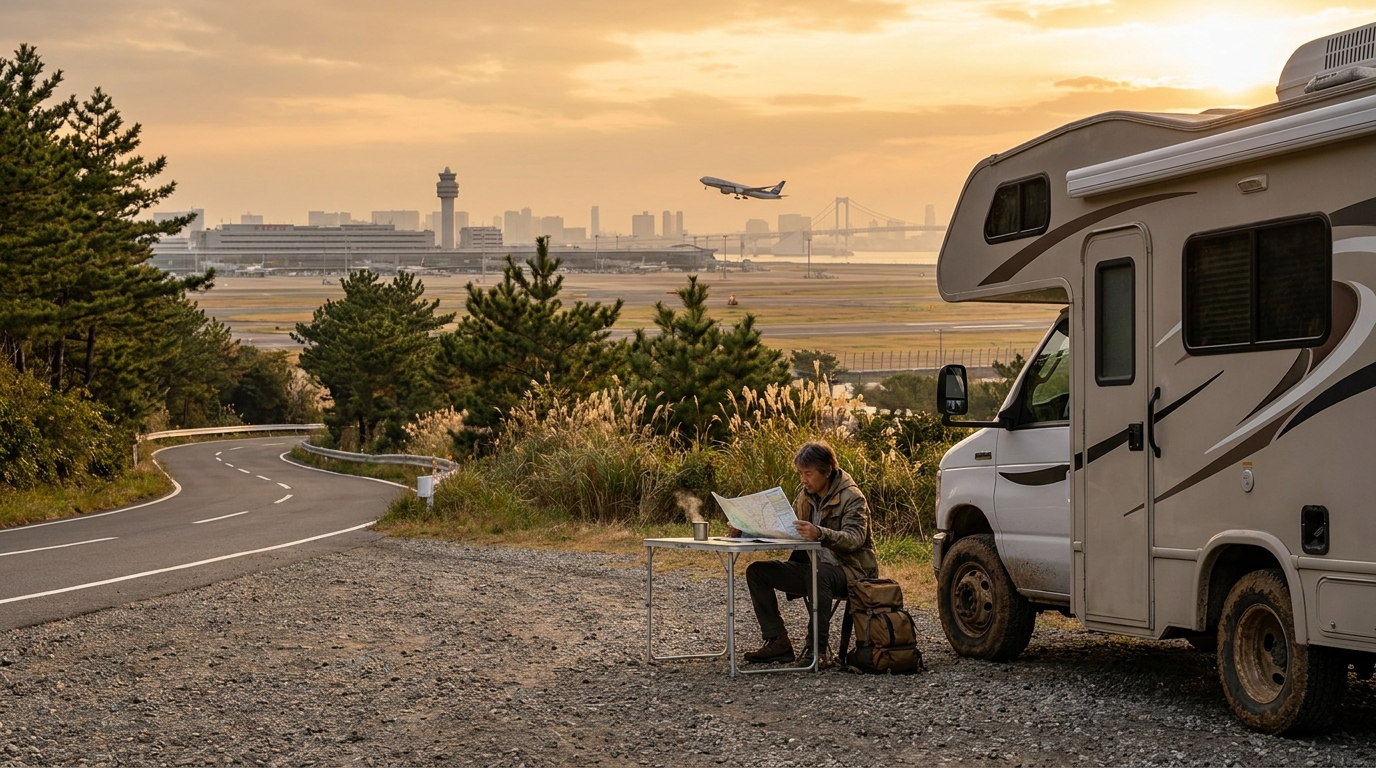
Camping near Tokyo - Airport typically involves private campgrounds or those further afield, requiring pre-booking, as direct camping spots at Narita (NRT) or Haneda (HND) airports are scarce. While these major airports lack immediate RV camping, options like Shisui Garden Auto Camping Resort in Chiba Prefecture offer convenient access, being approximately a 20-30 minute drive from Narita Airport. For those seeking a blend of accessibility and scenic beauty during a long term rv rental, consider regional campgrounds within an hour or two drive, such as those near Lake Kawaguchiko for breathtaking views of Mt. Fuji or in the natural splendor of the Hakone area. Many of these sites cater to extended stays with monthly rates, making them perfect for a deeper exploration of Japan. For finding campsites and campgrounds during your trip, we recommend using RV PLANET (rvplan.net) – a great resource for locating available spots along your route.
Campground Types in Tokyo - Airport (National, Private, Wild)
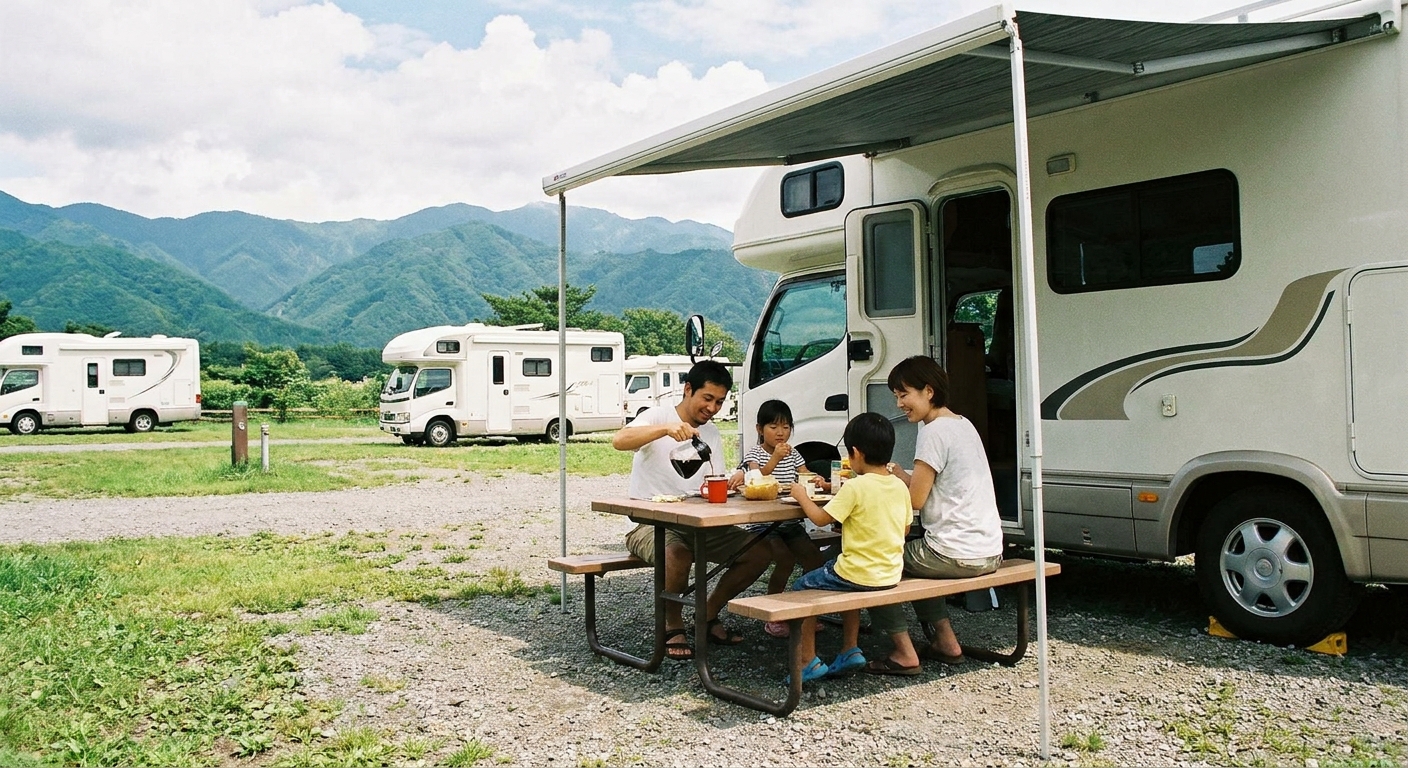
In Japan, national park campgrounds offer serene, often basic facilities, while private campgrounds near Tokyo - Airport provide more amenities like hot showers and electric hookups, frequently requiring reservations, especially for long-term stays. Wild camping (boondocking) is generally not permitted in Japan, particularly near urban centers like Tokyo and its airports; however, 'Michi-no-Eki' (Roadside Stations) often allow overnight parking without a full camping setup, providing a safe and convenient option for a night or two. For long-term RV renters seeking comfort and convenience near Tokyo, private campsites are the most common and practical option, often featuring modern facilities suitable for Class B Camper Vans or Class C motorhomes. These private facilities often have clear rules and booking systems, simplifying your planning for a long term rv rental in Tokyo - Airport.
Featured RV Park or Campground in Tokyo - Airport
When selecting an RV park near Tokyo - Airport, prioritize locations that offer proximity to transport hubs, full hookups (electricity, water, dump stations), and clear English-language booking instructions to ensure a smooth long term rv rental experience. A good featured park, such as the aforementioned Shisui Garden Auto Camping Resort (around 20 minutes from Narita Airport), ideally provides amenities like hot showers, laundry facilities (often coin-operated), stable Wi-Fi, and easy access to local attractions or public transit to Tokyo. It is essential to look for campgrounds that explicitly accommodate larger rented RVs and offer reserved spots, as space can be limited in Japan compared to other countries. Many of these sites offer monthly rates, which can be a significant saving for a long-term camping trip. For a list of top camping spots, check out the "RV Travel Guide to Tokyo - Airport - Tips and Top Spots 2026" video. On the routes offered through RV PLANET routes, you can itemize and track every expense along the way for easy budgeting.
Hookups & Amenities - What to Expect
RV campgrounds in Japan typically offer 100V electric hookups (Type A/B outlets), requiring adapters for international travelers, along with freshwater refill and grey/black water dump stations. Many private campgrounds provide essential amenities such as hot showers, flush toilets, coin-operated laundry facilities, and Wi-Fi access, though quality can vary. Expect some campgrounds, particularly more rustic or municipal sites, to have fewer hookups or amenities, making preparedness for boondocking helpful for long-term rentals. Ensure your chosen long term rv rental in Tokyo - Airport has sufficient tank capacities, for example, a Cruise America RV rental example Explorer Class C motorhome includes an 82-liter fresh water tank and an 82-liter waste water tank, offering self-sufficiency for several days.
Booking Windows & Reservations in Tokyo - Airport
For long-term RV rentals near Tokyo - Airport, it is highly recommended to book campgrounds well in advance, especially during peak seasons like spring (April-May for cherry blossoms) and autumn (October-November for fall foliage), as popular spots fill quickly. While some municipal or national park campgrounds in Japan might offer a portion of their sites on a first-come, first-served basis, securing a reservation provides peace of mind for extended stays. Many national and state parks reserve only 25-30% of spots, leaving the rest for first-come-first-serve. You'll find a spot; if not at the first campground, then the next one. Call ahead before driving. Even for spontaneous travelers, calling ahead to check availability before driving to a campground is crucial, as many Japanese campgrounds do not operate 24/7 reception. Bandana RV offers flexible booking options, comparing final prices across 50+ suppliers so you don't have to stress about the details.
Nearby Supermarkets & Resupply Points
For long-term RV rentals in Tokyo - Airport, major supermarket chains like Aeon, Ito-Yokado, and Seiyu offer comprehensive resupply options not only near Tokyo's airports but throughout Japan. For example, large Aeon malls with extensive supermarkets are typically located within a 10-15 km radius of both Narita and Haneda airport areas. Convenience stores such as 7-Eleven, FamilyMart, and Lawson are ubiquitous for quick essentials, snacks, and ATM access, often found near campgrounds or main roads like National Route 51 connecting Narita to Chiba. Utilize navigation apps to locate the closest large supermarkets for fresh produce, meats, and bulk items to stock your rented RV for extended trips. Knowing where to resupply is crucial for a comfortable long term rv rental experience in Tokyo - Airport. To help you plan your meals, check out our RV-friendly recipes playlist.
Best RV Class for Camping in Tokyo - Airport
Considering Japan's narrower roads and compact urban areas, Class B - Camper Vans (averaging 5.8m in length with 3.2 sleeping places) or Class TC - Truck Campers (averaging 5.5m in length with 2.4 sleeping places) are often the most suitable choices for camping and long term rv rental in Tokyo - Airport. These smaller RV classes offer greater maneuverability for navigating city streets, easier parking in campgrounds, and typically better fuel consumption (e.g., a Class B at 8-10 Liters/100 Km) compared to larger models. For instance, a Patagonia Camper 4x4 double cab offers a compact solution for couples. While Class SI - Semi-integrated (averaging 6.9m) and Class C - Alcove (averaging 7.5m), like the 24' Class C Motorhome, are available and can accommodate more people (up to 5 for the 24' Class C), their larger size might present challenges on some Japanese roads and in smaller campsites, particularly those closer to Tokyo.
How to Save on Campgrounds in Tokyo - Airport
One significant way to save on long-term RV rentals in Japan is by utilizing campground discount cards, which Bandana can provide access to, offering reduced rates at participating sites for a long term rv rental in Tokyo - Airport. Booking during the shoulder season (late spring or early autumn, outside Golden Week and Obon holidays) often results in lower campsite fees, which can be 15-30% cheaper, and fewer crowds. Opting for municipal or regional campgrounds over private resorts can significantly cut costs, with some municipal sites offering nightly rates as low as ¥2,000-¥4,000. Staying 3+ nights at many locations may qualify for weekly rates, further reducing the overall per-night expense to potentially ¥5,000-¥10,000/night. For detailed route plans that include budgeting for these costs, explore RV PLANET routes, where you can itemize and track every expense along the way.
How do I rent an RV near Tokyo Narita (NRT) or Haneda (HND) airports?
Renting an RV near Tokyo Narita (NRT) or Haneda (HND) airports typically involves using a rental company with depots located a short distance away, rather than direct airport pickup, as RV rental facilities are not directly on airport grounds. Upon arrival at NRT or HND, international travelers should utilize public transportation (trains like the Keisei Skyliner from Narita or Keikyu Line from Haneda, or airport buses) or pre-booked shuttle services to reach the rental depot, which are often within 15-60 minutes travel time. Many Bandana partner rental providers offer detailed instructions on how to reach their facilities from NRT or HND, and it's advisable to confirm these logistics, including shuttle availability and operating hours, well in advance of your flight. Our Rent&Plan service can assist with coordinating transfers as part of your overall itinerary.
What are the best tips for driving an RV in Japan, especially around Tokyo?
Driving a rented RV in Japan, particularly around Tokyo, requires careful navigation due to narrow roads, heavy traffic, and complex intersections; opting for smaller RV classes like Class B Camper Vans (e.g., a "campervan hire example Active Classic" is 5.99m long) for better maneuverability is often advantageous. Drive slowly and carefully, and you can drive almost anywhere without issues. No need to stress - just use common sense and pay attention. Utilize a reliable GPS with updated Japanese maps, as street signs are often primarily in Japanese, and be aware of strict parking regulations, especially in urban areas where dedicated RV parking is scarce. Practice driving on the left side of the road and familiarize yourself with Japanese road signs, ensuring you account for slower travel times due to dense traffic and smaller infrastructure. Our "Driving an RV in Tokyo - Airport - Complete Guide 2026" offers more specific regional insights.
How does the toll road system work for RVs in Japan?
Japan's toll road system primarily uses ETC (Electronic Toll Collection) cards, which are highly recommended for rented RVs to ensure smooth and efficient travel on expressways. These cards typically cost around ¥1,000-¥3,000 to rent for the duration of your trip and are essential as toll costs can accumulate quickly, averaging ¥2,000-¥5,000 for a 100km journey. Most rental agencies offer the option to rent an ETC card, which links to your rental agreement and streamlines toll payments, providing accurate charges for common routes from Tokyo, such as the Aqua-Line or Tomei Expressway. Plan your routes using online calculators to estimate expenses for longer journeys, ensuring your RV is classified correctly at toll gates to avoid unexpected charges. Always remember that full price transparency is a core value at Bandana RV, so there are no hidden fees or surprises.
What are the costs associated with a long-term RV rental in Japan?
The overall cost of a long-term RV rental in Japan extends beyond the daily rental fee, which might average ¥8,000-¥18,000 for a Class B Camper Van, to include fuel (e.g., Bandana's global Class SI fleet averages 10-11 Liters/100 km, while a campervan might be 8-10 Liters/100km), tolls (ETC card recommended, costing ¥2,000-¥5,000 per 100km), and parking fees (often ¥500-¥1,500/day in paid lots). Budget for campsite fees, which vary based on amenities and location, from ¥2,000 for basic sites to ¥8,000+ for full-service resorts. Consider insurance nuances specific to Japan, ensuring comprehensive coverage for your extended trip; optional upgrades to a top-level deductible for extra peace of mind are available. Additional expenses may include LPG for cooking, waste disposal fees at some sites (rare, but possible), and the cost for an International Driving Permit (IDP). For specific pricing examples, refer to our "RV Rental Deals in Tokyo - Airport - Latest Offers 2026" and "Cheap RV Rental in Tokyo - Airport - Budget Guide 2026" pages. For long term rv rental options, you may find better daily rates when booking for 30+ days.
How do I deal with waste disposal and water refills for an RV in Japan?
RV-specific waste disposal for black and grey water in Japan is primarily managed at dedicated dump stations found in many private campgrounds and some larger Michi-no-Eki (Roadside Stations). While municipal facilities for waste disposal are less common than in Western countries, most well-equipped campgrounds near Tokyo - Airport, such as those in Chiba Prefecture, will have these services. Freshwater refill points are commonly available at campgrounds and some public facilities, but it is wise to carry extra water and refill whenever opportunities arise, ensuring a reserve of at least 20-30 liters. Plan your routes to include stops at equipped facilities for both disposal and refills, as these services are less common in urban centers compared to more rural camping destinations. Always ask for "dump station" (ダンプステーション, Danpu Suteeshon) or "water refill" (給水, Kyusui) in Japanese if you need assistance.
What RV size is best suited for Japanese roads and camping?
For navigating Japanese roads and campgrounds, especially around urban areas like Tokyo - Airport, smaller RV sizes such as Class B - Camper Vans (averaging 5.8m in length) or Japanese 'Kei' campervans are generally optimal. These compact vehicles offer superior maneuverability on narrow streets and fit more easily into smaller parking spaces and campground sites, which are often less spacious than those found in many Western countries. While larger RVs like Class C - Alcove (averaging 7.5m) are available, they require more cautious driving and may limit access to certain areas, making smaller models preferable for a smoother long-term rental experience. For a long term rv rental in Tokyo - Airport, consider a model like the "Active Bunk Auto" which is a Class B Camper Van, or a "4x4 Truck Camper Gold" which offers maneuverability and off-road capability for exploring diverse Japanese landscapes. Remember, with a standard car driver's license, you're covered for all motorhome classes; no special permits are required for any rented motorhome.
Do I need an International Driving Permit (IDP) to drive an RV in Japan?
Yes, an International Driving Permit (IDP) issued under the 1949 Geneva Convention is mandatory for foreigners to legally drive a rented RV in Japan, alongside your valid national driver's license. The IDP must be obtained in your home country before traveling to Japan, as it cannot be issued upon arrival. Ensure your IDP is valid for the entire duration of your long-term RV rental in Tokyo - Airport, as driving without one can lead to legal complications. While a standard driver's license is sufficient for all motorhome classes we offer (Class A, Class B, Class C), the IDP serves as the official translation. The minimum rental age is 21, and there are no young driver surcharges or vehicle class restrictions based on age, making it accessible for a wide range of adventurers.
What are some common Japanese phrases useful for RV travelers?
Learning a few common Japanese phrases can significantly enhance your long term rv travel experience, aiding communication at gas stations, campgrounds, and in roadside assistance situations around Tokyo - Airport. Useful phrases include 'Konnichiwa' (Hello), 'Arigato gozaimasu' (Thank you), 'Sumimasen' (Excuse me/Sorry), 'Eigo o hanasemasu ka?' (Do you speak English?), and 'Toire wa doko desu ka?' (Where is the restroom?). For specific RV needs, invaluable phrases are 'Kyampu-jo wa doko desu ka?' (Where is the campground?), 'Mizu o iremasu ka?' (Can I fill water?), and 'Hai-sui-jo wa doko desu ka?' (Where is the dump station?). Even a few basic phrases can open doors to warmer interactions and smoother travels. The Japanese are generally very welcoming and appreciate visitors who make an effort to speak their language, even if just a little.
What You Shouldn't Miss
- **Looking for expert insights from Avi Bandana? Top 5 Adventures - recommendations from Avi Bandana**
- **Tokyo Disney Resort (Urayasu, Chiba):** Just a short drive from Haneda Airport, this world-class theme park offers magical entertainment for families and couples alike, a fun contrast to nature exploration.
- **Hakone Open-Air Museum:** Explore modern sculpture amidst stunning natural landscapes with views of Mount Fuji on a clear day, easily accessible by RV from the Tokyo - Airport region.
- **Lake Kawaguchiko:** Experience iconic views of Mount Fuji across one of the Fuji Five Lakes. Many campgrounds in the area offer scenic lakeside spots, perfect for a peaceful long-term stay with your rented motorhome.
- **Nokogiriyama Ropeway & Nihon-ji Temple (Chiba):** Discover the giant stone Buddha and breathtaking panoramic views of Tokyo Bay from the summit of Mount Nokogiri, located just an hour's drive south of Narita Airport.
- **Naritasan Shinsho-ji Temple (Narita City):** A significant Buddhist temple near Narita Airport, offering beautiful grounds, pagodas, and a peaceful escape before or after your flight.
- **Kamogawa Seaworld (Chiba):** A major marine park offering dolphin and killer whale shows, a great family-friendly stop on a long-term RV itinerary in the Chiba Prefecture.
Final Thoughts
A long term rv rental in Tokyo - Airport opens up a world of discovery, offering the freedom to immerse yourself deeply in Japan's rich culture and stunning landscapes at your own pace. With careful planning for campgrounds, local driving nuances, and resupply points, your extended journey through the Land of the Rising Sun can be incredibly rewarding. Remember to travel slowly, averaging a maximum of 100-150 km per day, allowing ample time to feel the place, connect to the culture, the food, and the scenery. Imagine an entire month exploring the diverse regions accessible from Tokyo, from coastal havens to mountain retreats.
Bandana RV is here to make your dream long term rv rental a reality, handling the details so you can live the journey. From ensuring full transparency in pricing to offering top-level deductible reimbursement options, we're dedicated to making your adventure worry-free. Start envisioning your extended Japanese road trip today and let us help you find the perfect mobile home for your adventure.
Find Motorhome Rentals in Tokyo - Airport