In This Guide
- Where to Camp in South Africa - Top Options
- Campground Types in South Africa (National, Private, Wild)
- Featured RV Park or Campground in South Africa
- Hookups & Amenities - What to Expect
- Booking Windows & Reservations in South Africa
- Nearby Supermarkets & Resupply Points
- Best RV Class for Camping in South Africa
- How to Save on Campgrounds in South Africa
- How much does it cost to rent an RV long term in South Africa?
- Is it safe to RV camp in South Africa?
- What are the best RV routes for a long trip in South Africa?
- What type of license do I need to drive an RV in South Africa?
- What are the rules for RV camping in South Africa?
- Can you live in an RV in South Africa?
- What do I need to pack for a long term RV rental in South Africa?
- Connectivity and Navigation for RVs in South Africa
- Can I travel with pets in a long term RV rental in South Africa?
- What You Shouldn't Miss
- Why Book with Bandana Caravan
- Final Thoughts
- Frequently Asked Questions
Imagine yourself on the open road, the diverse landscapes of South Africa unfolding before you. With a long-term RV rental, this dream of extended exploration becomes an exciting reality, offering the freedom to truly immerse yourself in the country's vibrant culture and breathtaking scenery. South Africa is a destination perfectly suited for extended adventures in a rented motorhome or campervan, allowing you to travel slowly, averaging a maximum of 100-150 km per day, giving you ample time to feel the place, connect to the culture, the food, and the scenery. For live availability and current prices, start with our RV Rental South Africa - Complete Guide 2026 guide.
Where to Camp in South Africa - Top Options
South Africa offers diverse RV camping experiences, from coastal resorts along the renowned Garden Route to authentic bushveld camps in Kruger National Park and serene mountain retreats like the Cederberg. Travelers can explore popular destinations such as the ruggedly beautiful Wild Coast, the majestic Drakensberg Mountains for exceptional hiking, or the expansive Karoo for unparalleled stargazing and unique desert landscapes. Consider venturing to regional gems like the Panorama Route's Blyde River Canyon camps for stunning vistas or the tranquil coastal sites in the Western Cape for a less crowded, more intimate experience. The country’s extensive network of over 75,000 km of paved roads ensures that you can reach these incredible destinations with ease, even in a larger rented motorhome.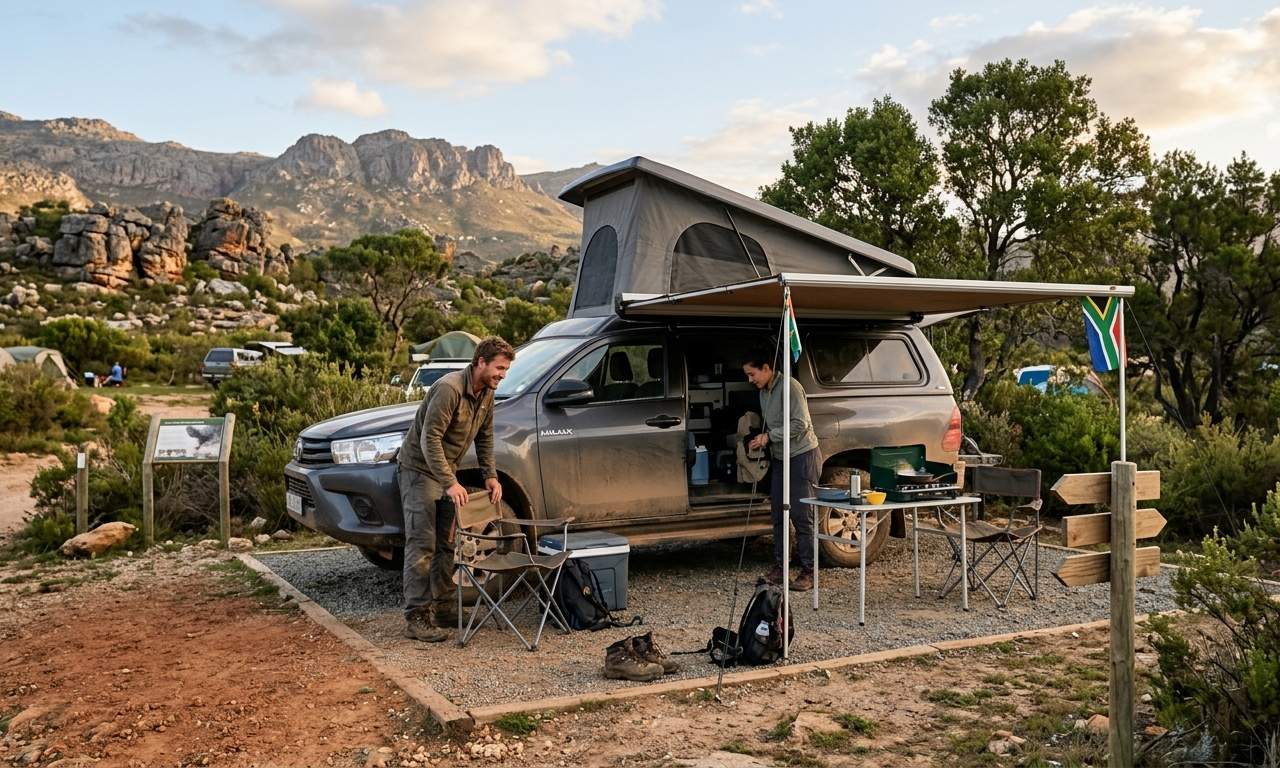
Campground Types in South Africa (National, Private, Wild)
South Africa features three primary campground types for long-term RV travelers: National Parks (SANParks), private caravan parks, and informal or 'wild' camping spots, each providing distinct experiences and regulations. National Parks (SANParks) offer well-maintained facilities within protected areas, often requiring advance booking, and adhering to strict rules for waste management and wildlife interaction. For example, many SANParks camps offer 25-30% of their sites for reservations, while the rest are available first-come, first-served. Private Caravan Parks, found in popular tourist towns, typically provide a broader range of amenities, from swimming pools to entertainment, with varying price points and generally robust security. Wild camping, also known as freedom camping or boondocking, is generally discouraged and often illegal in South Africa's public spaces and nature reserves due to safety and environmental concerns. However, some remote, privately-owned farms or designated sites may permit it with prior arrangement, always emphasizing responsible waste disposal and minimal environmental impact.Featured RV Park or Campground in South Africa
When selecting a long-term RV park in South Africa, prioritize locations offering comprehensive facilities, robust security, and a welcoming community, ensuring a comfortable and engaging extended stay. Look for parks with full hookups (electricity, water, and sewerage), reliable Wi-Fi, laundry facilities (often coin-operated), and clean ablution blocks. Security is paramount; ideal parks feature controlled access, vigilant staff, and good lighting, providing peace of mind for you and your rented motorhome. Consider parks that offer communal spaces, recreational activities, and proximity to local attractions and essential services, making daily life easier and more enjoyable. A great example of a top-tier experience would be a camp along the Garden Route with direct beach access and powered sites, or a private reserve camp offering exclusive game viewing opportunities.Hookups & Amenities - What to Expect
In South Africa, RV campgrounds typically provide essential hookups and amenities for a comfortable long-term stay in your rented RV. Electric hookups are commonly 15 amp, 220-240V, requiring a standard South African 3-pin plug (round pins) or an adapter for international motorhomes. Water hookups offer potable water directly to your site, and dump stations are readily available for grey and black water disposal at most established caravan parks. Beyond the basics, expect amenities such as clean communal ablution blocks with hot showers, convenient laundry facilities, and varying levels of Wi-Fi connectivity-though it might be paid or limited in remote areas. Many larger private parks also include swimming pools, dedicated braai (barbecue) areas perfect for making RV-friendly recipes playlist, and sometimes even small shops or restaurants.Booking Windows & Reservations in South Africa
For long-term RV rentals in South Africa, especially during peak seasons like December-January, Easter, or school holidays, booking campsites well in advance is highly recommended to secure your preferred spot. Popular National Parks (SANParks) often release a limited percentage, typically 25-30%, of their sites for reservations, with the remainder available on a first-come, first-served basis. This flexibility is particularly beneficial for spontaneous travelers who prefer to book day-to-day. While spontaneous travelers can often find a place, especially outside peak times, it's always wise to call ahead before driving long distances to confirm availability. For shoulder seasons (March-May, September-November), you'll find more flexibility and often better rates for your rented mobile home.Nearby Supermarkets & Resupply Points
When traveling long term in a rented RV across South Africa, readily accessible supermarkets and resupply points are crucial for provisioning and enjoying your RV PLANET routes. Major supermarket chains such as Shoprite, Checkers, Pick n Pay, and Spar are prevalent in towns and cities across the country, offering a wide range of groceries, fresh produce, and household essentials. For more remote areas, smaller general dealers or co-ops can provide basic supplies, though selection might be limited. Planning your route with resupply stops in mind, especially before venturing into national parks or sparsely populated regions, is vital for maintaining a well-stocked motorhome for extended periods. This ensures you can enjoy home-cooked meals and keep your travel budget in check.Best RV Class for Camping in South Africa
The best RV class for long-term camping in South Africa depends on your desired balance of comfort, maneuverability, and suitability for diverse terrains. Class SI - Semi-integrated RVs, typically averaging 6.9 meters in length, sleeping 3.8 people, and accommodating 3.4 adults, offer a good balance of living space and maneuverability on varying South African roads, with Bandana's fleet averaging 10-11 Liters/100 km fuel consumption. For tighter roads, national park camps, or off-the-beaten-path adventures, Class B - Camper Vans (like a 'Combi Van' with a 5-meter length, sleeping 4, or a 'V3' at 6.36 meters, sleeping 2) are highly suitable, offering greater agility and easier parking. While larger classes like Class C (Alcove) motorhomes (Bandana's fleet averages 7.5 meters, sleeping 5.8 people) offer more space, their increased size can be challenging on some mountain passes or unpaved roads, making the more compact Class SI and Class B often preferred for extended South African exploration. Remember, you can drive slowly and carefully, and you can drive almost anywhere without issues. No need to stress - just use common sense and pay attention.How to Save on Campgrounds in South Africa
To significantly reduce long-term RV rental costs in South Africa, leveraging campground discount cards or memberships is a prime strategy. Booking during the shoulder season (e.g., March-May, September-November) offers substantially lower rates and fewer crowds compared to peak holiday periods like December-January. Opting for municipal or regional campgrounds over private resorts often provides more budget-friendly options, though amenities may be simpler. Many campgrounds offer weekly or monthly rates that provide substantial savings compared to nightly bookings, making longer stays more economical. Consider sharing hookups with fellow travelers in a group if permissible, and utilize self-contained features for occasional boondocking where legal and safe, further reducing amenity fees.How much does it cost to rent an RV long term in South Africa?
The total cost for a long-term RV rental in South Africa extends beyond the daily rental rate, encompassing a comprehensive budget for fuel, campsite fees, food, activities, permits, tolls, and a contingency fund. Rental costs typically decrease with longer rental periods, so always inquire about weekly or monthly rates, which can vary significantly based on RV class, age, and seasonality. For detailed pricing, consult our "RV Rental in South Africa - Prices and Best Deals 2026" or "Luxury RV Rental in South Africa - Premium Prices 2026" guides. Fuel estimates for rented RVs, such as Bandana's Class SI averaging 10-11 Liters/100 km, are a major expense; factor in South Africa's vast distances and current fuel prices. Campsite fees vary widely, from around R150-R300 per night for basic national park sites to R300-R700+ for private resorts with extensive amenities. Budget for food costs (cooking in your RV is typically more economical than dining out), activity budgets (e.g., game drives, tours), permit fees (especially for national parks like Kruger), tolls on major highways, and a contingency fund of at least 15-20% for unexpected expenses like minor repairs or medical needs. Compare current offers through "RV Rental Deals in South Africa - Latest Offers 2026" to find the best deals for your extended adventure. For families, our "Family RV Rental in South Africa - Pricing Guide 2026" can provide tailored budget insights.Is it safe to RV camp in South Africa?
RV camping in South Africa can be a safe and rewarding experience with appropriate planning and adherence to specific security protocols, prioritizing vigilance and informed decision-making. Securing your rented vehicle involves locking all doors and windows, using additional security measures like alarms or steering wheel locks, and keeping valuables out of sight. Safe overnight parking strategies include staying in reputable, established campgrounds with controlled access and security personnel, avoiding isolated or unlit areas, and researching camp reviews for safety information. For emergency procedures for large vehicles in remote areas, always have a fully charged phone with local emergency numbers (e.g., 10111 for police, 10177 for ambulance), basic roadside repair tools, and notify friends or family of your itinerary. Be mindful of your surroundings, especially in urban areas; general travel safety tips apply to RVers, such as avoiding driving at night and being aware of local conditions.What are the best RV routes for a long trip in South Africa?
South Africa offers a diverse array of RV routes for long-term trips, ranging from well-trodden paths to rewarding off-the-beaten-path adventures. The Garden Route (N2 between Mossel Bay and Storms River) is a popular, scenic choice with excellent infrastructure and numerous RV-friendly campsites. For wildlife enthusiasts, a self-drive through Kruger National Park and surrounding private reserves is unparalleled, requiring specific RV advice on road conditions, speed limits (often 40-50 km/h inside the park), and designated fuel stops within the park. Consider less-known routes like the Wild Coast for rugged beauty (though roads can be challenging, suitable for more robust RVs or campervans), the Panorama Route for stunning landscapes near Blyde River Canyon, or exploring the Cederberg Mountains for hiking and ancient San rock art. For challenging but rewarding regions, routes through the Swartberg Pass (Western Cape) or the Sani Pass (requiring a 4x4 RV and specific permits for Lesotho) offer breathtaking scenery and unique cultural immersion, but demand careful planning for road conditions, permits, and fuel availability.What type of license do I need to drive an RV in South Africa?
To legally drive an RV in South Africa, you will generally need a valid driving license that permits you to operate a vehicle of the RV's size and weight, typically a standard car license (Code B or EB) is sufficient for all motorhome classes, including Class A, Class B, and Class C. No special license, CDL, or additional permits are required for any rental motorhome. For international visitors, an International Driving Permit (IDP), accompanied by your valid national driver's license, is highly recommended for driving in South Africa, as it translates your license into multiple languages and is recognized by authorities. It's crucial to confirm these requirements with your RV rental provider before your trip to ensure you meet all legal driving standards for the specific vehicle you intend to rent.What are the rules for RV camping in South Africa?
RV camping in South Africa adheres to a set of rules primarily designed to ensure safety, environmental protection, and respectful coexistence, especially in protected areas. National parks and private campsites have specific regulations regarding noise levels, pet policies (many national parks do not permit pets or restrict them to specific areas), waste disposal, and fire restrictions, all of which must be followed diligently. Responsible RV travel emphasizes minimizing your environmental footprint through proper waste management (pack it in, pack it out), water conservation, and using eco-friendly products. Ethical wildlife interaction from an RV perspective means never feeding animals, maintaining safe distances, and respecting their natural habitats, especially in game reserves. Wild camping is generally not permitted in South Africa, particularly in urban areas or public land, due to safety and environmental concerns; always seek out designated campsites or obtain explicit permission for private land stays to avoid legal issues and ensure your safety.🎬 Video coming soon
Can you live in an RV in South Africa?
Renting an RV for an extended period in South Africa is feasible and offers a unique way to experience the country for several weeks or months, though it differs from permanent RV living. While there are no specific laws prohibiting long-term RV *travel*, finding permanent sites can be a challenge as most campgrounds are geared for shorter stays; however, some private caravan parks may offer discounted monthly rates for extended visitors. Practical considerations for long-term rental include consistently managing water and electricity hookups, efficient waste disposal at designated dump stations, and having a reliable plan for RV maintenance and roadside assistance, which is essential for any long-term rental. Embrace nuanced cultural immersion opportunities by seeking out local markets, engaging respectfully with communities in smaller towns, and trying RV-friendly food experiences beyond standard tourist traps. Ensuring consistent connectivity and having a reliable contact point for any necessary administrative purposes are also crucial for the logistical aspects of an extended RV rental vacation.What do I need to pack for a long term RV rental in South Africa?
A comprehensive packing list for a long-term RV rental in South Africa should consider the diverse climate, potential activities, and local availability of supplies. Clothing should include versatile layers for varying temperatures (hot days, cool nights, especially in high-altitude or desert regions), swimwear for coastal and pool stops, rain gear for unexpected showers, and comfortable walking shoes for hiking in places like the Drakensberg. Beyond what the RV provides, essential kitchen items like your favorite spices, preferred cooking oils, and reusable containers are crucial. Practical items include insect repellent (especially for bushveld areas), high-SPF sunscreen (due to high UV index), universal power adapters for any personal electronics, headlamps or flashlights for evening activities, and binoculars for unparalleled wildlife viewing. Consider bringing a good camera to capture memories, local guidebooks (digital or physical), and any personal medications, as specific brands might not always be readily available in remote areas.Can I travel with pets in a long term RV rental in South Africa?
Traveling with pets in a long-term RV rental in South Africa is possible, but requires careful consideration of regulations, specific rental policies, and destination restrictions. The feasibility depends heavily on the RV rental company's policy, as many have strict no-pet rules or charge additional cleaning fees for pet-friendly vehicles. Always confirm this with Bandana RV during your booking process. Regulations for pets vary across South Africa; National Parks (SANParks) generally do not permit pets, or only allow them in designated day-use or specific accommodation areas, never in wildlife-viewing zones. Private caravan parks are often more accommodating, but always confirm their pet policy and any breed or size restrictions before booking. Ensure your pet has up-to-date vaccinations, microchipping, and carries a veterinary health certificate for potential checks, and pack all necessary pet supplies, including food, water bowls, bedding, and waste bags, to ensure a comfortable and compliant journey.What You Shouldn't Miss
- **The Garden Route:** Drive the iconic coastal stretch from Mossel Bay to Storms River, stopping at beautiful beaches, forest hikes, and charming towns like Knysna and Plettenberg Bay.
- **Kruger National Park Safari:** Experience an unforgettable self-drive safari in a rented motorhome, spotting the "Big Five" and other incredible wildlife. Always adhere to park rules and speed limits.
- **Drakensberg Mountains:** Explore the dramatic peaks and valleys, a UNESCO World Heritage site, offering spectacular hiking trails and ancient San rock art viewing.
- **Cape Town & the Cape Peninsula:** Drive the scenic Chapman's Peak Drive, visit Boulder's Beach to see penguins, and explore the vibrant city life and Table Mountain. Consider an extended stay to fully absorb its charm.
- **Route 62 Wine Route:** Discover the world's longest wine route, stopping at vineyards for tastings and enjoying the quaint small towns and farm stalls.
Final Thoughts
An extended RV adventure through South Africa offers an unparalleled opportunity to explore this diverse and vibrant country at your own pace. With the freedom of a rented motorhome or campervan, you can chase stunning sunrises over the Drakensberg, spot wildlife in expansive national parks, and savor local flavors along the coast. It’s an experience that invites you to slow down, connect with nature, and make lasting memories with your loved ones.From understanding campsite types and planning your route to managing your budget and staying connected, we've covered the essentials to help you embark on this incredible journey. Remember, we’re here to support you every step of the way, making sure your booking process is seamless and transparent. So, get ready to discover the magic of South Africa on an unforgettable long-term RV trip!
Discover top destinations, planning tips, all in one place! Plan a trip itinerary in advance with minimal effort and maximum enjoyment. Get inspired for your next trip!
Find Long Term RV Rentals in South AfricaOn the routes offered through RV PLANET routes, you can itemize and track every expense along the way for easy budgeting.