
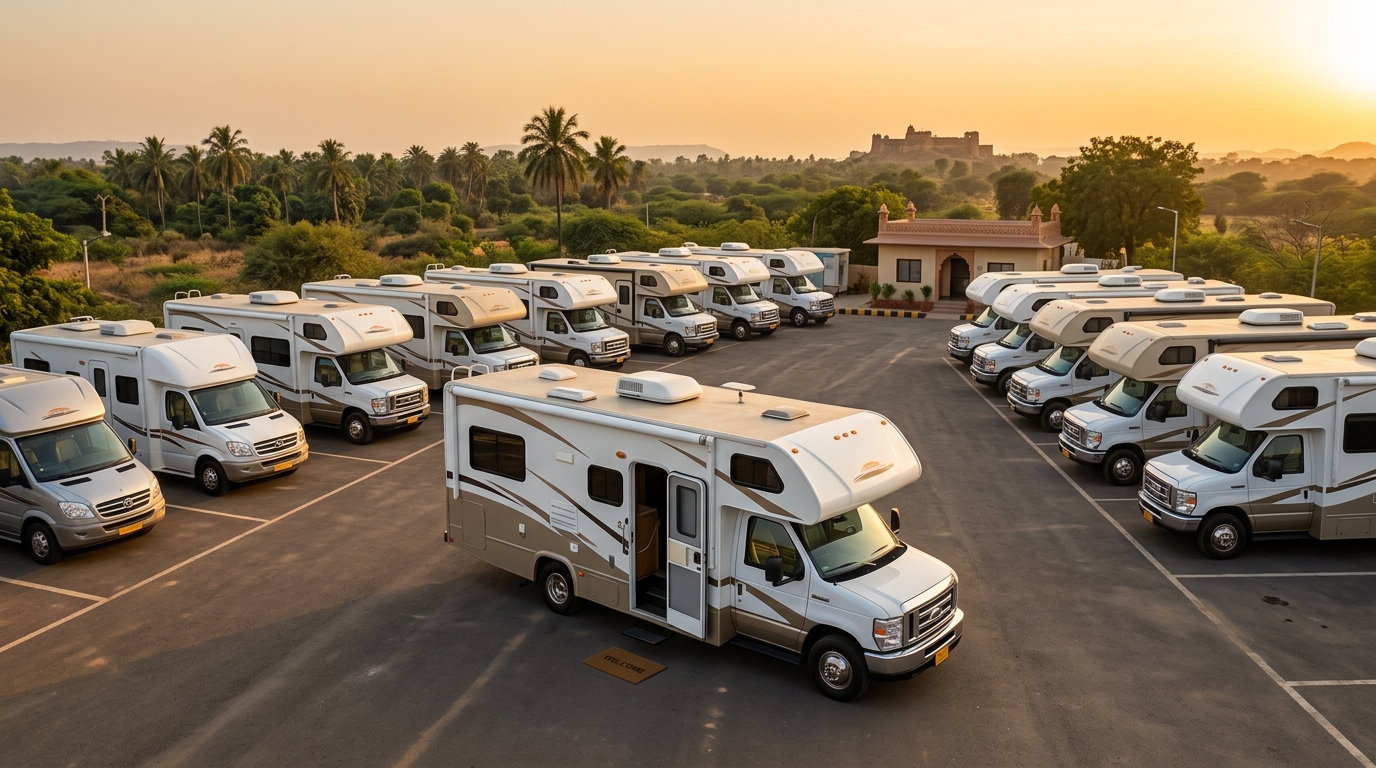
For live availability and current prices, start with our RV Rental India - Complete Guide 2026 guide.
In This Guide
- Where to Camp in India - Top Options
- Campground Types in India (National, Private, Wild)
- Hookups and Amenities - What to Expect for Long-Term Stays in India
- Booking Windows and Reservations for RVs in India
- What specific legal requirements and permits are needed for RV travel in India?
- How can RV travelers ensure safety and security in India?
- How do seasonal and regional conditions impact RV travel in India?
- What cultural and local etiquette should RVers know in India?
- How to ensure emergency preparedness and access support networks in India for RVers?
- What is the comprehensive cost analysis for long-term RV rental in India?
- Which RV types are best suited for diverse Indian terrains?
- What are the practicalities for extended RV travel and maintenance in India?
- What are non-traditional camping and safe parking options for RVs in India?
- Top Cities for RV Rental in India
Embarking on a long-term RV rental in India is an adventure that promises unparalleled freedom and deep cultural immersion, allowing you to explore this vibrant country at your own pace. With a rented motorhome, you transform your journey into a mobile home base, offering the flexibility to linger in captivating locales and connect with diverse landscapes and communities. For live availability and current prices, start with our RV Rental India - Complete Guide 2024 guide.
Where to Camp in India - Top Options
RV camping in India offers diverse options, from established private parks to scenic national park vicinities, with popular regions including the Himalayan foothills, the beaches of Goa and Kerala, and historical sites in Rajasthan. While dedicated RV parks are still emerging across India, many long-term travelers ingeniously utilize private resorts with ample parking, designated spots near national parks (which often require prior permits), or secure overnight parking at hotels and traditional roadside eateries known as dhabas. Imagine setting up your rented campervan amidst the stunning mountainscapes of Manali in Himachal Pradesh, exploring the spiritual retreats and river activities in Rishikesh, or enjoying beachfront experiences along the coastal stretches of Karnataka and Maharashtra.
For those seeking extended stays, researching local regulations and proactively seeking permissions is crucial, particularly when venturing into less developed or protected areas. Planning your route to include a mix of these options can provide both comfort and authentic experiences, ensuring you have reliable spots for your mobile home. Consider the tranquility of a hillside camp in Munnar, Kerala, or the majestic desert views from a safe parking spot in Jaisalmer, Rajasthan. The possibilities are truly endless for a long-term RV adventure across India.
Campground Types in India (National, Private, Wild)
In India, RV camping options typically include private campgrounds, designated areas near national parks, and to a limited extent, wild camping or boondocking. Private campgrounds and resorts, though not as widespread as in Western countries, are increasingly offering amenities like electrical hookups, reliable security, and sometimes even recreational facilities, providing a comfortable base for extended stays. These sites are a great option for renters seeking consistency and convenience, allowing them to truly relax in their rented motorhome.
Camping near national parks in India often involves staying in designated areas just outside the core park zones, requiring prior permits and strict adherence to environmental regulations to protect wildlife. This offers a fantastic way to wake up to nature's beauty from your camper. Wild camping (boondocking) is generally not legally enshrined or widely accepted for RVs across India due to varying local laws and safety considerations; however, with courteous local permission, temporary overnight parking may be tolerated in secure locations such as dhabas (roadside eateries) or temple grounds, which can offer a unique cultural interaction. Always ensure you have permission and prioritize safety when considering non-traditional parking spots for your rented RV.
Hookups and Amenities - What to Expect for Long-Term Stays in India
RV hookups and amenities in India can vary significantly, ranging from basic parking spots at dhabas to more developed private facilities with essential services. When planning a long-term RV rental in India, expect access to electricity, typically 230V with Type D or Type M sockets, so travelers should carry appropriate adapters and surge protectors to safeguard their RV's electrical systems. This ensures your mobile home stays powered and comfortable throughout your extended trip.
Water hookups usually provide potable water, though purification or filtering is highly recommended for drinking, and dump stations for grey and black water disposal are found in more established private sites or municipal facilities in larger towns. While Wi-Fi and laundry services are common in private resorts or hotels that accommodate RVs, dedicated RV parks are still developing their infrastructure, and such amenities might be less consistent. For extended trips in your rented campervan, planning for self-sufficient solutions like having enough fresh water capacity and a portable waste tank, or diligently checking amenity availability beforehand, is advisable for a smoother journey. Remember, God is in the small details, and we take care of them, making a big difference in your travel experience. On the routes offered through RV PLANET routes, you can itemize and track every expense along the way for easy budgeting.
Booking Windows and Reservations for RVs in India
For long-term RV rentals in India, planning and booking ahead is highly recommended, especially during peak tourist seasons (October to March) or for popular destinations like Goa and Kerala. While spontaneous travel is certainly part of the RV spirit, securing reservations for private RV parks or designated camping spots, particularly in areas near national parks or major attractions, is prudent for extended itineraries. Many national park campgrounds in India may only release a limited percentage (e.g., 25-30%) of spots for advanced reservations, with the remainder often allocated on a first-come, first-served basis, providing flexibility for spontaneous travelers.
You’ll find a spot; if not at the first campground, then the next one. It's always advisable to call ahead to your intended campground or parking location to confirm availability and current operating procedures before driving long distances, ensuring a smoother journey for long-term renters. Remember, opting for long-term periods can sometimes unlock better rates. Our RV Rental in India - Prices and Best Deals 2024 guide offers more insights into optimizing your booking strategy.
What specific legal requirements and permits are needed for RV travel in India?
Navigating the legal landscape for RV rental in India requires understanding international driving permits, vehicle registration, and state-specific camping regulations. Foreigners typically need an International Driving Permit (IDP) in conjunction with their national driver's license to legally operate an RV in India; a standard car driver's license is sufficient for all motorhome classes (Class A, Class B, and Class C) with Bandana, making the process straightforward. It is important to note that while an IDP is recommended, it is not mandatory in most cases, but it certainly helps for smooth interactions with authorities. Rental RVs will have commercial vehicle registration, which differs from personal vehicle imports, and it's crucial to ensure all necessary permits for interstate travel are clearly covered in your rental agreement with your Bandana supplier.
Camping regulations vary by state, with national parks and protected areas often requiring specific entry and camping permits that must be secured well in advance to avoid bureaucratic hurdles. Always inquire about these permits when planning your route through such regions. For example, some states may have different rules regarding overnight parking in undesignated areas. Understanding these local nuances ensures a hassle-free and legally compliant long-term RV adventure in India.
How can RV travelers ensure safety and security in India?
Ensuring safety and security during RV travel in India involves preparing for diverse road conditions, maintaining personal and vehicle security, and understanding emergency protocols. Road safety requires constant vigilance for variable road conditions, often heavy traffic, and adherence to local driving etiquette, which can differ significantly from Western norms (e.g., horn usage as a communication tool). Drive slowly and carefully, and you can drive almost anywhere without issues. No need to stress - just use common sense and pay attention, especially in cities like Mumbai or Delhi.
For personal and vehicle security in your rented motorhome, always lock doors, secure valuables out of sight, and consider parking in well-lit, populated areas or secured compounds overnight, such as hotel parking lots or established dhabas. In case of emergencies like breakdowns or medical incidents, having local contact numbers, a reliable phone, and understanding how to access local assistance are crucial. Additionally, awareness of local wildlife in certain regions, like forest areas in Madhya Pradesh, can help mitigate risks while enjoying your extended RV journey.
How do seasonal and regional conditions impact RV travel in India?
Seasonal and regional conditions significantly influence RV travel in India, requiring careful itinerary planning to avoid extreme weather. The monsoon season (June to September) brings heavy rainfall, which can lead to flooded roads, landslides, and make travel challenging, especially in mountainous or coastal areas like the Western Ghats. During this period, routes might be less accessible, and visibility can be poor. Extreme heat characterizes the summer months (April to June) across much of the northern plains, necessitating RVs with efficient air conditioning and planning travel for early mornings or evenings to avoid the midday sun.
Conversely, winters (October to March) offer pleasant temperatures in most regions, making it the ideal time for long-term RV travel across India, including popular destinations like Rajasthan and Goa. However, northern mountainous areas, such as Ladakh and the Himalayas, can experience extreme cold and snowfall during winter, making many routes inaccessible or requiring specialized vehicles and preparation. Always check local weather forecasts and road conditions before embarking on long drives to ensure a comfortable and safe journey in your rented campervan.
What cultural and local etiquette should RVers know in India?
Observing cultural and local etiquette in India is essential for respectful interactions and a smoother long-term RV travel experience. Dress modestly, especially when visiting religious sites or rural areas, to show respect for local customs and traditions; this applies to both men and women. Be mindful of food safety, often opting for freshly cooked meals from reputable eateries, and always wash hands thoroughly before eating, particularly when enjoying street food. When dining with locals, it's polite to eat with your right hand. For those planning to prepare meals in their rented motorhome, our RV-friendly recipes playlist offers great ideas.
Engage with local communities respectfully, learning a few basic greetings in Hindi or the local language, such as "Namaste." Always ask for permission before taking photographs of people, especially in rural settings, to foster positive interactions and avoid causing offense. A small gesture of respect goes a long way in building connections and enriching your long-term RV journey through the heart of India. Travel slowly, max 100-150 km per day on average, and take time to feel the place, connect to the culture, the food, and the scenery.
How to ensure emergency preparedness and access support networks in India for RVers?
Emergency preparedness for RVers in India involves proactive measures and knowing how to access reliable local assistance and support networks. Always carry a well-stocked first-aid kit, essential vehicle repair tools, and have roadside assistance contact details readily available from your Bandana RV rental provider. Many of our direct partnerships with 50+ leading RV suppliers worldwide, including El Monte, Cruise America, Apollo, and Britz, offer various levels of emergency support, which we coordinate for you.
In case of a serious breakdown or medical emergency, immediately contact your rental company's support line and, if necessary, emergency services (dial 112 for all-in-one emergency services in India). Having a local SIM card for reliable phone and internet connectivity is vital for communication, especially when navigating unfamiliar routes. Familiarizing yourself with major hospitals or clinics along your planned long-term route, particularly when using RV PLANET routes for navigation, can be beneficial for peace of mind. We handle the details, so you can live the journey, supported from day one until your booking is confirmed.
What is the comprehensive cost analysis for long-term RV rental in India?
A comprehensive cost analysis for long-term RV rental in India extends beyond basic rental fees to include fuel, tolls, parking, food, permits, and potential hidden expenses. Rental fees for long-term RVs in India are dynamic, similar to flight tickets, changing daily based on availability, seasonality, and supplier marketing decisions; they often become more economical on a per-day basis for extended periods, ranging from approximately $80-$150 per day for a Class C motorhome during off-peak seasons. Fuel costs are a significant variable expense, fluctuating by state, and heavily depend on your rented vehicle's efficiency (e.g., a Class B Camper Van typically consumes 8-10 Liters/100 km). Budgeting should also account for tolls on India's national highways and parking fees in tourist areas, which can add up over a month-long trip.
Additional expenses include daily food budgets, costs for specific national park permits or state entry fees, and potential hidden costs like maintenance supplies or unexpected repairs. For easy budgeting and tracking of all these ancillary costs, we recommend utilizing RV PLANET routes, which allow travelers to itemize and track every expense along the way. While some adventurers might consider buying an RV in India for long-term use, this involves significant upfront investment, complex registration procedures, and potential resale challenges, which are not associated with our straightforward RV rentals. Bandana focuses exclusively on RV rentals for vacation travel, ensuring full price transparency with no hidden fees or surprises.
Which RV types are best suited for diverse Indian terrains?
Selecting the right RV type for India's diverse terrains requires considering vehicle size, ground clearance, and amenities to match road conditions and travel comfort. Smaller, more agile RVs like Class B - Camper Vans (average length 5.8m, sleeping for 3.2 adults) are often best for navigating congested city streets, narrower rural roads, and mountainous routes such as those in the Himalayas, due to their superior maneuverability and compact size. These vehicles, like the 'rv rental denver example Category Van' or 'Active Bunk Auto', also offer good fuel efficiency, typically around 8-10 Liters/100 km.
Semi-integrated RVs (Class SI), with an average length of 6.9m and sleeping for 3.8 adults, provide a good compromise between living space and handling, suitable for highways and moderately challenging terrains while maintaining a fuel consumption of 10-11 Liters/100 km. For families or those desiring more space on longer trips, Class C - Alcove RVs (average 7.5m length, sleeping 5.8 adults, 10-12 Liters/100 km) offer ample living and sleeping areas, but their larger size requires more caution on challenging Indian roads. Crucial features for any rented RV in India include robust suspension to handle uneven roads and reliable air conditioning for comfort in warmer climates, especially during extended stays. Drive slowly and carefully, and you can drive almost anywhere without issues. No need to stress - just use common sense and pay attention.
What are the practicalities for extended RV travel and maintenance in India?
Practicalities of extended RV travel and maintenance in India include managing water, waste, power, internet, laundry, and accessing repair services across diverse regions. Water sourcing typically involves filling up at private campgrounds or trusted public sources; however, purification is highly recommended for all drinking water to ensure health and safety during your long-term rental. Waste disposal (grey and black water) facilities are primarily found at established RV parks or identified municipal points in larger towns, requiring careful planning for regular emptying.
Reliable electricity and internet connectivity can be challenging in remote areas; consider your rented motorhome's power options, and for internet, a local mobile hotspot with an Indian SIM card is often the best solution for consistent connectivity. Laundry solutions typically involve using services in towns, designated facilities at private resorts, or hand-washing. Accessing repair services or spare parts for specific RV models may require reaching larger urban centers, but the 'jugaad' spirit of local mechanics often finds creative solutions for minor issues. Planning your route to pass through major cities or towns every week or two will make these practicalities much more manageable, ensuring a smooth and enjoyable extended RV adventure in India.
What are non-traditional camping and safe parking options for RVs in India?
Non-traditional camping and safe overnight parking options for RVs in India extend beyond conventional campgrounds, often relying on local hospitality and permission. Dhabas (roadside eateries) frequently offer secure parking for trucks and are often willing to accommodate RVs overnight, sometimes providing basic amenities like restrooms and food, making them a popular choice for budget-conscious long-term renters. With prior permission, temple grounds, ashrams, or even hotel parking lots in smaller towns can provide safe, temporary overnight parking solutions, especially in areas where designated RV parks are scarce.
Responsible wild camping or boondocking, while generally not legally recognized for RVs, may be tolerated in very remote, non-protected areas with a strong emphasis on leaving no trace. Always prioritize safety, seek local advice or permission where possible, and avoid isolated spots. These alternatives offer unique cultural immersion opportunities and expand your potential long-term itineraries beyond just formal sites. For finding these varied parking spots during your trip, we recommend using RV PLANET (rvplan.net) — a great resource for locating available spots along your route, ensuring your rented campervan is always secure.
🎬 Video coming soon
Top Cities for RV Rental in India
India offers several incredible starting points and destinations for your long-term RV rental adventure, each presenting unique cultural experiences and logistical considerations. These cities serve as excellent hubs to pick up your rented motorhome and begin exploring the surrounding regions.
- Delhi: As the capital, Delhi provides access to a vast network of national highways leading to the Himalayan north, the historical states of Rajasthan and Punjab. It's a key hub for many of our RV suppliers, making it convenient to find your ideal Class B Campervan or Class C motorhome.
- Mumbai: Located on the western coast, Mumbai is a gateway to the beaches of Goa, the spiritual caves of Ajanta and Ellora, and the Western Ghats. Its coastal proximity offers stunning scenic routes for your long-term RV journey.
- Bengaluru (Bangalore): This southern metropolis is an excellent base for exploring the verdant landscapes of Karnataka, the tea plantations of Kerala, and the historical sites of Tamil Nadu. The city offers diverse routes and RV-friendly facilities.
- Chennai: On the southeastern coast, Chennai provides access to the ancient temples and cultural richness of Tamil Nadu, as well as coastal drives along the Bay of Bengal.
- Kochi (Cochin): A picturesque city in Kerala, Kochi is ideal for exploring the backwaters, spice plantations, and serene beaches of the state. Its laid-back charm is perfect for slow travel with a rented RV.
- Jaipur: The "Pink City" in Rajasthan offers a royal starting point for discovering the desert landscapes, historic forts, and vibrant culture of Rajasthan, perfect for a long-term cultural immersion trip. For planning such an adventure, consider our "Luxury RV Rental in India - Premium Prices 2024" guide.
- Goa: Famous for its beaches and relaxed vibe, Goa is a fantastic spot to pick up a smaller campervan and explore the coastal beauty for an extended period, moving between its many beaches and towns.
- Manali: In the northern state of Himachal Pradesh, Manali is a gateway to the breathtaking Himalayas, offering adventurous routes for experienced RVers, though accessibility can be seasonal. This location is covered in more detail in the "RV Rental Asia - Complete Guide 2024" overview.
When driving your rented RV in these cities, remember to drive slowly and carefully, and you can navigate almost anywhere without issues. No need to stress - just use common sense and pay attention to local traffic patterns.
What You Shouldn't Miss
- The Golden Triangle by RV: Explore Delhi, Agra (Taj Mahal), and Jaipur at your own pace over a 2-week period. This classic route offers incredible historical and cultural immersion, easily accessible with a rented motorhome.
- Kerala's Backwaters and Beaches: Spend an extended period navigating the serene backwaters in your campervan and relaxing on the beautiful beaches of Kovalam and Varkala. Average travel speed of 100 km per day allows for deep exploration.
- Himalayan Foothills Adventure: Drive your RV through the majestic landscapes of Himachal Pradesh, visiting destinations like Manali and Shimla. This is best done during the autumn months (September-November) for optimal weather and road conditions.
- Rajasthan's Desert Kingdoms: Embark on a month-long journey through the vibrant cities of Jodhpur, Udaipur, and Jaisalmer, camping near historical forts and experiencing the rich desert culture in your mobile home.
- Goa's Coastal Bliss: Dedicate a week or more to explore Goa's diverse beaches, from lively Baga to tranquil Palolem, enjoying fresh seafood and local markets from your conveniently parked campervan.
Looking for expert insights from Avi Bandana? Top 5 Adventures - recommendations from Avi Bandana
Avi Bandana, our founder, is passionate about discovering the unique charm of each destination. His personal recommendations for India focus on routes that allow for genuine connection with the local culture and stunning scenery, advocating for slow travel to truly absorb the experience. He highlights the importance of visiting local markets for ingredients to cook in your RV and engaging in community festivals.
Final Thoughts
Long-term RV rental in India is more than just a trip; it's an immersive lifestyle experience that offers unparalleled freedom and a deep connection with one of the world's most fascinating countries. From the majestic Himalayas to the serene southern coasts, your rented motorhome becomes your mobile sanctuary, enabling you to explore diverse cultures, breathtaking landscapes, and culinary delights at your own pace.
We understand that planning such an extensive adventure requires careful consideration, and that's why Bandana is committed to providing full transparency, expert guidance, and robust support every step of the way. With the right preparation, the perfect RV, and a sense of adventure, your long-term RV journey through India will undoubtedly be an unforgettable chapter in your travel story. Get inspired for your next trip and discover all the possibilities!
Ready to begin your epic long-term adventure? Compare Long-Term RV Rental Prices in India today and embark on the journey of a lifetime.
