In This Guide
- Top 5 Tips for last minute rv rental RV Rental in Tokyo - Airport
- Before You Book - Class, Dates, Insurance
- Pre-Trip Prep - Packing Checklist for Tokyo - Airport
- On the Road - Driving, Fueling, Navigation
- At the Campground - Setup, Hookups & Etiquette
- last minute rv rental-Specific Tips for Tokyo - Airport
- Common Mistakes to Avoid in Tokyo - Airport
- What airports in Tokyo can I pick up an RV
- What size RV is best for Tokyo roads
- What do I need to prepare for RV travel in Japan
- How much does it cost to rent an RV at Narita Airport
- Are there any hidden fees when renting an RV in Tokyo
- How do I drive an RV from Narita Airport
- Where can I park an RV overnight near Narita Airport
Embarking on a last-minute RV rental adventure in Tokyo - Airport offers an exhilarating way to explore Japan on your own terms. While Japan might not be the first place that comes to mind for a motorhome trip, it offers unique opportunities for freedom and cultural immersion. For live availability and current prices, start with our RV Rental Tokyo - Airport - Complete Guide 2026 guide. Bandana Caravan, founded in 2001, has over two decades of experience helping tens of thousands of travelers worldwide plan their perfect trips, providing full transparency with no hidden fees and 24/7 support for your booking journey.
Top 5 Tips for last minute rv rental RV Rental in Tokyo - Airport
Securing a last-minute RV rental in Tokyo - Airport requires flexibility and quick decision-making to find the best available options.
1. Check availability frequently: Last-minute rentals can appear as cancellations occur, so keep an eye on rental platforms for updated listings.
2. Be flexible with dates and RV models: Wider options significantly increase your chances of finding a vehicle, such as a compact Class B campervan like the "rv rental denver example Category Van" or a slightly larger Class C motorhome.
3. Prioritize booking airport transfers: Confirm how you'll reach the rental depot from Narita (NRT) or Haneda (HND) airports, as depots are typically off-site and require pre-arranged transport or local public transit.
4. Pre-download offline maps: Internet access might be spotty, especially outside urban areas like central Tokyo, making reliable offline navigation essential for your routes.
5. Pack light and smart: Smaller RVs are easier to navigate and park in Japan's urban settings and narrower streets, making efficient packing a crucial element of your preparation.
Before You Book - Class, Dates, Insurance
Choosing an RV class for a last-minute rental often means prioritizing availability, with compact campervans generally being more readily available and suitable for Japan's infrastructure.
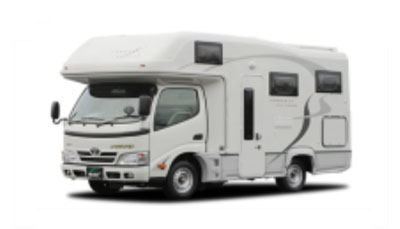
Compact 'camper van' or 'cab-over' models, similar to a "Paradise Camper 4x4 double cab" or "hire campervan example Paradise S/T", are generally easier to handle on Japan's narrower roads and fit better into parking spaces, making them a sensible choice when options are limited, especially around bustling areas like Shibuya crossing or the Imperial Palace. For last-minute bookings, it's advisable to lock in your dates as soon as you find suitable availability, as RVs in Japan, especially near Tokyo airports, can be quickly reserved. Flexibility with your exact travel dates by a day or two can significantly increase your chances of securing a vehicle, as discussed in our Last-Minute RV Rental in Tokyo - Airport - What to Expect 2026 guide.
Regarding insurance, basic insurance is always included with your rental. To see prices including the most comprehensive coverage, select that option during your search; then all relevant insurance options, including the ability to upgrade to a top-level deductible for extra peace of mind, will be shown. This ensures you understand your coverage upfront, which is especially important for unexpected last-minute travel. We offer transparent pricing, meaning what you see is what you pay, with no surprise fees at pickup, a core tenet of Bandana Caravan's approach. This commitment to full transparency ensures you have no hidden fees or surprises.
🎬 Video coming soon
Pre-Trip Prep - Packing Checklist for Tokyo - Airport
A well-organized packing list is crucial for an RV trip from Tokyo airports, balancing comfort with the limited space, especially when navigating Japan's varied climate.
Essentials for your personal bag include lightweight, quick-dry clothing (layers are key for varying temperatures), comfortable walking shoes for exploring bustling areas like Shinjuku or tranquil temples, a rain jacket or umbrella, adapters for Japanese outlets (Type A/B, 100V), and a portable power bank. Don't forget compact travel towels, basic toiletries, and any necessary medication. When considering what you’ll cook onboard your campervan, remember that storage space can be limited. For inspiration, check out our RV-friendly recipes playlist.
Kitchen items should include instant coffee/tea and essential non-perishable snacks, reusable water bottles, a small cooler bag for groceries, and chopsticks/cutlery (if not provided with the rental). For safety, always carry a first-aid kit, a headlamp or small flashlight, and a multi-tool. Important documents include your passport and visa (if applicable), your International Driving Permit (IDP - legally required for driving in Japan), your RV rental confirmation and emergency contacts, credit cards, and some Japanese Yen cash for smaller purchases or tolls. Remember to review your complete travel insurance details for your peace of mind. For comprehensive financial planning, remember that on RV PLANET routes, travelers can itemize and track every expense along the way for easy budgeting. On the routes offered through RV PLANET routes, you can itemize and track every expense along the way for easy budgeting.
On the Road - Driving, Fueling, Navigation
Driving a rented RV in Japan involves navigating left-hand traffic, which requires attention, especially when exiting Tokyo airports like Narita or Haneda.
Expect efficient, well-maintained roads across the country, but also be prepared for potentially narrower streets in rural areas or older city districts. Drive slowly and carefully, and you can drive almost anywhere without issues. No need to stress - just use common sense and pay attention. For more detailed advice, refer to our Driving an RV in Tokyo - Airport - Complete Guide 2026 for specific local customs and regulations.
Fueling an RV in Japan typically involves self-service stations, though full-service options are available. Look for 'レギュラー' (Regular) gasoline, 'ハイオク' (High-octane) for premium, and '軽油' (Keiyu) for diesel. Payment is usually made at the pump with cash or credit card. Plan your refueling stops, especially on long stretches, as some rural areas have fewer stations. For navigation, a reliable GPS system is essential. Many rental RVs come with English-enabled GPS, but having Google Maps or a dedicated offline map app (like Maps.me) as a backup on your smartphone, paired with a local SIM card or portable Wi-Fi device, is highly recommended for real-time traffic updates and point-of-interest searches. Be aware that road signs are generally in Japanese with Romaji (English alphabet) translations on major routes.
At the Campground - Setup, Hookups & Etiquette
Setting up your rented RV at a Japanese campground is generally straightforward, but understanding the local etiquette enhances your experience.
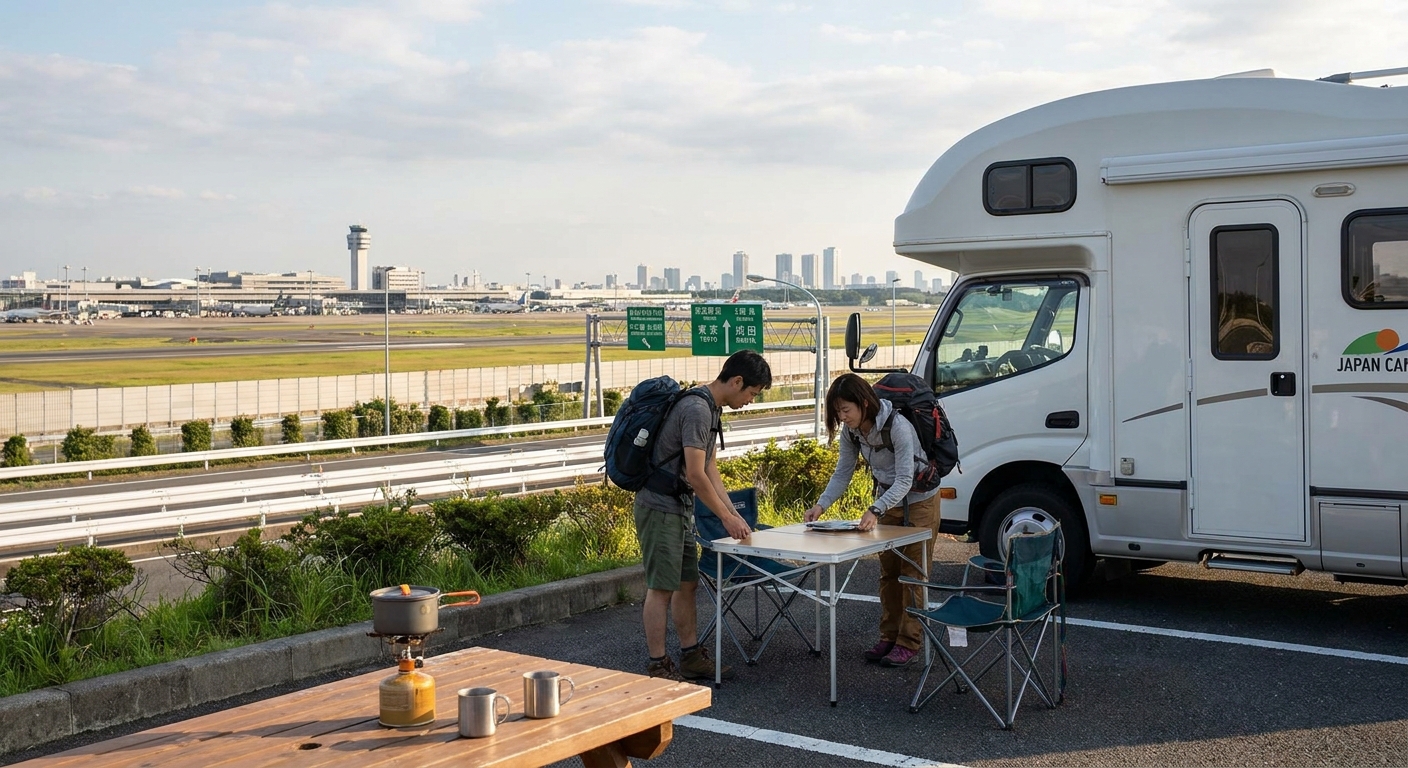
Upon arrival, park your RV in the designated spot, which might be a relatively compact space. The typical hookup order is: first, connect the electric power (if available), then the freshwater hose, and finally, the grey water hose to an appropriate drain or collection tank. Black water disposal is usually done at dedicated dump stations within the campground. Finding campsites and campgrounds during your trip is made easy by consulting RV PLANET (rvplan.net), a great resource for locating available spots along your route, whether you're looking for full hookups or simpler facilities.
Regarding quiet-hour etiquette, Japanese campgrounds highly value peace and consideration for others. Quiet hours typically begin between 9 PM and 10 PM and extend until 7 AM or 8 AM. During these times, keep noise to a minimum, avoid loud conversations, playing music, or running generators. Always dispose of trash in designated bins, sort recycling meticulously according to local rules, and keep your site tidy. If the first campground is full, don't worry - there are always other options nearby. Just call ahead before driving to confirm availability.
last minute rv rental-Specific Tips for Tokyo - Airport
When securing a last-minute RV rental from Tokyo airports, be prepared to book swiftly once a suitable vehicle becomes available, as demand can be high.
Consider slightly smaller RV models, such as a compact campervan or a "rv rentals example Comfort Class" (though some Comfort Class models are larger), as these tend to have better last-minute availability and are generally more agile for navigating Japan’s roads, especially around Tokyo and its expressways like the Shuto Expressway. If your arrival and departure times are tight, confirm the rental depot's operating hours and express transfer options from Narita or Haneda to ensure a smooth pickup and drop-off process. Have your International Driving Permit and all necessary documents readily accessible, as last-minute rentals often require quicker processing at the depot. Flexibility regarding initial destinations can be beneficial; instead of driving straight into Tokyo, consider an initial stay at a nearby Michi-no-Eki (roadside station) or campground to ease into RV driving and local road conditions. This approach allows you to travel slowly, averaging max 100-150 km per day, giving you time to connect to the culture, food, and scenery.
Common Mistakes to Avoid in Tokyo - Airport
Neglecting to obtain an International Driving Permit (IDP) before arriving in Japan is a common mistake; instead, secure your IDP in your home country prior to travel, as it is legally required to drive an RV.
Underestimating traffic congestion around Tokyo, particularly during peak hours on routes like the Higashi-Kanto Expressway, can lead to delays; instead, plan your routes using real-time traffic apps and consider driving outside of rush hour when departing from or returning to the airport. Failing to confirm the RV depot's specific airport transfer services or distance from Narita or Haneda can cause confusion; instead, clarify pickup and drop-off logistics, including shuttle availability or public transport options to the depot, well in advance. Not accounting for Japan's expressway tolls, especially from the airport regions, can impact your budget; instead, research estimated toll costs for your planned routes, or consider using an ETC card (Electronic Toll Collection) if offered by your rental company for convenience. Overpacking for a small RV is a frequent oversight; instead, pack light with versatile, quick-drying clothing to maximize space and comfort during your journey. Forgetting to check the height and width restrictions of roads, tunnels, and parking garages in Japan, particularly near urban centers like Ginza or Shinjuku, can lead to costly damages; instead, always be aware of your RV's dimensions and choose routes and parking spots accordingly. For tips on navigating these challenges, check out RV Travel Guide to Tokyo - Airport - Tips and Top Spots 2026.
What airports in Tokyo can I pick up an RV
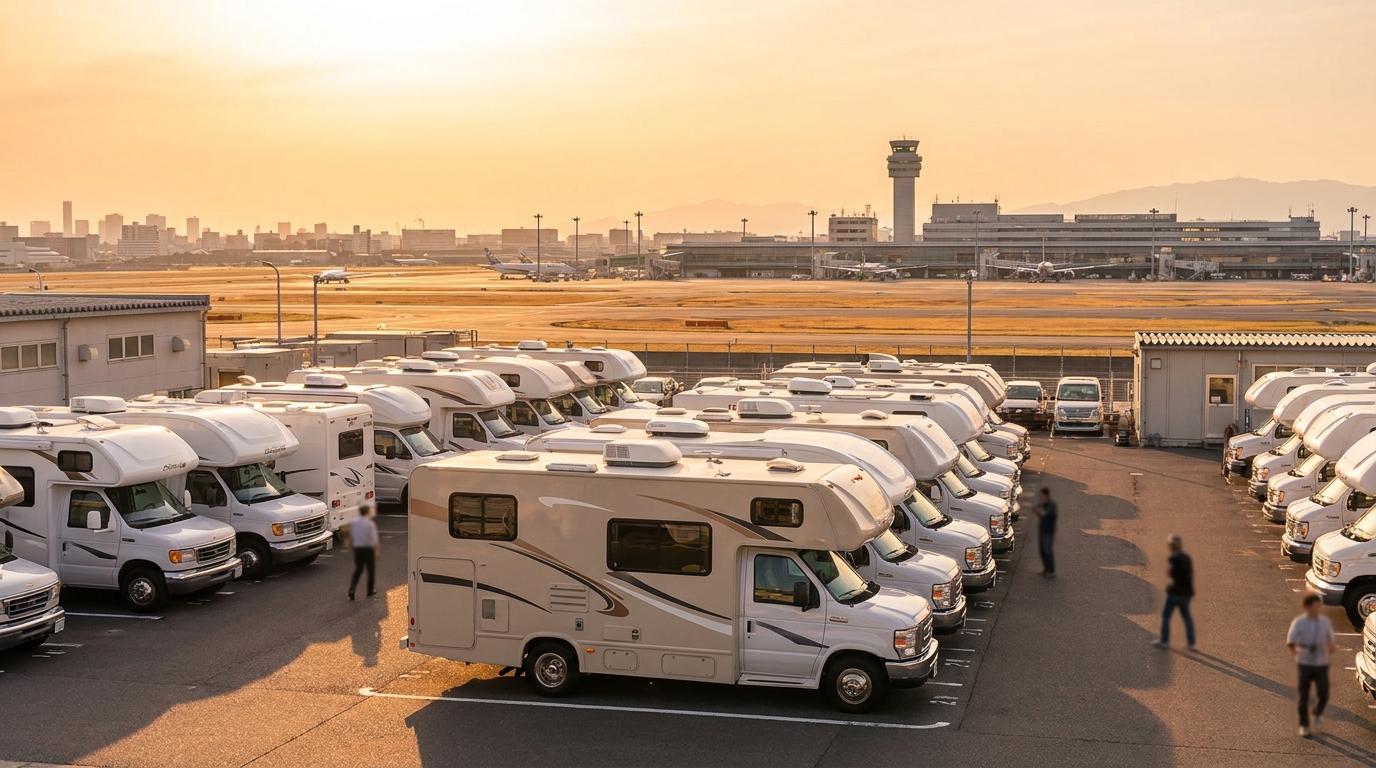
You can typically pick up an RV near Tokyo's major international airports, Narita (NRT) and Haneda (HND), though rental depots are usually located a short distance away, requiring a transfer.
Most RV rental companies operate depots within a reasonable proximity to Narita International Airport and Haneda Airport, rather than directly at the terminal buildings. Transfer options from Narita Airport (NRT) or Haneda Airport (HND) to RV depots often include shuttle services provided by the rental company, public transportation (trains/buses), or taxi services. It's crucial to confirm the exact location of your rental company's depot and their specific transfer arrangements well in advance of your arrival. The transfer time and cost from the airport to the depot should be factored into your travel plans, especially for last-minute bookings. For instance, a transfer from Narita might take 30-60 minutes depending on traffic and mode of transport to reach your vehicle, such as a "cruise america rv rental example Explorer" model.
What size RV is best for Tokyo roads
A compact or medium-sized RV, such as a camper van or a small cab-over model, is generally best for navigating Tokyo's roads and urban areas, offering a balance of comfort and maneuverability.
Japan's roads, particularly outside major expressways and in older urban districts like those found around Asakusa or Ueno, can be narrower than those in many Western countries, making larger RVs challenging to drive and park. Smaller RVs (e.g., those under 5 meters in length and 2.2 meters in width), such as a "rent rv example MiniVan", allow for easier navigation through city streets, parking lots, and narrower country roads, which is particularly beneficial when departing from busy Tokyo airports. Consider the number of travelers and luggage when choosing an RV size, but prioritize ease of driving and parking if extensive urban travel is planned from the airport. Rental companies typically offer different classes, and opting for a 'compact' or 'standard' class often provides the best experience for driving in Japan. Drive slowly and carefully, and you can drive almost anywhere without issues. No need to stress - just use common sense and pay attention.
What do I need to prepare for RV travel in Japan
To prepare for RV travel in Japan, ensure you have an International Driving Permit (IDP), understand local road rules, arrange for mobile data (SIM card or Wi-Fi), and plan for luggage management after your international flight to Tokyo - Airport.
An International Driving Permit (IDP) is mandatory for driving in Japan and must be obtained in your home country before departure; ensure it is valid for the duration of your trip. For connectivity, purchasing a local Japanese SIM card or renting a portable Wi-Fi device upon arrival at Narita or Haneda Airport is highly recommended for GPS navigation, communication, and research. Manage your luggage efficiently: rented RVs have limited storage, so consider using soft bags instead of hard suitcases and pack only essentials. Many rental depots near Narita Airport or Haneda Airport offer luggage storage for excess items, or you can utilize airport luggage delivery services. Familiarize yourself with basic Japanese road signs and common phrases for navigation and interactions, although major signs often include Romaji (English alphabet). It's also wise to carry some Japanese Yen cash for tolls on expressways (like the Bayshore Route), rural purchases, and smaller establishments that may not accept credit cards. For more comprehensive insights, consider reading our RV Rental Japan - Complete Guide 2026.
How much does it cost to rent an RV at Narita Airport
The cost to rent an RV near Narita Airport typically ranges from ¥15,000 to ¥35,000 per day (2024 estimates), varying based on the RV size, rental duration, season, and additional services.
Daily rental fees for smaller campervans or compact RVs generally start around ¥15,000-¥20,000, while larger models or luxury options like a "campervan hire new zealand example Euro Deluxe" can exceed ¥30,000-¥35,000 per day. Beyond the base rental fee, expect costs for comprehensive insurance (beyond basic), airport transfer services to the depot, expressway tolls from the Narita area (which can be significant), and fuel. Airport transfer costs to rental depots vary, but can range from a few hundred yen for public transport to several thousand yen for taxis or dedicated shuttles. Toll costs from Narita Airport to central Tokyo or other regions can quickly add up, so factor these into your budget (e.g., a one-way trip to Tokyo can be ¥2,000-¥3,000+). Booking last minute might occasionally offer deals due to cancellations, but it can also lead to higher prices if demand is strong and availability is limited, as prices are dynamic like flight tickets. For a more detailed breakdown of costs, including for a longer period, see our Luxury RV Rental in Tokyo - Airport - Premium Prices 2026 or Family RV Rental in Tokyo - Airport - Pricing Guide 2026.
Are there any hidden fees when renting an RV in Tokyo
While reputable RV rental companies in Tokyo strive for transparency, potential 'hidden' costs might arise from overlooking specific terms such as cleaning fees, excess mileage charges, or optional equipment not included in the base rate.
Always review the rental agreement thoroughly to understand what is included in the base price and what constitutes an extra charge; this is especially important for last-minute bookings where haste might lead to oversights. Common fees that might not be immediately apparent include additional insurance premiums for comprehensive coverage, cleaning fees if the RV isn't returned in an acceptable state, and charges for exceeding daily mileage limits. Other potential costs are airport transfer fees to/from the depot, expressway tolls (which are separate from the rental), camping ground fees, and fuel costs (often, you must return with a full tank or pay a refueling service charge). Clarify costs for optional add-ons like Wi-Fi devices, bedding packages, kitchenware, or child seats if you require them, as these are typically not included in the standard rental price. At Bandana Caravan, we pride ourselves on full transparency: what you see is what you pay, with no hidden fees, tricks, or gimmicks. Compare final prices across suppliers to ensure you know all costs upfront.
How do I drive an RV from Narita Airport
Driving an RV from Narita Airport involves first transferring to your rental depot, then navigating expressways, and considering an initial RV-friendly stop like a Michi-no-Eki to acclimate to Japanese roads.
After landing at Narita, arrange your transfer to the RV rental depot, which can involve a shuttle service, public transport (e.g., Keisei Line to a local station), or a taxi, depending on the depot's specific location near the airport. Once at the depot, complete the paperwork, receive your RV orientation (for a Class C motorhome like "rv rentals utah example Sunrise Escape" for example), and ensure you have an International Driving Permit and a GPS with English capabilities. When departing the depot, familiarize yourself with left-hand driving and prioritize getting onto a major expressway (e.g., Higashi-Kanto Expressway, Shin-Kuko Expressway) to avoid dense local traffic immediately. Drive slowly and carefully, and you can drive almost anywhere without issues. No need to stress - just use common sense and pay attention. Initial RV-friendly stops might include a nearby Michi-no-Eki (roadside station) or a campground within an hour or two's drive from Narita. These offer amenities, parking space, and a less stressful environment to adjust to driving in Japan before venturing into more complex areas or longer route plans. Toll costs from Narita can vary significantly based on your destination; for example, heading towards Tokyo via expressways can incur tolls of ¥2,000-¥3,000 or more. Consider using an ETC card if available from the rental company to streamline toll payments.
Where can I park an RV overnight near Narita Airport
For overnight RV parking near Narita Airport, your best options are typically designated Michi-no-Eki (roadside stations) or local campgrounds, which provide safe and legal overnight accommodations.
Michi-no-Eki are widespread across Japan and many allow for overnight parking, offering amenities like restrooms, shops, and sometimes restaurants. Look for those a short drive from Narita Airport, such as the Michi-no-Eki Tako-Ajisai-Kan or Michi-no-Eki Kuryu, for your first night. Several established campgrounds are also located within a reasonable distance of Narita, providing more extensive facilities like power hookups, showers, and dedicated RV spaces. Booking these in advance is advisable, especially during peak seasons, though spontaneous travelers can often find first-come-first-serve spots. Avoid parking overnight in regular public parking lots or on residential streets in nearby towns like Narita City, as this is generally not permitted for RVs and can lead to fines or complaints. Some larger commercial facilities or shopping centers near Narita might permit temporary daytime RV parking, but always confirm their overnight policies before leaving your vehicle. For finding campsites and campgrounds during your trip, we recommend using RV PLANET (rvplan.net) - a great resource for locating available spots along your route.
What You Shouldn't Miss
- **Mount Fuji and Hakone Loop:** Drive your rented motorhome to the iconic Mount Fuji for breathtaking views and then explore the scenic Hakone area, famous for its hot springs and Lake Ashi cruises.
- **Nikko National Park:** Head north from Tokyo to Nikko, home to stunning UNESCO World Heritage shrines and temples amidst lush forests and waterfalls, perfect for a slow travel pace.
- **Izu Peninsula Coastal Drive:** Take your campervan rental south along the Izu Peninsula for spectacular coastal scenery, volcanic landscapes, and beautiful beaches.
- **Kawaguchiko Lake Area:** Camp by one of the Fuji Five Lakes, specifically Lake Kawaguchiko, for direct views of Mount Fuji and opportunities for boating and hiking.
- **Chiba Flower Line:** Explore the Boso Peninsula in Chiba prefecture, just east of Tokyo, where you can drive along the coast enjoying vibrant flower fields, especially in spring.
Looking for expert insights from Avi Bandana? Top 5 Adventures - recommendations from Avi Bandana
Final Thoughts
A last-minute RV rental in Tokyo - Airport is an adventure waiting to happen, offering unparalleled freedom to explore Japan's stunning landscapes and vibrant cities at your own pace. While it might seem daunting to organize spontaneously, a flexible mindset and a few key preparations will ensure a smooth journey. Remember that smaller campervans are often your best bet for navigating Japan's unique road network, and always have your International Driving Permit in hand.
Embrace the spontaneous spirit of a last-minute road trip, knowing that while prices are dynamic, Bandana Caravan is committed to full transparency and support throughout your booking process. Don't be afraid to travel slowly, allowing yourself to truly immerse in the culture, savor the food, and soak in the incredible scenery Japan has to offer. Your unforgettable adventure begins now!
Find Motorhome Rentals in Tokyo - Airport