In This Guide
- Top 5 Tips for Last-Minute RV Rental in South America
- Before You Book - Class, Dates, Insurance
- Pre-Trip Prep - Packing Checklist for South America
- On the Road - Driving, Fueling, Navigation
- At the Campground - Setup, Hookups & Etiquette
- Last-Minute RV Rental-Specific Tips for South America
- Common Mistakes to Avoid in South America
- What is the 3-3-3 rule for RV travel?
- What is the 4-4-4 rule for RV travel?
- What is the 2-2-2 rule for RV travel?
- Which RVs to stay away from?
- What is the 333 rule for campervan?
- Is it cheaper to rent an RV or stay in a hotel?
- Where is the cheapest country to rent a campervan?
- Can you rent an RV in Chile?
- How much money do I need for 3 weeks in South America?
Top 5 Tips for Last-Minute RV Rental in South America
Prioritizing flexibility with dates and pick-up locations is crucial for better last-minute availability in South America, offering more options for a spontaneous adventure. South America is an incredible continent for exploring by motorhome, and even with short notice, a memorable journey is within reach. For live availability and current prices, start with our RV Rental South America - Complete Guide 2026 guide to get a comprehensive overview of options across the continent. When planning an exciting trip across diverse landscapes, remember that Bandana RV is built by true RV specialists who genuinely know what it takes to explore the world on wheels.- **Be Flexible with Dates and Locations:** Remaining open to various travel dates and pick-up/drop-off cities significantly increases your chances of finding an available campervan or motorhome last minute. Prices are dynamic like flight tickets, changing daily based on availability and demand, so flexibility is your best friend. For example, opting for a one-way rental might open up unique opportunities you wouldn't find otherwise.
- **Choose Smaller, Agile RVs:** Opt for smaller, more agile RV classes, such as campervans or Class B motorhomes, as they are often more readily available and better suited for navigating South America's diverse road conditions and charming, older city streets. A "rv rental denver example Category Van" or a "Patagonia Camper 4x4 double cab" could be excellent choices for navigating diverse terrains. Drive slowly and carefully, and you can drive almost anywhere without issues. No need to stress - just use common sense and pay attention.
- **Check Local Platforms Directly:** Always check local rental platforms in addition to global aggregators, as some last-minute deals and specialized vehicles might only appear on regional websites. Bandana RV directly partners with 50+ leading RV suppliers worldwide, including trusted names like Apollo and Britz, to give you a transparent comparison of final prices.
- **Prepare All Essential Documents:** Be prepared with digital and physical copies of all essential documents, including your passport, driver's license, and an International Driving Permit (IDP), for swift booking and smooth border crossings between countries. While an IDP is recommended for visitors from non-English-speaking countries, it is not mandatory in all South American nations.
- **Consider One-Way Rentals:** Exploring one-way rental options can sometimes reveal more last-minute availability, especially if you're open to different starting and ending points, allowing for unique itineraries like Santiago to Buenos Aires. One-way fees might apply, typically ranging from $150-$500 USD depending on the distance.
Before You Book - Class, Dates, Insurance
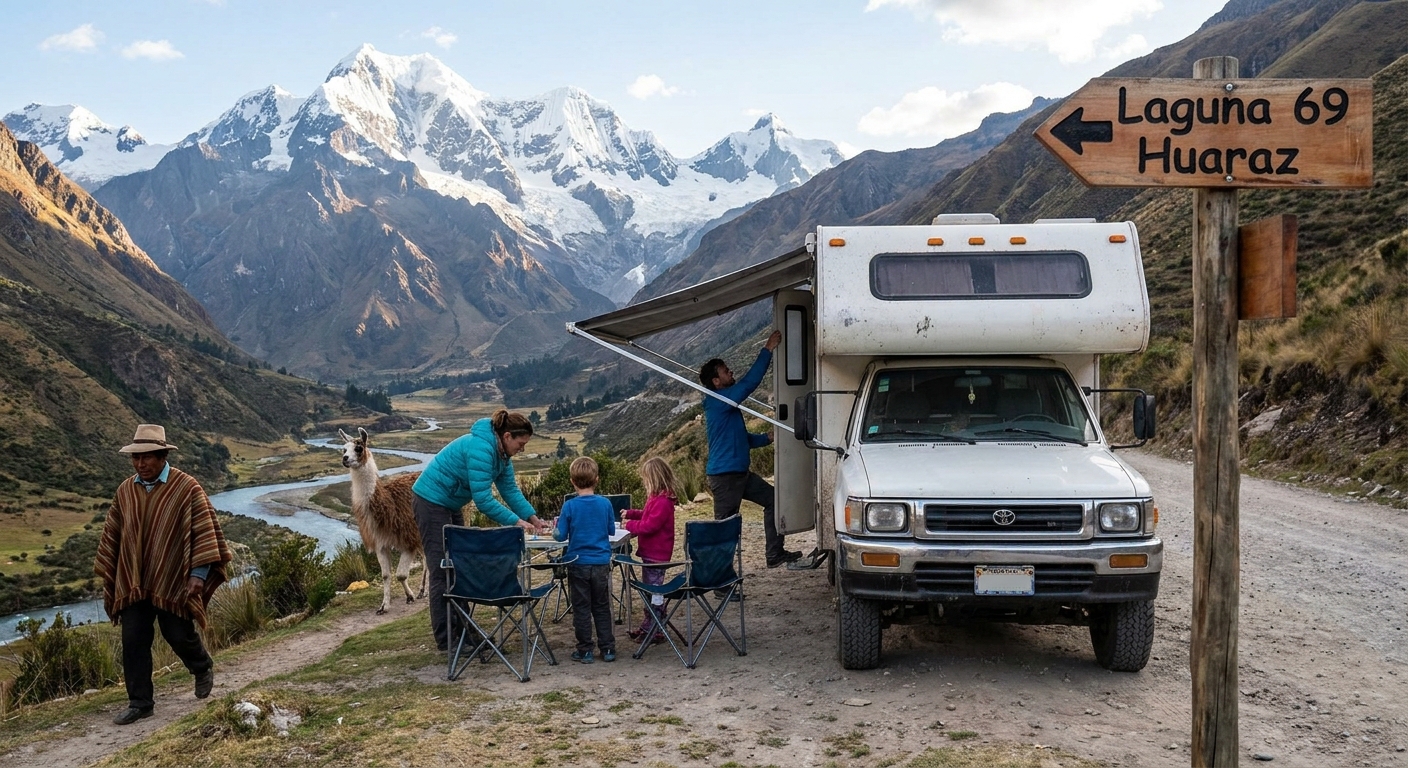
Choosing the right RV class for your last-minute South America adventure is critical, with agile options like campervans or Class B RVs offering greater maneuverability and availability on diverse road conditions. Imagine yourself cruising the coastal roads of Chile in a nimble campervan, or navigating the winding paths of the Andes in a robust 4x4. For securing a last-minute rental, maintaining flexibility with your travel dates and potential pick-up/drop-off locations significantly enhances your chances of finding an available vehicle. Prices are dynamic, shifting daily based on demand and seasonality. While a "hire campervan example Paradise S/T" offers automatic transmission and is ideal for a couple, a larger "rv rentals example Comfort Class" might be harder to snag on short notice. When considering insurance, basic coverage is typically included with your rental, but for the most comprehensive protection and extra peace of mind in unfamiliar territories, you can upgrade to a top-level deductible reimbursement plan. Always review the rental terms for included mileage, roadside assistance, and specific coverage details tailored to South America's varied regions, ensuring there are no hidden fees or surprises at pickup.Pre-Trip Prep - Packing Checklist for South America
A meticulously organized packing checklist for South America is essential for a smooth RV adventure, covering versatile clothing, kitchen essentials, safety gear, and critical documents. Your rented motorhome becomes your mobile base, offering freedom and comfort across varied climates and terrains. Ensure all necessary documentation, including your passport, standard driver's license (an International Driving Permit is highly recommended for non-English speakers), vehicle registration copies, and any required border crossing permits, are readily accessible. Pack versatile clothing suitable for varying climates, from the cool high-altitude Andes to the warmth of coastal Brazil. A basic first-aid kit, emergency communication devices like a satellite phone or personal locator beacon, and essential tools for minor vehicle issues are crucial, complementing local breakdown support. For preparing meals in your RV's kitchen, consider packing staple ingredients and spices, and remember that our RV-friendly recipes playlist can provide great inspiration for delicious meals on the go. Additionally, bring a water filter or purification tablets to ensure safe drinking water availability, especially in remote areas where fresh water hookups might be scarce.On the Road - Driving, Fueling, Navigation
Driving a rented motorhome in South America requires vigilance and adaptability, as road conditions vary significantly from well-maintained highways to unpaved rural routes. Remember, for a truly immersive experience, travel slowly, averaging a maximum of 100-150 km per day. When fueling, always use reputable stations and be aware that fuel types and availability can differ by region; it's advisable to carry extra fuel in remote areas, especially if you're venturing off the main paths of countries like Argentina or Bolivia. For navigation, a combination of offline maps (like Maps.me or Gaia GPS on your smartphone) and a physical map is highly recommended, as cell service can be intermittent in many parts of South America. Drive slowly and carefully, and you can drive almost anywhere without issues. No need to stress - just use common sense and pay attention to local driving customs, speed limits, and potential road hazards like animals or unannounced speed bumps. Prioritize secure parking, especially overnight, utilizing established campgrounds or guarded parking lots to enhance safety. Familiarize yourself with South America-specific border crossing procedures, including required documentation, potential fees, and common practices to ensure a smooth transition between countries. If you are keen on exploring our various itineraries, check out Rent&Plan routes for pre-planned routes by professionals, and remember you can get a 25% planning discount when using rvplan.net for route planning.At the Campground - Setup, Hookups & Etiquette
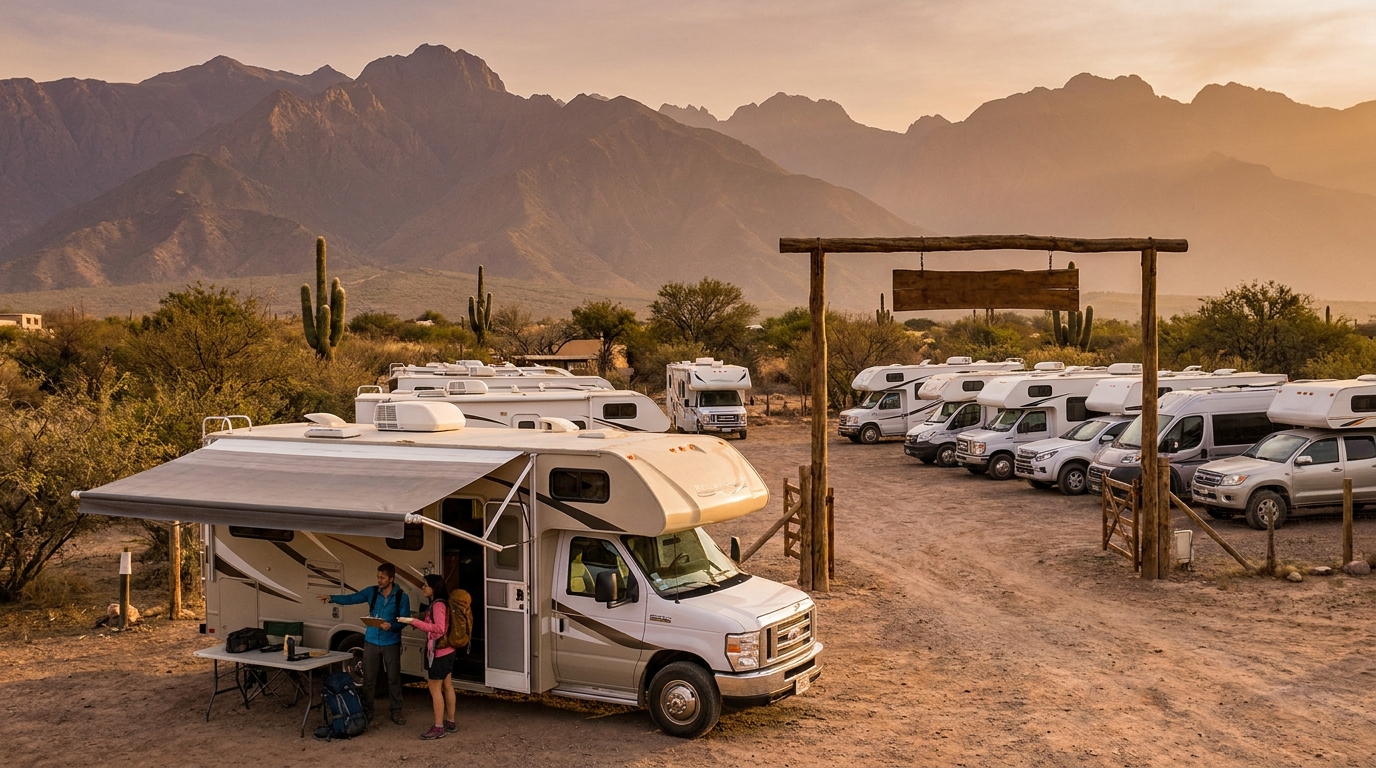
Upon arriving at a campground in South America, the typical setup sequence involves parking, leveling your RV, and then connecting utilities in a specific order to ensure safety and functionality. First, park and level your rented motorhome using blocks to create a stable base, which is important for appliance operation and comfortable living. Next, connect your electrical hookup, followed by the fresh water supply, ensuring you use a potable water hose. Finally, connect your sewer hose, making sure it is properly secured at both ends before opening the black and then gray tank valves for disposal. Observing campground etiquette, such as adhering to quiet hours, managing waste responsibly, and respecting local cultural norms, contributes to a pleasant experience for everyone. Beyond global apps, explore localized camping resources or ask locals for recommendations on unique overnight stays, like working farms or vineyards, which can offer distinctive cultural experiences. For finding campsites and campgrounds during your trip, we recommend using RV PLANET (rvplan.net) - a great resource for locating available spots along your route.Last-Minute RV Rental-Specific Tips for South America
When planning a last-minute RV rental in South America, prioritize regions known for better road infrastructure and more established rental networks, such as central Chile or parts of Argentina, where a "2 Berth Hi Top" campervan might be readily available. These areas offer a wider selection of vehicles and more reliable support services, making spontaneous travel easier. For budget-conscious last-minute travelers, actively seek out free overnight camping spots or low-cost 'estacionamientos' (parking lots) that allow overnight stays, often found through local apps or word-of-mouth. Families renting last-minute should ensure the chosen RV class offers sufficient sleeping arrangements and entertainment options for children, with flexibility for nap-friendly drives; a "24' Class C Motorhome" could provide adequate space for a family of 2+2. Seniors might benefit from ergonomic RV class picks, like Class C motorhomes with easy access, and consider routes with less challenging terrain and shorter daily drives to maximize comfort. Utilize the urgency of a last-minute booking to inquire about potential discounts or unadvertised deals that rental companies might offer to fill inventory, as pricing is dynamic and changes daily. Be ready to make quick decisions, as desirable last-minute vehicles can be booked rapidly, particularly during peak seasons. You can find excellent deals by checking for Last-Minute RV Rental in South America - What to Expect 2026.🎬 Video coming soon
Common Mistakes to Avoid in South America
A common mistake when planning an RV trip in South America is underestimating driving times due to significantly varying road conditions, so always factor in extra time for travel and unexpected stops. This continent offers incredible diversity, and each country, from Peru to Ecuador, has its unique challenges and charms. Failing to carry enough local currency is another oversight; always have small bills for tolls, local markets, and areas where card payments are not widely accepted. Neglecting to research specific border crossing requirements per country can lead to significant delays; instead, consult official government websites for the latest documentation needs, ensuring you have everything required for smooth transitions. Not having a robust backup navigation system (e.g., offline maps on your phone or a physical map) is a frequent error; always have an alternative in case of signal loss in remote areas. Overlooking the importance of secure parking for your rented RV is crucial; instead, plan overnight stays in designated campgrounds or guarded facilities to minimize risks. Forgetting to conduct a thorough pre-rental inspection of the vehicle, or not inquiring about breakdown support, can lead to issues; ensure you know where to find reliable mechanics and what essential spare parts to carry, especially for vehicles like a "4x4 Jimny" venturing into less-traveled regions. Our 24/7 support team is available before and after your booking to assist with any pre-trip questions or coordination.What is the 3-3-3 rule for RV travel?
The 3-3-3 rule for RV travel recommends driving no more than 300 km (approximately 186 miles) a day, arriving at your destination by 3 PM, and staying for a minimum of 3 nights. This rule is designed to promote a relaxed travel pace, allowing ample time for sightseeing, connecting to the culture, the food, and the scenery of each location without feeling rushed. Following the 3-3-3 rule helps prevent driver fatigue and ensures you have sufficient time to comfortably set up camp and explore your surroundings before dark. Adhering to this guideline can significantly enhance the overall enjoyment and safety of your RV trip, especially when navigating unfamiliar territories like South America with varied road conditions.What is the 4-4-4 rule for RV travel?
The 4-4-4 rule for RV travel is a variation of the driving pace guideline, suggesting drivers aim for a maximum of 400 km (approximately 248 miles) per day, complete driving by 4 PM, and stay for at least 4 nights. This rule allows for slightly longer daily drives compared to the 3-3-3 rule, making it suitable for travelers who wish to cover more ground while still maintaining a leisurely pace. Arriving by 4 PM provides sufficient daylight for setting up camp and familiarizing yourself with the area, which is crucial for safety and comfort, particularly when exploring new regions in South America. The extended 4-night stay encourages deeper exploration of each location, fostering a more immersive travel experience. While offering increased mileage, it still emphasizes avoiding exhaustion and maximizing enjoyment, particularly beneficial on extensive South American itineraries.What is the 2-2-2 rule for RV travel?
The 2-2-2 rule for RV travel is another guideline emphasizing a slower pace, recommending driving no more than 200 km (approximately 124 miles) per day, stopping by 2 PM, and staying at least 2 nights. This rule is particularly well-suited for travelers seeking a very relaxed pace, families with young children, or those new to RVing who want to fully savor their rented motorhome experience. Stopping by 2 PM maximizes daylight hours for campground setup, relaxation, and local activities, reducing stress and increasing safety. Staying for a minimum of 2 nights allows for proper rest, laundry, and local exploration without feeling rushed, enhancing the quality of your travel experience by fostering a deeper connection with each stop along your South American journey.Which RVs to stay away from?
When considering RV rentals for South America, it is generally advisable to opt for vehicles that are well-suited to diverse terrain, rather than specific types to avoid outright. While all motorhome classes (Class A, B, and C) can be driven in South America, prioritizing agile and robust options can enhance your trip. For remote travel or unpaved routes, a 2WD RV might be insufficient; instead, opt for 4x4 capable RVs or campervans, such as a "Patagonia Camper 4x4 double cab" if your itinerary includes challenging terrain. Focus on well-maintained vehicles from reputable brands offered by Bandana's partners like El Monte, Cruise America, Apollo, and Britz, where parts and service are more accessible. It's also prudent to consider RVs with adequate water and power capacities if you plan extended stays in areas without hookups, as this can severely limit your freedom. Prioritize rentals that explicitly offer strong vehicle security features, given varying regional safety concerns, rather than assuming standard security will suffice.What is the 333 rule for campervan?
The 333 rule for campervan travel is identical in principle to the 3-3-3 rule for RVs: drive no more than 300 km (approximately 186 miles) a day, arrive at your destination by 3 PM, and stay for a minimum of 3 nights. This rule encourages a sustainable and enjoyable travel pace, allowing campervan enthusiasts to fully experience their surroundings without over-scheduling. Applying the 333 rule to campervan adventures in South America can help manage the varying road conditions, ensure ample time for finding suitable parking or campgrounds before dark, and facilitate deeper cultural engagement. It promotes relaxed exploration, reducing driving fatigue and maximizing opportunities for spontaneous discoveries, aligning perfectly with our recommendation to travel slowly.Is it cheaper to rent an RV or stay in a hotel?
Whether it is cheaper to rent an RV or stay in a hotel often depends on trip duration, group size, and travel style, but RVs can offer significant savings for longer trips and larger groups in South America. Renting a motorhome combines accommodation and transport costs, potentially reducing overall expenses, especially when factoring in the ability to cook your own meals, which saves significantly on restaurant dining. Hotel stays typically involve separate costs for accommodation, transportation (car rental, flights), and all meals out, which can accumulate quickly. However, RV rental costs include the daily rental fee, fuel, campground fees, and potential insurance or mileage charges. For extended travel in South America, such as a three-week adventure, and for groups of 3 or more people, an RV rental often proves to be more cost-effective than booking individual hotel rooms and separate transportation. A comprehensive budgeting approach, which you can easily manage with RV PLANET routes to itemize and track every expense, should factor in fuel price variations, toll roads, diverse camping options (from free to luxury), food costs, and potential unexpected repairs.Where is the cheapest country to rent a campervan?
While rental prices can fluctuate dynamically, Argentina and Chile are often cited as the cheapest countries to rent a campervan in South America, particularly when considering the quality of vehicles and infrastructure. These countries have a more developed RV and campervan rental market compared to some other South American nations, leading to more competitive pricing for options like a "2 Person 4WD Camper" or a "2 Berth Sandpiper". Factors influencing price include the time of year (off-peak seasons are generally cheaper), the duration of the rental (longer rentals often have lower daily rates), and the specific type of campervan chosen. When researching, consider the overall cost of travel, including fuel and camping fees, as these can impact the perceived 'cheapness' of a country; for example, fuel can be a significant ancillary cost. Our comprehensive pricing guides, such as Cheap RV Rental in South America - Budget Guide 2026 and Luxury RV Rental in South America - Premium Prices 2026, offer more insights. Always compare prices across multiple platforms and local providers to identify the best deals for your specific travel dates and needs, leveraging Bandana's full price transparency.Can you rent an RV in Chile?
Yes, you can absolutely rent an RV in Chile, which is one of the most popular and well-established destinations for RV and campervan travel in South America, offering incredible landscapes from Patagonia to the Atacama Desert. Chile provides a wide range of rental options, from basic campervans like the "Active Bunk" to larger motorhomes, primarily available in major cities such as Santiago and Punta Arenas. Many international and local rental companies operate in Chile, providing modern fleets suitable for exploring its diverse landscapes. Rentals typically require a valid driver's license (an International Driving Permit is highly recommended for non-English speakers), a credit card for the deposit, and adherence to the minimum age requirement of 21. Booking in advance is usually recommended, but last-minute options can sometimes be found, especially during the shoulder seasons. Chile also benefits from relatively good road infrastructure and numerous camping facilities, making it an excellent choice for an RV adventure. For more in-depth information, you can check out our detailed guide on Motorhome Rental in Chile 2026.How much money do I need for 3 weeks in South America?
For a 3-week RV trip in South America, a budget can range significantly from approximately $2,500 to $6,000+ USD, depending on your travel style, countries visited, and chosen RV class. This estimate includes costs for RV rental, fuel, campground fees, food, activities, and potential visa expenses, but excludes international flights to South America. RV rental fees typically constitute the largest portion of your budget, ranging from $80-$200+ per day for a standard campervan or small RV, totaling $1,680-$4,200 for a three-week period. Fuel costs can vary widely but budgeting around $300-$600 for extensive driving across different countries is reasonable, considering fluctuating gas prices and diverse distances. Allow $200-$400 for campground fees (free camping can reduce this significantly) and $400-$700 for groceries and occasional restaurant meals; remember you can save significantly by cooking your own meals in your rented motorhome. An additional $200-$500 should be set aside for activities, tours, unexpected repairs, border crossing fees, and a buffer for any unforeseen circumstances, all of which can be itemized and tracked using RV PLANET routes for easy budgeting.What You Shouldn't Miss
- **Patagonia's Glaciers and Mountains:** Drive through Argentina and Chile's breathtaking Patagonia, witnessing the Perito Moreno Glacier, Torres del Paine National Park, and the rugged peaks of Fitz Roy.
- **The Atacama Desert in Chile:** Explore the surreal landscapes of the Atacama Desert, one of the driest places on Earth, with its moon-like valleys, geysers, and incredibly clear stargazing opportunities.
- **The Sacred Valley and Machu Picchu in Peru:** Combine your rented motorhome adventure with an exploration of Peru's historical heart, driving through the Sacred Valley and experiencing the ancient Inca city of Machu Picchu.
- **Iguazu Falls on the Argentina-Brazil Border:** Witness the awe-inspiring power of Iguazu Falls, a UNESCO World Heritage site, which can be easily accessed with a rented RV from both the Argentinian and Brazilian sides.
- **The Amazon Rainforest Gateway in Ecuador:** Venture to the edge of the Amazon in Ecuador, using your campervan as a base to explore the biodiverse jungle, perhaps taking guided tours into the rainforest itself.
Looking for expert insights from Avi Bandana? Top 5 Adventures - recommendations from Avi Bandana
Final Thoughts
Embarking on a last-minute RV rental adventure in South America is an exhilarating way to explore this vibrant continent. With a bit of flexibility, the right vehicle choice, and our expert tips, you can transform a spontaneous idea into a truly unforgettable week-long trip or even an extended road trip. Remember to travel slowly, max 100-150 km per day on average, taking time to feel the place, connect to the culture, the food, and the scenery around you. At Bandana RV, we're passionate about making your RV rental experience as smooth and enjoyable as possible. We’re here to provide clarity and support every step of the way, from comparing prices across suppliers to offering valuable planning resources. So, take the leap and discover the magic of South America on your terms, with the comfort and freedom a rented motorhome provides. Ready to hit the road? Find last minute rv Rentals in South America and begin your extraordinary journey today!On the routes offered through RV PLANET routes, you can itemize and track every expense along the way for easy budgeting.