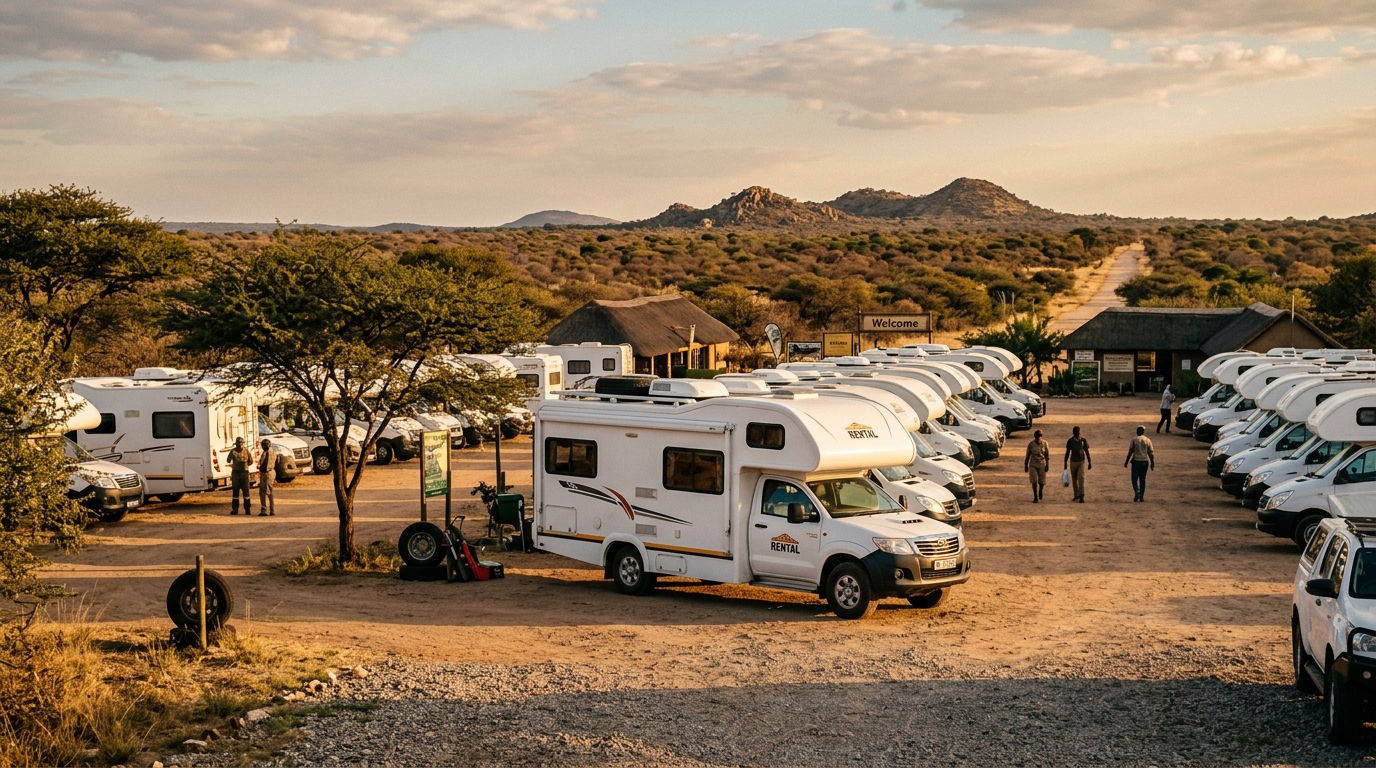
For live availability and current prices, start with our RV Rental Botswana - Complete Guide 2026 guide.
In This Guide
- Best Botswana RV Itinerary for last minute rv rental — Overview
- 7-Day Classic Route in Botswana
- 14-Day Extended Journey in Botswana
- Recommended RVPlan Trip for Botswana
- Daily Driving Distances & Drive Times in Botswana
- Best RV Class for This Itinerary — Couple & Family Picks
- What is the best time to do an RV safari in Botswana?
- How much does it cost to rent an RV in Botswana?
- Is it worth going to Botswana for safari?
- Do you need a 4x4 for RV rental in Botswana?
- Can you just drive through Botswana?
- How do I prepare for a self-drive RV trip in Botswana?
- What are the road conditions like for RVs in Botswana?
- Are there specific rules for RV camping in Botswana?
- What are the safety considerations for RV travel in Botswana?
- How can I experience local culture on an RV trip in Botswana?
Best Botswana RV Itinerary for last minute rv rental — Overview
A last-minute RV rental in Botswana offers an unparalleled immersive self-drive safari experience, allowing you to navigate the country's wild landscapes at your own pace. Typically, such an adventure focuses on iconic wildlife destinations like the Okavango Delta, Moremi Game Reserve, and Chobe National Park. The minimum recommended duration for a truly meaningful RV safari is 7 days, though a 14-day itinerary is ideal for deeper exploration and includes opportunities to experience non-safari attractions like the stark beauty of the Makgadikgadi Pans.
Total driving distances can vary significantly, ranging from approximately 800 km for a compact 7-day trip to over 2000 km for a more extended journey. It's crucial to understand that these routes are primarily on unpaved roads, often characterized by sand, gravel, and corrugations, which significantly impacts travel times. The prime season for an RV adventure in Botswana is the dry period, from May to October. This timing is due to optimal wildlife viewing conditions as animals congregate around water sources, and generally more accessible road conditions, although a robust 4x4 RV remains essential for most park interiors.
7-Day Classic Route in Botswana
For a classic Botswana RV safari, a 7-day itinerary provides a fantastic introduction to its world-renowned wildlife. This route offers a balanced experience of key parks and reserves:
- Day 1: Maun Arrival & RV Pickup (0 km) – Arrive in Maun, the gateway to the Okavango Delta. Collect your rented RV, stock up on essential provisions, and perhaps spend the night at a well-equipped campsite near town to acclimatize and ensure your vehicle is ready.
- Day 2: Maun to Moremi Game Reserve (South Gate) (approx. 90 km) – Drive into the wildlife-rich Moremi Game Reserve. This journey on gravel roads requires careful driving. Set up camp at a designated site near Xakanaxa or Third Bridge, offering excellent opportunities for immediate game viewing.
- Day 3: Moremi Game Reserve Exploration (approx. 50 km loop) – Dedicate the entire day to extensive game drives within Moremi. The areas around Xakanaxa and Third Bridge are famed for their diverse wildlife, including predators and abundant birdlife, often seen along the waterways. Stay at the same campsite for convenience.
- Day 4: Moremi to Khwai Community Area (approx. 60 km) – Travel through scenic bushveld to the Khwai Concession. This area is known for community-run campsites and offers unique experiences like mokoro (traditional canoe) excursions or guided bush walks, providing deeper cultural and ecological insights.
- Day 5: Khwai to Savuti (Chobe National Park) (approx. 120 km) – Navigate more challenging sandy tracks as you head towards the Savuti region of Chobe National Park. Savuti is renowned for its large elephant herds and high concentrations of predators, making for thrilling wildlife encounters. Overnight at a Savuti campsite.
- Day 6: Savuti to Kasane (Chobe National Park) (approx. 170 km) – Enjoy a final morning game drive in Savuti before undertaking the drive north to Kasane, the gateway to the Chobe River Front. This stretch can be demanding due to sand, so allow ample time. Camp near the Chobe River.
- Day 7: Chobe River Front & Departure (approx. 50 km) – Experience an unforgettable morning boat cruise on the Chobe River, famous for its incredible aquatic wildlife and vast elephant herds. Afterwards, prepare for your RV return in Kasane or your onward journey.
14-Day Extended Journey in Botswana
For those with more time, a 14-day itinerary allows for a more comprehensive exploration of Botswana, incorporating diverse landscapes and cultural experiences:
- Days 1-4: Okavango Delta & Moremi – Begin in Maun, exploring the Okavango Delta's periphery and spending dedicated time within the Moremi Game Reserve. Consider a scenic flight over the delta for a unique perspective on this vast inland waterway.
- Days 5-7: Khwai & Savuti – Continue through the Khwai Community Area to the predator-rich Savuti region of Chobe National Park. Allocate extra time here for in-depth game drives and patient wildlife observation.
- Days 8-9: Chobe River Front (Kasane) – Dedicate two full days to the Chobe River Front, enjoying multiple game drives and iconic boat cruises to witness massive elephant populations and diverse birdlife along the river.
- Day 10: Chobe to Nata Bird Sanctuary (approx. 300 km) – Embark on a longer drive southeast towards Nata, a town on the edge of the Sua Pan. Visit the Nata Bird Sanctuary, particularly stunning when seasonal flamingos and other water birds are present.
- Day 11: Nata to Makgadikgadi Pans (Gweta/Planet Baobab) (approx. 120 km) – Explore the unique, starkly beautiful lunar landscapes of the Makgadikgadi Pans. Options include quad biking on the pans or visiting local baobab sites near Gweta.
- Day 12: Makgadikgadi Pans to Kubu Island (challenging 4x4) or Nxai Pan (approx. 100-150 km) – For the truly adventurous, a challenging 4x4 excursion to the spiritual Kubu Island within the pans offers an otherworldly experience. Alternatively, explore Nxai Pan National Park, famous for the iconic Baines' Baobabs.
- Day 13: Nxai Pan/Makgadikgadi towards Maun (approx. 200-300 km) – Begin the journey back towards Maun, breaking the drive with an overnight stop at a suitable location.
- Day 14: Maun & Departure – Enjoy a final morning activity in Maun, perhaps visiting local craft markets, before returning your RV and departing.
Recommended RVPlan Trip for Botswana
While there isn't a specific "RVPlan trip" pre-packaged for "last-minute RV rental in Botswana" at this exact moment, Avi Bandana strongly encourages travelers to explore the diverse range of expertly curated itineraries available directly through our RVPlan service. These pre-planned adventures are designed by seasoned travel experts and offer meticulously crafted routes, practical camping recommendations, and engaging activity suggestions tailored to various durations and interests across Botswana's spectacular wilderness.
Utilizing RVPlan provides a seamless solution for your Botswana journey, combining your RV rental with a thoughtfully designed itinerary. This approach significantly simplifies trip organization, allowing you to embark on your adventure with confidence and focus on experiencing the magic of Botswana, knowing the logistical details are expertly handled.
Daily Driving Distances & Drive Times in Botswana
Avi Bandana consistently recommends maintaining a maximum average of 100 miles or 150 km per day when planning an RV trip in Botswana. This conservative daily limit is absolutely crucial for safety and for a more immersive experience.
This pace allows ample time to navigate variable road conditions common in Botswana, enjoy spontaneous wildlife sightings without feeling rushed, and manage potential vehicle issues that can arise in remote areas. Here are a few examples to illustrate typical drive times:
- Example 1: Maun to Moremi South Gate (approx. 90 km) – Although a relatively short distance, this drive can easily take 2-3 hours due to gravel, sand, and wildlife activity requiring slow, cautious driving.
- Example 2: Savuti to Kasane (approx. 170 km) – Expect 4-6 hours or more for this route. It features notoriously deep sand and corrugated sections that demand a capable 4x4 RV and very slow, deliberate speeds.
- Example 3: Nata to Maun (approx. 300 km) – Largely paved, this longer stretch typically takes 3-4 hours. However, watch out for livestock on the road, stray wildlife, and occasional potholes that necessitate careful driving.
Best RV Class for This Itinerary — Couple & Family Picks
When selecting the ideal RV for your Botswana adventure, consider the number of travelers and the type of terrain you'll encounter. For a couple planning a last-minute RV adventure, the Class B - Camper Van is an excellent choice. It provides a perfect balance of compact size for maneuverability through varied terrains and essential comforts for two.
Bandana's global fleet includes Class B Camper Vans typically averaging 5.8 meters in length, comfortably accommodating 2-3 occupants, and offering efficient fuel consumption, making them agile for diverse African routes. For families embarking on a Botswana RV trip, a **Class C - Alcove** RV is highly recommended, offering superior space and sleeping capacity to ensure a comfortable journey for everyone.
These Class C Alcove RVs, typically around 7.5 meters in length, provide ample sleeping places for 4-6 people and are well-suited for family-sized comfort on longer journeys. To further simplify your planning stress, consider Bandana's 'Rent & Plan' service, which bundles your chosen RV rental with a professionally designed itinerary, offering full access to our trip-planning software.
What is the best time to do an RV safari in Botswana?
The optimal time to undertake an RV safari in Botswana is during the dry season, which generally runs from May to October. This period offers the best conditions for wildlife viewing and significantly safer navigation on the country's unpaved and often challenging roads.
During these cooler and drier months, wildlife congregates around diminishing water sources, making sightings at waterholes and along rivers more frequent and predictable. Road conditions improve considerably, with sandy tracks firming up and river crossings becoming less daunting, which is a critical factor for the heavier, often 4x4-equipped RVs that traverse these remote areas.
The shoulder months of May and October can be particularly rewarding, often providing a good balance of excellent wildlife viewing, fewer crowds compared to peak July-August, and potentially better availability for last-minute RV rentals and campsite bookings. While the green season (November to April) transforms the landscape into a lush paradise, ideal for birdwatching and observing newborn animals, the heavy rains during this period can render many tracks impassable, demanding a robust 4x4 RV and expert off-road driving skills.
How much does it cost to rent an RV in Botswana?
The base cost to rent an RV in Botswana typically ranges from $200-$500 USD per day, but a comprehensive budget for an RV safari must account for numerous other essential expenses beyond the rental fee itself. Last-minute bookings might also incur premiums or face limited availability, so planning ahead is always advisable. On the routes offered through RV PLANET routes, you can itemize and track every expense along the way for easy budgeting.
RV Rental: Daily rates fluctuate based on vehicle class (e.g., a 4x4 safari-equipped model will be more expensive), rental duration, and season; expect higher prices during peak travel times.
Insurance: Comprehensive insurance is essential and can add significantly to the overall cost. It often comes with a high deductible, and you may need additional coverage for specific off-road scenarios or remote vehicle recovery.
Fuel: Budget generously for fuel. A 4x4 RV can consume 12-17 Liters/100 km, and distances are vast. Fuel in remote areas is considerably more expensive than in towns.
National Park & Reserve Fees: These are substantial. Expect to pay $30-$120 USD per person per day for international visitors, plus a daily vehicle entry fee of around $10-$20 USD, which varies by park.
Campsite Fees: Designated campsites within national parks and reserves are mandatory and usually range from $30-$70 USD per person per night. These must be booked far in advance.
Special Permits: Certain remote areas, such as the Central Kalahari Game Reserve or Makgadikgadi Pans, may require additional, often costly, permits or concession fees.
Provisions: Factor in costs for groceries, drinking water, cooking gas, and other camping essentials. Supply points are scarce and expensive in rural and park areas.
Activities: Excursions like mokoro trips, scenic flights over the Okavango, or guided game drives are additional costs that enhance the experience.
Contingency Fund: Crucially, allocate at least 15-20% of your total budget for unexpected expenses such as emergency vehicle recovery, unforeseen repairs, medical emergencies, or extended stays due to impassable roads.
Is it worth going to Botswana for safari?
Absolutely, going to Botswana for a safari is overwhelmingly worth it, offering a uniquely authentic and transformative wilderness experience, especially for those undertaking a self-drive RV adventure. Botswana is home to some of Africa's most pristine and diverse ecosystems, from the intricate waterways of the Okavango Delta to the vast salt pans of Makgadikgadi and the ancient spiritual sites of Tsodilo Hills.
An RV self-drive safari provides an unparalleled sense of freedom, adventure, and self-reliance, fostering deep personal growth and a profound connection with the raw beauty of untamed nature. Beyond the classic 'Big 5' wildlife sightings, the experience offers immersive encounters with a vast array of fauna, stunning, dramatic landscapes, and the challenging yet deeply rewarding journey of navigating remote African wilderness.
Exploring unique, non-safari attractions like the surreal, lunar landscapes of the Makgadikgadi Pans or the significant rock art of Tsodilo Hills adds crucial cultural, geological, and historical depth to the trip, significantly enhancing the overall 'worth it' factor and ensuring the creation of lifelong memories that transcend typical safari experiences.
Do you need a 4x4 for RV rental in Botswana?
Yes, a 4x4 RV is overwhelmingly recommended, and often absolutely essential, for any self-drive safari in Botswana, particularly when planning to venture into national parks and remote wilderness areas. The primary safari routes within reserves like Moremi, Chobe (Savuti, Linyanti), and the Central Kalahari are characterized by deep sand tracks, heavily corrugated gravel roads, and potentially muddy sections during the wet season, all of which are impassable for standard 2WD vehicles.
Attempting these challenging roads with a standard 2WD RV would almost certainly result in getting stuck, leading to significant vehicle damage, costly recovery operations, and a severely compromised or entirely aborted trip. Even for last-minute rentals, prioritizing a robust 4x4 RV specifically designed for rough African terrain is crucial for a safe, successful, and fulfilling Botswana safari experience.
The implications of not having a 4x4 extend beyond just getting stuck; they include restricted access to prime wildlife habitats, an increased risk of breakdowns in remote locations where assistance is scarce, and the inability to reach many pre-booked campsites within the national parks, thereby limiting your overall experience.
Can you just drive through Botswana?
Yes, you can absolutely drive through Botswana, as it serves as a key transit route for travelers heading to neighboring countries such as Namibia, Zambia, or Zimbabwe, provided you have the correct documentation and adhere to specific border procedures. For transit purposes, ensure you possess a valid driver's license (an International Driving Permit is highly recommended), original vehicle registration documents, proof of ownership, and a valid passport with any necessary visas for both Botswana and your final destination.
At border posts, you will undergo customs and immigration clearance, pay road access tolls, and often need to purchase a Temporary Import Permit (TIP) or third-party vehicle insurance valid for Botswana, even if you are only passing through. Efficient transit routes typically utilize the A1 highway connecting South Africa to Zimbabwe via Gaborone and Francistown, or the A3/A33 for those traveling between Maun and Namibia or heading towards Kasane for access to Zambia/Zimbabwe.
Always allow ample time for border crossings, particularly during peak travel seasons, as delays can be significant. It is advisable to confirm the most current entry and transit requirements with the respective embassies or consulates before your journey, as regulations can change without notice.
How do I prepare for a self-drive RV trip in Botswana?
Preparing for a self-drive RV trip in Botswana demands meticulous planning, with a strong focus on vehicle readiness, self-sufficiency, and robust emergency protocols, given the country's vast size and often remote wilderness areas. Ensure your RV, ideally a 4x4 safari-equipped model, is in peak mechanical condition. Carry at least two spare tires, a high-lift jack, a comprehensive tire repair kit, an air compressor, essential basic tools, and crucial recovery gear like a tow rope, shovel, and jump leads.
Plan your fuel stops rigorously, as petrol stations are sparsely located outside major towns; always carry extra fuel in approved jerry cans. Critically, carry a substantial supply of drinking water, at least 20-40 liters per person for several days, and consider water purification tablets as a backup. For communication, a satellite phone or a high-frequency (HF) radio is indispensable for emergencies in areas lacking cellular service; an emergency beacon (PLB/EPIRB) offers an additional layer of safety.
Navigation tools are paramount: equip yourself with a reliable GPS device pre-loaded with offline maps (such as Tracks4Africa) and always carry physical maps as a backup, as road signs are often absent or misleading. For health, pack an extensive first-aid kit, all personal medications, anti-malarial prophylaxis if recommended, strong insect repellent, and ensure you understand basic medical emergency procedures suitable for remote conditions. Stock up on non-perishable food items, cooking gas, and all necessary camping essentials, as supply points in rural and park areas are extremely limited and expensive.
Documentation is key: keep secure copies of all crucial documents—passports, visas, driver's license, vehicle registration, and rental agreements—stored separately from the originals. Finally, educate yourself on safe behavior around dangerous wildlife; never feed animals, maintain a respectful distance at all times, and always secure all food and valuables inside the RV to deter scavengers and potentially dangerous predators.
What are the road conditions like for RVs in Botswana?
Road conditions for RVs in Botswana are highly variable, ranging from good tarred highways connecting major centers to notoriously challenging deep sand tracks, heavily corrugated gravel roads, and potentially impassable muddy routes within the national parks and reserves. The main arterial roads, such as sections of the A1 and A3 highways, are generally tarred and in reasonable condition, but constant vigilance for potholes, pedestrians, and livestock is necessary.
Many secondary roads and access routes to parks are gravel and can be heavily corrugated, demanding slower speeds and often resulting in a bumpy ride that can be hard on both the vehicle and its occupants. Within popular safari destinations like Moremi, Chobe (Savuti), and the Central Kalahari, deep sand tracks are prevalent, especially in the dry season. These require a 4x4 RV, the ability to lower tire pressure, and proficient off-road driving skills.
During the rainy season (November to April), unpaved roads can become waterlogged, muddy, and extremely slippery, rendering many routes impassable even for experienced 4x4 drivers. Some routes, particularly in the Okavango Delta region, may involve seasonal river crossings that require high clearance and careful assessment of water levels and current strength. Beyond natural terrain challenges, RV travelers must also contend with stray livestock, wildlife crossings, and sometimes rudimentary or unmarked roads, underscoring the need for robust navigation tools and constant attention.
Are there specific rules for RV camping in Botswana?
Yes, Botswana has specific and stringent rules governing RV camping, particularly within national parks, game reserves, and designated wilderness areas. These regulations are in place to ensure environmental protection and visitor safety. All campsites within national parks and reserves must be pre-booked, often months in advance, and secured with the appropriate permits. Last-minute camping without a confirmed booking is generally prohibited and can lead to fines.
Camping is strictly permitted only in designated campsites; wild camping outside these areas is illegal and carries severe penalties. Botswana adheres to a strict "leave no trace" philosophy. All rubbish, including organic waste, must be meticulously packed out. Proper disposal of grey water and human waste is critical; chemical toilets are often required or highly recommended for all RVs.
Fire restrictions are common, with open fires typically limited to designated fire pits at campsites and often completely prohibited during high fire risk seasons. Always ensure any fires are fully extinguished before leaving them unattended. Maintain a respectful distance from all wildlife, never feed animals, and store all food securely to prevent attracting scavengers and potentially dangerous predators. Noise levels should be kept to a minimum, especially after dark, to avoid disturbing wildlife and fellow campers, preserving the tranquility of the wilderness. Vehicle regulations are also strict: stick to established tracks, observe speed limits, and never drive off-road to protect the fragile environment.
What are the safety considerations for RV travel in Botswana?
Safety for RV travel in Botswana encompasses vigilant wildlife awareness, extremely cautious driving practices, diligent personal security measures, and comprehensive emergency preparedness, particularly when venturing into the country's vast and remote wilderness areas.
Wildlife Encounters: Always assume wild animals are present. Never approach dangerous animals like elephants, buffalo, or predators on foot. Maintain a safe distance in your vehicle, and always secure all food and valuables inside the RV to deter scavengers and deter potentially dangerous animals from approaching.
Road Safety: Drive defensively, adhering strictly to speed limits, and exercise extreme caution on unpaved roads. Be prepared for hazards such as deep sand, severe corrugations, stray livestock, and other vehicles. It is strongly advised to avoid driving at night due to poor visibility and increased animal activity on the roads.
Personal Security: While Botswana is generally considered a safe country, exercise common sense precautions. Keep valuables out of sight, ensure RV doors are locked when unattended, and avoid walking alone at night, especially in urban areas. Be discreet with cash and electronics.
Health & Medical: Carry a comprehensive first-aid kit and all personal medications. Be aware of malaria risks in certain areas and take prophylaxis if recommended by a healthcare professional. Know how to contact emergency services and ensure you have travel insurance that includes medical evacuation coverage.
Communication: Given the often unreliable cellular service in remote areas, a satellite phone is a critical safety device for communicating in genuine emergencies. Ensure you have a reliable means of communication.
Vehicle Security: When camping or parked, always ensure your vehicle is secured. In remote campsites, remain aware of your surroundings and avoid leaving gear unattended outside the RV.
How can I experience local culture on an RV trip in Botswana?
Experiencing local culture on an RV trip in Botswana involves intentional and respectful engagement with communities, moving beyond typical safari activities to embrace the country's rich heritage and contribute positively to local livelihoods. Visiting local markets in towns like Maun, Kasane, or Francistown is highly recommended. These vibrant hubs are excellent places to interact with vendors, purchase traditional crafts directly from artisans, and sample local produce, thereby directly supporting the local economy and preserving traditional skills.
Seek out community-based tourism initiatives, particularly in areas adjacent to national parks such as the Khwai Concession or near the Okavango Delta. These initiatives often offer guided walks, mokoro trips, or village visits led by local people, ensuring that tourism benefits directly reach the community and provide authentic insights into their way of life. With proper arrangements and ideally a local guide, visiting a traditional village, perhaps near Tsodilo Hills to understand the context of the ancient rock art, can provide profound insights into Batswana customs, daily life, and history, offering a rich cultural counterpoint to the wildlife focus.
When purchasing crafts, buy directly from local artisans to support their livelihoods and help preserve traditional skills. Learning a few basic Setswana phrases, such as 'Dumela' (hello) or 'Ke a leboga' (thank you), can foster warmer interactions and demonstrate respect for the local culture. Always remember to ask for permission before taking photos of people, be mindful of local customs, and dress modestly, particularly when visiting rural areas, ensuring all interactions are respectful and genuinely reciprocal.
What You Shouldn't Miss
- Maun Local Markets: Immerse yourself in the vibrant atmosphere of Maun's bustling markets for traditional crafts and local produce.
- Khwai Community Trust: Engage with locals for guided walks or village visits to understand their way of life and conservation efforts.
- Gweta Baobabs: Discover the ancient, majestic baobab trees near Gweta, offering stunning photographic opportunities and a deep connection to Botswana's natural history.
- Lekhubu (Kubu) Island: Experience the otherworldly, remote granite island in the Makgadikgadi Pans, requiring careful 4x4 navigation but offering unparalleled solitude and spiritual connection.
- Tsodilo Hills Rock Art: Undertake a significant 4x4 detour to this UNESCO World Heritage site to witness thousands of ancient rock art paintings, a profound cultural and historical experience.
- Okavango Delta Aerial View: Consider a scenic flight over the Okavango Delta for a breathtaking perspective on this unique inland waterway and its wildlife.
Final Thoughts
Embarking on a last-minute RV adventure in Botswana is a truly transformative experience. The freedom of exploring such a wild and magnificent landscape from your own mobile base is unparalleled. While the planning might seem complex, especially with the country's unique challenges, the rewards—incredible wildlife encounters, breathtaking scenery, and a profound connection with nature—are immense.
Remember to prioritize a 4x4 RV, plan your routes meticulously with ample time for driving, and be prepared for self-sufficiency in remote areas. By respecting local rules and wildlife, and embracing the spirit of adventure, your Botswana RV safari promises to be an unforgettable journey. Get inspired for your next trip!
For ideas you can prep on the road, watch our RV-friendly recipes playlist on YouTube.