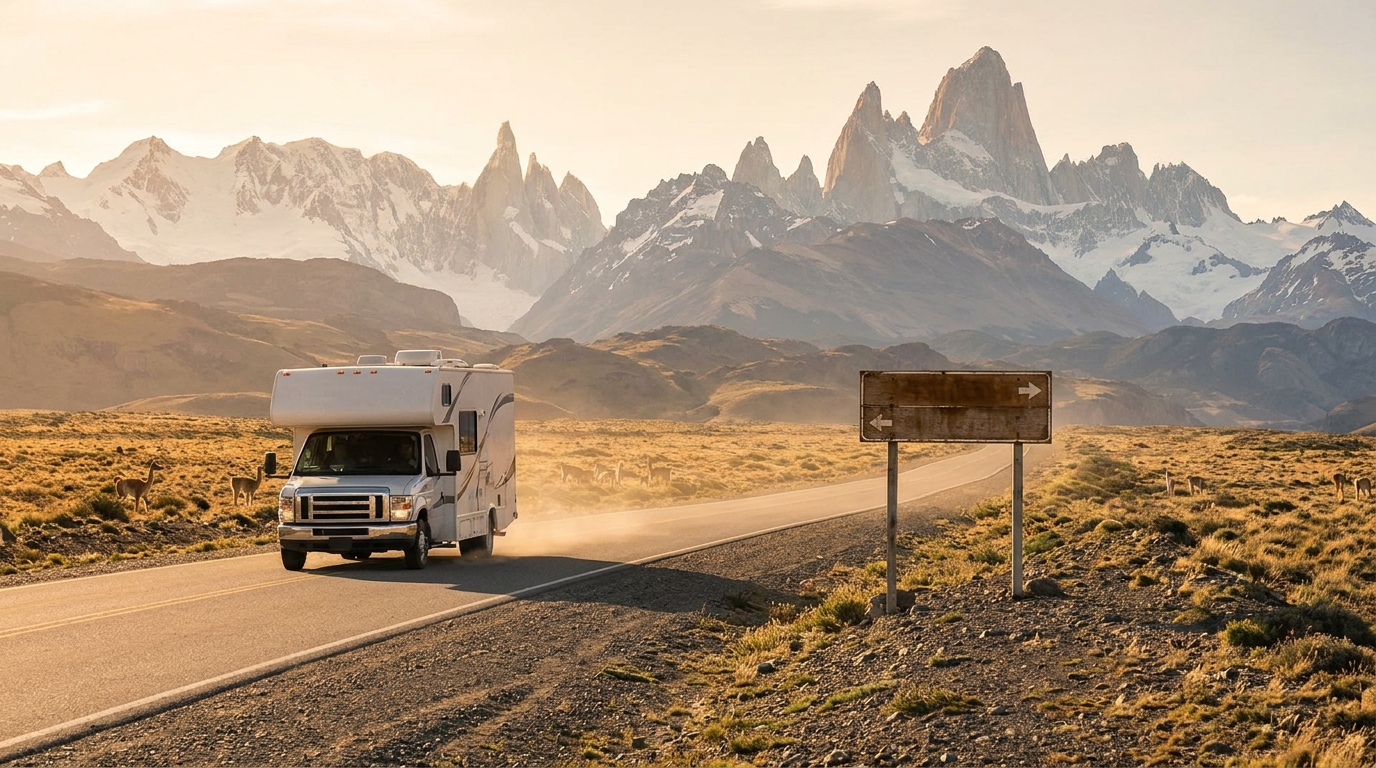
For live availability and current prices, start with our RV Rental South America - Complete Guide 2026 guide.
In This Guide
- Can You Drive an RV in South America? License & Age Rules
- Road Conditions & Terrain in South America
- RV Size Limits, Bridges & Restricted Zones
- Fuel: Diesel vs. Petrol & Cost per 100 km
- Tolls, Vignettes & Border Rules
- Driving Tips for last minute rv rental Travelers
- Recommended RV Class for South America Roads
- Should I Choose a Compact Van Instead of a Large RV in South America?
- Can I Park Anywhere? Free & Wild Camping Rules in South America
- Can I Drive an RV Into the City Center? Heights, Tunnels & Local Signage
- What is the 3-3-3 rule for RV travel?
- Can you RV in South America?
- Can you technically drive from North America to South America?
- What is the largest RV you can drive without a special license?
- What part of South America can you not drive through?
- How much does a 1 month trip to South America cost?
- Is it safe for US citizens to travel to South America right now?
- Can you get temporary RV insurance?
- Can you do travel insurance last minute?
Dreaming of an epic road trip through a continent of stunning contrasts, vibrant cultures, and breathtaking natural wonders? A last minute rv rental in South America offers unparalleled freedom to explore everything from the majestic Andes to the Amazon rainforest, and the vast plains of Patagonia. While last-minute planning has its unique challenges, it is absolutely possible and incredibly rewarding. To ensure a smooth adventure, start by consulting our RV Rental South America - Complete Guide 2024 for essential insights into planning your trip.
Can You Drive an RV in South America? License & Age Rules
Yes, you can confidently drive an RV in South America with the right documentation and awareness of local rules. A standard Class B or equivalent driver's license, valid for vehicles up to 3.5 metric tons (approximately 7,700 lbs) Gross Vehicle Weight Rating (GVWR), is typically sufficient for driving most rental motorhomes and campervans in South America. For foreign drivers, an International Driving Permit (IDP) is usually required in conjunction with their national driver's license, though specific requirements can vary significantly by country. For example, Argentina, Chile, and Peru often recommend or require an IDP for visitors, while Brazil might accept a national license for shorter stays. It's always a good practice to carry an IDP for smoother interactions with local authorities. The minimum driver age for RV rentals generally starts at 21 years across our trusted suppliers, and crucially, there are no young driver surcharges or vehicle class restrictions based on age with Bandana Caravan. This means adventurous young couples and families can also hit the road without extra worry.
Road Conditions & Terrain in South America
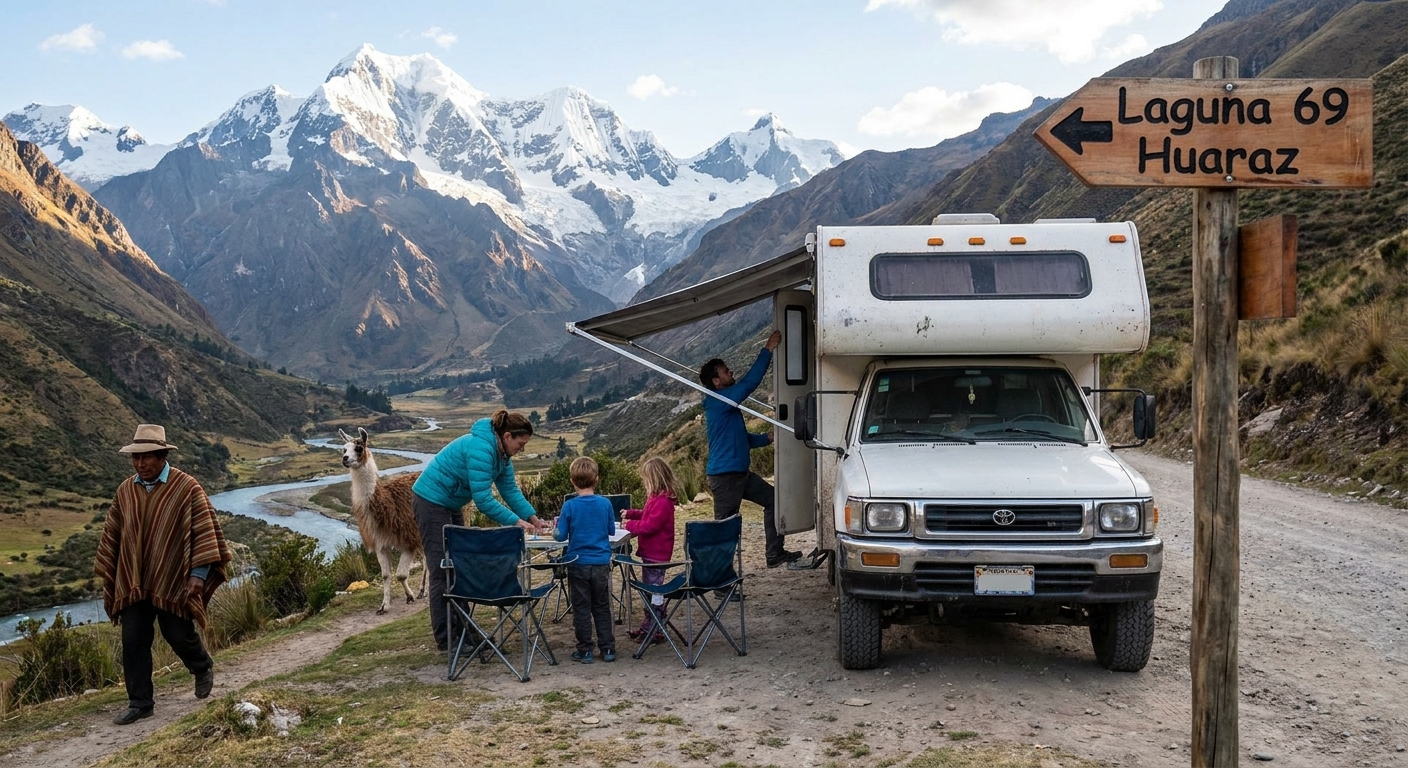
Road conditions in South America vary greatly, ranging from well-maintained, paved highways in major corridors to challenging unpaved, gravel, or dirt roads, especially in rural and mountainous regions like the Andes or Patagonia. For last-minute RV renters, flexibility and patience are key, as unexpected road closures due to weather (such as rainy season mudslides or snow in higher altitudes) or construction can occur without much notice. Driving a rented RV in South America often means embracing slower, scenic routes, which allows ample time for travel and enjoying the diverse landscapes from coastal roads to high-altitude passes and dense jungle fringes. Always plan to travel slowly, aiming for a maximum of 100-150 km per day on average, to truly absorb the beauty of the region. Many travelers find that a Class SI - Semi-integrated RV offers a great balance of comfort and agility for these varying terrains.
RV Size Limits, Bridges & Restricted Zones
While specific height, weight, and length limits for RVs are less uniformly enforced across South America compared to some other regions, drivers must be vigilant for local signage, particularly regarding low bridges, narrow tunnels, and weight-restricted roads. Environmental zones are less common for general RV access, but certain protected areas or national parks may have specific vehicle size or type restrictions that you should research in advance. Ferry services, particularly important for regions like Patagonia or crossing major rivers in places like the Amazon basin, typically accommodate various RV sizes, but it is advisable to book in advance for larger vehicles and always inquire about specific dimensions. For a comfortable trip, consider a Class SI - Semi-integrated RV, with Bandana's global fleet averaging 6.9 meters in length, which offers a good balance of living space and easier handling on varied roads.
Fuel: Diesel vs. Petrol & Cost per 100 km
Diesel fuel (Gasóleo or Diésel) is generally more prevalent and often cheaper than petrol (Gasolina or Nafta) in South America, making diesel RVs a practical choice for long-distance travel. Bandana's global fleet average for a Class SI - Semi-integrated RV typically consumes around 10-11 Liters/100 km, while a Class B - Camper Van averages 8-10 Liters/100 km. Fuel availability can be sparse in remote areas, necessitating careful planning for refueling stops, and quality may vary; carrying a spare fuel filter is a prudent measure. When planning your budget, remember that fuel costs will be a significant factor. For tracking all your trip expenses, from fuel to campsite fees, RV PLANET routes RV PLANET routes allow you to itemize and track every expense along the way for easy budgeting. On the routes offered through RV PLANET routes, you can itemize and track every expense along the way for easy budgeting.
Tolls, Vignettes & Border Rules
Tolls are common on major highways in many South American countries (e.g., Argentina, Chile, Brazil), typically paid in local currency or by card at toll booths, as vignettes are not widely used for RVs. Crossing international borders in an RV requires specific documentation, including vehicle registration, proof of ownership (or rental agreement), valid insurance (often requiring temporary local coverage), and sometimes temporary import permits like a Carnet de Passage en Douane, though this varies by country and vehicle origin. While some Bandana RVs may offer pre-purchased toll passes in other regions, this is less common or universally applicable in South America due to varied local systems; cash or card payment at the booth is the standard practice. Always have your documents easily accessible and expect some bureaucracy at border crossings. For detailed itineraries and planning tips specific to various regions, check out "RV Rental Deals in South America - Latest Offers 2024".
Driving Tips for last minute rv rental Travelers
Pacing yourself is crucial when traveling by last minute rv rental in South America. Given varying road conditions and scenery, plan shorter daily driving distances, especially if traveling with family, to allow for frequent stops and unexpected delays. Prioritizing safety means driving during daylight hours to mitigate risks from poor road conditions, stray animals, or security concerns; always ensure your rented RV is well-equipped with emergency supplies. Local knowledge is invaluable, so inquire with locals or other travelers about current road conditions, particularly for unpaved sections or border crossings, as information can change rapidly. For seamless navigation, download offline maps (e.g., Maps.me, iOverlander) as cellular data coverage can be sporadic, and consider a local SIM card for better connectivity in populated areas. Finally, carry sufficient local currency for tolls, small purchases, and potential minor border fees, and be prepared for potential bureaucratic processes at border crossings with patience and all necessary documents readily accessible.
🎬 Video coming soon
Recommended RV Class for South America Roads
For last-minute RV rentals in South America, a Class SI - Semi-integrated or Class B - Camper Van is often recommended for their balance of comfort and maneuverability on diverse road conditions. A Class SI - Semi-integrated RV, with Bandana's global fleet averaging 6.9 meters in length, offers a good balance of living space (typically sleeping 3.8 people) and easier handling than larger RVs, making it suitable for varying road quality. Alternatively, a Class B - Camper Van, averaging 5.8 meters in length and sleeping 3.2 people, provides excellent maneuverability for narrower roads and city driving, with a Bandana global fleet average fuel consumption of 8-10 Liters/100 km, making it economical. These sizes allow for comfortable living while remaining agile enough for the varied infrastructure of the continent. For those considering different budget levels, exploring options in "Cheap RV Rental in South America - Budget Guide 2024" or "Luxury RV Rental in South America - Premium Prices 2024" can help you find the perfect fit.
Should I Choose a Compact Van Instead of a Large RV in South America?
While a compact van offers superior maneuverability in tight city centers and on very narrow mountain passes, a larger RV generally provides significantly more comfort and indoor space, which often matters more for extended trips in South America. Most main roads and tourist routes in South America can comfortably accommodate standard-sized motorhomes (up to 7.5 meters). The added amenities like a full bathroom, kitchen, and dedicated sleeping areas in a larger RV like a Class SI or Class C often outweigh the minor maneuverability benefits of a compact van, especially for families or longer journeys. Opt for a compact van (Class B Camper Van) if your itinerary heavily features historic city centers, extremely remote off-road tracks, or if you prioritize fuel efficiency and nimble parking; otherwise, a larger RV will enhance your overall travel experience with more living space and amenities for cooking delicious RV-friendly recipes playlist on the go. Remember, driving slowly and carefully allows you to navigate almost anywhere without issues, regardless of RV size.
Can I Park Anywhere? Free & Wild Camping Rules in South America
Free or wild camping (boondocking) is widely practiced and generally tolerated in many rural areas of South America, particularly in countries with vast open spaces like Argentina and Chile, offering unique opportunities to connect with nature. Designated campgrounds, often basic but secure, are available in or near national parks and popular tourist destinations, providing facilities like water, electricity, and dump stations that are less common in wild camping spots. Rules regarding wild camping vary significantly by country, region, and even local municipality; always check local regulations, respect private property, leave no trace, and prioritize safety by choosing well-lit or visible locations. For finding campsites and campgrounds during your trip, we recommend using RV PLANET (rvplan.net) - a great resource for locating available spots along your route. You'll find a spot; if not at the first campground, then the next one. Always call ahead before driving.
Can I Drive an RV Into the City Center? Heights, Tunnels & Local Signage
Yes, you can almost always drive an RV into city centers in South America, but it requires careful attention to local signage, particularly regarding height limits, narrow streets, and designated environmental zones or residents-only areas. No need to stress - just use common sense and pay attention. Cities like Buenos Aires, Santiago, or Rio de Janeiro may have areas with lower tunnels, overhead cables, or historical districts with very narrow streets, so always observe maximum height and width restrictions clearly displayed. Parking a rented RV in city centers can be challenging due to limited space and security concerns; consider utilizing dedicated RV parking facilities outside the immediate core and using public transport or taxis for urban exploration. Remember, you can drive almost anywhere without issues if you drive slowly and carefully.
What is the 3-3-3 rule for RV travel?
The 3-3-3 rule for RV travel is a widely adopted guideline that suggests driving no more than 300 miles (approximately 480 km) a day, arriving at your destination by 3 PM, and staying for a minimum of 3 nights. This rule is designed to promote a relaxed travel pace, prevent driver fatigue, allow ample time for setup and enjoyment at each stop, and reduce the stress often associated with rushing through an RV trip. For a last-minute RV rental in South America, adhering to the 3-3-3 rule can be particularly beneficial due to varying road conditions and the desire to fully immerse in the diverse landscapes without feeling rushed. This slow travel approach perfectly aligns with the advice to average only 100-150 km per day, allowing you to truly connect with the culture, food, and scenery.
Can you RV in South America?
Yes, RV travel in South America is not only possible but offers an incredibly rewarding way to explore the continent's diverse landscapes and cultures at your own pace. From the Andean mountain ranges in Peru and Chile to the Patagonian steppes of Argentina and the vibrant coastal routes of Brazil, a rented motorhome or campervan provides flexibility, comfort, and direct access to many remote and beautiful destinations. Detailed planning regarding licensing, vehicle suitability, and border crossings, as outlined in other sections, will ensure a smooth and enjoyable last-minute RV adventure. Bandana Caravan, with over 20 years of experience, is a true RV specialist, not a travel agency side department, ensuring you receive the best guidance for your South American trip.
Can you technically drive from North America to South America?
Technically, one cannot drive continuously from North America to South America due to the impassable Darien Gap, a dense expanse of jungle and swampland spanning Panama and Colombia. This notorious 60-mile stretch is the only break in the entire 30,000-mile Pan-American Highway. Vehicles, including RVs, must be shipped across the Darien Gap via cargo container or roll-on/roll-off (RoRo) ferry services from Panama to a Colombian port (e.g., Cartagena) to continue the overland journey into South America. Planning for this crossing requires significant logistics, including customs procedures, shipping arrangements, and insurance, making it a crucial consideration for any North-to-South America RV trip. Most RV rental in South America journeys begin and end within the continent itself.
What is the largest RV you can drive without a special license?
In most South American countries, similar to international standards, you can typically drive an RV with a Gross Vehicle Weight Rating (GVWR) of up to 3,500 kg (approximately 7,700 lbs) using a standard Class B (or equivalent) driver's license. This weight limit generally covers a wide range of popular rental RVs, including Class B Camper Vans, Class SI Semi-integrated, and many Class C Alcove models, without requiring a commercial or heavy vehicle license. For example, a "cruise america rv rental example Explorer" Class C motorhome, measuring 7.1 meters in length with an 82 Liter fresh water tank and seating for 4, can be driven with a standard license. Always confirm the specific licensing requirements for the country you plan to rent in, as regulations can vary, and ensure your national license and recommended IDP cover the GVWR of your chosen rental RV.
What part of South America can you not drive through?
The primary part of South America that is impassable by road, directly impacting overland travel from North America, is the Darien Gap, a remote and undeveloped region bordering Panama and Colombia. This natural barrier, consisting of dense rainforest, mountains, and wetlands, has no roads and serves as a break in the Pan-American Highway, requiring all vehicles to be shipped by sea between Central and South America. Within South America itself, while there are challenging and unpaved roads and some areas may be seasonally inaccessible due to weather, there are no other major geographical regions that completely preclude vehicular travel. Roads in Patagonia, for instance, can be tough, but are generally navigable by appropriate rental RVs like a 4x4 Camper B - THOR, which features a Turbo Diesel engine and automatic or manual transmission.
How much does a 1 month trip to South America cost?
The cost of a 1-month RV trip in South America can vary widely, but a realistic budget often ranges from $2,500 to $6,000 USD, excluding the RV rental costs, depending on your travel style and the countries visited. Key cost components include fuel (e.g., Bandana's Class SI RVs average 10-11 Liters/100 km), campground fees (ranging from free wild camping to $15-$40/night for amenities), food (varying from local markets to restaurants), border crossing fees, and activities. For a last-minute RV rental, consider that rental prices can fluctuate based on season and availability. Factor in additional expenses such as optional top-level deductible reimbursement for extra peace of mind, propane for cooking and heating, dump fees, tolls, and potential maintenance. With RV PLANET routes RV PLANET routes, you can itemize and track every expense along the way for easy budgeting for your week-long trip or extended road trip.
Is it safe for US citizens to travel to South America right now?
For US citizens, traveling to South America is generally safe, but safety levels vary significantly by country and region, necessitating thorough research and adherence to local advisories. Common safety recommendations for RV travelers include avoiding driving at night, securing your rented vehicle, being aware of your surroundings, and safeguarding valuables, especially in urban areas or less frequented regions. It is always advisable to check the latest travel advisories from the U.S. Department of State (2024) for specific countries and to purchase comprehensive travel insurance that includes emergency medical and evacuation coverage. Bandana Caravan is with you before, during, and after your booking, offering supportive service to help you prepare for a secure and enjoyable journey.
Can you get temporary RV insurance?
Yes, temporary RV insurance is often available and frequently required for foreign-registered RVs when traveling through South American countries. Many countries will require you to purchase local third-party liability insurance at the border or from local providers, as your existing international policy may not be valid or sufficient for their legal requirements. For a last-minute RV rental, inquire with your rental company about insurance coverage provided and any additional temporary local insurance you might need to purchase at border crossings to ensure full compliance and peace of mind. Bandana Caravan offers full transparency, so there are no hidden fees or surprises regarding insurance, and we clearly outline what is included and what is an optional upgrade, such as top-level deductible reimbursement.
Can you do travel insurance last minute?
Yes, you can typically purchase travel insurance last minute, even on the day of your departure, but certain benefits like 'Cancel for Any Reason' or coverage for pre-existing conditions may have strict eligibility windows that you might miss. Last-minute travel insurance is crucial for covering unforeseen medical emergencies, trip interruptions, lost luggage, and potential costs associated with RV travel, such as vehicle breakdown assistance. When booking a last-minute RV rental in South America, ensure your travel insurance policy covers your destination, planned activities, and any specific RV-related risks, verifying the policy's terms and conditions before purchasing. Our 24/7 support means real people are behind you to assist with pre-booking comparisons and post-booking coordination, ensuring you have all the information needed to secure appropriate insurance.
What You Shouldn't Miss
- **Patagonia's Epic Routes:** Drive the Ruta 40 in Argentina or the Carretera Austral in Chile for breathtaking glaciers, mountains, and wildlife.
- **Atacama Desert Wonder:** Explore the otherworldly landscapes of Chile's Atacama Desert, famous for its lunar valleys and incredibly clear night skies.
- **Wine Country Adventures:** Journey through the renowned wine regions of Mendoza, Argentina, or Chile's Colchagua Valley, offering tastings and picturesque vineyards.
- **Brazilian Coastal Charm:** Discover the diverse ecosystems of Brazil, from the stunning beaches of Florianópolis to the unique wetlands of the Pantanal.
- **Andean History in Peru:** Visit ancient Inca ruins around Cusco and the Sacred Valley, using your RV as a mobile base for cultural immersion.
- **Colombian Coffee & Culture:** Experience the vibrant culture and natural beauty of Colombia, particularly its lush coffee region and colonial towns.
Looking for expert insights from Avi Bandana? Top 5 Adventures - recommendations from Avi Bandana
Final Thoughts
Embarking on a last-minute RV driving adventure in South America is an incredible opportunity to explore a diverse and vibrant continent on your own terms. While a spontaneous trip requires a bit of adaptability, the rewards of connecting with nature, culture, and cuisine at your own pace are truly priceless. Remember our key advice: plan shorter driving distances, carry necessary documents like your IDP, and choose an RV size that balances comfort with maneuverability for the varied terrain.
Whether you're exploring the historic towns of Colombia or traversing the dramatic landscapes of Argentina, a rented motorhome offers the ultimate freedom. With Bandana Caravan, you benefit from full transparency, dedicated 24/7 pre-booking support, and the expertise of true RV specialists who understand what makes a memorable journey. So, go ahead, get inspired, and let the open roads of South America call to your adventurous spirit.
Compare Last-Minute Motorhome Prices for South America today and discover your next unforgettable journey!