
In This Guide
- Can You Drive an RV in Maine? License & Age Rules
- Road Conditions & Terrain in Maine
- RV Size Limits, Bridges & Restricted Zones
- Fuel: Diesel vs. Petrol & Cost per 100 km
- Tolls, Vignettes & Border Rules
- Driving Tips for last minute rv rental Travelers
- Recommended RV Class for Maine Roads
- Should I Choose a Compact Van Instead of a Large RV in Maine?
- Can I Park Anywhere? Free & Wild Camping Rules in Maine
- Can I Drive an RV Into the City Center? Heights, Tunnels & Local Signage
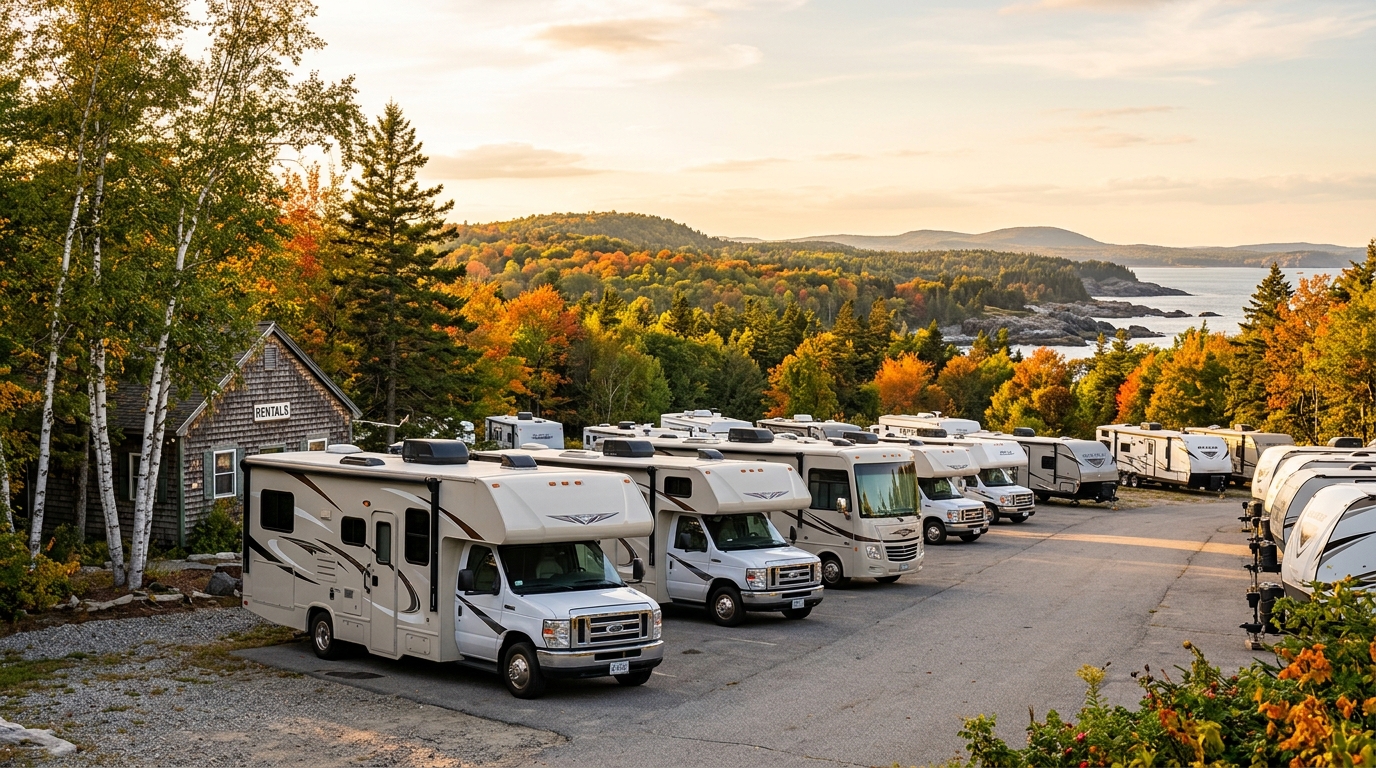
Maine, the "Pine Tree State," beckons with rugged coastlines, pristine lakes, and vast forests, making it an ideal destination for a memorable last minute RV rental adventure. With a rented motorhome, you have the freedom to chase the vibrant fall foliage, discover charming seaside towns, or explore the tranquility of its expansive wilderness at your own pace. Whether you're a seasoned RVer or planning your first mobile home trip, understanding the local driving rules and nuances is key to a smooth journey.
For live availability and current prices, start with our RV Rental Maine - Complete Guide 2026 guide. Bandana Caravan is a true RV specialist, focused exclusively on RV travel, offering unmatched personal experience and attention to the smallest details to ensure your Maine adventure is truly exceptional. We believe in full transparency, so you'll never encounter hidden fees or unwelcome surprises with us.
Can You Drive an RV in Maine? License & Age Rules
In Maine, most standard recreational vehicles (RVs) can be driven with a regular Class C driver's license, provided their Gross Vehicle Weight Rating (GVWR) is under 26,001 pounds.
A commercial driver's license (CDL) is generally only required for motorhomes exceeding this weight or carrying hazardous materials, which is exceptionally rare for any rental RV. The minimum driver age for a last minute rv rental in Maine typically is 21 years old, with no young driver surcharges or vehicle class restrictions based on age, even though Maine allows 18-year-olds to hold a Class C license. Foreign drivers can generally use their valid driver's license from their home country for up to one year, but an International Driving Permit (IDP) is highly recommended for translation and ease of identification by law enforcement. We ensure clarity on all licensing requirements during the booking process, offering full transparency from the start.
Road Conditions & Terrain in Maine
Maine offers a diverse range of road conditions and terrain, from well-maintained interstate highways to narrow, winding coastal roads and gravel paths, which last minute RV renters should be prepared to navigate.
Major arteries like I-95 are generally smooth, but secondary state routes can be less consistent, especially in rural areas, with some frost heaves and potholes particularly outside the peak summer season. The terrain varies from flat coastal plains to the rolling hills and mountains of inland and northern Maine, including areas like the Appalachian Trail corridor, requiring careful driving on inclines and declines. Coastal routes, while incredibly scenic, can be narrow and winding, with limited shoulders and congestion in popular towns like Bar Harbor or Kennebunkport during summer, necessitating slower speeds and increased vigilance for larger motorhomes. Gravel roads are common for accessing state parks, campgrounds, and private lands; always ensure your rental agreement covers driving on unpaved surfaces. We strongly encourage slow, scenic driving, averaging a maximum of 100-150 km per day, to fully appreciate Maine's natural beauty and ensure safety, especially when unfamiliar with the roads.
RV Size Limits, Bridges & Restricted Zones
While Maine's road network generally accommodates RVs, drivers should be aware of potential height and weight restrictions, particularly regarding historic covered bridges, ferry services, and certain park roads.
Standard RVs typically fit most roads; however, specific local restrictions, like those found on some scenic coastal routes or within older towns, can pose challenges for larger rigs. Maine is famous for its historic covered bridges, many of which have strict height and weight limits-some as low as 8 feet high or 3 tons-which are always clearly marked, so caution and planning are essential. Ferry services to islands like Monhegan or Cranberry Isles often have length and weight restrictions, and reservations are highly recommended, especially for motorhomes. Acadia National Park's historic carriage roads are strictly off-limits to motorized vehicles, and some park areas may have specific RV length limits for parking or camping, though main park roads are generally accessible. Always pay attention to roadside signage, particularly for low bridge warnings and road closures, as these can change seasonally.
🎬 Video coming soon
Fuel: Diesel vs. Petrol & Cost per 100 km
RVs in Maine typically run on either petrol (gasoline) or diesel, with fuel availability generally good along major routes, though it's wise for last minute RV renters to plan stops in more remote regions to manage costs and ensure supply.
Most smaller Class B Campervans and some Class SI Semi-integrated RVs use petrol, while larger Class C Alcove and Class A Integrated motorhomes often run on diesel. Bandana's fleet typically consumes around 8-10 Liters/100 km for Class B Camper Vans and 10-12 Liters/100 km for Class C Alcove motorhomes. Based on an average fuel price of approximately $0.95 per liter, an RV trip in Maine can cost approximately $8.80 to $18.70 per 100 km for fuel, subject to current market prices. Diesel is widely available at truck stops and larger service stations, but some smaller, rural gas stations may only carry petrol, making planning for diesel rigs important. When budgeting for these ancillary costs, remember that RV PLANET routes allow travelers to itemize and track every expense along the way for easy budgeting. Some RV rental providers, including certain Bandana partners like El Monte and Cruise America, may offer fuel discount cards or loyalty programs that can help reduce costs during your trip. On the routes offered through RV PLANET routes, you can itemize and track every expense along the way for easy budgeting.
Tolls, Vignettes & Border Rules
Maine primarily utilizes toll roads on the Maine Turnpike (I-95) and some bridges, which last minute RV renters should account for, as the state does not use vignettes, and border crossings are typically straightforward with Canada.
Maine's tolls are primarily on the Maine Turnpike (I-95), stretching from Kittery to Augusta, with varying rates depending on entry/exit points and vehicle class; RVs typically pay higher rates due to additional axles. Payment options include E-ZPass transponders or cash lanes; E-ZPass is the most convenient, as some exits may not have cash lanes. No vignettes are required for driving a rented RV in Maine or the surrounding New England states. Border crossings into Canada, such as New Brunswick or Quebec, require valid passports for all occupants and proof of vehicle registration/rental agreement; checking specific rules for bringing pets is also advisable. Many Bandana partners offer the option to pre-purchase or rent an E-ZPass transponder, allowing for electronic toll collection and potentially avoiding higher cash rates or fines for missed tolls.
Driving Tips for last minute rv rental Travelers
Effective driving tips for last minute RV renters in Maine focus on safety, planning, and embracing the scenic pace, ensuring a smooth and enjoyable journey through varied terrain.
Plan Your Route Carefully: Utilize GPS with RV-specific settings to avoid low bridges, narrow roads, or unsuitable terrain, especially when exploring lesser-known areas away from popular spots. Consider routes and itineraries designed by professionals through RV PLANET (rvplan.net) to help you discover top destinations and plan your trip with minimal effort and maximum enjoyment. Embrace the Pace: Maine's charm often lies in its scenic drives; avoid rushing and allow extra time for travel, particularly on coastal routes or during peak season, to truly enjoy the journey and avoid stress. We recommend traveling slowly, averaging a maximum of 100-150 km per day, to take time to feel the place, connect to the culture, the food, and the scenery.
Regular Stops for Families: If traveling with family, plan frequent stops every 2-3 hours at state parks, rest areas, or quaint towns to allow children to stretch, play, and explore, enhancing the overall pet and kid-friendly experience. Preparing meals in your rented motorhome's kitchen can also be a delightful experience; find inspiration in our RV-friendly recipes playlist. Budget-Conscious Fueling: Monitor fuel levels closely, especially in remote areas where stations are sparse, and consider signing up for gas station loyalty programs or using rental provider fuel cards to manage costs effectively. Practice Parking & Maneuvering: Before heading out, spend a little time in a large, empty lot practicing turns, backing up, and understanding your RV's dimensions, as parking spots in charming Maine towns can be snug. Prepare for Connectivity Gaps: Be aware that cellular service can be spotty in remote parts of Maine; download offline maps and consider alternative communication methods for emergencies. Looking for expert insights from Avi Bandana? Check out our Top 5 Adventures - recommendations from Avi Bandana.
Recommended RV Class for Maine Roads
For navigating Maine's diverse landscapes, a Class B Camper Van or a Class SI Semi-integrated RV often provides an ideal balance of maneuverability, comfort, and accessibility for last minute renters.
Class B Camper Vans: Averaging 5.8 meters in length, these are excellent for Maine, offering easy maneuverability on narrow coastal roads and fitting into standard parking spots. They provide sleeping for an average of 3.2 people (2.7 adults) and are fuel-efficient (typically 8-10 Liters/100 km), making them perfect for exploring towns and national parks with ease. Consider models like the "2 Berth Hi Top" or the "Active Pop Top" for agile travel. Class SI Semi-integrated RVs: With an average length of 6.9 meters, these strike a great balance, offering more interior space (average 3.8 sleeping places, 3.4 adults) and amenities than a Class B, while still being manageable on most Maine roads. Their fuel consumption is typically 10-11 Liters/100 km, making them a comfortable choice for families or couples seeking more space without sacrificing too much agility. Examples include the "2 Berth Rover" or "Comfort Standard".
While larger Class C and Class A RVs offer more luxury and space, their increased length (around 7.5 meters for Class C like the "24' Class C Motorhome", or longer for Class A like the "Class A - Thor ACE 30") might be less convenient for some of Maine's tighter roads and smaller campgrounds. The choice depends on your group size and desired level of comfort versus ease of driving and parking, but the Class B and SI provide great versatility for Maine's unique geography. For those considering a one-way adventure, explore options in our One-Way RV Rental in Maine - Price Guide 2026.
Should I Choose a Compact Van Instead of a Large RV in Maine?
While a compact van (Class B Camper Van) offers superior maneuverability and easier parking in Maine's quaint towns, a larger RV provides significantly more living space and amenities, often making the trade-off worthwhile as most Maine roads can accommodate bigger rigs.
Compact Van Advantages: Class B Camper Vans (average 5.8m length) excel in navigating narrow coastal routes, fitting into standard parking spaces, and offer better fuel efficiency (8-10 Liters/100 km), which is beneficial for exploring dense historic centers like Kennebunkport or Bar Harbor. These smaller motorhomes, such as a "campervan hire new zealand example Aquila" or "Active Standard Auto", are popular among couples or solo travelers. Larger RV Advantages: Class C Alcove (average 7.5m length, like a "29′ Class C Motorhome") or Class SI Semi-integrated (average 6.9m length, like a "4 Berth Adventurer") RVs provide more comfortable indoor living space, larger kitchens, separate sleeping areas, and more storage, ideal for families (Class C averages 5.8 sleeping places / 4.4 adults) or longer trips. These larger models, such as a "cruise america rv rental example Explorer", offer amenities like bigger refrigerators and more dining space. Road Accommodation: Most primary and secondary roads in Maine are well-suited for larger RVs; the primary challenges are specific low bridges (always marked) or very tight turns in select older villages, which can usually be navigated with careful planning. Comfort vs. Agility: The decision largely hinges on your priority: maximum agility and easier town access with a compact van, or greater comfort, space, and amenities with a larger RV, where the occasional extra effort in maneuvering is often offset by the enhanced living experience. For a last minute rental, availability might also play a role, but both options are generally suitable for exploring the vast majority of Maine. For more detailed pricing information, consider our Family RV Rental in Maine - Pricing Guide 2026 or our RV Rental in Maine - Prices and Best Deals 2026.
Can I Park Anywhere? Free & Wild Camping Rules in Maine
In Maine, free and wild camping is generally restricted on private land without explicit permission and in many developed public areas, making designated campgrounds or specific public lands with primitive camping rules the primary options for overnight RV parking.
Private Land: Camping on private property is strictly prohibited without the landowner's express consent; trespass laws are enforced rigorously. State Parks & Public Lands: Maine State Parks and Public Lands generally require camping in designated sites, often with a fee. Reservations are highly recommended, especially during peak season, even for last minute plans. Dispersed Camping: Limited dispersed or "boondocking" opportunities exist on some parcels of Maine Public Reserved Lands (MPRL) and within certain areas of the vast North Maine Woods, which often requires permits or fees and adherence to strict Leave No Trace principles. Retailer Parking Lots: Some large retail chains, such as Walmart or Cabela's, may permit overnight RV parking, but this varies by individual store manager and local ordinances; always ask permission inside the store first. Rest Areas: Overnight sleeping in rest area parking lots is generally intended for drowsy drivers and not for multi-night camping; always check signage for specific time limits. Rules vary by region-always check local regulations and follow local law before parking overnight, and be prepared to use designated campgrounds for most of your stay.
Can I Drive an RV Into the City Center? Heights, Tunnels & Local Signage
Yes, RVs can generally be driven into most city and town centers in Maine, but drivers must remain highly vigilant for local signage indicating height restrictions, low bridges, narrow streets, and limited parking.
Drive slowly and carefully, and you can drive almost anywhere without issues. No need to stress-just use common sense and pay attention. Major cities like Portland, Bangor, and Augusta, as well as popular coastal towns such as Kennebunkport, Bar Harbor, and Camden, are accessible by RV on main roads. While most main thoroughfares are clear, older downtown areas and historic districts may have low overhead clearances, like train bridges or old building overhangs, or narrow streets that make maneuvering large RVs challenging. Finding suitable and legal RV parking in bustling city centers can be very difficult; consider utilizing peripheral parking lots or park-and-ride options and using public transport or walking into the core. Always pay close attention to signs indicating vehicle dimensions, weight limits, "no RV" zones, or "residents only" parking, as these override general assumptions. Maine does not currently have specific environmental zones that restrict RV access based on emissions, unlike some European cities, but local anti-idling ordinances may apply. For more budget-friendly options, check our Cheap RV Rental in Maine - Budget Guide 2026 and RV Rental Deals in Maine - Latest Offers 2026.
What You Shouldn't Miss
- Explore Acadia National Park: While popular, no trip to Maine is complete without experiencing the rugged beauty of Acadia. Drive the scenic Park Loop Road, hike Cadillac Mountain for sunrise, and enjoy popovers at Jordan Pond. Many campgrounds in and around the park, like Blackwoods and Seawall, can accommodate rental motorhomes.
- Coastal Route 1 Road Trip: Drive portions of U.S. Route 1, winding through picturesque towns like Camden, Rockland, and Boothbay Harbor. Stop at local seafood shacks for fresh lobster rolls and discover artisan shops. Remember our advice to travel slowly, max 100-150 km per day, to truly savor these charming coastal communities.
- Discover the North Maine Woods: For a more off-the-beaten-path experience, venture into the vast North Maine Woods. This expansive, privately owned forest land offers primitive camping, fishing, and wildlife viewing, including moose. Permits and fees are often required, so plan ahead.
- Visit a Lighthouse: Maine boasts 65 lighthouses, each with its own story. Park your rental campervan and visit iconic beacons like Pemaquid Point Light, Bass Harbor Head Light, or the postcard-perfect Nubble Light in York.
- Indulge in Wild Blueberries: If your trip is in August, make sure to seek out local farms or roadside stands for Maine's famous wild blueberries. They're smaller, sweeter, and more intensely flavored than cultivated varieties.
- Take a Ferry to a Quiet Island: Escape the mainland bustle with a ferry ride to one of Maine's islands, such as Monhegan Island or the Cranberry Isles. While RVs may have restrictions on ferries, a day trip on foot or bicycle offers a unique perspective of Maine's maritime culture.
Looking for expert insights from Avi Bandana? Top 5 Adventures - recommendations from Avi Bandana will inspire your journey.
Final Thoughts
Embarking on a last minute RV rental adventure in Maine offers unparalleled freedom to explore its rugged coastlines, serene lakes, and charming towns. From navigating scenic routes to finding the perfect campsite, a little preparation goes a long way. Remember, flexibility can open doors to incredible experiences and even some great deals on your rental motorhome.
Whether you dream of waking up to the sound of ocean waves or the quiet rustle of pine trees, Maine with a rented campervan provides a canvas for unforgettable memories. With our transparent pricing and dedicated support, planning your journey is as enjoyable as the trip itself. Start dreaming, start planning, and get ready to discover the magic of Maine.
Discover top destinations and planning tips all in one place! Find last minute RV rentals in Maine and embark on your next adventure today.
