In This Guide
- Can You Drive an RV in Africa? License & Age Rules
- Road Conditions & Terrain in Africa
- RV Size Limits, Bridges & Restricted Zones
- Fuel: Diesel vs. Petrol & Cost per 100 km
- Tolls, Vignettes & Border Rules
- Driving Tips for last minute rv rental Travelers
- Recommended RV Class for Africa Roads
- Should I Choose a Compact Van Instead of a Large RV in Africa?
- Can I Park Anywhere? Free & Wild Camping Rules in Africa
- Can I Drive an RV Into the City Center? Heights, Tunnels & Local Signage
- What is the 3-3-3 rule for RV?
- Can I drive in Africa with a US license?
- What is the largest RV you can drive without a special license?
- Is it legal to sleep in an RV while driving?
- Is it safe to drive through Africa?
- What countries are RV friendly?
- How far to drive RV in a day?
- Is it possible to drive to Africa from America?
- Can you rent an RV with a normal license?
- What license is required for a motorhome?
Embarking on a last minute RV rental in Africa offers an unparalleled sense of adventure, promising diverse landscapes, vibrant cultures, and unforgettable wildlife encounters. Whether you're a seasoned RVer or a first-timer, navigating the continent requires a bit of thoughtful preparation. For live availability and current prices, start with our RV Rental Africa - Complete Guide 2026 guide. Even for spontaneous planners, knowing the essentials about driving conditions, vehicle suitability, and local regulations will ensure your journey is smooth and spectacular. Our aim is to provide you with a quick plan for those spontaneous decisions, so you can confidently hit the road.
Can You Drive an RV in Africa? License & Age Rules
Yes, most international drivers can operate standard rented RVs (under 3,500 kg Gross Vehicle Weight Rating) in many African countries with their valid national driving license, often supplemented by an International Driving Permit (IDP).
Driver age requirements for RV rentals typically start at 21 years old across the continent. While some companies may have specific rules, you generally won't encounter surcharges or vehicle class restrictions for drivers over 21. For instance, a driver from the US or Europe holding a standard license can usually rent a Class B Camper Van or a Class C motorhome like the MC 4-32 (5.99m length) in South Africa without issues. Specific licensing requirements do vary significantly by African nation; it's always wise to research your destination country's Department of Transport regulations or consult a local embassy for precise details before your trip. For those considering a spontaneous adventure, understanding these foundational rules is an essential part of preparing for your last minute rv rental in Africa.
Road Conditions & Terrain in Africa
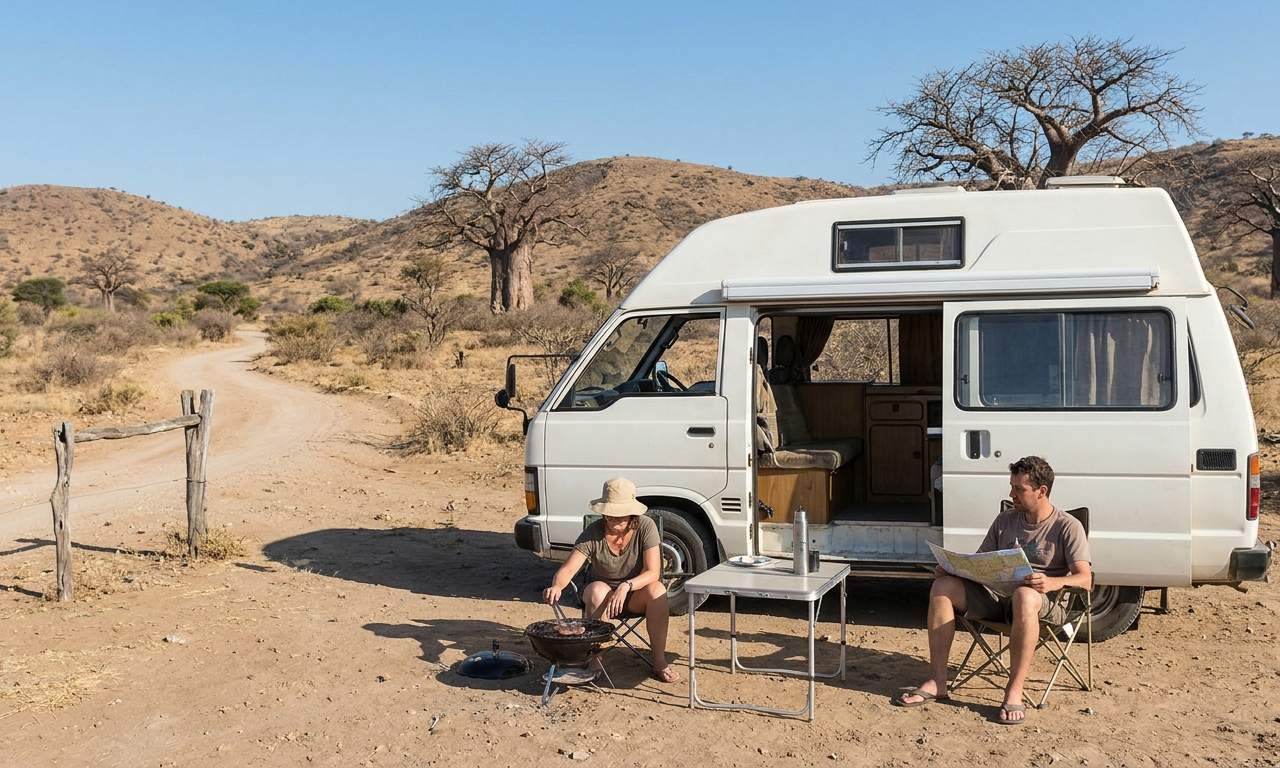
African road conditions offer a dramatic spectrum, from well-maintained tarmac highways in major cities and popular tourist corridors to unpaved gravel, sand, and challenging dirt tracks in more rural and wilderness areas.
Travelers with a last minute RV rental should prepare for incredibly diverse terrains including mountainous passes, extensive desert stretches, and the potential for potholes and frequent wildlife crossings. Choosing a robust rented RV, such as a 4x4 camper or a durable semi-integrated model, is often recommended for navigating the rougher roads common in popular destinations like Namibia or Botswana. For instance, a Class SI - Semi-integrated RV (average length 6.9m) can comfortably handle many regional routes. Embrace slow, scenic driving, especially on secondary roads, allowing ample time for unexpected stops, thrilling wildlife viewing, and safely adapting to changing road conditions. Remember, the journey is as much a part of the adventure as the destination.
RV Size Limits, Bridges & Restricted Zones
While explicit RV size limits, strict bridge clearances, and widespread restricted zones are less common in Africa compared to some highly urbanized regions globally, drivers should always remain keenly aware of their rented RV's dimensions, particularly its height and weight.
Larger motorhomes might face slight challenges on narrow village roads, within certain national parks that impose track limitations, or when traversing older, smaller bridges, especially in very remote areas. Always pay close attention to local signage, which will clearly indicate any height, weight, or length restrictions for specific roads, tunnels, or park entrances. There’s no need to stress about driving a larger Class A or C motorhome; just use common sense and pay attention. For example, a 7.5m long Class C - Alcove RV will generally fit, but requires awareness in tight spots. When planning ferry crossings, particularly for coastal routes or island access like those near Mozambique, always verify your RV's exact length and weight as fees are typically calculated by size.
Fuel: Diesel vs. Petrol & Cost per 100 km
Most motorhomes available for rent in Africa, including Bandana's global fleet, primarily operate on diesel, which is generally more widely available in rural African regions compared to petrol.
Based on our global fleet averages, a Class SI - Semi-integrated RV typically consumes 10-11 Liters/100 km, while Class C - Alcove RVs use 10-12 Liters/100 km. More fuel-efficient Class B - Camper Vans, such as the V3 model (6.36m length), average 8-10 Liters/100 km, indicating diesel as the common and practical fuel type for most RV adventures. Fuel costs vary significantly across African countries; it's essential to budget for potentially higher prices in remote areas and always refuel when possible, as stations can be scarce along some routes. For easy budgeting and to itemize every expense along the way, consider using RV PLANET routes to plan your itinerary, which helps track costs beyond the initial rental. If you're planning on cooking many meals to save on food costs, check out our RV-friendly recipes playlist for delicious and simple meal ideas on the go! On the routes offered through RV PLANET routes, you can itemize and track every expense along the way for easy budgeting.
Tolls, Vignettes & Border Rules
Toll roads and vignette systems in Africa are highly variable and country-specific, rather than a unified continental system, so research for your specific itinerary is key.
In countries like South Africa, major highways may feature electronic or manual toll plazas; it's advisable to carry local currency for cash payments or inquire about e-tag options, if available, for your rented motorhome. When crossing borders between African countries in an RV, expect detailed procedures including passport control, obtaining temporary vehicle permits (Temporary Import Permits), and potentially paying carbon taxes or road usage fees. For a smooth transit, always ensure all vehicle documentation, including your rental agreement, proof of ownership, and insurance, is in impeccable order and easily accessible for border officials, as rules vary widely and are often rigorously enforced. Our RV Rental Africa - Complete Guide 2026 offers more detailed insights into planning your journey.
Driving Tips for last minute rv rental Travelers
For a successful last minute rv rental adventure in Africa, prioritizing safety is paramount: drive defensively, maintain ample following distance, and strictly avoid driving at night due to poor visibility, pedestrians, livestock, and unlit vehicles.
Stay informed by checking local travel advisories for your chosen route and register with your embassy; communication can be limited in remote areas, so carrying a satellite phone or an emergency beacon is highly recommended. Always pack essentials like extra water, a spare tire, basic repair tools, and a comprehensive first-aid kit, as services can be far apart in the vast African landscapes. Embrace cultural sensitivity: be respectful of local communities, slow down in villages, greet locals, and understand that customs and etiquette vary greatly across Africa. Planning your route diligently, even for last minute trips, is crucial, acknowledging that unexpected delays are common; flexibility and patience are key to an enjoyable and immersive African RV adventure. Remember to travel slowly, max 100-150 km per day on average, to truly connect to the culture, food, and scenery.
Recommended RV Class for Africa Roads
For diverse African road conditions, including gravel and dirt tracks, Class B - Camper Vans (with an average length of 5.8m) or Class TC - Truck Campers (average length 5.5m) like the "Patagonia Camper 4x4 double cab" are often recommended for their superior maneuverability and robustness.
However, many popular African RV destinations, such as Namibia and South Africa, also comfortably accommodate Class SI - Semi-integrated RVs (average length 6.9m) and Class C - Alcove RVs (average length 7.5m) on primary routes and well-maintained secondary roads. Models like the MC 4-32 (5.99m length) and MC 4-69 (6.99m length) found in South Africa demonstrate that both compact and medium-sized motorhomes are perfectly suitable for regional travel. While larger Class A - Integrated RVs (average length 7.5m) offer significant comfort and amenities, their size and typically lower ground clearance can present a disadvantage on particularly unpaved or less-maintained roads, making smaller or medium-sized options more versatile for a spontaneous African road trip.
Should I Choose a Compact Van Instead of a Large RV in Africa?
Generally, there is no inherent issue driving any RV size in African countries, and often the enhanced comfort and expansive indoor space of a larger RV outweigh slight maneuverability advantages of a compact van, especially on longer journeys through diverse landscapes.
A compact campervan (like a Class B Camper Van with an average length of 5.8m) can be genuinely helpful when navigating very tight historic centers (though less common for RVs in Africa), extremely narrow mountain passes, or challenging 4x4 specific tracks. For most major tourist routes and national parks in RV-friendly African countries, a larger Class C motorhome (average 7.5m) or a Semi-integrated RV (average 6.9m) provides a more comfortable living space, larger water/waste tanks, and a wider array of amenities without significant driving limitations. No need to stress about driving a larger vehicle – just use common sense and pay attention. The trade-off truly depends on your specific itinerary for your last minute rv rental: if extreme off-roading is paramount, a purpose-built 4x4 compact camper is ideal; for a balance of comfort and accessibility on varied roads, a medium-sized RV is often preferred.
Can I Park Anywhere? Free & Wild Camping Rules in Africa
Free and wild camping rules in Africa are highly varied and generally stricter within national parks, protected areas, and private lands, where designated campsites or permits are often mandatory for your rented motorhome.
While informal overnight parking might occur in very remote, unpopulated areas, it is generally not advised due to safety concerns, lack of facilities, and potential environmental impact. Many African countries, especially popular RV destinations like Namibia and South Africa, actively encourage camping in established campsites within national parks or private reserves, which offer security and essential amenities. Always prioritize safety and legality by seeking out official campsites or private accommodations; local rules vary by region, so always check local regulations and follow local law before parking your rented RV overnight. For finding campsites and campgrounds during your trip, we recommend using RV PLANET (rvplan.net) – a great resource for locating available spots along your route.
Can I Drive an RV Into the City Center? Heights, Tunnels & Local Signage
In most African cities, driving a rented RV into the city center is generally possible, though it requires careful attention to local signage regarding height limits, tunnels, low bridges, and potential environmental or residents-only zones.
Major African cities typically have wider roads and less stringent historical district restrictions compared to some European counterparts, making RV access more feasible. Always pay close attention to local signage for any specific height or weight restrictions, particularly around older infrastructure or designated areas. No need to stress - just drive slowly and carefully, and you can drive almost anywhere without issues. While explicit regional data for city-center restrictions in Africa is not extensively provided, the general rule is to be cautious, utilize GPS with your RV's dimensions inputted, and consider parking on the outskirts and using public transport for central exploration if you are unsure or want to avoid busy areas.
What is the 3-3-3 rule for RV?
The "3-3-3 rule" for RV travel suggests driving no more than 300 miles (or roughly 480 kilometers) a day, arriving at your destination by 3 PM, and staying for at least 3 days, providing a guideline for comfortable and stress-free RV travel.
This rule is designed to prevent driver fatigue and allow ample time for relaxation and local exploration, which is crucial when enjoying a last minute rv rental in Africa. While a useful general principle, adapting the 3-3-3 rule for African RV adventures is essential, as varied road conditions, fuel availability, and unforeseen delays may necessitate shorter daily driving distances and more flexible timing. Adhering to the "arrive by 3 PM" aspect is particularly important in Africa for finding secure camping spots before dark and avoiding nocturnal driving hazards like wildlife or unlit obstacles, emphasizing the slow travel recommendation of 100-150 km per day.
Can I drive in Africa with a US license?
While many African countries will accept a valid US driver's license for short-term tourist visits, it is highly recommended and often required to carry an International Driving Permit (IDP) alongside your US license when driving a rented RV in Africa.
The IDP translates your US license into multiple languages, significantly facilitating understanding by local authorities and meeting the diverse, country-specific licensing requirements often found across African nations. For certain countries or longer stays, obtaining a temporary local permit might also be necessary; always verify the specific requirements for each African country you plan to visit by contacting its embassy or consulate well before your departure. Failure to have the correct documentation, including an IDP, can lead to fines, difficulties with rental agencies, or complications with insurance coverage for your last minute rv rental.
What is the largest RV you can drive without a special license?
In most countries, including many in Africa, you can drive RVs up to 3,500 kg (7,700 lbs) Gross Vehicle Weight Rating (GVWR) with a standard Class B (or equivalent "normal") driver's license.
This weight threshold typically covers most Class B - Camper Vans (like the "Active Compact Select" with automatic transmission), Class SI - Semi-integrated RVs (average length 6.9m), and even some smaller Class C - Alcove RVs (average length 7.5m). Larger motorhomes, such as substantial Class A - Integrated models or some full-sized Class C RVs, may exceed the 3,500 kg limit, requiring a higher license category (e.g., C1 in Europe or specific endorsements in other regions). Always check the specific GVWR of your rented RV and compare it against the weight limits of your domestic driver's license and the regulations of the African countries you intend to visit, especially for a last minute rv rental where specific vehicle details might be confirmed closer to pickup.
Is it legal to sleep in an RV while driving?
It is generally illegal and highly unsafe for passengers to sleep in a rented RV while it is in motion, particularly if they are not secured with seatbelts in designated seating positions.
All occupants of a motorhome must be securely buckled into an approved seatbelt whenever the vehicle is being driven, adhering to road safety laws in Africa and globally. Sleeping in beds, over-cab alcoves, or unsecured dinettes while the RV is moving poses extreme danger in the event of a sudden stop, collision, or sharp maneuver. Designated sleeping areas within the RV are strictly for use when the vehicle is parked and stationary, ensuring the safety of all passengers during your last minute rv rental trip.
Is it safe to drive through Africa?
Driving through Africa can be a safe and incredibly rewarding experience, but it requires thorough planning, adherence to comprehensive safety guidelines, and an acute awareness of varied regional conditions, including road quality, wildlife, and potential security concerns.
To mitigate risks for your rented campervan, research specific routes and countries for current travel advisories, avoid driving at night, and ensure your RV rental includes robust insurance coverage for remote areas, theft, and emergency medical or evacuation services. Common hazards include poorly maintained roads, unlit vehicles, unpredictable wildlife crossings in places like Kruger National Park in South Africa, and in some areas, higher crime rates; employing secure camping practices and being mindful of your surroundings are crucial. For breakdowns in remote locations, having a satellite phone, sufficient supplies, and knowing emergency contact procedures are essential; responsible tourism also includes respecting local communities and cultural practices for a safer, more enriching experience with your last minute rv rental in Africa.
What countries are RV friendly?
Several African countries are widely recognized as RV-friendly, offering well-established infrastructure and popular routes for self-drive tours, most notably South Africa, Namibia, Botswana, and increasingly, parts of Kenya and Tanzania.
South Africa stands out with its diverse landscapes, good road networks (like the scenic Garden Route), and numerous national parks featuring developed campsites suitable for motorhome travelers. Namibia is highly regarded for its vast open spaces, stunning desert landscapes, and excellent infrastructure for adventure RV travel, including many accessible national parks. Botswana offers incredible wildlife viewing opportunities, particularly in areas like the Okavango Delta, which can be explored with a rugged 4x4 campervan. For specific information, our guides such as "One-Way RV Rental in Africa - Price Guide 2026" and "RV Rental in Africa - Prices and Best Deals 2026" offer insights into planning your journey. When considering these RV-friendly countries, always research border crossing procedures, vehicle import permits, and regional travel advisories to ensure a smooth and hassle-free journey between nations with your last minute rv rental.
How far to drive RV in a day?
For RV travel in Africa, it is generally recommended to limit driving to no more than 250-300 kilometers (150-180 miles) per day to properly account for varied road conditions, potential stops, and unforeseen delays.
This reduced daily distance, an adaptation of the general "3-3-3 rule," allows for a more relaxed pace, adequate time to find safe overnight parking for your rented motorhome, and a deeper appreciation of the breathtaking African scenery. Longer distances can be particularly taxing due to driver fatigue, especially on unpaved roads or in hot climates, and significantly increase the risk of encountering hazards during dusk or night driving. Remember the Bandana philosophy of slow travel: maximum 100-150 km per day on average, to fully feel the place, connect to the culture, the food, and the scenery. Factor in potential border crossing times, wildlife sightings, and village speed limits, all of which can significantly reduce your average speed compared to driving on smooth highways during your last minute rv rental trip.
Is it possible to drive to Africa from America?
While technically possible to drive a vehicle, including a motorhome, from America to Africa, it involves an extensive and exceptionally complex logistical undertaking that primarily requires international shipping of the vehicle across the Atlantic Ocean.
This "overlanding" journey typically involves shipping your RV via a cargo vessel from a major port in North America (ee.g., on the East Coast USA) to a major port in Africa (such as Casablanca, Durban, or Tema). The entire process demands significant customs paperwork, temporary vehicle import permits, specialized shipping insurance, and a considerable financial investment, making it highly impractical for a last minute rv rental. For those seeking an RV experience in Africa, renting a vehicle locally upon arrival is overwhelmingly the most feasible, convenient, and recommended option, saving you immense time, cost, and logistical headaches. For insights on "Cheap RV Rental in Africa - Budget Guide 2026" for local rentals, explore our detailed guides.
Can you rent an RV with a normal license?
Yes, in Africa and globally, you can typically rent most common RV types, such as Class B - Camper Vans (average length 5.8m) and Class SI - Semi-integrated RVs (average length 6.9m), with a standard "normal" driving license (e.g., a Class B or equivalent from your home country).
Rental eligibility often depends on the Gross Vehicle Weight Rating (GVWR) of the RV, which for the majority of standard models falls below the 3,500 kg (7,700 lbs) threshold that would necessitate a specialized commercial license. Always confirm with the specific RV rental provider in Africa the exact licensing requirements for your chosen vehicle, as minimum driver age (often 21, but sometimes 25 for certain larger models) and holding an International Driving Permit (IDP) are common additional conditions. The MC 4-32 and MC 4-69 models, for example, frequently offered in South Africa, are motorhomes typically drivable with a standard license, making a last minute rv rental accessible to many.
What license is required for a motorhome?
For the vast majority of motorhomes, particularly those rented for personal vacation travel in Africa and worldwide, a standard Class B (or equivalent national) driving license is fully sufficient, provided the vehicle's Gross Vehicle Weight Rating (GVWR) does not exceed 3,500 kg (7,700 lbs).
This "normal" license category covers most semi-integrated, alcove (Class C), and camper van (Class B) models, which are popular for their balance of size and amenities. If a motorhome's GVWR is above 3,500 kg, such as some larger Class A - Integrated RVs or extended Class C - Alcove models like the "Discovery - 5 berth motorhome with rear U-lounge," a higher license category (e.g., C1 in many European systems or a specific commercial vehicle endorsement) will be required. Always verify the exact GVWR of the motorhome you plan to rent or drive, and cross-reference it with your country's license classifications and any specific requirements of the African nations you intend to travel through for your last minute rv rental. An International Driving Permit (IDP) is recommended for visitors from non-English-speaking countries but is NOT mandatory in most cases.
What You Shouldn't Miss
Looking for expert insights from Avi Bandana? Here are top adventures and essential stops for your last minute RV rental in Africa:
- Namibia's Sossusvlei Dunes: Witness the towering red sand dunes of Sossusvlei, particularly at sunrise or sunset. Park your RV in a nearby campsite and explore Dead Vlei for surreal photo opportunities.
- South Africa's Garden Route: Drive the iconic Garden Route between Mossel Bay and Storms River, enjoying pristine beaches, lush forests, and charming towns. Many RV-friendly campsites are available along this famous stretch.
- Botswana's Okavango Delta: Experience the unique inland delta with a 4x4 campervan. While much of the delta is watery, certain areas offer land-based camping and wildlife viewing from your RV, or guided mokoro (traditional canoe) excursions.
- Morocco's Atlas Mountains & Sahara: Traverse the dramatic landscapes of the Atlas Mountains before venturing to the edge of the Sahara Desert. Find a unique spot to witness the stars in vast silence from your motorhome.
- Zambia's Victoria Falls: Camp near Livingstone and marvel at the majestic Victoria Falls, one of the Seven Natural Wonders of the World. The surrounding area offers activities from white-water rafting to leisurely river cruises.
- Wildlife Safari from Your RV: In parks like Kruger National Park (South Africa) or Etosha National Park (Namibia), you can often self-drive through designated areas, spotting the "Big Five" directly from the comfort and safety of your rented motorhome.
Final Thoughts
A last minute rv rental in Africa promises an adventure like no other, offering the freedom to explore incredible landscapes and unique cultures at your own pace. With Bandana RV by your side, you'll benefit from full transparency, expert planning tools, and the confidence of knowing you're dealing with true RV specialists with over two decades of experience.
Embrace the open road, be prepared for anything, and let the magic of Africa unfold around you. Remember to travel slowly, savoring every moment and connection. Whether you're planning months ahead or seizing a spontaneous opportunity, your dream African motorhome journey awaits. Discover top destinations, planning tips, all in one place!
Don't wait to start your epic African road trip. Compare Last Minute RV Rental Prices for Africa today and begin sketching out your unforgettable adventure!