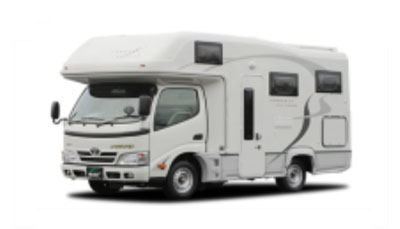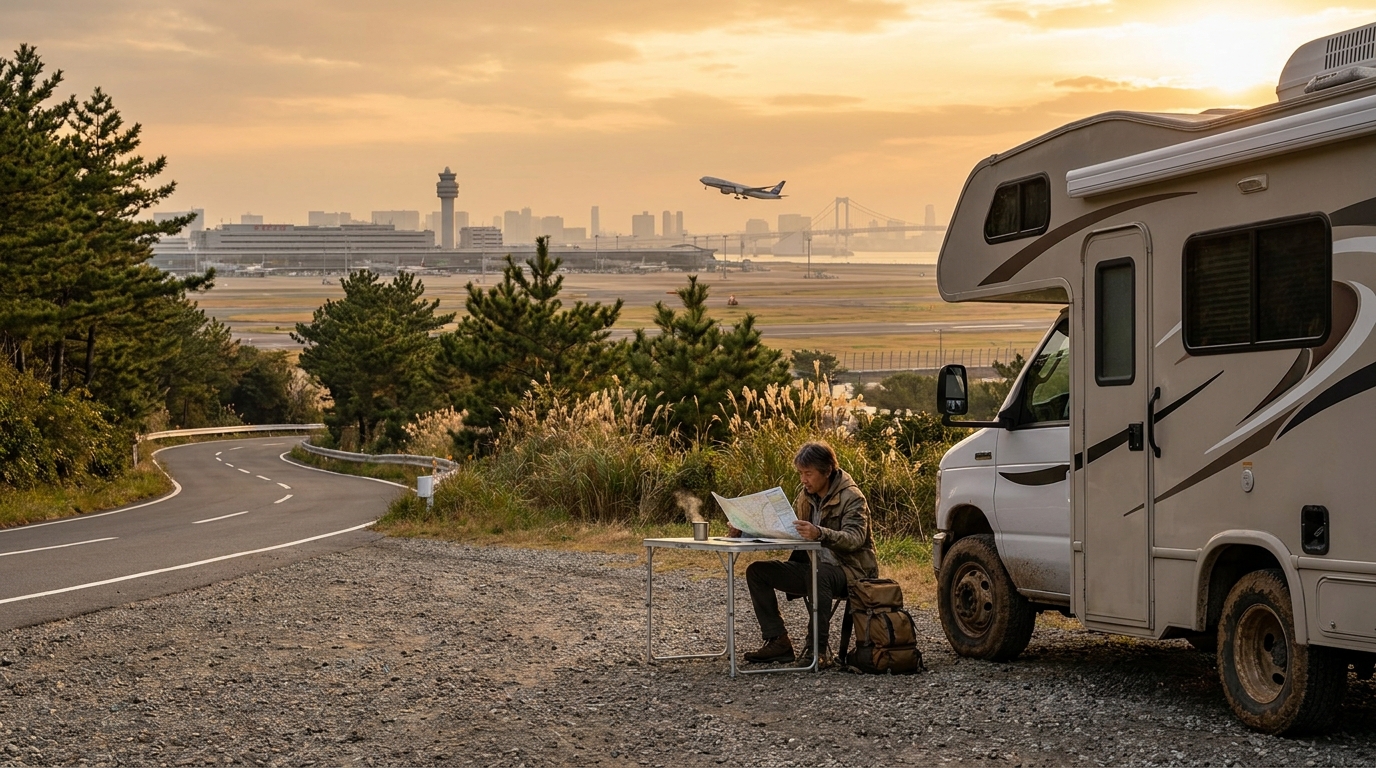
For live availability and current prices, start with our RV Rental Tokyo - Airport - Complete Guide 2026 guide.
How to rent an RV in Japan?
Renting an RV in Japan for a last-Tminute trip from Narita Airport (NRT) is feasible through platforms like Bandana, offering pick-up points conveniently located for airport access. While direct RV rental offices directly at Narita Airport are rare, many providers offer shuttle services or are easily accessible via Japan's efficient train system from NRT. Last-minute availability can vary significantly, so it's highly recommended to check online platforms like Bandana and call rental companies directly to secure a vehicle. This proactive approach will help ensure you find the perfect mobile home for your adventure. For those planning a broader trip, our guide RV Rental Japan - Complete Guide 2026 covers essential information for exploring the country.
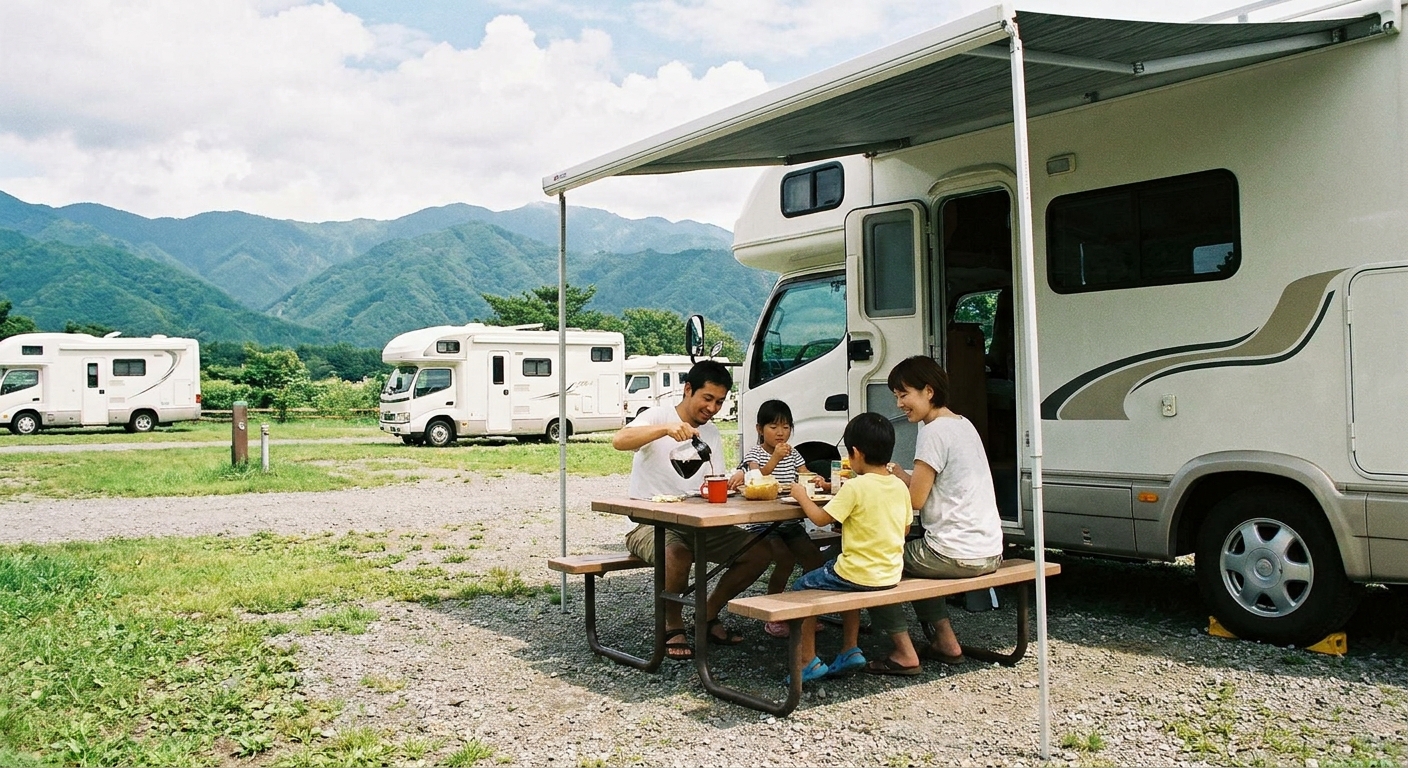
What documents do I need to rent an RV in Japan?
To rent an RV in Japan, you will primarily need a valid International Driving Permit (IDP) based on your home country's license, your original driver's license, your passport, and a major credit card. The IDP is mandatory for most foreign drivers and must be presented alongside your valid domestic driver's license. Your passport serves as primary identification, and a credit card is essential for payment and the security deposit required by rental companies. Without these crucial documents, you may be unable to complete your RV rental, so ensure they are in order before your departure. Remember, having the right documentation is key to a seamless experience.
How old do you have to be to rent an RV in Japan?
Most RV rental companies in Japan, including those serving the Tokyo area, typically require drivers to be at least 21 years old. However, some companies may enforce a higher minimum age of 25 for certain larger vehicle classes. It is crucial to confirm the specific age requirements with your chosen rental provider, as policies can vary significantly by company and the type of RV being rented. For travelers looking for more options, checking out Last-Minute RV Rental in Tokyo - Airport - What to Expect 2026 might offer insights into age flexibility. Remember to always verify these details during the booking process to avoid any last-minute surprises.
What is the best RV rental company in Japan?
For last-minute RV rentals near Tokyo - Airport, Bandana offers a wide selection of vehicles and comprehensive support services, making it a strong contender for international travelers. When choosing a rental company, consider crucial factors such as fleet diversity, the availability of comprehensive insurance options, and convenient pickup/drop-off locations accessible from Narita Airport. Prioritizing providers that offer English-language support and clear rental agreements will significantly contribute to a smoother overall experience. If you're comparing options, exploring Family RV Rental in Tokyo - Airport - Pricing Guide 2026 can offer a helpful comparison.
Are RVs popular in Japan?
Yes, RVs are gaining significant popularity in Japan, particularly among domestic travelers and an increasing number of international visitors. This trend is driven by the desire for flexible travel and the growing interest in exploring Japan's beautiful outdoors. The rise of 'van life' culture and the general boost in outdoor recreation, especially since 2026, have substantially contributed to RV adoption. Japan's extensive network of Michi-no-Eki (roadside stations) provides crucial infrastructure supporting RV travel by offering safe rest stops and essential amenities, making nationwide exploration more accessible and enjoyable.
Where to Camp in Tokyo - Airport — Top Options
While dedicated campgrounds immediately adjacent to Narita Airport are limited, top camping options near Tokyo - Airport can be found in the surrounding Chiba and Ibaraki prefectures. These locations offer a good balance of nature access and reasonable proximity to NRT. Consider searching for campgrounds situated in the coastal areas of Chiba or the mountainous regions of Ibaraki, typically within a 1-2 hour drive of Narita Airport. Additionally, Michi-no-Eki (roadside stations) can often serve as informal overnight parking spots when proper campgrounds are unavailable or for brief, single-night stops.
Campground Types in Tokyo - Airport (National, Private, Wild)
In the Tokyo - Airport region, campground types generally include privately run RV parks offering full amenities, designated public campsites (though less common directly near the airport but available further afield), and Michi-no-Eki (roadside stations) which permit overnight parking but not traditional 'camping.' Private campgrounds often provide a full suite of amenities including electric, water, and sewer hookups, showers, and laundry facilities; reservations are typically required. Public or national park sites, while fewer directly adjacent to NRT, offer access to natural areas and usually require advance booking, especially during peak seasons. Michi-no-Eki are legally designated for overnight parking and rest stops, but generally do not permit full camping setups, such as deploying awnings. Wild camping, or freedom camping, is generally discouraged and often illegal in Japan; it is crucial to utilize designated parking or camping facilities to respect local laws and customs.
Featured RV Park or Campground in Tokyo - Airport
While a specific featured RV park directly adjacent to Tokyo - Airport is not provided, an ideal campground in the region would offer convenient access to Narita, a range of hookups, and essential amenities for RV travelers. Look for facilities that reliably provide electric, fresh water, and grey/black water dump stations, alongside clean restrooms and showers. Prioritizing locations with good transportation links or shuttle services to NRT can significantly ease your final RV drop-off logistics, making your departure as smooth as your arrival. On the routes offered through RV PLANET routes, you can itemize and track every expense along the way for easy budgeting.
Can you sleep anywhere in an RV in Japan?
No, 'wild camping' or sleeping just anywhere in an RV is generally not permitted or advised in Japan. RVers should instead utilize designated Michi-no-Eki (roadside stations) for overnight rest or book spaces at private RV parks and campgrounds. Michi-no-Eki are specifically designed for safe, legal overnight parking and rest stops, often equipped with restrooms and local shops, but they are not intended for full camping setups. Designated RV parks and campgrounds offer comprehensive amenities and legal overnight stays, providing peace of mind and necessary services like hookups. Always respect local customs and privacy; avoid parking in residential areas, small business lots, or undesignated spots to prevent issues with local authorities. For comprehensive guidance on navigating these aspects, refer to Driving an RV in Tokyo - Airport - Complete Guide 2026.
Hookups & Amenities — What to Expect
In Japanese RV parks and campgrounds, you can typically expect electric hookups (usually 100V with a specific plug type), fresh water connections, and grey/black water dump stations. Japan uses 100V electricity (either 50Hz or 60Hz depending on the region); an adapter might be necessary for international appliances if your RV does not have a universal outlet. Fresh water hookups are common for refilling tanks, and designated dump stations for both grey and black water are standard at most private RV parks and some larger Michi-no-Eki. Many private campgrounds also offer communal showers, laundry facilities, and Wi-Fi access, significantly enhancing comfort for RV travelers.
Do RVs have toilets and showers in Japan?
Many RVs available for rent in Japan, particularly larger Class C Alcove and Class SI Semi-integrated models, come equipped with built-in toilets and showers, offering excellent self-sufficiency for travelers. The availability of onboard toilets and showers depends significantly on the RV class; smaller camper vans might feature portable toilets or require reliance on public facilities. Having these amenities provides greater freedom and convenience on your journey, but it also necessitates understanding and utilizing proper waste disposal procedures at designated dump stations.
How do you dump an RV in Japan?
To dump an RV in Japan, you primarily use designated dump stations found at private RV parks, some Michi-no-Eki (roadside stations), and occasionally at specific service areas, ensuring proper waste disposal. Look for clear signage indicating 'dump station' or 'sutema-jo' (ステーション) at these facilities, which are crucial for responsible waste management. Always follow the local instructions carefully for connecting hoses and rinsing your tanks thoroughly, adhering to Japan's strict environmental regulations and cultural etiquette regarding waste disposal. Proper waste disposal is essential for respecting the environment and local communities.
Best RV Class for Camping in Tokyo - Airport
For navigating Japan's roads and finding suitable camping near Tokyo - Airport, smaller RV classes like Class B Camper Vans or Class SI Semi-integrated models are often the most practical due to their maneuverability and compact size. For instance, a Class B Camper Van, averaging 5.8m in length and sleeping around 3.2 people from Bandana's global fleet, is excellent for navigating narrower roads and tighter parking spots, with a fuel consumption of roughly 8-10 Liters/100 Km. A Class SI Semi-integrated RV, averaging 6.9m in length and sleeping nearly 4 people from Bandana's fleet, offers a good balance of interior space and external manageability, consuming about 10-11 Liters/100 km. Larger Class C Alcove (average 7.5m) or Class A Integrated (average 7.5m) vehicles, while providing more comfort, can be significantly more challenging to drive and park in densely populated areas or on narrower rural routes common in Japan.
How much does an RV rental cost in Japan?
The cost of an RV rental in Japan varies widely based on vehicle class, rental duration, season, and amenities, but typically ranges from ¥15,000 to ¥35,000 (approximately $100-$230 USD) per day, not including fuel, tolls, or camping fees. Factors influencing the price include the RV's size and age, whether you're traveling during peak season (e.g., cherry blossom or autumn foliage periods), and the type of insurance package chosen. While the upfront cost might seem higher than a car rental and hotel combination, RV travel can prove more cost-effective for families or groups, as it conveniently combines accommodation and transport, potentially saving on multiple hotel bookings and allowing for budget-friendly self-catering. For a detailed cost breakdown, explore options via RV PLANET (rvplan.net) routes to itemize every expense.
What is the average gas mileage for an RV?
The average gas mileage for an RV rental in Japan, based on Bandana's global fleet averages, typically ranges from 8-12 Liters per 100 km for smaller models like Camper Vans and Semi-integrated RVs, though actual consumption can vary. Specifically, a Class B - Camper Van generally offers around 8-10 Liters/100 Km, while a Class SI - Semi-integrated RV typically consumes about 10-11 Liters/100 km. For larger Class C - Alcove models, expect averages of around 10-12 Liters/100 Km, and Truck Campers might consume higher, around 12-17 Liters/100 km. Fuel costs in Japan can represent a significant component of your overall trip budget, making the choice of a more fuel-efficient RV class an important consideration for longer journeys.
Is it hard to drive an RV in Japan?
Driving an RV in Japan presents unique challenges, primarily due to left-hand traffic, narrower roads outside major highways, and the need for familiarity with toll road systems like ETC cards. However, it is manageable with careful planning and awareness. Drivers from right-hand traffic countries will need to adjust to driving on the left side of the road with the steering wheel on the right. Many rural and some urban streets are significantly narrower than those in other countries; smaller RVs, like Class B or SI models, offer a distinct advantage here. Japan's extensive network of toll roads requires consideration for renting an ETC (Electronic Toll Collection) card with your RV to streamline payments and potentially save money. Adhering strictly to traffic laws, observing speed limits, and being mindful of parking manners will ensure a respectful and smooth travel experience, avoiding disruptions to local communities. For more detailed insights, consult Driving an RV in Tokyo - Airport - Complete Guide 2026.
Where to park an RV in Tokyo?
Parking an RV in Tokyo city centers is challenging due to limited space and height restrictions. RVers should prioritize utilizing Michi-no-Eki, designated RV parks on the outskirts, or large shopping center parking lots that explicitly accommodate larger vehicles. Avoid attempting street parking in central Tokyo; it's often illegal, impractical, and may incur significant fines for oversized vehicles. Michi-no-Eki located further from the city are excellent options for free, safe overnight parking and rest stops, but are not suitable for long-term camping. Exploring options in the periphery of the Kanto region, near major attractions or outlets, can yield larger commercial parking lots that may accommodate oversized vehicles.
Can you take an RV on a ferry in Japan?
Yes, you can generally take an RV on ferries in Japan. Ferries are a popular way to travel between islands and across large bodies of water, though you will need to book in advance and provide accurate vehicle dimensions. Popular ferry routes connect Japan's main island of Honshu with Hokkaido, Shikoku, and Kyushu, offering scenic travel opportunities and access to diverse regions. Always book your ferry passage well in advance, especially for larger RVs, and be prepared to provide precise measurements (length, height, width) to ensure proper allocation of space and accurate pricing.
Booking Windows & Reservations in Tokyo - Airport
For last-minute RV rentals and camping near Tokyo - Airport, while booking in advance is ideal, it's often possible to secure rentals and campground spots by checking online availability or calling directly on the same day or the day before. Check rental company websites frequently for real-time inventory updates or cancellations; directly calling the rental branch near NRT can often yield last-minute options not visible online. Even if online reservation systems appear full, many national and private campgrounds maintain a percentage of spots for first-come, first-served arrivals or walk-ins; spontaneous travelers frequently find success this way. To ensure a seamless experience for a last-minute trip, always call ahead to confirm specific availability at your desired campground before driving there.
Nearby Supermarkets & Resupply Points
For resupplying your RV trip near Tokyo - Airport, major supermarket chains like Aeon, Ito-Yokado, and Life can be found in towns surrounding Narita Airport and near popular camping areas. Utilize mapping applications to locate the nearest large supermarkets for comprehensive grocery shopping, including fresh produce and specialty items. Convenience stores, or konbini, such as 7-Eleven, Lawson, and FamilyMart, are ubiquitous across Japan and are excellent for quick snacks, drinks, and essential items at any time, even near rural locations. Keep an eye out for local farmer's markets (直売所 - chokubaijo) along your route for fresh, regional produce and unique local delicacies.
How to Save on Campgrounds in Tokyo - Airport
To save on campgrounds near Tokyo - Airport, consider utilizing discount cards often provided by rental companies like Bandana, opting for municipal or regional campgrounds over private resorts, traveling during the shoulder season, and staying for longer durations to potentially qualify for weekly rates. Inquire about special campground discount programs or memberships that your RV rental company might offer or recommend for Japan. Booking your trip during the shoulder seasons—spring (excluding Golden Week) or autumn—can significantly reduce costs compared to peak summer rates, while still offering excellent weather for exploration. Municipal or regional campgrounds are typically more affordable than private resorts, offering essential amenities without the premium price tag. As the ultimate saving on accommodation, Michi-no-Eki represent free overnight parking spots, though they offer limited camping amenities.
What You Shouldn't Miss
- Explore the historic Naritasan Shinshoji Temple, a vibrant Buddhist temple complex easily accessible from the airport.
- Visit the Narita International Airport Terminal 1 Observation Deck for panoramic views of the runways and surrounding landscape.
- Enjoy a serene walk through Narita Lakeside Park, a beautiful natural area offering tranquility and scenic views.
- Experience a traditional Japanese meal at a local restaurant in Narita city, savoring regional specialties.
- If venturing further, consider the Boso Flower Line in Chiba for a scenic drive with seasonal blooms.
- Utilize the Michi-no-Eki network for convenient stops and overnight parking on your wider Japan journey.
Final Thoughts
Embarking on a last-minute RV adventure near Tokyo - Airport offers a unique blend of convenience and discovery. While Japan's infrastructure might require a bit more planning than other destinations, the rewards of exploring its landscapes and culture in your own mobile home are immense. Remember to travel slowly, embracing the journey and connecting with the local rhythm.
By understanding the local customs, navigating the road rules, and utilizing resources like Michi-no-Eki, your last-minute RV rental can transform into an unforgettable Japanese escapade. Don't hesitate to explore the hidden gems and scenic routes available. Get inspired for your next trip and discover top destinations and planning tips all in one place!
Find Motorhome Rentals in Tokyo - AirportFor ideas you can prep on the road, watch our RV-friendly recipes playlist on YouTube.