In This Guide
- Top 5 Tips for RV Rental Beginners in Liverpool
- Before You Book - Class, Dates, Insurance
- Pre-Trip Prep - Packing Checklist for Liverpool
- On the Road - Driving, Fueling, Navigation
- At the Campground - Setup, Hookups & Etiquette
- RV Rental Beginners-Specific Tips for Liverpool
- Common Mistakes to Avoid in Liverpool
- How much does it cost to rent an RV in Liverpool
- What is the average cost of a motorhome pitch in UK
- What is the best type of motorhome for beginners
- Do you need a special licence to drive a motorhome in the UK
- Is it easy to drive an RV in the UK
- How do I plan a motorhome route in the UK
- Can I drive a motorhome into Liverpool city centre
- Where can I park my RV in Liverpool
- Where can I fill up my water tank in an RV in the UK
- Are there dump stations in the UK for RVs
- How do you get around Liverpool without a car
Top 5 Tips for RV Rental Beginners in Liverpool
Embarking on your first RV rental adventure in Liverpool is an exciting prospect! To ensure a smooth and enjoyable journey, here are five essential tips for beginners.
Book well in advance to secure preferred RV models and rates, especially during peak seasons like summer holidays or major events in Liverpool. Booking 6-12 months ahead can also lead to better rates, potentially saving up to 25% compared to last-minute hires.
Familiarize yourself with your RV's dimensions, including its height, width, and length, to confidently navigate UK roads and avoid issues like low bridges, which are common on older routes. Many rental companies provide a detailed walkthrough, so pay close attention.
Research and pre-book designated RV parking or campsites near Liverpool. While Liverpool has limited dedicated RV parking, numerous campsites on the outskirts offer suitable spots with excellent public transport links into the city center. For finding campsites, we recommend using RV PLANET (rvplan.net)—a great resource for locating available spots along your route.
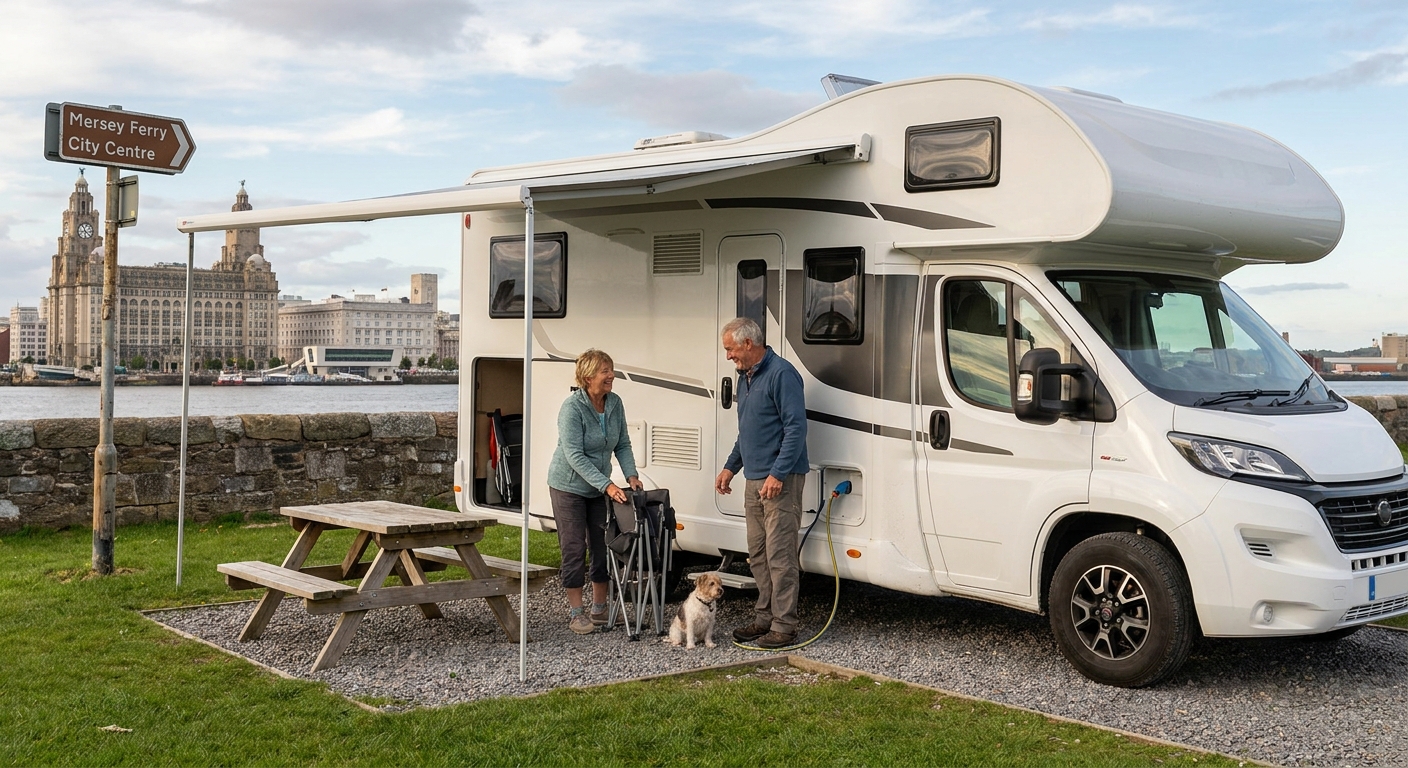
Plan how you'll explore Liverpool city center from your parked RV. Utilizing public transport (buses, trains, or the iconic Mersey Ferry) or park-and-ride facilities is often the most practical approach, allowing you to leave the larger vehicle safely parked.
Understand basic RV hookups for electricity, water, and waste disposal before arriving at your first campsite. Most UK campsites provide standard hookup points, typically a blue CEEform plug for electricity, and clearly marked water and waste disposal stations. Familiarizing yourself with these will make your first setup stress-free.
Before You Book - Class, Dates, Insurance
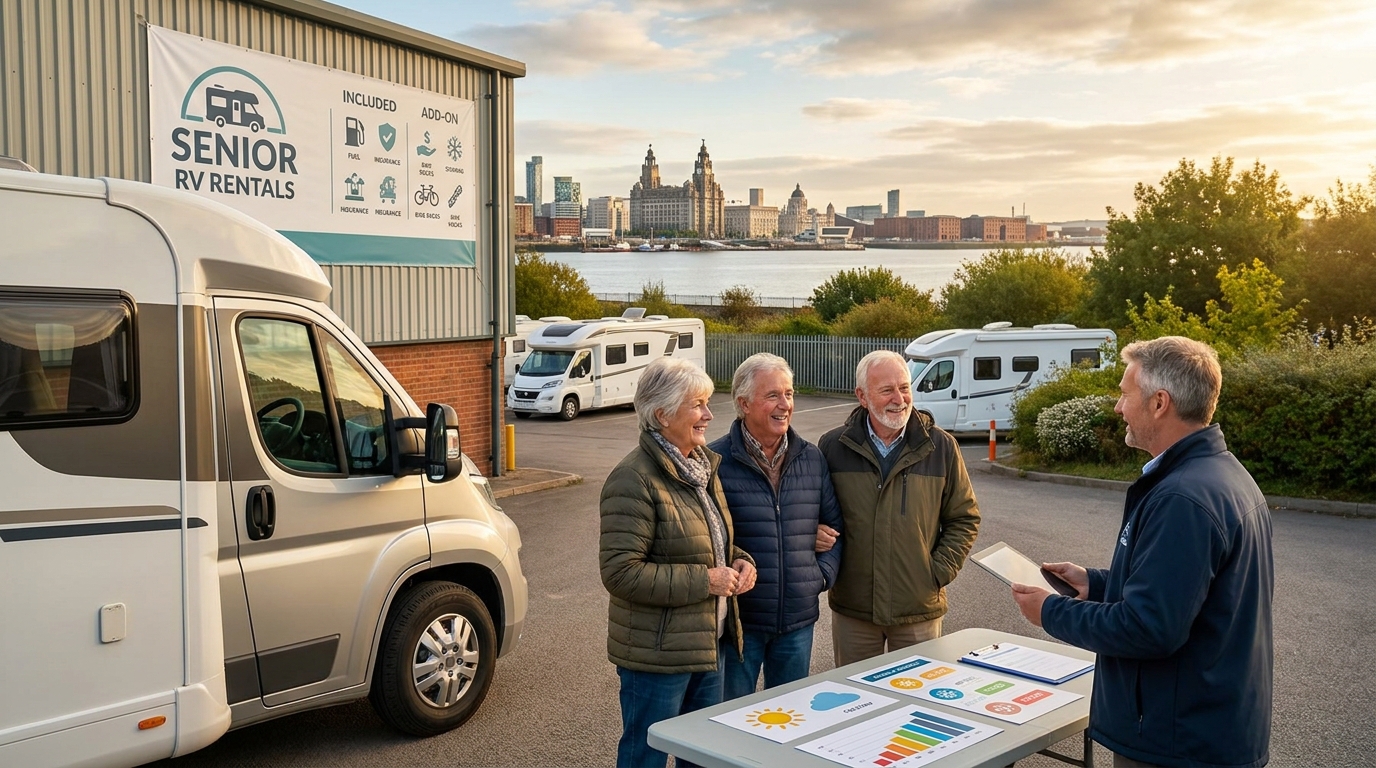
Selecting the right RV class and understanding booking logistics are crucial first steps for your Liverpool RV adventure. With Bandana Caravan, you can compare final prices across over 50 leading suppliers, ensuring what you see is what you pay, with no surprise fees at pickup.
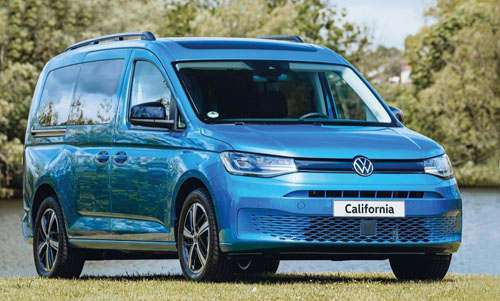
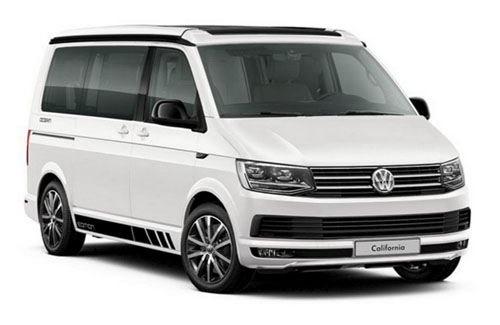
Choose an RV class based on your group size, desired amenities, and comfort level with driving larger vehicles. For the UK's often narrower roads and urban environments like Liverpool, smaller campervans or compact motorhomes, such as Class B (Campervans) or smaller Class C models, are generally easier to maneuver and park. For instance, a compact campervan like the 'Active Classic' is ideal for couples, offering car-like driving dynamics.
Secure your rental dates well in advance, ideally 6-12 months ahead for peak season travel (June to August) to ensure availability of preferred models and potentially better rates. Off-peak seasons, like spring or autumn, can offer significant savings and a more relaxed experience.
Understand insurance options; basic coverage is typically included with all rentals, but comprehensive options, including top-level deductible reimbursement, can be selected during the booking process for added peace of mind. Always check the specific terms and conditions provided by the rental company.
Pre-Trip Prep - Packing Checklist for Liverpool
Packing smart is key for an enjoyable RV trip to Liverpool. Given the UK's variable climate, versatility in your wardrobe is essential. We compare final prices across over 50 suppliers, ensuring you get the best value without hidden fees.
Pack versatile clothing, including waterproofs and warm layers suitable for Liverpool's unpredictable weather. Layers are your best friend, allowing you to adapt to changing temperatures. Think comfortable walking shoes, a waterproof jacket, and a warm fleece or jumper.
Bring essential kitchen items for self-catering to make the most of your onboard facilities. Items like basic utensils, plates, bowls, eco-friendly washing-up liquid, and a tea towel are usually not included but are indispensable. Many rental RVs are equipped with a stove, refrigerator, and microwave, making it easy to prepare meals. For ideas you can prep on the road, watch our RV-friendly recipes playlist on YouTube.
Include safety items for peace of mind on the road. A well-stocked first-aid kit, a high-visibility vest, a warning triangle, and a torch are vital. You’ll also need all your necessary documents: driving licence, rental agreement, insurance details, passport, and any pre-booked campsite confirmations.
On the Road - Driving, Fueling, Navigation
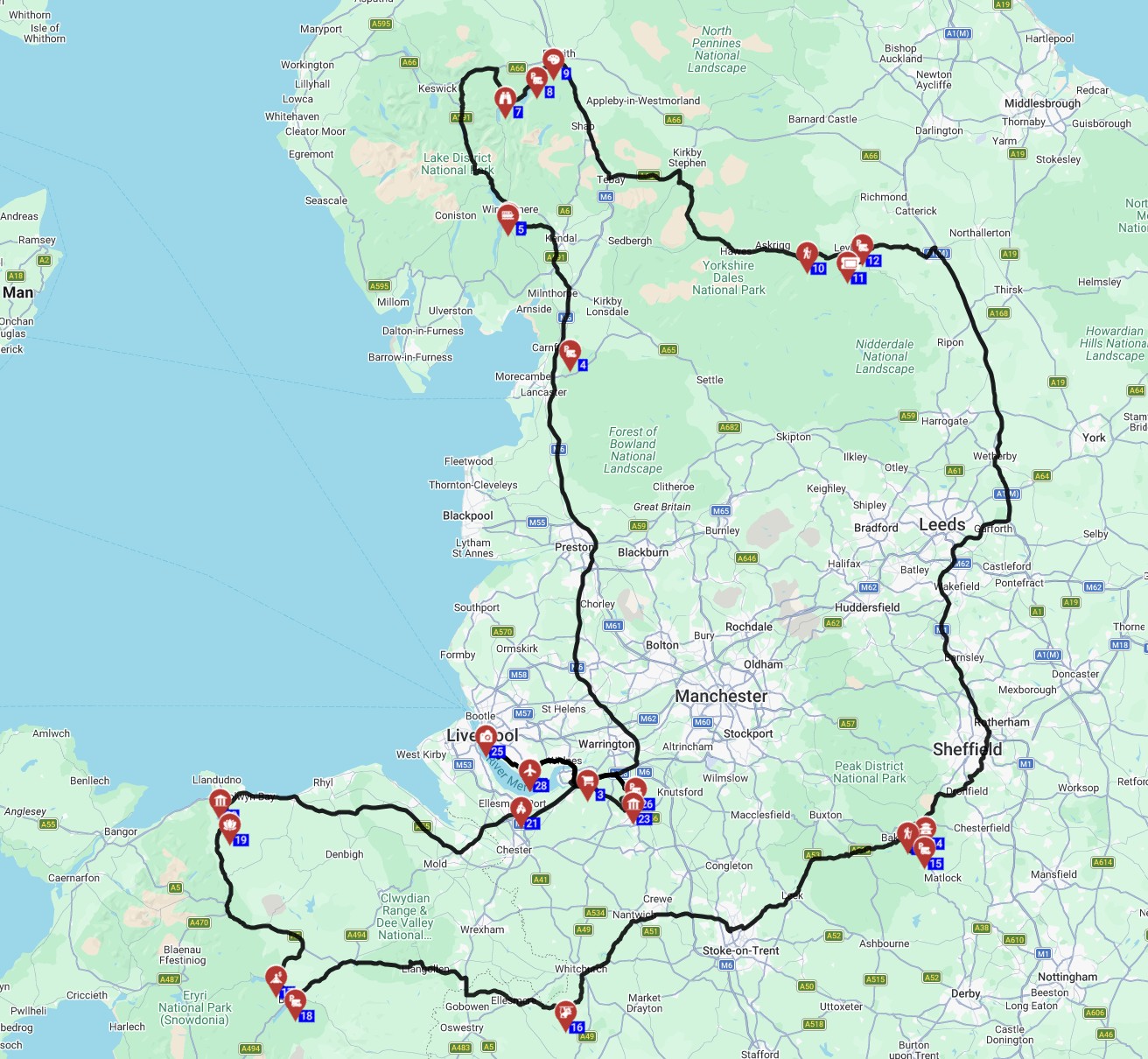
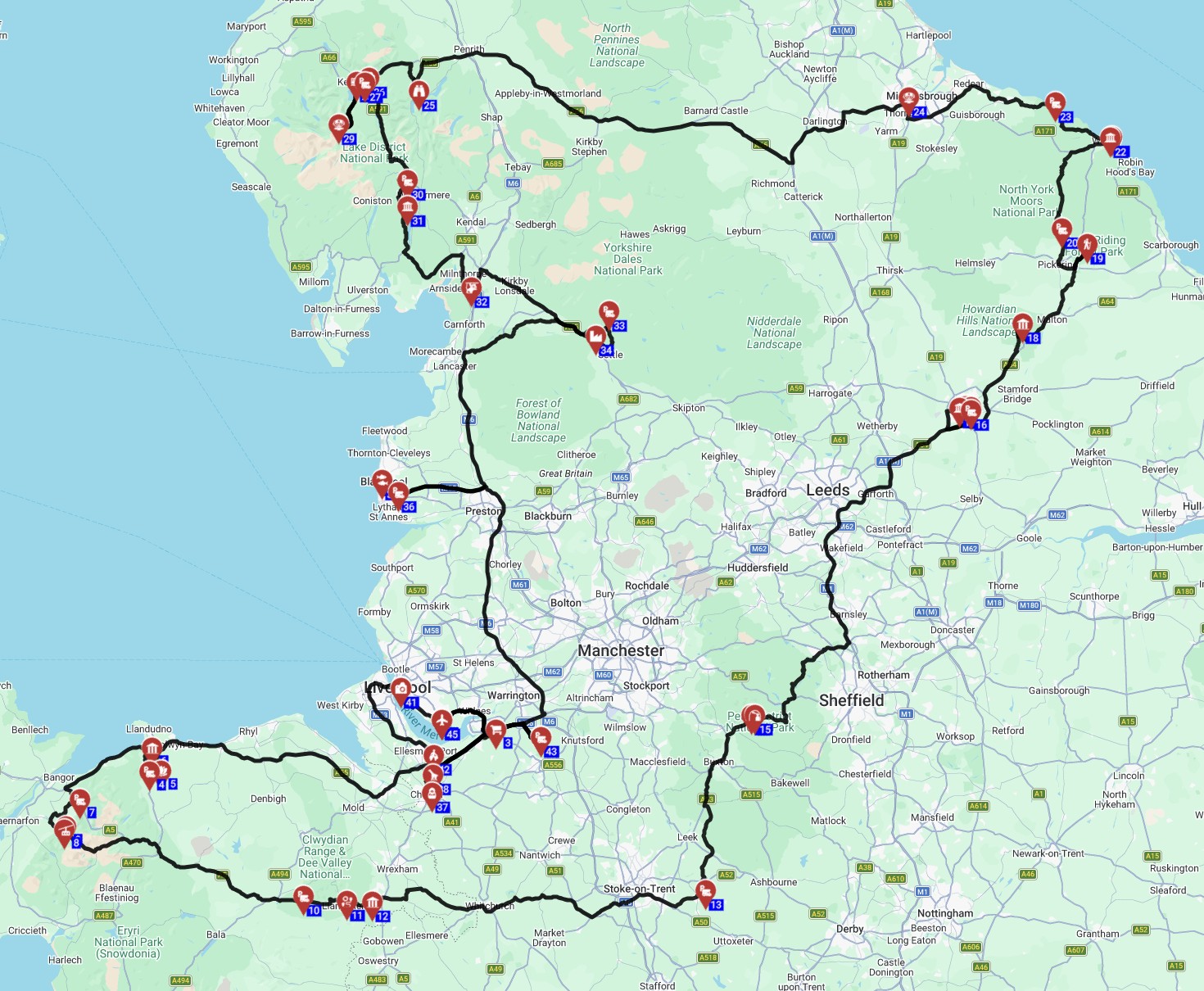
Navigating UK roads in a rented RV requires a bit of adjustment, especially if you're accustomed to driving on the right. Always drive on the left, maintaining safe distances and strictly adhering to UK speed limits for larger vehicles. Remember, many of the routes offered through RV PLANET routes can be planned with vehicle size in mind.
Plan your fuel stops at larger service stations that can accommodate RVs, as most UK RVs are diesel-powered. Look for major motorway service areas or larger roadside stations that are more likely to have adequate space and high-flow diesel pumps.
Utilize RV-specific GPS navigation to help avoid potential challenges. These systems are programmed with vehicle dimensions, warning you about low bridges, narrow roads, or weight-restricted areas in and around Liverpool, ensuring a smoother journey.
At the Campground - Setup, Hookups & Etiquette
Setting up your RV at a campsite is straightforward with a few key steps. Proper leveling is important for comfort and ensures appliances like the refrigerator function correctly, so use leveling ramps or blocks as needed.
Connect hookups in the correct sequence: electrical first using the blue CEEform plug, then water, and finally the waste hose to the grey water drain. Always ensure your connections are secure before turning on any power or water.
Adhere to campsite etiquette: respect quiet hours, typically from late evening to early morning, and maintain a tidy pitch by disposing of rubbish properly in designated bins. This ensures a pleasant environment for all campers.
RV Rental Beginners-Specific Tips for Liverpool
For beginners exploring Liverpool in an RV, embracing a more relaxed pace and choosing the right vehicle are paramount. Opting for a smaller campervan or compact motorhome, like a 'Campervan hire example Cat A - Optimist', makes navigating the UK's roads and parking in urban areas significantly easier.
Pre-plan and book campsites or designated RV parking spaces, especially those with good public transport links to Liverpool's city center. This avoids the stress of finding a spot upon arrival.
Request a thorough walkthrough of all RV systems from your rental company before you depart. Understanding how to operate the heating, water, and waste systems will prevent common beginner issues.
Avoid over-scheduling your itinerary. Allow ample time for travel, campsite setup, exploring attractions, and potential unexpected delays. A relaxed approach ensures you can truly enjoy the experience.
Download RV-specific apps like Park4Night or Campercontact. These are invaluable for locating campsites, dump stations, and water points easily across the UK. On the routes offered through RV PLANET routes, you can itemize and track every expense along the way for easy budgeting.
Common Mistakes to Avoid in Liverpool
As you prepare for your RV adventure in Liverpool, being aware of common pitfalls can save you time and stress. For the easiest, safest, and most affordable way to rent an RV, we compare final prices across over 50 suppliers so you don't have to.
Avoid overpacking; instead, pack only essentials to conserve limited RV storage space and improve fuel efficiency. Every kilogram counts when driving a larger vehicle.
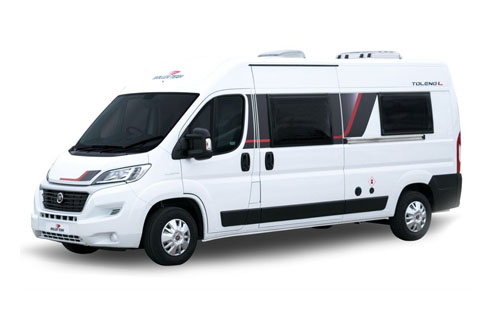
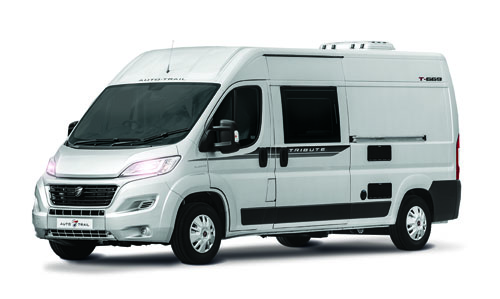
Do not ignore your RV's dimensions; always know its height and width and use RV-specific navigation to avoid low bridges or restricted areas. Many Class C motorhomes, like the 'Premium Plus Alcove 6', can be quite tall.
Never dispose of waste improperly. Instead, always use designated dump stations at campsites or service points to protect the environment and avoid fines.
Avoid neglecting pre-booking campsites, especially during peak season. Spontaneous spots near popular destinations like Liverpool can be scarce, so planning ahead is key.
Do not set off without familiarizing yourself with UK road rules, including driving on the left and the etiquette of roundabouts, which can be numerous and complex.
How much does it cost to rent an RV in Liverpool
Estimating the cost of an RV rental in Liverpool involves several factors, with base rental prices varying significantly by vehicle size, the season, and the duration of your hire. For a 1-week RV rental in Liverpool, expect costs from £490-£840 for campervans and £840-£1,400+ for larger motorhomes.
Base rental costs typically range from £70-£120 for campervans and £120-£200+ for larger motorhomes per night. Prices are dynamic and subject to availability, much like flight tickets, with the final price set at the time of booking.
Additional expenses to budget for include fuel (most UK RVs use diesel), insurance upgrades beyond basic coverage, and campsite pitch fees. For finding campsites and campgrounds during your trip, we recommend using RV PLANET (rvplan.net)—a great resource for locating available spots along your route.
Consider potential tolls, such as for the Mersey Tunnels, public transport costs from your campsite into the city, and your personal spending on activities and food. On the RV PLANET routes, travelers can itemize and track every expense along the way for easy budgeting.
What is the average cost of a motorhome pitch in UK
The average cost for a motorhome pitch in the UK, including areas near Liverpool, typically ranges from £20 to £40 per night. Prices are influenced by the campsite's location, proximity to popular attractions like Liverpool's city center, and the amenities provided.
Sites offering electric hook-up (EHU), showers, laundry facilities, and Wi-Fi tend to be at the higher end of this price range. Certified Locations (CLs) or smaller, independent sites may offer more basic facilities at a lower price point.
Booking campsites in advance is highly recommended, especially during peak season (May to September) or around major events in Liverpool, as availability can be limited. For finding campsites and campgrounds during your trip, we recommend using RV PLANET (rvplan.net)—a great resource for locating available spots along your route.
What is the best type of motorhome for beginners
For beginners venturing into the world of RV rentals, particularly in the UK and around Liverpool, compact campervans or smaller Class B/C motorhomes are often the ideal choice. These vehicles are easier to maneuver on UK roads and simpler to park in urban or busy areas.
Consider vehicles like the 'Active Classic' or similar campervan models. They offer a more manageable driving experience with car-like dynamics while still providing essential living amenities.
When making your selection, factor in your trip duration, the number of travelers, and your specific needs for integrated amenities like a shower and toilet. Ultimately, your comfort level with driving a larger vehicle will guide your decision.
Do you need a special licence to drive a motorhome in the UK
In most cases, you do not need a special license to drive a motorhome in the UK. The majority of rented RVs, including those suitable for beginners in Liverpool, typically weigh under 3,500kg Maximum Authorised Mass (MAM).
Most people can drive motorhomes up to 3,500kg MAM with a standard Category B driving license, the same license used for cars. If you obtained your license before 1 January 1997, you might have entitlement for Category C1, allowing you to drive vehicles between 3,500kg and 7,500kg MAM.
International visitors should confirm if an International Driving Permit (IDP) is required alongside their domestic license, especially if they are not from an EU/EEA country. Always verify the MAM of your rented RV with the rental company to ensure you have the correct license entitlement.
Is it easy to drive an RV in the UK
Driving an RV in the UK, including the routes surrounding Liverpool, certainly involves a learning curve, particularly for those new to motorhome travel. While manageable, it requires heightened awareness and preparation.
UK country roads and some city streets can be narrow, making smaller RVs advantageous. Managing a larger vehicle demands attention to blind spots, wider turning circles, and anticipating braking distances. Always use an RV-specific GPS system to avoid unsuitable routes, low bridges, or weight-restricted areas.
Driving on the left side of the road and navigating roundabouts are key differences to adapt to. Taking your time, practicing in quieter areas initially, and staying vigilant will ensure a safe and enjoyable driving experience.
How do I plan a motorhome route in the UK
Planning a motorhome route in the UK, whether for exploring Liverpool or beyond, is best done with a focus on practicality and safety. Utilize RV-specific GPS or navigation apps that account for vehicle height, width, and weight to help you avoid unsuitable roads and low bridges.
Prioritize A-roads and motorways for more efficient travel, understanding that scenic B-roads can be challenging for larger RVs. Always book campsites in advance, particularly when traveling to popular destinations like Liverpool or during peak season, to secure your preferred spots.
Factor in necessary stops for water refills and waste disposal at designated service points. Consider shorter, RV-friendly itineraries from Liverpool, such as a 'Coastal Escape' weekend to the Wirral or Formby, to ease into RV travel.
Can I drive a motorhome into Liverpool city centre
Driving a motorhome directly into Liverpool city centre is generally not recommended for first-time RVers due to narrow streets, heavy traffic, and limited suitable parking. Most city center car parks have height restrictions that make them inaccessible for RVs.
It is far more practical to park your RV at a designated campsite on the outskirts of Liverpool and utilize public transport to access city attractions. This approach avoids the stress of navigating busy urban roads with a large vehicle.
Always be vigilant for potential low bridges and congestion charge zones; while Liverpool typically does not have a congestion charge for private vehicles, awareness of such restrictions is always wise. For seamless route planning, explore options on RV PLANET routes, which often highlight suitable approaches to cities.
Where can I park my RV in Liverpool
Designated RV parking spaces are scarce in Liverpool's immediate city center. The most practical solution is to utilize well-equipped campsites situated on the city's outskirts, which offer pitches within easy reach of public transport into the heart of Liverpool.
Several campsites, such as those on the Wirral Peninsula or the Caravan and Motorhome Club's Liverpool Club Site, provide excellent bases within a short public transport ride to the city. Some park-and-ride facilities might accommodate larger vehicles, but dedicated RV bays are rare, so it's always best to confirm availability in advance.
Avoid attempting to park in small, standard car parks, on residential streets without explicit permission, or in areas with height barriers, as this can lead to fines or damage. Planning your parking strategy beforehand is crucial for a stress-free experience.
Where can I fill up my water tank in an RV in the UK
Refilling your RV's fresh water tank in the UK is generally straightforward, with most campsites offering convenient water points. These are typically located near individual pitches or at central communal areas for easier access.
Designated Motorhome Service Points (MSPs), sometimes found at larger truck stops or public amenities, also provide water refills. While not as common, some larger petrol stations on motorways or main A-roads may have facilities, but it’s advisable to verify availability beforehand.
Always use a food-grade hose specifically for filling your fresh water tank to maintain hygiene and prevent contamination. This simple step ensures the quality of your drinking water throughout your trip.
Are there dump stations in the UK for RVs
Yes, designated dump stations, commonly referred to as chemical disposal points (CDPs) or motorhome service points, are widely available across the UK, including near Liverpool.
Almost all campsites in the UK provide facilities for emptying both grey water (from sinks and showers) and black water (from the toilet cassette). These points are usually clearly marked and easily accessible.
Dedicated MSPs, which can be standalone or located at large petrol stations or truck stops, offer convenient options for both water refills and waste disposal. Utilize RV-specific apps like Park4Night or Campercontact to easily locate the nearest dump stations along your route.
How do you get around Liverpool without a car
Liverpool boasts a comprehensive and efficient public transport network, making it easy to explore the city once your RV is parked. This is often the most practical approach for navigating the city center.
The Merseytravel bus network provides extensive routes connecting most areas, including popular campsites on the outskirts, directly to Liverpool's city center. You can purchase day tickets or use contactless payment for convenience.
Merseyrail trains offer frequent services, running into the heart of Liverpool from numerous suburban stations, providing a quick and reliable way to travel. For a scenic route, the iconic Mersey Ferry offers a unique perspective, connecting Pier Head in Liverpool with the Wirral Peninsula.
The city center itself is very walkable, allowing you to easily explore many attractions on foot. Additionally, cycling routes are increasingly available, offering another pleasant way to see the sights.
What You Shouldn'urse of Liverpool
- Visit The Beatles Story: Immerse yourself in the Fab Four's journey at this world-class exhibition on the Albert Dock, easily accessible from campsites by public transport.
- Explore the Royal Albert Dock: Wander through this historic waterfront, home to museums, galleries, shops, and restaurants. It's a great place to park your RV at a nearby campsite and explore on foot or via public transport.
- Drive the Wirral Coastline: Take a short RV trip from Liverpool to the Wirral Peninsula for stunning coastal views, charming seaside towns, and serene beaches like those at New Brighton or West Kirby.
- See the Two Cathedrals: Experience Liverpool's unique architectural flair by visiting both the Anglican and Metropolitan Cathedrals, perhaps driving between them via scenic city routes.
- Discover Penny Lane: For Beatles fans, an RV pilgrimage to iconic spots like Penny Lane offers a flexible way to revisit these legendary locations at your own pace.
Final Thoughts
Renting an RV for your Liverpool adventure offers unparalleled freedom and a unique way to experience the city and its surroundings. By focusing on smaller, more manageable vehicles and pre-planning your routes and campsites, your first RV trip can be incredibly rewarding.
Embrace the journey, stay flexible, and most importantly, have fun! With the right preparation and the support of services like Bandana Caravan and RV PLANET (rvplan.net), your Liverpool RV experience will be unforgettable.
Find Motorhome Rentals in Liverpool