In This Guide
- The 4 RV Families Compared for Scotland
- Price Comparison by RV Class in Scotland
- Our Recommendation for RV Rental Beginners Travelers in Scotland
- Top Cities for RV Rental in Scotland
- What do I need to know before renting an RV in Scotland?
- How difficult is it to drive an RV in Scotland?
- Can you wild camp in Scotland in an RV?
- Where can I park an RV in Scotland?
- What is the best month to RV Scotland?
- How much does it cost to rent an RV in Scotland?
- Is it worth renting an RV in Scotland?
- Practical Information for RV Travel in Scotland
- What You Shouldn't Miss
Embarking on a motorhome adventure through Scotland is an experience that combines breathtaking landscapes with the ultimate freedom of the open road. For first-time RV renters, choosing the right vehicle and understanding the local nuances can seem daunting, but with the right guidance, it’s an incredibly rewarding journey. At Bandana Caravan, we specialize in helping beginners compare RV rental options across 50+ countries, offering full transparency and 24/7 support throughout your booking process. For live availability and current prices, start with our RV Rental Scotland - Complete Guide 2026 guide.
The 4 RV Families Compared for Scotland
Choosing the right RV family is critical for a beginner's trip to Scotland, as it significantly influences maneuverability on narrow roads, comfort in varied climates, and overall trip enjoyment. Beginners should consider vehicle size for navigating Scotland's unique winding single-track roads and accessing remote locations, assess sleeping capacity and amenities based on their group size and desired trip length, and evaluate fuel efficiency and load capacity for budgeting and packing essentials. We focus on Class A, Class SI (Semi-Integrated), Class C (Alcove), and Class B (Campervan) motorhomes, ensuring a perfect fit for any travel style. On the routes offered through RV PLANET routes, you can itemize and track every expense along the way for easy budgeting.
Class A (Integrated) — Best For
Class A integrated motorhomes are best suited for beginners seeking a luxurious, spacious experience with full amenities, ideal for longer trips with 4-5 people who prioritize comfort and don't mind navigating larger vehicles. Our fleet typically features Class A motorhomes with an average length of 7.5 meters, sleeping 4.4 people, and consuming 11-12 Liters/100 km. These vehicles offer ample living space and storage, perfect for families or groups desiring a 'home-away-from-home' feel, often including features like a well-equipped kitchen for preparing RV-friendly recipes playlist. Trade-offs include higher fuel consumption and potential challenges with maneuverability and parking on Scotland's narrower, winding roads or in smaller villages.
Class SI (Semi-Integrated) — Best For
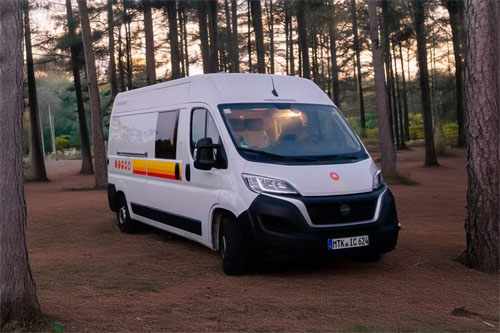
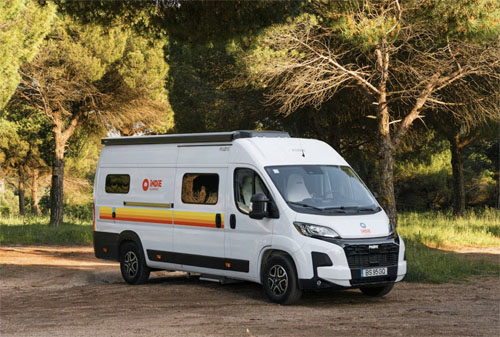
Class SI semi-integrated motorhomes are best for beginners looking for a balanced option, combining comfortable living spaces with more manageable driving dimensions than larger models, making them ideal for couples or small families exploring Scotland. Our fleet typically shows Class SI models averaging 6.9 meters in length, sleeping 3.8 people, and consuming 10-11 Liters/100 km. These RVs strike a sweet spot, offering good fuel efficiency and easier navigation on many Scottish roads compared to Class A or C, while still providing essential amenities. They are particularly suitable for travelers who want dedicated sleeping and living areas without the bulk of an alcove above the cab, making them more aerodynamic and subtly designed.
Class C (Alcove) — Best For
Class C alcove motorhomes are best for beginner families or groups of 4-6 in Scotland, offering excellent sleeping capacity and a cost-efficient solution with their distinctive over-cab bunk. Our fleet typically features Class C motorhomes with an average length of 7.5 meters, accommodating 5.8 sleepers, and consuming 10-12 Liters/100 km. The elevated sleeping area above the driver's cab provides additional beds without compromising main living space, making them a popular choice for those traveling with children. While similar in length to Class A, their construction can make them slightly easier to handle for some beginners, though careful navigation on narrow Scottish roads is still advised.
Class B (Campervan) — Best For
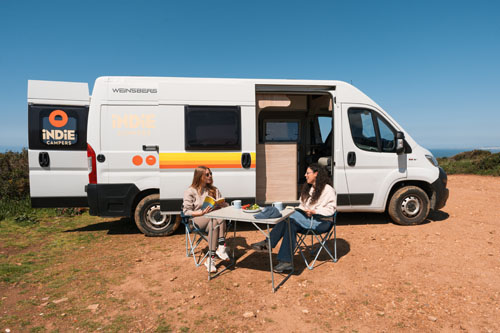
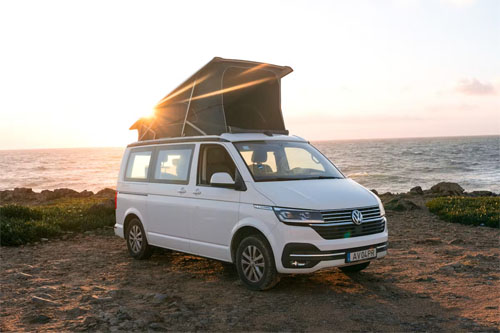
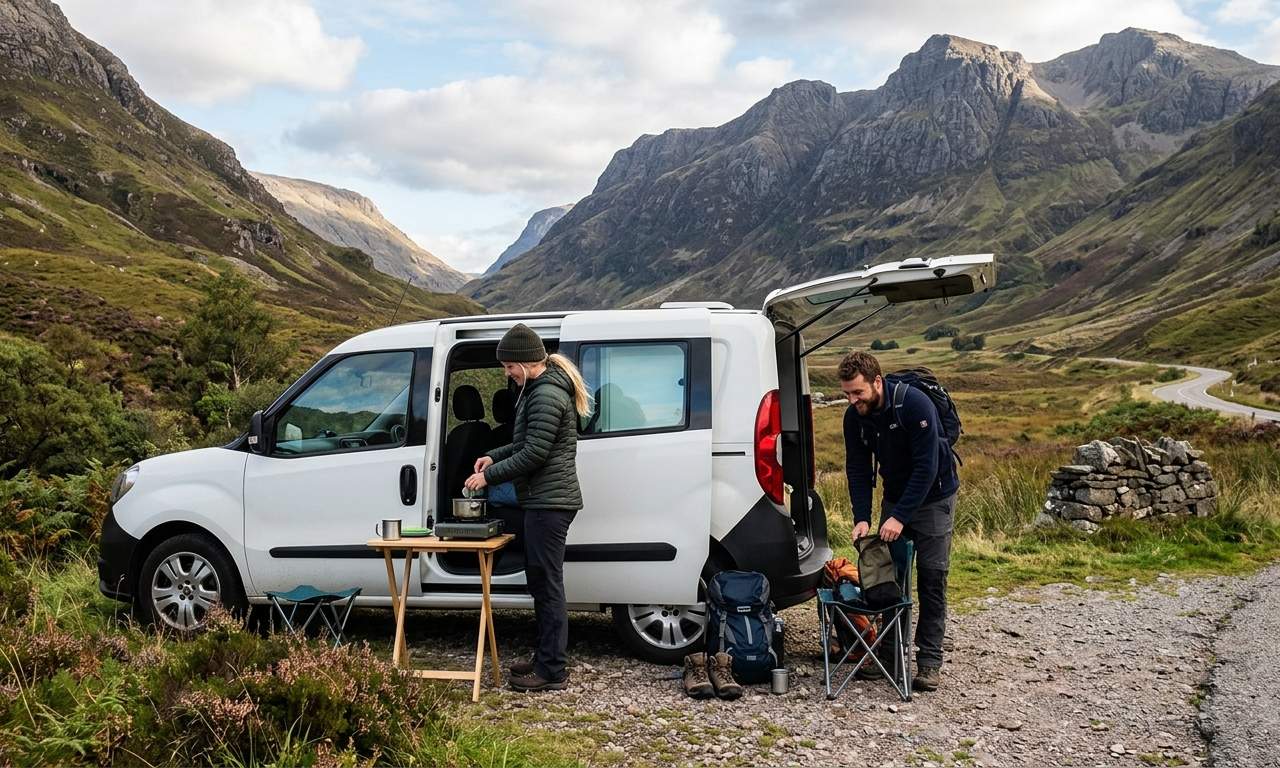
Class B campervans are best for solo travelers, couples, or small groups of beginner RVers in Scotland seeking maximum maneuverability, fuel economy, and the flexibility to access more remote or crowded locations. Our fleet typically features Class B campervans with an average length of 5.8 meters, sleeping 3.2 people, and consuming around 10 Liters/100 km. Their compact size allows for easier driving on single-track roads, simpler parking in towns and at attractions, and often better fuel efficiency. Campervans are ideal for adventurous beginners prioritizing exploration and agile travel over extensive interior space and luxury amenities, offering a more intimate connection with Scotland's diverse landscapes.
Price Comparison by RV Class in Scotland
RV rental prices in Scotland are dynamic, varying significantly by vehicle class, season, rental duration, and booking lead time, making early booking beneficial for beginners. Generally, smaller campervans (Class B) offer the most budget-friendly options, while larger, more luxurious Class A or C motorhomes will command higher rental costs. Prices update daily; check the search box at the top of the page for the most current live numbers and best deals. Our commitment to full transparency means no hidden fees or surprises.
Side-by-Side Comparison Table
Comparing RV classes side-by-side helps beginner renters quickly identify which vehicle best matches their group size, budget, and desired travel style for a Scottish adventure. This table summarizes key specifications and ideal use cases to aid your decision-making process. Consider average length for road navigation, sleeping capacity for comfort, and fuel efficiency for budget planning when choosing your perfect rental motorhome in Scotland.
| Family | Avg Length | Sleeps | Fuel Use | Best Use Case in Scotland |
|---|---|---|---|---|
| Class A (Integrated) | 7.5m | 4.4 | 11-12 L/100km | Luxury, spacious travel for families/groups, longer trips, less remote touring. |
| Class SI (Semi-integrated) | 6.9m | 3.8 | 10-11 L/100km | Balanced comfort and maneuverability for couples/small families, versatile touring. |
| Class C (Alcove) | 7.5m | 5.8 | 10-12 L/100km | Family-friendly, cost-effective with high sleeping capacity, traditional motorhome experience. |
| Class B (Camper Van) | 5.8m | 3.2 | 10 L/100km | Agile, fuel-efficient for solo/couples, urban exploration, remote access, easier driving. |
Our Recommendation for RV Rental Beginners Travelers in Scotland
For most RV rental beginners in Scotland, the **Class SI (Semi-integrated) motorhome** is our top recommendation, offering the ideal balance of comfort, amenities, and manageable driving size for varied Scottish roads. Its average length of 6.9 meters makes it less daunting to navigate single-track roads and park than larger Class A or C models, while still providing ample space for a couple or small family (averaging 3.8 sleepers). The runner-up is the **Class B (Campervan)**, particularly for solo travelers or adventurous couples prioritizing maximum maneuverability and fuel efficiency to explore the most remote corners of Scotland, often requiring less planning for parking. Both options provide a robust introduction to RV travel without the steep learning curve associated with the largest vehicles, making them perfect for a first-time Scottish adventure.
To further help with planning, consider exploring a "Weekly RV Rental in Scotland - Pricing 2026" guide or a "One-Way RV Rental in Scotland - Price Guide 2026" to understand the costs for your chosen vehicle class and duration. We also encourage checking out our "RV Rental in Scotland - Prices and Best Deals 2026" for more detailed pricing information.
Top Cities for RV Rental in Scotland
Scotland offers several fantastic starting points for your rented motorhome adventure, each providing convenient access to diverse landscapes and attractions. Picking up your camper in a major city means easy access to a wider selection of vehicles and often better rental deals.
- Edinburgh: Scotland's capital is a popular starting point, offering numerous cultural attractions and easy access to both the Lowlands and the Highlands. Consider picking up your RV rental at the Edinburgh or Edinburgh - Airport locations.
- Glasgow: The largest city in Scotland, Glasgow provides a gateway to the West Coast, Loch Lomond, and the Trossachs National Park. Renting from Glasgow or Glasgow - Airport offers flexibility for exploring the western regions.
- Inverness: Situated in the Highlands, Inverness is ideal for those who want to dive straight into the rugged beauty of northern Scotland, including Loch Ness and the North Coast 500 route.
- Aberdeen: For adventurers keen on exploring the Northeast, including Balmoral Castle and the Cairngorms National Park, Aberdeen and Aberdeen - Airport are excellent choices.
- Dundee: A vibrant city on the east coast, Dundee and Dundee - Airport offer a good base for discovering the Angus glens, coastal towns, and golf courses.
- Prestwick: Located southwest of Glasgow, Prestwick - Airport is a convenient option for accessing Ayrshire's stunning coastline and historical sites.
No matter your chosen starting point, remember to plan your route leisurely; we always recommend traveling slowly, averaging a maximum of 100-150 km per day. This pace allows you to truly feel the place, connect to the culture, the food, and the scenery, making your trip a genuine Scottish immersion.
What do I need to know before renting an RV in Scotland?
Before renting an RV in Scotland, beginners need to understand driving regulations, plan for unpredictable weather, prepare for midges, and consider connectivity in remote areas to ensure a smooth trip. Crucially, a standard car driver's license is sufficient for all motorhome classes (Class A, B, C) available for rent, and the minimum rental age is 21 years old. For non-English speaking visitors, an International Driving Permit (IDP) is recommended but not mandatory in most cases.
🎬 Video coming soon
Driving Requirements in Scotland
Drivers in Scotland must be at least 21 years old to rent an RV, and a valid standard driver's license from your home country is generally accepted. An International Driving Permit (IDP) is recommended for visitors whose licenses are not in English, but it's usually not a legal requirement. Remember that driving in Scotland is on the left-hand side of the road, and seatbelts are mandatory for all passengers. Always check specific supplier requirements, as some may have higher age limits for certain vehicle classes or require a license held for a minimum number of years, though these are typically not for specific vehicle types.
Weather Preparedness in Scotland
Scotland's weather is famously changeable; pack layers for all seasons, as you might experience sun, rain, and cool temperatures all in one day. Waterproof outer layers are essential, even in summer. Always check local forecasts to adapt your itinerary on the fly, remaining flexible is key to enjoying Scotland's varied conditions. This preparedness ensures you're ready for anything, whether you're exploring the coastal routes or hiking in the Highlands.
The Midge Factor in Scotland
From late spring to early autumn (typically May to September), midges can be prevalent, especially in the Highlands and near water. Bring strong repellent (e.g., Smidge or Avon Skin So Soft), consider midge nets for evening outdoor activities, and keep windows and doors closed during dawn and dusk to minimize their impact. You can even check the official Scottish Midge Forecast online to help plan your day's activities and overnight stops, offering a strategic advantage for avoiding the worst swarms and fully enjoying Scotland's stunning outdoors.
Connectivity in Scotland
Mobile data coverage can be patchy in Scotland's remote areas, particularly in the Highlands and islands. Consider purchasing a local SIM card with a good data plan upon arrival, download offline maps before your trip, and don't rely solely on public Wi-Fi. Many campsites offer Wi-Fi, but quality and speed can vary. For those who need to stay connected for work or navigation, a portable Wi-Fi hotspot can be a valuable addition to your packing list.
Pet Travel in Scotland
If bringing a pet on your RV adventure, confirm the rental company's pet policy and any associated fees well in advance. Many campsites in Scotland are pet-friendly, but always research and book ahead. Be aware of local regulations for dogs on beaches, in national parks, or in certain attractions. Keeping your pet on a lead is often required in public areas to protect local wildlife and ensure safety. A comfortable and safe space for your pet inside the motorhome is also crucial for their well-being on the road.
Customize Itineraries
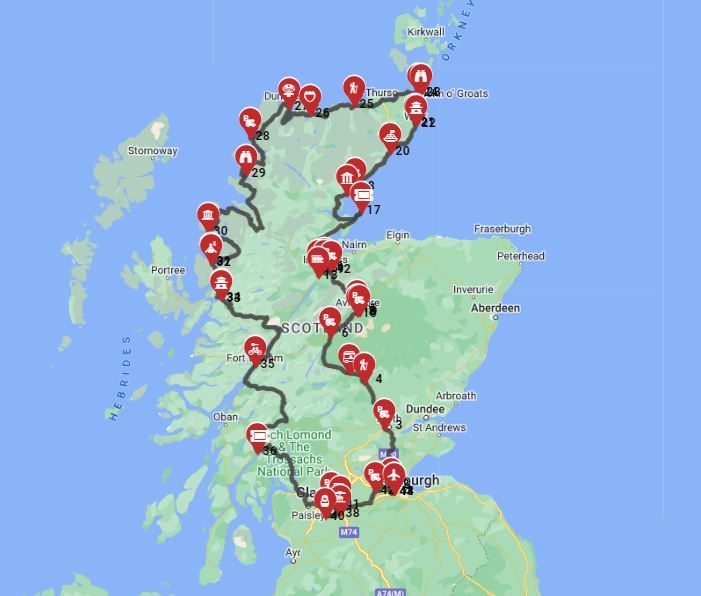
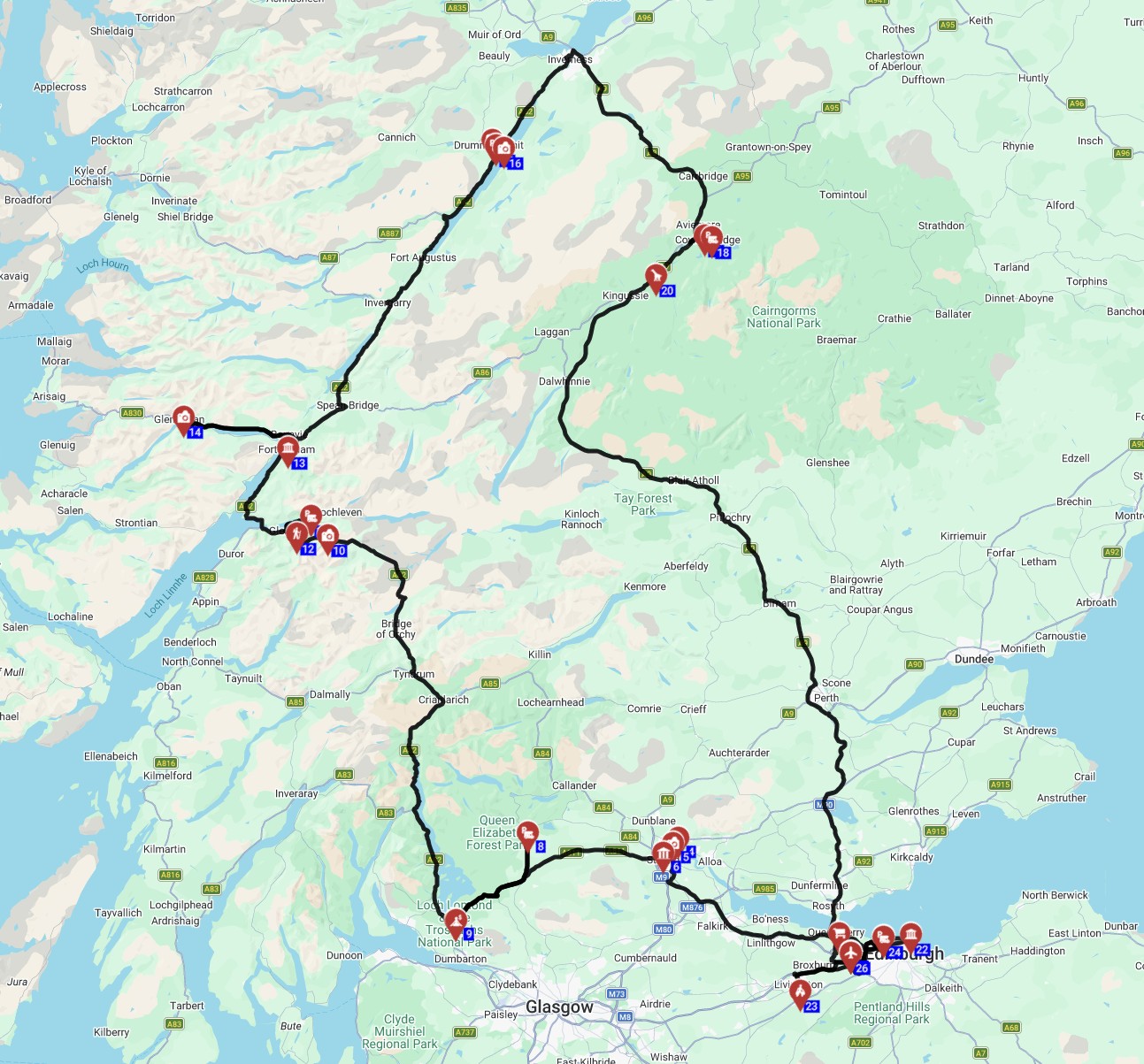
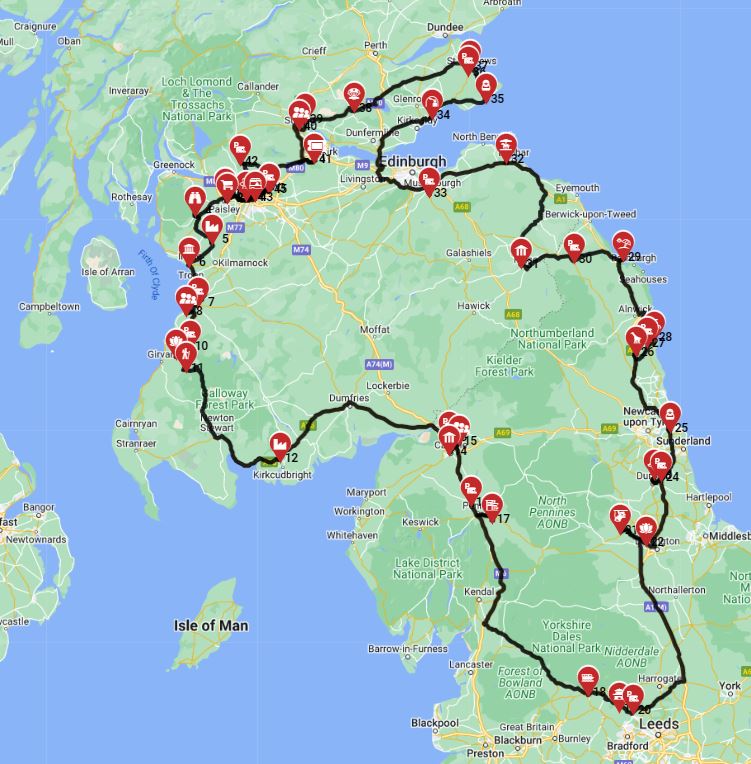
Instead of rigidly following fixed routes like the popular North Coast 500, customize your trip based on your interests, vehicle size limitations, and desired pace, allowing flexibility for weather changes or discovering hidden gems. rvplan.net offers 1,300+ pre-planned routes across 5 continents, including Scotland, which can be adapted to your preferences. Remember to embrace slow travel, averaging 100-150 km per day, allowing time to truly connect with Scotland's rich culture, delicious food, and dramatic scenery.
How difficult is it to drive an RV in Scotland?
Driving a rented RV in Scotland can be challenging for beginners due to narrow, winding roads, single-track lanes with passing places, and hilly terrain, but it is entirely manageable with caution and practice. Scotland's picturesque scenery often means navigating smaller roads than you might be used to, particularly in rural and coastal areas.
Navigating Narrow Roads & Single Tracks
Many scenic routes, especially in the Highlands and islands, feature narrow or single-track roads; be prepared to use passing places frequently, yield to oncoming traffic, and pull over when necessary. The etiquette is simple: if you see a passing place ahead on your left, pull into it. If it's on your right, wait opposite it for oncoming traffic to pass. For larger RVs, like Class A or C models averaging 7.5 meters, these roads demand extra attention to your vehicle's width and length, especially around tight bends. Drive slowly and carefully, and you can drive almost anywhere without issues. No need to stress - just use common sense and pay attention. For more specific driving guidance, consider resources related to "RV Rental Europe - Complete Guide 2026".
Vehicle-Specific Practicalities
Larger RVs (Class A or C, averaging 7.5m) require more careful navigation and awareness of their length and width, especially around tight bends or in small villages. Smaller campervans (Class B, averaging 5.8m) are significantly easier to maneuver and park. Regardless of size, patience is key: allow extra travel time, don't rush, and pull over safely to let faster traffic pass; Scottish drivers are generally understanding of tourists. Take time to get used to your RV's dimensions and handling in less congested areas before tackling more challenging routes like parts of the iconic North Coast 500.
Can you wild camp in Scotland in an RV?
Wild camping in an RV is generally tolerated in Scotland, unlike in much of the UK, but it requires strict adherence to the Scottish Outdoor Access Code and 'Leave No Trace' principles. While the 'Right to Roam' applies to non-motorized activities, it does not extend to motor vehicles. This means you cannot simply park your RV anywhere you like.
Scottish Outdoor Access Code for RVs
The Scottish Outdoor Access Code grants responsible access to most land and inland water, but for motorized vehicles, it generally means parking considerately and not causing obstruction or damage. This often translates to using designated parking areas, lay-bys, or asking for permission from landowners. Misinterpreting the code can lead to fines or being asked to move on, so it's vital for beginners to understand these distinctions.
Leave No Trace Deep Dive for RVers
Crucially, 'wild camping' for RVs means finding discrete, non-residential spots away from main roads, leaving absolutely no trace of your presence. This includes properly disposing of all litter, human waste, and grey water. Never discharge grey water or toilet waste directly into the environment. Always carry waste out and dispose of it at designated dump stations, which are common at official campsites. Protecting Scotland's fragile environment is a shared responsibility.
Supporting Local and Respectful Travel
Prioritize staying at official campsites or designated overnight parking spots whenever possible, especially in popular areas, to support local businesses and alleviate pressure on fragile environments. These sites offer amenities like fresh water, waste disposal, and often electricity, providing a comfortable and sustainable way to travel. Always seek permission from landowners if unsure about an overnight spot, and avoid staying in one location for more than a night or two; blending in rather than standing out helps preserve these beautiful areas for everyone.
Where can I park an RV in Scotland?
RV parking in Scotland primarily involves choosing between official campsites for amenities and designated overnight stops, or practicing responsible wild camping in appropriate locations. Understanding these options is key to a stress-free trip for beginners.
Campsites for RVs in Scotland
Scotland boasts numerous well-equipped campsites, ranging from basic facilities to luxurious holiday parks. These sites typically offer hook-ups for electricity, fresh water, and waste disposal, providing a secure and comfortable base for beginners. Booking campsites in advance, especially during peak season, is highly recommended. Many national and state parks only reserve 25-30% of their spots, leaving the rest for first-come-first-serve. So, you'll find a spot; if not at the first campground, then the next one. Always call ahead before driving a long distance. For finding campsites and campgrounds during your trip, we recommend using RV PLANET (rvplan.net) - a great resource for locating available spots along your route.
Designated Overnight Parking Spots
Some towns and rural areas offer designated 'aires' or specific parking zones for motorhomes, often for a small fee. These spots typically provide basic parking facilities, sometimes with waste disposal, but generally without full campsite amenities. These are great for a quick overnight stop when you don't need full services.
Responsible Wild Camping (Parking) for RVs
As previously discussed, responsible wild camping (parking) is permissible if you follow strict 'Leave No Trace' principles. It's essential to find legal, discreet, and unobtrusive spots, especially away from residential areas, private land, and popular tourist hubs to avoid issues. Always ensure you are not obstructing access, damaging the environment, or causing a nuisance. Many remote areas in the Highlands and islands may offer suitable spots if used respectfully.
Town & Attraction Parking
Parking large RVs in city centers or at popular tourist attractions can be challenging due to limited space and height restrictions. Utilize park-and-ride schemes available on the outskirts of major cities like Edinburgh and Glasgow, or plan to park your rented motorhome a little further out and use public transport to reach your destination. Drive slowly and carefully, and you can drive almost anywhere without issues. No need to stress - just use common sense and pay attention.
What is the best month to RV Scotland?
The best months for RVing in Scotland are typically May, June, and September, offering a balance of pleasant weather, longer daylight hours, and fewer midges or crowds compared to peak summer. These shoulder seasons provide an excellent experience for beginners, allowing for more comfortable driving and exploring.
Spring (April-May)
Spring generally brings good weather, with fewer midges beginning to emerge, blooming landscapes, and lower rental prices. Nights can still be chilly, and some smaller facilities or attractions may not be fully open until May. This period is ideal for those seeking quieter roads and beautiful scenery, though be prepared for changeable conditions, as Scottish weather can shift rapidly.
Summer (June-August)
Summer offers the longest daylight hours, warmest temperatures (averaging 15-18°C), and all attractions are fully open. However, this is also the busiest period with the highest prices, most crowds, and peak midge season. If you choose to travel during these months, booking your RV and campsites several months in advance (e.g., 3-6 months) is highly advisable to secure availability, though spontaneous travelers can often find first-come-first-serve spots at national parks. Checking our "Luxury RV Rental in Scotland - Premium Prices 2026" guide might give you an idea of peak season rates.
Autumn (September-October)
Autumn brings stunning autumnal colors across the landscape, significantly fewer midges than summer, and decreasing crowds. Temperatures remain mild into early October, but days shorten, and the weather can become more unpredictable with higher chances of rain or strong winds. This season is fantastic for photographers and those who prefer a tranquil travel experience, but require flexibility in their plans. Packing layers and waterproofs is essential for variable conditions.
Winter (November-March)
Winter in Scotland is characterized by the coldest, shortest days, and potential for snow and ice, especially in the Highlands. Many campsites and attractions may be closed. This season is only recommended for experienced RVers prepared for harsh conditions and who understand winterizing an RV. While challenging, the winter landscape can be dramatically beautiful and offer a unique, serene experience for the well-prepared.
How much does it cost to rent an RV in Scotland?
Renting an RV in Scotland typically ranges from £80 to £250+ per night depending on the vehicle class, season, and rental duration, but total trip costs for beginners involve more than just the rental fee. Prices are dynamic, similar to flight tickets, changing daily based on availability, seasonality, and supplier marketing decisions. The final price is set at the actual booking time.
Trip Cost Estimation by Duration
- 1-week RV rental trip in Scotland: Expect rental costs to average £560-£1750 (approx. $700-$2200 USD) for a week, with additional expenses for fuel, campsites, and food pushing the total to around £1000-£2500.
- 2-week RV rental adventure in Scotland: A two-week adventure could see rental fees ranging from £1120-£3500 (approx. $1400-$4400 USD). Including all other costs, budget roughly £2000-£5000 for a memorable 14-day journey.
- 1-month RV rental trip in Scotland: For an extended road trip, expect rental costs of £2400-£7500 (approx. $3000-$9500 USD). With daily living expenses, a month-long trip could total £4000-£10,000+.
Cost by Group Type: Couples vs. Families with Kids in Scotland
The cost of your RV rental in Scotland will also vary by group size and vehicle preference. Couples often find Class B campervans or smaller Class SI motorhomes (e.g., 5.8m to 6.9m length, 2-3 sleepers) more economical, starting around £80-£150 per night. Families with kids, typically requiring a 4-6 berth Class C (e.g., 7.5m length, 4-6 sleepers) for more space and sleeping capacity, will see higher rental costs, often £150-£250+ per night. Larger Class A motorhomes will naturally command premium prices, as detailed in "Luxury RV Rental in Scotland - Premium Prices 2026".
Last-Minute RV Rental Deals in Scotland
You can find last-minute RV rental deals in Scotland, but prices are dynamic and depend heavily on availability. While booking far in advance (3-6 months) often secures better rates and choice, spontaneous travelers sometimes find good deals closer to their departure date if suppliers have surplus vehicles. For the best prices and selection, try to book your motorhome rental at least 12 weeks out, especially for peak seasons.
How to Find the Cheapest RV Rental if You're Flexible
If you are flexible, you can find the cheapest RV rental in Scotland by:
- Choosing off-peak travel dates: Spring (April-May) and Autumn (September-October) generally offer lower rates than peak summer.
- Being flexible with your pick-up and drop-off locations: Sometimes, renting from a slightly less popular city like Dundee - Airport can be cheaper than Edinburgh or Glasgow.
- Comparing across suppliers: Bandana Caravan helps you compare final prices across 50+ leading RV suppliers worldwide, including major partners like Apollo and Britz, ensuring you get the best deal with no hidden fees.
- Considering a smaller vehicle class: Class B campervans are typically the most affordable option.
For estimating and tracking all ancillary trip costs beyond the RV rental itself (fuel, campground fees, propane, dump fees, tolls, groceries, total trip cost, daily expenses, budgeting), travelers can itemize and track every expense along the way for easy budgeting on RV PLANET routes.
Is it worth renting an RV in Scotland?
Renting an RV in Scotland is highly worth it for beginners seeking flexibility, immersion in stunning landscapes, and a unique sense of adventure that traditional travel methods cannot fully replicate. The ability to carry your accommodation with you opens up incredible opportunities to explore Scotland's dramatic beauty at your own pace.
Unparalleled Flexibility and Spontaneity
An RV allows you to customize your itinerary spontaneously, adapting to weather changes or discovering hidden gems beyond basic routes, offering freedom from hotel bookings and fixed schedules. Imagine waking up to a different breathtaking loch view each morning or changing your plans to chase the best weather. This flexibility is a core advantage of rented motorhome travel in Scotland. If you're comparing rental prices, look at a "Cheap RV Rental in Scotland - Budget Guide 2026" to make your flexible trip even more affordable.
Deep Immersion in Culture and Nature
RV travel allows you to stay closer to nature, park near hiking trails, and immerse yourself in local communities and culture. You can easily stop at farm shops for fresh local produce, visit traditional pubs for authentic Scottish food and drink, or explore whisky distilleries that often have RV-friendly parking. Cooking meals in your RV, perhaps inspired by local ingredients, adds another layer of authentic experience. Check our RV-friendly recipes playlist for ideas!
Cost-Effective for Groups
For families or groups, a rented RV can be more economical than separate accommodation and car rental, especially when factoring in the ability to cook your own meals rather than eating out for every meal. While the initial rental cost might seem higher, the savings on accommodation and dining can make it a surprisingly budget-friendly option for an extended road trip. Explore "RV Rental in Scotland - Prices and Best Deals 2026" for comparative options.
Adventure & Comfort Combined
A motorhome combines the thrill of a road trip with the comfort and convenience of having your own mobile accommodation. After a day of hiking rugged trails or exploring ancient castles, you return to your personal space, complete with kitchen, bathroom, and comfortable beds. This blend of adventure and comfort makes Scotland's diverse terrain and beauty highly accessible and enjoyable for beginner explorers.
Practical Information for RV Travel in Scotland
Navigating Scotland in a rented RV requires some practical knowledge to ensure a smooth and enjoyable trip. Familiarizing yourself with local customs and essential services will greatly enhance your experience.
Road Rules and Driving in Scotland
As mentioned, traffic drives on the left side of the road in Scotland. Speed limits are generally 30 mph (48 km/h) in urban areas, 60 mph (96 km/h) on single carriageways, and 70 mph (112 km/h) on dual carriageways and motorways for cars and smaller campervans. Larger motorhomes (over 3.5 tonnes) have lower limits, typically 50 mph (80 km/h) on single carriageways and 60 mph (96 km/h) on dual carriageways/motorways. Watch out for speed cameras and pay attention to road signs, which are generally clear. Some toll bridges exist, such as the Forth Road Bridge or Skye Bridge (though Skye is now free), but most roads are toll-free. Drive slowly and carefully, and you can drive almost anywhere without issues. No need to stress - just use common sense and pay attention.
Fuel Stations and Types
Fuel stations are generally plentiful in towns and along major routes, but they can be sparse in remote Highlands and island areas. Plan your fuel stops carefully, especially when venturing off the main roads. Diesel (often called 'white diesel') is the most common fuel for modern motorhomes. Many older models may use petrol (gasoline). Always check your vehicle's fuel type before filling up.
Emergency Numbers and Assistance
In case of an emergency in Scotland, dial 999 for police, fire, or ambulance services. For non-emergencies, you can call 101 for police. Keep your rental company's 24/7 support number handy for any mechanical issues with your RV. Bandana offers real people behind you before, during, and after your booking to ensure you always have someone to turn to for coordination.
SIM Cards and Mobile Connectivity
To ensure consistent connectivity, consider purchasing a local pay-as-you-go SIM card from providers like EE, Vodafone, or O2 upon arrival. These are readily available at supermarkets, newsagents, and mobile phone stores. Coverage will vary, with urban areas having strong signals and remote regions potentially having limited or no service. Downloading offline maps for navigation is always a smart idea.
What You Shouldn't Miss
- Drive the North Coast 500: While popular, this 830 km (516-mile) route around Scotland's northern Highlands offers unparalleled coastal scenery, ancient ruins, and charming villages. Plan ample time (at least 7-10 days) to truly savor the slow travel experience and navigate its challenging sections, particularly in a larger Class C or Class A motorhome.
- Explore the Isle of Skye: With its dramatic landscapes like the Old Man of Storr, Quiraing, and Fairy Pools, Skye is a must-see. Book ferry crossings and campsites well in advance, especially for a rented motorhome, as the island is highly sought after.
- Visit a Whisky Distillery: Scotland is famous for its whisky, and many distilleries offer tours and tastings. Some even have dedicated RV parking or are located near campsites, offering a perfect opportunity for cultural immersion.
- Hike in a National Park: Whether it's the Cairngorms for its mountains and wildlife or Loch Lomond & The Trossachs for its lochs and forests, Scotland's national parks offer incredible hiking opportunities for all skill levels.
- Discover Historic Castles: From the iconic Edinburgh Castle and Stirling Castle to the dramatic Eilean Donan Castle and the haunted Glamis Castle, Scotland's history is best explored through its impressive fortifications. Many have large car parks that can accommodate RVs.
- Experience Local Food Markets: Seek out local farmers' markets or roadside honesty boxes for fresh produce, artisanal cheeses, and baked goods. This is a great way to stock your RV kitchen and support local communities, enhancing your culinary road trip.
Looking for expert insights from Avi Bandana? Top 5 Adventures - recommendations from Avi Bandana.
Final Thoughts
Renting an RV for your first trip to Scotland is an invitation to an unforgettable adventure, offering unmatched freedom and a deep connection to its dramatic landscapes and rich culture. While planning is key, don't let the details overwhelm you. We are here to guide you every step of the way, ensuring you choose the perfect motorhome or campervan for your needs.
Imagine the joy of waking up to a new view each day, exploring ancient castles, and discovering hidden glens at your own pace. With Bandana Caravan, you’re not just renting a vehicle; you’re unlocking a world of possibilities with reliable support and transparent pricing.
So, take the leap! Start dreaming, start planning, and let Scotland's magic unfold before you. Get inspired for your next trip! Discover top destinations, planning tips, all in one place!
Check Scotland RV Rental Prices Now and begin your incredible Scottish journey!