For live availability and current prices, start with our RV Rental England - Complete Guide 2026 guide.
In This Guide
- The 5 RV Families Compared for England
- Class A (Integrated) - Best For
- Price Comparison by RV Class in England
- Class SI (Semi-Integrated) - Best For
- Class C (Alcove) - Best For
- Class B (Campervan) - Best For
- Class TC (Truck Camper) - Best For
- Side-by-Side Comparison Table
- Our Recommendation for RV Rental Beginners Travelers in England
- What are the road rules for RVs in England?
- How long does it take to get used to driving an RV?
- What are the rules for wild camping in England?
- How do I find RV campsites in England?
- Where can I empty my RV waste in England?
- What apps are essential for RV travel in England?
- What is the best time of year to RV in England?
- How much does it cost to rent an RV in England?
- What documents do I need to rent an RV in England?
- Are there age restrictions for RV rental in England?
- Can you bring pets in an RV rental in England?
The 5 RV Families Compared for England
Choosing the right RV family is critical for a successful beginner trip in England, as vehicle size significantly impacts navigability on narrow roads, parking availability, and comfort levels. England's diverse terrain, from bustling cities to winding country lanes, alongside its often damp climate and varying trip lengths, makes the initial RV selection paramount for a smooth experience. Consider group size, budget, desired amenities, and driving confidence when comparing Class A, SI, C, B, and TC options for your English adventure.
Class A (Integrated) - Best For
Class A (Integrated) motorhomes are best suited for beginners in England who prioritize luxury, spacious living, and travelling with larger groups, similar to driving a bus. Bandana's fleet typically shows Class A models with an average length of 7.5 meters, sleeping 4.4 people, and offering an average load capacity of 209.5 kg, with fuel consumption around 11-12 Liters/100 km. These vehicles offer extensive amenities and storage, ideal for longer trips or those seeking a 'home-away-from-home' experience. A key trade-off for beginners in England is their size, which can make navigating narrow country lanes and parking in historic town centers challenging.
Price Comparison by RV Class in England
Because pricing is flex-rate, the table below pulls real example prices from Bandana's live search for various RV classes and durations. These prices are estimates and can fluctuate daily based on demand, seasonality, and availability; check the search box at the top of the page for the most current live numbers.
| Family | Avg Length (m) | Sleeps | Fuel Use (L/100km) | Best Use Case in England |
|---|---|---|---|---|
| Class A (Integrated) | 7.5 | 4.4 | 11-12 | Luxury, large groups, long trips, spacious living. |
| Class SI (Semi-Integrated) | 6.9 | 3.8 | 10-11 | Balanced comfort, couples/small families, manageable size for varied roads. |
| Class C (Alcove) | 7.5 | 5.8 | 10-12 | Families/larger groups, extra sleeping capacity, cost-efficient for more people. |
| Class B (Campervan) | 5.8 | 3.2 | 10 | Maneuverability, fuel economy, solo/couples, urban exploration, remote access. |
| Class TC (Truck Camper) | 5.5 | 2.4 | 12-17 | Off-grid adventure, flexible travel, detachable unit, rugged terrain. |
Class SI (Semi-Integrated) - Best For
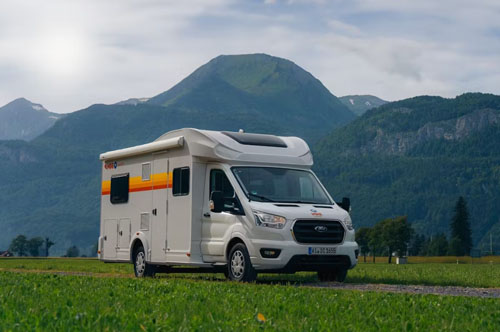
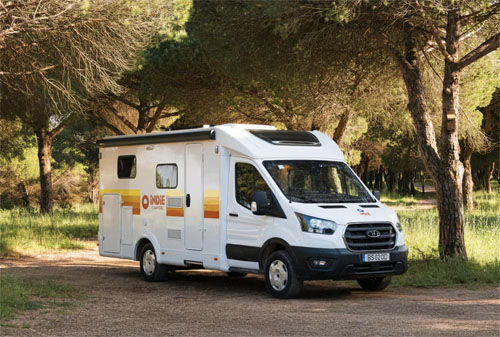
Class SI (Semi-Integrated) motorhomes are an excellent balanced choice for RV rental beginners in England, offering a good compromise between space, comfort, and maneuverability. Bandana's fleet typically features Semi-integrated RVs with an average length of 6.9 meters, sleeping 3.8 people, and providing an average load capacity of 72.2 kg, with fuel consumption generally around 10-11 Liters/100 km. These models often outperform larger Class A vehicles in navigating England's smaller roads and are more spacious than Campervans (Class B) or Truck Campers (Class TC), suiting couples or small families. Their streamlined design also often results in better fuel efficiency compared to Alcove (Class C) models.
Class C (Alcove) - Best For
Class C (Alcove) motorhomes are highly suitable for families or groups of beginners in England, primarily due to their characteristic over-cab sleeping area which provides extra beds. Bandana's fleet typically shows Alcove RVs averaging 7.5 meters in length, sleeping 5.8 people, and offering an average load capacity of 42.4 kg, with common fuel consumption rates of 10-12 Liters/100 km. This class emphasizes cost-efficiency for larger groups, making it a popular choice for those needing more sleeping capacity without the full size of a Class A. While larger, their robust build and straightforward handling make them manageable on England's main roads, prioritizing accommodation over extreme agility.
Class B (Campervan) - Best For
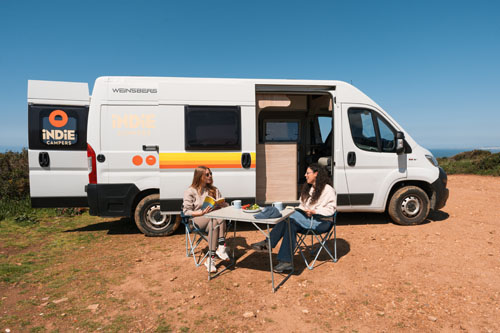
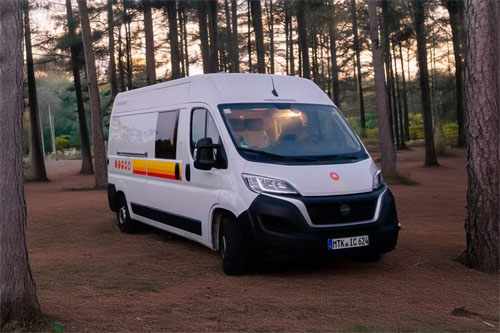
Class B (Campervan) models are ideal for RV rental beginners in England who prioritize maneuverability, fuel economy, and navigating tighter spaces, perfect for couples or solo travelers. Bandana's fleet typically shows Campervans with an average length of 5.8 meters, sleeping 3.2 people, and providing an average load capacity of 37 kg, with fuel consumption often around 10 Liters/100 km. These compact vehicles excel in scenarios requiring access to small villages, historic town centers, and easier parking where larger RVs would struggle. Campervans are favored for their car-like driving experience, making them less intimidating for new RV drivers and offering greater flexibility for spontaneous travel across the English countryside.
Class TC (Truck Camper) - Best For
Class TC (Truck Camper) RVs are an excellent choice for beginner adventurers in England seeking an off-grid, flexible travel option, due to their detachable living units. Bandana's fleet typically shows Truck Campers with an average length of 5.5 meters, sleeping 2.4 people, and common fuel consumption around 12-17 Liters/100 km; payload capacity is highly variable, with fleet data indicating an average of 0 kg. These vehicles are positioned as the flexible, off-road capable choice, allowing the truck to be used independently for day trips once the camper is unmounted. Their compact size and robust build are well-suited for exploring more rugged English terrain or accessing remote locations that larger, integrated RVs might find challenging.
Side-by-Side Comparison Table
Below is a comparative overview of the various RV families available for rent in England, highlighting key specifications and their best use cases for beginner travelers.
| Family | Avg Length (m) | Sleeps | Fuel Use (L/100km) | Best Use Case in England |
|---|---|---|---|---|
| Class A (Integrated) | 7.5 | 4.4 | 11-12 | Luxury, large groups, long trips, spacious living. |
| Class SI (Semi-Integrated) | 6.9 | 3.8 | 10-11 | Balanced comfort, couples/small families, manageable size for varied roads. |
| Class C (Alcove) | 7.5 | 5.8 | 10-12 | Families/larger groups, extra sleeping capacity, cost-efficient for more people. |
| Class B (Campervan) | 5.8 | 3.2 | 10 | Maneuverability, fuel economy, solo/couples, urban exploration, remote access. |
| Class TC (Truck Camper) | 5.5 | 2.4 | 12-17 | Off-grid adventure, flexible travel, detachable unit, rugged terrain. |
Our Recommendation for RV Rental Beginners Travelers in England
For most RV rental beginners in England, we primarily recommend a Class SI (Semi-Integrated) motorhome due to its optimal balance of comfort, amenities, and manageable size for England's diverse road network. Its average length of 6.9 meters makes it significantly easier to navigate narrow country lanes and park compared to larger Class A or C models, while still offering ample living space for couples or small families. As a strong runner-up, Class B (Campervan) is highly recommended for beginners prioritizing extreme maneuverability and fuel efficiency, especially if you plan to explore many small villages and urban areas. The Campervan's compact dimensions and car-like driving make it the least intimidating option for new RV drivers, offering unparalleled flexibility.
What are the road rules for RVs in England?
Driving an RV in England requires adherence to specific road rules, including driving on the left, understanding distinct speed limits for larger vehicles, and preparing for unique road challenges. Key rules include national speed limits (e.g., 50 mph on single carriageways, 60 mph on dual carriageways for vehicles over 3.05 tonnes or 3.5t), careful navigation of narrow country lanes, and awareness of height/width restrictions in historic town centers. Beginners should plan routes to avoid overly restrictive roads, utilize RV-specific navigation apps, and practice wider turns for roundabouts and junctions. Understanding signage for large vehicles and avoiding peak traffic hours can significantly ease the driving experience, addressing concerns about it being hard to drive an RV in England.
How long does it take to get used to driving an RV?
The adjustment period for driving an RV in England typically varies by individual experience, but most beginners can feel comfortable within a few hours to a couple of days of practice. It's recommended to start in an open, low-traffic area to get accustomed to the RV's dimensions, weight, and increased braking distance. Focus on mastering mirror usage for blind spots, practicing wider turns at junctions and roundabouts, and understanding the vehicle's height for bridges and overhead obstacles. Gradual exposure to different road types, from quiet roads to main highways, will build confidence quickly.
What are the rules for wild camping in England?
Wild camping (parking overnight outside designated campsites) with an RV is generally illegal across most of England without explicit landowner permission, making it a critical consideration for RV rental beginners. While a 'right to roam' exists in some areas for walkers, this does not extend to motorized vehicles or overnight stays outside of designated pitches. The primary exception is parts of Dartmoor National Park, where specific areas allow wild camping by foot, but usually not with vehicles. Practical alternatives include informal overnight stops in pub car parks (with permission), certified sites (CLs/CSs), and formal campsites, which offer proper facilities and ensure legality.
How do I find RV campsites in England?
RV campsites in England are readily found using dedicated camping apps, online directories, and through reputable organizations like The Camping and Caravanning Club or the Caravan and Motorhome Club. Essential apps such as Park4Night, Campercontact, and Brit Stops (for pub stopovers) provide locations, reviews, and details on facilities. Booking in advance is highly recommended, especially during peak season and for popular destinations, to secure a pitch with desired amenities like electric hook-up or hardstanding. Joining a national club can also unlock access to exclusive member-only Certified Locations (CLs) and Certified Sites (CSs), which are smaller, more intimate campsites.
Where can I empty my RV waste in England?
RV waste, including greywater (from sinks/showers) and blackwater (from toilets), can typically be emptied at designated 'disposal points' or 'service points' found at most official campsites and some public motorhome stopovers across England. These facilities, often called 'Elsan points' for chemical toilets, are crucial for responsible RV travel and maintaining environmental cleanliness. It is imperative never to empty waste into roadside drains or natural environments, as this can cause pollution and is illegal. Planning your route with regular campsite stops ensures you have access to these essential services for proper waste management.
What apps are essential for RV travel in England?
Essential apps for RV travel in England include robust navigation tools, specialized camping locators, and applications for real-time information, enhancing safety and convenience. Navigation apps like Google Maps or Waze are vital for routing, though specialized RV navigation apps (e.g., Co-Pilot RV) can offer routes tailored to vehicle dimensions. Camping apps such as Park4Night, Campercontact, and the official apps for The Camping and Caravanning Club or Caravan and Motorhome Club are indispensable for finding pitches and services. Additionally, fuel finder apps, local weather forecasts, and apps providing information on local attractions or public transport can greatly improve your travel experience.
What is the best time of year to RV in England?
The best time to RV in England for beginners is typically late spring (May-June) or early autumn (September-October) due to milder weather, fewer crowds, and more manageable driving conditions. During these shoulder seasons, attractions are open, campsites are less crowded than peak summer, and daylight hours are still long enough for extensive exploration. While summer (July-August) offers the warmest weather and longest days, it also brings larger crowds, higher prices for rentals and campsites, and potentially more challenging road traffic. Off-season or winter travel (November-April) can offer significant cost savings and unique serene experiences, though some campsites and attractions may be closed, and weather can be unpredictable.
How much does it cost to rent an RV in England?
The cost to rent an RV in England varies significantly, typically ranging from £70-£200+ per night based on RV class, rental duration, season, and company, with substantial additional expenses for a comprehensive budget. Beyond the rental fee, beginners should budget for fuel (Bandana's fleet typically consumes 10-17 Liters/100 km), campsite fees (£20-£50+ per night), and potential tolls or ferry costs. Other crucial expenses include food (budgeting for cooking in the RV saves money), attractions, and comprehensive insurance coverage. Budget-saving tips include traveling during the off-season, booking rentals and campsites in advance, and utilizing amenities within the RV to reduce dining out expenses. For ideas you can prep on the road, watch our RV-friendly recipes playlist on YouTube. On the routes offered through RV PLANET routes, you can itemize and track every expense along the way for easy budgeting.
What documents do I need to rent an RV in England?
To rent an RV in England, you will typically need a valid driving license, proof of address, and potentially an International Driving Permit (IDP) depending on your country of origin and the rental company's policy. Most rental companies require drivers to have held their license for at least 2-3 years, with specific endorsements for larger vehicles if applicable. Proof of identity (passport or national ID) and two forms of proof of address (e.g., utility bill, bank statement) are also commonly required. For non-EU/UK license holders, an International Driving Permit (IDP) is often necessary in conjunction with your domestic license.
Are there age restrictions for RV rental in England?
Most RV rental companies in England impose age restrictions on drivers, typically requiring them to be between 25 and 75 years old due to insurance policies. A minimum age of 25 is common, with some providers accommodating drivers aged 21-24 often with additional surcharges or restricted vehicle options. Similarly, there can be an upper age limit, usually around 70 or 75, which might also incur higher insurance premiums or require specific driving assessments. Always confirm the exact age requirements directly with your chosen rental company and their insurance provider before booking.
Can you bring pets in an RV rental in England?
Many RV rental companies in England offer pet-friendly vehicles, allowing you to bring your furry companions along for the adventure, usually for an additional cleaning fee. It is crucial to confirm the specific pet policy with your chosen rental provider in advance, as some may have restrictions on pet size, breed, or the number of animals allowed. An extra security deposit or a non-refundable cleaning fee is common for pet-friendly rentals to cover potential wear and tear or additional cleaning required. Planning for pet-friendly campsites and attractions is essential to ensure a smooth and enjoyable trip for all travelers, integrating niche-specific itineraries such as pet-friendly travel.
What You Shouldn't Miss
- Explore the historic charm of the Cotswolds by motorhome, with its picturesque villages and rolling hills.
- Drive a scenic route along the Jurassic Coast, a UNESCO World Heritage Site offering dramatic coastal landscapes and fossil hunting opportunities.
- Visit the Lake District National Park for breathtaking mountain scenery, serene lakes, and excellent hiking trails, perfect for a Class B campervan.
- Immerse yourself in history with a visit to Stonehenge, Hadrian's Wall, or one of England's many medieval castles.
- Experience the vibrant culture and iconic landmarks of cities like London, Bath, or York, remembering to drive slowly and carefully in urban areas.
Final Thoughts
Renting an RV in England offers an unparalleled way to experience the country's diverse landscapes and rich history at your own pace. While navigating narrow roads or finding parking might require a bit more attention, the freedom and unique experiences far outweigh these considerations. We encourage you to embrace the adventure, explore those charming villages off the beaten path, and create unforgettable memories on your English RV journey.
With Bandana Caravan, you get more than just a rental; you gain a partner committed to making your RV adventure seamless and enjoyable. We handle the complexities so you can focus on the exploration. Let us help you plan your dream trip and discover the magic of England from the comfort of your own mobile home.