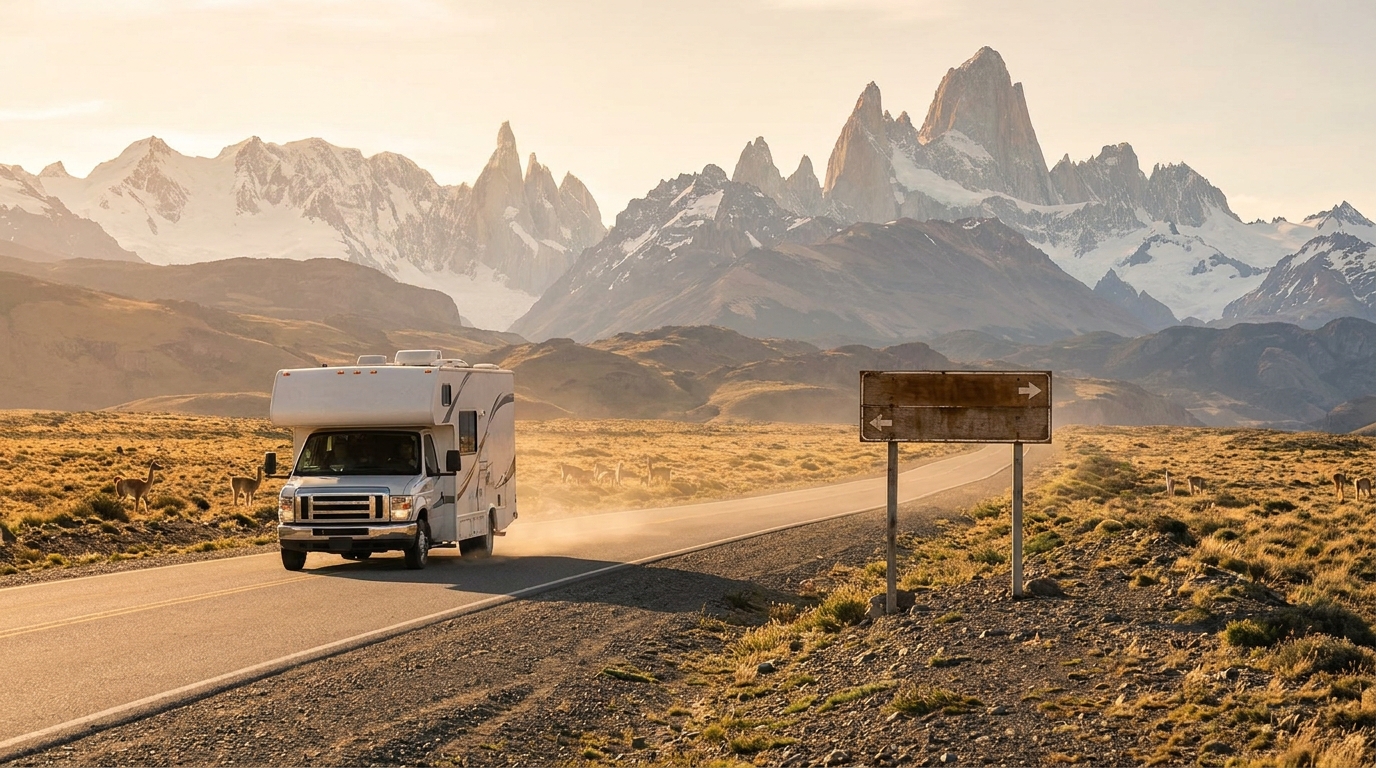
In This Guide
- Best South America RV Itinerary for RV rental beginners - Overview
- 7-Day Classic Route in South America
- 14-Day Extended Journey in South America
- Recommended RVPLAN Trip for South America
- Must-See Stops Along the Way (Avi Bandana Picks)
- Daily Driving Distances & Drive Times in South America
- Best RV Class for This Itinerary - Couple & Family Picks
- What is the 3-3-3 rule for RV travel?
- Can you RV in South America?
- Is it cheaper to rent an RV or stay in a hotel?
- Where is the cheapest country to rent a campervan?
- What is the 4-4-4 rule for RV travel?
- What is the best route to travel through South America?
- Which countries are best for taking RV trips?
- Is renting an RV cheaper than flying?
- What is a must see in South America?
Best South America RV Itinerary for RV rental beginners - Overview
A South America RV adventure for beginners typically involves exploring regions like Patagonia (Chile/Argentina) or the Andean highlands (Ecuador/Peru) with careful planning. For first-timers, a foundational trip of 7-14 days is recommended, allowing for slow travel and deep cultural immersion without feeling rushed. The ideal seasons for RV travel are generally the shoulder seasons-spring (September-November) and autumn (March-May)-to avoid extreme weather conditions and the busiest tourist crowds. Total distances for these beginner itineraries can range from approximately 1,000 km (620 miles) for a 7-day regional exploration to about 2,500 km (1,550 miles) for a 14-day extended journey. For live availability and current prices, start with our RV Rental South America - Complete Guide 2026 guide. This comprehensive resource is designed to help you navigate your first journey.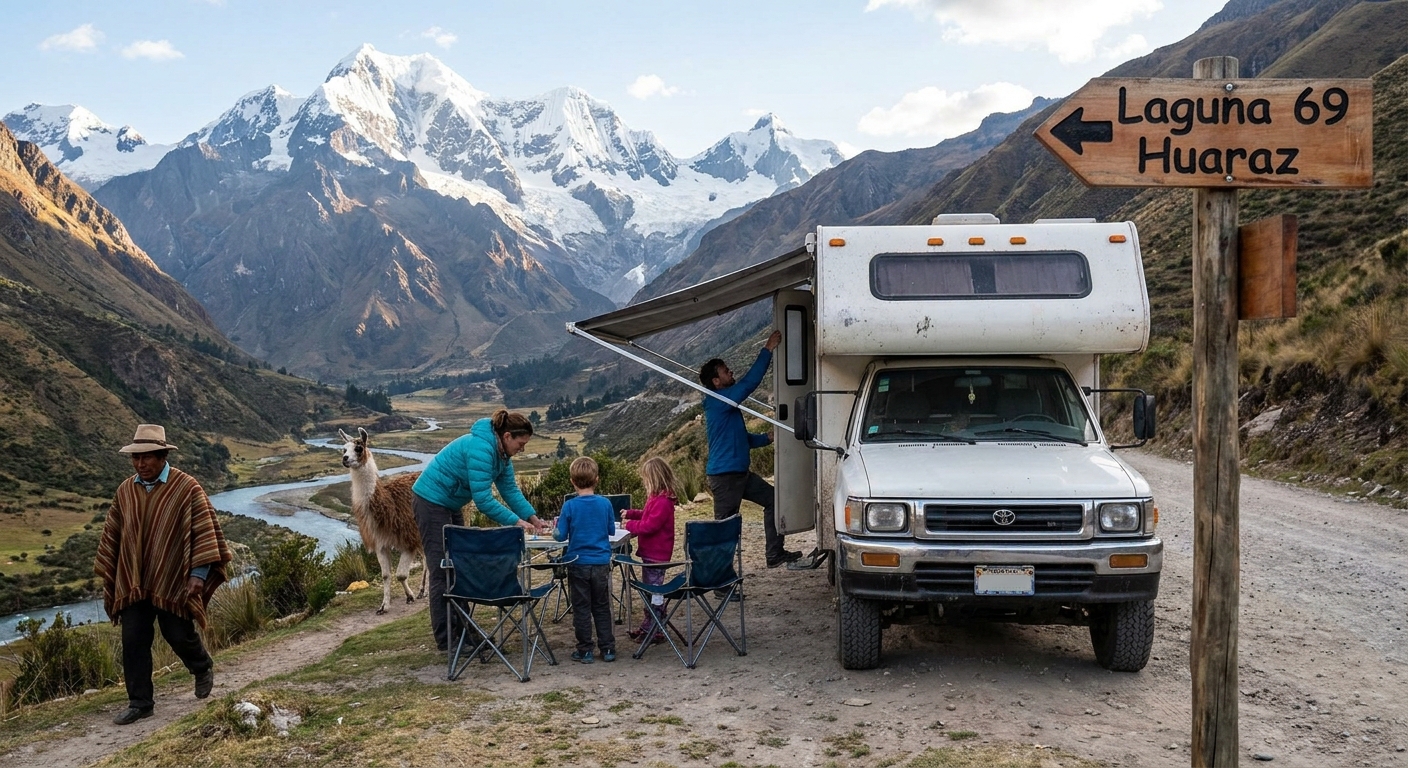
7-Day Classic Route in South America
A manageable and rewarding 7-day classic route for RV rental beginners in South America can start from Santiago, Chile, offering a taste of coastal beauty and renowned wine country.- Day 1: Santiago, Chile → Valparaíso (approx. 120 km / 75 miles): Pick up your rented RV in Santiago, then drive to the vibrant coastal city of Valparaíso. Spend the afternoon exploring its colorful hills and iconic street art. Plan to sleep at a welcoming campsite near the coast for your first night.
- Day 2: Valparaíso → Casablanca Valley (approx. 40 km / 25 miles): Enjoy a leisurely morning in Valparaíso before heading to the renowned Casablanca Wine Valley. Indulge in some wine tasting at a local vineyard. Many vineyards offer RV facilities for overnight parking, providing a unique experience.
- Day 3: Casablanca Valley → Pomaire → Lago Rapel (approx. 100 km / 60 miles): Visit Pomaire, a traditional pottery village famous for its clay pig crafts, then continue your journey to Lago Rapel for scenic views and potential water activities. Secure a spot at a lakeside resort campground.
- Day 4: Lago Rapel → Pichilemu (approx. 100 km / 60 miles): Drive to Pichilemu, recognized as Chile's surf capital. Relax on the beautiful beaches or watch the skilled surfers. An overnight stay at a beachfront campground offers prime ocean access.
- Day 5: Pichilemu → Colchagua Valley (approx. 150 km / 90 miles): Delve deeper into Chile's wine country by exploring the picturesque Colchagua Valley, home to premium wineries. Look for an RV-friendly wine estate or a nearby campground for the night.
- Day 6: Colchagua Valley → Santa Cruz → San Fernando (approx. 70 km / 45 miles): Visit the Colchagua Museum in Santa Cruz and enjoy the charming town before a short drive to San Fernando. You can park at a municipal site or a private campground.
- Day 7: San Fernando → Santiago, Chile (approx. 140 km / 85 miles): Return to Santiago, ensuring you allow ample time for RV return procedures and a smooth transition back. This route ensures a memorable first South American RV adventure.
14-Day Extended Journey in South America
For those with two weeks, an extended journey through Chilean Patagonia offers breathtaking landscapes and an unforgettable RV experience. This itinerary focuses on the stunning Lake District and the Carretera Austral, starting and ending near Coyhaique for convenience.- Days 1-3: Chilean Patagonia Introduction (Puerto Montt → Puerto Varas → Petrohué Falls, approx. 180 km / 110 miles): Begin your adventure in Chile's beautiful Lake District. Pick up your rented RV in Puerto Montt, then drive to the picturesque German-influenced town of Puerto Varas. Explore the stunning Petrohué Falls and Osorno Volcano, spending your nights at charming lakeside campgrounds.
- Days 4-6: Carretera Austral North (Vicente Pérez Rosales NP → Hornopirén → Caleta Gonzalo, approx. 200 km / 125 miles + ferry): Head south along the legendary Carretera Austral. This involves taking a scenic ferry from Hornopirén to Caleta Gonzalo, which is part of Pumalín Park. Explore its pristine nature, opting for wild camping where permitted or utilizing designated sites.
- Days 7-9: Central Carretera Austral (Chaitén → Futaleufú → La Junta, approx. 250 km / 155 miles): Continue your journey through Chaitén, a town recovering from volcanic eruptions. Consider a detour to Futaleufú, renowned for world-class white-water rafting, before proceeding to La Junta, a small town nestled between mountains. Utilize campgrounds in towns or amidst nature.
- Days 10-12: Southern Carretera Austral (La Junta → Coyhaique → Puerto Río Tranquilo, approx. 300 km / 185 miles): Drive to Coyhaique, the largest city in the region, providing an opportunity for resupply and essential services. Then, head south towards Puerto Río Tranquilo to witness the mesmerizing Marble Caves (Capillas de Mármol) by boat. Camp near the lake for spectacular views.
- Days 13-14: Return Journey & Farewell (Puerto Río Tranquilo → Balmaceda Airport (Coyhaique), approx. 200 km / 125 miles): Enjoy a final morning immersed in the Patagonian landscape before making your return drive to Balmaceda Airport (near Coyhaique) for your departure, ensuring ample time for your RV return procedures. This journey provides a comprehensive introduction to Patagonia's rugged beauty.
Recommended RVPLAN Trip for South America
For first-time RV renters in South America, exploring the tailored itineraries available on rvplan.net is highly recommended, as these professionally crafted routes simplify the planning process. RV PLANET itineraries provide detailed daily schedules, recommended stops, and essential logistical information for RV travel across the continent. By leveraging these expertly designed route plans, travelers can discover trips optimized for various durations and interests, ensuring a seamless and memorable adventure without the usual pre-trip planning headaches. Plus, you receive a 25% planning discount when you use rvplan.net to organize your trip, making the journey even more accessible.Must-See Stops Along the Way (Avi Bandana Picks)
"Looking for expert insights from Avi Bandana? Top 5 Adventures - recommendations from Avi Bandana" involve truly immersing yourself in the local culture rather than just hitting major tourist landmarks. Avi Bandana suggests seeking out traditional markets, such as the vibrant indigenous market in Otavalo, Ecuador, or the historic San Telmo market in Buenos Aires, Argentina, for authentic crafts and unique local flavors. Prioritize dining at traditional restaurants, known as 'comedores' or 'picadas,' where you can savor authentic, home-cooked meals that provide a genuine taste of the region’s culinary heritage. Engaging with local industries, like small-scale artisans or agricultural producers, can offer unique insights into the culture and economy of the areas you visit. These experiences often provide the most profound and memorable travel moments, fostering a deeper connection with the places and people of South America.Daily Driving Distances & Drive Times in South America
Avi Bandana recommends a maximum daily driving distance of 100 miles or 150 km on average when exploring South America by RV to truly embrace slow travel and savor the scenery. This recommendation factors in the continent's diverse and often challenging road conditions, which can include extensive unpaved sections, steep mountain grades, numerous *topes* (speed bumps), and mandatory toll booths, all significantly increasing travel times compared to driving in other regions. For instance, a 100 km (62 miles) stretch that might take an hour on a North American highway could easily require 2.5-3 hours of driving in parts of South America due to varied terrain and road quality. When planning routes, remember that a drive from San Pedro de Atacama to Salta, across the Andes, is about 600 km, but could demand 10-12 hours of driving over two days, including complex border crossing procedures and necessary acclimatization to high altitudes. Similarly, traveling from Puerto Varas to Chaitén in Chilean Patagonia, approximately 200 km (125 miles), often involves ferries and unpaved sections, easily filling an entire day's journey.Best RV Class for This Itinerary - Couple & Family Picks
The choice of RV for your South American adventure significantly impacts your experience, with different classes suiting various travel groups and terrains. For a couple embarking on a South American RV adventure, a Class B Campervan is an excellent choice, offering superior maneuverability and fuel efficiency on the continent's diverse roads. Bandana's global fleet typically includes campervans like the "Category Van", which average 5.8 meters in length and comfortably sleep up to 3.2 people. These compact units are easier to handle, especially on narrower city streets or challenging unpaved mountain roads common in South America. For families traveling with children, the Class C Alcove motorhome provides ample space and comfort. These Class C RVs from Bandana's global fleet average 7.5 meters in length, featuring 5.8 sleeping places and a capacity for 4.4 adults, making them ideal for longer trips where additional living and sleeping areas are valued. Their robust build is also well-suited for the varied road conditions encountered across the continent. To simplify your journey even further, consider Bandana's Rent&Plan service, which pairs your RV rental with a ready-made itinerary designed by our travel professionals, offering full access to trip-planning software and removing much of the organizational stress. For an estimated total cost, remember that RV PLANET routes allow you to itemize and track every expense.What is the 3-3-3 rule for RV travel?
The 3-3-3 rule for RV travel is a widely adopted guideline that suggests RVers drive no more than 300 miles (approximately 480 km) a day, arrive at their destination by 3 PM, and stay for a minimum of 3 nights. This rule is designed to promote a relaxed pace of travel, mitigate driver fatigue, allow ample time for campsite setup and local exploration, and minimize the stress often associated with rushed road trips. However, for RV travel in South America, this rule should be significantly adjusted to account for longer drive times over shorter distances and variable road quality. A more practical adaptation for South America might be "150 km (100 miles), arrive by 3 PM, stay for 3 nights" to better align with the continent's unique travel realities and encourage a slower, more enjoyable pace.Can you RV in South America?
Yes, RVing in South America is absolutely possible and offers an incredible way to experience the continent's diverse landscapes and vibrant cultures, though it demands meticulous planning and a keen awareness of local conditions. Safety and security are paramount; always secure your rented RV, avoid driving at night, and research safe parking options such as established campgrounds or guarded lots. Border crossings are often more complex for RVs, requiring specific vehicle permits, an International Driving Permit (IDP) in addition to your standard driver's license, passports, and sometimes temporary import documents for the vehicle itself; expect potential delays and fees at each border. Comprehensive vehicle, health, and travel insurance is critical, so ensure your policies cover international travel in South America and specific RV-related incidents. Road conditions can vary dramatically from well-maintained highways to unpaved gravel roads, steep mountain passes, and numerous *topes* (speed bumps), so vehicle preparation, including robust tires (and multiple spares) and serviced suspension, is key. For connecting with home, mobile internet options include local SIM cards or international roaming, with coverage and cost varying significantly across countries. Lastly, be mindful of cultural nuances; learning basic Spanish phrases and respecting local customs, especially in rural communities, will enrich your travel experience.Is it cheaper to rent an RV or stay in a hotel?
Whether renting an RV is cheaper than staying in hotels in South America largely depends on the duration of your trip, the number of travelers, and your preferred travel style. While the upfront RV rental costs might seem higher than a single hotel room, an RV combines accommodation and transportation, eliminating separate expenses for taxis, buses, and car rentals. Rented RVs offer immense accommodation flexibility, allowing for wild camping where permitted, which can drastically reduce lodging costs compared to hotels. With an RV's fully equipped kitchen, you can prepare your own meals, significantly cutting down on restaurant expenses, especially when compared to eating out for every meal during a hotel stay. Beyond the rental fees, factor in fuel costs (which can be substantial, particularly for larger motorhomes on longer routes), campground fees (if not wild camping), road tolls, potential border crossing fees, and any unexpected maintenance or supplies. For families or groups of 4-6 people, the per-person cost of a rented RV often becomes more economical than booking multiple hotel rooms and arranging separate daily transportation, making it an attractive option for budget-conscious explorers. You can find out more about various pricing options in our guide to Cheap RV Rental in South America - Budget Guide 2026. For even more specific details on dynamic pricing and how to find the best deals, check out RV Rental Deals in South America - Latest Offers 2026. For budget planning, remember that you can itemize and track every expense along your journey using RV PLANET routes.Where is the cheapest country to rent a campervan?
Determining the single cheapest country to rent a campervan in South America can fluctuate annually due to dynamic pricing, specific rental company promotions, and local economic factors. Generally, countries with more developed tourism infrastructure and larger vehicle fleets, such as Argentina and Chile, tend to offer more competitive pricing and a wider selection of rental options. While the daily rental rate might appear higher in these countries compared to less-traveled destinations, they often compensate with better road infrastructure and more established support services, which can lead to reduced overall trip costs (e.g., lower fuel consumption on better roads, easier access to maintenance). Smaller, less-traveled countries might have fewer rental choices, potentially resulting in higher prices or less vehicle variety; however, local operators may sometimes offer unique deals. Always compare not only the daily rental rate but also insurance inclusions, mileage limits, and one-way rental fees, as these additional costs can significantly impact the total trip expense. For those seeking premium options, consult Luxury RV Rental in South America - Premium Prices 2026.What is the 4-4-4 rule for RV travel?
The 4-4-4 rule for RV travel is a variation of the 3-3-3 rule, suggesting that RVers aim to travel no more than 400 miles (approximately 640 km) a day, stop driving by 4 PM, and stay at least 4 nights at each location. This guideline is designed for even more relaxed travel, promoting extended stays for deeper exploration and prioritizing comfort and safety over covering vast distances quickly. However, like the 3-3-3 rule, applying the 4-4-4 rule directly in South America might be overly ambitious due to the continent's slower average speeds, diverse terrain, and variable road conditions. For South America, a more practical adaptation would likely be "200 km (125 miles), stop by 4 PM, stay 4 nights" to better align with local travel realities and ensure ample time for immersive exploration in each area.What is the best route to travel through South America?
The "best" RV route through South America for beginners depends entirely on individual interests, available time, and comfort levels with varied terrain. However, popular and highly rewarding options include the iconic Patagonian routes in Chile and Argentina, and manageable sections of the Pan-American Highway. Routes like Chile's Carretera Austral or Argentina's Ruta 40 offer unparalleled natural beauty, ranging from majestic glaciers and mountains to vast wilderness, making them ideal for nature enthusiasts and adventurers (see our 14-Day Extended Journey in South America example above). For those interested in high-altitude landscapes, vibrant indigenous cultures, and ancient ruins, routes through the Andean Highlands in Ecuador, Peru, and Bolivia offer a challenging but profoundly rewarding experience, though they require careful planning for altitude sickness and varied road conditions. Coastal drives along sections of the Pan-American Highway provide access to bustling cities, beautiful beaches, and national parks, often with better road infrastructure. For beginners, starting with a well-defined regional route, such as the Chilean Lake District and northern Patagonia, is highly recommended to gain confidence and experience before tackling more extensive trans-continental journeys. For those looking to plan longer journeys, consider our Long-Term RV Rental in South America - Monthly Rates 2026.Which countries are best for taking RV trips?
For RV beginners in South America, Chile and Argentina are generally considered among the best countries for taking RV trips due to their more developed tourism infrastructure, stunning natural attractions, and relatively good road networks in popular areas. Chile offers incredible geographical diversity, from the arid Atacama Desert in the north to the picturesque Lakes District and the rugged, fjord-laced beauty of Patagonia in the south, supported by a growing number of campgrounds and RV services. Argentina is renowned for its vast and varied landscapes, including the dramatic Andes Mountains, the expansive Patagonian steppe (home to iconic routes like Ruta 40), and the world-class wine regions, all providing excellent opportunities for extended RV travel. Ecuador, though smaller, offers incredible biodiversity, towering Andean peaks, and gateways to the Amazonian fringes, making it suitable for RVers comfortable with mountain driving and exploring off-the-beaten-path areas. These countries strike a good balance of accessible rental options, scenic routes, and sufficient support for RV travel, making them ideal starting points for newcomers to the continent.Is renting an RV cheaper than flying?
Renting an RV is generally not cheaper than flying for covering vast distances across South America quickly, but it becomes significantly more cost-effective and offers greater value for multi-destination, experiential road trips where the journey itself is a central part of the vacation. A single flight ticket will often cost less than the daily rental rate of a motorhome plus the considerable fuel expenses for a comparable distance. However, RV travel offers substantial savings on accommodation, especially if you plan to utilize wild camping opportunities or inexpensive campgrounds, and it eliminates the need for separate rental cars at each destination. With a rented RV's kitchen, you gain the ability to cook your own meals, which can dramatically cut down on food costs compared to dining out constantly. When comparing, calculate the total costs, including rental fees, fuel, camping/parking fees, groceries, and any border crossing or toll fees for the RV trip, versus the combined costs of flights, separate car rentals, hotel stays, and restaurant meals for a flying itinerary. For a short, single-destination trip, flying is likely cheaper, but for a multi-week, immersive exploration of a region or country, an RV can provide a richer experience at a comparable or even lower overall cost, particularly for groups or families. We always ensure full price transparency, so there are no hidden fees or surprises with our rentals.What is a must see in South America?
South America is rich with iconic natural wonders, historical sites, and vibrant cultural experiences that are absolute must-sees for any traveler, especially those with the flexibility a rented RV provides. Patagonia, spanning parts of Chile and Argentina, is home to stunning natural formations like the Perito Moreno Glacier, the majestic Fitz Roy peaks, and the dramatic Torres del Paine National Park, perfect for hiking and wildlife spotting. The towering Andes Mountains, the longest continental mountain range, offer breathtaking scenery, high-altitude lakes, and rich indigenous cultures, with highlights in Peru (Machu Picchu), Bolivia (the otherworldly Uyuni Salt Flats), and Ecuador. While not directly RV accessible, surrounding areas in Brazil, Ecuador, Peru, and Bolivia offer gateways to the unparalleled biodiversity of the Amazon Rainforest. Additionally, exploring vibrant cities such as the historic centers of Quito, Cusco, Cartagena, and Santiago, or experiencing the dynamic energy of Buenos Aires and Rio de Janeiro, provides deep cultural insights. For RVers, the unique flexibility of a motorhome allows for seamlessly combining these major highlights with off-the-beaten-path discoveries, creating a truly unique and comprehensive travel experience across South America.What You Shouldn't Miss
- **Explore Patagonia's Glaciers:** Witness the colossal Perito Moreno Glacier in Argentina, which actively calves ice into Lago Argentino – a truly breathtaking natural spectacle.
- **Drive Chile's Carretera Austral:** Embark on this legendary, largely unpaved route through fjords, dense forests, and past hanging glaciers, offering some of the most remote and stunning landscapes on the continent.
- **Experience the Atacama Desert:** Discover the surreal moon-like landscapes, geysers, and incredibly clear night skies of Chile's Atacama Desert, one of the driest places on Earth.
- **Savor Argentine Asado:** Indulge in an authentic Argentine barbecue, or 'asado,' a cultural experience involving various cuts of perfectly grilled meat, often accompanied by local wine. For tips on cooking your own delicious meals in your RV, check out our RV-friendly recipes playlist.
- **Visit Colonial Cities:** Wander through the enchanting cobblestone streets and admire the vibrant architecture of colonial cities like Cartagena, Colombia, or Quito, Ecuador, both UNESCO World Heritage sites.
- **Discover Local Markets:** Immerse yourself in the bustling atmosphere of traditional markets, such as the Mercado de Otavalo in Ecuador, to find unique crafts, local produce, and interact with indigenous communities.
Final Thoughts
Embarking on your first RV rental adventure in South America is an exciting prospect, promising unparalleled freedom and immersion in breathtaking landscapes and vibrant cultures. With a little careful planning and the right mindset for slow travel, you'll discover a continent ready to amaze you at every turn. Remember that Bandana is here to support you through every step of the booking process, ensuring transparency and peace of mind from the moment you start comparing prices. Whether you choose a week-long exploration of Chile's wine country or an extended journey through the rugged beauty of Patagonia, the memories you create will last a lifetime. Don't let initial apprehensions hold you back; RV travel in South America is an achievable dream for beginners. Just drive slowly and carefully, use common sense, and pay attention, and you can drive almost anywhere without issues. Get inspired for your next trip and discover the incredible possibilities that await you.On the routes offered through RV PLANET routes, you can itemize and track every expense along the way for easy budgeting.