
In This Guide
- Can You Drive an RV in UK? License & Age Rules
- Road Conditions & Terrain in UK
- RV Size Limits, Bridges & Restricted Zones
- Fuel: Diesel vs. Petrol & Common Consumption per 100 km
- Tolls, Vignettes & Border Rules
- Driving Tips for RV Rental Beginners Travelers
- Recommended RV Class for UK Roads
- Should I Choose a Compact Van Instead of a Large RV in UK?
- Can I Park Anywhere? Free & Wild Camping Rules in UK
- Can I Drive an RV Into the City Center? Heights, Tunnels & Local Signage
- What is the best way to travel by RV in the UK?
- How much does it cost to rent an RV in the UK for a week?
- What do I need to know about driving a motorhome in the UK?
- Are motorhomes allowed on all UK roads?
- What are the rules for pets in motorhomes UK?
- Where can I find free overnight parking for my campervan UK?
- What is the best time of year to rent an RV in UK?
- How do I choose the right RV for my UK trip?
- What apps are useful for RV travel in the UK?
- How can I travel sustainably with an RV in the UK?
- What You Shouldn't Miss
- Why Book with Bandana Caravan
- Final Thoughts
- Frequently Asked Questions
Embarking on your first RV rental adventure in the United Kingdom opens up a world of scenic routes, historic towns, and stunning natural beauty at your own pace. With a rented motorhome or campervan, you gain the freedom to explore diverse landscapes, from the rugged Scottish Highlands to the rolling hills of the Cotswolds and the dramatic coastlines of Cornwall. Whether you're a family seeking a memorable vacation or a couple yearning for spontaneous exploration, understanding the basics of RV travel in the UK is key to a smooth and unforgettable experience. For live availability and current prices, start with our RV Rental UK - Complete Guide 2026 guide, where you'll find comprehensive information to kickstart your journey with confidence.
Can You Drive an RV in UK? License & Age Rules
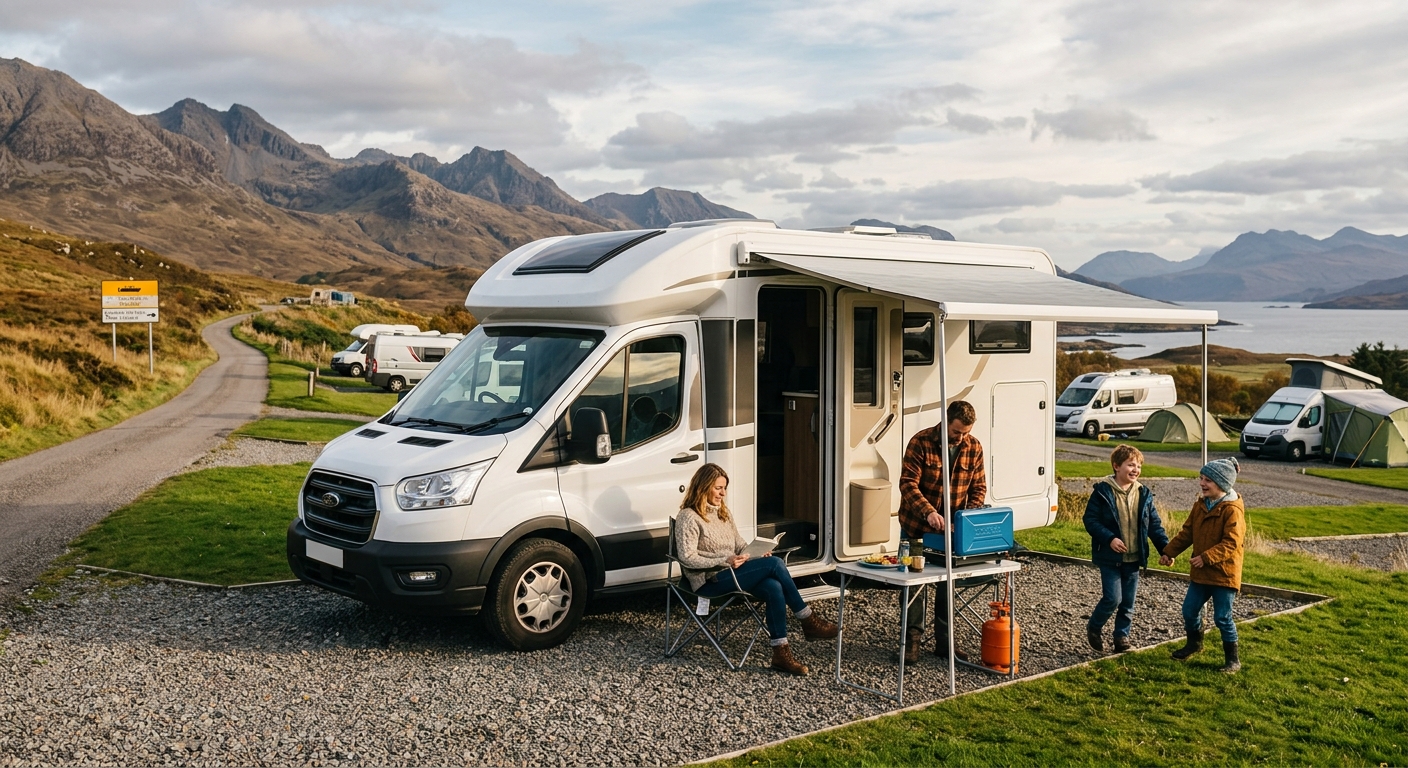
A standard Category B driving license, issued in the UK or EU, is sufficient for driving most motorhomes in the UK, specifically vehicles with a Maximum Authorised Mass (MAM) of up to 3,500 kg. For larger rented RVs exceeding 3,500 kg MAM, a Category C1 license is typically required, which involves passing a separate test. Many of our partner suppliers, like Apollo and Britz, offer Class B Camper Vans or Class SI (Semi-integrated) motorhomes that fall within the standard Category B license limits, making them accessible for first-time renters. The minimum driver age for RV rental in the UK is 21 years old across our fleet, and importantly, there are no young driver surcharges or vehicle class restrictions based on age, ensuring everyone can enjoy the open road. Overseas visitors from non-EU countries are generally advised to carry an International Driving Permit (IDP) in addition to their valid national license, especially for trips longer than 12 months, though it's not always mandatory for shorter tourist visits.
Road Conditions & Terrain in UK
UK roads present a diverse driving experience, ranging from multi-lane motorways that allow for efficient long-distance travel to narrower A and B roads, and charmingly tight, winding country lanes often found in rural areas. While the terrain can be relatively flat in regions like Eastern England, you'll also encounter the rolling hills of the Cotswolds and the more mountainous landscapes of Scotland, Wales, and Northern England, offering varied and beautiful drives. RV beginners should prepare for navigating complex roundabouts, which are a prominent feature of UK roads, and city driving that requires slower speeds and careful maneuvering through historic town centers. However, there's no need to stress about city driving; drive slowly and carefully, and you can drive almost anywhere without issues. We wholeheartedly recommend embracing the opportunity for slow travel, averaging a maximum of 100-150 km per day, especially on country routes, to fully appreciate the diverse British landscape and connect with local culture.
RV Size Limits, Bridges & Restricted Zones
When traveling by rented motorhome in the UK, being aware of vehicle dimensions is crucial, as the country has numerous low bridges, particularly in older towns and rural areas. Always check your rented RV's height and pay close attention to clearance signs to avoid any unfortunate surprises. Additionally, weight limits are common on certain smaller roads, historic bridges, and within ancient town centers, making vigilance essential, especially if you're driving a larger Class C motorhome like a "Comfort Family 6" model. Environmental zones, such as London's Ultra Low Emission Zone (ULEZ) and various Clean Air Zones (CAZ) in other cities, may apply daily charges to older or larger vehicles, so it's wise to check your planned route for any applicable fees. Bandana RV prides itself on full transparency, providing all necessary vehicle details upfront so there are no hidden fees or unexpected costs at pickup. When booking ferries for island travel, such as to the Scottish Isles or Northern Ireland, accurately declaring your RV's length, height, and weight is vital to prevent issues or additional charges.
Fuel: Diesel vs. Petrol & Common Consumption per 100 km
Most rental motorhomes and campervans in the UK fleet are diesel-powered, offering better fuel efficiency for their size compared to petrol engines, which is an important consideration for budgeting your trip. Both petrol and diesel are widely available at fuel stations across the UK, from motorways to rural areas, so finding a refill shouldn't be an issue. However, electric charging points for e-RVs are still less common, so verify availability if you're considering an electric campervan rental. Based on Bandana's global fleet averages, common fuel consumption for popular RV classes is approximately 10 L/100 km for a Class B Camper Van like a "Happy 1 EX", 10-11 L/100 km for a Class SI (Semi-integrated) motorhome such as an "Elnagh Baron 579", and 10-12 L/100 km for a larger Class C (Alcove) model like a "Euro Deluxe". The total cost per 100 km will fluctuate depending on current UK diesel prices, but using these consumption rates can significantly help you budget for your adventure. For easy budgeting and tracking all ancillary expenses like fuel, tolls, and campground fees, remember that RV PLANET routes allow travelers to itemize and track every expense along the way, ensuring no surprises. On the routes offered through RV PLANET routes, you can itemize and track every expense along the way for easy budgeting.
Tolls, Vignettes & Border Rules
The UK operates a system of specific tolls rather than a national vignette, which means you'll only pay for certain motorways, bridges, and tunnels, rather than a flat fee for road usage across the country. Notable toll roads include parts of the M6 motorway (the M6 Toll), the Dartford Crossing (part of the M25 orbital around London), and several major bridges like the Severn Bridge and Humber Bridge. It's advisable to check your route for tolls in advance and understand the payment methods, as some are automatic ANPR (Automatic Number Plate Recognition) systems requiring online payment or registration, while others accept cash or card. There are no hard borders or customs checks when traveling between England, Scotland, Wales, and Northern Ireland, making internal UK travel seamless and straightforward for your rented motorhome adventure. We pride ourselves on comparing final prices across 50+ suppliers, so what you see is what you pay, with no surprise fees at pickup, including transparency on potential toll-related costs.
Driving Tips for RV Rental Beginners Travelers
Driving a rented motorhome or campervan in the UK for the first time is an exciting experience, and a few key tips can make it smoother. Firstly, practice wide turns, as RVs have a longer wheelbase than cars, requiring extra space at junctions and roundabouts to avoid hitting kerbs or obstacles. Secondly, master UK roundabouts; familiarize yourself with multi-lane layouts, signal clearly, and be in the correct lane well in advance. On single-track country roads common in areas like the Scottish Highlands or rural Cornwall, be prepared to slow down, pull over into designated 'passing places', and sometimes reverse to allow oncoming traffic to pass safely. Constantly check all your mirrors due to potential blind spots, particularly before changing lanes, turning, or reversing. Lastly, research parking options in advance for historic towns and cities, as RV-friendly spaces can be limited, and remember that environmental zones like ULEZ or CAZ may apply. Drive slowly and carefully, and you can drive almost anywhere without issues. No need to stress - just use common sense and pay attention.
Recommended RV Class for UK Roads
For navigating the varied UK roads, Class B Camper Vans and Class SI (Semi-integrated) motorhomes are generally highly recommended for beginners, offering an optimal balance of comfort and maneuverability. Class B Camper Vans, like an "Active Compact Select" or "HiTop Campervan" model, with an average length of 5.8 meters from Bandana's global fleet, provide excellent agility for narrower country roads and easier parking in towns. These compact models still offer essential features such as a gas stove and a refrigerator for preparing meals, along with a bed. Class SI (Semi-integrated) RVs, averaging 6.9 meters in length, provide more interior space, fixed beds, and additional amenities while still being manageable on most UK routes. For instance, a "Comfort Family 5" model offers spacious living for families of 2+2. These classes provide a comfortable driving experience without the intimidation of very large vehicles, making them ideal for tackling the diverse UK infrastructure and ensuring an enjoyable week-long trip.
Should I Choose a Compact Van Instead of a Large RV in UK?
The choice between a compact van, such as a Class B Camper Van, and a larger RV, like a Class SI or C motorhome, for a UK trip hinges on your personal priorities for comfort versus maneuverability. A compact van like a "Combi Van" is approximately 5 meters long with a 60 Liter fresh water tank, offering genuine advantages in navigating tight historic city centers, very narrow mountain passes, or limited parking spaces, often feeling more like driving a large car. However, larger RVs provide significantly more indoor living space, more extensive kitchen facilities (like a 150 Liter refrigerator in a "CA-25" model), and fixed beds, which can greatly enhance comfort on longer trips or during inclement British weather. A "4 Berth Adventurer" motorhome, for instance, is 7.4 meters long and sleeps 4 comfortably. For many beginners, the enhanced comfort and amenities of a mid-sized RV, such as a Semi-integrated, often outweigh the slight increase in maneuverability challenges, as most major tourist routes are well-suited for these vehicles. When considering your ideal vehicle, exploring options like "Cheap RV Rental in UK - Budget Guide 2026" or "Luxury RV Rental in UK - Premium Prices 2026" can help narrow down your perfect fit.
Can I Park Anywhere? Free & Wild Camping Rules in UK
Generally, free or 'wild' camping for motorhomes and campervans is restricted across much of England and Wales, typically requiring explicit permission from landowners for overnight parking outside designated campsites. Attempting to wild camp without permission can lead to fines or being moved on by local authorities. In contrast, Scotland's 'right to roam' legislation, under the Land Reform (Scotland) Act 2003, allows for more permissive wild camping in most unenclosed land, provided you follow the Scottish Outdoor Access Code, which emphasizes respecting the environment and leaving no trace. Regardless of the region, ethical considerations are paramount: always dispose of waste properly in designated dump stations, be self-sufficient as no facilities will be available, and minimize your impact on the local environment and communities. Utilizing apps like Park4Night can help locate potential overnight parking spots, but always verify legality and landowner permission locally before settling in. RV PLANET (rvplan.net) is a great resource for locating available campsites and campgrounds during your trip, which we strongly recommend for a hassle-free experience. Rules can vary significantly by region, so always check local regulations and follow local law before parking overnight.
Can I Drive an RV Into the City Center? Heights, Tunnels & Local Signage
Yes, you can generally drive a rented RV into most UK city centers, but careful attention to local signage, vehicle dimensions, and specific restrictions is crucial for a stress-free experience. You must be highly aware of height limits for multi-story car parks, underpasses, and low bridges, which are common in historic urban areas. It's always best to know your motorhome's exact height (for example, a "C-30" Class C motorhome is 9.1 meters long and approximately 3.4 meters high) and navigate with caution. Watch out for environmental zones, such as London's ULEZ or Clean Air Zones (CAZ) in other cities, which may apply charges to older or larger vehicles for entry. Always pay close attention to local signage indicating vehicle restrictions, residents-only parking, and specific routes for larger vehicles, as these can change. Planning your city visits in advance, including researching RV-friendly parking options, is highly recommended to avoid difficulties and potential fines. Drive slowly and carefully, and you can drive almost anywhere without issues. No need to stress - just use common sense and pay attention.
What is the best way to travel by RV in the UK?
The best way to travel by RV in the UK involves combining strategic route planning with a flexible itinerary to embrace both popular attractions and off-the-beaten-path destinations. Prioritize planning routes that account for the UK's diverse road network, including narrower country lanes and complex roundabouts, using GPS systems suitable for larger vehicles. Remember to travel slowly, averaging a maximum of 100-150 km per day, to truly absorb the scenery and local culture. Utilize apps like Pitchup or Park4Night to find a mix of well-equipped campsites and ethical wild camping spots, especially leveraging Scotland's more permissive 'right to roam' rules. Embracing slow travel allows you to fully appreciate the UK's varied landscapes, from historical trails and literary tours to local food markets and wildlife spotting locations, moving beyond just major tourist routes. Adopt environmentally and ethically sound practices by focusing on proper waste disposal, conserving resources, and supporting local communities throughout your journey.
How much does it cost to rent an RV in the UK for a week?
The cost to rent an RV in the UK for a week varies significantly, typically ranging from £700 to over £1,500, influenced by the RV class, season, and specific amenities. For instance, a compact Class B Camper Van like a "Category Van" might start from around £100 per day in the low season, while a larger, well-equipped Class C "Euro Deluxe" could be upwards of £200 per day during peak summer. Transparent cost breakdowns should include not only the base rental fee but also estimated expenses for fuel (as mentioned, around 10-12 L/100 km), campsite fees (averaging £25-£40 per night), and potential attraction entry fees or tolls. Factor in insurance costs, which vary based on coverage level and driver age or experience, and budget for optional extras like bedding, kitchen kits, or bicycle racks. For a comprehensive overview of pricing strategies, check out our "RV Rental in UK - Prices and Best Deals 2026" guide. Booking well in advance, especially for peak season (June-August), can often secure better rates and ensure availability of your preferred vehicle type. Remember, prices are dynamic like flight tickets, changing daily based on availability and seasonality, so the final price is set at the actual booking time.
What do I need to know about driving a motorhome in the UK?
Driving a motorhome in the UK requires adapting to left-hand traffic, which is a fundamental difference for many international visitors, and navigating unique road infrastructure. Be prepared for single-track roads with designated passing places in rural areas, particularly in scenic regions like the Lake District or the Scottish Highlands, where courtesy and anticipation are key. Complex multi-lane roundabouts are common, and approaching them requires clear signaling and being in the correct lane well in advance. Always be mindful of your motorhome's height and width; check signage carefully for low bridges, height barriers, and weight limits, especially when venturing into historic towns. For example, a "Category Large 6 AT" Class C motorhome is large and requires extra care. Practice defensive driving, maintain greater stopping distances due to the vehicle's size and weight, and always be aware of your surroundings. Familiarize yourself with environmental zones, like London's ULEZ or other city-specific Clean Air Zones (CAZ), as charges may apply depending on your vehicle's emissions standard. With a standard car driver's license being sufficient for most motorhomes, the main hurdle is simply getting accustomed to the road nuances.
Are motorhomes allowed on all UK roads?
While motorhomes are broadly permitted on most UK roads, certain routes, particularly very narrow country lanes or historic town centers, may have physical restrictions or be impractical for larger vehicles. Low bridges are a significant concern, especially in older areas; always know your rented RV's height and watch for clearance signs, as misjudging can cause serious damage. Weight limits apply to some minor roads and bridges, which larger motorhomes (above 3.5 tonnes MAM, requiring a Category C1 license) may exceed, necessitating careful route planning. Urban areas often feature environmental zones, such as Clean Air Zones (CAZ) or London's Ultra Low Emission Zone (ULEZ), which may incur charges for non-compliant vehicles, regardless of road access. For larger motorhomes, planning routes that stick to A-roads or motorways is generally advisable to avoid tight spots and ensure a smoother journey. However, smaller campervans and compact Class SI motorhomes offer more flexibility for navigating these varied conditions. Explore our "One-Way RV Rental in UK - Price Guide 2026" to see how vehicle size might impact your travel options.
What are the rules for pets in motorhomes UK?
Traveling with pets in a rented motorhome in the UK is generally possible, but it requires adhering to individual rental company policies, which often include additional cleaning fees or specific pet-friendly vehicle options. Always confirm these details when booking your Class B Camper Van, Class C motorhome, or any other rented RV. Ensure your pet is safely secured while the vehicle is in motion, using appropriate restraints or carriers, and never leave them unattended for extended periods, especially in hot weather. When planning your itinerary, research pet-friendly campsites, pubs, and attractions in advance, as rules vary widely across different locations and businesses. Many campsites, like "Glen Nevis Campsite" near Fort William, welcome dogs, but always check. For international travelers entering the UK, ensure your pet complies with all DEFRA (Department for Environment, Food & Rural Affairs) requirements, including vaccinations, microchipping, and valid pet passports. Always keep a list of local veterinary services along your route for any emergencies, and make sure you carry fresh water and food for your pet, especially during travel days.
Where can I find free overnight parking for my campervan UK?
Finding free overnight parking for your rented campervan in the UK is generally more permissible in Scotland due to its 'right to roam' laws, compared to England and Wales where it is largely restricted to private land with prior permission. In England and Wales, 'wild camping' or free parking without explicit permission is often illegal or discouraged, with local authorities actively patrolling popular spots, particularly coastal areas and national parks. For Scotland, responsible wild camping dictates adhering to the Scottish Outdoor Access Code by leaving no trace, respecting private property, and avoiding enclosed fields or areas near homes. Apps like Park4Night are invaluable resources for locating potential overnight parking spots, including official stopovers and Aires, while Brit Stops lists pubs, farm shops, and vineyards that often allow free overnight stays for customers. Always check local council websites and specific signage, as rules can vary significantly by region and even within different parts of England and Wales, emphasizing ethical considerations and minimizing your environmental impact.
What is the best time of year to rent an RV in UK?
The best time of year to rent an RV in the UK is typically late spring (May) through early autumn (September) for the most favorable weather conditions and longest daylight hours. May, June, and September offer a good balance of pleasant weather, fewer crowds than the peak summer months, and potentially lower rental and campsite prices. During these shoulder seasons, you can enjoy popular routes like the Scottish North Coast 500 or the Jurassic Coast without the intense crowds. July and August are peak season, providing the warmest weather, all attractions fully open, and lively atmospheres, but also the highest demand, prices, and largest crowds. Booking your Class C motorhome or campervan well in advance is essential for these months, as availability can be limited. Consider shoulder seasons like April or October for quieter trips and lower costs, though weather can be more unpredictable and some attractions may have reduced hours. Whether you're a pre-planner or a spontaneous traveler, remember that many national and state parks reserve only 25-30% of spots in advance, with the rest available first-come-first-serve, so you’ll find a spot – if not at the first campground, then the next one. Just call ahead before driving.
How do I choose the right RV for my UK trip?
Choosing the right rented RV for your UK trip involves a careful assessment of your travel group size, desired comfort levels, budget constraints, and confidence in driving a larger vehicle. For couples or small groups of up to three people, a Class B Camper Van (averaging 5.8m in length) or a compact Class SI (Semi-integrated) motorhome (averaging 6.9m in length), like a "Class I SG" model, offers excellent maneuverability suitable for narrower UK roads. Families or larger groups, perhaps 4-6 people, might prefer a Class C (Alcove) RV like a "Glamys 265" model, which typically offers more sleeping places (often 5-6) and greater indoor living space, including a dining area. Consider the trade-off between vehicle size and amenities: smaller RVs are easier to drive and park in tight spots, while larger ones provide more home-like comforts, separate sleeping areas, and storage for essentials. Factor in the type of driving you'll be doing (city vs. rural) and your experience level when deciding, as different vehicle types require varying levels of driver confidence. To find your ideal vehicle, compare motorhome prices for UK directly on our platform and explore various models offered by our 50+ leading RV suppliers worldwide.
What apps are useful for RV travel in the UK?
Several apps are highly useful for RV travel in the UK, significantly enhancing navigation, campsite discovery, fuel efficiency, and overall trip planning. For navigation, while Google Maps or Waze are excellent for general directions, consider dedicated RV GPS apps (e.g., CoPilot RV) that allow you to input your vehicle's dimensions (height, width, length) to avoid low bridges and restricted roads, a common challenge in the UK. Campsite finders like Pitchup, Park4Night, and the Camping and Caravanning Club app are essential for locating available pitches, wild camping spots (where permitted), and official overnight parking. For fuel and EV charging, apps like PetrolPrices.com can help compare fuel costs, while Zap-Map is indispensable for finding electric vehicle charging points if you're renting an e-campervan. Reliable mobile data coverage, especially in remote areas like the Scottish Highlands, can be variable, so checking network coverage maps or considering a portable Wi-Fi device is advisable for consistent connectivity. These tools make planning and executing your adventure with a rented motorhome much smoother.
How can I travel sustainably with an RV in the UK?
Traveling sustainably with a rented RV in the UK involves adopting eco-conscious practices, minimizing environmental impact, and supporting local communities throughout your journey. Prioritize waste reduction by minimizing single-use plastics, separating recycling rigorously, and utilizing designated waste disposal points at campsites. Conserve resources by being mindful of your water and electricity usage in your motorhome, taking shorter showers, and turning off lights and appliances when not needed. When preparing meals in your RV's kitchen – perhaps using a 3-burner gas stove like those found in a "Jayco Conquest Royale 6" model – consider planning your menu to minimize food waste and dispose of any organic waste responsibly. Our RV-friendly recipes playlist offers great ideas for sustainable cooking on the road. Support local businesses and communities by purchasing local produce from farm shops, dining at independent establishments, and visiting small shops and artisans. Adhere strictly to 'leave no trace' principles when wild camping or visiting natural areas, ensuring you don't disturb wildlife or leave any rubbish behind. Driving efficiently to minimize fuel consumption, avoiding excessive idling, and considering offsetting your carbon footprint through reputable schemes are also important steps towards a more responsible RV adventure.
What You Shouldn't Miss
- Explore the Scottish Highlands: Drive the iconic North Coast 500 route (approximately 830 km) with its dramatic landscapes, historic castles, and countless lochs.
- Wander through the Lake District National Park: Discover picturesque villages, tranquil lakes, and challenging hiking trails, offering over 2,362 square kilometers of natural beauty.
- Immerse yourself in the Cotswolds: Visit charming honey-coloured villages, rolling hills, and historic market towns like Bibury and Bourton-on-the-Water.
- Discover Ancient History: Park your RV near iconic sites such as Stonehenge or Hadrian's Wall (117 km long), exploring thousands of years of British heritage.
- Coastal Adventures in Cornwall: Drive along the stunning Cornish coastline, enjoying surfing beaches, fishing villages, and delicious seafood.
- Looking for expert insights from Avi Bandana? Explore Top 5 Adventures - recommendations from Avi Bandana for unique travel ideas.
Final Thoughts
Embarking on a rented RV adventure in the UK for the first time is an incredibly rewarding experience, offering unparalleled flexibility and freedom to explore at your own pace. While navigating unfamiliar roads and understanding local rules might seem daunting initially, with a little preparation and confidence, you'll find it an enjoyable journey. Remember to embrace the slow travel philosophy, take in the breathtaking scenery, and connect with the rich culture and delicious food the UK has to offer.
We at Bandana are here to support you before, during, and after your booking, ensuring you have all the information and assistance you need for a successful trip. From transparent pricing to expert advice on routes and vehicles, we're dedicated to making your RV rental experience in the UK as smooth and enjoyable as possible. So, go ahead, imagine yourself on the route, discovering hidden gems and creating lasting memories.
Ready to start planning your perfect UK road trip? Compare Motorhome Prices for UK and find the ideal campervan or motorhome to begin your unforgettable journey today!
