In This Guide
- Can You Drive an RV in Scotland? License & Age Rules
- Road Conditions & Terrain in Scotland
- RV Size Limits, Bridges & Restricted Zones in Scotland
- Fuel: Diesel vs. Petrol & Cost per 100 km in Scotland
- Tolls, Vignettes & Border Rules in Scotland
- Driving Tips for RV Rental Beginners in Scotland
- Recommended RV Class for Scotland Roads
- Should I Choose a Compact Van Instead of a Large RV in Scotland?
- Can I Park Anywhere? Free & Wild Camping Rules in Scotland
- Can I Drive an RV Into the City Center? Heights, Tunnels & Local Signage
- What is Local Etiquette and Environmental Stewardship for RVers in Scotland?
- What Practical Annoyances Should RVers Expect in Scotland and How to Solve Them?
- Are There Alternative RV Routes and Hidden Gems in Scotland Beyond the NC500?
- How Much Does an RV Trip Cost in Scotland? Budgeting and Unexpected Expenses
- Can I Travel with Pets or Consider Accessibility in an RV in Scotland?
Embarking on your first motorhome or campervan adventure in Scotland promises breathtaking landscapes, rich history, and the freedom of the open road. As RV travel specialists, Bandana Caravan has been helping tens of thousands of travelers explore the world by RV since 2001, and we’re here to ensure your debut trip through Scotland is smooth and unforgettable. For live availability and current prices, start with our RV Rental Scotland - Complete Guide 2026 guide, which provides a comprehensive overview for your planning.
Can You Drive an RV in Scotland? License & Age Rules
Most drivers can operate motorhomes in Scotland with a standard Category B driver's license, provided the vehicle’s Maximum Authorised Mass (MAM) does not exceed 3,500 kg. If your license was issued after 1 January 1997, it typically covers vehicles up to 3,500 kg with up to 8 passenger seats. Those with licenses issued before this date may automatically be entitled to drive vehicles up to 7,500 kg MAM. The minimum driver age for most RV rentals in Scotland is 21, but some premium Class A motorhome suppliers might require drivers to be 25 years old, so always check specific terms. An International Driving Permit (IDP) is recommended for visitors from non-English-speaking countries, although it's generally not mandatory if your national license includes a photo and is in English.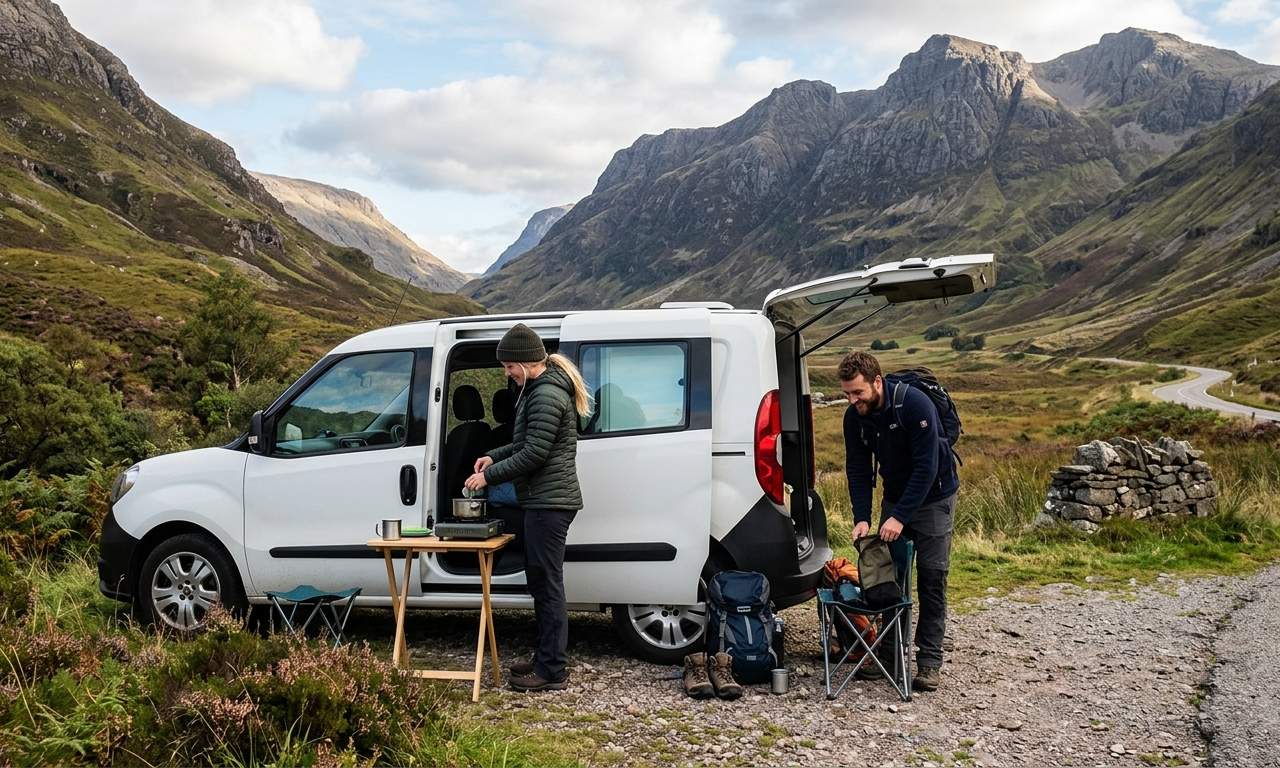
Road Conditions & Terrain in Scotland
Scotland's road conditions vary significantly, from modern motorways (M-roads) and well-maintained A-roads to narrower, winding single-track roads that are particularly common in remote areas like the Highlands and islands. The terrain can be mountainous, especially in the Highlands, featuring steep inclines, sharp bends, and occasionally less-maintained gravel sections or potholes on quieter routes. Beginner RV drivers should plan for slower travel speeds and allocate extra time for journeys, particularly when exploring scenic routes such as those found on the Isle of Skye or the South West Coastal 300. Crucially, on single-track roads, drivers must be prepared to use designated passing places, pulling over on the left to allow oncoming traffic or faster vehicles to pass.RV Size Limits, Bridges & Restricted Zones in Scotland
RV size limitations in Scotland are often more practical than regulatory, dictated by the accessibility of routes rather than strict legal limits, although some ferry services and historic bridges do have specific height or weight restrictions. Larger motorhomes, such as a Class C Alcove (typically around 7.5 meters in length), may find navigating very narrow or extremely winding roads challenging. For instance, the infamous Bealach na Bà pass on the North Coast 500 is explicitly advised against for vehicles exceeding 5.5 meters (18 ft) due to its steep gradients and tight hairpin bends. Many picturesque island routes, including certain roads on the Isle of Skye, feature tight corners, blind summits, and limited turning spaces, making smaller vehicles like a Class B Camper Van (averaging 5.8 meters) considerably more nimble. Always consult ferry operator websites for specific length and weight restrictions when planning island hops, as larger RVs can incur significantly higher costs or even be denied passage. Additionally, urban areas like Edinburgh and Glasgow operate Low Emission Zones (LEZs) where older, more polluting vehicles may be charged to enter, so check your rented RV's emission standard to avoid unexpected penalties.Fuel: Diesel vs. Petrol & Cost per 100 km in Scotland
Most rental RVs in Scotland, especially those available through Bandana's global fleet from suppliers like Apollo and Britz, are diesel-powered, which is readily available at fuel stations throughout the country. Based on general RV fleet averages, fuel consumption for motorhomes typically ranges from 8-17 Liters per 100 km. Smaller campervans might average 8-10 L/100km, while larger Class C motorhomes could be 12-17 L/100km. Assuming an average diesel price of £1.60 per liter in 2026, beginners can expect to spend approximately £12.80 - £16.00 per 100 km for a smaller campervan or £19.20 - £27.20 per 100 km for a larger Class C motorhome. It's important to note that fuel stations can be sparse in very remote areas, so careful route planning and refueling stops are essential to avoid running low. For detailed cost tracking and budgeting, RV PLANET routes allow travelers to itemize and monitor every expense along their journey.Tolls, Vignettes & Border Rules in Scotland
Scotland is largely toll-free, meaning travelers renting an RV will not encounter significant road tolls or vignettes for general driving on its public road network as of 2026. Historically tolled crossings, such as the famous Forth Road Bridge and the Skye Bridge, are now free to use for all vehicles, simplifying travel between regions. Should your RV adventure extend south into England, be aware that the M6 Toll in the Midlands is the only major toll road, which can be paid by card or online. However, no other significant tolls typically affect tourist routes when traveling from Scotland into other parts of the UK. There are also no specific border rules between Scotland and England or Wales that impact RV travel, as they are all part of the United Kingdom.Driving Tips for RV Rental Beginners in Scotland
Embracing slow travel is paramount for an enjoyable first-time RV experience in Scotland; the country's unparalleled beauty is best appreciated at a leisurely pace, allowing for frequent stops at numerous scenic viewpoints. Before setting off on a longer trip, practice driving your rented motorhome in a quiet area to familiarize yourself with its size, weight, and braking distance, which will build confidence. For families, planning regular breaks every 2-3 hours is crucial to stretch legs, grab a snack, and explore, making the journey enjoyable for everyone, especially if you have an active family of 2+2. Always pay close attention to local signage, particularly for height and weight restrictions, and be mindful of farm animals like sheep and cattle that may be on rural roads. Opting for an RV with an automatic transmission, if available, can provide an easier driving experience, especially on Scotland's often hilly and winding roads.🎬 Video coming soon
Recommended RV Class for Scotland Roads
For beginners exploring Scotland's diverse and often challenging roads, a Class B Camper Van or a Class SI (Semi-integrated) RV typically offers the best balance of maneuverability, fuel efficiency, and interior comfort. Class B Camper Vans, often around 5.8 meters in length, are highly recommended for their agility on narrow, winding roads and ease of parking in smaller towns and campsites. These compact campervans, like the "Active Pop Top" or "Combi Van", are excellent for couples or small groups of friends. Class SI Semi-integrated RVs, with an average length of 6.9 meters, such as the "K3" or "K2D", provide more living space and amenities, offering a good compromise for couples or small families, while still being manageable on most Scottish routes. While Class C Alcove motorhomes (averaging 7.5 meters or larger, like the "Group E" with 6 sleeping places) offer more sleeping capacity and living space, their increased length can be more challenging for beginners on single-track roads and in tight turning situations. Consider what features are most important to you - for instance, some prefer a shower and toilet on board, even in smaller units.Should I Choose a Compact Van Instead of a Large RV in Scotland?
While a compact campervan offers superior maneuverability and easier access to tight historic centers or challenging mountain passes, most RV sizes can comfortably navigate Scotland's main routes with careful driving. The decision between a compact campervan and a larger motorhome often balances driving ease with desired interior comfort and amenities. A compact campervan, such as a Class B Camper Van (like the "Active Classic" or "Juliette 2-3"), genuinely helps on extremely narrow, winding routes like specific sections of the North Coast 500 or certain Isle of Skye roads, and is much easier to park. However, a larger motorhome, such as a Class SI Semi-integrated (like the "Comfort Family") or a Class C Alcove (like a "Glamys 265"), provides significantly more indoor space, better kitchen and bathroom facilities, and more comfortable sleeping arrangements, which can greatly enhance the overall experience, especially during Scotland's often inclement weather. Drive slowly and carefully, and you can drive almost anywhere without issues. No need to stress - just use common sense and pay attention. Beginners should consider their comfort level with driving larger vehicles and their planned itinerary, prioritizing a compact campervan if tackling highly restricted or remote routes is a primary concern, or a larger RV for enhanced living comfort on more conventional paths.Can I Park Anywhere? Free & Wild Camping Rules in Scotland
In Scotland, the celebrated 'right to roam' under the Land Reform (Scotland) Act 2003 explicitly does not apply to motorized vehicles, meaning wild camping in an RV is generally not permitted. Overnight parking for rented RVs must occur in designated campsites, certified motorhome stopovers (similar to Aire-style facilities found in Europe), or on private land with explicit prior permission from the landowner. Parking overnight in public car parks, lay-bys, or roadside spots without specific permission is typically not allowed and can result in fines or being asked to move. Always research and book campsites in advance, especially during Scotland's peak season (May to September), to ensure a legal and comfortable overnight stay. You'll find a spot. If not at the first campground, then the next one. Call ahead before driving. Rules vary by region and specific local bylaws; always check local regulations and follow local law before parking overnight. For finding campsites and campgrounds during your trip, we recommend using RV PLANET (rvplan.net) - a great resource for locating available spots along your route.Can I Drive an RV Into the City Center? Heights, Tunnels & Local Signage
You can almost always drive an RV into city centers in Scotland, but it requires careful attention to local signage, particularly regarding height restrictions, environmental zones, and parking. Major cities like Edinburgh and Glasgow operate Low Emission Zones (LEZs), which may charge older, more polluting vehicles to enter. Ensure your rental RV meets the emissions standards to avoid penalties or choose a newer model which typically complies. Be highly vigilant for height restrictions on multi-story car parks, underpasses, and low bridges, as these are common, and a motorhome's height (especially Class C Alcoves, which can be over 3 meters tall) can easily exceed clearances. Many city centers also feature narrow streets, pedestrian zones, or 'residents-only' parking areas, making driving and finding suitable parking challenging for larger vehicles. It's often advisable for RV travelers to park on the outskirts of major cities at a designated park-and-ride facility or campsite and use public transport to explore the city center. Drive slowly and carefully, and you can drive almost anywhere without issues. No need to stress - just use common sense and pay attention.What is Local Etiquette and Environmental Stewardship for RVers in Scotland?
Practicing good local etiquette and environmental stewardship in Scotland is crucial for preserving its fragile landscapes and maintaining positive community relations. Always use designated passing places on single-track roads to allow oncoming traffic or faster vehicles to pass, indicating your intent with a clear signal. Supporting local economies is easy: make an effort to purchase food, souvenirs, and services from small businesses in the towns and villages you visit. Minimize your environmental impact by adhering strictly to the 'Leave No Trace' principles: always take all rubbish with you, dispose of waste (including grey and black water) only at designated disposal points, and avoid damaging flora or disturbing wildlife. Be respectful of private land and property, avoiding parking in gateways or obstructing access, and always seek permission before entering private land. For finding campsites and campgrounds during your trip, RV PLANET (rvplan.net) is an excellent resource.What Practical Annoyances Should RVers Expect in Scotland and How to Solve Them?
RV travelers in Scotland should anticipate and prepare for common annoyances such as midges, sudden weather changes, and limited connectivity in remote areas. Midges are notorious biting insects, particularly prevalent from late May to September; combating them requires strong midge repellent (containing DEET), midge nets for windows and doors, and consulting the 'midge forecast' before visiting specific areas. Scotland's weather is famously unpredictable, often changing rapidly from sun to rain in minutes; pack layers of waterproof and warm clothing, and be prepared to adapt outdoor plans spontaneously. Cellular service and Wi-Fi can be limited or non-existent in remote regions of the Highlands and islands, so download offline maps, entertainment, and essential information beforehand. Navigating narrow roads and finding suitable parking, especially for larger motorhomes, can be challenging, which is why we suggest considering a smaller RV or a campervan for greater flexibility. When preparing meals in your rental RV, check out our RV-friendly recipes playlist for delicious and easy ideas.Are There Alternative RV Routes and Hidden Gems in Scotland Beyond the NC500?
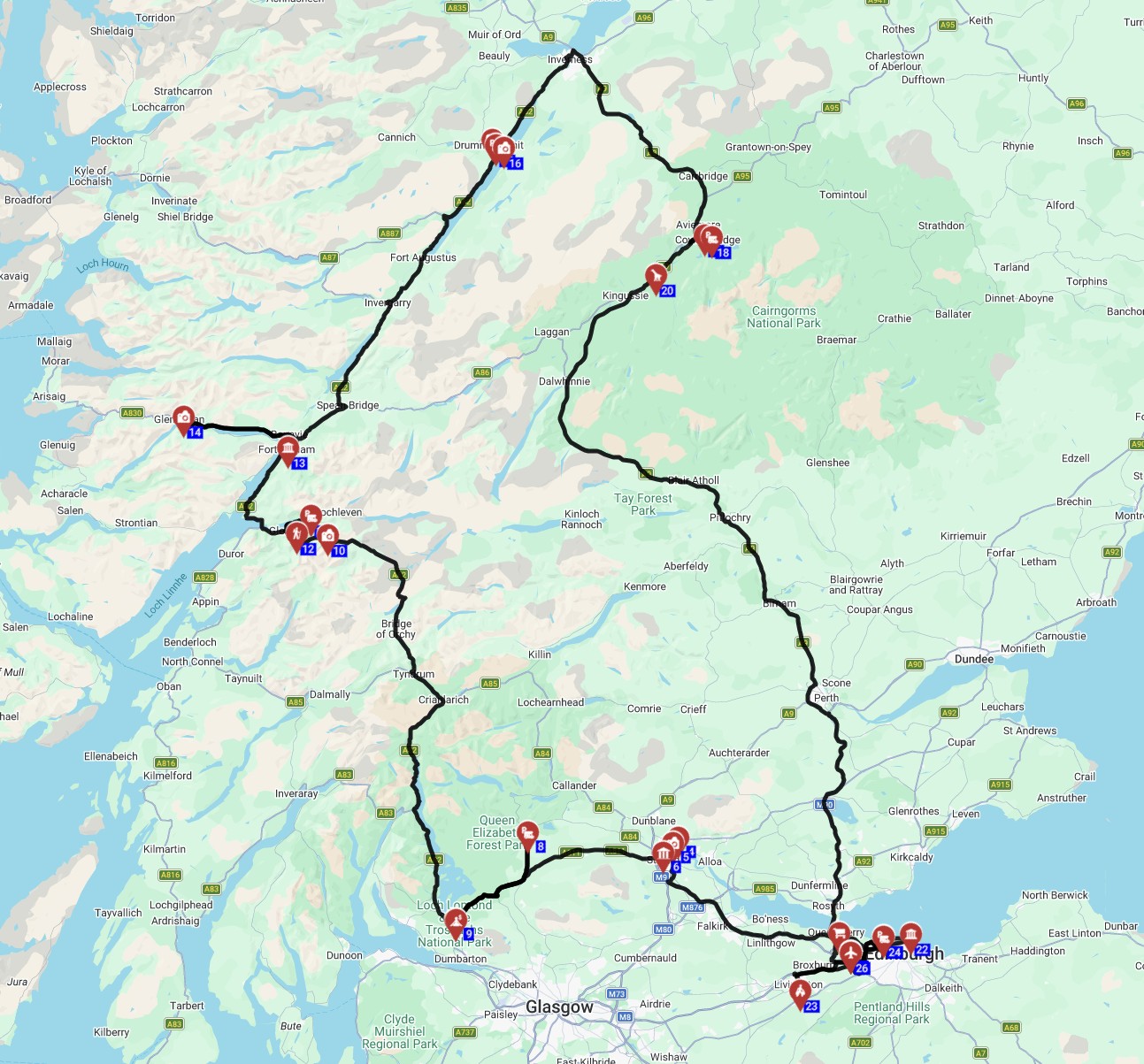
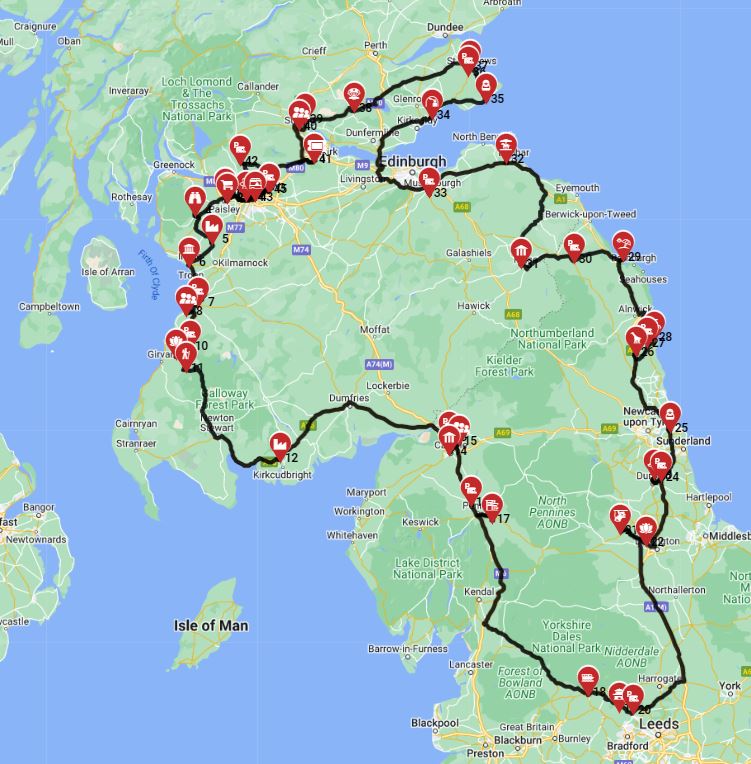
Beyond the incredibly popular North Coast 500, Scotland offers numerous alternative RV-friendly routes and hidden gems that provide equally stunning scenery with potentially fewer crowds. The Argyll Coastal Route (following the A83/A82) offers dramatic lochs, ancient castles, and convenient access to islands like Mull and Iona, showcasing Scotland's rugged west coast beauty over its 200 km length. The South West Coastal 300 explores the picturesque coastlines and rolling hills of Dumfries & Galloway and Ayrshire, featuring sandy beaches, charming towns, and connections to Robert Burns. The Snow Roads Scenic Route in the Cairngorms National Park provides a high-altitude journey through Scotland's highest mountains, dotted with distilleries and opportunities for outdoor activities like hiking or cycling. Hidden gems include the remote beauty of Assynt and Coigach in the north-west Highlands, the peaceful Trossachs National Park with its tranquil lochs, or specific lesser-known glens and lochs that offer serene parking opportunities at smaller, independent campsites. For example, compare motorhome prices for Scotland with our detailed guides like "Cheap RV Rental in Scotland - Budget Guide 2026" or "Luxury RV Rental in Scotland - Premium Prices 2026" to find the perfect vehicle for any adventure. Many of these lesser-known routes, as well as the more popular ones, are covered in detail within RV PLANET routes.How Much Does an RV Trip Cost in Scotland? Budgeting and Unexpected Expenses
A comprehensive budget for an RV trip in Scotland should account for several key expenses: rental fees, fuel, campsite fees, ferry costs for island travel, attraction entry, food, and a contingency for unexpected expenses. RV rental costs vary significantly by season, vehicle class (e.g., smaller campervans are typically less expensive than larger Class C Alcoves), and trip duration, generally ranging from £70-£200+ per night. Fuel will be a significant expense, as detailed previously, so factor in an average of £15-£25 per 100 km depending on your RV's efficiency and planned route. Campsite fees typically range from £20-£45 per night for a powered pitch, with costs varying by location, facilities, and seasonality. Allocate funds for specific ferry journeys to islands (e.g., Isle of Skye, Outer Hebrides), which can be substantial for an RV (e.g., a one-way vehicle and two-passenger fare to Skye can be £20-£40+). Don't forget entrance fees to popular attractions like historic castles or renowned distilleries. For food, stocking up at local supermarkets will save significantly on dining out, but also indulge in meals at local pubs and cafes to truly experience Scottish hospitality. For a detailed breakdown and to compare prices, check out our "RV Rental in Scotland - Prices and Best Deals 2026" guide. You might also want to explore options like "Weekly RV Rental in Scotland - Pricing 2026" or "One-Way RV Rental in Scotland - Price Guide 2026" for budgeting specific trip styles.Can I Travel with Pets or Consider Accessibility in an RV in Scotland?
Traveling with pets in a rented RV in Scotland is generally possible, but it requires careful planning and the selection of a pet-friendly rental vehicle and campsites. Many Bandana partner rental companies offer pet-friendly RVs, often for an additional cleaning fee (typically £25-£50); always confirm the specific pet policy before booking. Ensure your pet's vaccinations are up-to-date, they are microchipped, and you have all necessary pet passports or health certificates for international travel if applicable. Finding pet-friendly campsites is crucial, as not all sites allow animals, and some may have restrictions on breeds or require pets to be kept on a lead. For travelers with mobility challenges, some specialized RVs offer accessibility modifications such as wider doors, ramps, or adapted bathrooms, though availability may be limited. Inquire directly with rental providers about specific accessible RV options suitable for Scotland's roads.What You Shouldn't Miss
- Explore Edinburgh's Historic Royal Mile: Park your motorhome on the city's outskirts and take public transport into the heart of Edinburgh to walk the Royal Mile, from Edinburgh Castle to Holyrood Palace, soaking in centuries of history. For specific tips on RV access, consider our "RV Rental Edinburgh 2026" guide.
- Drive the Glencoe Valley: Experience one of Scotland's most dramatic and iconic landscapes by slowly driving through Glencoe, a glacial valley with towering mountains and stunning viewpoints perfect for a rented campervan.
- Visit a Whisky Distillery on Speyside: Take a tour and a dram at one of the many distilleries along the Speyside Whisky Trail, learning about Scotland's national drink. Many offer RV-friendly parking.
- Spot Nessie at Loch Ness: Enjoy the mystery and beauty of Loch Ness, with various viewpoints and visitor centers accessible by motorhome, potentially setting up camp at a nearby site in Inverness (see "RV Rental Inverness 2026").
- Hike in the Cairngorms National Park: Access spectacular hiking trails suitable for all levels, from gentle forest walks to challenging mountain ascents, with your RV as your mobile base. The park also features the UK's highest public road, the Cairnwell Pass.
- Discover the Isle of Skye: While popular, Skye offers unparalleled beauty. Focus on less-traveled areas or visit during the shoulder seasons (April/May, September/October) for a more peaceful experience. Just remember some roads are narrow for larger RVs.
Looking for expert insights from Avi Bandana? Top 5 Adventures - recommendations from Avi Bandana
Final Thoughts
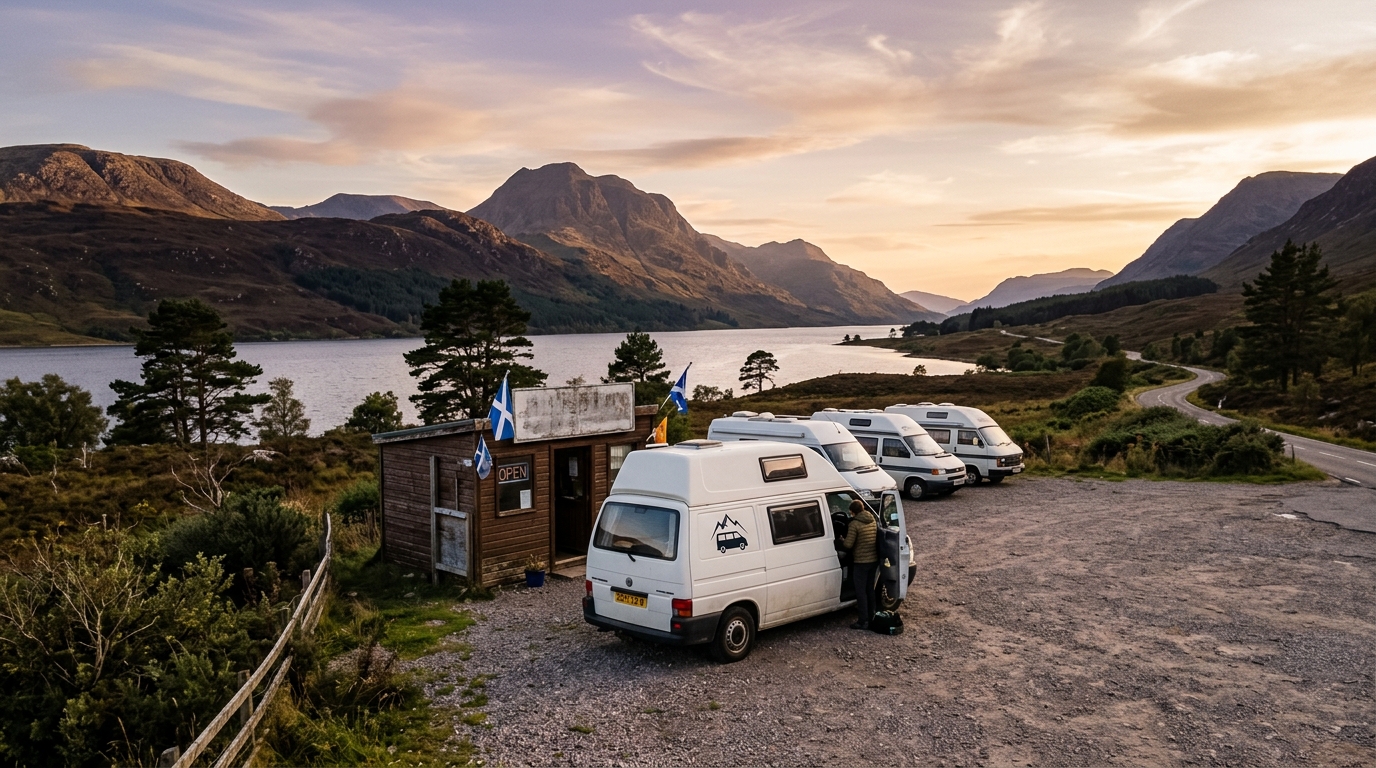
Taking your first RV rental trip through Scotland is an adventure that promises incredible freedom and discovery. Imagine waking up to the mist rolling over a Highland loch, cooking a delicious breakfast in your rented campervan, and setting off to explore ancient castles or charming coastal villages at your own pace. With Bandana Caravan, you’re not just booking a vehicle; you’re gaining a partner who understands the nuances of RV travel and is committed to your success. We believe that traveling slowly, averaging max 100-150 km per day, allows you to truly feel the place, connect to the culture, savor the food, and immerse yourself in the stunning scenery. Whether you choose a compact campervan for agile navigation or a larger motorhome for family comfort, Scotland's roads are waiting to be explored. So, gather your loved ones, choose your ideal RV, and get ready for an unforgettable journey through a land of legends and breathtaking beauty. Get inspired for your next trip! Check Scotland RV Rental Prices Now and begin planning your Scottish motorhome adventure with confidence and ease.On the routes offered through RV PLANET routes, you can itemize and track every expense along the way for easy budgeting.